The team from Auger accepts the Startup of the Year trophy at the 2025 GeekWire Awards. (GeekWire File Photo / Dan DeLong)
Boot up the robot trophies, it’s time to vote for the finalists for the 2026 GeekWire Awards!
This is your chance to help us honor the top innovators and entrepreneurs in Pacific Northwest tech — from Startup of the Year to Next Tech Titan, from Young Entrepreneur of the Year to CEO of the Year, and much more.
With 50 finalists across 10 categories, the annual GeekWire Awards are a much-anticipated and hotly-contested affair, hosted live from the Showbox SoDo in Seattle on May 7.
Cast your ballot here or in the embedded form at the bottom. Voting runs through April 10.
The event will feature a VIP reception, sit-down dinner and fun entertainment mixed in. Tickets go fast, and a limited number of half-table and full-table sponsorships are available, so contact events@geekwire.com to reserve a spot for your team today.
Over the next few weeks, we’ll feature the finalists in special GeekWire editorial posts on each category.
Advertisement
Now in its 18th year, the GeekWire Awards is a premier event for the Seattle tech community, bringing together hundreds of geeks to celebrate innovation and the entrepreneurial spirit. Past winners have included Auth0, Tableau, Smartsheet, Rover, Remitly, Swype, Redfin, Zulily, The Black Boardroom Initiative, University of Washington computer scientist Ed Lazowska, Technology Access Foundation and many others.
(function(t,e,s,n){var o,a,c;t.SMCX=t.SMCX||[],e.getElementById(n)||(o=e.getElementsByTagName(s),a=o[o.length-1],c=e.createElement(s),c.type=”text/javascript”,c.async=!0,c.id=n,c.src=”https://widget.surveymonkey.com/collect/website/js/tRaiETqnLgj758hTBazgd5M58tggxeII7bOlSeQcq8A_2FgMSV6oauwlPEL4WBj_2Fnb.js”,a.parentNode.insertBefore(c,a))})(window,document,”script”,”smcx-sdk”); Create your own user feedback survey
It’s a vacuum-based automatic vinyl record cleaner
Designed to use few moving parts
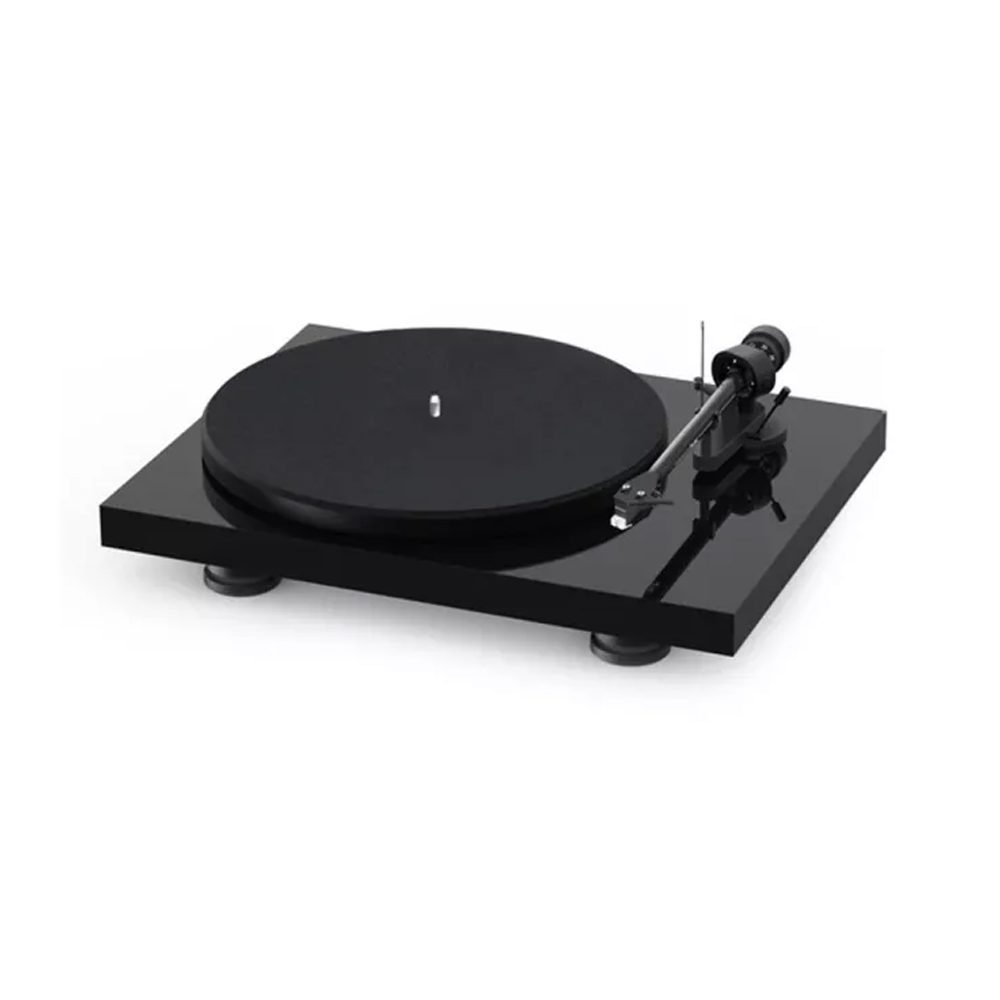
My record collection isn’t mine, but an inheritance I try to take good care of. Or I thought I took great care of, but Pro-Ject’s new release has me thinking I could be doing a better at keeping them pristine.
This is the Pro-Ject VC-E Mini, which is going on sale in April. It’s set to cost £249 (about $350, AU$500), so it’s not cheap — but it’s more affordable than the existing VC-E2 and VC-E3.
Article continues below
Advertisement
Since dirt on a vinyl can really hurt its sound quality, machines like this make sense, but to me the VC-E Mini solves a few problems that make this kind of machine out-of-reach for most people.
A smaller cleaning machine
The Pro-Ject VC-E Mini is, as the name suggests, a more compact record cleaner, and it’s designed to minimize moving parts (and cupboard space too).
Advertisement
It saves space by not having a suction arm to clean the vinyl. Instead it uses a brushless vacuum motor to help cleaning fluid trickle across the vinyl and off the machine.
The box also includes a cleaning brush, magnetic clamp, adhesive arm strip and said cleaning fluid, so the cleaning process sounds pretty hands-on.
Sign up for breaking news, reviews, opinion, top tech deals, and more.
This fluid is Pro-Ject’s Wash it 2, which is already readily available to buy since other VC-E models use it. It doesn’t use alcohol, and instead is made from “demineralised water and cleaning concentrate”.
Advertisement
As someone who’s always just cleaned their records with a microfiber cloth, I’ve always been put off by the size and price of bespoke upkeep machines like this.
While the VC-E doesn’t fully solve the latter problem, I’ll concede that it’s small enough to be tempting as someone who really does want to preserve these items. Maybe I need it more than I thought…
And of course, you can also follow TechRadar on YouTube and TikTok for news, reviews, unboxings in video form, and get regular updates from us on WhatsApp too.
Sony Honda Mobility, the automotive venture from two of Japan’s most storied companies, has swung the axe on its EV project. In a statement, it said it would “discontinue the development and launch” of the Afeela 1 and 2, its long-in-development electric cars. The company added it would review its “business direction,” and announce its future plans “at the earliest possible opportunity.” Which, if we’re honest, probably means the whole thing is going to be shut down, or scaled back so much it’s no longer worth talking about.
2026 has not been a great year for Honda. On March 12, it posted an up-to $15.7 billion loss as it wrote off a big chunk of its investment in EVs. The US’ pivot toward fossil fuels, removal of federal EV tax credits and the imposition of tariffs has hit its business pretty hard. Not to mention the high-profile embarrassment of its current F1 engine project with Aston Martin, which promised so much and has delivered less than nothing.
Sony’s journey into the automotive world began six years ago with the announcement of the Vision-S, the car which would eventually be re-christened Afeela. But while the product looked good on trade show stands, it stood still while the rest of the car world sprinted ahead. In January, Tim Stevens said Afeela 1 looked a little dated, and a little lacking in emotion, and a lot more expensive than comparable models from rivals. Not to mention that Afeela 1 is a sedan, being sold to a world that’s increasingly fallen out of love with the type in favor of higher-riding SUVs. In Sony’s statement, however, the SUV-aping Afeela 2 didn’t even get a mention by name, which hints that it was as much an afterthought for the company as we might have guessed when it was announced.
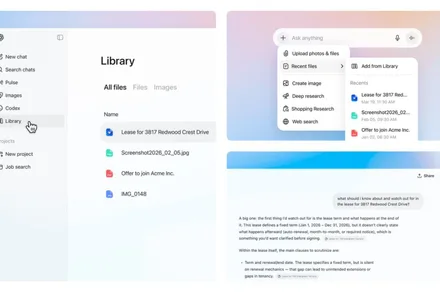
OpenAI is finally addressing one of the most frustrating things about working with files in ChatGPT. The company is rolling out two new features to help users quickly access previously uploaded files, including a Recent files menu and a dedicated Library tab.
How do ChatGPT’s new file management features work?
Until now, files in ChatGPT were largely tied to individual conversations, which meant finding them often involved going back to the original chat and scrolling through long threads. The new Recent files option in the attachment menu now lists some of the files you’ve used most recently, making it easier to jump back into ongoing work without digging through older chats.
It’s now easier to find, reuse, and build on the files you upload and create in ChatGPT.
You can quickly reference files in a chat using recent files in the toolbar, ask ChatGPT about something you’ve uploaded, or browse your files in the new Library tab in the web sidebar.… pic.twitter.com/fIazWRF9h3
On the web, there’s also a new Library tab in the sidebar. This acts as a central hub for all your uploaded and generated files, giving you a more organized view instead of tying everything to separate conversations. You can browse, search, and quickly attach files to new chats from this tab.
OpenAI also says ChatGPT can answer questions about files you’ve already uploaded, so you don’t need to reupload them every time you want more insights. Together, these changes make file reuse faster and far less tedious, especially if you regularly juggle files across multiple sessions.
Who’s getting access, and when?
The update is rolling out globally to ChatGPT Plus, Pro, and Business subscribers. Those in the EU, Switzerland, and the UK will have to wait a bit longer, with availability in these regions expected soon. There’s no word yet on whether these features will make their way to the free tier.
With these changes, OpenAI is continuing to position ChatGPT as more than just a chatbot, gradually turning it into a tool for managing ongoing work across conversations.
X is updating its revenue-sharing incentives to give more weight to engagement from a user’s home region, Nikita Bier, the company’s Head of Product has announced. Bier said the change in policy was to “encourage content that resonates with people in [the user’s] country, in neighboring countries and people who speak [their] language.”
Bier continued that while X appreciates everyone’s opinion on US politics, the company is hoping the new policy can “disincentivize gaming the attention of US or Japanese accounts.” The US and Japan have the largest number of users on X. Bier didn’t mention it outright, but dozens of popular accounts tweeting pro-Trump sentiments and commentaries focusing on US politics in general were revealed to be based outside the US late last year, when X rolled out a transparency feature that exposed users’ locations. Those accounts, which pretended to be from the US and garnered millions of likes, views and reposts, turned out to be based in countries like India, Kenya and Nigeria.
“X will be a much richer community when there’s relevant posts for people in all parts of the world,” Bier said. When one user responded to his post that some countries barely have any users, making it hard to earn money from the website, Bier just suggested that they should write about their day-to-day experiences. “Of course, you’re welcome to continue chiming in on America politics. We just won’t send money overseas for that content,” he said. X’s new policy will start taking effect on Thursday, March 26.
Since Donald Trump’s war on Iran started more than three weeks ago, United States military forces have allegedly attacked more than 9,000 sites, creating a climate of fear and constant uncertainty for Iranians in Tehran and across the country. Without an advanced warning system from the government, and amid the longest internet shutdown in Iran’s history, Iranians are left in an information void.
Even before Israel and the United States began dropping bombs, Iran’s lack of a public emergency alert tool and severe state-controlled digital oppression has impacted tens of millions of citizens. Since the 12-day Israel-Iran war last year, though, a group of Iranian digital rights activists and volunteers has been working to fill the gap with a dynamic, regularly updated mapping platform called Mahsa Alert. The project can’t replace real-time early alerts that could come from a coordinated government service, but the tool sends push notifications when Israeli forces warn about attacks, details some confirmed strike locations, and offers offline mapping capabilities.
“There is no emergency alert in Iran,” says Ahmad Ahmadian, the president and CEO of US-based digital rights group Holistic Resilience, which is behind Mahsa Alert and has been developing the platform since last summer. “This was where we saw the traction, we saw the need, and we continued working on it with the volunteers, with some [open source intelligence] experts, and used this to map the repression machinery ecosystem of Iran and surveillance.”
Mahsa Alert is a website but also has Android and iOS apps, which were intentionally designed to be lightweight and easy to use on any device. Given the heavy government connectivity control inside Iran and erratic access to the internet, volunteers also prioritized engineering the platform for offline use. And it can be easily updated if a user does get connectivity for a brief period by downloading APK files that contain new data. The team works to keep these updates extremely small; a recent release was 60 kilobytes, and Ahmadian says they are typically no more than 100 kilobytes.
Advertisement
One overlay on Mahsa Alerts plots the locations of “confirmed attacks” that Ahmadian says his team or other OSINT investigators have verified, using video footage or images that are submitted to a Telegram bot or shared on social media. There are also warnings about areas where Israeli forces have issued evacuation alerts, along with the crucial component of people submitting reports on what is happening around them.
“We have to go through a due diligence and verification process and tag them before putting them on the map,” Ahmadian says of the reported attacks and incidents, adding that the team has a backlog of more than 3,000 reports that it is working through or is unable to verify. Along with attempting to map strikes, the team behind Mahsa Alert have also plotted “danger zones” that could be at risk of attack—such as sites linked to Iran’s nuclear program or military—so ordinary citizens can stay away from them. Ahmadian claims 90 percent of attacks it has confirmed were at sites that were already present on the map. “Some of them that we can confirm, we do it because [a user] has shared a photo or they have shared some details that makes them verifiable,” he says.
The map also includes locations of thousands of CCTV cameras, suspected government checkpoints, and other domestic infrastructure. Medical facilities, such as hospitals and pharmacies, are included on the map along with other resources like the locations of religious sites and past protests.
Mahsa Alert has become more visible on global social media feeds as Iranians around the world share details from the map, encouragingpeopleto look into the service and flagging it for friends and family who could use it as a resource. “The app went from near zero to over 100,000 daily active users in a matter of days,” Ahmadian says, adding that in total there have been around 335,000 users this year, with people first turning to the app during the Iranian regime’s brutal crackdown on anti-government protesters in January. Through the limited user information the app collects, Ahmadian claims there are signs that 28 percent of users are accessing the platform from inside Iran.
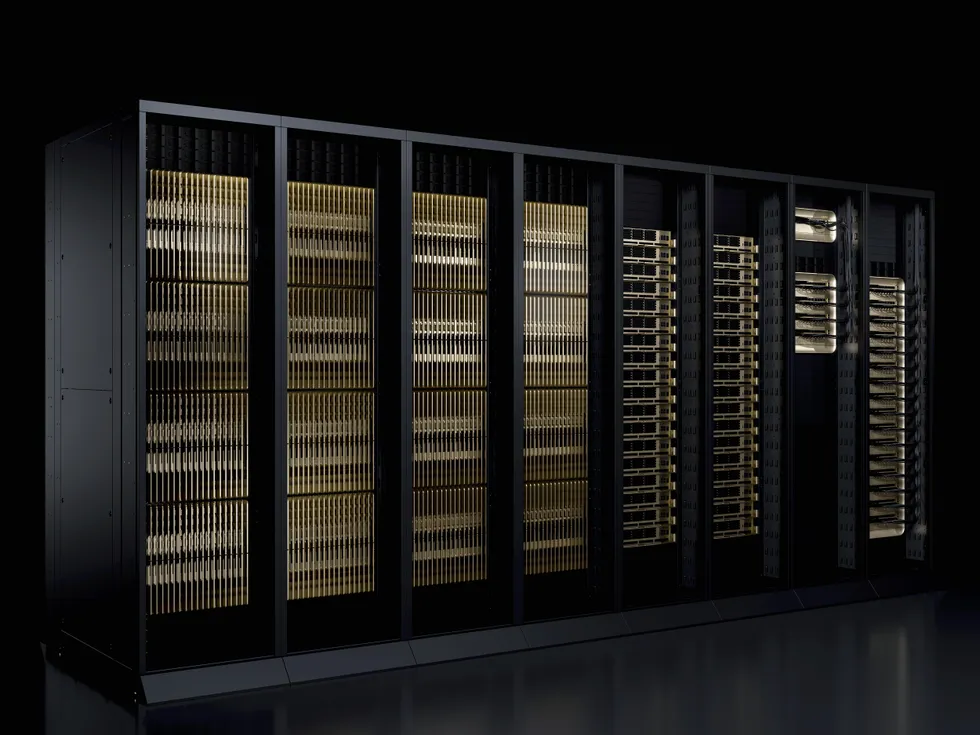
Last week’s Nvidia GTC conference highlighted new chip architectures to power AI. But as the chips become faster and more powerful, the remainder of data center infrastructure is playing catchup. The power delivery community is responding: Announcements from Delta, Vertiv, and Eaton showcased new designs for the AI era. Complex and inefficient AC to DC power conversions are gradually being replaced by DC configurations, at least in hyperscale data centers.
“While AC distribution remains deeply entrenched, advances in power electronics and the rising demands of AI infrastructure are accelerating interest in DC architectures,” says Chris Thompson, vice president of advanced technology and global microgrids at Vertiv.
AC to DC Conversion Challenges
Today, nearly all data centers are designed around AC utility power. The electrical path includes multiple conversions before power reaches the compute load. Power typically enters the data center as medium-voltage AC (1kV to 35kV), is stepped down to low-voltage AC (480V or 415V) using a transformer, converted to DC inside an uninterruptible power supply (UPS) for battery storage, converted back to AC, and converted again to low-voltage DC (typically 54 V DC) at the server, supplying the DC power computing chips actually require.
“The double conversion process ensures the output AC is clean, stable and suitable for data center servers,” says Luiz Fernando Huet de Bacellar, vice president of engineering and technology at Eaton.
Advertisement
That setup worked well enough for the amounts of power required by traditional data centers. Traditional data center computational racks draw on the order of 10 kW each. For AI, that is starting to approach 1 MW. At that scale, the energy losses, current levels, and copper requirements of AC to DC conversions become increasingly difficult to justify. Every conversion incurs some power loss. On top of that, as the amount of power that needs to be delivered grows, the sheer size of the convertors, as well as the connector requirements of copper busbars, becomes untenable. According to an Nvidiablog, a 1 MW rack could require as much as 200 kg of copper busbar. For a 1 GW data center, it could amount to 200,000 kg of copper.
Benefits of High-Voltage DC Power
By converting 13.8 kV AC grid power directly to 800 VDC at the data center perimeter, most intermediate conversion steps are eliminated. This reduces the number of fans and power supply units, and leads to higher system reliability, lower heat dissipation, improved energy efficiency, and a smaller equipment footprint.
“Each power conversion between the electric grid or power source and the silicon chips inside the servers causes some energy loss,” says Fernando.
Switching from 415 V AC to 800 V DC in electrical distribution enables 85 percent more power to be transmitted through the same conductor size. This happens because higher voltage reduces current demand, lowering resistive losses and making power transfer more efficient. Thinner conductors can handle the same load, reducing copper requirements by 45 percent, a 5 percent improvement in efficiency, and 30 percent lower total cost of ownership for GW-scale facilities.
Advertisement
“In a high-voltage DC architecture, power from the grid is converted from medium-voltage AC to roughly 800 V DC and then distributed throughout the facility on a DC bus,” said Vertiv’s Thompson. “At the rack, compact DC-DC converters step that voltage down for GPUs and CPUs.”
A report from technology advisory group Omdia claims that higher voltage DC data centers have already appeared in China. In the Americas, the Mt. Diablo Initiative (a collaboration among Meta, Microsoft, and the Open Compute Project) is a 400 V DC rack power distribution experiment.
A handful of vendors are trying to get ahead of the game. Vertiv’s 800 V DC ecosystem that integrate with NVIDIA Vera Rubin Ultra Kyber platforms will be commercially available in the second half of 2026. Eaton, too, is well advanced in its 800 V DC systems innovation courtesy of a medium-voltage solid-state transformer (SST) that will sit at the heart of DC power distribution system. Meanwhile Delta, has released 800 V DC in-row 660kW power racks with a total of 480 kW of embedded battery backup units. And, SolarEdge is hard at work on a 99%-efficient SST that will be paired with a native DC UPS and a DC power distribution layer.
But much of the industry is far behind. Patrick Hughes, senior vice president of strategy, technical, and industry affairs for the National Electrical Manufacturers Association, says most innovation is happening at the 400 V DC level, though some are preparing 800 V DC. He believes the industry needs a complete, coordinated ecosystem, including power electronics, protection, connectors, sensing, and service‑safe components that scale together rather than in isolation. That, in turn, requires retooling manufacturing capacity for DC‑specific equipment, expanding semiconductor and materials supply, and clear, long‑term demand commitments that justify major capital investment across the value chain.
Advertisement
“Many are taking a cautious approach, offering limited or adapted solutions while waiting for clearer standards, safety frameworks, and customer commitments,” said Hughes. “Building the supply chain will hinge on stabilizing standards and safety frameworks so suppliers can design, certify, manufacture, and install equipment with confidence.”
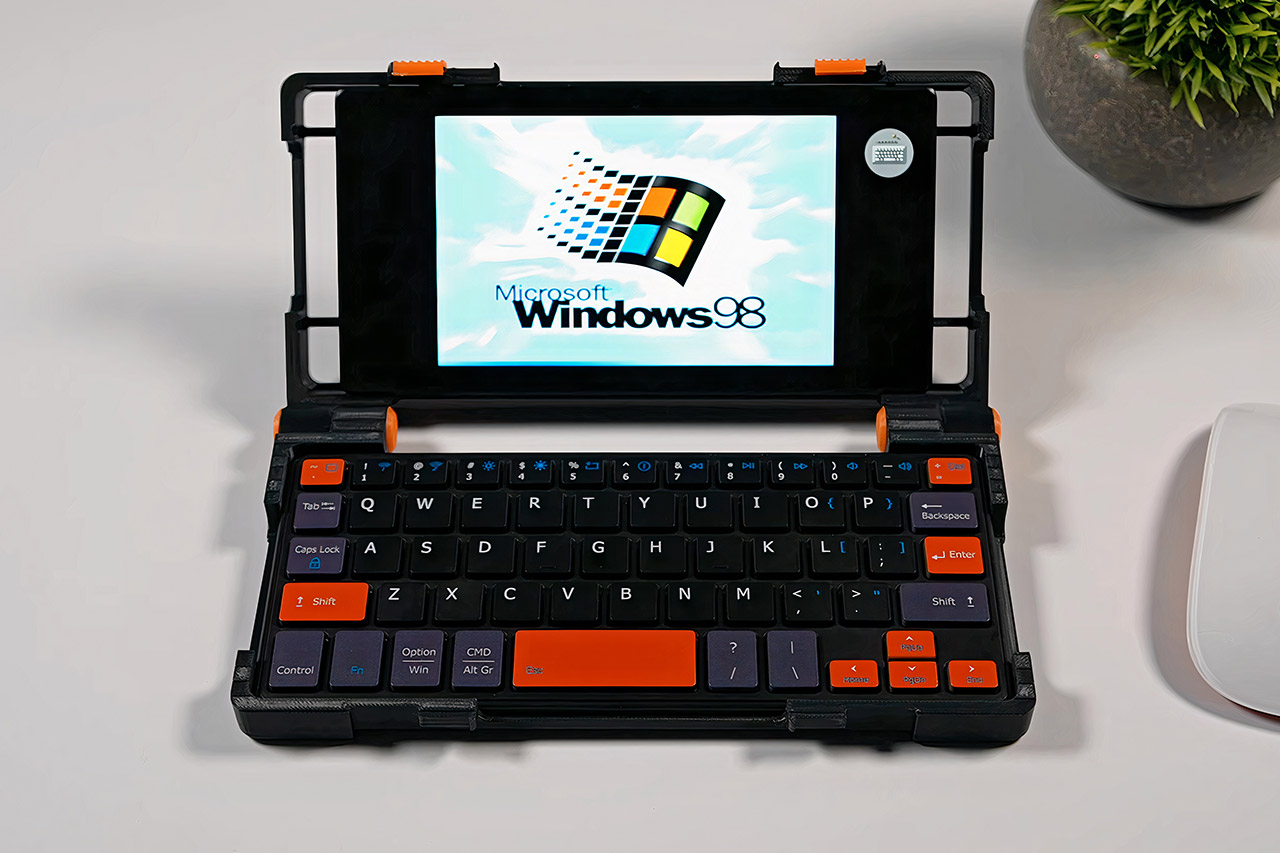
Gamers have long been searching for a computer that can be slipped into a coat pocket and used to complete tasks, a dream that now appears to be within reach due to a creative designer who wrapped a Razer Edge tablet within a custom 3D printed shell.
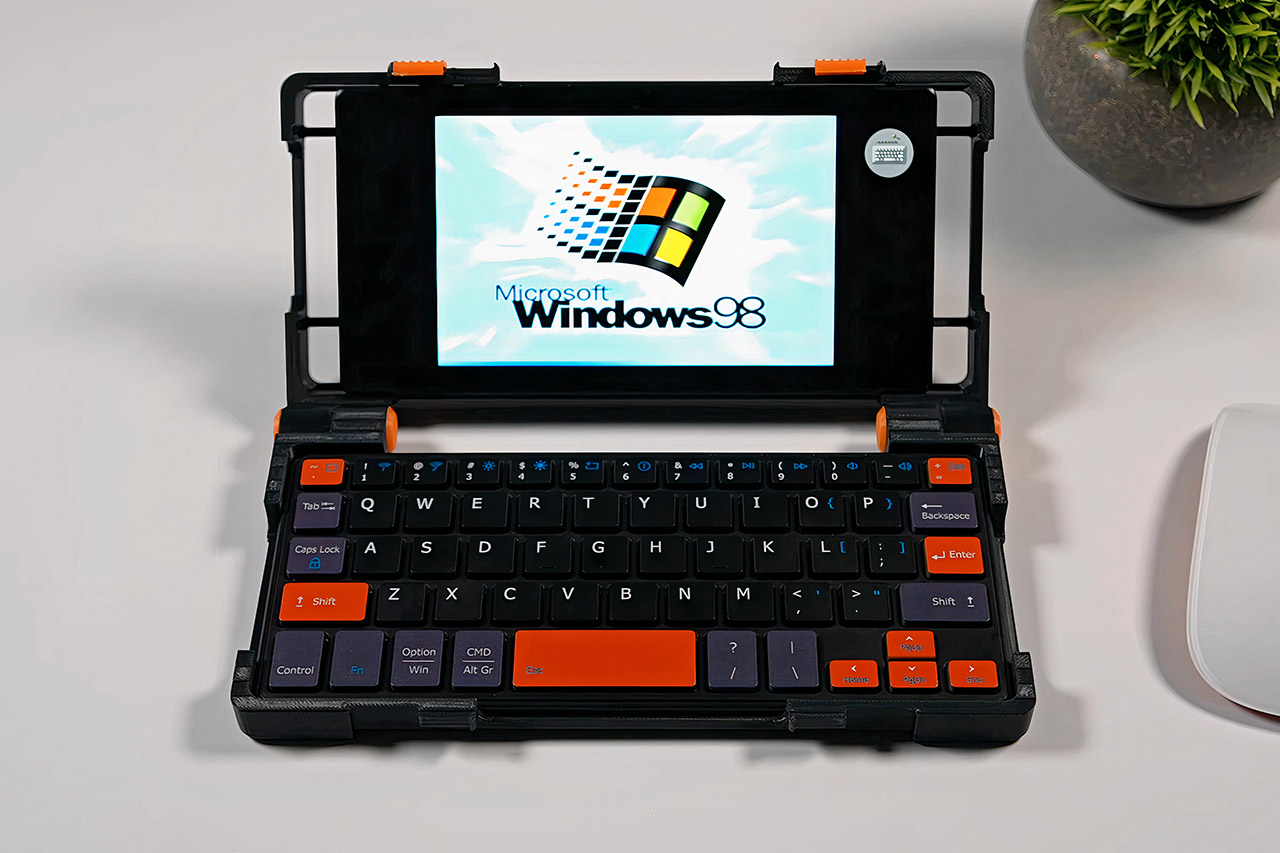
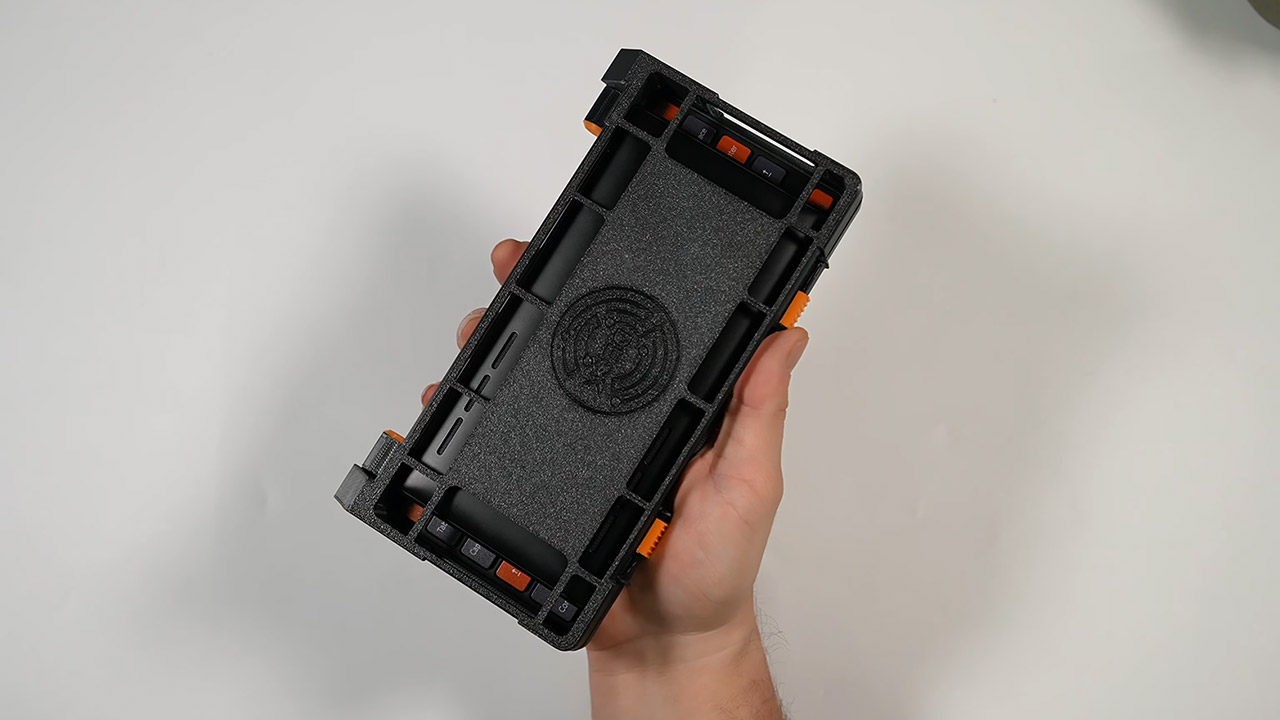
Flip the lid open and a familiar tablet screen greets you, cleanly framed in black plastic with just enough orange trim to make its intentions clear. A compact Bluetooth keyboard sits snugly in the base, and when everything is folded shut the whole thing is no bigger than a large phone, slim enough to disappear into a pocket or bag without a second glance. Those orange accents on the hinges and keycaps are a quiet reminder that this is anything but an ordinary device.
XBOX EXPERIENCE BROUGHT TO LIFE BY ROG The Xbox gaming legacy meets ROG’s decades of premium hardware design in the ROG Xbox Ally. Boot straight into…
XBOX GAME BAR INTEGRATION Launch Game Bar with a tap of the Xbox button or play your favorite titles natively from platforms like Xbox Game Pass…
ALL YOUR GAMES, ALL YOUR PROGRESS Powered by Windows 11, the ROG Xbox Ally gives you access to your full library of PC games from Xbox and other game…
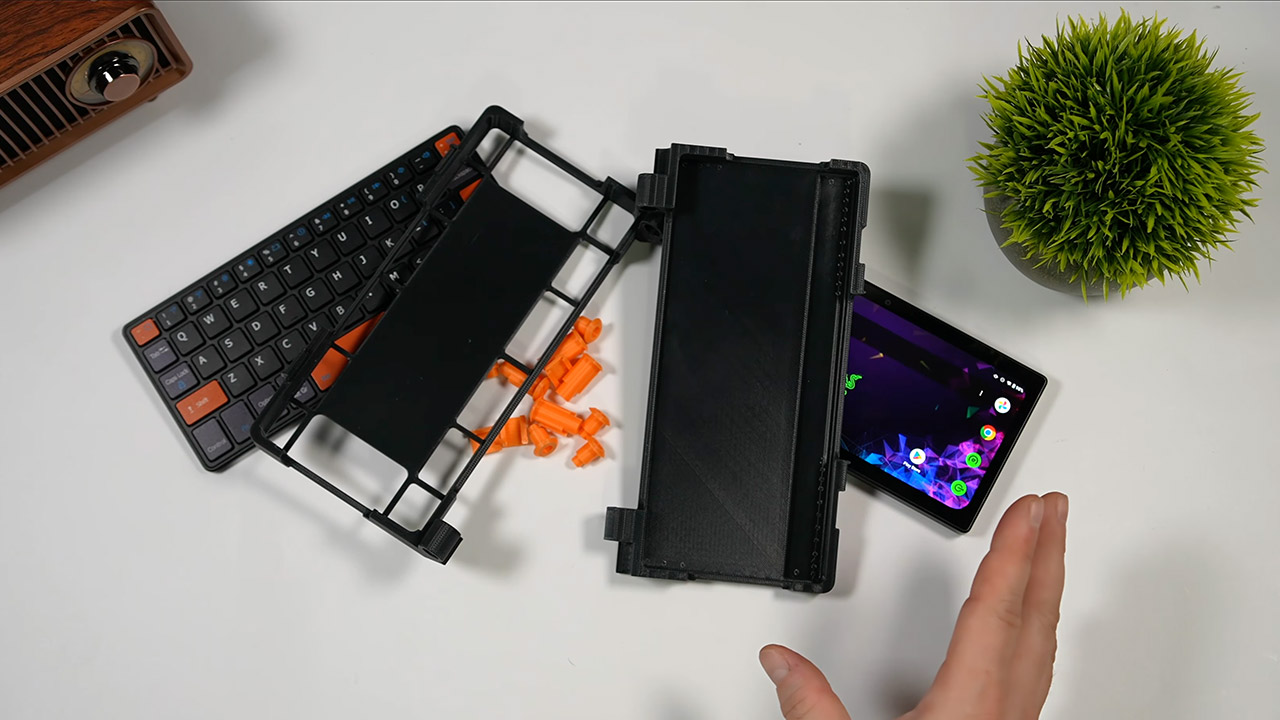
The project started with a Razer Edge picked up for around $80, a tablet that had largely faded from the spotlight since its release but still packed a capable Qualcomm Snapdragon G3x Gen 1 processor, plenty of RAM, and Android 12 under the hood. It came without the original controllers, but at that price it was too good a candidate to pass up.
There were already some design files floating around online for modular clamshells that could hold a phone, so it was just a matter of modifying them a little to fit the Razer Edge. Then it was simply a matter of using free editing software to make the necessary changes and printing them on a regular consumer printer. This all came together with simple screws and pins for the hinges, and a few lock sliders on the front keep the whole thing shut securely when you’re traveling.
The major challenge was getting the tablet inside without damaging it. A metal ring affixed to the rear of the Razer Edge, combined with a MagSafe-style adaptor on the case, locked everything together with powerful magnets that can be peeled away with some moderate coaxing. The tablet can leave the shell in seconds and return to becoming a tablet whenever it feels like it. The keyboard simply fits into a little tray in the bottom and automatically pairs over Bluetooth. Given its size, the layout is quite decent, and all of the shortcuts for doing daily tasks are available. When the lid closes, everything tucks neatly against the screen.
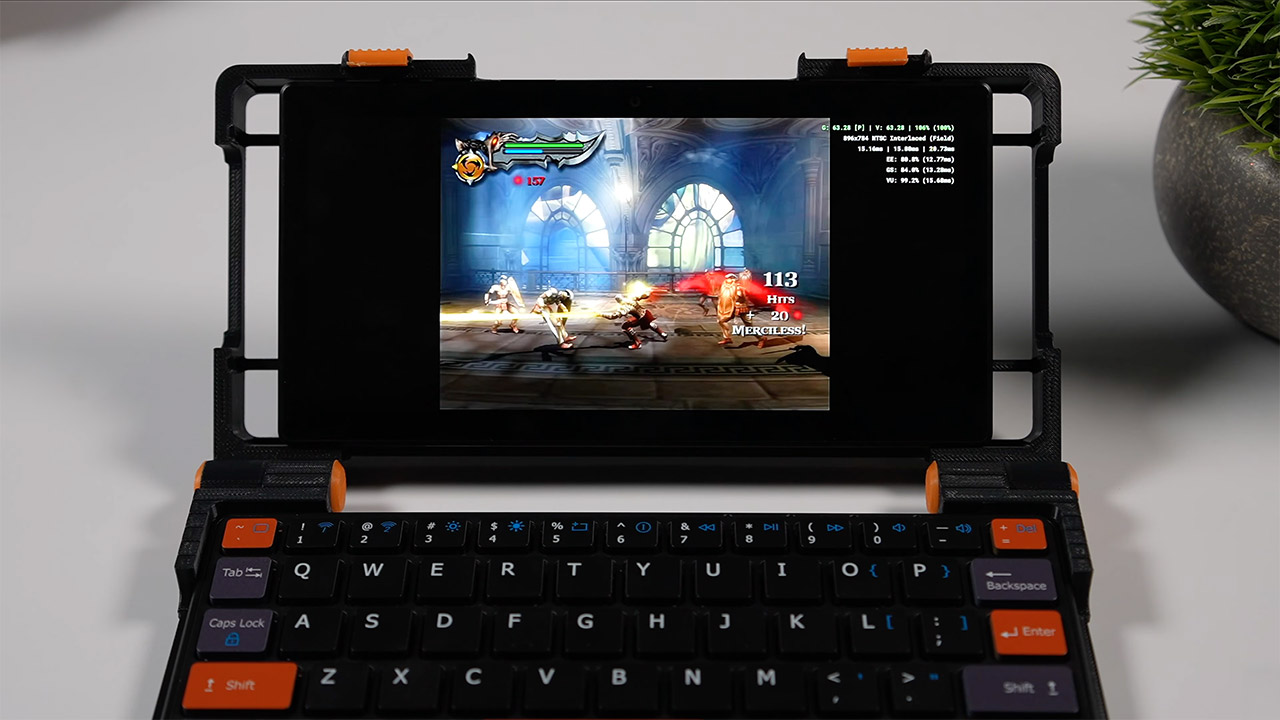
Power it up and things get interesting fast. Android 12 handles all the everyday essentials without breaking a sweat, and cloud streaming over Wi-Fi or mobile broadband opens up a much bigger games library on top of that. Emulation is where it really shines though, running GameCube titles at 720p with a solid frame rate and pushing PlayStation 2 games to 1.75 times their native resolution on many titles. Lighter PC games load up through dedicated apps and run without issue, and for anyone feeling nostalgic there is even a Windows 98 simulator tucked in there for good measure. [Source]
The brand expects the store to break even in two years
Singaporean furniture retailer Castlery will open a showroom in New York on May 15, making it one of the very few homegrown companies to establish a permanent retail presence there. This marks the next phase of growth for the company in the United States, following six years of operating online-only in the market.
Co-founder Declan Ee called the brick-and-mortar flagship outlet, a first in the US, as a “natural progression” from its digital retail model.
“The goal was always to create a best-in-class experience for our customers… and the final piece of this experience is completed when we have an offline store,” he said.
The 3,000-square-foot showroom in Manhattan’s Chelsea neighbourhood represents a seven-figure investment on a 10-year lease. Ee’s team scouted over 200 sites over two years before choosing this one.
Advertisement
The showroom features 17 fully furnished room settings and a complimentary interior styling service that will advise customers on space planning, furniture selection and interior layout.
Ee told The Business Times that he expects the store to break even within 1.5 years to 2 years, or even within a year if sales are strong.
The opening of the store in the Big Apple marks Castlery’s fourth showroom worldwide, following the opening of its third in Brisbane last Aug. Its Sydney store was set up in 2024 and expanded in 2025, while its 24,000 sq ft flagship store in Liat Towers was established in 2022.
Castlery is in 5 markets, with most sales coming from the US
Castlery’s showrooms at Liat Towers in Singapore (left) and Brisbane, Australia (right)./ Image Credit: Castlery
Castlery was founded in 2013 by Ee and his co-founders, Fred Ji, Zhou Zhiwei and Travers Tan, as a digital retail furniture brand. It currently employs more than 500 staff worldwide, with 200 in its Singapore headquarters.
To date, the brand has sold more than 1 million pieces of furniture and introduced more than 7,000 products.
The brand entered the US in 2019 during the COVID-19 pandemic as an online brand, starting with two warehouses in New Jersey and Los Angeles, California. Today, Castlery reaches all 50 states from six US warehouses, with the addition of sites in Seattle and Georgia in 2023, and then Texas and Chicago in 2024.
Ee noted that this has reduced delivery times to its US customers, many of whom rent their homes and need furniture delivered with short lead times.
Advertisement
“We were very aggressive in the first two to three years, when we were scaling the business online in the US,” he said.
The US currently makes up Castlery’s largest market by contributing to 65% of the company’s overall sales. Australia comes in second at 17%, followed by Singapore at 15%. The UK and Canada, where Castlery expanded online in 2025, make up the remaining 3%.
The New York store will serve as a testing ground amid evolving market conditions
Castlery’s New York showroom./ Image Credit: Castlery
With this offline expansion, Ee said Castlery will take a “measured” approach given evolving global developments and geopolitical tensions.
The New York showroom will be a testing ground for Castlery before it decides to commit to more showrooms in the country.
Well aware of New York’s competitive retail scene with players such as West Elm and Crate & Barrel that have multiple outlets, Ee acknowledged that this will give consumers plenty of options.
Advertisement
“There’s a lot of room for us to grow in the US, but we’re taking things step by step because one’s perspective changes after opening the first store. You get data, you see how customers react and their basket size—all these things,” he explained.
As more than half the brand’s products were being manufactured in China and then shipped directly to US customers, Castlery saw its Chinese imports slapped with the highest tariff rates of close to 30%.
Castlery has since diversified its supply chain to reduce its exposure to tariffs. It has moved some of its manufacturing from China to places such as Vietnam, Thailand, and India, leaving only about 20% of its production in China today.
Advertisement
After diversifying its supply chains, Ee said production costs have risen, given higher minimum-order quantities.
This has caused profits to fall by 1% to 3%, which Ee noted is not a negligible amount for a growing furniture brand that typically enjoys margins of 4% to 8%. The tariffs also created consumer uncertainty, leading to a six-month dip in sales, though they have since recovered.
Besides the tariffs, geopolitical tensions have put additional pressure on Castlery’s bottom line. Rising fuel prices amid the ongoing Middle East conflict have squeezed its profit margins.
Taking all these factors into account, Ee expects Castlery’s revenue growth for the current FY2026 ending in Mar to be “flat or in the single-digit” range, down from FY2025’s 10% to 15% year-on-year growth.
Advertisement
A step closer to Castlery’s global ambitions
Declan Ee is Castlery’s co-founder and President./ Image Credit: Castlery
That said, Ee is still “cautiously optimistic” about Castlery’s growth prospects.
“We control what we can. You don’t know where the wind will blow, so you build the sail to catch it,” he said.
“In our case, it’s about being close to the customer and creating products that they would want to buy, even in difficult economic times.”
The opening of the New York store brings the brand a step closer to its global ambitions.
By 2029, Ee aims to have eight to 12 showrooms in key cities worldwide, including Washington, D.C, Los Angeles, San Francisco and Seattle, as well as in Melbourne and Perth in Australia.
Advertisement
Ee is actively scouting for retail locations in London as well, seeing Castlery’s UK online sales double month-on-month until Nov 2025 following a pop-up it held at the London Design Festival in Sep that year.
Ee explained: “Unlike the US, there are not so many big furniture brands in the UK. So we think there’s space for us to enter the market, not to mention that the sales pick-up from customers has been very encouraging.”
Achieving its expansion plans would place Castlery “on track” to evolve from a digital-first furniture retailer into a “proper global retail brand.”
“If we’re nationwide (in a single market), it gives customers a sense of assurance that we’re not just an online challenger brand, but a serious operator.”
For the past three years, every data center conversation has started and ended with GPUs. Training clusters and inference racks and accelerator roadmaps. If you worked in data center silicon and you were not talking about GPUs, people looked at you like you were lost. Read Entire Article Source link
As many of the AI stories on Walled Culture attest, one of the most contentious areas in the latest stage of AI development concerns the sourcing of training data. To create high-quality large language models (LLMs) massive quantities of training data are required. In the current genAI stampede, many companies are simply scraping everything they can off the Internet. Quite how that will work out in legal terms is not yet clear. Although a few court cases involving the use of copyright material for training have been decided, many have not, and the detailed contours of the legal landscape remain uncertain.
However, there is an alternative to this “grab it all” approach. It involves using materials that are either in the public domain or released under a “permissive” license that allows LLMs to be trained on them without any problems. There’s plenty of such material online, but its scattered nature puts it at a serious disadvantage compared to downloading everything without worrying about licensing issues. To address that, the Common Corpus was created and released just over a year ago by the French startup Pleias. A press release from the AI Alliance explains the key characteristics of the Common Corpus:
Truly Open: contains only data that is permissively licensed and provenance is documented
Multilingual: mostly representing English and French data, but contains at least 1[billion] tokens for over 30 languages
Diverse: consisting of scientific articles, government and legal documents, code, and cultural heritage data, including books and newspapers
Advertisement
Extensively Curated: spelling and formatting has been corrected from digitized texts, harmful and toxic content has been removed, and content with low educational content has also been removed.
There are five main categories of material: OpenGovernment, OpenCulture, OpenScience, OpenWeb, and OpenSource:
OpenGovernment contains Finance Commons, a dataset of financial documents from a range of governmental and regulatory bodies. Finance Commons is a multimodal dataset, including both text and PDF corpora. OpenGovernment also contains Legal Commons, a dataset of legal and administrative texts. OpenCulture contains cultural heritage data like books and newspapers. Many of these texts come from the 18th and 19th centuries, or even earlier.
OpenScience data primarily comes from publicly available academic and scientific publications, which are most often released as PDFs. OpenWeb contains datasets from YouTube Commons, a dataset of transcripts from public domain YouTube videos, and websites like Stack Exchange. Finally, OpenSource comprises code collected from GitHub repositories which were permissibly licensed.
The initial release contained over 2 trillion tokens – the usual way of measuring the volume of training material, where tokens can be whole words and parts of words. A significant recent update of the corpus has taken that to over 2.267 trillion tokens. Just as important as the greater size, is the wider reach: there are major additions of material from China, Japan, Korea, Brazil, India, Africa and South-East Asia. Specifically, the latest release contains data for eight languages with more than 10 billion tokens (English, French, German, Spanish, Italian, Polish, Greek, Latin) and 33 languages with more than 1 billion tokens. Because of the way the dataset has been selected and curated, it is possible to train LLMs on fully open data, which leads to auditable models. Moreover, as the original press release explains:
Advertisement
By providing clear provenance and using permissibly licensed data, Common Corpus exceeds the requirements of even the strictest regulations on AI training data, such as the EU AI Act. Pleias has also taken extensive steps to ensure GDPR compliance, by developing custom procedures to enable personally identifiable information (PII) removal for multilingual data. This makes Common Corpus an ideal foundation for secure, enterprise-grade models. Models trained on Common Corpus will be resilient to an increasingly regulated industry.
Another advantage for many users is that material with high “toxicity scores” has already been removed, thus ensuring that any LLMs trained on the Common Corpus will have fewer problems in this regard.
The Common Corpus is a great demonstration of the power of openness and permissive copyright licensing, and how they bring benefits that other approaches can’t match. For example: “Common Corpus makes it possible to train models compatible with the Open Source Initiative’s definition of open-source AI, which includes openness of use, meaning use is permitted for ‘any purpose and without having to ask for permission’. ” That fact, along with the multilingual nature of the Common Corpus, would make the latest version a great fit for any EU move to create “public AI” systems, something advocated on this blog a few months back. The French government is already backing the project, as are other organizations supporting openness:
The Corpus was built up with the support and concerted efforts of the AI Alliance, the French Ministry of Culture as part of the prefiguration of the service offering of the Alliance for Language technologies EDIC (ALT-EDIC).
This dataset was also made in partnership with Wikimedia Enterprise and Wikidata/Wikimedia Germany. We’re also thankful to our partner Libraries Without Borders for continuous assistance on extending low resource language support.
The corpus was stored and processed with the generous support of the AI Alliance, Jean Zay (Eviden, Idris), Tracto AI, Mozilla.
Advertisement
The unique advantages of the Common Corpus mean that more governments should be supporting it as an alternative to proprietary systems, which generally remain black boxes in terms of where their training data comes from. Publishers too would also be wise to fund it, since it offers a powerful resource explicitly designed to avoid some of the thorniest copyright issues plaguing the generative AI field today.
























































You must be logged in to post a comment Login