Tech
Keep a Flame Lit and This Box Will Compute

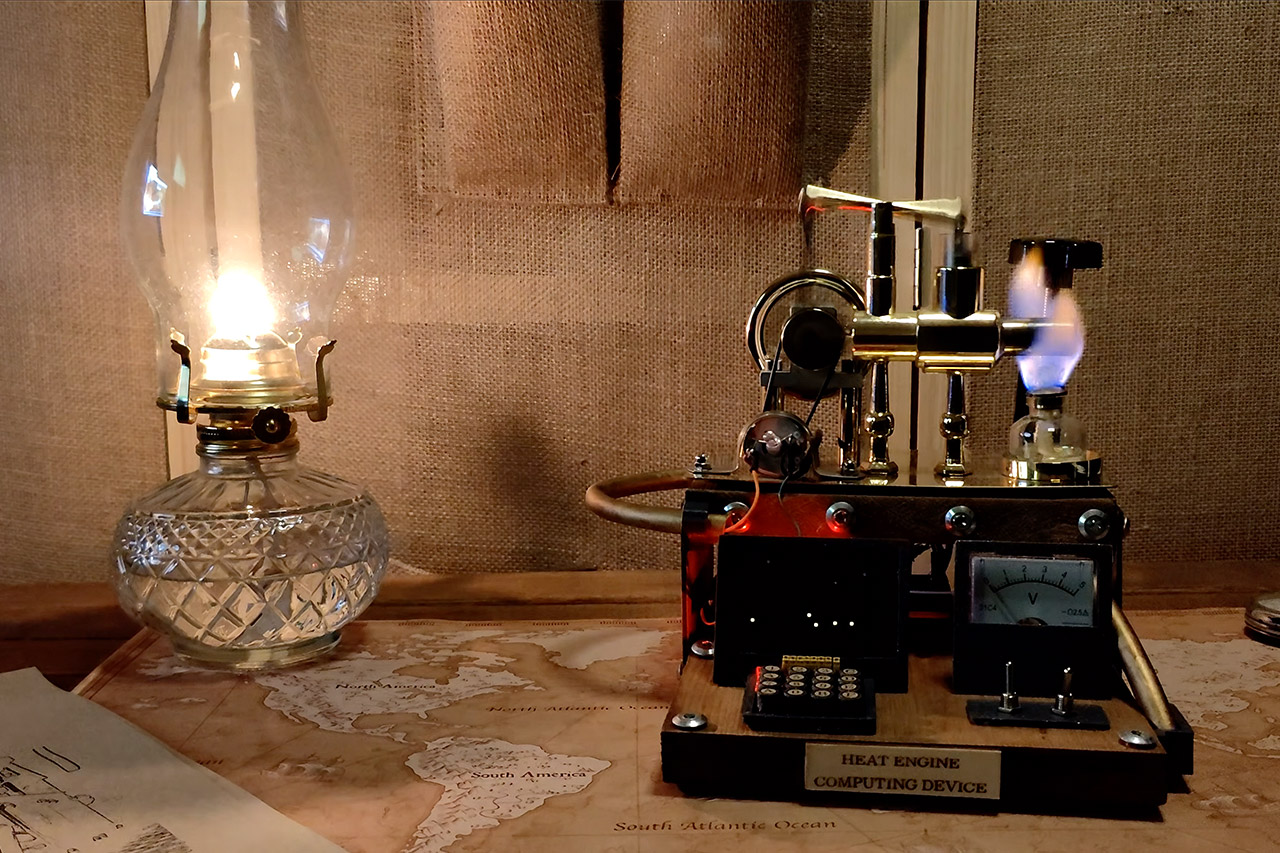
Light a small spirit lamp of ethanol and heat finds one end of a sealed brass cylinder. Air inside expands, a piston moves, a flywheel gathers speed, and a cheap electric motor wired as a dynamo starts feeding current into a wooden box. An analog voltmeter on the front climbs. A 2.42-inch monochrome screen flickers to life. Sixteen hex keys wait for input. For as long as the flame holds, YouTuber PickentCode has a working computer.

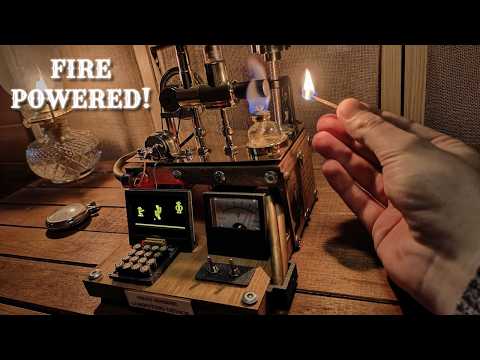
In 1816, Robert Stirling patented a heat engine as a safer alternative to steam boilers, which had a bad history of blowing up. Two centuries later, the identical concept has been simplified and now sits on a desk. Pickencode took approximately a month to get the build started after designing the layout in Blender using a computer. The case is composed of wood and finished with a rich dark Victorian oil. A handmade blue-laser engraver was used to make a portrait of Stirling as well as a sketch of his original engine for the side panels. This allowed the image to be etched into the wood as a succession of tiny burnt dots, a brilliant approach that allows a photograph to be printed directly onto the wood. The housings and keycaps were created using a 3D printer, and old shower tubing painted gold hides the wiring while also adding a decorative touch to the frame with its ‘pipes’.
Sale


KAMRUI AK1PLUS Mini PC Computer, Intel N5030 (Up to 3.1GHz), 12GB RAM 256GB SSD, Dual 4K Mini Desktop…
- Faster Performance for Everyday Computing: Powered by the Intel N5030 processor (4 cores, 4 threads, up to 3.1GHz), the KAMRUI AK1PLUS Mini PC…
- 12GB RAM & Up to 4TB Expandable Storage: Work faster with 12GB LPDDR4 memory and a high-speed 256GB M.2 2280 SSD for quick boot-ups and smooth…
- Dual 4K UHD Displays for Maximum Productivity: Expand your workspace with dual HDMI 2.0 outputs, supporting two 4K@60Hz UHD displays simultaneously…
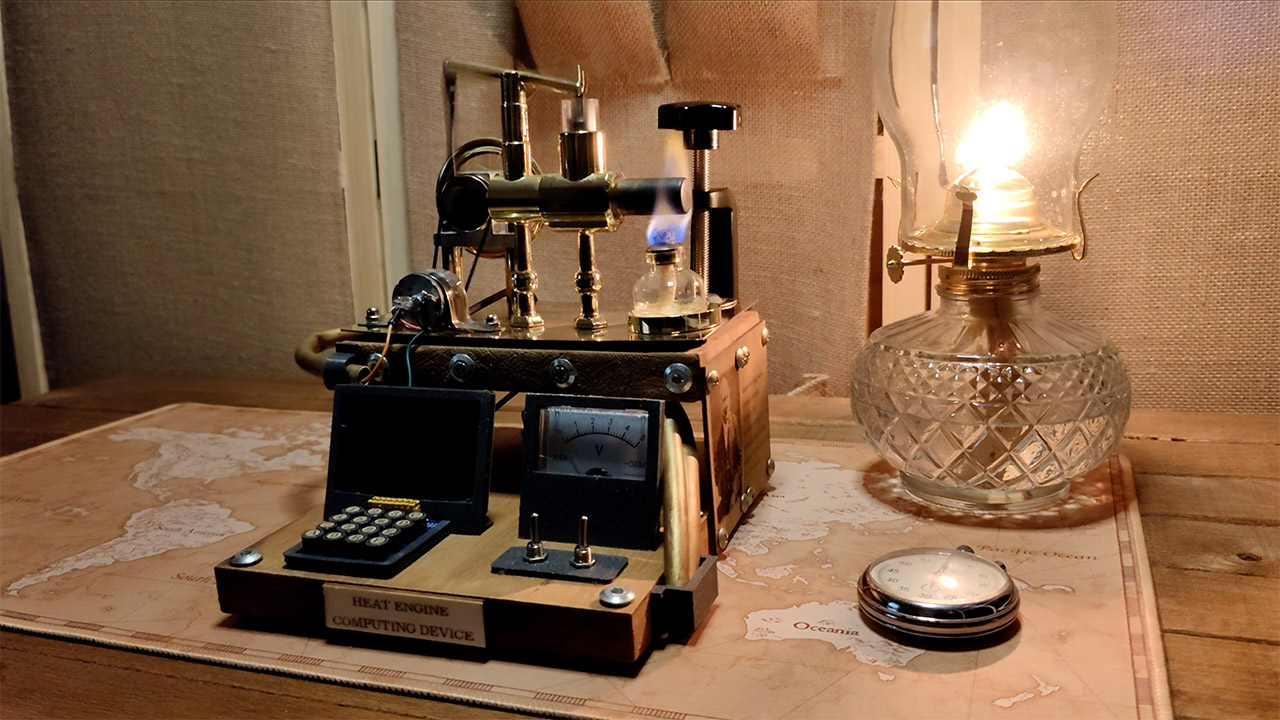
The power output is insanely low, at 150 milliwatts, and is only useful if every watt is treated as if it were gold dust. To make the best use of this limited amount of power, the ESP32-C3 has been directed to turn down its radio and keep the screen brightness as low as possible. While the computer is rendering pixels or executing opcodes, the clock speed reduces to 80 MHz, then to 10 MHz when idle. Several tiny capacitors were added to smooth out the dynamo’s stuttering output. The panel has two toggle switches that control both the main circuit and the meter.

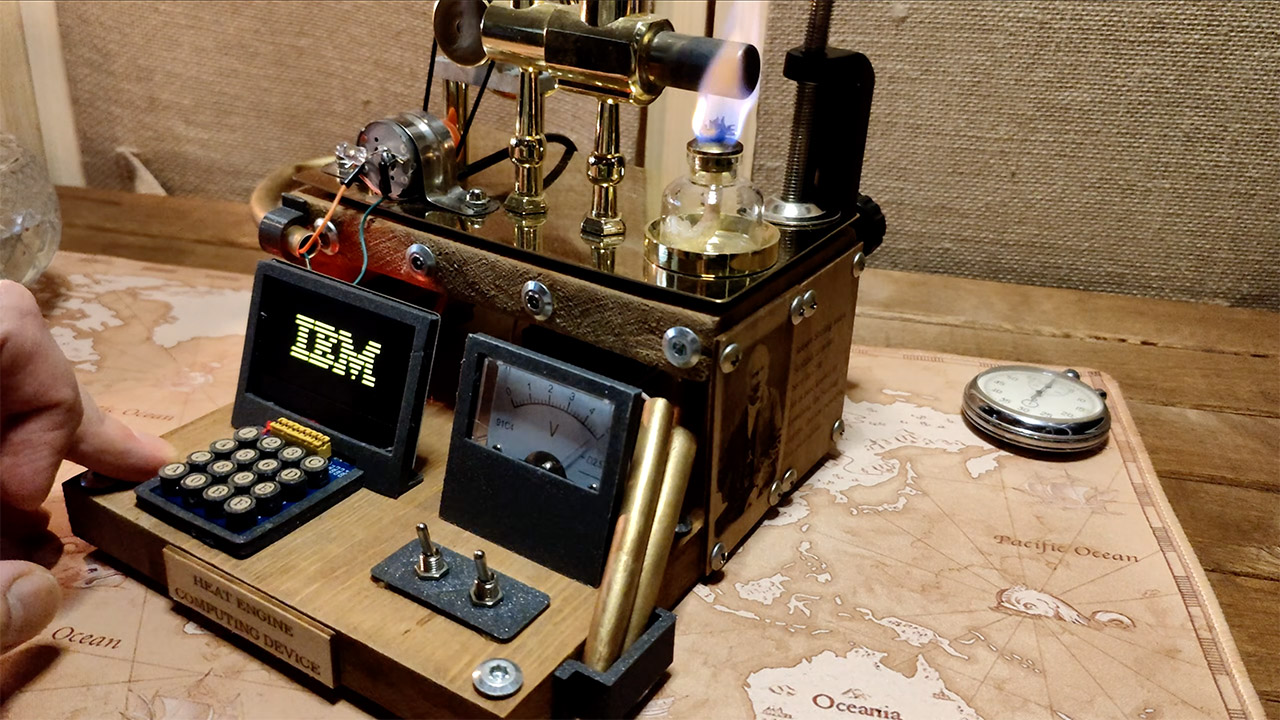
The software had to be designed with these limitations in mind. CHIP-8, a virtual machine from the 1970s, was an ideal match because it is built for a box with a sixteen-key keypad and a 64-by-32 monochrome display that scaled up nicely to a 128-by-64 OLED screen. The interpreter itself contains sixteen 8-bit registers, four kilobytes of RAM, a call stack, two timers, and a staggering thirty-four two-byte opcodes. Preloaded ROMs include Tetris, Snake, and Pong, and if you’re feeling daring, there’s also a built-in editor that allows you to type raw opcodes into the keypad and run them right away. One homebrew test draws random pixels and clears the screen after ten of them
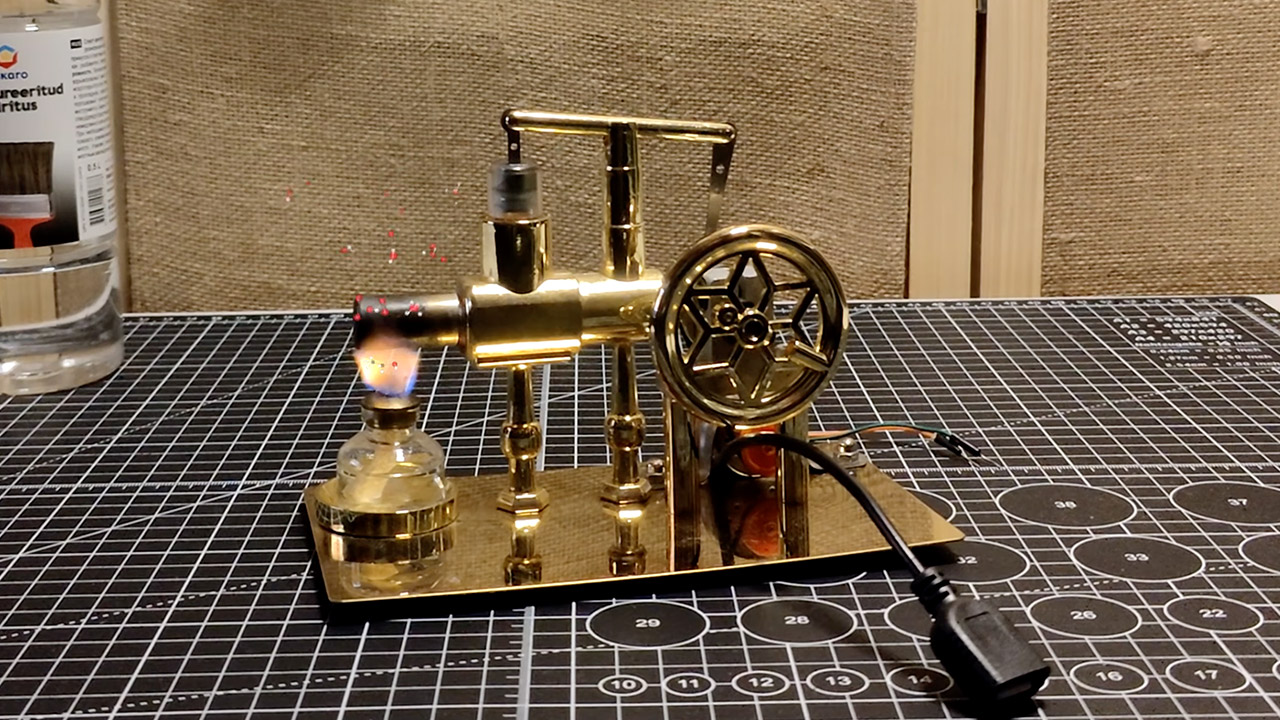
This small computer’s “fuel” is merely ethanol in a spirit lamp. Heat one end of the cylinder while keeping the other cool to create rotation from a displacer that transfers hot and cold air around. A power piston then converts that into motion, which is stored in a flywheel and continues to function as long as there is a temperature difference. When the lamp is turned off, the computer shuts down. The main purpose of this exercise is that you can get some practical work out of 150 milliwatts, enough to play a game or even enter a few lines of machine code while watching the voltmeter tick away, all thanks to a flame from a spirit lamp performing the function of a wall wart. Stirling never saw a microcontroller, but would most certainly recognize his engine.
[Source]
You must be logged in to post a comment Login