Tech
Kent Survival Builds and Sleeps in a Giant LEGO Shelter

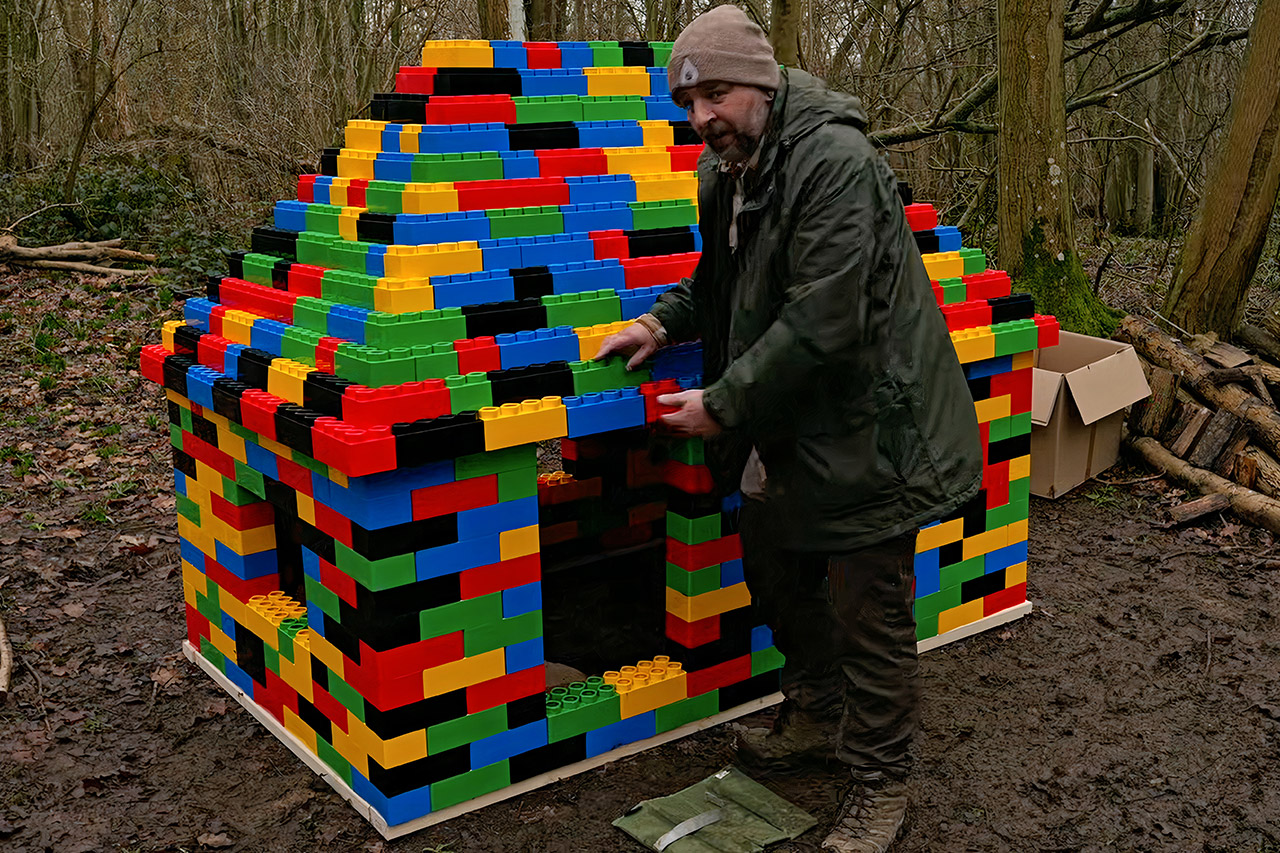
Kent Survival arrives in a stretch of woodland in a truck with ten boxes of huge plastic bricks, a real-life LEGO project, and sets out to build a livable shelter out of them. These bricks are essentially the same as their traditional LEGO counterparts, but scaled up to a much larger size: they come in 8-stud and 4-stud versions, totaling 1400 pieces. His idea was simple: build the thing and see if it was possible to turn a child’s play into a real shelter.


Before he could begin building his shelter, the uneven ground in the woodland returned to haunt him, since the terrain was so uneven that he had to construct a temporary platform out of planks of wood. He cut and arranged them to level the base, but it was a constant battle to keep it solid because the pieces remained separate and required a lot of fussing to keep them from slipping on the dirt humps.


LEGO Architecture Paris – City of Love Building Set for Adults – DIY Office or Bedroom Decor for Women…
- MODEL KIT FOR ADULTS – Adults ages 18 and up can embrace their love of architecture with this LEGO building set (21064), which makes striking home…
- DETAILED PARIS DECOR – This detailed model features 4 iconic Paris landmarks—the Eiffel Tower, Notre-Dame de Paris, the Arc de Triomphe, and the…
- HANG OR STAND TO DISPLAY – Your completed cityscape includes a buildable frame and a decorated ‘City of Love’ brick and can be hung on a wall or…
Building with these oversized blocks was different than working with the smaller versions, of course, because the square block shapes do not lend themselves to the interlocking stagger that makes smaller LEGO builds so strong, so he had to be extremely careful about which blocks he placed each time, checking for any weak points in the structure.
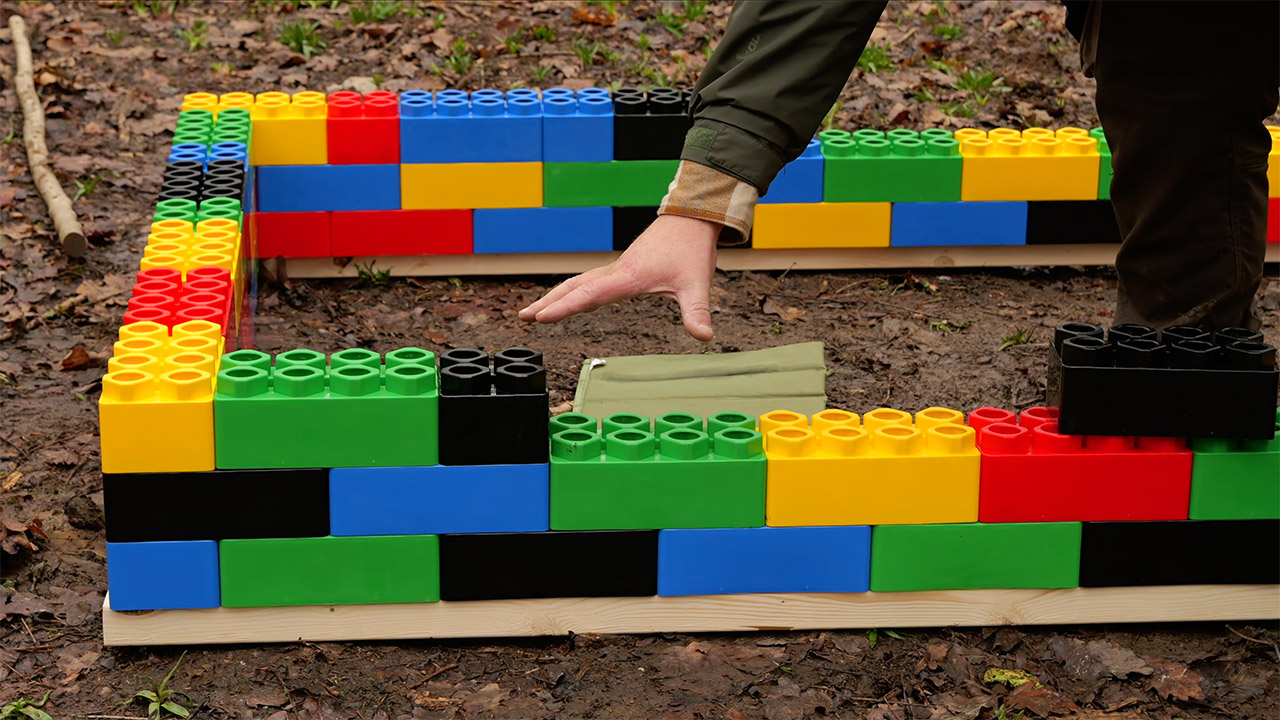
He began by building his walls with the larger 8-stud blocks at the bottom to provide added solidity, then blended in some of the 4-stud pieces as he moved up to maintain balance. Corners were particularly difficult and required extra care to ensure that everything remained square. He eventually managed to erect an 8-stud-wide doorway and three windows; despite knowing where they were going all along, he left them open until the main construction was completed.

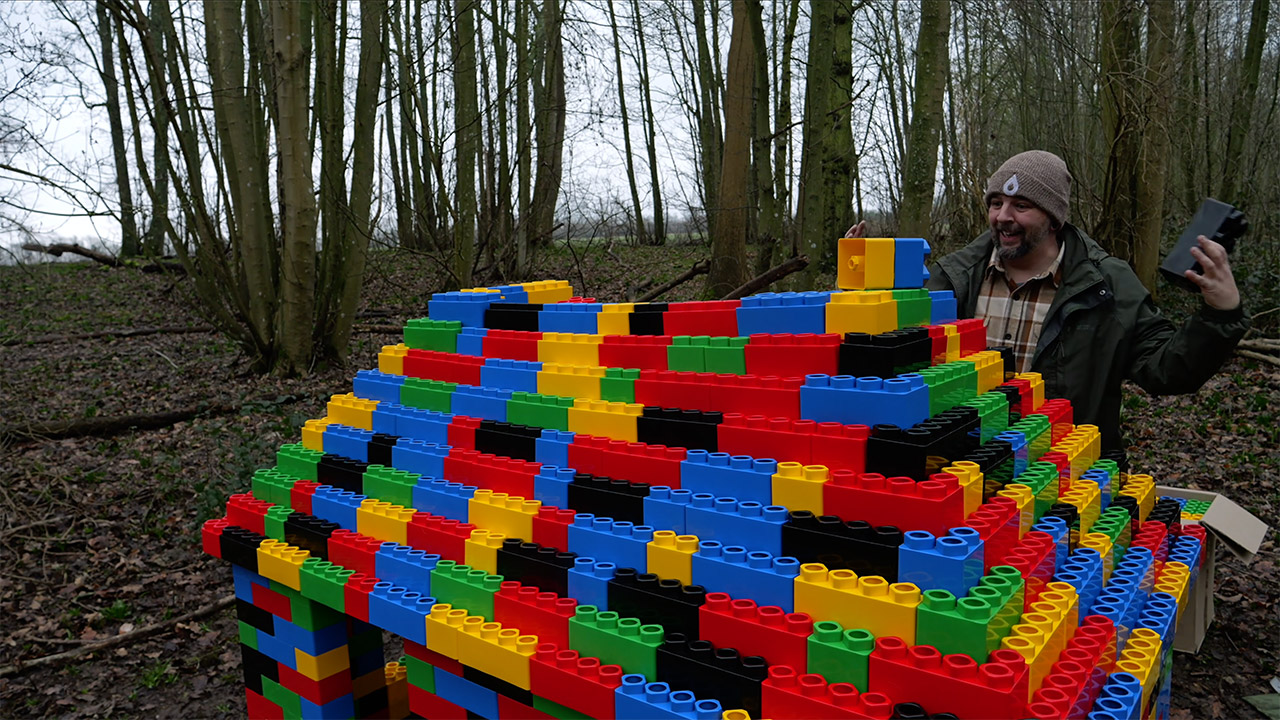
Then came the roof, which was the most difficult part since he went with a simple pitched design, but the real challenge was having it sit perfectly. This section kept sagging and leaning to one side or the other, and he had to make numerous adjustments to get it exactly right. It needed five internal braces to keep it up, and even then, it bowed inward somewhat. Every now and then, a support would move or topple, requiring him to do a fast patch to keep the entire structure upright.
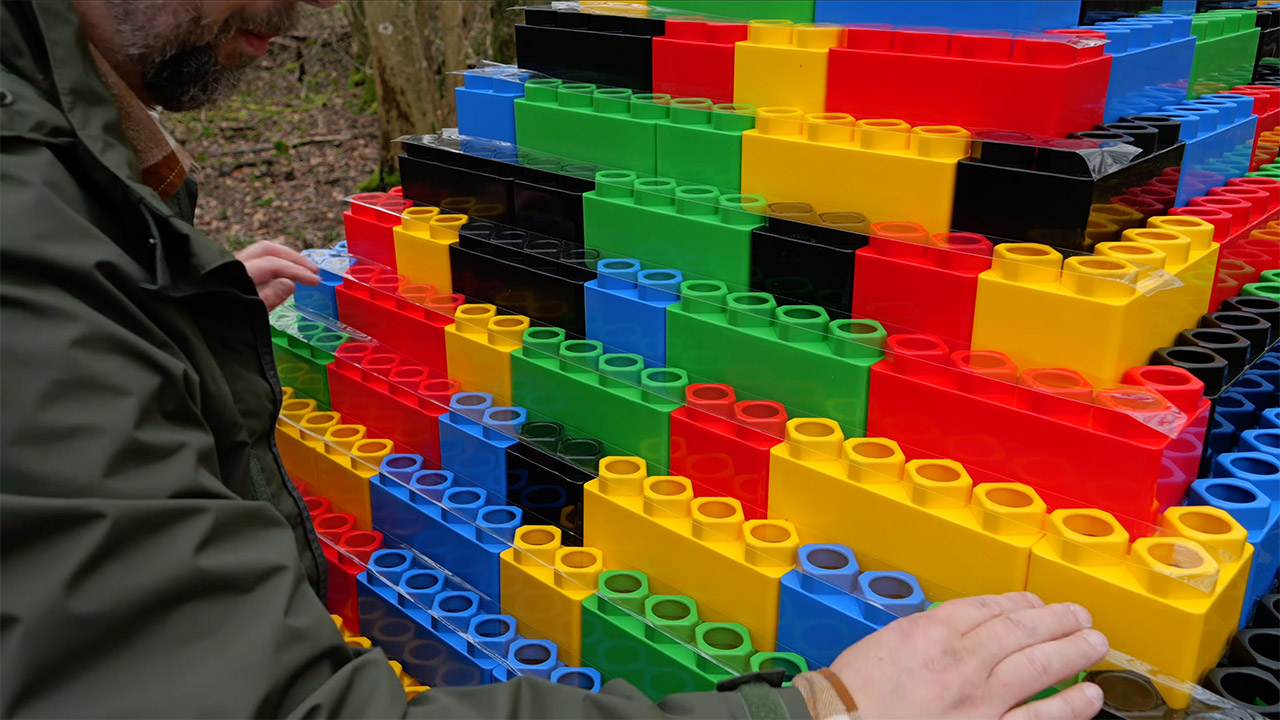
After three hours of assembling bricks and another hour tinkering with details, the basic shape of the shelter was complete. Just as he was completing, the rain began to fall, the wind increased, and the light faded quickly. He filled the holes in the walls and roof with clear Gorilla tape before stretching and taping down greenhouse material to keep the rain out. The end product worked well for one night, but it was not a long-term answer.
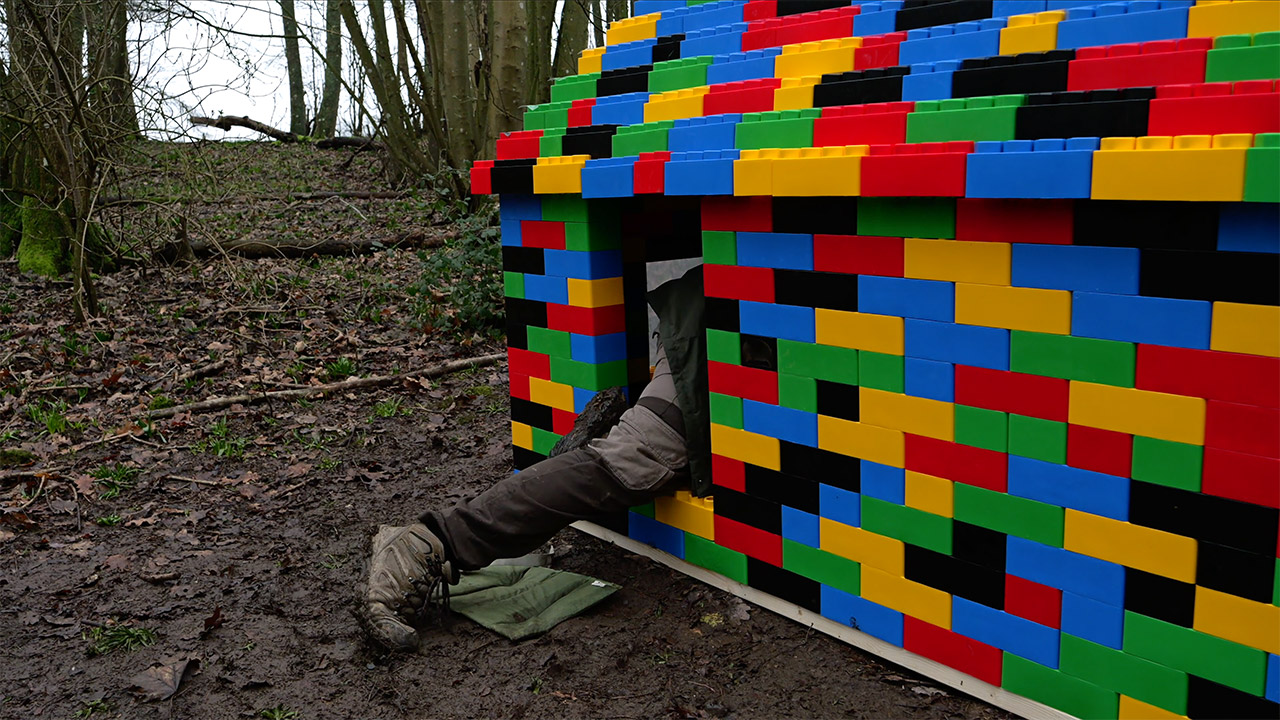
Getting inside the confined room was a bit of a squeeze, but it felt like being in a little camper, so he set up a ground sheet on the majority of the floor, hung a bivvie table along the wall, and laid out his sleeping mat (albeit it was a bit of a squeeze to fit). He also turned on a gas heater (he selected gas over open flames because he didn’t want to risk melting his valuable plastic) and set up a meter to keep track of the oxygen and gas levels in the confined enclosure.
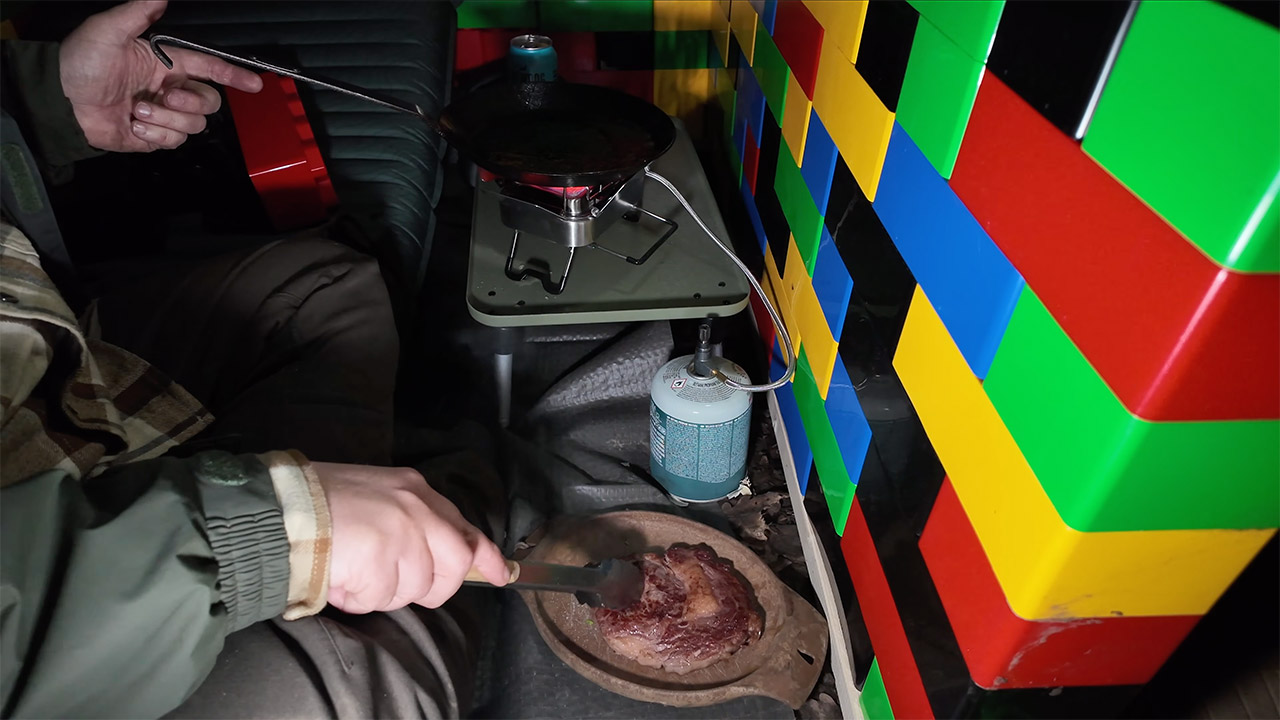
It survived the night without falling apart, albeit needing a lot of labor, regular changes, and a little luck against the weather and the constraints of the materials he was using. Kent packed up the next morning, satisfied with the experiment; he said it was a lot of fun, but it also served as a lesson that even large blocks can be used to make a temporary shelter if you put in the work.
You must be logged in to post a comment Login