
Klipsch The Nines II: Two-minute review
The Klipsch The Nines II are a tough pair of small speakers to beat for a large room. The amount of power and the clean, slightly overly bassy, sound are just some of what make these speakers special. There’s also a ton of features on offer, including virtualized spatial audio (which is admittedly limited) Wi-Fi streaming, and even Dirac Live (though I couldn’t seem to get it to work during my testing).
In fact, the buggy nature of the Dirac Live is my only real gripe with Klipsch’s The Nines II (well, that and their cumbersome name if you’re writing a review…), and the Dirac issue could be more due to environmental factors than a fundamental problem. My other issue — the fact that the speakers are heavy — is more just inconvenient than a real flaw.
Whenever I listen, I’m convinced that The Klipsch The Nines II are among the best stereo speakers to come out this year. And the amount of connectivity and features make them a nice alternative to the best soundbars, especially if you still want a bit of that more traditional stereo speaker setup.


Just be aware that these are quite a bit more expensive than the original Klipsch The Nines. That said, The Klipsch The Nines II offer a lot more than the first version as well.
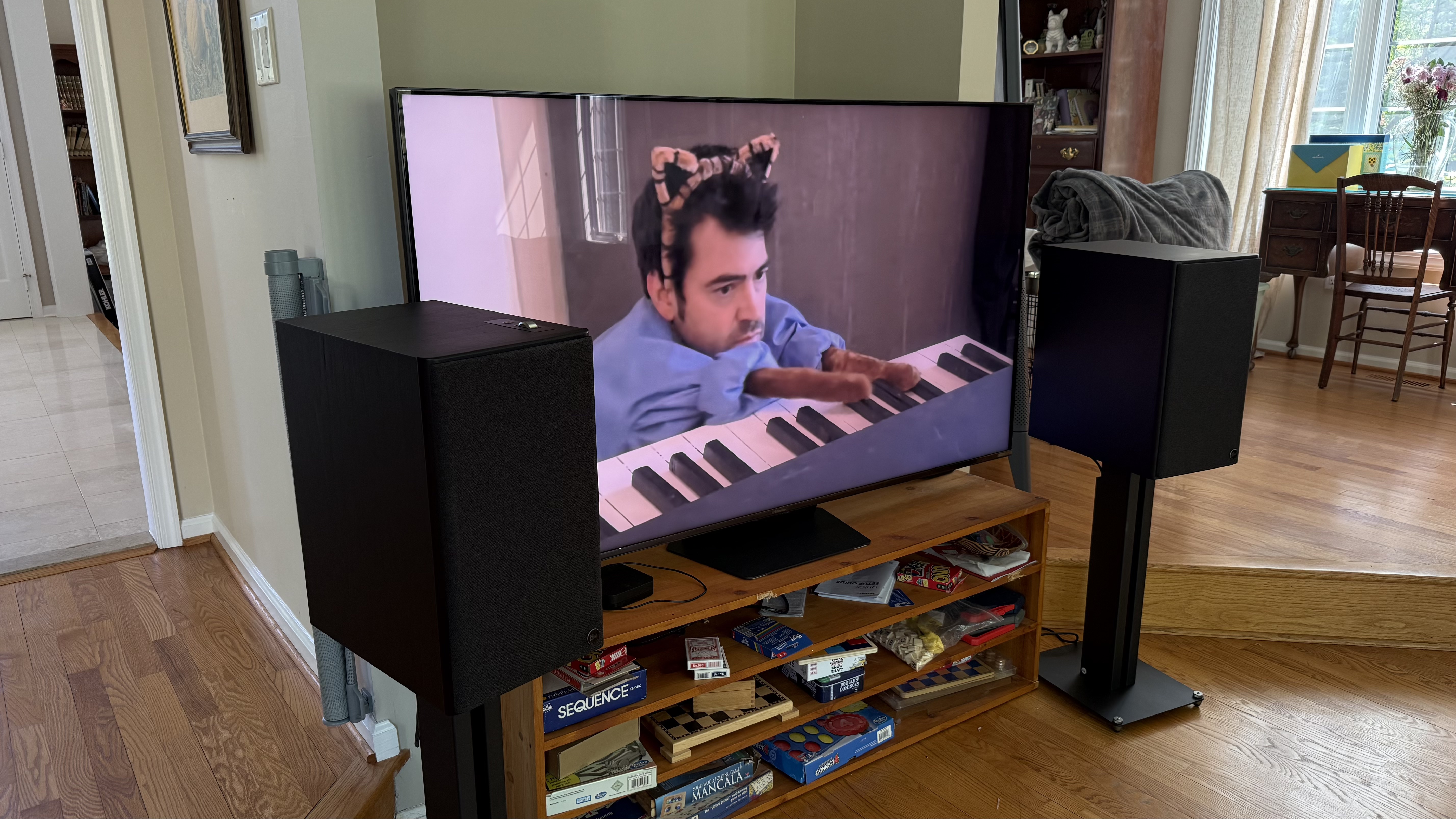

Klipsch The Nines II review: Price and release date
- How much does it cost? $2,399 / £2,249 / AU$4,999
- When is it available? Available now
- Where can you get it? Available in the US, UK, and Australia
The original Klipsch The Nines have been out for a few years now, so the Spring release of the Klipsch The Nines II in 2026 is perfect timing. Speakers may not benefit from the yearly iterations of something like phones or TVs, but it’s about time for the upgrade considering the improvements in Bluetooth technology and W-iFi streaming over those last few years.
Interestingly enough, the Klipsch The Nines II are more than an iterative upgrade. Dolby Atmos (even if it’s a virtualization) and Dirac Live support are on offer in the new version, along with support for more Hi-Res codecs and a wider frequency range, which is why this newer version also comes with a much higher price tag — they’re $700 / £700 more than the originals. That’s quite a price hike.
Klipsch The Nines II Powered Stereo Speakers: Specs
|
Dimensions |
18.13” (460.38mm) H x 9.62” (244.5mm) W x 14.75” (374.65mm) D |
|
Weight |
Active speaker: 32.8lbs (14.9kg); Passive speaker: 31.7 lbs (14.43kg)) |
|
Active or passive |
Active |
|
Subwoofer |
No (has sub out) |
|
Frequency response |
31Hz-25kHz +/- 3dB |
|
Dolby Atmos / DTS:X enabled |
Yes (virtualized) |
|
Maximum output |
107dB |
Klipsch The Nines II Powered Stereo Speakers: Features
- Virtualized Dolby Atmos, and Dirac room correction
- Wi-Fi streaming for a bunch of different music apps
- App has a lot of functionality, including custom EQ
The Klipsch The Nines II speakers may be limited in terms of features just by their form factor compared to a soundbar system like the Klipsch Flexus Core 300, but they have the right amount of options for a pair of bookshelf speakers.
Dolby Atmos and DTX:S is available on these speakers, though the spatial audio support is virtualized due to the fact that there aren’t any upward-facing speakers, and obviously limited width. Still, the virtualization does give a sense of height to the audio that works decently with a blockbuster movie.
Along with Bluetooth connectivity (5.4 specifically), the Klipsch The Nines II also support Wi-Fi streaming, specifically Google Cast, Apple AirPlay 2, Spotify Connect, Tidal Connect, Qobuz Connect, and more. Since they work with Google Cast, they can be set up with Google Home for smart home users.
There’s a tiny bit of a lag between source and speaker when going wireless. However, there is a Lip Sync setting in the app to better synchronize when using the speakers with a wireless source with visuals, such as watching a video on a laptop with the audio coming through the Klipsches.
There will still be a lag between play, pause, etc. but that’s not something that I found to really affect my experience of the speakers.
Image 1 of 4

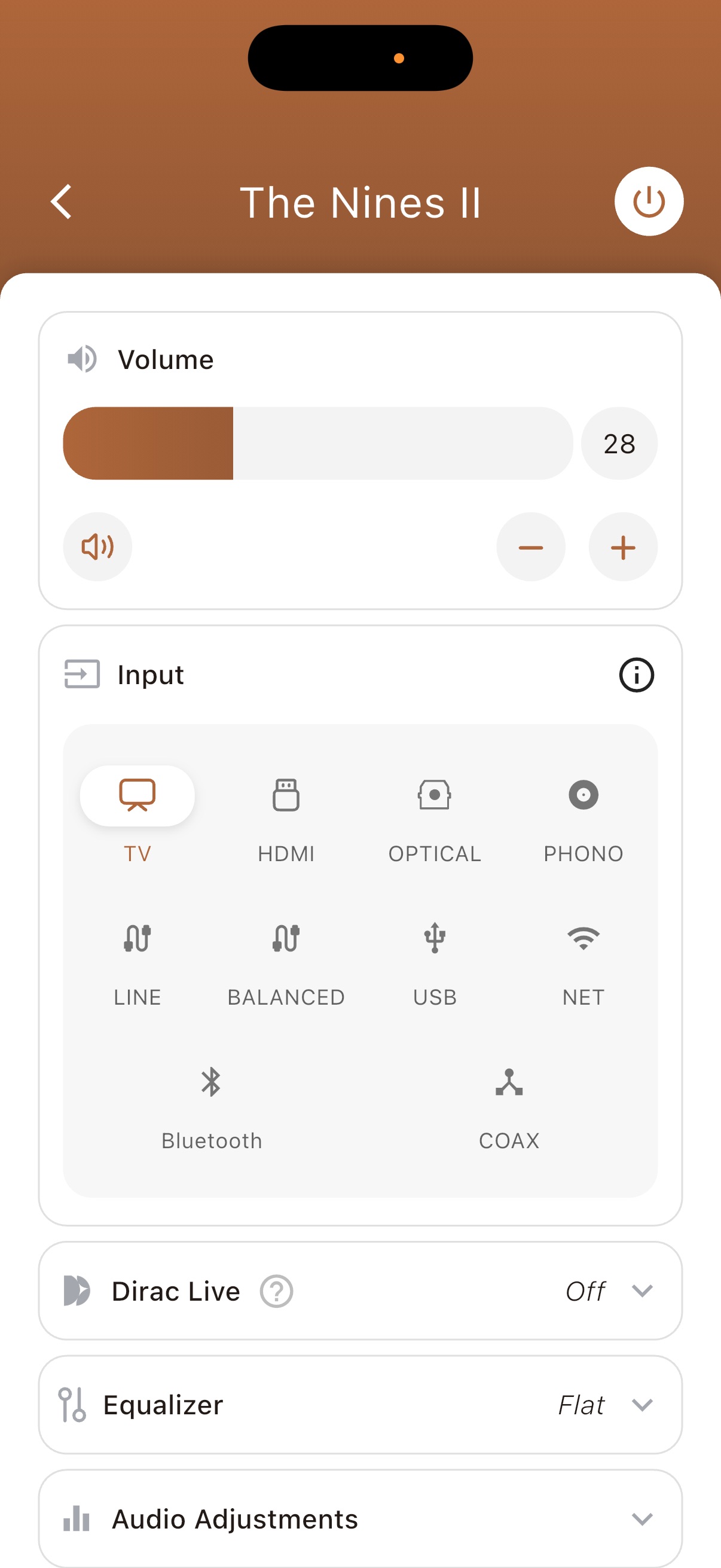
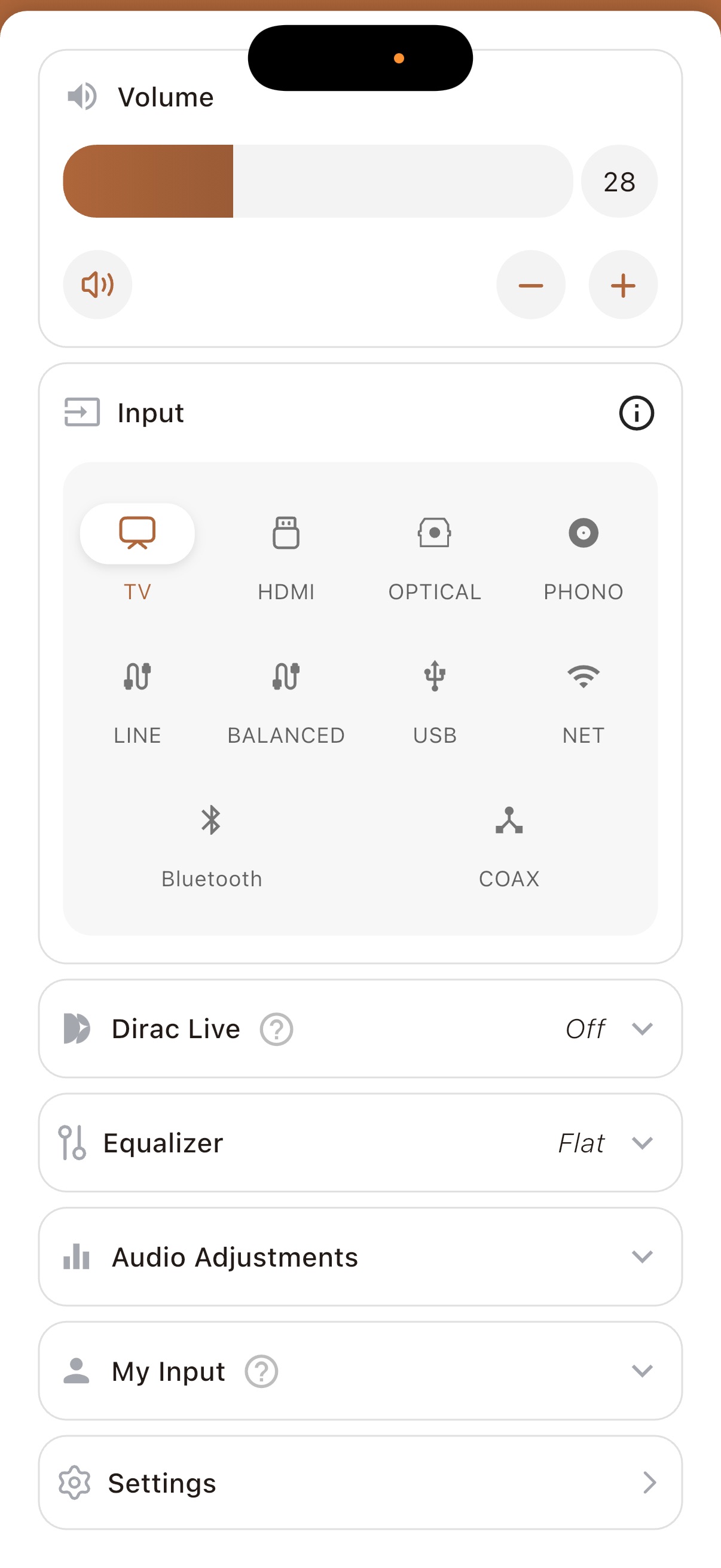
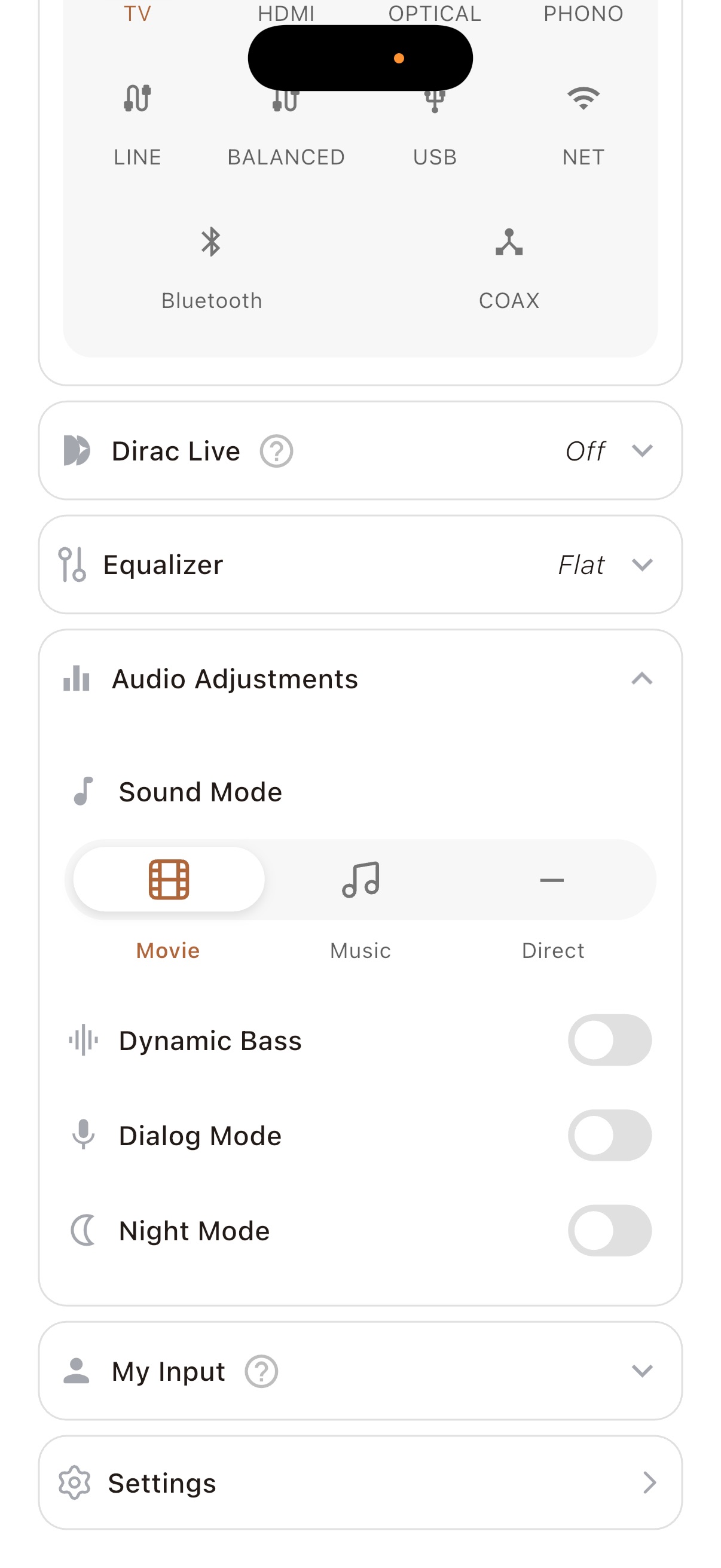
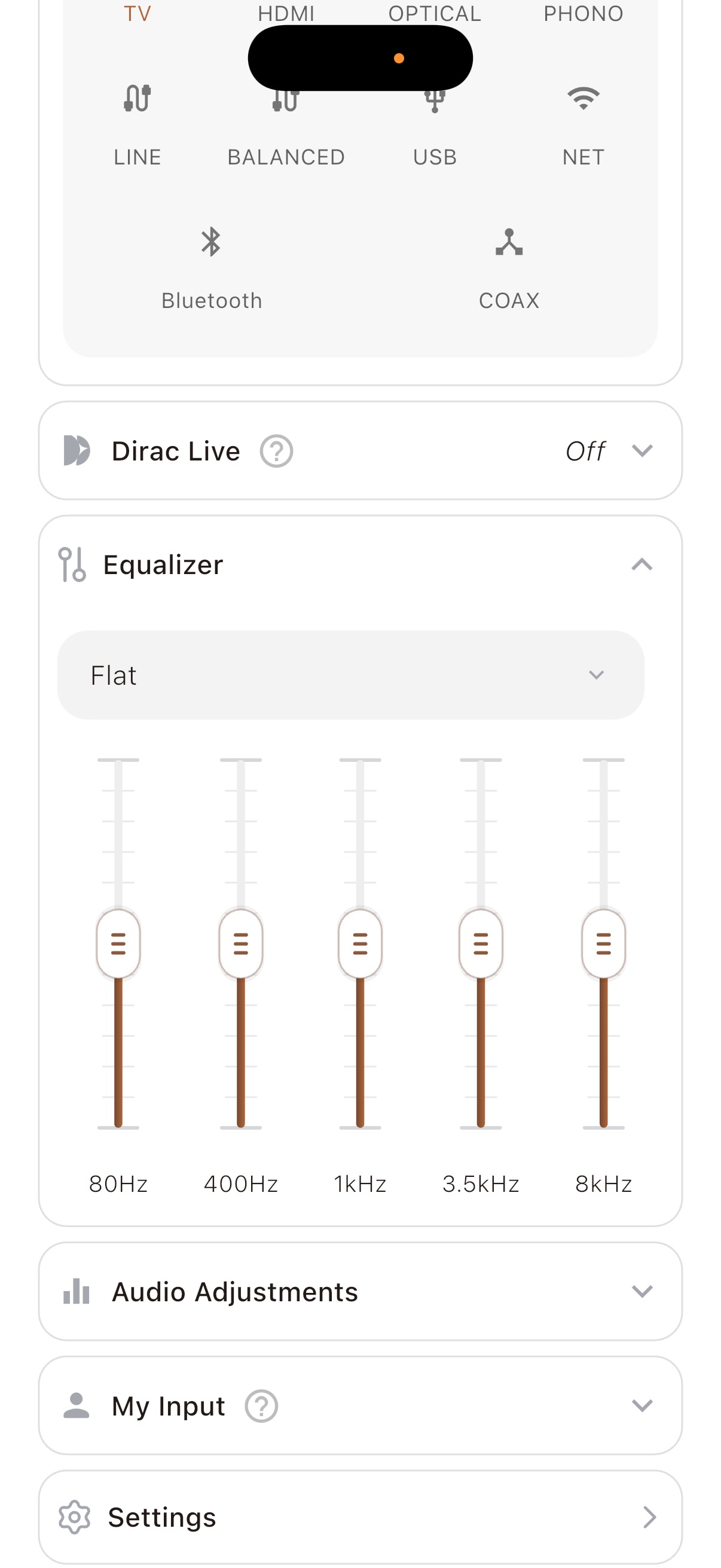
Speaking of the app, this is the central place for any deeper fine tuning. If you want to tweak the audio, there’s a five-band EQ in the app along with some presets. If you want to set up or use Dirac Live, you do that through the app — by the way, the speaker comes with a limited license that will adjust the audio between 200 and 500 Hz (the full frequency is paywalled).
Lastly (well, I’m leaving a few less consequential things out), you can turn on a few different modes: Dynamic Bass, Dialog mode, and Night Mode, and they all work decently enough with the latter being the most effective at its purpose (bringing up quiet sounds and bringing down loud ones).

Klipsch The Nines II Powered Stereo Speakers: Sound quality
- Weighty, robust sound
- Lots of bass, mid-bass a bit too full
- Lots of dynamic headroom
Klipsch’s The Nines II are really good sounding speakers, and they might be the most weighty sounding speakers I’ve heard for the size, too. Despite not having a subwoofer (or maybe because of it and still providing a lot of bass), every element seems to have a thickness or robustness to it that I usually don’t hear with a lot of audio equipment.
Listening to music the low end is there in spades, whether I was listening to pop, hip hop, or even Counting Crows. The massive bass gives a boominess to the mid-range that is not unpleasant, but is far from neutral or accurate. Using the app to bring the 400Hz slider down one or two notches does clean up the sound a lot, but know that this is fundamentally built into its audio profile.
The high end is slightly on the warm side due to that weightiness I spoke about. Boosting the 8kHz slider in the app does brighten the affair though, if you prefer. Regardless, the Klipsch The Nines II did retain all the detail in the high-end in elements such as the strings in Radiohead’s Pyramid Song or Joni Mitchell’s higher register in A Case of You.
The soundstage, while dependent on correctly setting up the speakers, is not only nice and wide but has good separation thanks to the amount of headroom on these speakers. After all, I never really had them higher than halfway up in volume and they filled a good sized room full of distortion-free, clean audio.
- Sound quality score: 4.5 / 5
Klipsch The Nines II: Design
- These speakers are big for bookshelves
- Few physical controls, lots of inputs
- There’s a subwoofer output
The Klipsch The Nines II are big at over 18 inches tall, over nine and a half inches wide, and almost 15 inches deep, weighing up to 33 lbs per speaker (the one without all the controls is two measly pounds lighter). They’re also attractive, thankfully, coming in three colorways: walnut, red oak, and black (reviewed here).
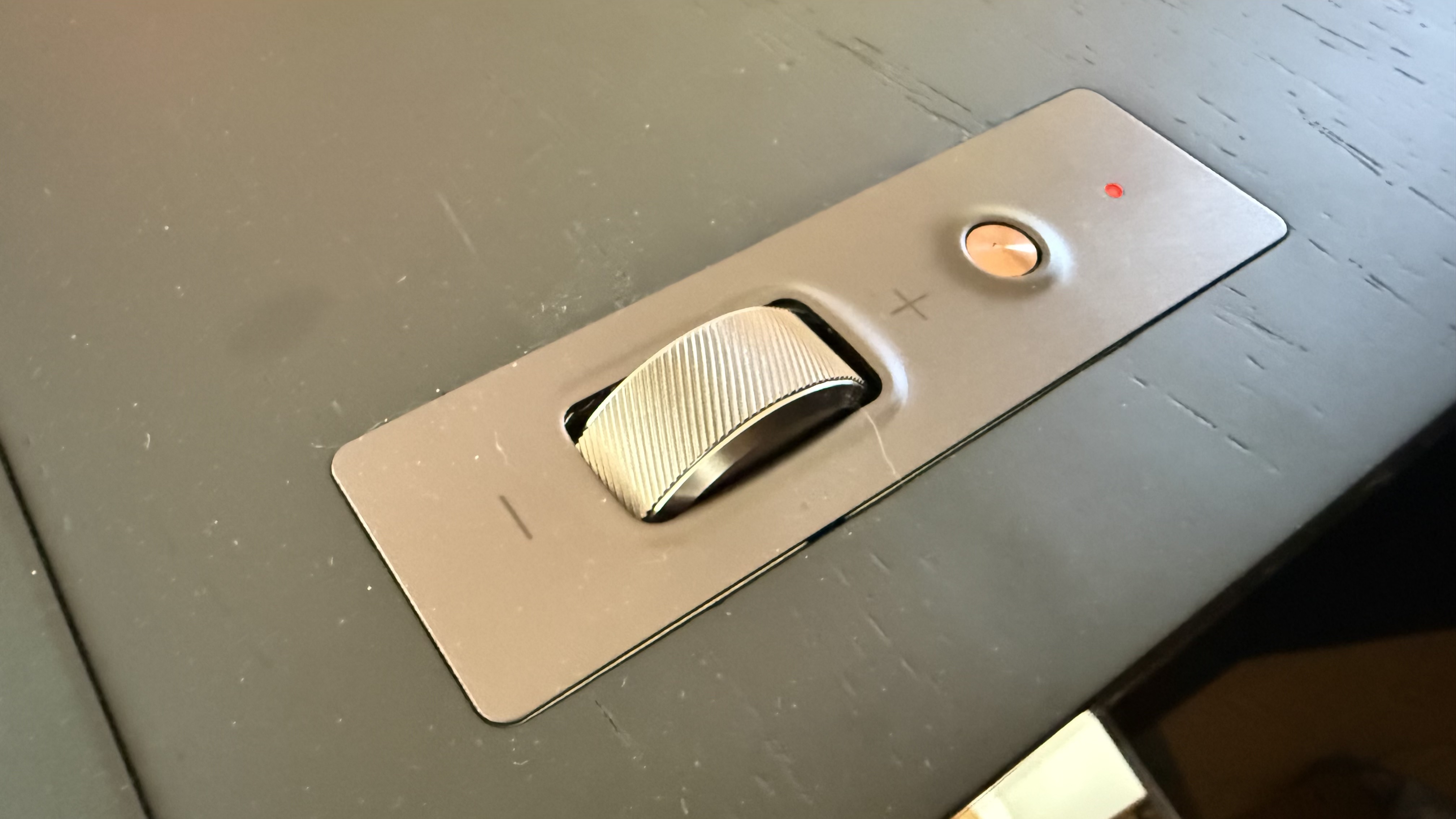
In terms of controls, the active speaker only has a volume dial and a single power / input cycle button. There’s also an LED indicator above the power button that changes colors depending on the input selected and, while there may only be two physical controls (there’s also a pairing button on the back of each speaker labeled Utility), there are quite a few inputs.
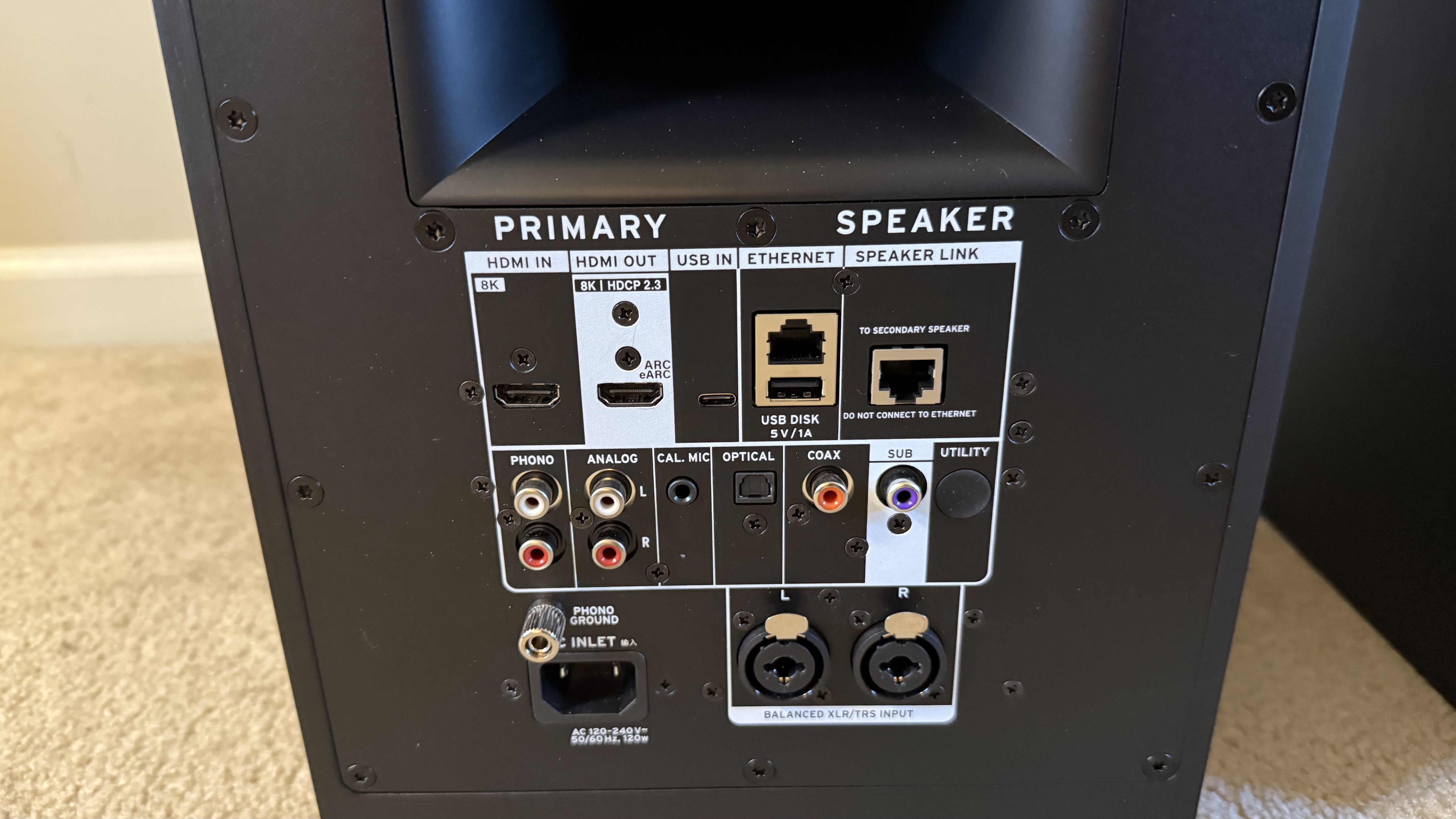
There’s HDMI eARC, optical, phono, USB, Bluetooth, coaxial, and ethernet. It’s easier to select them through the app, because remembering which color corresponds to which port isn’t easy to remember.
All the ports are situated on the back of the primary speaker. Besides the physical ports for the channels listed above that need them, there’s also a sub out and a mic in, the latter of which is for the Dirac Live feature.
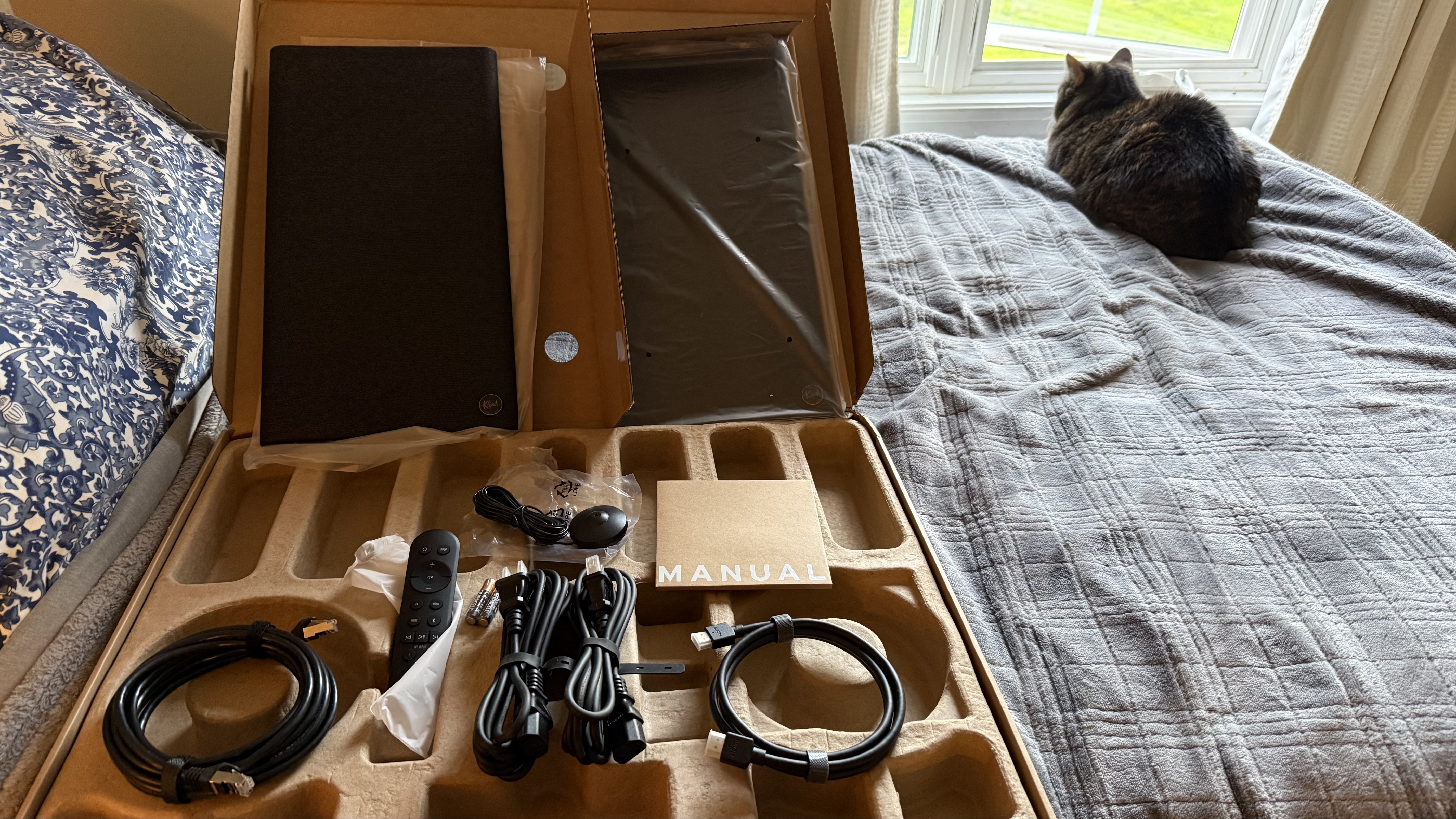
Also included are speaker covers that attach magnetically, along with a matte black remote, the aforementioned wired mic, an HDMI cable, power cable, and cable to connect the two speakers to each other physically, if you don’t want to have them speaking to each other wirelessly (they’re automatically paired with each other out of the box, so going wireless is no hassle).
Klipsch The Nines II review: Setup and usability
- Setup is made more difficult by the speakers’ weight
- App is intuitive to use for the most part
- Dirac Live is difficult to set up
The Klipsch The Nines II are both easy and not easy to set up, entirely based on their weight. The primary and secondary speakers are automatically paired out of the box and just need to be plugged in to power. Pairing via Bluetooth requires just being on the Bluetooth input and connecting via your smart phone.
And the physical connections just need their respective cables and possibly a settings change — changing a TV’s audio output to eARC, for instance. In terms of functionality, that’s all you have to do to use them.
That said, each speaker is heavy at over 30 lbs each (or over 14.5kg). That’s cumbersome to move. Even if that weight is not a problem for you, these are big boxes. Add in speaker stands, which I believe are ideal for getting the best sound out of these speakers (an additional $475 for a pair if you want Klipsch’s own…) and setup becomes more of a physical challenge than it might be for some speakers.
The stand just takes time to assemble: connect the proper rubber feet based on flooring, the base to the stand, and the stand to the speaker. But if you connected the stand to the speaker upside down like I did, you’ll encounter my least favorite part… flipping the speaker over while connected to the stand, which weighs an additional 24.1 lbs (10.9kg), by the way.
Each complete 57 lbs unit was unwieldy, to say the least, and I felt like I had to be careful so as not to let these fairly pricey speakers accidentally fall and get damaged.
Outside of that, adjusting the speakers for placement is similar to any other pair of bookshelf speakers, if heavier, and it didn’t take me long to get them situated for a listening sweet spot on the couch.
Using the speakers is likewise a slightly mixed bag. Using the remote is easy and I appreciate the ability to remap the two bottom buttons to my favorite inputs. The app is generally intuitive as well.
However, as much as I enjoy the difference Dirac Live can make with speakers, I had an incredibly difficult time getting the calibration test to run even though I had the upgrade for the full frequency range (an additional $99).
I know that the microphone is very sensitive so needs as much quiet as possible, but no matter how hard I tried, that degree of quiet threshold I just could not reach.
- Setup and usability score: 3.5 / 5
Klipsch The Nines II Powered Stereo Speakers: Value
- Comes with a premium price tag
- A lot of very good speakers available for much less
- Much more expensive than the original Klipsch The Nines
When the original Klipsch The Nines came out, they were priced similarly to the KEF LSX II LT, one of the most popular active stereo speaker systems out there. The Klipsch The Nines II are not only seven hundred bucks more than the original, but the KEF speakers have come down to $999 / £899 since they came out. That’s a massive price difference.
That said, the KEF LSX II LT are compact so are not able to really fill a room the way The Nines II can. Plus, there’s no analog connectivity or the extensive set of features the Klipsch The Nines II have.
When it comes to being a complete and yet powerful stereo system in two (reasonably) compact boxes, The Nines II are good value — but no one’s going to claim they’re a bargain.
Should I buy the Klipsch The Nines II speakers?
|
Attributes |
Notes |
Rating |
|---|---|---|
|
Features |
Dolby Atmos, Wi-Fi streaming, Dirac Live and a huge suite of connectivity options. |
4.5 / 5 |
|
Sound quality |
You might want to do some minor EQing, but they sound immersive and full, with enough bass to skip adding a subwoofer. |
4.5 / 5 |
|
Design |
They look good, the controls are nicely done, and the connectivity is well-handled. |
4.5 / 5 |
|
Setup and Usability |
Setup is easy but does take some muscle or a second person to do properly. Dirac Live calibration has issues. |
3.5 / 5 |
|
Value |
The price hike from the previous version may seem too much, but it’s worth it with the added features. |
3.5 / 5 |
Buy them if…
Don’t buy them if…
Klipsch The Nines II review: Also consider
How I tested the Klipsch The Nines II
- Used regularly for a few weeks
- Listened to all sorts of audio
- Used the various controls and ports
I used the Klipsch The Nines II for a few weeks, listening to all sorts of genres of music, such as hip hop, EDM, pop, rock, jazz, and folk to get a better feel for these speakers. They were also tested with some TV viewing and computer games.
I’ve tested a lot of tech gear over the years from laptops to keyboards and speakers, and so have been able to use my expertise towards giving an honest and fair opinion, not to mention a critical eye, to any product I test.
You must be logged in to post a comment Login