Protex AI, Altra, Barespace, Tines, Nory and CleverCards also made it to this year’s list.
Despite the usual London dominance in Sifted’s annual list of the 100 fastest-growing Irish and UK start-ups, Dublin’s Kota has managed to place in the top 10 this year.
The Irish insurance and employee benefits platform has made it to the ninth spot on the 2026 list, with a two year revenue CAGR (compound annual growth rate) of more than 640pc. The four-year-old start-up last raised $14.5m in May 2025, taking its total raise to date to nearly $23m.
“This ranking is a reflection of the work we’ve done over the last three years building out our infrastructure and network of insurance and pension providers, and the value that lets us deliver to customers,” Kota celebrated in a post on LinkedIn.
Advertisement
The company’s employee health insurance and benefits platform aims to empower start-ups and scaling organisations to automate and manage team benefits.
Others in this year’s list include the Dublin-based Limerick-founded workplace safety start-up Protex AI, which secured $36m early last year to expand across the US. The 2021-founded company ranked 21 on the Sifted list with a CAGR of 313pc.
Protex’s AI-powered platform plugs into CCTV devices and uses computer vision to capture unsafe events autonomously. The start-up already has around 80 employees.
Meanwhile, Care-tech Altra placed number 41 with a CAGR of just above 200pc. Founded in 2019, the start-up has reached profitability. “This recognition reflects a real shift in the care sector,” the company said.
Advertisement
Dublin’s Barespace, on the other hand, which bills itself as the “operating system” for the hair and beauty industry, has made it to the 56th spot – and the highest ranking seed start-up on the list.
Founded in 2022, the company has around 32 employees. Last September, it announced a €2.9m round to accelerate its UK and European expansion.
Irish automation unicorn Tines has climbed 12 positions on the list since last year, reaching the 70th spot with a CAGR of 136pc. The company, which has around 400 workers, recently announced 100 new jobs in Boston as demand for its AI tools rise in the US.
Founded in 2018, Tines reached unicorn status in February 2025 after a $125m Series C round. The company has raised $272m to date from investors including Goldman Sachs, SoftBank, Felicis, Addition, Accel, Blossom Capital and Lux Capital.
Advertisement
Food sector-focused AI start-up Nory has dropped seven spots since last year, reaching the 44th rank in this year’s list. The dual-headquartered start-up in Dublin and London raised $37m last September, also to drive expansion in the US. Nory has a two-year revenue CAGR of around 182pc.
While insurtech CleverCards dropped 27 spots to the 54th rank on the 2026 list. Founded it 2019, CleverCards’s payments technology allows businesses and public sector organisations to create prepaid digital Mastercards and send them to anyone. The service was launched to market in 2023.
Previous year’s entrants, that did not rank this year include e-SIM provider Holafly, VR simulation training provider VRAI, data company CitySwift, e-commerce financier Wayflyer, and AI copyright protection provider Ceartas.
Don’t miss out on the knowledge you need to succeed. Sign up for the Daily Brief, Silicon Republic’s digest of need-to-know sci-tech news.
Open-ear wireless earbuds are having a moment, and it is not just about comfort. More listeners are realizing that complete isolation is not always ideal when you are walking at night, jogging before sunrise, or navigating chaotic commuter hubs like Penn Station where situational awareness can matter as much as sound quality.
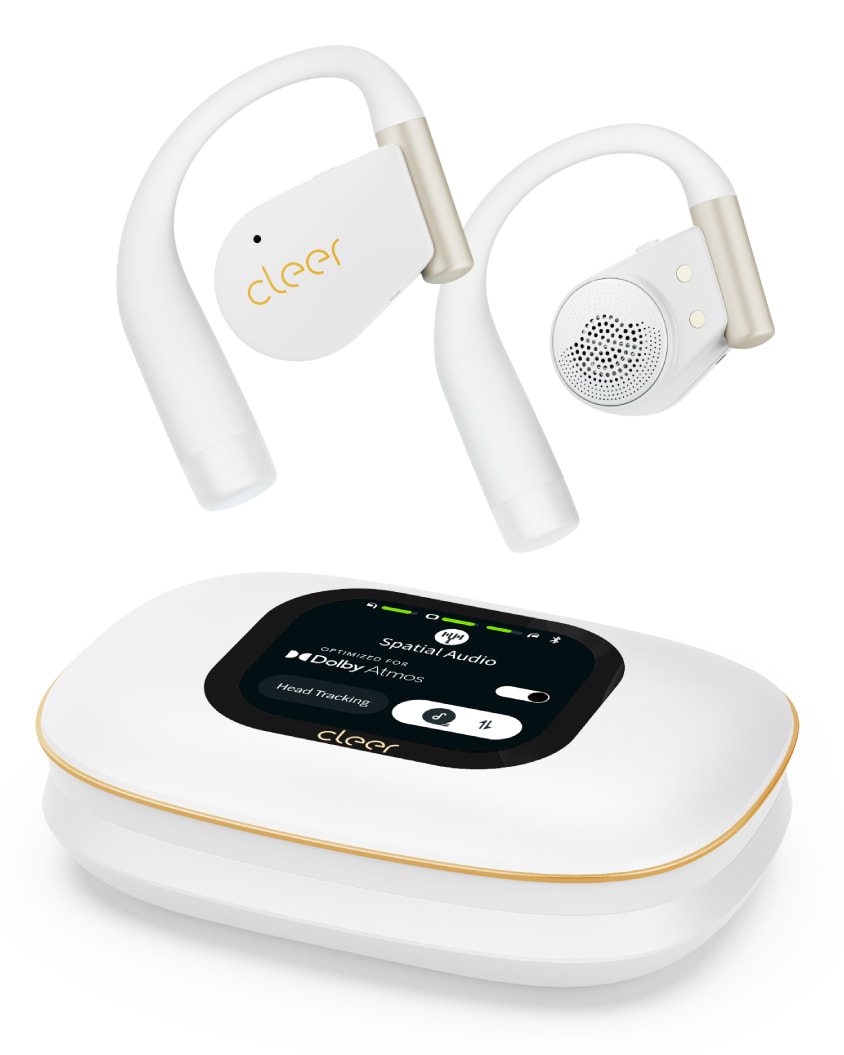
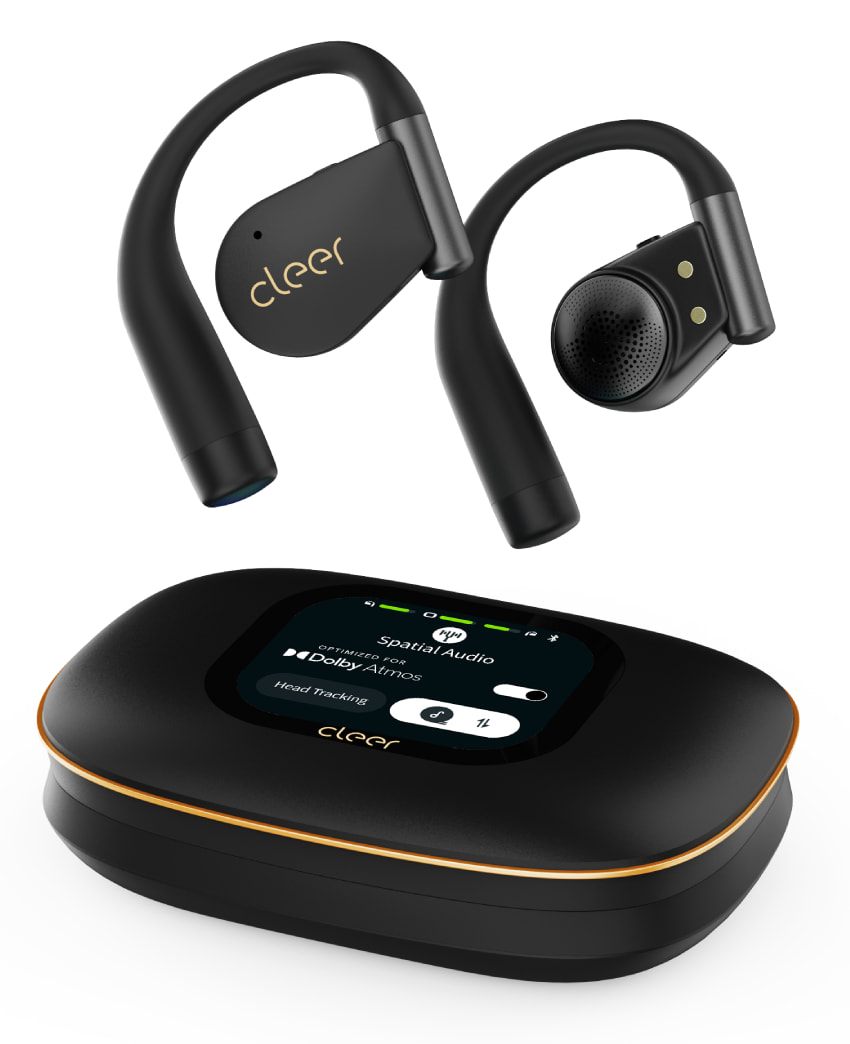
Against that backdrop, Cleer Audio has introduced the ARC 5, the latest addition to its ARC series of open fit true wireless earbuds. Building on the momentum of the ARC 4+ unveiled at CES 2026, the new model retains THX Headphone Certification, Dolby Atmos optimization, and Qualcomm Snapdragon Sound with aptX Lossless and head tracking, while continuing Cleer’s push into spatial audio for listeners who want immersion without cutting themselves off from the world around them.
What’s New in the Cleer ARC 5
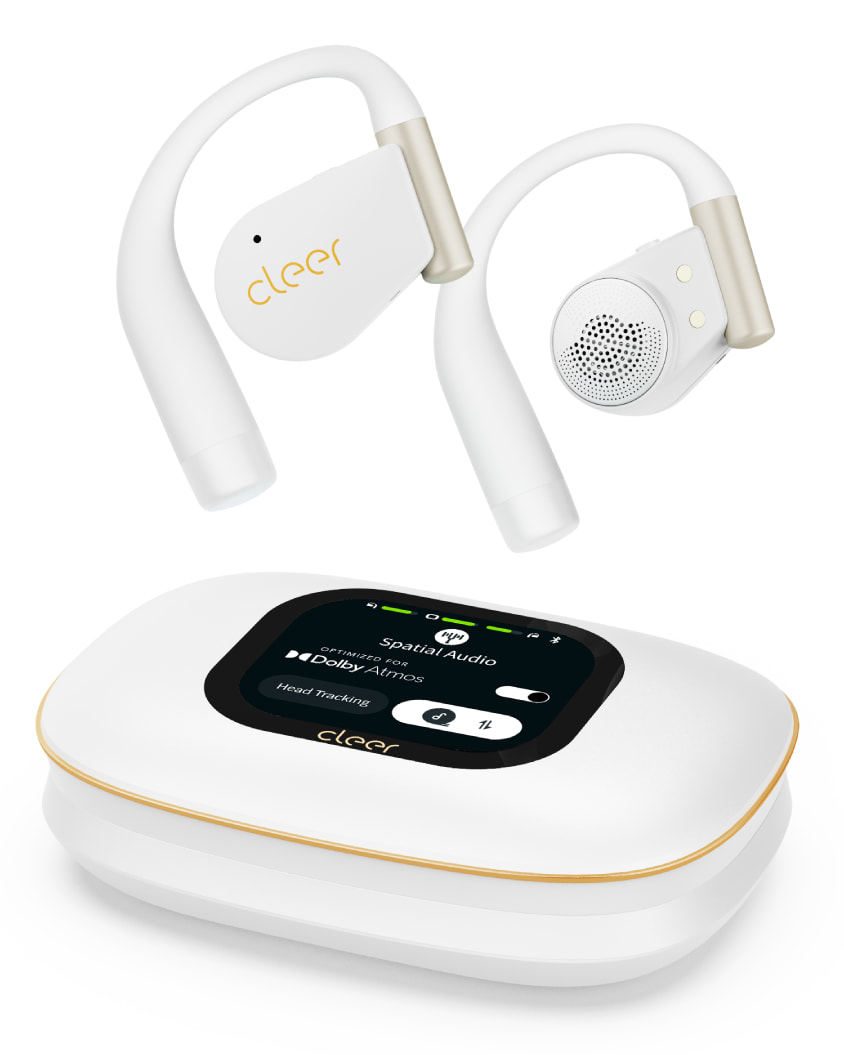
The ARC 5 introduces several meaningful upgrades over previous models, including THX Spatial Audio, a new AMOLED HD touchscreen smart case, thinner ear hooks for improved comfort, lighter overall weight, and extended battery life. The goal is simple: deliver a more immersive listening experience without sacrificing the situational awareness that makes open fit earbuds appealing in the first place.
THX Spatial Audio: With THX Headphone Certification, the ARC 5 is engineered for balanced frequency response, clear vocals, accurate stereo imaging, and controlled bass performance. The addition of THX Spatial Audio builds on that foundation with support for Dolby Atmos and head tracking, creating a more immersive soundstage while maintaining the open ear design that keeps listeners aware of their surroundings.
AMOLED Touchscreen Smart Case: Cleer also introduces a new AMOLED Smart Case that goes beyond basic charging duties. The touchscreen allows users to control playback, adjust EQ settings, monitor battery levels, and access features like UV C sterilizationwithout reaching for a smartphone. It essentially turns the charging case into a small command center for the earbuds.
Advertisement
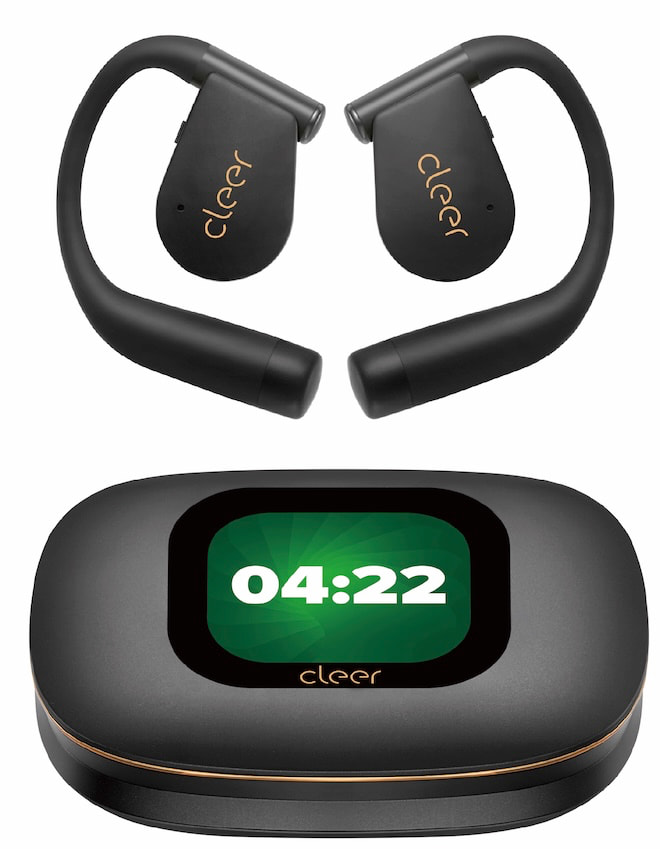
Improved Comfort and Fit: The ARC 5 features thinner ear hooks designed to reduce pressure while maintaining stability during movement. A redesigned acoustic structure also positions the drivers more effectively, improving clarity, spatial imaging, and sound projection. The result is a sleeker and more comfortable design suited for workouts, commuting, or extended listening sessions.
Lightweight Design: Each earbud weighs 11.5 grams, while the total weight with the smart charging case is 117 grams, keeping the system portable whether you are using the earbuds or carrying them in a bag or pocket.
Extended Battery Life: Battery life has also been extended, with the ARC 5 delivering up to 60 hours of total playback with the charging case via USB C charging. A 65 minute quick charge can provide up to two hours of listening time, making it easier to top up before heading out the door.
Although the spotlight is on the ARC 5’s new additions, Cleer has carried forward many of the core features that made the previous ARC 4 series appealing, including the following:
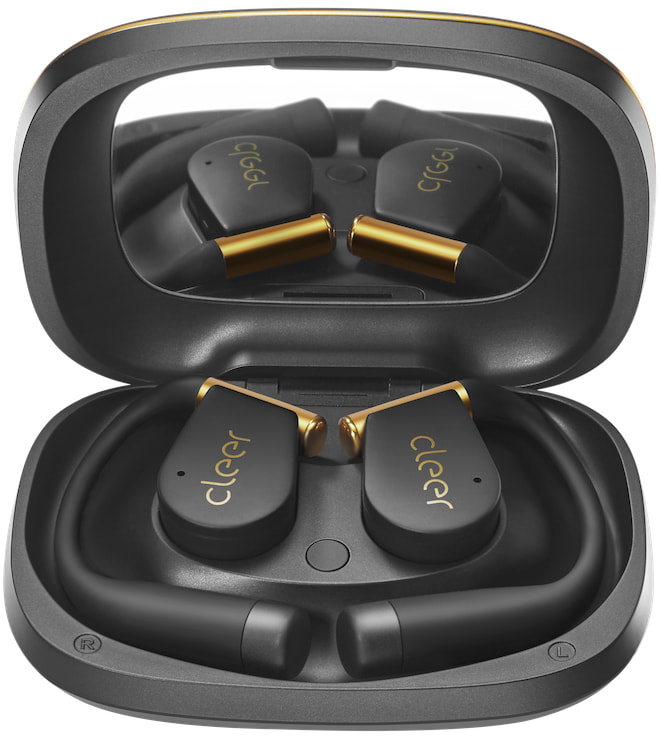
Open Ear Design: The ARC 5 retains Cleer’s flexible ear hook and hinge design, which helps improve stability and comfort during extended use. The open ear architecture allows listeners to enjoy music while remaining aware of their surroundings, making the earbuds well suited for commuting, office use, and workouts where situational awareness still matters.
Advertisement
THX Headphone Certification: THX Headphone Certification remains a central part of the ARC platform. It ensures open ear sound accuracy with balanced frequency response, clear vocals, detailed highs, and controlled bass performance. The certification process also requires precise channel matching for accurate imaging and low distortion even at higher listening levels, while meeting THX’s specialized standards for optimized low frequency performance in open ear designs.
Advertisement. Scroll to continue reading.
Bass Enhancement: Because open ear earbuds naturally struggle with low frequency reinforcement, Cleer relies on its DBE 4.0 (Dynamic Bass Enhancement) processing to add depth and weight to the bass. The system is designed to reinforce the low end without muddying the midrange or creating an overly bloated presentation.
Bluetooth Connectivity: The ARC 5 continues to support Bluetooth 5.4, Qualcomm Snapdragon Sound, and Bluetooth multipoint connectivity. Support for aptX Lossless provides the bandwidth needed for higher quality wireless playback with lower latency, while integrated voice control enables hands free operation. The overall connectivity package is clearly aimed at everyday usability rather than simply stacking features on a spec sheet.
Advertisement
Call Quality: Call performance is supported by Qualcomm cVc (Clear Voice Capture) microphones that reduce background noise and suppress echo during conversations. Support for aptX Voice further improves speech intelligibility, helping voices sound clearer on both ends of the call. That focus matters because open ear designs can struggle with call clarity if microphone processing is not properly implemented.
Cleer+ App: The ARC 5 also integrates with the Cleer+ app for iOS and Android. The app provides access to EQ adjustments, ambient and noise control settings, firmware updates, battery monitoring, and the user manual. In other words, the practical tools users actually end up relying on during daily use.
With THX Certification, THX Spatial Audio, Dolby Atmos optimization, improved ergonomics, and a feature rich control system, Cleer Audio has positioned the ARC 5 as a high performance open ear wireless earbud option aimed at listeners who want strong audio quality without completely shutting out the world around them.
Performance & Award-Winning Design
“ARC 5 represents a major leap forward in open ear audio,” said Hideaki Yamaguchi (Yama), CEO of Cleer Audio Americas, “and by combining THX Certification and THX Spatial Audio with improved ergonomic design, a thinner hook, lighter weight, an HD touchscreen smart case, and a wide range of advanced features, we have created earbuds that deliver immersive cinematic audio, exceptional comfort, and strong value while still keeping users aware of their surroundings.”
The ARC 5 has already earned two major international design honors, receiving both the Good Design Award 2025 and the Red Dot Design Award 2025, recognition that highlights the product’s blend of technological innovation and thoughtful industrial design.
Up to 12 hours, in total of 80 hours with the charging case
Up to 9 hours, in total 34 hours with the charging case
Up to 7 hours, in total 32 hours with the charging case
Charge Methods
USB-C
USB-C
USB-C
Quick Charge
5-minute charge provides 2 hours
10-minute charge provides 3 hours
10-minute charge provides 2 hours
Colors
Black, White
Black, White, Pink
Black, White
Weight
11.5g (per earbud)
Advertisement
117g (both earbuds and case)
10.8g (per earbud)
76g (both earbuds and case)
10.8g (per earbud)
Advertisement
76g (both earbuds and case)
The Bottom Line
With each generation of Cleer’s open ear lineup from the original ARC through ARC II, ARC 3, ARC 3 Gaming Edition, ARC 3 Sport Pro, ARC 4 and ARC 4+, the company has steadily refined the formula that made the series popular in the first place. The ARC 5 continues that pattern. It keeps the core elements that defined earlier models while improving ergonomics with a thinner ear hook, lighter earpieces, and longer overall battery life.
One of the more notable additions is THX Spatial Audio, which expands the listening experience beyond the ARC series’ existing Dolby Atmos optimization and head tracking support. The ARC 5 also introduces a touchscreen smart charging case that allows users to control playback, monitor battery status, and adjust settings without reaching for a smartphone. While the concept of a smart case is not entirely new, Cleer brings the feature to its open ear lineup at a lower price than similar implementations such as the case included with the JBL Tour Pro 3 wireless earbuds.
What makes the ARC 5 stand out is its focus on open ear listening with certified sound quality. The combination of THX Headphone Certification, spatial audio support, Snapdragon Sound connectivity, and a comfortable ear hook design targets listeners who want immersive audio without blocking out the outside world.
At the same time, the ARC 5 deliberately avoids features common in traditional in-ear earbuds. There is no active noise cancellation, no sealed ear tip design, and therefore none of the deep isolation or heavy low end reinforcement that those designs deliver. That tradeoff is intentional.
Advertisement
Advertisement. Scroll to continue reading.
The ARC 5 is aimed at listeners who value situational awareness, comfort, and credible sound quality over total isolation. Commuters navigating crowded transit hubs, runners and cyclists who need to hear traffic, and office listeners who do not want to be completely cut off from their surroundings are the most likely audience.
If you have followed the ARC series from the beginning, the ARC 5 represents a logical next step in Cleer’s evolution of open ear wireless earbuds and is well worth serious consideration.
Price & Availability
The Cleer Audio ARC 5 Open-Ear Wireless Earbuds are now available (as of March 17, 2026) in black or white for $219.99 USD.
This week Jonathan chats with Valentyn Danylchuk about BreezyBox — an interactive shell and toolkit that provides various tools and a compiler on an ESP32 microcontroller. What was the inspiration for this impressive project, and what direction is it heading? Watch to find out!
Did you know you can watch the live recording of the show right on our YouTube Channel? Have someone you’d like us to interview? Let us know, or have the guest contact us! Take a look at the schedule here.
The FBI has resumed purchasing reams of Americans’ data and location histories to aid federal investigations, the agency’s director, Kash Patel, testified to lawmakers on Wednesday.
This is the first time since 2023 that the FBI has confirmed it was buying access to people’s data collected from data brokers, who source much of their information — including location data — from ordinary consumer phone apps and games, per Politico. At the time, then-FBI director Christopher Wray told senators that the agency had bought access to people’s location data in the past but that it was not actively purchasing it.
When asked by U.S. Senator Ron Wyden, Democrat of Oregon, if the FBI would commit to not buying Americans’ location data, Patel said that the agency “uses all tools … to do our mission.”
“We do purchase commercially available information that is consistent with the Constitution and the laws under the Electronic Communications Privacy Act — and it has led to some valuable intelligence for us,” Patel testified Wednesday.
Advertisement
Wyden said buying information on Americans without obtaining a warrant was an “outrageous end-run around the Fourth Amendment,” referring to the constitutional law that protects people in America from device searches and data seizures.
A spokesperson for the FBI did not respond to questions about the agency’s purchase of commercial data, including how often the FBI obtained location data and from which brokers.
Government agencies typically have to convince a judge to authorize a search warrant based on some evidence of a crime before they can demand private information about a person from a tech or phone company. But in recent years, U.S. agencies have skirted this legal step by purchasing commercially available data from companies that amass large amounts of people’s location data originally derived from phone apps or other commercial tracking technology.
For example, U.S. Customs and Border Protection purchased a tranche of data sourced from real-time bidding, or RTB, services, according to a document obtained by 404 Media. These technologies are central to the mobile and web advertising industry, and they collect information such as location and other identifiable data used to target people viewing ads. Surveillance firms can observe this process and gather information about a user’s location, and then potentially sell that data to brokers or federal agencies looking to circumvent the warrant process.
Advertisement
The FBI claims it does not need a warrant to use this information for federal investigations; though this legal theory has not yet been tested in court.
Last week, Wyden and several other lawmakers introduced a bipartisan, bicameral bill called the Government Surveillance Reform Act, which among other things would require a court-authorized warrant before federal agencies can buy Americans’ information from data brokers.
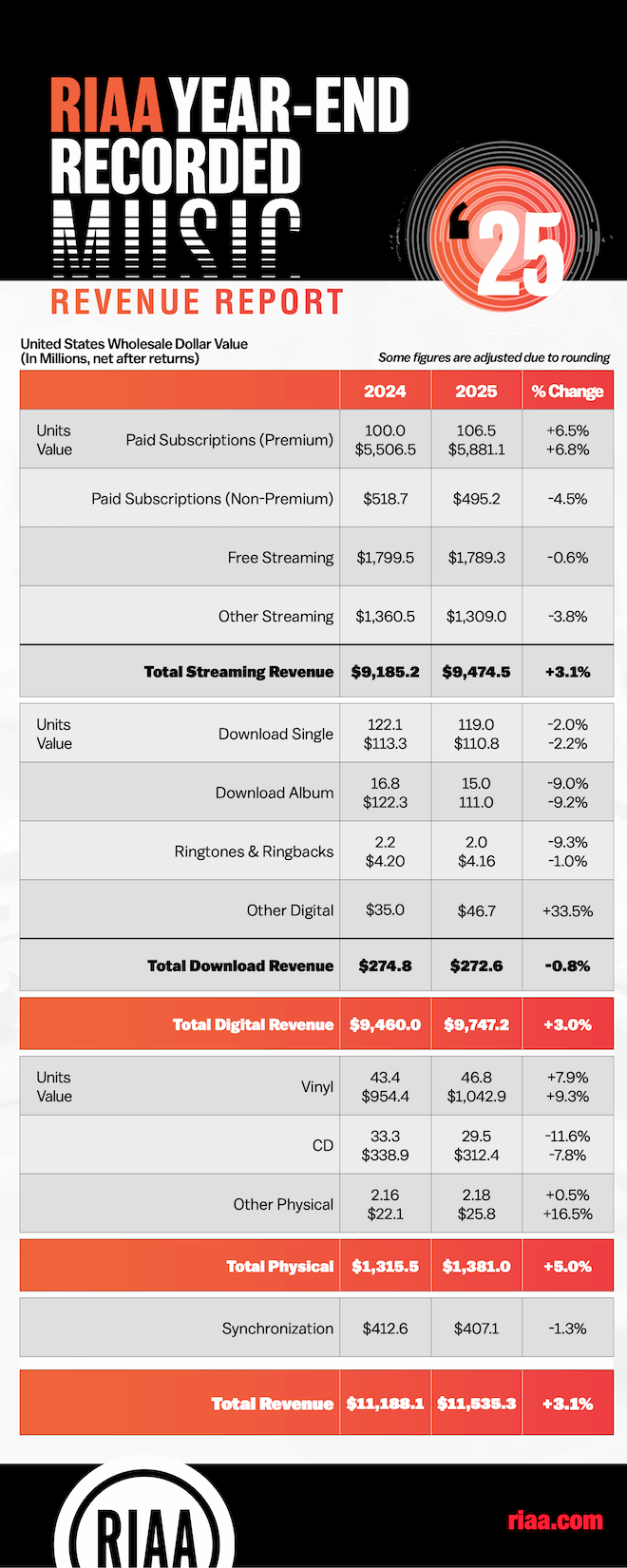
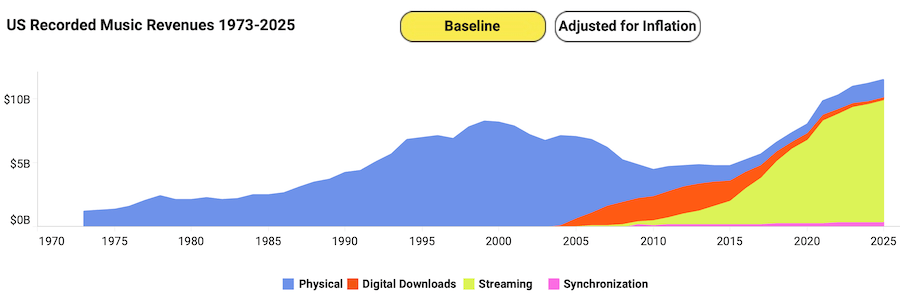
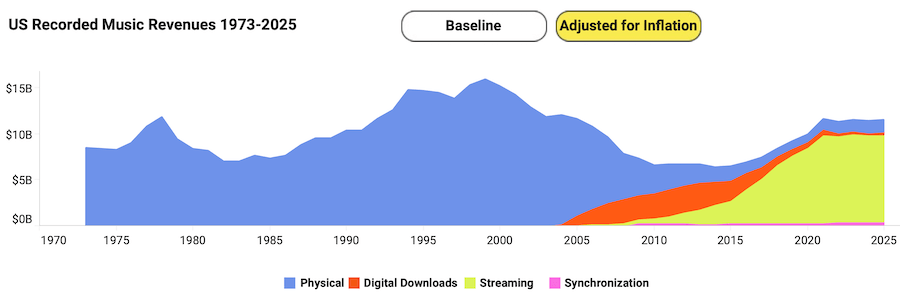
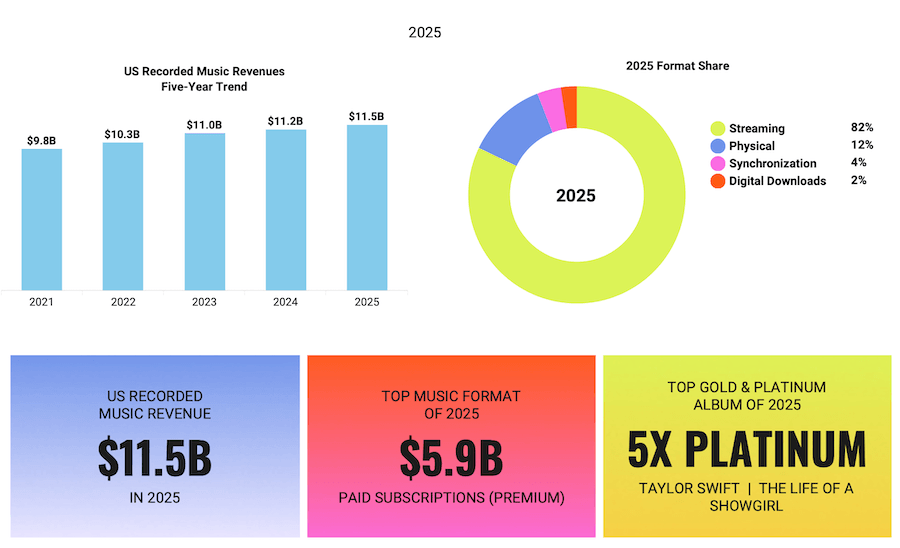
The RIAA’s 2025 year end revenue report gives us a pretty clear look at where the music business stands right now. The recorded music industry in the United States generated $11.535 billion in wholesale revenue, a 3.1% increase over 2024. Streaming continues to dominate the market, vinyl remains the strongest part of the physical media business, and CDs keep drifting further into legacy territory.
Strip away the nostalgia and the usual industry hype and the story becomes pretty straightforward. Streaming pays most of the bills, vinyl still attracts buyers who want something tangible, and the rest of the formats are slowly losing ground. The numbers don’t argue. They just show how people are choosing to listen to music in 2025.
Before anyone starts comparing every figure to older headlines, one detail matters: RIAA says its reports are now based on wholesale data to align with global reporting standards. That means accuracy requires using the 2024 and 2025 figures shown inside the new report itself, not mixing them with older retail based totals from prior annual summaries.
Streaming Still Owns the Block
Streaming generated $9.4745 billion in 2025, up 3.1%, and accounted for roughly 82% of total U.S. recorded music revenue. Paid subscriptions were the engine inside the engine: 106.5 million premium accounts produced $5.881 billion, up 6.8% in revenue, while the broader paid subscription category represented 55.3% of all U.S. music revenue. That is the part of the business paying the rent, keeping the lights on, and making the rest of the machine possible. Spotify and Apple Music still dominate the landscape, but streaming’s share of total U.S. recorded music revenue has not pushed past the mid-80% range, which suggests something important: physical media’s double-digit share of the market has stabilized rather than disappearing.
There is a second story tucked inside those streaming numbers. Not every digital segment is moving in lockstep. Free streaming slipped 0.6% to $1.789 billion, and other streaming fell 3.8% to $1.309 billion. So yes, streaming is still the dominant format by a mile, but the healthiest part of it is clearly the paid side.
Advertisement
That tells us consumers are still willing to pay for access when the experience is frictionless and the catalog feels essentially infinite; though it does raise a fair question about how much of that catalog is genuine music versus the growing volume of AI-generated content now flooding streaming platforms.
Vinyl Is Not a Gimmick Anymore
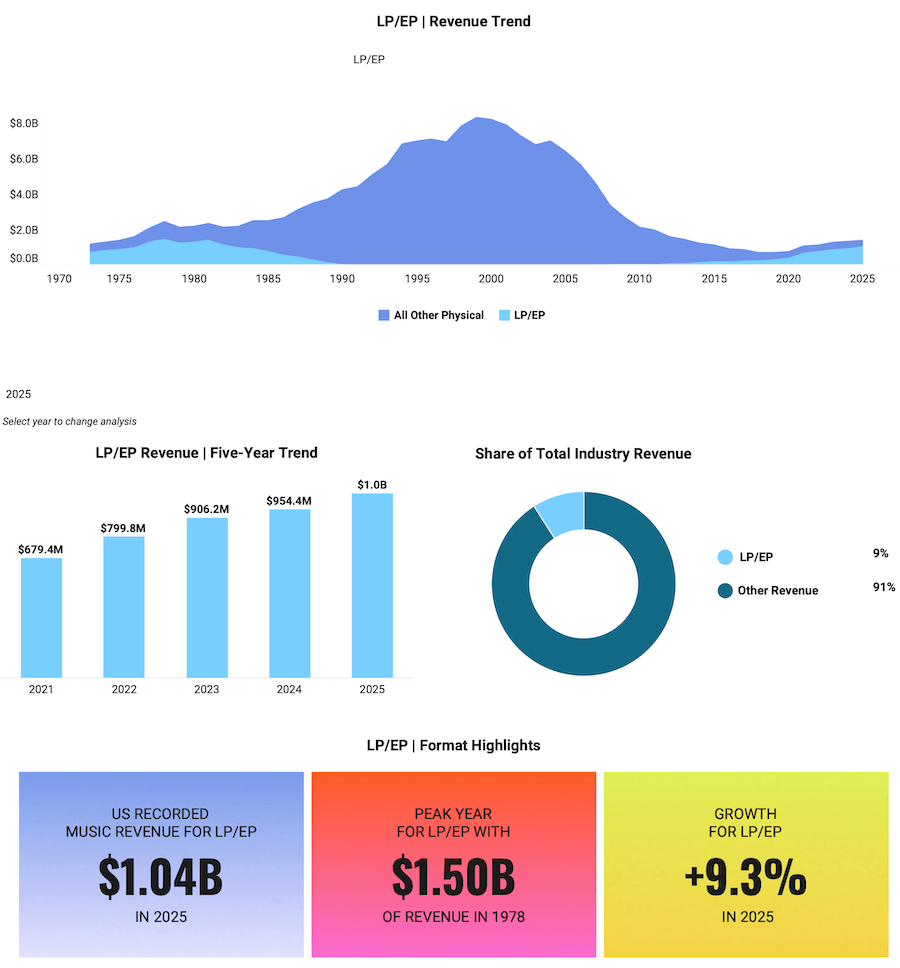
Vinyl was the headline physical format again, and this time the number has real swagger: $1.0429 billion in U.S. revenue on 46.8 million units, up 9.3% in revenue and 7.9% in units year over year. According to the RIAA, 2025 marked vinyl’s 19th consecutive year of growth, and U.S. vinyl accounted for nearly 50% of global vinyl revenue.
This is no longer a boutique side hustle for crate diggers and weekend collectors. Vinyl has grown well beyond the small group of audiophiles who kept the format alive after CDs, downloads, and eventually streaming pushed it to the margins. Today it is a serious commercial format with real momentum.
Record Store Day alone tells part of the story. What started as a niche celebration has evolved into two major annual events, with collectors and music fans lining up before sunrise for a shot at limited pressings. Independent record stores are also seeing renewed life in college towns and major cities across North America. Many have adapted by turning themselves into community spaces selling coffee, food, turntables, record accessories, and entry level hi-fi gear alongside vinyl. The format is no longer surviving on nostalgia. It has rebuilt an ecosystem around it.
The more revealing point is not merely that vinyl grew. It is how decisively it beat the rest of physical media. Vinyl generated more than three times the revenue of CDs in 2025 and outsold them by a wide margin in units as well. The format has moved beyond novelty because it offers something streaming cannot: ownership, ritual, display value, collectibility, and a direct emotional transaction between listener and music. Streaming gives you access to everything. Vinyl gives you a reason to care about something. Different drug. Different high. Same customer wallet, sometimes.
Advertisement
CDs Are Not Dead, But They Are Bleeding Out Slowly
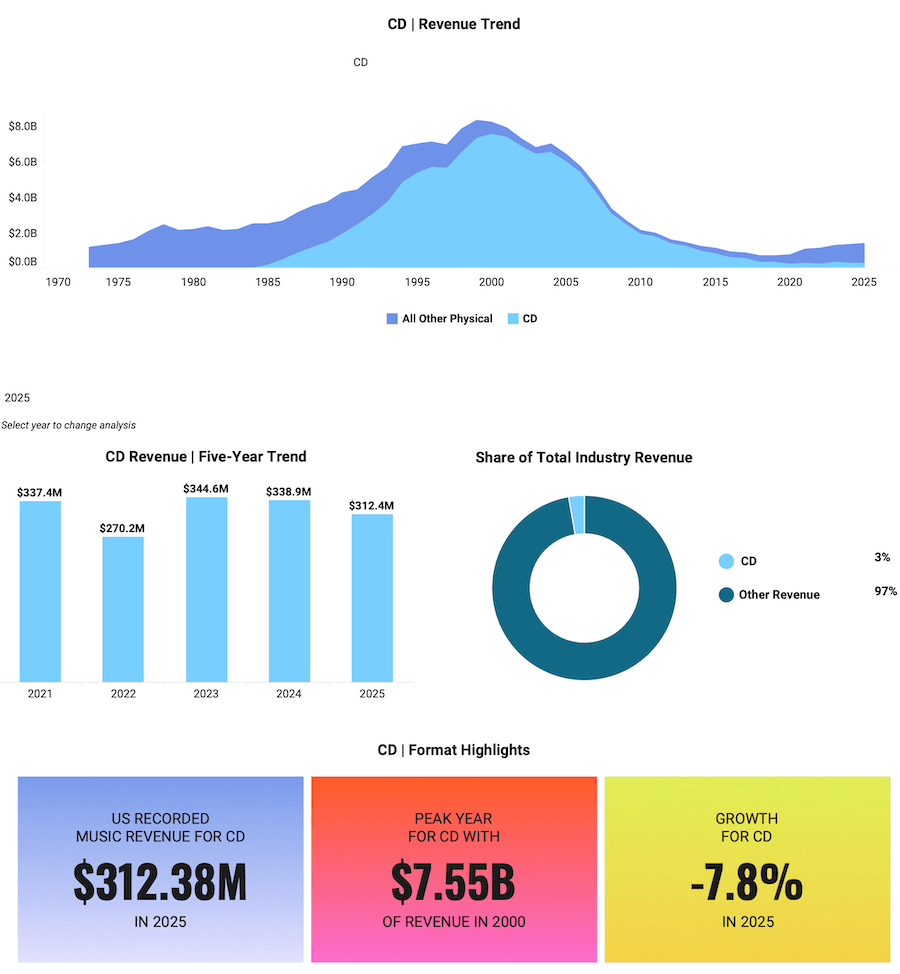
CDs brought in $312.4 million on 29.5 million units in 2025. That represented a 7.8% decline in revenue and an 11.6% drop in units compared with the prior year. The compact disc has not disappeared. It still sells in meaningful numbers, and there are niches where it remains relevant, including collectors, catalog buyers, K-pop fans, box set purchasers, and listeners who want a physical copy without paying vinyl prices. But the long-term direction is clear. CDs are no longer the center of the physical media market.
Advertisement. Scroll to continue reading.
The biggest remaining advantage for CDs is price. New releases on CD are usually far cheaper than new vinyl, and the used market is enormous. Walk into almost any record store and you will still find large CD bins with thousands of titles selling for $1 to $5. For listeners building a music library, it is still one of the most affordable ways to own albums.
There is also continued support from the hardware side of the industry. A number of hi-fi manufacturers still produce portable CD players, traditional CD players, transports, and SACD machines, aimed at listeners who value physical playback and the potential for higher quality sound through a dedicated system.
But it would be a mistake to frame this as a revival similar to vinyl. The data does not support that narrative. CD sales continue to decline year after year, even if the format maintains a loyal audience. On a good player, a well-mastered CD can absolutely outperform most streaming playback, but that alone is not enough to drive a broad market comeback. Vinyl has turned collecting into an event. CDs have not. Nobody is lining up outside record stores before sunrise waiting for Compact Disc Day. Not in 2025, and not anytime soon.
Advertisement
Downloads Continue Their Slow Walk to the Exit
Permanent digital downloads kept shrinking. Total download revenue fell 0.8% to $272.6 million. Download singles dropped 2.2% in value, while download albums fell 9.2%. The category still exists, but mostly as a residue of older buying habits and edge cases where ownership of files still matters. In the larger picture, downloads now look like a transitional format that has already served its purpose. They were once the escape car from the CD era. Now they are just parked outside with a flat tire.
What the Data Actually Tells Us
The 2025 RIAA numbers show a music business that is healthier than the doom merchants want to admit and more complicated than the vinyl evangelists sometimes pretend. Streaming is the mass market utility. Vinyl is the premium physical object. Everything else is fighting for leftovers. Paid subscriptions are where the financial strength sits, vinyl is where the emotional and collectible upside sits, and CDs are losing relevance even though they still matter in absolute dollars.
That also means the industry has stopped being a simple format war. Streaming and vinyl are not really enemies. They represent different behaviors. One is about access, portability, and habit. The other is about ownership, fandom, and intent. Consumers are using both because they solve different problems.
The 2025 numbers make that clear: digital revenue climbed to about $9.7 billion while physical formats generated roughly $1.38 billion, and both categories grew at the same time. In other words, the market can support subscriptions and collecting when consumers see value in both.
There is also a broader context that is easy to overlook. Music consumption in the United States now generates billions more in revenue than the theatrical movie business, with recorded music alone clearing $11.5 billion in 2025. People simply spend more time listening to music than watching films. It happens everywhere: at home, in the car, on the train, at the gym, and on airplanes. That constant presence makes music one of the most durable forms of media consumption, and it is likely that the gap between music and movies will continue to widen as streaming subscriptions and mobile listening keep expanding.
Taken together, the numbers show something simple. Streaming dominates music access. Vinyl anchors the physical collector market. CDs remain a niche but affordable ownership format. And across all of it, music continues to be one of the most consistent and pervasive forms of entertainment people consume every day.
Qihoo 360 recently shipped its 360 Security Claw AI assistant, a tool designed to rein in the viral AI agent OpenClaw. However, the installer contained a private SSL certificate associated with the company’s internet domain. Criminals and security researchers could theoretically exploit this certificate to compromise Qihoo 360’s infrastructure, although… Read Entire Article Source link
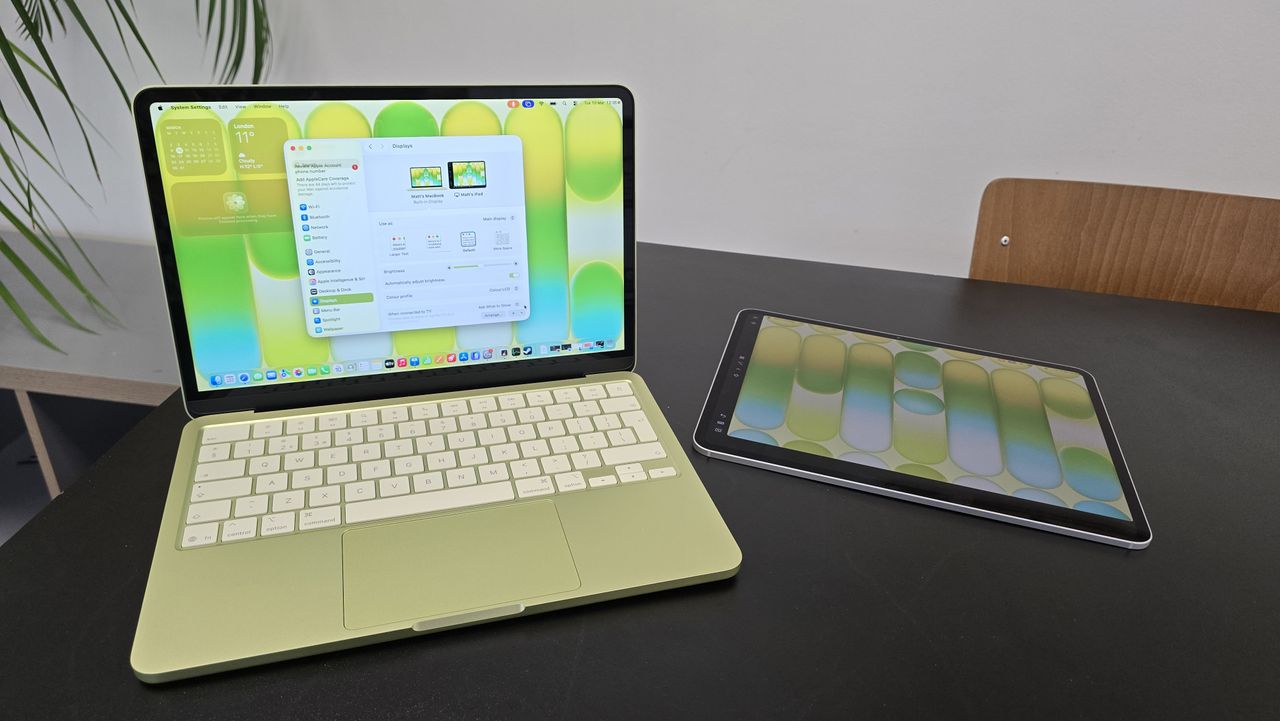
The MacBook Neo, along with the Mac mini, is Apple‘s most affordable computing option at just $599. And yet it is a formidably capable device, possibly, a once-in-a-generation product. Why? One unknown I wanted to clear up was how well it ran Windows 11 in a virtual machine.
So I asked the team at Parallels to benchmark a Windows-equipped Neo, and what they delivered shocked me.
I didn’t have high expectations given the Mac Neo’s limited specifications. It uses similar hardware to the iPhone 16 Pro Max: an Apple A18 Pro with six cores, 256GB storage and 8GB of unified memory.
Advertisement
Article continues below
Against a $1,119 Dell Pro 14 laptop (Intel Core Ultra 5 235U @ 2.00 GHz, 10-core, 16GB RAM, running Windows 11 build 26200 natively), a MacBook Neo with a virtualised Windows 11 (build 26200) with six vCPU and 6GB vRAM (via Parallels Desktop 26) delivered approximately 20% higher single-core CPU performance than natively on the Dell computer.
That’s across five industry-leading benchmark packages: Geekbench, PassMark, 3DMark, PCMark, Blender, and Unigine. I reached out to Parallels to obtain the raw data from these tests and will update the article once it is received.
Advertisement
For typical office productivity workloads, overall performance is approximately 20% slower than native Windows 11 on the Dell laptop.
Parallels said this “remains responsive and practical,” meaning it should be fast enough for everyday use. They also added that “this setup works well for standard office productivity (Microsoft Office, email, calendar), web applications and browser-based tools, business productivity software, and light development and testing”.
Sign up to the TechRadar Pro newsletter to get all the top news, opinion, features and guidance your business needs to succeed!
There are obvious caveats – you still need to buy a copy of Parallels and a Windows 11 license – and this certainly warrants more extensive tests, something that I hope my peers will carry out.
Advertisement
Apple is only warming up
I cannot stress enough how important this finding is.
Here we have an Apple laptop that was never destined to run Windows 11, capable of running Microsoft’s flagship OS in a virtual machine, better than a Dell laptop designed to run Windows 11 natively.
Not only is the Dell laptop far more expensive, but its CPU is also expected to be more powerful. What we have seen is the fruit of vertically integrated platform, something that Apple mastered by kicking out Intel and Samsung from its Mac and iPhone range.
Own the hardware and the software and you can perform miracles.
This is mind-blowing and both Apple and Parallels deserve a big pat on the back for achieving this. It’s too early to say the writing is on the wall for Windows laptops, but expect Apple to sell millions of these in the current financial year. Could it become Apple’s best-selling computer ever? I wouldn’t bet against this.
Matt Hanson, who reviewed the MacBook Neo for TechRadar, quipped that “While I wouldn’t recommend using Windows 11 on the MacBook Neo full-time, as native macOS performance is always going to be better, Apple’s affordable laptop has put budget laptop and Chromebook makers on notice. It’s not perfect, but the performance, build quality and design mean there’s really no choice if you’re looking for a laptop under $600: buy the MacBook Neo”.
Advertisement
Matt gave it a 4.5 out of 5, noting the presence of USB 2.0 ports, the lack of a keyboard backlight, and limited RAM as the only significant drawbacks of an otherwise stellar laptop.
I will not buy Apple’s cheapest laptop just yet but I – and I am sure millions of others – would find it hard to resist a $99.99 refurbished MacBook Neo in a few years.
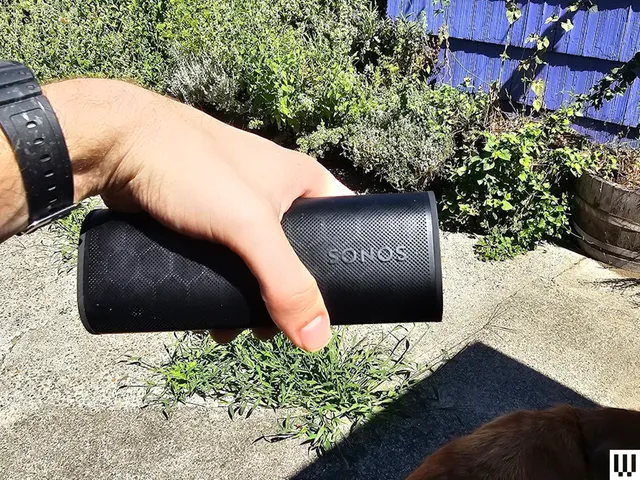
Yesterday’s discount on the Sonos Ace over-ear headphones wasn’t the only sale you can find on new additions to your Sonos setup. You can also nab the Sonos Roam 2 for just $139 as part of the Amazon Spring Sale. This Bluetooth speaker has excellent sound despite its relatively compact size, and of course it plays nicely with your other Sonos speakers.
Unlike older Sonos products, the Roam 2 now has Bluetooth in addition to Wi-Fi. When you’re home, the speaker joins your network and acts just like any other Sonos speaker in your setup. Take it on the go, and you can easily connect your phone and keep the tunes rolling. The Sonos app isn’t always the best at finding new speakers, but in this case it fired right up and connected to the Roam 2, good news for the easily frustrated. It has a fun sound profile that’s great for picnics or backyard hangs, with solid bass and balanced mid and upper ranges. Some other Bluetooth speakers might get louder, but the Roam 2 makes up for it by joining a chorus of other speakers around your home.
While the first-generation Roam suffered from some long-term battery health issues, Sonos has assured us that the Roam 2 more than fixes the problem, and at least in the short time our reviewer Parker Hall spent with it, it wasn’t an issue anymore. The outside is also slightly prone to smudges and scuffs, something to keep in mind if you prefer your equipment looking pristine. It’s waterproof, though, and quite sturdy, so just know that any marks you see on the housing are just surface level.
Fusion power company Helion Energy has taken the top spot in the latest update of the GeekWire 200, our quarterly ranking of the top privately held technology startups in the Pacific Northwest.
Helion replaced Highspot, which announced a merger with Seismic in a significant sales software deal last month (exited companies graduate from the list). Backed by the likes of SoftBank and Sam Altman, Helion announced two key milestones in February on its mission to generate usable energy from fusion reactions.
The company’s ascent atop the GeekWire 200 reflects a broader trend on the rankings, as startups building complex hardware across sectors like space, energy, robotics, and agriculture make up a sizable chunk of the list. It’s a notable change for a region traditionally dominated by enterprise software.
The top 10 includes companies such as Agility Robotics, which is building humanoid robots; Brinc, a drone maker serving public safety customers; Stoke Space, a space manufacturing company; and Carbon Robotics, which sells weed-zapping machines to farmers. Seattle VC firm Ascend has coined this crop of companies as “Cascadian Dynamism.”
Advertisement
The GeekWire 200 is a great resource to help keep track of the region’s up-and-coming companies, along with established leaders.
The list, which dates to 2013, combines objective data and editorial insight to provide a broad view of the region’s startup landscape. The GeekWire 200 has long served as a resource for investors, job seekers, service providers, and others tracking the Pacific Northwest tech scene.
The top 10 includes one new member: infrastructure startup Temporal, now valued at $5 billion after raising a $300 million Series D round last month. Temporal’s revenue grew more than 380% year-over-year as it helps companies move their AI agents into real-world production.
Several other startups rose up the list this quarter:
Auger, the supply chain software startup that raised a $100 million seed round in 2024, continues to hire rapidly — headcount is up more than 200% year-over-year — and is now ranked No. 41. Auger also announced a partnership with Microsoft on Wednesday.
Echodyne, the Seattle-area radar platform company, announced plans to build a new manufacturing facility in Washington state and moved up to No. 54.
Starfish Space is now No. 64 after landing a $54.5 million Space Force contract for its satellite servicing spacecraft.
AIM Intelligent Machines, the autonomous construction startup that recently inked its own government contract, moved up to No. 122.
Avalanche Energy, which announced a $29 million round last month to fuel its fusion technology, moved up to No. 156.
Tin Can, the hot Seattle startup behind a landline-style telephone for kids, sprang to No. 167 after raising $12 million in December.
There are also a batch of newcomers making their debut on the list, including:
Tune Therapeutics (No. 140), a biotech company co-headquartered in Seattle that’s developing epigenome editing programs.
Gradial (No. 151), a Seattle-based startup developing agentic marketing tools that raised $35 million in December and recently launched a new tool for GEO, or Generative Engine Optimization.
Starcloud (No. 171), the Redmond, Wash.-based company working on space-based data centers that was featured during Jensen Huang’s keynote at NVIDIA GTC this week.
Others new entrants include Union.ai; Integrate; Clearly AI; mpathic; AheadComputing; Casium; RentSpree; Inflection.io; Dopl Technologies; Loopr; Scala; Elevāt; Certivo; AZX; and MontyCloud.
Notes on the GeekWire 200
Our list is not scientific, by any means, and the specific rankings should be taken with a grain of salt. But it has proven to be a highly useful tool. We hear regularly from readers who use the GeekWire 200 to look for jobs, prospect for customers, mine for potential investments, and get a high-level view of the tech community.
We also use the list as a valuable insights tool, gathering survey data to highlight trends among fast-growing startups.
We’re looking at each company’s employee growth over the past 12 months, factoring in both the percentage increase and the number of jobs added.
Larger companies still earn credit for maintaining scale — a sign of maturity and customer traction. But this is weighted less heavily than growth, to help spotlight emerging players.
We include LinkedIn follower counts as a rough measure of a company’s public traction. To avoid favoring long-established firms, we apply a curve that gives younger companies a fairer shot.
Companies founded 15 years ago or later “graduate” from the GeekWire 200, and are not included. We also remove companies due to mergers, acquisitions and private equity deals in which they sell a majority of their shares.
To make sure your Pacific Northwest technology startup is eligible for the GeekWire 200, first confirm it’s included in the broader GeekWire Startup List. If so, there’s no need to submit it separately. If your startup isn’t among the companies on that larger list, you can submit it for inclusion here, and we’ll crunch the numbers to see if your company makes the next GeekWire 200 update. Email us at tips@geekwire.com with any questions.
The New York digital comics platform is combining its 300,000-title library with INKR’s AI localisation engine, and bringing in new leadership to execute the expansion.
The problem with getting manga into the hands of readers outside Japan is not demand. Manga is the fastest-growing category in American book publishing; global interest has been building for years, accelerated by streaming adaptations of franchises like Demon Slayer, Attack on Titan, and Jujutsu Kaisen.
The problem is infrastructure. Translating, reformatting, and distributing a comics series across languages and screen sizes is still a largely manual process, and the industry’s publishing toolchain has never been built to handle it at speed or at scale.
GlobalComix, the New York-based digital comics platform, is betting it can fix that. On Wednesday the company announced three moves at once: a $13 million funding round, the appointment of Henrik Rydberg as chief executive, and the acquisition of INKR, a Singapore-founded AI localisation platform for comics.
Together, the announcements describe a company that wants to be not just a reading destination but the infrastructure layer beneath the global comics publishing industry.
Advertisement
The $13 million round was co-led by SBI US Gateway Fund, the US arm of SBI, one of Japan’s most active venture capital firms with more than 1,200 portfolio companies, and Point72 Ventures, the venture arm of Steve Cohen’s Point72 Asset Management.
Point72 Ventures previously led GlobalComix’s $6.5 million Series A in July 2023 and returns here as co-lead. Additional participants include Scrum Ventures, Wise Ventures, Wicklow Capital, and Upside VC.
The Japan-US investor pairing is deliberate. SBI’s network spans Japanese media and publishing, the market that produces manga, while Point72 brings continuity and US market perspective.
Shohei Yamada, Managing Partner of SBI US Gateway Fund, described GlobalComix as “building the infrastructure that connects creators, publishers, and readers worldwide,” adding that he believed it had the potential to make manga and comics “accessible to anyone, anywhere.”
Advertisement
Ishan Sinha, now a Partner at Point72 Ventures who led the 2023 Series A, said the addition of INKR’s AI team and localisation technology “meaningfully expands what the platform can support for creators and publishers.”
The INKR acquisition brings the most technically substantive element of the announcement.
INKR was founded in 2019 by Ken Luong, Khoa Nguyen, and Hieu Tran, a team based in Singapore and Ho Chi Minh City, and launched its app in October 2020.
The platform’s core product is an AI localisation engine that automates the most labour-intensive steps in preparing a comic for a new language market: text and object detection, image cleaning, translation, and typesetting.
Advertisement
The company says the technology reduces localisation time from days to hours and has been used to localise more than 15,000 comics, though that figure comes from GlobalComix’s press materials and has not been independently verified.
GlobalComix’s platform currently hosts more than 300,000 titles from publishers including Marvel, DC, Kodansha, Image Comics, and Tokyopop, alongside more than 25,000 independent creators.
The company’s ambition is to combine INKR’s localisation pipeline with its existing distribution and monetisation infrastructure, effectively creating a vertically integrated system: a publisher brings a Japanese title in, the AI engine prepares it for English, French, or Brazilian Portuguese markets, and GlobalComix handles distribution and revenue.
The global manga market is estimated to exceed $20 billion annually, with demand for translated content growing across the West.
Advertisement
Whether GlobalComix can capture meaningful share of that workflow, against established players including Viz Media, Yen Press, and digital platforms like WEBTOON, depends on whether the AI localisation quality is good enough for professional publishing standards and whether publishers will trust a startup with their most valuable IP.
The acquisition of INKR, whose technology is described as already trusted by publishers in Japan and Korea, is the clearest attempt to answer that second question before it is asked.
Flock, valued at roughly $7.5 billion and backed by venture capital giant Andreessen Horowitz, says its systems help police identify vehicles linked to criminal activity by analyzing license plates and other features, such as bumper stickers. But the same capability has alarmed privacy advocates and local governments, particularly after reports that… Read Entire Article Source link











.png)





















































You must be logged in to post a comment Login