Tech
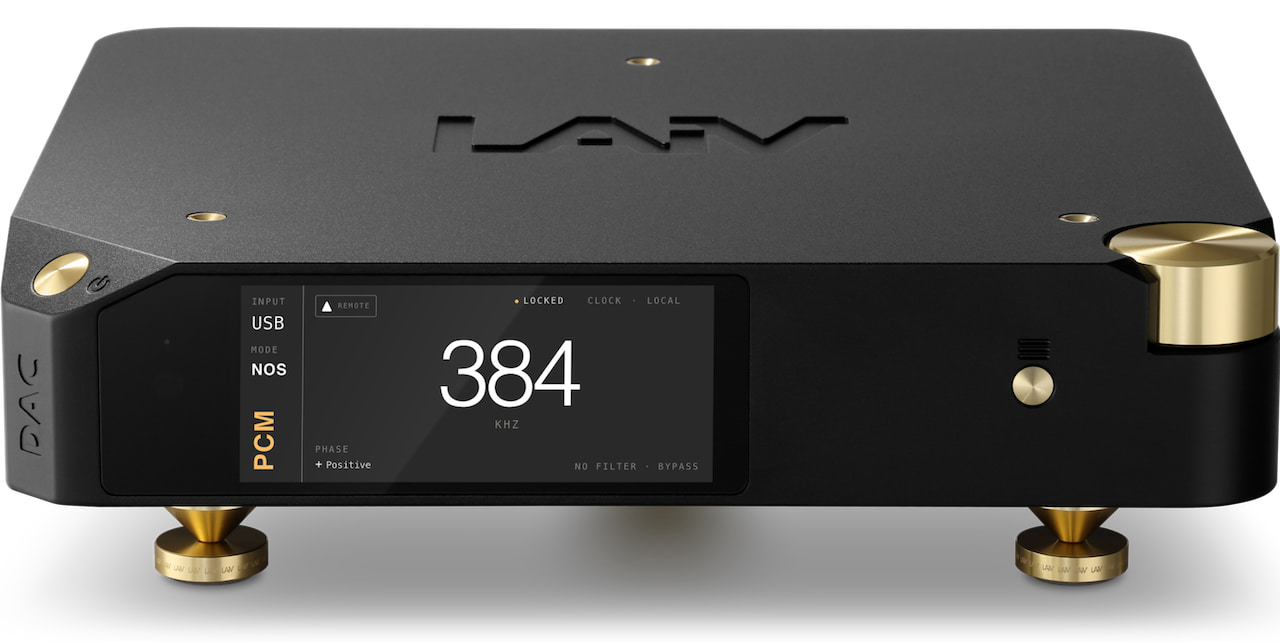
LAiV Harmony DAC 2 Is a $3,994 R2R DAC Aimed Straight at Denafrips and Holo

LAiV was founded in Singapore in 2023 and has moved quickly from its original Harmony DAC into headphone amplifiers, monoblocks, compact digital components and the $849 Crescendo VERSE R2R DAC, preamplifier and headphone amplifier that we reviewed earlier this year.
Now the company is returning to the product that put it on the map.
The new Harmony DAC 2 costs $3,994, with preorders underway and initial deliveries expected between September and October 2026. At that price, LAiV is no longer playing the role of affordable newcomer. Denafrips, Holo Audio and Chord Electronics are already established in this part of the market, while FiiO and HiFiMAN are making R2R increasingly accessible below $1,000.
So what does the Harmony DAC 2 bring to the fight?

Related Reading:
The R2R Architecture Carries Over
LAiV has retained the original Harmony DAC’s fully balanced discrete R2R ladder architecture rather than redesigning the conversion stage. Most of the important changes happen around it.
PCM playback now offers three processing options: NOS, LAiV’s proprietary oversampling mode and a dedicated hardware sample rate converter capable of converting PCM up to 705.6 or 768kHz. The original Harmony offered NOS and LAiV’s oversampling mode but not the new hardware SRC option.
DSD is handled separately. Because the R2R ladder cannot directly reproduce a 1-bit DSD stream, LAiV converts DSD to multi-bit before it reaches the ladder. No additional oversampling or sample rate conversion is applied. That distinction matters when comparing the Harmony DAC 2 with competing digital architectures.
Direct 10MHz Clock Input
One of the more unusual additions is a direct 10MHz external master clock input over 50-ohm BNC.
Owners of the original Harmony who wanted to use an external clock had to route it through a DDC and then feed the DAC over I2S. The DAC 2 accepts a 10MHz clock directly, removing an additional component from the signal chain.
Whether an external clock produces an audible improvement is something we would want to test rather than assume, but the connectivity makes sense for the kind of system in which a $4,000 standalone DAC is likely to live.
A More Flexible Analog Stage
LAiV has also redesigned the output stage around a discrete Class A buffer with lower output impedance.
Balanced XLR outputs deliver 4.15Vrms at less than 50 ohms, while RCA provides 2.08Vrms at less than 25 ohms. Both outputs can now operate simultaneously, something LAiV did not recommend with the original Harmony.
That makes it easier to feed a headphone amplifier through XLR while also connecting an integrated amplifier or powered loudspeakers through RCA.
The DAC 2 also adds full digital isolation between its input and output sections, 12V trigger input and output, USB-C firmware updating and a new 960 × 400 color display.
None of those features sounds especially dramatic on its own. Collectively, they make the DAC considerably easier to integrate into a serious two-channel system.


Where Does It Fit in the LAiV Lineup?
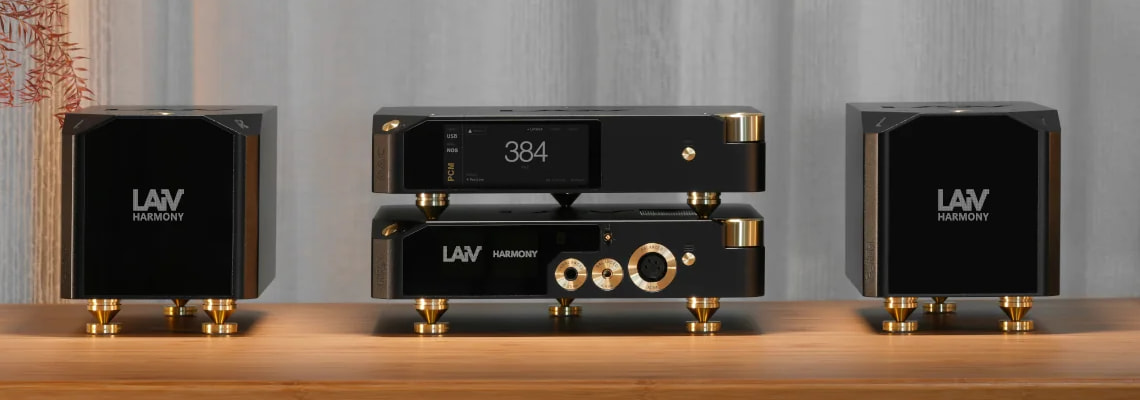
The Harmony DAC 2 is now LAiV’s primary full-size standalone DAC.
The compact Harmony µDAC starts at $1,149, while the original Harmony DAC remains listed at $3,249. The DAC 2 therefore costs $745 more than its predecessor. LAiV says an upgrade kit for existing Harmony owners is also planned, although pricing has not been announced.
Below those products sits the Crescendo VERSE. We reviewed the $849 all-in-one earlier this year and found LAiV competing in a much broader desktop category against brands such as FiiO, Topping, Schiit and Shanling.
The Harmony DAC 2 is aimed at a very different customer. There is no network streamer or headphone amplifier here. It is a dedicated high-end digital source for an existing system.
The Competition Is Getting Crowded
The most obvious rival is the new Denafrips Venus 15th, priced at $3,999 — just five dollars more than the Harmony DAC 2. It also uses a balanced R2R architecture and offers NOS and oversampling operation.
Holo Audio’s Spring 3 is another direct competitor, particularly in KTE form, which lands around the same price. Holo’s May DAC moves further upmarket.
Chord Electronics takes a completely different approach. The $5,695 Hugo TT 2 uses Rob Watts’ custom FPGA architecture rather than R2R and also includes headphone and preamplifier functionality. Different product, same customer consideration set.
Then there is the rapidly improving value end of the market.
The FiiO K17 R2R costs $989.99 and combines FiiO’s segmented R2R architecture with network streaming, PEQ and a powerful headphone amplifier. HiFiMAN’s SERENADE uses its HYMALAYA Pro R2R platform for $999. Cayin’s $1,199 iDAC-8 uses AKM conversion instead, but adds selectable tube and solid-state analog output stages.
These products are not direct replacements for the LAiV, but they illustrate the larger problem facing every expensive resistor-ladder DAC in 2026:
R2R alone is no longer enough of a reason to spend $4,000.

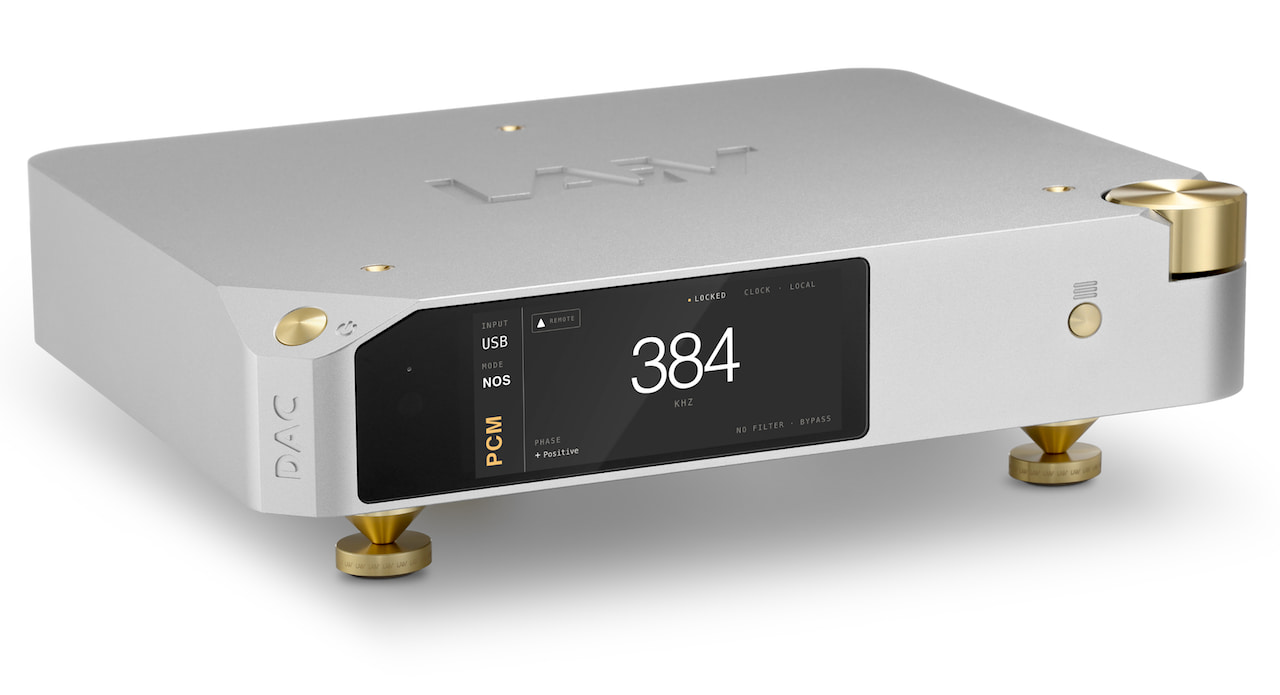
LAiV Harmony DAC 2 Specifications:
- Type: Standalone digital-to-analog converter
- DAC architecture: Fully balanced discrete precision-matched R2R ladder
- Digital processing: Intel Cyclone FPGA
- Internal clock: Crystek CCHD-957
- PCM modes: NOS, LAiV proprietary oversampling, hardware SRC
- Hardware SRC: Up to 705.6/768kHz
- DSD processing: Direct conversion to multi-bit for the R2R ladder; no additional oversampling or SRC
- Digital inputs: USB, optical, coaxial, I2S
- External clock input: 10MHz BNC, 50 ohms
- USB/I2S support: Up to PCM 768kHz and DSD256
- Optical/coaxial support: Up to PCM 192kHz and DSD64 via DoP
- Output stage: Discrete Class A buffer
- Balanced output: XLR, 4.15Vrms, less than 50 ohms
- Single-ended output: RCA, 2.08Vrms, less than 25 ohms
- Simultaneous outputs: XLR and RCA
- THD+N: 0.0035%
- SNR: Greater than 125dB
- Dynamic range: Greater than 110dB
- Crosstalk: Less than -120dB
- Frequency response: 20Hz-20kHz, ±0.25dB
- Digital isolation: Yes
- Display: 960 x 400 TFT color LCD
- 12V trigger: Input and output
- Firmware updates: USB-C
- Remote: Harmony RCX included
- Dimensions: 255 x 250 x 50mm; 75mm high including spikes
- Power consumption: 14.7W operating; 2.5W standby
- Finishes: Black or silver
- Warranty: 24 months

The Bottom Line
The Harmony DAC 2 is interesting because LAiV has focused on the areas around its existing R2R ladder rather than pretending the basic conversion architecture needed to be reinvented.
Hardware SRC, direct 10MHz clocking, full digital isolation, a discrete Class A output stage and simultaneous XLR/RCA operation all make it a more capable system component than the original Harmony.
But $3,994 puts it directly against Denafrips and Holo Audio while Chord remains a major alternative for listeners who prefer an entirely different digital philosophy. FiiO and HiFiMAN are simultaneously showing how inexpensive competent R2R hardware has become.
LAiV has built a more complete DAC, but now it has to prove that the performance is worth four grand.
Where to buy: $3,994 at laiv.audio in black or silver
You must be logged in to post a comment Login