Tech
LAiV Unveils Crescendo VERSE: All-in-One R2R DAC, Headphone Amp, and Preamp Targets Sub-$1,000 Market

The LAiV Crescendo VERSE lands at a moment when hi-fi is quietly being redefined. LAiV’s new component combines an R2R ladder DAC, discrete headphone amplifier, and active preamp into a single compact chassis priced under $1,000; exactly the kind of “one box” solution more listeners are gravitating toward as systems shift away from racks of separates and toward streamlined setups built around headphones, powered speakers, or compact amplifiers.
The idea that serious high-end sound can’t exist below four figures is starting to look outdated, and products like this are a big reason why.
What’s Inside the LAiV Crescendo VERSE: R2R, FPGA, and Full Digital Control
At the core of the Crescendo VERSE is LAiV’s proprietary balanced R2R ladder DAC architecture, built from tightly matched resistors (0.05% tolerance) to prioritize tonal accuracy, stable imaging, and long-term listenability. This is not a chip-based DAC. It’s a discrete ladder design aimed at delivering a more natural, less processed presentation; the kind of approach usually reserved for significantly more expensive hardware.
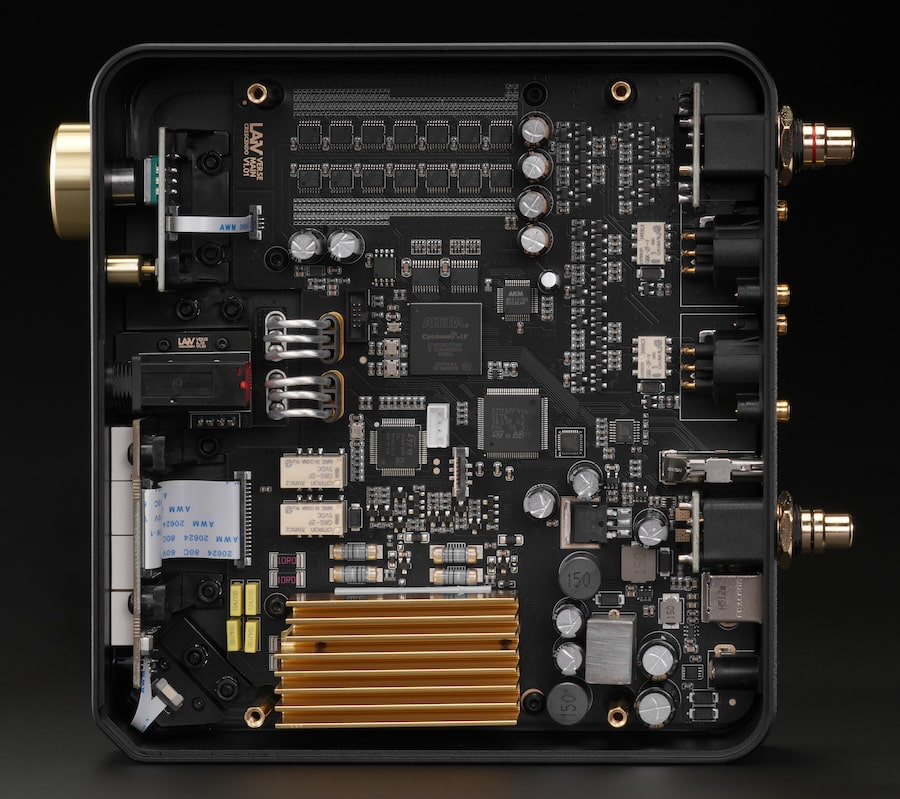

Supporting that DAC stage is an FPGA-based digital processing platform, which handles signal management and gives the VERSE its flexibility in playback modes and resampling.
The VERSE is designed to give users control over how their digital signal is handled rather than forcing a single approach.
The Crescendo VERSE supports native 1-bit DSD playback, keeping DSD signals in their original format without converting them to PCM, while also handling high-resolution PCM up to 768kHz and DSD up to at least DSD256 via its digital inputs. An integrated sampling rate converter (SRC) adds further flexibility, enabling PCM upsampling from 1x to 16x and DSD resampling up to DSD512 for those who want more control over how their digital content is processed.
There are also selectable playback modes (including NOS and SRC behavior), which means users can prioritize either signal purity or smoother multi-format playback depending on their system and library.
LAiV does include a small but important caveat: switching between PCM and DSD tracks in a mixed playlist can produce audible clicks or pops when using native mode. If your library jumps between formats, the multi-bit DSD mode converts everything to PCM for uninterrupted playback.

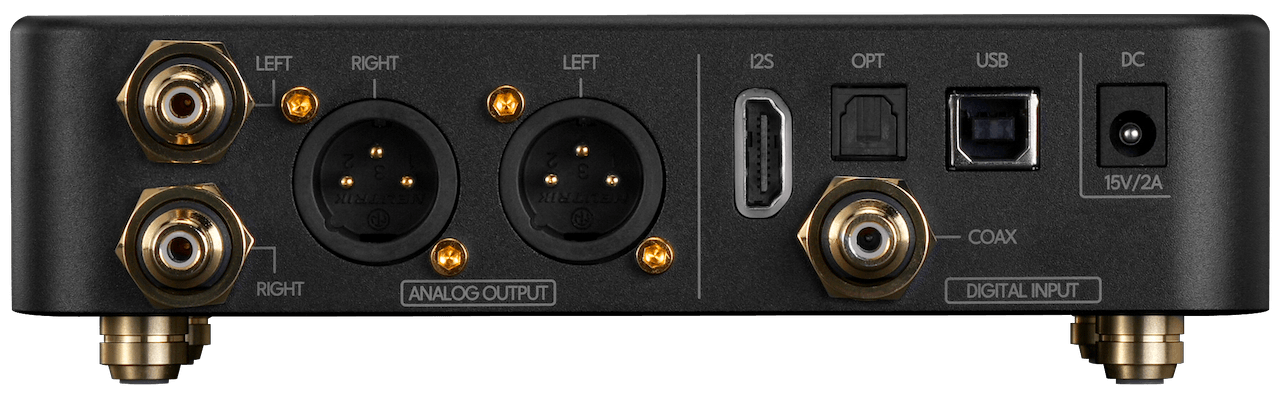
Digital Only Connectivity?
LAiV made a deliberate call with the Crescendo VERSE: this is a digital first component. It offers USB, optical, coaxial, and I2S inputs, with the latter configurable and clock aware for more advanced setups. All inputs support high resolution playback, with USB and I2S handling up to 768kHz PCM and high rate DSD. What you will not find here are any analog inputs. That omission is not an oversight, it is a statement. The VERSE is designed to be a dedicated digital front end, not a catch all hub trying to do everything at once, which may not be ideal for those who may wish to add an analog source.
Active Preamplifier
The Crescendo VERSE includes a discrete, output buffered preamplifier stage rather than a simple variable DAC output. It uses analog domain volume control to preserve signal integrity and maintains low output impedance for proper matching with downstream gear. Both balanced XLR and single ended RCA outputs are available and can be used simultaneously, which makes integration straightforward whether you are running active speakers, a power amplifier, or a hybrid system. This is where the one box concept starts to make practical sense in a real system.
Enough for Your Planars in Balanced Mode
The headphone stage is fully discrete and built with flexibility in mind, offering selectable gain settings to accommodate everything from sensitive in-ear monitors to more demanding full size headphones. Output is available via 4.4mm balanced and 6.35mm single ended connections. Power output reaches up to 1100 mW per channel in balanced mode and roughly 230 to 290mW single ended, which is enough for the majority of headphones people are actually using, although high impedance dynamic headphones are definitely a stretch and there is way to drive electrostatic headphones.
Physical Design & Usability
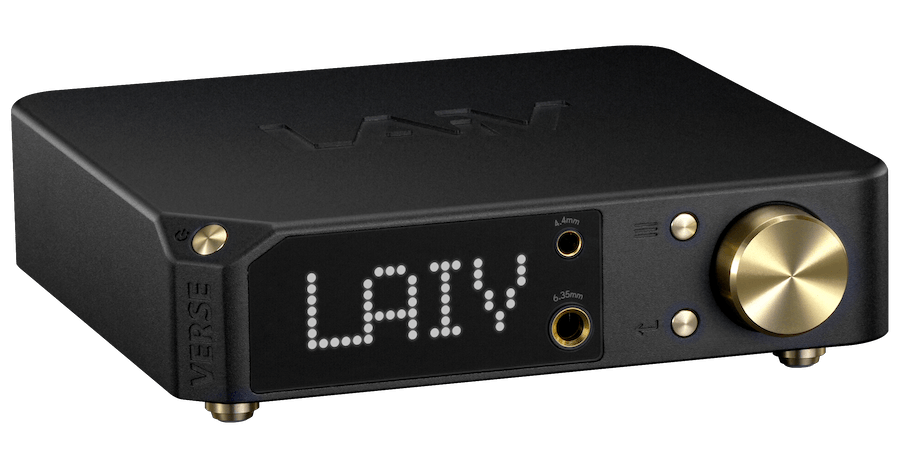
The Crescendo VERSE is built around a compact, desktop friendly chassis measuring approximately 230 mm wide (9.1 inches), 220 mm deep (8.7 inches), and just under 50 mm tall (about 2 inches), with a weight of about 0.9 kg (just under 2 pounds).
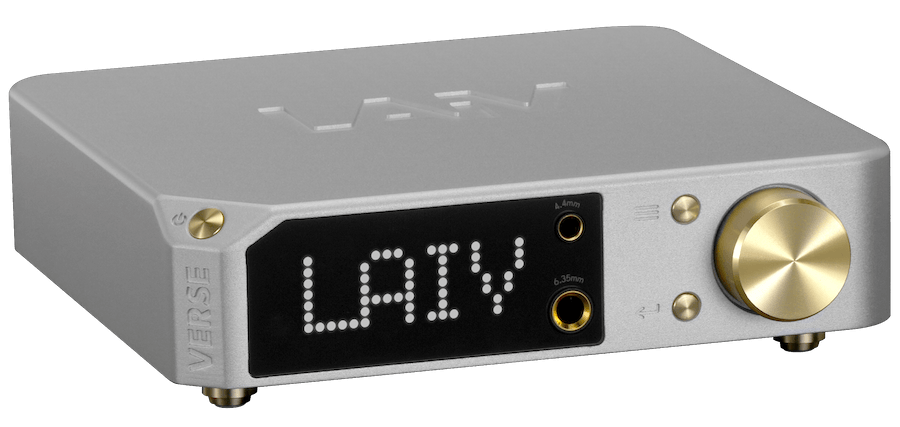
The enclosure uses a precision machined aluminum housing with a thick front panel and tight panel tolerances that give it a more serious, component grade feel than most devices in this price range. Finish options include a silver chassis with gold accents or a darker variant, both of which lean into a more distinctive, design forward aesthetic rather than disappearing into the background.
On the front, a dot matrix LED display provides clear readouts for input selection, volume level, sample rate, and playback status, while a central rotary encoder handles volume, input switching, and menu navigation with direct, tactile control. A full function remote is also included, allowing access to key settings such as gain, input selection, and playback modes without needing to interact directly with the unit.


The Bottom Line
What LAiV has created with the Crescendo VERSE is not a lifestyle product and not a stripped down DAC. It is a focused digital control center built around an R2R DAC for tonal character, a proper preamp stage for system integration, and a capable headphone amplifier for personal listening. There is no streaming platform, no analog input stage, and no attempt to be everything to everyone. That focus is the point.
At $849, it is a direct challenge to the idea that meaningful high end performance has to be expensive or complicated. The Crescendo VERSE is trying to be enough: a compact, high performance hub that can anchor a serious desktop or small room system without the cost and complexity that used to define the category. If it delivers on the promise of R2R performance at this level, the definition of affordable high end audio may need a reset.
We will know soon enough. James Fiorucci’s full review drops later this week, and if this category is on your radar, it is one you will want to read.
Where to buy: $849 at LAiV
You must be logged in to post a comment Login