Tech
LG Denies Smart TV Spying Claims But The Privacy Story Is More Complicated

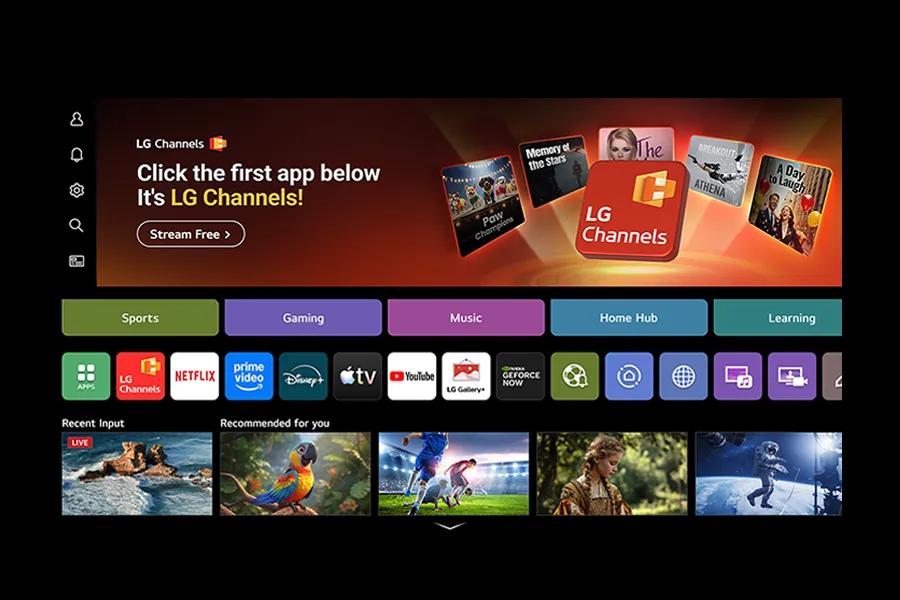
Buying a premium television used to mean worrying about black levels, motion processing, HDMI inputs and whether somebody at the factory had decided Vivid Mode needed to resemble the surface of the sun. In 2026, the Smart TV hanging on your wall is also a networked computer that may stay connected for years to phones, speakers, game consoles and smart-home devices while running software, serving ads, measuring viewing behavior and personalizing content.
That changes the privacy equation considerably. What was once a relatively dumb display has evolved into a persistent platform sitting at the center of the home network, which means picture quality is no longer the only thing worth paying attention to.
A modern smart TV is a networked computer running an operating system, connected to other devices in the home and, on some models, equipped with microphones. It can also include advertising technology and Automatic Content Recognition (ACR), which can identify what is being watched when the feature is enabled.
LG is hardly alone in any of this, but the company finds itself under renewed scrutiny following a lengthy investigation by Gamers Nexus, Level1Techs and independent security researchers into the behavior and security of several LG televisions. Their findings arrived less than four months after LG resolved a Texas lawsuit concerning its ACR practices, creating a story that involves data collection, consent, voice processing, network discovery and cybersecurity rather than a simple case of a television secretly eavesdropping from the corner of the room.
The available evidence does not justify stating that ordinary LG televisions continuously record every conversation around them. LG explicitly denies that interpretation, while the researchers and subsequent security analysis raise legitimate questions about other aspects of the platform and what could happen if a television were compromised. That distinction needs to remain front and center throughout this story.
LG Has Been Here Before
Privacy questions involving LG televisions did not begin in 2026. In November 2013, British developer DoctorBeet examined network traffic from an LG NetCast smart TV and reported that viewing information continued to be transmitted even after he disabled the television’s “Collection of watching info” setting. His packet captures showed channel information and a unique device identifier being transmitted without encryption.
DoctorBeet also found filenames from USB-connected storage appearing in outgoing requests, although the receiving URL returned an HTTP 404 error. His testing therefore demonstrated that the television attempted to send those filenames, not that LG successfully received and stored them on an operational server.
That involved 2013 NetCast hardware, not current webOS televisions, so it cannot be used as evidence that a 2026 LG OLED behaves the same way. It does, however, provide some historical context for why another privacy dispute involving LG televisions deserves more than a shrug and a new checkbox in the settings menu.

ACR Became a Much Bigger Business
What changed dramatically over the following decade was the business sitting behind the television. Automatic Content Recognition can generate a digital fingerprint of programming and use it to identify what is being watched, which can support audience measurement, content recommendations and advertising.
LG made its ambitions rather explicit in January 2021 when it invested nearly $80 million in television-data company Alphonso, becoming its largest investor with a controlling stake exceeding 50 percent. LG said the deal would combine Alphonso’s data analytics, media planning and Video AI capabilities with its televisions and help create an owned first-screen and cross-device advertising platform. Alphonso subsequently became LG Ad Solutions.
The company went further in September 2022, announcing that LG Ads Solutions’ proprietary ACR system would replace its legacy technology across millions of LG televisions internationally. LG said the technology was already active on its U.S. smart TVs and described ACR data as a tool advertisers could use to understand exposure, measure campaigns and identify viewing audiences.
LG Ad Solutions now markets access to 49 million LG smart TVs in the United States and 216 million globally, while promoting proprietary ACR data as part of its advertising platform. Those figures describe LG Ad Solutions’ addressable television footprint; they do not mean ACR is enabled on every one of those televisions or that all of them are transmitting identical information.
There is nothing particularly secret about the commercial strategy. LG openly operates a connected-TV advertising and measurement business, which means the television can continue producing economic value long after Best Buy has stopped caring whether you kept the box.
Texas Sued LG and Four Other TV Manufacturers
On December 15, 2025, Texas Attorney General Ken Paxton filed actions against LG, Samsung, Sony, Hisense and TCL over the use of ACR technology. Texas alleged that consumers were not adequately informed about the collection and use of viewing information and challenged whether the companies had obtained meaningful consent.
Those were allegations by the State of Texas, not judicial findings that every manufacturer violated the law or that every television collected information in precisely the same fashion. The fact that Texas pursued five major brands is also significant because it establishes that the larger controversy surrounding ACR is not unique to LG.
That distinction becomes especially important when discussing how ACR actually works. LG says its current implementation uses audio fingerprinting through the television’s internal audio processor, rather than screenshots, screen recordings or stored audio, and says the feature is off by default until a user accepts its Viewing Information Agreement.
LG Reached an Agreement With Texas in May
LG and Texas resolved their dispute in May 2026 through an Agreed Final Judgment and Permanent Injunction. The order requires LG to obtain affirmative express consent before collecting or processing covered viewing data and requires clearer disclosures explaining that ACR is being used to identify and analyze television content.
The judgment also contains language that is essential for accurate reporting: LG’s agreement does not constitute an admission of wrongdoing, fault or liability, and the order cannot be construed as an admission that LG violated the law. Texas additionally recognized LG’s efforts to implement privacy protections, including measures the judgment describes as exceeding industry norms.
The accurate formulation is therefore not “Texas proved LG illegally spied on customers.” Texas alleged improper practices involving ACR and consent; LG agreed to stronger disclosure and consent requirements in order to settle the litigation without admitting wrongdoing.
The judgment also stipulates that viewing data collected from U.S. consumers has not been and will continue not to be transmitted from the United States to the People’s Republic of China. That language matters because it is materially different from implying that Texas discovered LG had previously been sending American viewing data to China.
Gamers Nexus and Level1Techs Went Looking Under the Hood
Then came September. On September 6, Gamers Nexus published a more than two-hour investigation developed with Level1Techs and independent security researchers, examining several LG televisions through network monitoring, firmware analysis and security testing. The researchers reported extensive network and device discovery, examined LG’s ACR and advertising infrastructure and disclosed security weaknesses they said were being handled through responsible-disclosure channels.

This is where the story requires some discipline because not every demonstration represented normal out-of-the-box television behavior. Malwarebytes, after reviewing the investigation and LG’s response, noted that some findings involved intended LG software behavior while others depended on security vulnerabilities and a compromised television.
The security vulnerabilities themselves are another matter. The researchers reported remote-code-execution vulnerabilities to LG but withheld full technical details while responsible disclosure was underway. Malwarebytes said LG had not publicly addressed those specific vulnerabilities as of its September 10 update, and as of September 16, LG has not publicly announced a fix for them.
Gamers Nexus also reported that the tested sets identified other devices and nearby Wi-Fi access points, while The Register reported claims involving device names, IP information, Wi-Fi networks and signal data. LG acknowledges device discovery and nearby Wi-Fi processing but says those functions serve separate purposes: device discovery supports connectivity, while Wi-Fi information can help estimate approximate location for ACR when the appropriate agreements have been accepted.
That is precisely why describing every finding as “LG spying” creates more heat than light. There are questions about normal product behavior, optional data collection and exploitable security vulnerabilities, and they should not be tossed into the same bucket merely because they create bloody chum for the online sharks.
LG Responds
LG published a detailed statement on September 12, addressing the allegations and explaining how it says voice recognition, ACR, network discovery and advertising systems operate. Its central denial could hardly be clearer:
“LG smart TVs do not continuously record or transmit users’ conversations.”
LG says voice recognition is disabled by default and requires the relevant agreement to be accepted. On supported sets with hands-free controls enabled, wake-word detection takes place locally; if the wake word is not detected, LG says the audio is not stored, converted to text or transmitted. Once a legitimate voice session begins, speech can be converted to text, but LG says sessions are temporary and limited to approximately 18 seconds.
The company also says voice information is not stored offline for later transmission when internet connectivity returns. Supported models equipped with a physical microphone switch can disable the built-in microphone entirely, although the remote microphone can still be used deliberately when voice recognition is enabled.
LG’s explanation of ACR is equally specific. The feature is optional and off by default; enabling it requires accepting the Viewing Information Agreement, while personalized and cross-device advertising require additional consent. LG says ACR may operate with Live TV, HDMI-connected equipment and LG Channels but does not operate inside third-party LG apps such as Netflix or YouTube.
LG also confirms that nearby Wi-Fi information and signal strength can be used to help estimate a television’s approximate location when relevant ACR agreements have been accepted. Depending on market, consent and user choices, ACR-derived viewing information may be shared with majority-owned LG Ad Solutions for audience analysis and, with further consent, interest-based or cross-device advertising. LG explicitly says voice and ambient-audio data are not provided to LG Ad Solutions for advertising.
That is a far more useful conversation than arguing over whether your OLED has suddenly developed an interest in what you discuss during dinner.
Gamers Nexus Fires Back
LG’s September 12 statement has not ended the dispute. Gamers Nexus responded the same day with a 47-minute follow-up challenging the company’s explanations and presenting additional testing that the researchers say did not require compromising the television.

In one test, researcher uturn says an ordinary LG television connected to an HDMI source transmitted information to Alphonso, the advertising company that became LG Ad Solutions, including a device identifier, city, state, ZIP code, latitude and longitude and the nearest major road. The researchers say the data was transmitted as frequently as 20 times per minute alongside audio fingerprints identifying content being played through HDMI.
LG acknowledges that nearby Wi-Fi information can be used to help estimate a television’s approximate location when the relevant agreements have been accepted, but we have not found a specific LG response addressing the exact data fields or transmission behavior documented in this follow-up.
Gamers Nexus also asked attorney Vincent Agosta to examine LG’s user agreements and consent process. His criticism centers on whether an ordinary purchaser could reasonably understand the collection and sharing described across multiple agreements — an issue that moves this controversy beyond the easy “is the microphone listening?” argument and back toward the more consequential question of what constitutes meaningful consent on a device most people still think of primarily as a television.
Is LG Unique?
No. ACR and smart-TV viewing-data collection are industry issues, which is precisely why Texas pursued multiple manufacturers rather than LG alone.
Vizio provides one of the clearest historical examples. In 2017, the FTC and New Jersey announced a $2.2 million settlement over allegations that software on 11 million Vizio smart TVs collected viewing histories without users’ knowledge or consent; the resulting order required prominent disclosure and affirmative express consent.
What makes the present LG story more significant is the collision of several issues at once. ACR and advertising were already under legal scrutiny, and the Gamers Nexus investigation then added questions about network behavior, voice processing and reported security vulnerabilities that could increase the consequences if a television were compromised.
That does not make LG uniquely nefarious. It makes LG the company currently sitting underneath the microscope.


Should LG Owners Be Concerned?
There is no reason to panic or have Uncle Paulie drag a 77-inch OLED into the Pine Barrens, but LG owners should take the privacy and security settings on their televisions seriously. The available evidence does not justify assuming that an uncompromised LG TV is secretly recording every conversation in the room, and LG says continuous ambient recording does not occur. At the same time, LG confirms that enabled ACR can identify supported content, process device and network information, use nearby Wi-Fi signals to help estimate approximate location and share certain viewing information with LG Ad Solutions depending on consent and jurisdiction.
A few practical steps can reduce unnecessary data collection and limit what a compromised television could access:
- Avoid unnecessary router exposure. There is generally no reason to manually forward ports to a smart TV, and UPnP can be disabled if your household does not depend on it.
- Keep the TV’s firmware current. Install software and security updates promptly. Whatever one thinks about ACR, the vulnerabilities identified by researchers are a reminder that a smart TV is a networked computer with very good black levels.
- Review LG’s privacy agreements individually. Pay particular attention to the Viewing Information Agreement, Voice Information Agreement and Interest-Based Cross Device Advertising Agreement rather than accepting everything just to get through setup.
- Disable ACR if you do not want viewing information collected. LG says ACR is off by default, requires consent and can be disabled without losing core functions such as HDMI inputs, Live TV, streaming apps or software updates.
- Turn off voice features you do not use. On supported models, owners can also use the physical microphone switch to disable the television’s built-in microphone.
- Consider isolating smart-home devices from your primary network. A separate guest or IoT network can reduce what a compromised television, camera or speaker can reach, although overly aggressive isolation may interfere with casting and device discovery.
The Bottom Line
Calling this simply “LG TVs are spying on you” would produce a terrific thumbnail and an unnecessarily sloppy news story. The underlying facts are more complicated and, frankly, more important.
Texas challenged LG’s ACR consent practices, while LG settled the litigation and accepted stronger consent and disclosure requirements without admitting wrongdoing. Gamers Nexus and its research partners subsequently reported network behavior and security issues they considered troubling, including vulnerabilities that could greatly increase the privacy implications of a compromised set.
LG disputes the interpretation that its normal voice-recognition system continuously records household conversations, but its September response also illustrates just how sophisticated the information infrastructure behind a modern television has become. ACR, approximate-location processing, device discovery, audience measurement and advertising can all exist within the same product, even if they operate as distinct systems with separate permissions.
The larger issue therefore extends well beyond LG. Smart-TV manufacturers increasingly operate software and advertising platforms that can continue generating revenue and information long after the hardware sale, and consumers deserve to understand exactly what they are agreeing to when those capabilities are enabled.
Picture quality still matters, but privacy has quietly become another television specification worth paying attention to. At this point, asking your $3,000 OLED to mind its own business should not qualify as an advanced feature.
For more information: lg.com
You must be logged in to post a comment Login