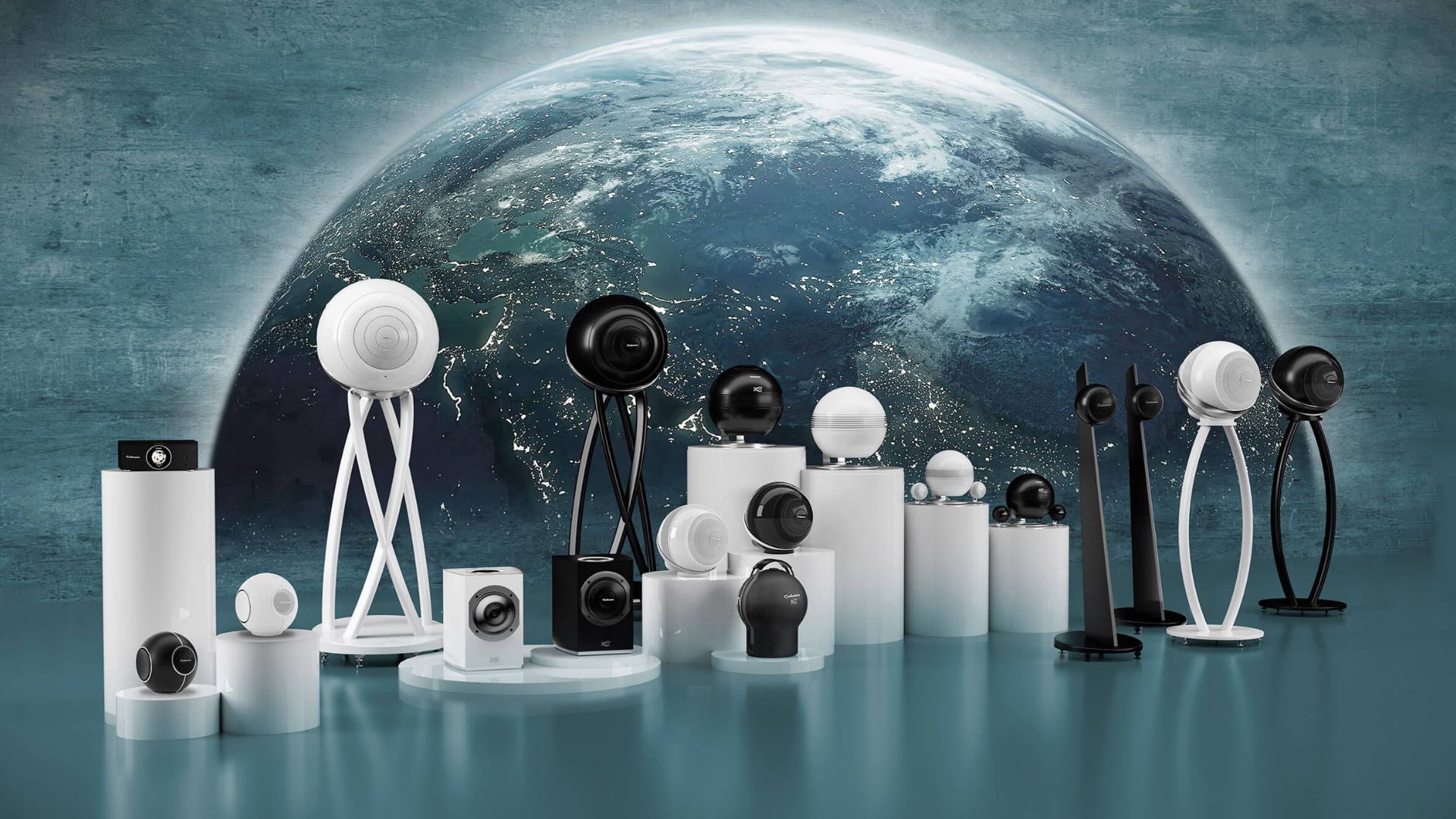
German electronics manufacturer Loewe Technology has acquired French loudspeaker company Cabasse, bringing a 76-year-old acoustic engineering brand into a premium electronics group best known for its high-end television and sound system products.
Cabasse, founded in 1950 in Brittany, has built its reputation around proprietary coaxial driver technology and a catalogue that includes the Sphere Evo loudspeaker. The brand currently has an independent research, development and production operation based in Brest, and this will continue following the transaction.
That operational continuity reflects the terms of the deal, under which Cabasse retains its brand identity and engineering autonomy while gaining access to Loewe’s international sales infrastructure and marketing resources to support wider distribution of its products.
Loewe’s own catalogue centres on its Stellar television range alongside a series of integrated sound systems, with the German brand carrying more than a century of heritage in premium consumer electronics that has positioned it as a design-led alternative to mainstream entertainment hardware manufacturers.
Advertisement
Loewe has outlined plans to use Cabasse’s technology portfolio, which spans advanced loudspeaker design, digital signal processing and acoustic calibration systems as the foundation for a new generation of integrated audiovisual products across both brands.
Advertisement
Those products are expected to include fully integrated home cinema and multi-room audio systems, along with wireless and connected audio hardware that draws on Cabasse’s proprietary calibration technology for use within future Loewe product lines.
Aslan Khabliev, CEO of Loewe Technology, said the acquisition would bring acoustic expertise that takes the group’s audio capabilities to a new level, while Cabasse Deputy CEO Arnaud Hendoux described the deal as a new chapter that preserves the brand’s Brest-based heritage while opening access to a broader international platform.
Advertisement
No financial terms for the acquisition were disclosed, and neither company has confirmed a timeline for when jointly developed products are expected to reach the market.
It seems fair to say that pinball machines are among the most universally loved gaming systems known today, yet the full-sized ones are both very expensive and very large, while even the good quality table-sized ones tend to be on the expensive side. That raises the question of whether a fully 3D printed pinball machine could at all be fun and not just feel like a cheapo toy? A recent video by [Steven] from [3D Printer Academy] on YouTube makes here a compelling argument that it might actually be worth something to consider.
In addition to being fully modular and customizable the most compelling element is probably that the design supports two- and four-player multiplayer. This sees the metal balls leaving at the rear and from there entering the playing field of another player’s machine, which can probably get pretty chaotic.
Unfortunately this is part of a Kickstarter campaign, so you’ll have to either shell out some cash to get access to the print files or DIY your own version. We’d also be remiss to not address the durability concerns of a 100% plastic pinball machine like this, plus the lack of serious heft to compensate for more enthusiastic playing styles.
Elon Musk testified on day two of his trial against OpenAI, saying he helped create the company as a nonprofit counterweight to Google and would not have backed it if the goal had been private profit. CNBC reports: Musk on Tuesday was the first witness called to testify in the trial. He spoke about his upbringing, his many companies, his role in founding OpenAI and his understanding of its structure. Musk said in his testimony that he was not opposed to the creation of a small for-profit subsidiary, “as long as the tail didn’t wag the dog.” Musk said he was motivated to start OpenAI to serve as a counterweight to Google. He got the idea after an argument he had with Google co-founder Larry Page, who called Musk a “speciesist for being pro-human,” he testified. “I could have started it as a for profit and I chose not to,” Musk said on the stand.
Earlier, attorneys for Musk and OpenAI presented their opening arguments to the jury. Musk’s lead trial lawyer, Steven Molo, delivered the opening statement for the Tesla and SpaceX CEO. OpenAI lawyer William Savitt gave the opening statement for the AI company, Altman and Brockman. OpenAI has characterized Musk’s lawsuit as a baseless “harassment campaign.” The company said Monday in a post on X that it “can’t wait to make our case in court where both the truth and the law are on our side.”
During his testimony on Tuesday, Musk repeatedly emphasized that he founded OpenAI to serve as a counterweight to Google. He said he got the idea after an argument about AI safety with Google co-founder Larry Page, who Musk said called him “a speciesist for being pro-human.” Musk said he was concerned Page was not taking AI safety seriously, so he wanted there to be an nonprofit, open source alternative to Google. “I could have started it as a for profit and I chose not to,” Musk said on the stand. Further reading:Elon Musk and OpenAI CEO Sam Altman Head To Court
Google’s Photos app has been doing things that Apple’s Photos app couldn’t, for years, and the iPhone-maker has noticed. Bloomberg’s Mark Gurman, in his latest report, claims that iOS 27, iPadOS 27, and macOS 27 will come with a dedicated “Apple Intelligence Tools” section inside the Photos editing interface.
The “Apple Intelligence Tools” section will include three new AI-powered photo-editing features: Extend, Enhance, and Reframe. Before we begin with what the features actually do, all of them will run entirely on-device, and, in a typical Apple fashion, complete their edits in seconds.
Christine Romero-Chan / Digital Trends
What will the new Apple Intelligence photo editing tools do?
Extend, as the name suggests, extends a picture’s boundaries by generating new imagery and seamlessly stitching it to the existing one. You should be able to use the feature to add some surrounding to close-up shots or add some negative space to either side of the subject.
Enhance, on the other hand, works as a one-tap enhancement button, which immediately adjusts the color, lighting, and the overall image quality, without going through different editing options and fiddling with various sliders.
Reframe is designed primarily for spatial photos captured for the Vision Pro headset. It lets users shift the perspective of a 3D image after it’s already been taken, allowing you to move from a front-facing to a side-facing view.
Advertisement
Apple
Is Apple actually ready to release all three features?
Not at the moment, no. Per Gurman, both the Extend and Reframe features are producing inconsistent results in the internal testing. If the underlying AI models don’t adapt or the results don’t improve significantly before the September launch event, Apple might delay them or scale back.
While I’m a big fan of the Apple Photos app myself, it currently offers only one AI-based editing feature, Clean Up, and that doesn’t work as well as the feature does on other smartphones like the Galaxy S or the Pixel flagship series.
I remember when Google released its Magic zeditor in 2023, and Samsung’s Galaxy AI followed quite aggressively in the coming years. In response, the best Apple could come up with was Clean Up. In my opinion, Apple genuinely needs the Extend, Enhance, and Reframe features to work, and work in time for a showcase at the WWDC 2026 and a public release in September.
Konrad Tomaszkiewicz, a writer and quest designer on CD Projekt Red’s first two Witcher games who went on to direct the award-winning Witcher 3, has spent the past several years building an original RPG at his new studio, Rebel Wolves. While the game resembles the director’s prior fantasy series in… Read Entire Article Source link
There’s still a meaningful effort afoot to implement statewide “right to repair” laws that try to make it cheaper, easier, and environmentally friendlier for you to repair the technology you own. All fifty states have at least flirted with the idea, though only Massachusetts, New York, Texas, Minnesota, Colorado, California, Oregon, and Washington have actually passed laws.
Alaska could be up next. Two versions of a new right to repair law are winding their way through the Alaska state House and Senate. The bills would amend the Alaska Unfair Trade Practices and Consumer Protection Act, requiring tech hardware manufacturers to make parts, tools or software needed for repairs available to independent service providers and consumers.
“In a lot of ways, this is a deeply conservative bill in the sense that for most of the 20th century, you could fix the stuff you bought, and the parts would be available, because it was another revenue stream for the businesses,” said Anchorage Democratic Sen. Forrest Dunbar, the sponsor of the Senate bill.”
As is also always the case, hardware vendors from a variety of sectors (agricultural, medical, tech, consumer hardware) are lobbying against Alaska’s proposal, falsely claiming that easier, more affordable repairs constitute a privacy and security threat to the public.
Advertisement
TechNet (a lobbying coalition that includes Dell, Apple, Amazon, Google, Nvidia, and Verizon), for example, is trying to convince the Alaska state legislature that everything is working fine currently, and that fixing anything would make consumers less safe. Apparently because truly independent repair professionals are too incompetent if they don’t have big corporate oversight:
“TechNet wrote that the bill would erode the current system where manufacturers work with authorized repair service providers, and that these agreements “ensure that technicians have the appropriate training, access to safe repair procedures, and the qualifications necessary to protect both the device and the consumer.”
TechNet is also trying to claim that the Alaska bill is “misaligned with language of right-to-repair bills from other states” such as New York. Granted they would say that, given that after New York passed its bill, tech lobbyists convinced NY Governor Kathy Hochul to water that states’s bill down to the point of uselessness.
The concern now is that lobbyists successfully manage to water the Alaska bill down so badly that it ultimately becomes similarly useless.
Something that’s broadly not mentioned in coverage of right to repair: while eight states have passed right to repair laws in recent years, not one of those states has actually managed to actively enforce it, despite no shortage of bad behavior by companies looking to secure repair monopolies. That’s something that needs to change if the movement is to have any serious impact.
After previously trying out low-tech compression molding with a toaster oven and 3D printed molds, [future things] is back with a video that seeks to explore some of the questions raised after the first video. Questions such as how well this method works with HDPE and PLA thermoplastics, whether the flashing could be cut off by the mold and the right temperatures and times to heat the plastic before a charge is ready for inserting into the mold.
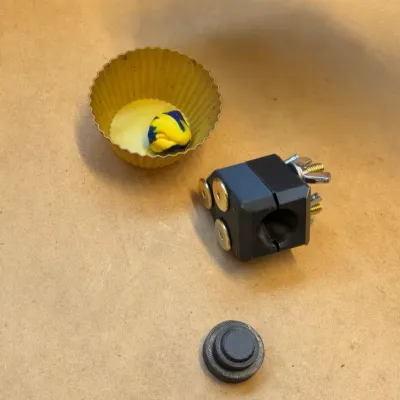
In this video the same PHA-based mold is used, but in a three-piece configuration to allow for a more complex shape. This way game tokens could be made for use by the son of the author, which also shows one straightforward and very practical use of this method.
A big change here is that no more metal chopsticks are used to handle the charge, as this was found to cool down the heated plastic too much. Instead the hot charge is handled with fingers and wooden chopsticks, with the plastic heated until it has about the consistency of thick honey. For LDPE this takes about 5-7 minutes at 130°C. After compressing the charge into the mold, about 30 seconds are all it takes for the plastic to cool down enough.
There was a question about the use of mold release spray, but this didn’t seem to cause any issues, so can probably be used safely. As for other plastic types, HDPE works fine too when you heat it up at a slightly higher temperature and don’t mind it being tougher to handle.
Advertisement
Easiest is probably PLA, which would seem unsurprising. Using some chopped-up PLA printing waste it was easy enough to make a few more game tokens, demonstrating that this method is very viable for converting scrap FDM print waste into such items. As noted in the comments by [edmundchao] this method works great too for PETG, using PETG molds, while using a ratcheting clamp for extra pressure instead of just pressing by hand.
We may receive a commission on purchases made from links.
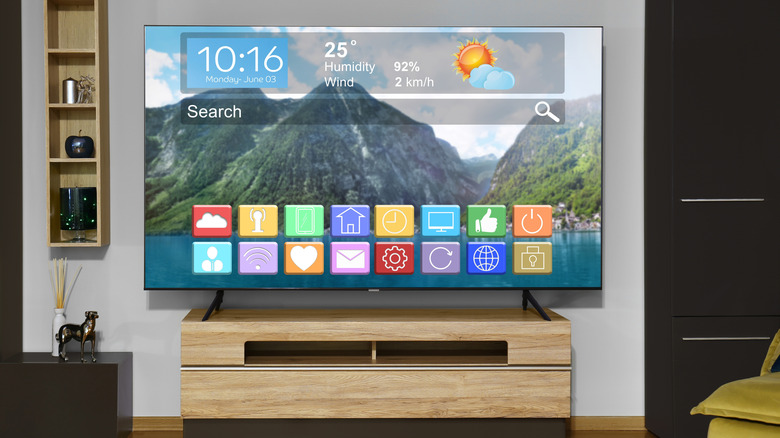
With the rise of streaming services came smart TVs with built-in apps and features that make it easier than ever to start watching content on the big screen from the moment you take it out of the box. But let’s be honest, most smart TVs aren’t all they’re cracked up to be, and they really never have been. Many proprietary operating systems that come with your TV are both sluggish and confusing to navigate. They may drop support for popular apps over time, lack quality-of-life features, and turn the experience of using your smart TV into a constant headache.
Meanwhile, a few companies have created products that universalize the smart TV experience, adding features and app libraries inside of HDMI dongles that cost less than the sales tax you’ll pay on most TVs. That means you don’t even need to get a different television if you’re looking to escape the software experience on the one you own. It also means you can extend your TV’s longevity by years longer than you might think. Between all of those factors, the entire concept of a smart TV is becoming somewhat obsolete. Diving in a bit deeper, here’s why there’s hardly any need for smart TVs anymore.
Advertisement
Streaming boxes and dongles are cheap and capable
There’s one glaring reason to ignore your TV’s smart features: smart TV dongles and set-top boxes are cheap and often have a wider range of features. Even a “dumb” TV can instantly be made smart by plugging in something as cheap as an Amazon Fire TV Stick 4K or Roku Streaming Stick 4K for under $40, and even on the expensive side, a Google TV Streamer is just shy of $100. You can even flex your budget a drop more to $130 for an Apple TV 4K, which can integrate with other Apple devices. In essence, you’re plugging a brand-new operating system into your TV, and it will add just as much value to your setup, whether your display is a cheap computer monitor or a multi-thousand-dollar OLED with all the fixings.
Advertisement
All of the aforementioned products will immediately add features your TV may have lacked, such as voice control, the ability to pair Bluetooth headphones, and smart home integration. You can control Google Home through your Chromecast or control your Alexa ecosystem through your Fire TV Stick, and even Roku will integrate with both so that you can control media with voice commands by using a smart speaker.
Moreover, Fire OS, Roku OS, and Google TV (the respective operating systems used by those devices) have a robust app library that contains pretty much every streaming service you could ask for. No more hoping that the developers of that obscure service, which exclusively streams the movie you’re trying to watch, bothered to make an app for your Samsung Tizen TV. In the case of Google TV, you can even install many apps from the Play Store just like on an Android phone.
Advertisement
Many smart TV operating systems are simply awful
Not only do cheap streaming dongles make any TV into a modern smart TV, but you can configure most TVs to simply boot into the connected device when you turn them on, bypassing their built-in operating system entirely. That’s a good thing, because not only do some of the major smart TV operating systems have features your TV likely doesn’t have by default, but also because your TV’s operating system may not be particularly great to use.
On the high end, TVs may have enough processing power and memory to run their OS fluidly, but budget TVs rarely do. That makes them frustratingly sluggish as you wait for apps and menus to load. Another common issue is that, due to their relatively small user bases, many developers abandon app development for proprietary smart TV operating systems. Even if your TV has great app support when you buy it, just a few years later, you might have lost some of your favorites. Among the apps that have dropped support for certain smart TVs in some capacity are YouTube, Disney+, and Netflix, all streamers that are staples of the modern media ecosystem.
Although smart capabilities are still essential for modern TVs, the real brains have moved off-device to streaming peripherals. That’s actually good news, since it means you can keep your TV up-to-date without needing to buy a brand new one.
The world today is riven by cultural differences, political divisions, and geopolitical disputes — a challenging environment for any investor hunting for startups that can grow large enough to deliver venture-scale returns.
Kompas VC has developed a regionally sensitive strategy to help it navigate, and invest in, this fragmented world. And it’s putting fresh capital towards this approach with a new €160 million fund ($187.5 million), the firm told TechCrunch.
“We see the world really falling into three main spheres of economic activity, of political activity — the U.S., Europe, and China,” Sebastian Peck, partner at Kompas VC, told TechCrunch. “We certainly see today that these three domains follow very, very different trajectories.”
Kompas has staked its reputation on backing startups that tackle core industrial competitiveness challenges, from manufacturing and supply chains to critical infrastructure and sustainability. Those themes haven’t disappeared, but different regions emphasize them to varying degrees.
Advertisement
“There was a lot of enthusiasm around these themes back in 2021,” Peck said. “In 2026, we’re in a very, very different paradigm. It’s all about AI, it’s all about fast growth, very explosive growth. A lot of big topics that we partially play to but also are not really part of what we stand for.”
“Our focus is in the physical world, anything around producing physical goods,” he added, saying that Kompas focuses on startups working on decarbonization, productivity, and risk management. “We’ve found our niche.”
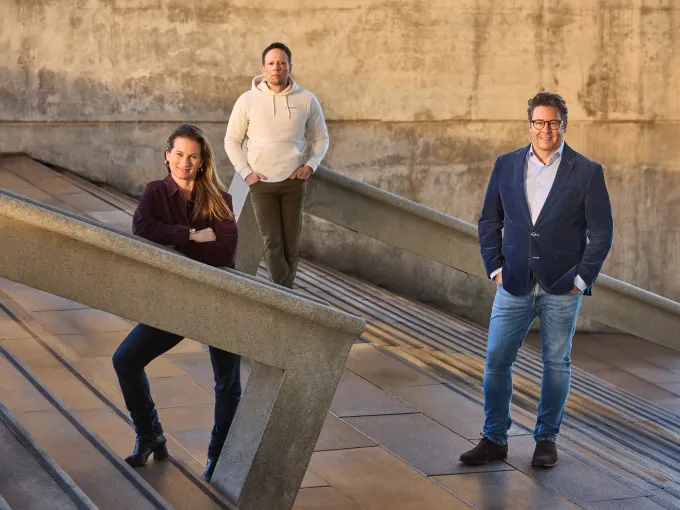
Kompas VC partners, from left: Talia Rafaeli, Andreas Winter-Extra, and Sebastian PeckImage Credits:Kompas VC /
That niche turns out to be pretty broad. Reshoring is en vogue in nearly every market, and depending on the startup, those markets typically have more than enough scale for a firm like Kompas.
Techcrunch event
San Francisco, CA | October 13-15, 2026
Advertisement
Though dwarfed by some venture funds these days, Kompas’s newly raised second fund should give it ample opportunity to lead early stage rounds with checks ranging from €3 million to €5 million.
As a European fund, Kompas has access to a range of founders and startups in the region. But it must weigh how global fragmentation might limit the potential for some to deliver venture returns. Peck cites prefab housing as an example. The approach is widely used in Scandinavian countries, but it isn’t as common in Germany or the rest of Europe, let alone the United States.
Advertisement
“It feels like such an intuitive solution. It’s a product that is effectively an industrial product. It should be highly scalable,” he said. Ultimately, the reason it doesn’t resonate outside Scandinavia has more to do with “cultural conditioning” than the technology itself, he said. “In that industry, if the U.S. isn’t the market you can go to, you need to look very, very carefully at whether there’s a large enough addressable market.”
The fragmentation extends beyond housing. For example, in Europe, sustainability is still broadly attractive, in contrast to the U.S., where the theme doesn’t have the cachet it did several years ago.
Still, a lot can change quickly, Peck acknowledges. “We are investing over 10-, 15-year horizons. That’s a few legislative periods to bridge, and sometimes things swing in unexpected directions.”
The shifting landscape poses a challenge, but also an opportunity for a smaller investor like Kompas. “I think there’s a great space for highly focused, highly specialized, smaller funds like ours to be the first check-in and bring sweep up certain themes and certain founders,” Peck said.
Advertisement
When you purchase through links in our articles, we may earn a small commission. This doesn’t affect our editorial independence.
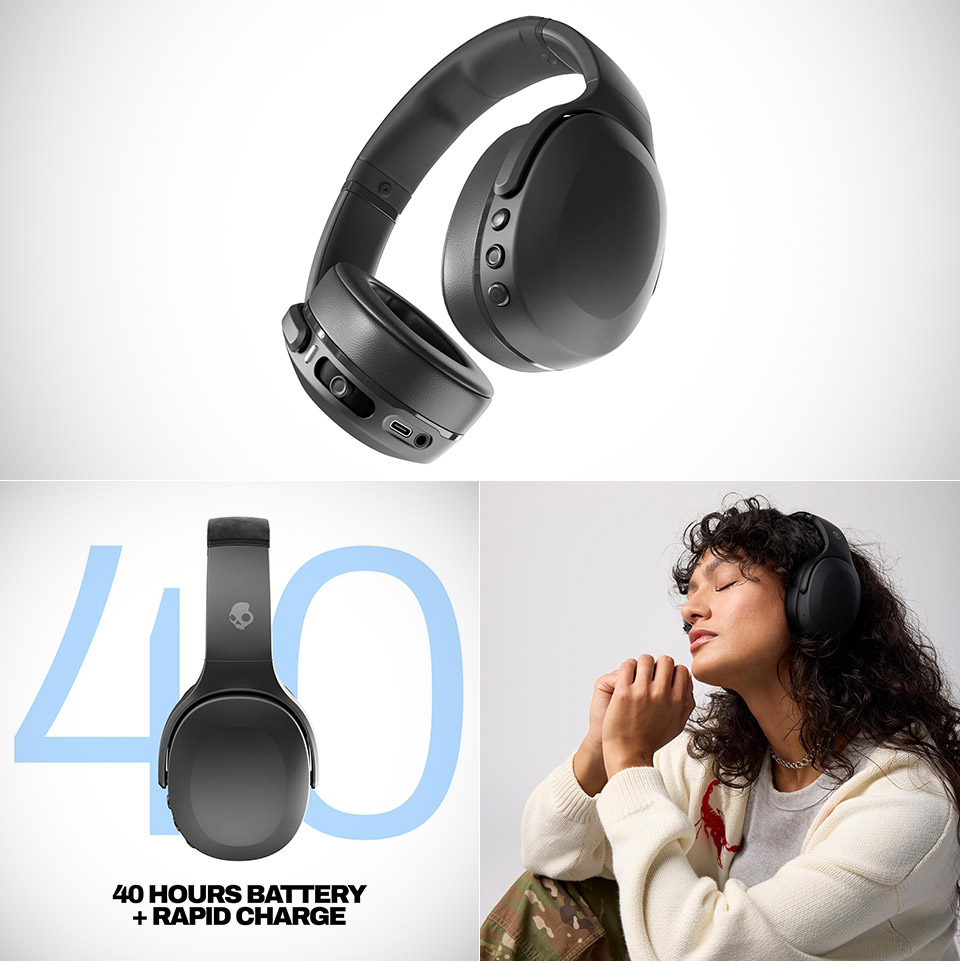
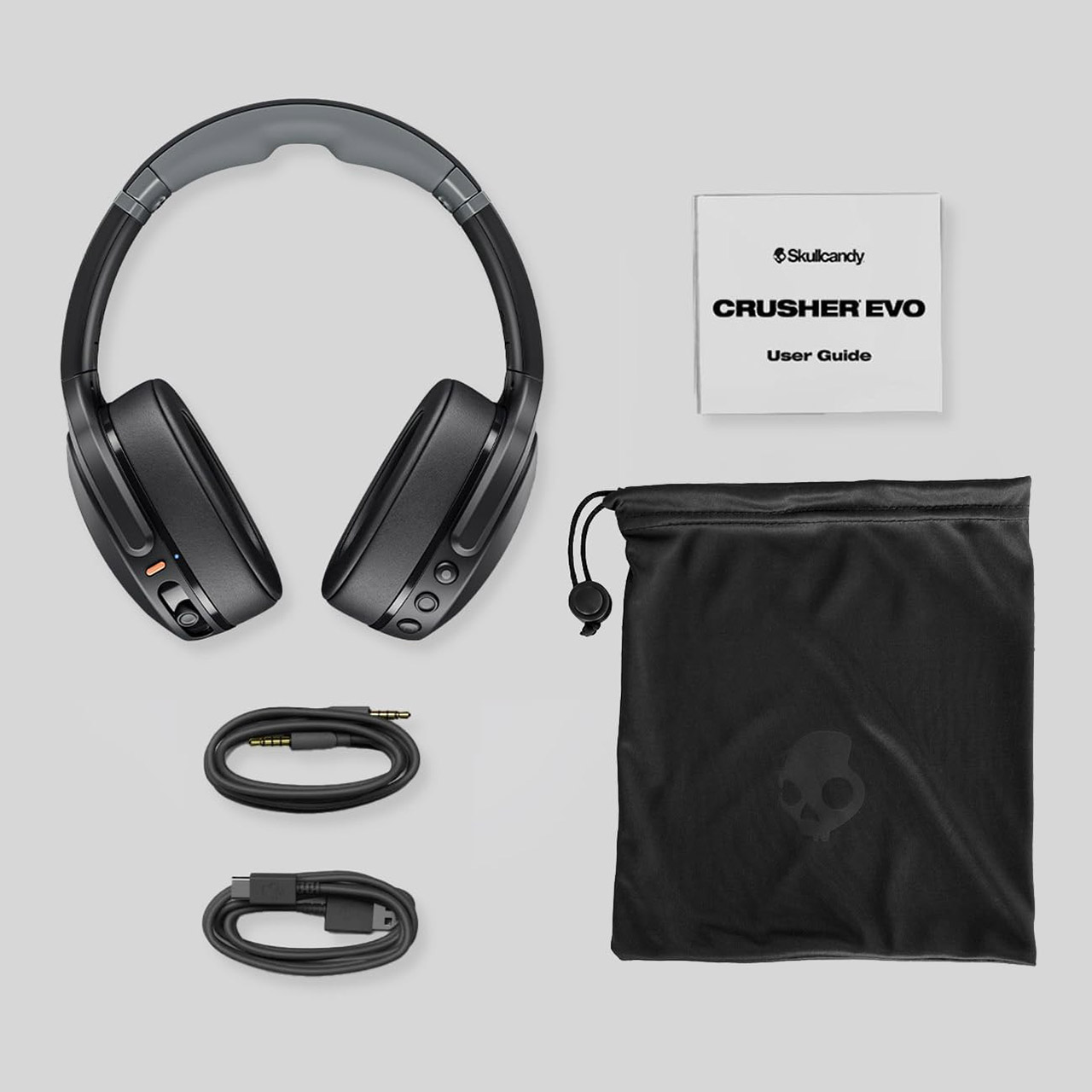
When looking for some powerful wireless headphones, the Skullcandy Crusher Evo, priced at $99.99 (was $210), is a popular choice. Why? Users want something with a lot of bass, but not so much that it drowns out the rest of the track. On the right earcup, there is an adjustable slider that allows you to fine-tune the low end to your liking.
Crank it right down, and the sound remains pleasant and balanced, with nothing getting lost in the mix. Turn it up, though, and you’ll be rewarded with a KNOCK of bass that literally vibrates through the earcups, all the way to the top of your skull. Two full-range drivers handle the rest of the audio, so your voices and guitars stay exactly where they should, even when the bass is turned up to eleven.
PATENTED MULTI-SENSORY CRUSHER BASS TECHNOLOGY. Featuring two full-range 40mm audio drivers plus additional dual bass drivers, your music and movies…
UP TO 40 HOURS BATTERY + RAPID CHARGE. Listen to your music for days with up to 40 hours of battery life. With Rapid Charge, just 10 minutes of…
PERSONAL SOUND IN THE SKULLCANDY APP. Download the app and participate in a hearing analysis that automatically adjusts the sound levels for your…
Real-world testing proves that the forty-hour battery is actually rather reasonable, as a single charge will last you several days, including commutes, dog walks, workouts, and so on. When you run low on battery, ten minutes plugged in provides you roughly four hours of music, which is quite useful, especially on those mornings when you’re racing around getting ready and don’t have time to think about your case. The Bluetooth remains rock steady even when you’re bouncing between rooms or working out, and we’ve had reports of zero odd drops from folks who’ve put these through their paces over the course of a few weeks.
Advertisement
The memory foam earcups and padded headband provide a highly comfortable experience, even after hours of use. The over-ear style effectively blocks out background noise, making it ideal for subway commutes or loud offices that do not require active canceling. Some people have reported feeling slightly warm after a few hours, but the fit is really good even if you wear glasses, and it’s rather forgiving on different skull sizes once you’ve worn them in. A handy small control panel on the earcup handles volume, skipping, and calls, eliminating the need to fumble for your phone.
The Skullcandy app adds a personal touch by running a fast hearing test and then adjusting the sound profile to match your individual ears. The Tile tracking embedded into the headphones means that if you ever misplace them, you can simply whip out your phone and it will show you precisely where they are – for example, under the back seat of your car or buried in a gym bag. When you’re going on a trip, packing is a breeze thanks to the easy-to-fold design and supplied case, and there’s even an aux cord in case you run out of juice after a long day.
AWS CEO Matt Garman at the event Tuesday. (GeekWire Photo / Todd Bishop)
SAN FRANCISCO — Amazon moved quickly Tuesday to capitalize on OpenAI’s new relationship status with Microsoft, launching a preview of OpenAI’s models on its Bedrock platform less than 24 hours after the ChatGPT maker was freed from its previously exclusive cloud arrangement.
The companies described the news as meeting years of customer demand.
“Their production applications run in AWS. Their data is in AWS. They trust the security of AWS, and we’ve forced them for the last couple of years, to get great OpenAI models, to go to other places,” AWS CEO Matt Garman said at an event in San Francisco.
OpenAI CEO Sam Altman appeared at the event via recorded video, noting that his “schedule got taken away” from him for the day, an apparent allusion to the opening of the trial in Elon Musk’s lawsuit against him and OpenAI in nearby Oakland.
“The opportunity ahead of us is enormous, and the most exciting part is that this is not something in the future — it’s starting right now,” Altman said in the video.
Advertisement
Sam Altman appears via recorded video at the event.
Altman also said OpenAI’s Codex coding tool will be available to AWS customers, and the companies unveiled Amazon Bedrock Managed Agents, powered by OpenAI — the product name for the enterprise agent platform previously described as a “Stateful Runtime Environment” when the two companies announced their partnership in February.
Denise Dresser, OpenAI’s chief revenue officer, said the hundreds of enterprise customers she has met since joining the company four months ago are past the experimentation phase with AI.
“They understand that to do that, they need to have powerful models. But even more importantly, they want those models in a trusted environment that they know and a trusted infrastructure. And so for me, that’s what’s so special about this partnership,” Dresser said.
It has been a whirlwind couple of months for both companies.
Amazon and OpenAI struck a $50 billion investment and cloud deal in February, with OpenAI committing to run workloads on Amazon’s custom Trainium chips and the two companies agreeing to co-build what they called a “Stateful Runtime Environment” on Amazon’s Bedrock platform. The cloud agreement alone is worth more than $100 billion over eight years.
Advertisement
An internal OpenAI memo that surfaced in April touted the Amazon partnership as a key enterprise growth driver. OpenAI chief revenue officer Denise Dresser wrote that the Microsoft partnership had “limited our ability to meet enterprises where they are,” adding that inbound demand for the AWS offering had been “frankly staggering.”
Amazon has also doubled down on its original AI partner, Anthropic, investing up to $25 billion and striking a similar $100 billion-plus cloud commitment in a deal announced earlier this month.
Both OpenAI and Anthropic have committed to running workloads on Amazon’s custom Trainium processors, and Facebook parent Meta recently signed a multibillion-dollar deal to use Amazon’s Graviton chips for agentic AI.
Things changed again for the AWS-OpenAI partnership just this week.
On Monday, Microsoft and OpenAI revamped their partnership, making OpenAI free to serve all of its products — including API-based services previously exclusive to Microsoft Azure — on any cloud provider. Amazon CEO Andy Jassy immediately signaled the impact, posting on LinkedIn that OpenAI’s models would be available soon on Amazon’s Bedrock platform.
Amazon reports first-quarter earnings Wednesday, with the company on pace to spend $200 billion this year on capital expenditures, most of it on AI infrastructure. Jassy has called AI “an extraordinarily unusual opportunity to forever change the size of AWS and Amazon as a whole.



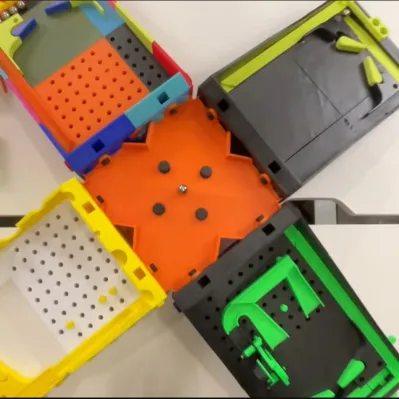
 It seems fair to say that pinball machines are among the most universally loved gaming systems known today, yet the full-sized ones are both very expensive and very large, while even the good quality table-sized ones tend to be on the expensive side. That raises the question of whether a fully 3D printed pinball machine could at all be fun and not just feel like a cheapo toy? A recent video by [Steven] from [3D Printer Academy] on YouTube makes here a compelling argument that it might actually be worth something to consider.







 After previously trying out low-tech compression molding with a toaster oven and 3D printed molds, [future things] is back with a video that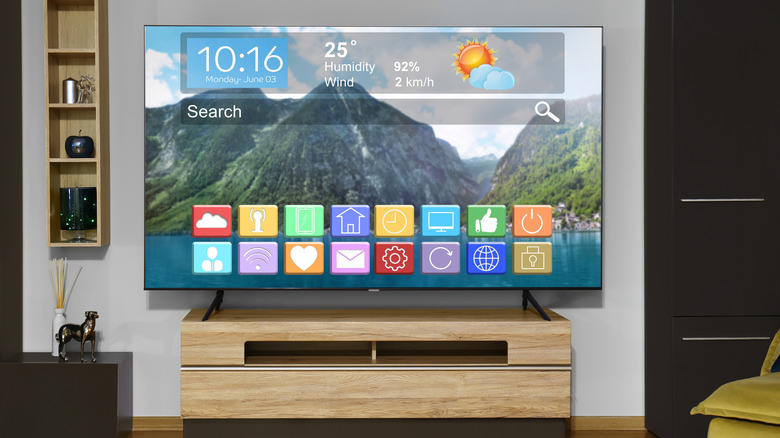







































You must be logged in to post a comment Login