








Connect with us
DAPA Banner

Tech

Lowe’s Is Selling A Heavy-Duty Five-Tier Garage Shelving Unit For $60

Published

on


If you’re looking for easy ways to upgrade your garage, making sure you have enough storage is a good place to start. Ample storage can help prevent clutter from accumulating by giving you more places to store your latest Lowe’s haul, or giving you more options to store existing items in a way that makes them easier to find. Adding more storage doesn’t have to cost a fortune either, since Lowe’s offers a five-tier heavy duty plastic shelving set for $59.98.

The shelves are made in the USA by Project Source, and they’re suitable for both indoor and outdoor use. According to the manufacturer, they can hold up to 150 pounds per shelf, and shouldn’t take much more than 10 minutes to assemble. The assembly process is tool-free, according to the brand. Each shelf offers 14.5 inches of clearance, making the unit suitable for storing larger items. To prevent mishaps, the shelves also come with a mounting bracket, so they can be attached to walls.

Advertisement

Thanks to their high weight capacity and low price, the shelves have become a popular item among Lowe’s buyers. More than 4,400 buyers have reviewed the shelving set, giving it an average rating of four out of five stars. Around 57% of those reviewers gave the set a full five-star rating, although not everyone is quite so impressed.

Advertisement

Some reviewers weren’t happy with the shelves

There are many common mistakes buyers often make while they’re shopping at Lowe’s, and if they’re shopping on the retailer’s website, not paying attention to reviews can be one of them. The shelving set has garnered a long list of positive reviews, but potential buyers shouldn’t overlook the limitations pointed out by less satisfied customers. Among the most negative reviews, a common theme is that the shelves aren’t as durable as advertised, with multiple users saying that they can’t get close to the claimed weight limit without sagging.

Another common complaint is that the shelves aren’t anywhere near as easy to assemble as they’re supposed to be. A string of one-star reviewers report issues with the fit of the shelving components, with several reviewers saying they resorted to using pliers to get the plastic parts to fit together, even though Project Source claims the assembly process does not require tools.

A four-star overall score is still mostly positive, even if some reviewers have pointed out flaws with the shelving set’s durability and construction. However, anyone needing the shelves to live up to the “heavy duty” part of their billing might be a little disappointed. They’re no magic space-saving garage lifehack, but for lighter loads, they’re worth checking out.

Advertisement


Source link

Advertisement
Continue Reading
Click to comment

You must be logged in to post a comment Login

Leave a Reply

Tech

AT&T Promo Codes and Bundle Deals: Save $50 in March

Published

on

Major wireless carriers: A necessary evil if you travel a lot, have a family, or are just interested in coverage that’s reliably consistent and widespread. AT&T is the third-largest provider in the US (first for 5G), with the largest coverage map. I’ve had various AT&T plans for more than a decade, first for just myself and now for my whole family, even though I only get one cell bar at my house and have to stand in one 5-square-foot patch of yard to make a phone call. And have lost entire days of my life to fighting unexpected random charges and upsells. (Verizon is somehow worse.) But anyway! AT&T is fine, it has all the latest phones, and there are some legitimately good perks, like no roaming in Canada or Mexico with select plans. If you know you’re going to have to go with one of the big guys, don’t sign up without checking out the below discounts first.

Save on AT&T Prepaid Phone Plans With the Latest Deals

An AT&T prepaid phone plan is one of the easiest ways to save big on your future phone bills. AT&T has a wide selection of prepaid phone plans, including 5G prepaid plans and multi-month long-term plans. For as low as $25 per month, you’ll get unlimited talk, text, and data. Plus, all AT&T prepaid plans include AT&T ActiveArmor mobile security, and are eligible for an eSIM or SIM card for as little as $0.99.

Get the new Samsung Galaxy S26 Ultra for $0

We on the WIRED Reviews team love the Samsung Galaxy S26 Ultra. We rated it a high 8/10 because of its built-in privacy display. We also loved the horizon lock to capture super steady video footage. Plus, it has excellent performance, great battery life, and a reliable quad-camera system. And right now, you can get a Samsung Galaxy S26 Ultra for free with an eligible trade-in (in any condition, but has a required trade-in of Galaxy S24+, Z Fold5, or newer).

Save Over $600 a Year With AT&T Fiber

AT&T Fiber claims to be the fastest internet network in America. You can find out for yourself (for less) with this new deal. When first time customers sign up for Fiber now, they’ll get 1 Gigabyte for only $37 per month. That’s over $600 in savings per year!

Advertisement

Are There AT&T Promos for Existing Customers?

But I already have AT&T, you might be saying—new deals never apply to me. Do you have AT&T internet, though? If, like me, you have AT&T for your phone plan and Xfinity or CenturyLink for internet, did you know you can save 20% off your AT&T bill every single month if you bundle your internet service with unlimited wireless? This applies to both current phone customers and current internet customers who don’t have both plans.

AT&T wants to reward you for your loyalty: when you sign up for AT&T Fiber and eligible wireless plans, you can get up to $150 in AT&T Visa Reward Cards. Be sure to check out the AT&T deals page for more details on that offer, along with other great ways to save.

AT&T Discounts for Professionals and Students

One of the reasons I went with AT&T in the first place is because my husband is a college professor and we get a generous 25% off our bill. This 25% discount applies for all teachers, as well as active military, veterans, first responders, and many medical professionals. Not one of the above? Students and union members can save $10 per line per month, and union members can also score 20% off accessories like cases, and stuff you used to be able to get with your phones, like chargers and cords.

How Can I Make My AT&T Plan Cheaper?

Not a new customer; not in a place to bundle; and not a teacher/first responder, in the military, or a student? All is not lost on the discount front. You can save over $800 a year on AT&T Wireless when you bundle four unlimited wireless plans with your current internet plan. (Savings based on 20% discount on four voice lines with eligible internet service, plus $10/month discount with eligible AutoPay & paperless bill, which starts within two bills.)

Advertisement

Don’t need four unlimited wireless plans? Check out if your employer offers a discount—a couple of mine have in the past, and you can save $10 per month per line on the unlimited plan. Check here to see if your workplace qualifies.

You can also get a discount on a new phone with an eligible trade-in, but the best deal yet may be the fact AT&T lets you try its wireless free for 30 days. Keep your current service and phone number while trying out AT&T’s network from your device—no catches or commitments. You don’t even need a credit card. It’s a great way to see if you get good service where you’ll be using the phone most.

Save More With AT&T Family Plans

If you want multiple people on your phone line or are adding a line for your child’s first phone, an AT&T Family Plan is one of the most cost effective ways to make the change. With AT&T family plans, you can mix and match any of AT&T’s unlimited plans to get great deals and serious discounts on any smartphone for each family member. Depending on what you choose, plans start at only $36 per month, per line (for 4 lines).

Choose AT&T for the Best Internet for Gaming

If you’re a big gamer, you’re going to want fast, reliable internet that’ll provide clear, bright graphics without laggy gameplay or interactive audio. AT&T Fiber with All-Fi promises to give gamers everything they look for in a service, with super fast speeds (up to 5 GIG), and tons of bandwidth for fast upload and download speeds.

Advertisement

Source link

Continue Reading

Tech

Musi hands Apple big win as judge rules apps can be delisted 'with or without cause'

Published

on

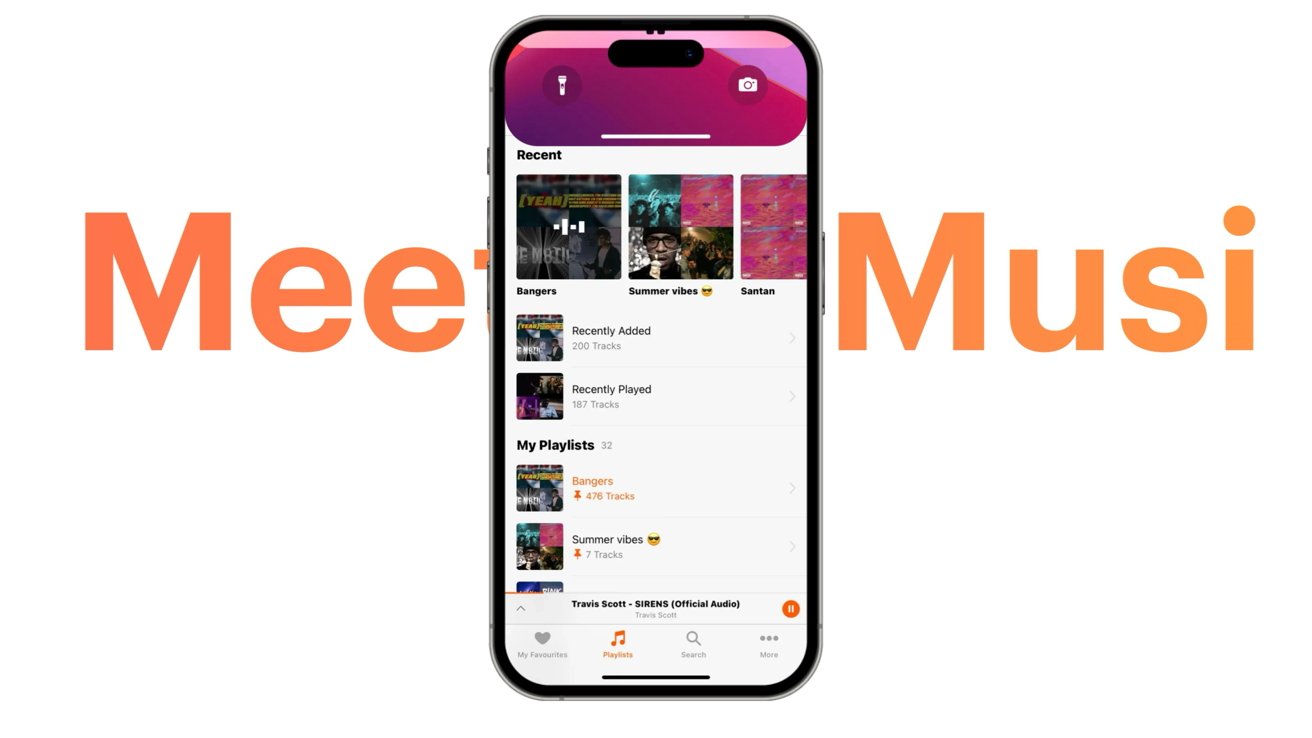
A lawsuit from music streaming app Musi suggested Apple had removed its app over unsubstantiated copyright claims, but it has been dismissed by courts with prejudice.

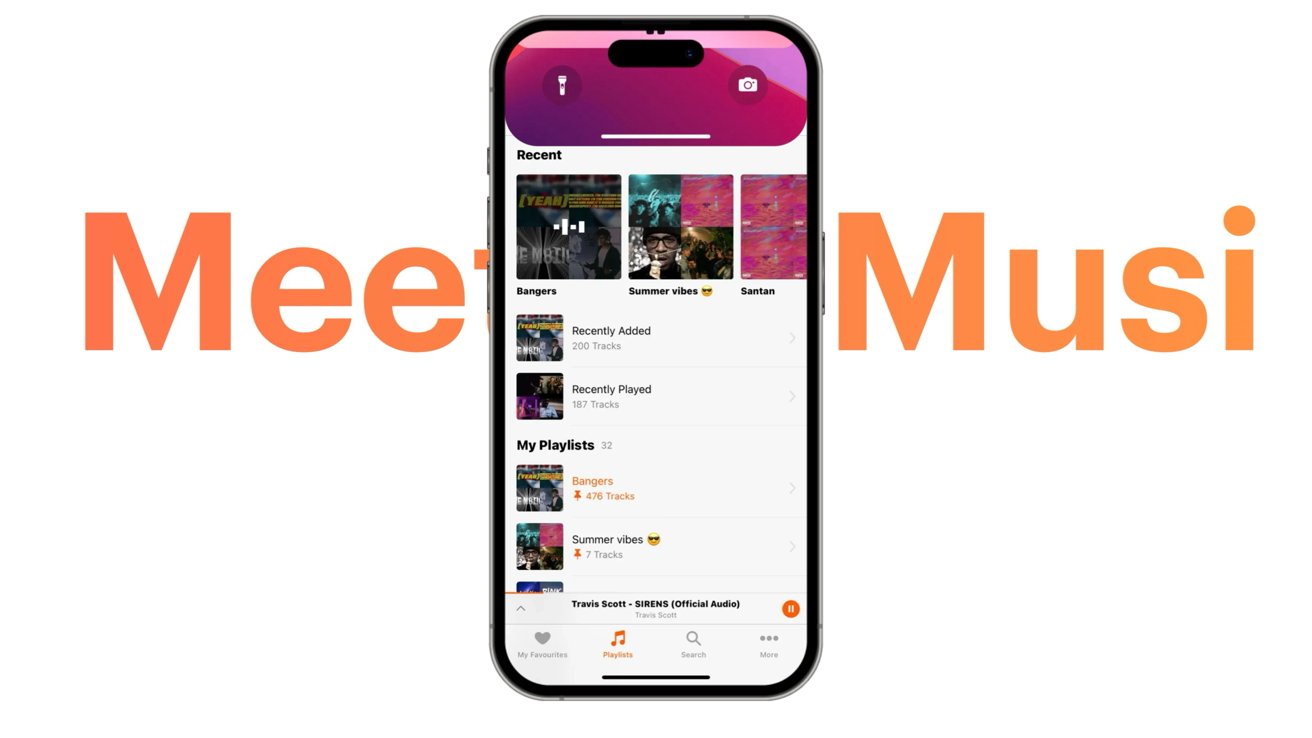
iPhone displaying a colorful music app interface with recent albums, playlists, and a currently playing track, overlaid on large orange text reading Meet Mus behind the phone
Musi loses its lawsuit over App Store removal

Apps are removed from the App Store for many reasons, some less clear than others. However, a judge just ruled that Apple can remove an app from the App Store, “with or without cause.”
It’s a significant win for Apple that sets precedence for future potential lawsuits. US District Judge Eumi Lee didn’t just rule in Apple’s favor — he tore Musi’s case apart on multiple levels.
Continue Reading on AppleInsider | Discuss on our Forums

Source link

Continue Reading

Tech

Finance Bros To Tech Bros: Don’t Mess With My Bloomberg Terminal

Published

on

An anonymous reader quotes a report from the Wall Street Journal: A battle of insults and threats has broken out between the tech world and Wall Street. What’s got everyone so worked up? The same thing that starts most fights: business software. A series of social-media posts went viral in recent days with claims that AI has created a worthy — and way cheaper — alternative to the Bloomberg terminal, a computer system that is like oxygen to professional investors. Now “Bloomberg is cooked,” some posters argued as they heralded the arrival of a newly released AI tool from startup Perplexity. […]

The finance bros who worship at the altar of Bloomberg have declared war on the tech evangelists who have put all their faith in AI. To suggest that the terminal is replaceable is “laughable,” said Jason Lemire, who jumped into the conversation on LinkedIn. (Ironically or not, his post also included an AI-generated image of churchgoers praying to the Bloomberg terminal). “It seems quite obvious to me that those propagating that post are either just looking for easy engagement and/or have never worked in a serious financial institution,” he wrote. […] Morgan Linton, the co-founder and CTO of AI startup Bold Metrics and an avid Perplexity Computer user, said it’s rare for a single AI prompt to generate anything close to what Bloomberg does. That said, he added that tools like this can lay “a really good foundation for a financial application. And that really has not been possible before.”

Others aren’t so sure. Michael Terry, an institutional investment manager who used the terminal for more than 30 years, said he used a prompt circulating online to try to vibe code a Bloomberg replica on Anthropic’s Claude. “It was laughable at best, horrific at worst,” he said. Shevelenko acknowledged there are some aspects of the terminal that can’t be replicated with vibe coding, including some of Bloomberg’s proprietary data inputs. The live chat network, which includes 350,000 financial professionals in 184 countries, would also be hard to re-create, as well as the terminal’s data security, reliability and robust support system. “I love Bloomberg. And I know most people that use Bloomberg are very, very loyal and extremely happy,” said Lemire. His message to the techies? “There’s nothing that you can vibe code in a weekend or even like over the course of a year that’s going to come anywhere close.”

Source link

Advertisement
Continue Reading

Tech

Open source Mamba 3 arrives to surpass Transformer architecture with nearly 4% improved language modeling, reduced latency

Published

on

The generative AI era began for most people with the launch of OpenAI’s ChatGPT in late 2022, but the underlying technology — the “Transformer” neural network architecture that allows AI models to weigh the importance of different words in a sentence (or pixels in an image) differently and train on information in parallel — dates back to Google’s seminal 2017 paper “Attention Is All You Need.”

Yet while Transformers deliver unparalleled model quality and have underpinned most of the major generative AI models used today, they are computationally gluttonous. They are burdened by quadratic compute and linear memory demands that make large-scale inference an expensive, often prohibitive, endeavor. Hence, the desire by some researchers to improve on them by developing a new architecture, Mamba, in 2023, which has gone on to be included in hybrid Mamba-Transformer models like Nvidia’s Nemotron 3 Super.

Now, the same researchers behind the original Mamba architecture including leaders Albert Gu of Carnegie Mellon and Tri Dao of Princeton have released the latest version of their new architecture, Mamba-3, as a language model under a permissive Apache 2.0 open source license — making it immediately available to developers, including enterprises for commercial purposes. A technical paper has also been published on arXiv.org.

This model signals a paradigm shift from training efficiency to an “inference-first” design. As Gu noted in the official announcement, while Mamba-2 focused on breaking pretraining bottlenecks, Mamba-3 aims to solve the “cold GPU” problem: the reality that during decoding, modern hardware often remains idle, waiting for memory movement rather than performing computation.

Advertisement

Perplexity (no, not the company) and the newfound efficiency of Mamba 3

Mamba, including Mamba 3, is a type of State Space Model (SSM).

These are effectively a high-speed “summary machine” for AI. While many popular models (like the ones behind ChatGPT) have to re-examine every single word they’ve already seen to understand what comes next—which gets slower and more expensive the longer the conversation lasts—an SSM maintains a compact, ever-changing internal state. This state is essentially a digital “mental snapshot” of the entire history of the data.

As new information flows in, the model simply updates this snapshot instead of re-reading everything from the beginning. This allows the AI to process massive amounts of information, like entire libraries of books or long strands of DNA, with incredible speed and much lower memory requirements.

To appreciate the leap Mamba-3 represents, one must first understand perplexity, the primary metric used in the research to measure model quality.

Advertisement

In the context of language modeling, perplexity is a measure of how “surprised” a model is by new data.

Think of a model as a professional gambler. If a model has high perplexity, it is unsure where to place its bets; it sees many possible next words as equally likely.

A lower perplexity score indicates that the model is more “certain”—it has a better grasp of the underlying patterns of human language. For AI builders, perplexity serves as a high-fidelity proxy for intelligence.

The breakthrough reported in the Mamba-3 research is that it achieves comparable perplexity to its predecessor, Mamba-2, while using only half the state size. This means a model can be just as smart while being twice as efficient to run.

Advertisement

A new philosophy

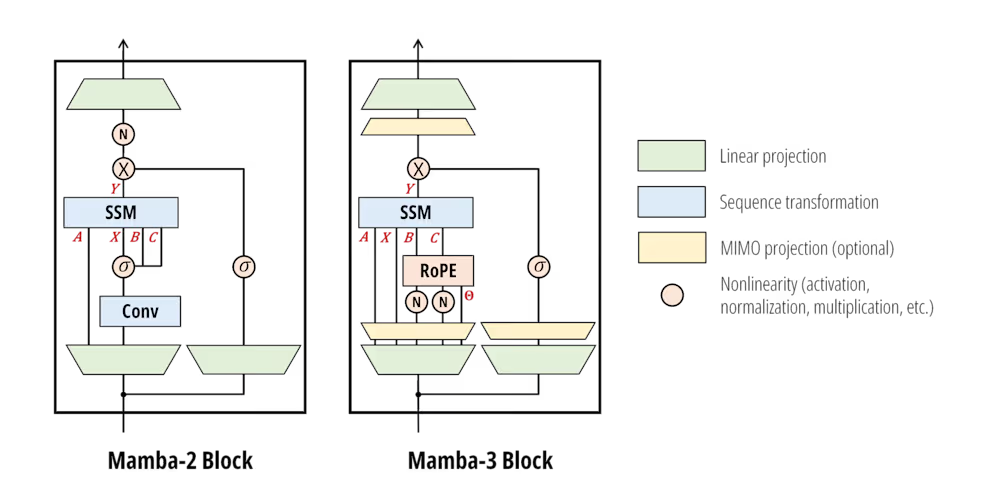
Mamba 3 architecture diagram

Mamba 3 architecture diagram. Credit: Tri Dao

The philosophy guiding Mamba-3 is a fundamental shift in how we think about AI “intelligence” versus the speed of the hardware it runs on. While the previous generation, Mamba-2, was designed to be trained at record-breaking speeds, Mamba-3 is an “inference-first” architecture — inference referring to the way AI models are served to end users, through websites like ChatGPT or Google Gemini, or through application programming interfaces (APIs).

Mamba 3’s primary goal is to maximize every second the computer chip (GPU) is active, ensuring that the model is thinking as hard as possible without making the user wait for an answer.

In the world of language models, every point of accuracy is hard-won. At the 1.5-billion-parameter scale, the most advanced “MIMO” variant of Mamba-3 achieved a 57.6% average accuracy across benchmarks, representing a 2.2-percentage-point leap over the industry-standard Transformer.

Advertisement
Mamba 3 accuracy benchmark chart

Mamba 3 benchmark comparison chart. Credit: Aakash Lahoti, Kevin Y. Li, Berlin Chen, Caitlin Wang, Aviv Bick, J. Zico Kolter, Tri Dao, Albert Gu

While a two-point jump might sound modest, it actually represents a nearly 4% relative increase in language modeling capability compared to the Transformer baseline. Even more impressively, as alluded to above, Mamba-3 can match the predictive quality of its predecessor while using only half the internal “state size,” effectively delivering the same level of intelligence with significantly less memory lag.

For years, efficient alternatives to Transformers suffered from a “logic gap”—they often failed at simple reasoning tasks, like keeping track of patterns or solving basic arithmetic, because their internal math was too rigid. Mamba-3 solves this by introducing complex-valued states.

This mathematical upgrade acts like an internal compass, allowing the model to represent “rotational” logic. By using this “rotary” approach, Mamba-3 can near-perfectly solve logic puzzles and state-tracking tasks that its predecessors could only guess at, finally bringing the reasoning power of linear models on par with the most advanced systems.

Advertisement

The final piece of the puzzle is how Mamba-3 interacts with physical hardware. Most AI models today are “memory-bound,” meaning the computer chip spends most of its time idle, waiting for data to move from memory to the processor.

Mamba-3 introduces a Multi-Input, Multi-Output (MIMO) formulation that fundamentally changes this dynamic. By performing up to four times more mathematical operations in parallel during each step, Mamba-3 utilizes that previously “idle” power. This allows the model to do significantly more “thinking” for every word it generates without increasing the actual time a user spends waiting for a response. More on these below.

Three new technological leaps

The appeal of linear models has always been their constant memory requirements and linear compute scaling.

However, as the Mamba 3 authors point out, there is “no free lunch”. By fixing the state size to ensure efficiency, these models are forced to compress all historical context into a single representation—the exact opposite of a Transformer’s ever-growing KV cache. Mamba-3 pulls three specific levers to make that fixed state do more work.

Advertisement

1. Exponential-Trapezoidal Discretization

State Space Models are fundamentally continuous-time systems that must be “discretized” to handle the discrete sequences of digital data.

Previous iterations relied on “Exponential-Euler” discretization—a heuristic that provided only a first-order approximation of the system.

Mamba-3 introduces a generalized trapezoidal rule, providing second-order accurate approximation. This isn’t just a mathematical refinement; it induces an “implicit convolution” within the core recurrence.

By combining this with explicit B and C bias terms, the researchers were able to remove the short causal convolution that has been a staple of recurrent architectures for years.

Advertisement

2. Complex-Valued SSMs and the “RoPE Trick”

One of the most persistent criticisms of linear models has been their inability to solve simple state-tracking tasks, such as determining the parity of a bit sequence.

This failure stems from restricting the transition matrix to real numbers, which prevents the model from representing “rotational” dynamics.Mamba-3 overcomes this by viewing the underlying SSM as complex-valued.

Using what the team calls the “RoPE trick,” they demonstrate that a complex-valued state update is mathematically equivalent to a data-dependent rotary embedding (RoPE) applied to the input and output projections.

This allows Mamba-3 to solve synthetic reasoning tasks that were impossible for Mamba-2.

Advertisement

3. MIMO: Boosting Arithmetic Intensity

The most significant leap in inference efficiency comes from the transition from Single-Input, Single-Output (SISO) to Multi-Input, Multi-Output (MIMO) SSMs.

In a standard SSM, the state update is an outer-product operation that is heavily memory-bound.By switching to a matrix-multiplication-based state update, Mamba-3 increases the “arithmetic intensity” of the model—the ratio of FLOPs to memory traffic.

This allows the model to perform more computation during the memory-bound decoding phase. Essentially, Mamba-3 utilizes the “idle” compute cores of the GPU to increase model power for “free,” maintaining the same decoding speed as its simpler predecessors.

What Mamba 3 means for enterprises and AI builders

For enterprises, Mamba-3 represents a strategic shift in the total cost of ownership (TCO) for AI deployments.

Advertisement
  • Cost vs. Performance: By matched-parameter performance, Mamba-3 (MIMO) matches the perplexity of Mamba-2 while using half the state size. For enterprise deployment, this effectively doubles the inference throughput for the same hardware footprint.

  • Agentic Workflows: As organizations move toward parallel, agentic workflows (like automated coding or real-time customer service agents), the demand for low-latency generation increases exponentially. Mamba-3 is designed specifically to prevent GPU hardware from sitting “cold” during these tasks.

  • The Hybrid Advantage: The researchers predict that the future of enterprise AI lies in hybrid models. By interleaving Mamba-3 with self-attention, organizations can combine the efficient “memory” of SSMs with the precise “database” storage of Transformers.

Availability, licensing, and usage

Mamba-3 is not merely a theoretical research paper; it is a fully realized, open-source release available for immediate use with model code published on Github.

The project is released under the Apache-2.0 License. This is a permissive, business-friendly license that allows for free usage, modification, and commercial distribution without requiring the disclosure of proprietary source code.

This release is good for developers building long-context applications, real-time reasoning agents, or those seeking to reduce GPU costs in high-volume production environments.

Leading the State Space Models (SSM) revolution

The release was met with enthusiasm on social media, particularly regarding the “student-led” nature of the project. Gu, whose X/Twitter bio describes him as “leading the ssm revolution,” gave full credit to the student leads, including Aakash Lahoti and Kevin Y. Li

Advertisement

.Gu’s thread highlighted the team’s satisfaction with the design:

“We’re quite happy with the final model design! The three core methodological changes are inspired by (imo) some elegant math and methods.”

As agentic workflows push inference demand “through the roof,” the arrival of Mamba-3 suggests that the future of AI may not just be about having the biggest model, but about having the most efficient one.

Mamba-3 has successfully re-aligned the SSM with the realities of modern hardware, proving that even in the age of the Transformer, the principles of classical control theory still have a vital role to play.

Source link

Advertisement
Continue Reading

Tech

Mark Built Diablo 2 as a First-Person Game in Unreal Engine 5

Published

on

Diablo 2 First Person Mod Unreal Engine
Mark of I Make Games, chose to rebuild Diablo 2 from the ground up in Unreal Engine 5, but with one major difference: the entire game is played in first person. A clean heads-up display lies at the bottom of the screen, displaying your current location, an experience bar that ticks upward as you fight monsters, skill slots, glowing potion icons, and a stamina meter that drains anytime you push yourself too far.


Mark has been adding spells to the mix as well, with Fireball letting you watch the projectile arc through the air and detonate on impact, and Teleport doing exactly what it sounds like, making your character vanish and reappear somewhere else in the blink of an eye.

Sale


ASUS ROG Xbox Ally – 7” 1080p 120Hz Touchscreen Gaming Handheld, 3-month Xbox Game Pass Premium…
  • XBOX EXPERIENCE BROUGHT TO LIFE BY ROG The Xbox gaming legacy meets ROG’s decades of premium hardware design in the ROG Xbox Ally. Boot straight into…
  • XBOX GAME BAR INTEGRATION Launch Game Bar with a tap of the Xbox button or play your favorite titles natively from platforms like Xbox Game Pass…
  • ALL YOUR GAMES, ALL YOUR PROGRESS Powered by Windows 11, the ROG Xbox Ally gives you access to your full library of PC games from Xbox and other game…

There’s also sliding, which allows you to glide down slopes or across slippery floors to maintain speed, because you never know when you’ll need to escape quickly. Climbing allows you to scale narrow ledges or sneak into concealed routes, which is ideal for continued exploration. Meanwhile, dismemberment is already at work on the evil guys, so when you smack them hard enough, their pitiful limbs just fly off.

Advertisement

Diablo 2 First Person Mod Unreal Engine
Teleport, of course, allows you to simply walk through walls for a variety of nefarious purposes, and then there’s Whirlwind, the hapless barbarian spinning around in circles with blades out, mowing down all comers. Lightning is the other new ability, which fires bolts back and forth between targets with impressive visual effects to keep you on your toes. Both were slightly tweaked to ensure proper timing. Mark does use a few pre-made character meshes to save time, but for everything else, he browses the Unreal Marketplace like a kid in a candy store.

Diablo 2 First Person Mod Unreal Engine
During testing, you can switch the camera to third person for a brief look, but Mark prefers to maintain the focus on the first-person experience. Visual effects will have to wait till things are a little more established. As it stands, Mark is only adding new regions and powers to his channel one at a time, creating a gradual but constant trickle of advancement, and the followers are already getting antsy; who knows, maybe one day they’ll get to check it out for themselves.
[Source]

Source link

Continue Reading

Tech

Meta will shut down VR Horizon Worlds access in June

Published

on

Horizon Worlds, Meta’s first pass at a metaverse, will be inaccessible via virtual reality headset after June 15, 2026. The company shared plans to separate Horizon Worlds from Quest VR platform and focus exclusively on the smartphone version of the app in February, and now in a new post on its community forums, Meta detailed when the VR version of Horizon Worlds will be deprecated.

By March 31, Meta says individual Horizon Worlds and Events will no longer be listed in the Quest’s Store and headset owners will be unable to visit worlds like “Horizon Central, Events Arena, Kaiju and Bobber Bay.” Then, after June 15, the app will be removed from Quest headsets and worlds will be completely unavailable to visit in VR. From that point on, the easiest place to visit Horizon Worlds will be in the Meta Horizon app for iOS and Android.

Additionally, Hyperscape Capture, a recently added beta feature that allows Quest headset owners to capture, share and visit each other in detailed 3D scans of real-life locations, is also being removed from Horizon Worlds. Meta says users will still be able to capture and view Hyperscapes, “but sharing, inviting, and co-experiencing Hyperscapes with others will no longer be supported.”

While Meta’s original blog detailing its 2026 VR strategy left open the possibility that a committed Quest owner might still be able to access some part of Meta’s original VR metaverse, that apparently was never the company’s plan. Meta saw enough “positive momentum” focusing on supporting the mobile version of Horizon Worlds in 2025 that it made sense to completely abandon the VR one in 2026. While that seems to run contrary to Meta’s positioning as a “metaverse company,” it does reflect where the company is spending the most money and seeing the most (relative) success: AI and smart glasses.

Advertisement

Source link

Continue Reading

Tech

AI Job Loss Research Ignores How AI Is Utterly Destroying the Internet

Published

on

An anonymous reader quotes a report from 404 Media, written by Jason Koebler: Over the last few months, various academics and AI companies have attempted to predict how artificial intelligence is going to impact the labor market. These studies, including a high-profile paper published by Anthropic earlier this month, largely try to take the things AI is good at, or could be good at, and match them to existing job categories and job tasks. But the papers ignore some of the most impactful and most common uses of AI today: AI porn and AI slop.

Anthropic’s paper, called “Labor market impacts of AI: A new measure and early evidence,” essentially attempts to find 1:1 correlations between tasks that people do today at their jobs and things people are using Claude for. The researchers also try to predict if a job’s tasks “are theoretically possible with AI,” which resulted in this chart, which has gone somewhat viral and was included in a newsletter by MSNOW’s Phillip Bump and threaded about by tech journalist Christopher Mims. (Because everything is terrible, the research is now also feeding into a gambling website where you can see the apparent odds of having your job replaced by AI.) In his thread, Mims makes the case that the “theoretical capability” of AI to do different jobs in different sectors is totally made up, and that this chart basically means nothing. Mims makes a good and fair observation: The nature of the many, many studies that attempt to predict which people are going to lose their jobs to AI are all flawed because the inputs must be guessed, to some degree.

But I believe most of these studies are flawed in a deeper way: They do not take into account how people are actually actually using AI, though Anthropic claims that that is exactly what it is doing. “We introduce a new measure of AI displacement risk, observed exposure, that combines theoretical LLM capability and real-world usage data, weighting automated (rather than augmentative) and work-related uses more heavily,” the researchers write. This is based in part on the “Anthropic Economic Index,” which was introduced in an extremely long paper published in January that tries to catalog all the high-minded uses of AI in specific work-related contexts. These uses include “Complete humanities and social science academic assignments across multiple disciplines,” “Draft and revise professional workplace correspondence and business communications,” and “Build, debug, and customize web applications and websites.” Not included in any of Anthropic’s research are extremely popular uses of AI such as “create AI porn” and “create AI slop and spam.” These uses are destroying discoverability on the internet, cause cascading societal and economic harms. “Anthropic’s research continues a time-honored tradition by AI companies who want to highlight the ‘good’ uses of AI that show up in their marketing materials while ignoring the world-destroying applications that people actually use it for,” argues Koebler. “Meanwhile, as we have repeatedly shown, huge parts of social media websites and Google search results have been overtaken by AI slop. Chatbots themselves have killed traffic to lots of websites that were once able to rely on ad revenue to employ people, so on and so forth…”

“This is all to say that these studies about the economic impacts of AI are ignoring a hugely important piece of context: AI is eating and breaking the internet and social media,” writes Koebler, in closing. “We are moving from a many-to-many publishing environment that created untold millions of jobs and businesses towards a system where AI tools can easily overwhelm human-created websites, businesses, art, writing, videos, and human activity on the internet. What’s happening may be too chaotic, messy, and unpleasant for AI companies to want to reckon with, but to ignore it entirely is malpractice.”

Advertisement

Source link

Continue Reading

Tech

MSI Prestige 14 AI+ business laptop review

Published

on

Why you can trust TechRadar


We spend hours testing every product or service we review, so you can be sure you’re buying the best. Find out more about how we test.

MSI Prestige 14 AI+: Two-minute review

The MSI Prestige 14 AI+ is a sleek business-focused laptop with a premium design that manages an interesting and useful mix of the features and performance you need, but skips a lot of the bloat.

As the name suggests, it’s a 14-inch laptop, and it’s aimed at users on the go who need a thin and light machine that still offers decent performance and battery life. The Prestige 14 measures in at 31.6 x 22.2 x 1.2 – 1.4cm (12.4 x 8.7 x 0.47 – 0.55 inches) and weighs 1.32kg (2.91 lbs) — an excellent size for portability without being too small. Compared to the non-Windows competition, it’s chunkier than a MacBook Air, but is slimmer and lighter than a MacBook Pro.

Advertisement

Source link

Advertisement
Continue Reading

Tech

Europe sanctions Chinese and Iranian firms for cyberattacks

Published

on

Europe sanctions Chinese and Iranian firms for cyberattacks

The Council of the European Union has sanctioned three Chinese and Iranian companies and two individuals for cyberattacks targeting devices and critical infrastructure.

One of the two sanctioned Chinese companies, identified as Integrity Technology Group, provided “technical and material support” between 2022 and 2023 that led to hacking more than 65,000 devices in six EU states.

The other Chinese company is Anxun Information Technology, which provided hacking services targeting “critical infrastructure and critical functions of member states and third countries.”

The two individuals added to the Council’s sanctions list are the co-founders of Anxun Information Technology, believed to have played a significant role in cyberattacks against EU member states.

Advertisement

The sanctioned Iranian company is Emennet Pasargad, which has been attributed multiple influence campaigns and the compromise of an SMS service in Sweden.

Emennet Pasargad has been involved in hijacking advertising billboards to spread misinformation during the 2024 Paris Olympics.

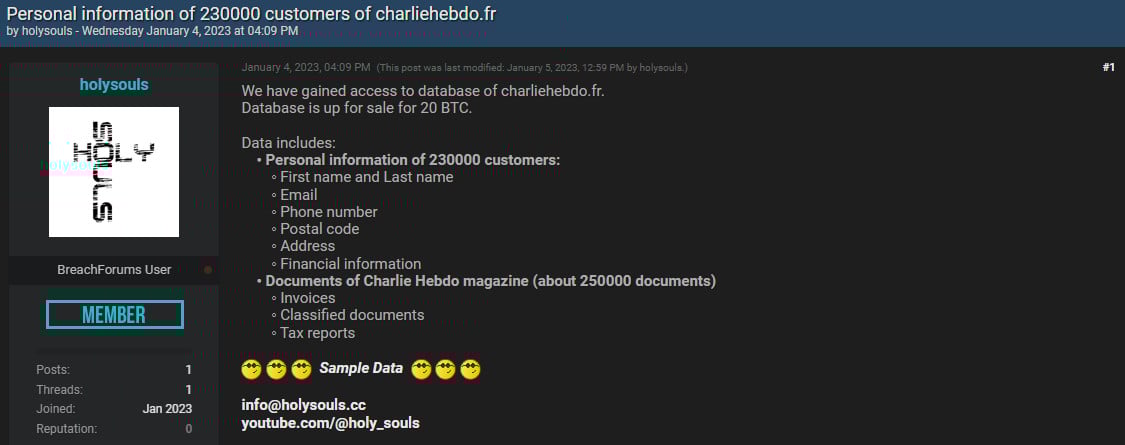
According to Microsoft, using the moniker Holy Souls on a hacker forum, the actor also offered in early January 2023 to sell personal information of 230,000 subscribers of the French magazine Charlie Hebdo.

Holy Souls asked for 20 bitcoins, worth around $340,000 at the time, and published a sample of the stolen details, which included Charlie Hebdo subscriber names and addresses.

Advertisement
Caption

Emennet Pasargad is believed to have provided cybersecurity services for the Iranian government and has a long history of influence campaigns. In November 2021, the U.S. Department of Justice offered a $10 million reward for two Iranian nationals who worked as contractors for the company.

“Those listed today under both regimes are subject to an asset freeze, and EU citizens and companies are forbidden from making funds, financial assets, or economic resources available to them. Natural persons also face a travel ban that prohibits them from entering or transiting through EU territories,” notes the European Council.

Integrity Technology Group was connected by the FBI in 2024 to the ‘Raptor Train’ botnet, believed to be operated by the Chinese state-sponsored threat actor ‘Flax Typhoon.’

In January 2025, the U.S. Treasury Department sanctioned the company for its involvement in these cyberattacks, allowing the Raptor Train to build a massive network of 260,000 infected devices.

In March 2025, the U.S. Justice Department sanctioned Anxun Information Technology (also known as i-Soon) for advertising hacker-for-hire services and carrying out cyberattacks since at least 2011.

Advertisement

In mid-February 2024, i-Soon suffered a data leak that exposed the company’s internal operations as a China-affiliated hacking contractor and its offensive toolkit.

The U.S. authorities also announced rewards of up to $10 million for valid information leading to the location of 10 Anxun Information Technology executives and technical staff members.

The European Union started imposing cyber sanctions in 2019 and, as of today, the restrictions target 19 individuals and seven entities responsible for malicious cyber activities.

Malware is getting smarter. The Red Report 2026 reveals how new threats use math to detect sandboxes and hide in plain sight.

Download our analysis of 1.1 million malicious samples to uncover the top 10 techniques and see if your security stack is blinded.

Advertisement

Source link

Continue Reading

Tech

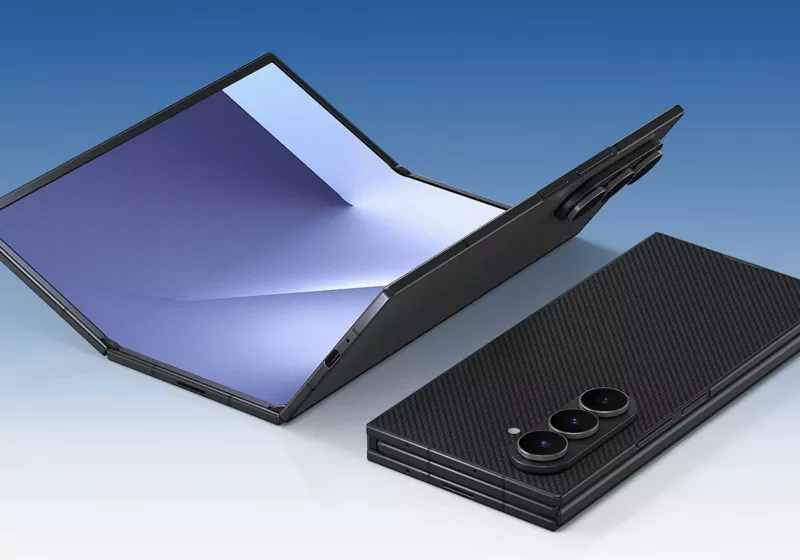
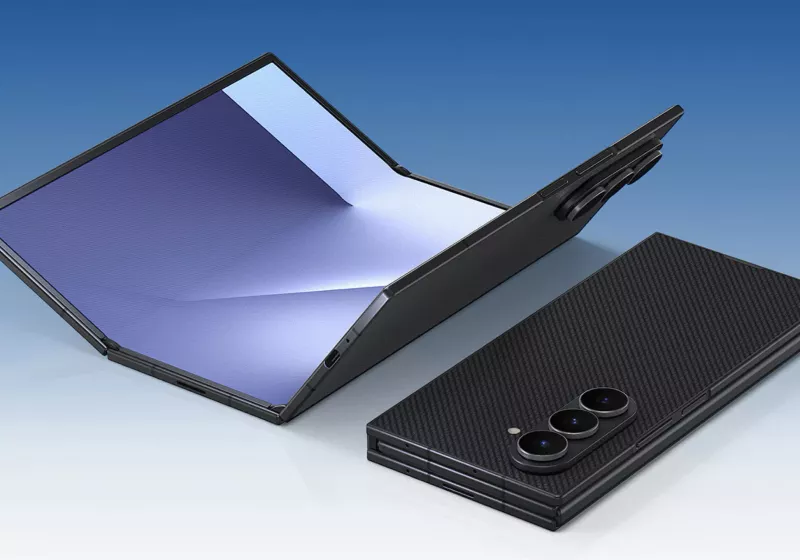
Samsung's Galaxy Z TriFold was a hit with buyers, but it's still shutting down after three months

Published

on


From the outset, Samsung positioned the TriFold as an experimental, tightly controlled product rather than a mass-market flagship. Early batches in Korea were limited to around 3,000 units per release, each selling out within minutes on Samsung’s online store.
Read Entire Article
Source link

Continue Reading

Trending

Copyright © 2025