
Tech
Lucid blames dip in Q1 sales on seat supplier issue

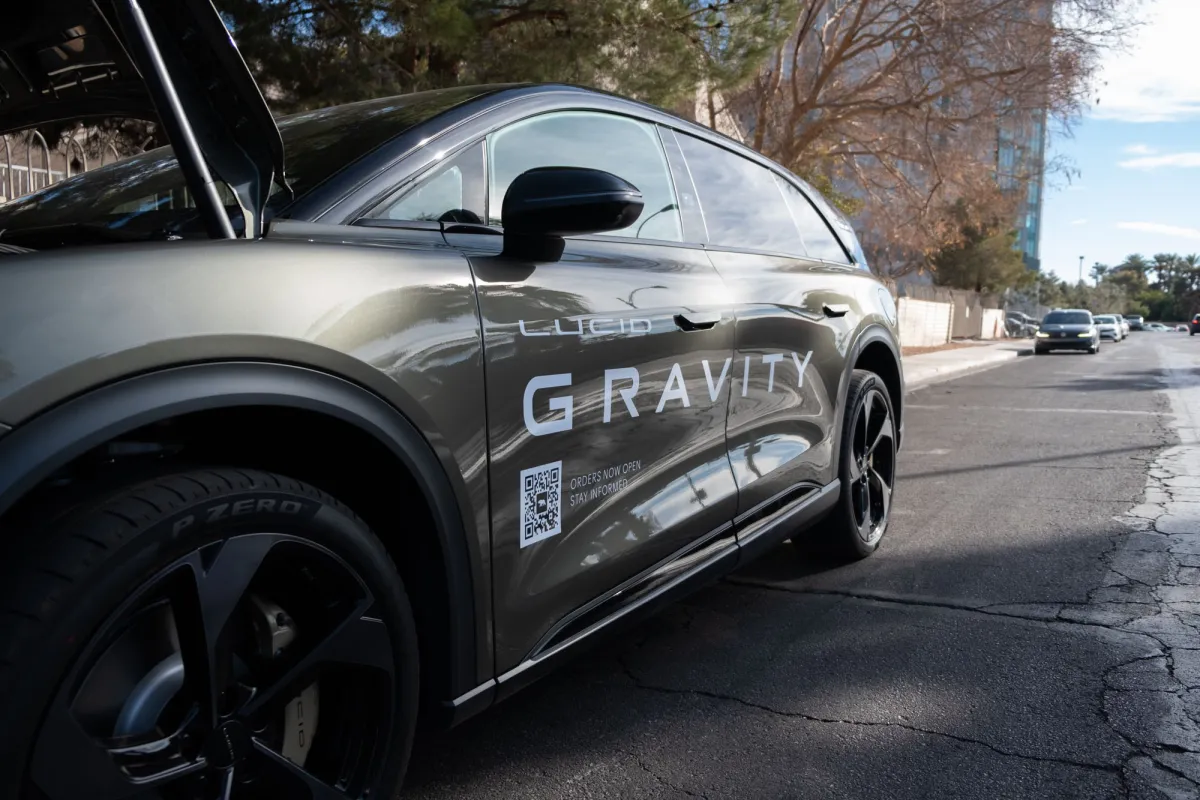
Lucid Group finished 2025 on an upswing — building twice as many EVs as the previous year and reporting a 55% uptick in sales. Then the first quarter of 2026 arrived.
The company, which makes the Air sedan and Gravity SUV, reported Friday that it sold 3,093 vehicles in the first quarter, a 42% drop from the previous quarter and about 0.5% lower than the same period last year. It had built many more, about 5,500 in total.
Lucid said the sales dip, and the gap between production and deliveries, is not a demand problem. Instead, the company blames a supplier quality issue with its second-row seats, which disrupted deliveries of the Lucid Gravity for 29 days.
The supplier issue also prompted Lucid to recall more than 4,000 Gravity SUVs. Lucid told the National Highway Traffic Safety Administration that it discovered some of the anchors for the SUV’s second-row seat belts were not properly welded.
Lucid spokesperson Nick Twork confirmed to TechCrunch that the decrease in sales was tied to problems with the supplier. He said that due to an unapproved change made by a supplier, the company issued a stop on Gravity sales that lasted most of February to ensure proper vehicle quality before restarting them. Twork made a point of noting Lucid’s more recent success, saying that “following eight record quarters, we showed strong results in both January and March which very nearly achieved year-over-year growth on their own.”
Lucid said in its securities filing Friday that the issue has been addressed, and the company seems confident that disruption won’t affect its production goals.
Lucid reaffirmed its previously announce production guidance of between 25,000 and 27,000 vehicles this year. Lucid built 18,378 EVs in 2025. That would represent an increase of as much as 47% from last year.
Techcrunch event
San Francisco, CA
|
October 13-15, 2026
Lucid’s seat supplier troubles come as the company prepares to start building its first vehicle on a new lower-cost platform aimed at the mass market. Lucid has said that first vehicle will cost around $50,000, a price point that will put it in direct competition with the upcoming Rivian R2 SUV, as well as existing products like the Tesla Model Y, Tesla Model 3, and Chevrolet Equinox EV.


There’s finally a release date for the Spaceballs sequel — but before you get too excited, it’s a whole year away. As first reported by Deadline, Amazon MGM Studios announced on Friday night that the upcoming Spaceballs movie will hit theaters on April 23, 2027, right around the 40th anniversary of the first film. Several members of the original cast will be reprising their roles, according to Deadline, including Mel Brooks, Rick Moranis, Bill Pullman, George Wynder and Daphne Zuniga.
Whispers of a potential Spaceballs 2 go back a couple of years, but Brooks officially confirmed in an extremely on-brand announcement video last summer that the movie is actually happening. Following Deadline‘s latest report, Amazon MGM Studios posted a screenshot of the article on X, along with the words, “Spaceballs: The Release Date. April 23, 2027.” The movie is being directed by Josh Greenbaum and written by Josh Gad, Dan Hernandez and Benji Samit, according to Deadline. Along with the returning cast members, it will star Gad, Keke Palmer (!!), Lewis Pullman and Anthony Carrigan.


The research, presented at the IEEE International Solid-State Circuits Conference in San Francisco earlier this year, shows the receiver can continue operating after exposure to 500 kilograys of radiation. That level of endurance far exceeds what even space-grade electronics are designed to handle.
Read Entire Article
Source link


Accidents can happen with our smartphones sometimes, which might require us to take them to a technician. Even though we shouldn’t assume ill intent, any of us would be wary allowing a technician to access our phone and all of our private data and information. That stuff is meant to stay private, and the last thing we want is the prying eyes of a stranger looking through our stuff.
If you have an Android device — specifically a Pixel or a Samsung Galaxy running Android 14 and above — you’re in luck; both of these devices contain a private mode. It’s called Repair Mode on Pixels and Maintenance Mode on Samsung devices. It’s exactly what it sounds like; it allows the technician to use the phone as normal, which would also allow them to test that everything works, but they cannot access your data at all. It’s a great idea, and it definitely solves the privacy concern. If you cannot repair your smartphone yourself, this may be a good option.
How does Repair Mode work?
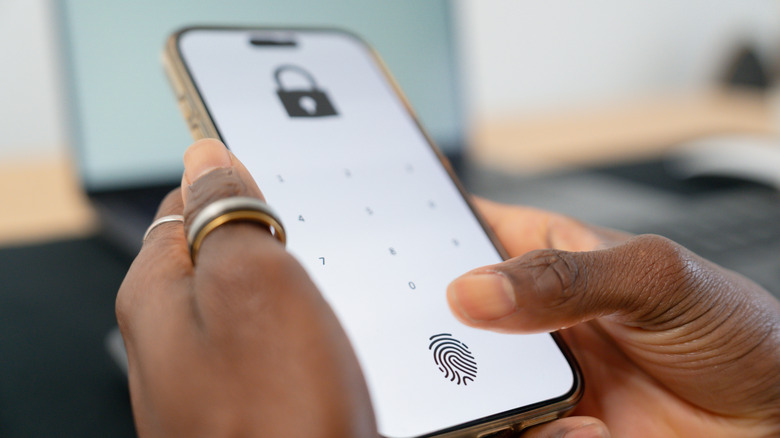
Activating Repair Mode is as easy as diving into the settings on your device and finding the option, which is in different places, deepening on which phone you have. You will be required to enter your phone’s PIN or password for extra security.
It works in a similar manner to Windows’ multiple desktop support. The phone behaves normally, but all of your data and files are completely inaccessible. The only thing is, if there’s a SIM card in the device, it can still pick up cellular signals, so if you’re wary of someone using your device and phone number to perform shady phone calls, remove the SIM card before handing it over.
The benefit is nobody will be able to see your stuff, and sometimes smartphone repairs can include something that would require using the phone’s software to make sure one or more of the features are working right. For example, if you needed one of the lens on the cameras replaced, the technician needs to open the Camera app to see if the replacement went successfully. The biggest problem is that this feature is currently only available on Google’s Pixel family and Samsung’s Galaxy family. Other Android devices don’t have it as of yet, which is a little disappointing. But if you have a supported device, this is an extra bit of security you can perform before handing your device over to the technician.


Another round of layoffs at Meta will affect 168 employees in Washington state, according to a filing from the state Employment Security Department. The cuts are part of a broader reduction impacting hundreds of Meta workers around the U.S.
“Teams across Meta regularly restructure or implement changes to ensure they’re in the best position to achieve their goals. Where possible, we are finding other opportunities for employees whose positions may be impacted,” said a Meta spokesperson via email.
The workers are primarily based in Seattle, Redmond and Bellevue, with 39 working remotely within the state. The layoffs will impact engineering, product management, manager and recruiting roles, among other titles. Jobs in Reality Labs, which focuses on AR and VR hardware and software and wearable devices such as smart glasses, were heavily affected.
The layoffs will take place starting May 8.
The company employs thousands of people across multiple offices in the Seattle region, one of its largest engineering hubs outside Menlo Park, Calif.
In January, the Facebook parent disclosed layoffs impacting 331 employees in Washington as it pared down its Reality Labs division. Meta previously cut more than 100 employees in the state in October as part of a broader round of layoffs within its artificial intelligence division.
The repeated workforce reductions and increased workplace use of AI have helped drive significant productivity gains. Meta’s average revenue per employee has spiked 85% over the past three years, Axios reported today.
The most recent layoffs coincided with the release of a new stock program targeting six top executives, potentially increasing their compensation by up to $921 million each over the next five years, the New York Times reported last week.
RELATED:


The maintainers of the popular Axios HTTP client have published a detailed post-mortem describing how one of its developers was targeted by a social engineering campaign linked to North Korean hackers.
This follows the threat actors compromising a maintainer account to publish two malicious versions of Axios (1.14.1 and 0.30.4) to the npm package registry, triggering a supply chain attack.
These releases injected a dependency named plain-crypto-js that installed a remote access trojan (RAT) on macOS, Windows, and Linux systems.
The malicious versions were available for roughly three hours before being removed, but systems that installed them during that period should be considered compromised, and all credentials and authentication keys should be rotated.
The Axios maintainers said they have wiped affected systems, reset all credentials, and are implementing changes to prevent similar incidents.
The Google Threat Intelligence Group has since linked this attack to North Korean threat actors tracked as UNC1069.
“GTIG attributes this activity to UNC1069, a financially motivated North Korea-nexus threat actor active since at least 2018, based on the use of WAVESHAPER.V2, an updated version of WAVESHAPER previously used by this threat actor,” explains Google.
“Further, analysis of infrastructure artifacts used in this attack shows overlaps with infrastructure used by UNC1069 in past activities.”
Targeted in a social engineering attack
According to a post-mortem, the compromise began weeks earlier through a targeted social engineering attack on the project’s lead maintainer, Jason Saayman.
The attackers impersonated a legitimate company, cloned its branding and founders’ likenesses, and invited the maintainer into a Slack workspace designed to impersonate the company. Saayman says the Slack server contained realistic channels, with staged activity and fake profiles that posed as employees and other open-source maintainers.
“They then invited me to a real slack workspace. this workspace was branded to the companies ci and named in a plausible manner,” explained Saayman in a post to the post-mortem.
“The slack was thought out very well, they had channels where they were sharing linked-in posts, the linked in posts i presume just went to the real companys account but it was super convincing etc. they even had what i presume were fake profiles of the team of the company but also number of other oss maintainers.”
The attackers then scheduled a meeting on Microsoft Teams that appeared to include numerous people.
During the call, a technical error was displayed, claiming that something on the system was out of date, prompting the maintainer to install a Teams update to fix the error. However, this fake update was actually RAT malware that gave threat actors remote access to the maintainer’s device, allowing them to obtain the npm credentials for the Axios project.
Other maintainers reported similar social engineering attacks, where the threat actors tried to get them to install a fake Microsoft Teams SDK update.
This attack is similar to a ClickFix attack, in which victims are shown a fake error message and then prompted to follow troubleshooting steps that deploy malware.
This attack also mirrors previous campaigns reported by Google’s threat intelligence teams, in which North Korean threat actors tracked UNC1069 used the same tactics to target cryptocurrency firms.
In previous campaigns attributed to the UNC1069 threat actor, the threat actors would deploy additional payloads on devices, such as backdoors, downloaders, and infostealers designed to steal credentials, browser data, session tokens, and other sensitive information.
Since the attackers gained access to authenticated sessions, MFA protections were effectively bypassed, allowing access to accounts without having to re-authenticate.
The Axios maintainers confirmed that the attack did not involve modifying the project’s source code, but instead relied on injecting a malicious dependency into otherwise legitimate releases.
Pelle Wessman, a maintainer of numerous open-source projects, including the popular Mocha framework, posted on LinkedIn that he was targeted in the same campaign and shared a screenshot of a fake RTC connection error message used to trick targets into installing malware.
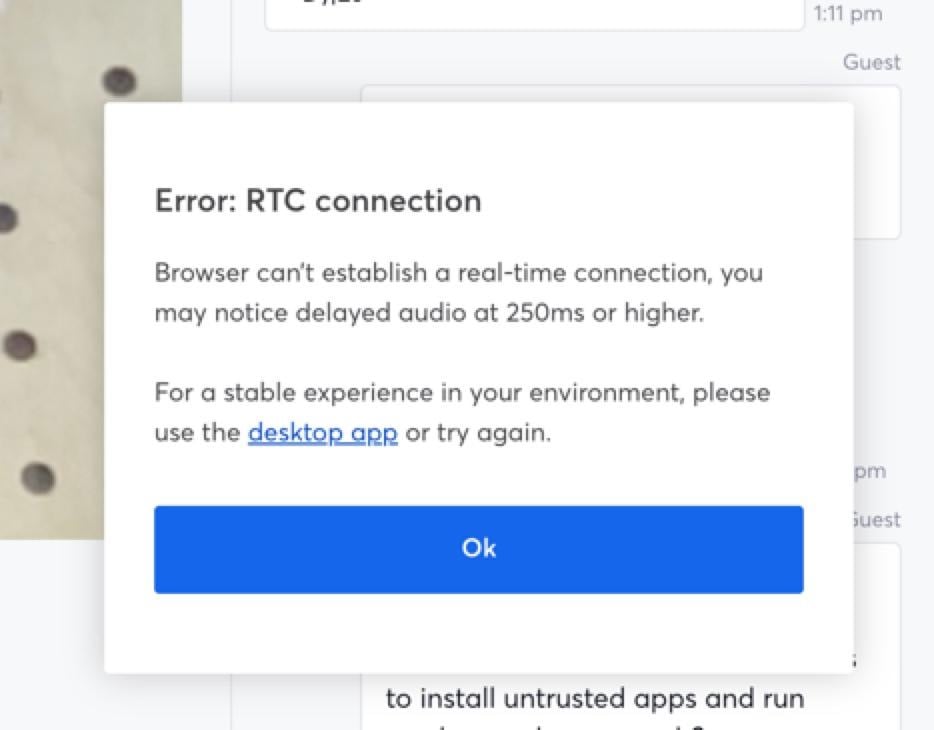
Source: Pelle Wessman
When Wessman refused to install the app, the threat actors tried to convince him to run a Curl command.
“When it became clear that I wouldn’t run the app and we had chatted back and forth on website and chat app they made one final desperate attempt and tried to get me to run a curl command that would download and run something, then when I refused they went dark and deleted all conversations,” explained Wessman.
Cybersecurity firm Socket also reported that this was a coordinated campaign that has begun targeting maintainers of popular Node.js projects.
Multiple developers, including maintainers of widely used packages and Node.js core contributors, reported receiving similar outreach messages and invitations to Slack workspaces operated by the attackers.
Socket noted that these maintainers are responsible for packages with billions of weekly downloads, demonstrating that the threat actors focused on high-impact projects.
“Since we published our initial analysis of the axios compromise, a deep dive into its hidden blast radius, and a report on the maintainer confirming it was social engineering, maintainers across the Node.js ecosystem have come out of the woodwork to report that they were targeted by the same social engineering campaign,” explained Socket.
“The accounts now span some of the most widely depended-upon packages in the npm registry and Node.js core itself, and together they confirm that axios was not a one-off target. It was part of a coordinated, scalable attack pattern aimed at high-trust, high-impact open source maintainers.”
Socket said the campaign followed a consistent pattern, with the threat actors first making contact through platforms like LinkedIn or Slack and then inviting recipients into private or semi-private workspaces.
After building rapport with the target, the threat actors scheduled video calls, which in some cases were conducted through sites impersonating Microsoft Teams and other platforms.
During these calls, an error message would be displayed to the targets, which prompted them to install “native” desktop software that works better or run commands to fix the technical issues.
The same playbook used against all these targets during the same time period indicates this was a coordinated campaign rather than a series of one-off attacks.
The Socket researchers say that these types of supply chain attacks are becoming more common, with attackers now focusing on widely used packages to cause widespread impact.

Automated pentesting proves the path exists. BAS proves whether your controls stop it. Most teams run one without the other.
This whitepaper maps six validation surfaces, shows where coverage ends, and provides practitioners with three diagnostic questions for any tool evaluation.

Slashdot reader Kirkman14 writes: A year before the Web opened to the public, Texas entrepreneur Don Lokke was trying to syndicate weekly political cartoons to bulletin board systems. His “telecomics,” as he called them, represent an overlooked early experiment in online comics.
Lokke launched his main series, “Mack the Mouse” at the height of the 1992 Clinton-Bush-Perot presidential race. His mouse protagonist voiced the frustrations felt by everyday Americans about rising taxes and the recession.
Lokke gave away “Mack” for free, but sold subscriptions to his other telecomics, betting sysops would pay for exclusive content. The timing wasn’t crazy: enthusiasm for BBSes as an industry was surging, with conferences like ONE BBSCON promoting “BBSing for profit.”
But the Web soon deflated those hopes, and Lokke left BBSes behind in 1995. Decades later, about half of his nearly 300 telecomics were recovered and preserved on 16colors.
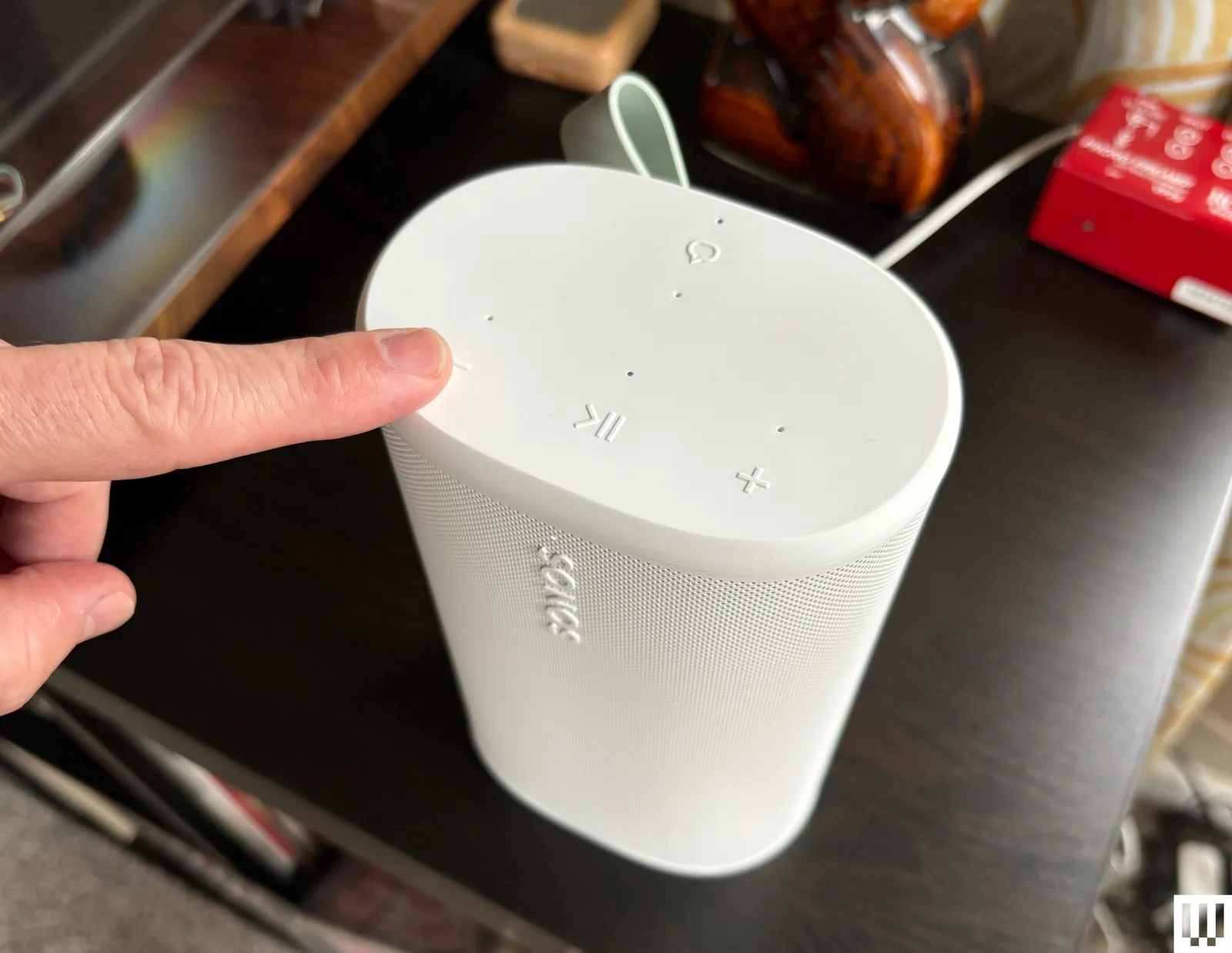
It’s smaller and more portable than the brutish Move, yet large enough to sound much fuller than the pint-sized Roam. It can sit fixed on its charging cradle to rival the homebound Sonos Era 100, or follow you anywhere. In other words, it’s the epitome of Sonos versatility, and now that it’s working properly, it’ll be hard to pass up.
Play On
Opening the Play’s brown cardboard packaging feels equal parts Scandi minimalism and sustainability, in line with recent releases like the Arc Ultra soundbar. Inside, a white acoustic wrapping gives way to a stout tubular speaker with a rubberized loop attached, measuring 7.6 x 4.4 x 3 inches and weighing just under 3 pounds. You’ll also find simple setup instructions and a wireless charging stand, but no wall adapter. You’ll need one that can supply at least 9 volts and 2 amps (18 watts), but a 15-volt, 3-amp (45-watt) model is recommended for “optimal” charging. Sonos says the adapter omission is about reducing e-waste, but will happily sell you one for $29.
Otherwise, the Sonos app is all you need to get going. After the obligatory firmware update, my Play was streaming on my home network in minutes. Sonos hosts over 100 streaming services directly, and you can also stream over third-party services like Spotify Connect, Tidal Connect, Apple AirPlay, and more. You’ll find the speaker as its own “Room” on the app’s main page, where you can swipe up to group it with other Sonos products on your network, or go into the settings to tweak options like EQ, Room name (important if you have more than one Play), and Sonos Trueplay to auto-adjust the sound to your environment.
You’ll also find a Battery Saver toggle, which is set by default to shut down the power when it’s idle for too long. It’s this feature that, according to Sonos, caused my connection woes as I tested the speaker’s 24-hour battery claim. Sonos says it identified the root cause, and after the firmware update I’ve let the speaker power down multiple times, with no further network disruptions over a week of extra testing.
Photograph: Ryan Waniata


Founders Fund has made its name backing what Peter Thiel calls “zero to one” companies — businesses that don’t just improve on existing ideas but create something entirely new. Its portfolio includes Facebook, SpaceX, and Palantir. Its latest bet is a New Zealand startup that puts solar-powered smart collars on cows.
Halter, which closed a $220 million Series E at a $2 billion valuation last month, with Founders Fund leading the round, isn’t the kind of company that tends to dominate technology headlines. There is no agentic AI involved, no humanoid robots. There is, however, a very large and largely unsolved problem: How do you manage cattle spread across some of the most remote terrain on earth, without dogs, horses, motorbikes, or helicopters?
Craig Piggott, Halter’s 30-year-old founder and CEO, has spent nine years working on an answer. “If you manage a pasture-based farm, whether it’s dairy or beef, the most important variable is how you manage the productivity of your land,” Piggott told TechCrunch in a recent interview. “Fences are the lever — they control where animals graze and how you rest the land. Being able to do that virtually just made a lot of sense.”
The system Halter has built combines a solar-powered collar, a network of low-frequency towers, and a smartphone app to let farmers create virtual fences, monitor every animal around the clock, and move their herds without ever leaving the farmhouse. Cattle are trained to respond to audio and vibration cues from the collar — a process Piggott that likens to the way a car beeps as it approaches a wall while parking. Most animals, he says, learn within three interactions with a virtual fence. “Then you’re able to guide them and shift them around on sound and vibration alone.”
The collar does more than herd. Because it is always on and collecting behavioral data, it also tracks animal health, monitors fertility cycles, and flags when individual animals may be sick, capabilities that Piggott says have improved dramatically as Halter has accumulated what is likely the world’s largest dataset of cattle behavior. The company is now on its fifth generation of hardware, and its reproduction product is currently in beta with U.S. customers.
“The product that ranchers use today is radically different to what they bought a year ago,” Piggott said. “Every week, we’re releasing new things to our customers.”
Piggott grew up on a dairy farm in New Zealand before studying engineering and landing a brief stint at Rocket Lab, the rocket company that gave him his first glimpse of what a technology startup could be. “Rocket Lab was kind of my introduction to technology and startups and the world of venture capital,” he said. “Realizing you could raise money, hire a team, and chase an ambitious mission was inspiring. I wanted to do that in agriculture.” He started Halter at 21. “Probably a bit naive in hindsight,” he acknowledged, “but that was fine.”
Techcrunch event
San Francisco, CA
|
October 13-15, 2026
Nine years later, Halter’s collar is on more than a million cattle across more than 2,000 farms in New Zealand, Australia, and the United States, where the company operates in 22 states. The financial proposition for farmers is straightforward: By giving ranchers precise control over where their herds graze, Halter can lift the productivity of their land by as much as 20% — not by saving labor costs (though that happens, too), but by ensuring cattle graze more efficiently and leave less grass behind. “In some cases, we see customers literally doubling the output off their land,” Piggott said. “The upper ceiling for returns is very, very strong.”
Halter isn’t alone in spying the opportunity. Pharmaceutical giant Merck already makes its own virtual fencing system for cattle, called Vence, and newer entrants are circling too — at Y Combinator’s most recent “demo day,” a startup called Grazemate presented a vision for herding cattle with autonomous drones (no collars necessary).
Piggott seems unbothered by either. Asked about drones, he answers: “Can I see drones playing some small part in the future? Probably. But I don’t think a drone is the right form factor for the core fencing element of virtual fencing. A collar will probably be the right form factor for a very long period of time.” And as for the bigger competitive picture, he argues the real obstacle isn’t rival technology at all. “The biggest competition is just not changing anything,” he said. “It’s doing what you did last year.”
What sets Halter apart, Piggott argues, is the sheer engineering difficulty of what it has spent nine years solving — a system managing a thousand animals needs to be reliable to many nines of uptime, because even a 1% failure rate means ten animals out at any given time. “Chasing those many nines of reliability takes time,” he said, “and that long tail is what we proved out in New Zealand over many years before we started to expand globally.”
Halter is also something of an outlier in the agricultural technology sector, which has slumped in recent years as startups struggled to persuade farmers to adopt new products while managing high operational costs. Piggott attributes Halter’s traction to its relentless focus on financial return. “From day one, Halter has been built around a really strong financial ROI,” he said. “If you can lift the productivity of land by 20%, that flows through the entire business.”
Unlike most technology companies, Halter doesn’t view the United States as the center of its universe. “The U.S. market is important for us, but it’s not the world’s biggest market,” Piggott said. “Agriculture is spread around the world, and we need to get there too.” The company has now raised roughly $400 million in total and is prioritizing expansion across the U.S., South America, and Europe.
But the scale of the remaining opportunity is perhaps best captured in a single number — one that no doubt resonated with Founders Fund and Halter’s earlier backers, too. Halter’s collar is on one million cattle, while there are one billion more in the world. With less than 10% penetration in its home market of New Zealand alone, “We have a long way to go, and a lot of product still to build,” Piggott said.
You can listen to our conversation with Piggott on this newest episode of the StrictlyVC Download podcast, which drops Tuesdays.

from the another-day-in-paradise dept
A quick refresher: there was originally $42.5 billion in broadband grants headed to the states thanks to the 2021 infrastructure bill most Republicans voted against (yet routinely try to take credit for among their constituents).
But after taking office this second time, the Trump administration rewrote the grant program’s guidance to eliminate provisions ensuring the resulting broadband is affordable to poor people, and to ensure that Elon Musk and Jeff Bezos gets billions in new broadband subsidies for their fledgling satellite broadband networks.
Money given to Bezos and Musk is money not spent on better, faster, local fiber optics (especially popular community owned networks). A serious broadband policy would ensure that open access fiber is the priority, followed by wireless, with satellite filling the gaps. Satellite was never intended to be the primary delivery mechanism for broadband, because of obvious congestion and capacity constraints.
The Trump NTIA is doing all of this under the pretense that giving taxpayer money to billionaires (for satellite service they already planned to deploy) instead of spending it on high quality fiber is “saving taxpayers money.” That’s generally resulted in widespread delays for this BEAD (Broadband, Equity, Access and Deployment) program, despite Republicans spending much of last election season complaining this program was taking too long.
The Trump NTIA hijacking of the program has also created a $21 billion pool of “non deployment funds” made up of the fake savings Republicans claim they created by screwing up the program. There’s a looming fight emerging over what happens to that money. Congress and the infrastructure law specifically states this money is supposed to be dedicated to expanding broadband access.
States would obviously like to use this money either for broadband, or for local infrastructure. But you get the sense that this giant wad of cash is very tempting for the Trump administration to just hijack and use as an unaccountable slush fund, doled out to its most loyal red state allies (or just kept by the “Treasury”).
After delays and excuses extended in to last summer, the Trump NTIA was supposed to provide guidance for states on how this money could be used earlier this month, but has been a no show:
“Under pressure from senators at an appropriations hearing, Commerce Secretary Howard Lutnick last month sought to calm fears when he said that so-called “non-deployment” funds under the Broadband Equity, Access and Deployment, or BEAD, program would not be rescinded.
But with no guidance so far from the department’s National Telecommunications and Information Administration, which was expected but delayed this week, lawmakers and others are pushing to have their voice heard on exactly how states will be able to use the $21 billion pot of money.”
It’s not clear if states can trust the word of Lutnick (who’s been a little distracted by Epstein allegations). The Trump administration has threatened (quite illegally) to withhold BEAD funding entirely from states that attempt to stand up to telecom monopolies or insist that taxpayer-funded broadband is affordable. There were also several initiatives to withhold BEAD funds if states tried to regulate AI.
Unsurprisingly, many states are afraid to be honest about what a cock up this whole hijacking has been in the press for fear of losing billions in potential (and already technically awarded) funding.
There’s a real potential here that taxpayer money that was originally earmarked for future-proof, ultra-fast fiber network is going to be repurposed into a general free for all slush fund that gets redirected to whoever praises the Trump administration the most. And I wouldn’t be surprised that this ultimately results in state lawsuits against the federal government for redirecting funds.
“I think the state officials who think they’re going to be made whole, need to reread the Merchant of Venice, because [NTIA boss Arielle] Roth is coming for her pound of flesh,” Sascha Meinrath, Palmer Chair in Telecommunications at Penn State University, told me in an email. “I wouldn’t be at all surprised if it’s operationalized in a way to directly target or disadvantage blue states — whether in what it does, or what’s tied to the acceptance of the funding.”
One last side note: last election season the “abundance” folks like Ezra Klein spent ample time parroting GOP criticism of the admitted delays and problems with this BEAD program (ignoring why the program took so long, as well as other examples of similar broadband grant programs from the same year doing well) as an example of a Democratic bureaucratic dysfunction.
But I’ve noticed that since Trump hijacked the program, introduced massive delays, redirected billions to billionaires, and even tried to run off with half the funding, the subject hasn’t been revisited by Klein since. Quite generally (since infrastructure just doesn’t get those clicks) the press coverage of this whole mess has ranged from nonexistent to positively tepid.
Filed Under: bead, broadband, elon musk, fiber, ntia, satellite, taxpayers, telecom


Security cameras have become commonplace in many neighborhoods, but their footage frequently leaves us scratching our heads and wondering what actually happened. That’s where the Wyze Cam Pan V4, priced at $45 (was $60), comes in, and its straightforward objective is to provide footage that will make sense later on. The camera records in sharp 4K (3840 by 2160 pixels each frame), so you may expect clear images of faces, clothes, license plates, and so on.
Movement tracking feels just as practical, with a 360-degree pan and 180-degree tilt that allows one camera to scan a whole room or yard with no blind spots. The base glides smoothly, while the head tilts up and down on demand, allowing you to define unique ‘waypoints’ that cause the camera to sweep over crucial locations at certain intervals. The AI tracking adds another dimension by following people, dogs, and vehicles, ignoring things like shifting leaves and focusing on what you want to see. Tests show that it can detect a person crossing the driveway and maintain them in view long enough to see all of their features and actions.
Sale

WYZE Cam Pan v4, 4K Smart Security Camera, AI Indoor/Outdoor Cameras for Home Security, Baby & Pet, Color…
- 4K Ultra HD Clarity with 360° Pan and 180° Tilt Coverage – Experience crystal-clear monitoring day and night with a wide field of view and remote…
- AI-Powered Motion Tracking for Pets & People – Next-gen CPU with integrated NPU enables faster processing and enhanced AI capabilities. Automatically…
- Robust Indoor/Outdoor Durability – Place your camera in or out, right-side up, up-side down, with an IP65 weather rating, this outdoor security camera…
Night vision doesn’t let you down either, with conventional infrared providing a basic view, but the built-in flashlight illuminates in full color when motion is detected. A built-in starlight sensor helps to keep the image from becoming hazy even when the light is not turned on yet. Clips shot in the evening or at night are just as clear as those made during the day, and users who put the camera near the front entrance or garage were able to identify delivery drivers and visitors without having to guess who they were.

Amazon Basics microSDXC Memory Card with Full Size Adapter, A2, U3, Read Speed up to 100 MB/s, 256GB…
- Universal Compatibility — NOT for Nintendo Switch 2, but Compatible with Nintendo Switch. Works seamlessly with GoPro/action cams, DSLRs, drones…
- Reliable Real-World Capacity – Labeled Capacities/Usable Capacities: 64GB/≥58GB; 128GB/≥116GB; 256GB/≥232GB; 512GB/≥465GB; 1TB/≥908GB (Due…
- 4K & Full HD Ready — Optimized for high-bitrate video recording and burst-mode photography. Handles RAW files, time-lapse sequences, and smooth 4K…
Storage is quite versatile and inexpensive: simply insert a microSD card (up to 512GB) and the camera will record continuously. The good news is that there is no monthly price for this option, as the card will last you several weeks depending on the size you choose. The Wyze app is also quite simple to use: you can go through your timeline and access quick filters for event replay. With two-way audio, you may quickly communicate with the person being recorded and even sound a loud siren if you notice something wrong.
Setup is fast; simply plug in the 6ft USB-C cable, connect to Wi-Fi, and follow the app steps via Bluetooth. It works equally well indoors and outside when combined with the optional outdoor power adaptor, and it has an IP65 designation, allowing it to withstand some rain and dust. It can also withstand temperatures ranging from minus 10 to plus 40 degrees, so you can place it anyplace without worrying about it melting or freezing.

Prime Video’s Most Underrated 5-Part Fantasy Series Is Perfect From Start to Finish

Arsenal’s cracks starting to show after shock FA Cup elimination

OWN XRP? TRUMP SAYS PREPARE NOW!! BIG NEWS

Smart energy pays enters the US market, targeting scalable financial infrastructure

Why Israel is blocking foreign journalists from entering

Bitcoin: We’re Entering The Most Dangerous Phase
OWN XRP? TRUMP SAYS PREPARE NOW!! BIG NEWS

‘They Have No Idea What’s Coming’: Financial Freedom Disappearing Fast | Catherine Fitts & Schectman

G7 Banking Giant Joins China’s Financial System While World Just Sold $82B In US Bonds
-

 NewsBeat2 days ago
Steven Gerrard disagrees with Gary Neville over ‘shock’ Chelsea and Arsenal claim | Football
-

 Business2 days ago
No Jackpot Winner and $194 Million Prize Rolls Over
-

 Fashion1 day ago
Weekend Open Thread: Spanx – Corporette.com
-
Entertainment5 days ago
Fans slam 'heartbreaking' Barbie Dream Fest convention debacle with 'cardboard cutout' experience
-

 Crypto World3 days ago
Gold Price Prediction: Worst Month in 17 Years fo Save Haven Rock
-

 Tech6 days ago
The Pixel 10a doesn’t have a camera bump, and it’s great
-
Crypto World4 days ago
Dems press CFTC, ethics board on prediction-market insider trades
-

 Tech6 days ago
Avatar Legends: The Fighting Game comes out in July and it looks pretty slick
-

 Business3 days ago
Login and Checkout Issues Spark Merchant Frustration
-

 Tech5 days ago
Apple will hide your email address from apps and websites, but not cops
-

 Sports4 days ago
Tallest college basketball player ever, standing at 7-foot-9, entering transfer portal
-

 Tech5 days ago
EE TV is using AI to help you find something to watch
-

 Fashion7 days ago
Amazon Sundays: Soft Spring Layers
-

 Politics5 days ago
Should Trump Be Scared Strait?
-

 Tech6 days ago
Elon Musk’s last co-founder reportedly leaves xAI
-

 Sports2 hours ago
India men’s 4x400m and mixed 4x100m relay teams register big progress | Other Sports News
-

 Fashion5 days ago
The Best Spring Trends of 2026
-

 Tech5 days ago
How to back up your iPhone & iPad to your Mac before something goes wrong
-

 Crypto World5 days ago
U.S. rule change may open trillions in 401(k) funds to crypto
-

 Tech5 days ago
Flipsnack and the shift toward motion-first business content with living visuals
You must be logged in to post a comment Login