Tech
Maker 3D-Prints Shoes Layer by Layer, Successfully Goes from Printer to Pavement

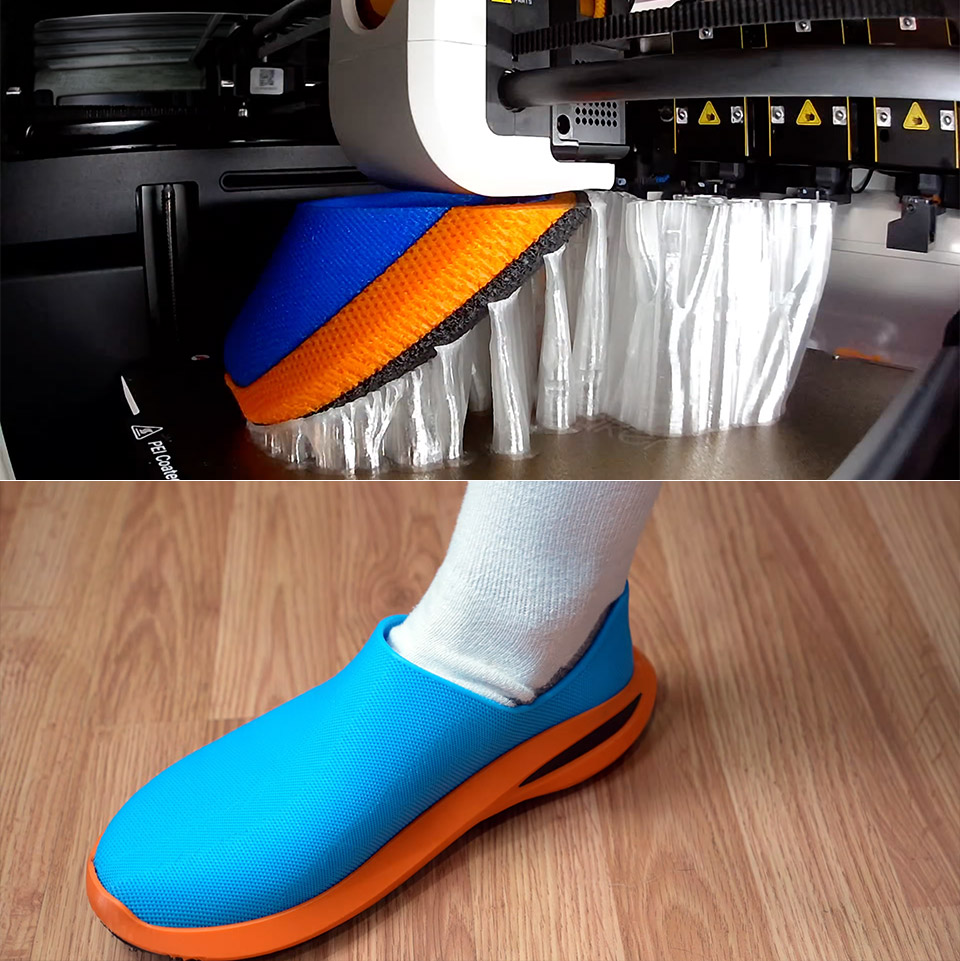
People are constantly pushing the boundaries of 3D printing, but shoes have long been the holy grail, or rather the holy nightmare, of the technology. They must be able to bend with each step, provide traction on a variety of surfaces, and withstand regular use without falling apart at the seams. DaveRig Design took on this exact task in a recent project, resulting in a pair of casual shoes that look and feel right at home on the street.


He started with the CityStep casual everyday sneaker design, which you can get at MakerWorld. This design features a slip-on form with a contoured profile that wraps around your foot snugly at the back and sides, while leaving the top of the shoe open and breathable. The design features a dense infill pattern on top to give it a knit fabric look and feel; there are no separate parts or glue jobs necessary, and the greatest part is that each shoe prints upright in one piece with a tiny heel stand to protect it from tumbling over while printing. Print times on typical machines are roughly sixty-six hours each pair, so you’re looking at around seventy-six hours on some machines due to the fine details and support structures.


Bambu Lab A1 3D Printer, Support Multi-Color 3D Printing, High Speed & Precision, Full-Auto Calibration…
- High-Speed Precision: Experience unparalleled speed and precision with the Bambu Lab A1 3D Printer. With an impressive acceleration of 10,000 mm/s…
- Multi-Color Printing with AMS lite: Unlock your creativity with vibrant and multi-colored 3D prints. The Bambu Lab A1 3D printers make multi-color…
- Full-Auto Calibration: Say goodbye to manual calibration hassles. The A1 3D printer takes care of all the calibration processes automatically…
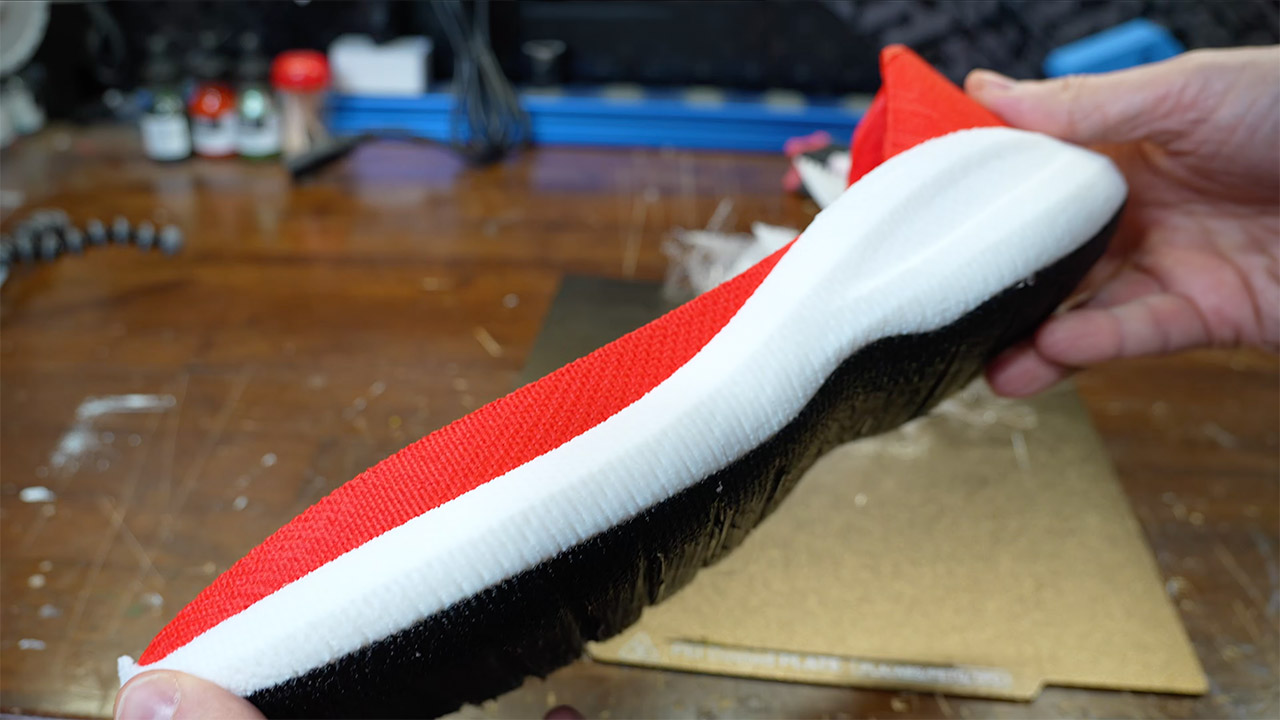
The actual game changer was the material he chose. DaveRig chose BIQU MorPhlex filament, a flexible choice that handles like ordinary TPU out of the spool, with a hardness of roughly 90 A, which is rigid enough to keep the printer from stringing and jamming, which is a common problem with softer filaments. Once the print is completed and the material has cooled, it transitions to a considerably softer seventy-five A rubber-like feel that provides cushioning and traction without the need for any additional post-processing gimmicks. He was using a Snapmaker U1 tool changer, a machine designed to automatically swap between four separate extruders, which came in handy for a project that required over three thousand swaps to blend colors and hardness levels across different parts of the shoe, ensuring that the sole remained grippy, the midsection flexed naturally, and the upper remained light and airy all at once.

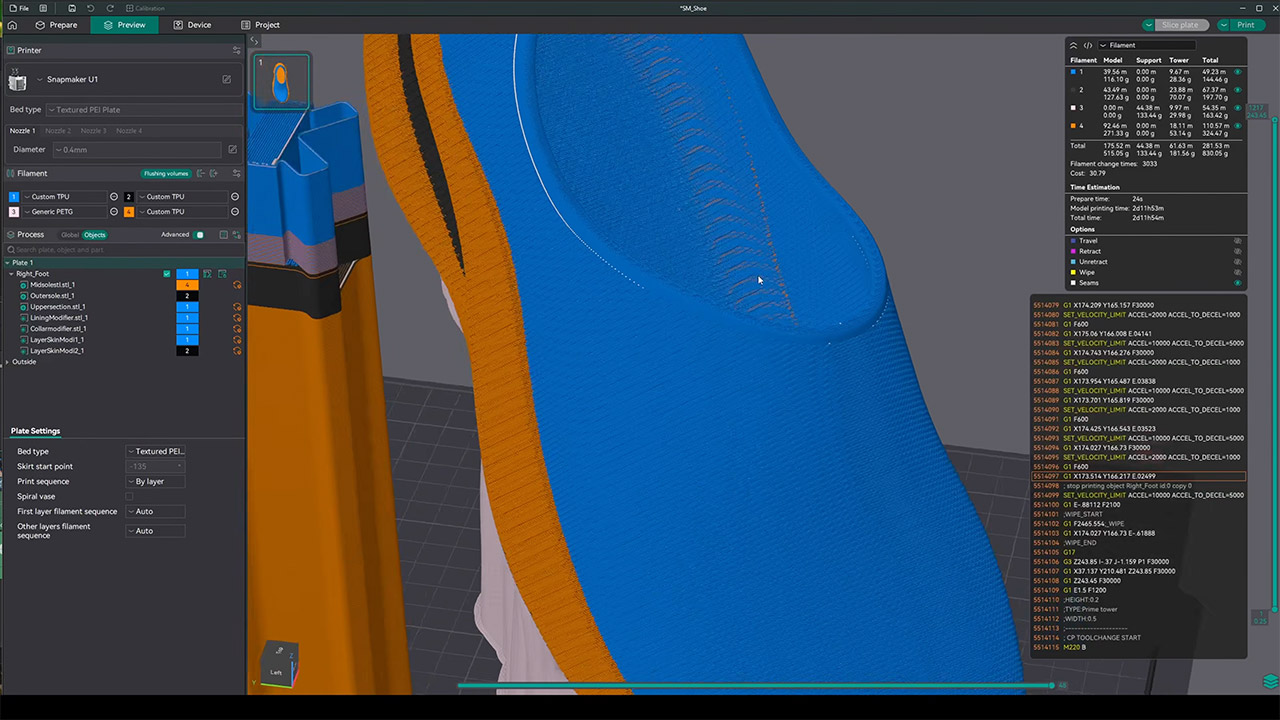
Before sending it to the printer, he spent some time in Blender fine-tuning the model, making subtle changes to get the layer bonding just perfect so the finished shoes wouldn’t split when stretched over your foot. Supports were made with a combination of flexible filament and conventional PLA to make them easy to remove when the print was completed, and he strengthened them to keep them from shifting around during the long print. To ensure perfect colour consistency, he ran both shoes side by side on the same build plate.
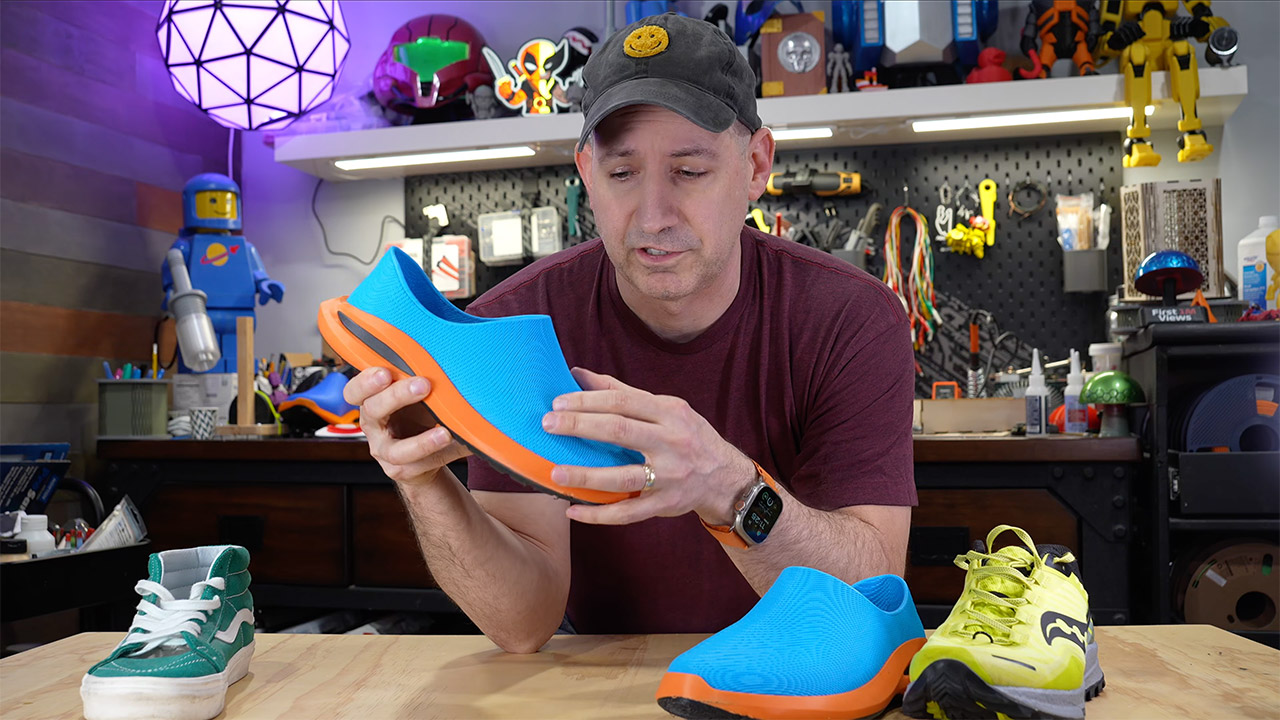
When the print was finally completed and the supports were removed without a hitch, the results were a pleasant surprise, nearly factory-fresh polished. The upper has a nice textured surface that smoothes over the layer lines so they are scarcely noticeable, and they appear to have come off a production line rather than a homemade work. The sole provides just enough traction, the MorPhlex’s post-print softness makes it easy to grab surfaces, and the heel cup keeps everything held in place without slipping around during normal walking.
You must be logged in to post a comment Login