TL;DR
Meta quit RE100 after a decade, unable to meet renewable energy criteria as it funds 10 gas plants for AI data centres





Meta quit RE100 after a decade, unable to meet renewable energy criteria as it funds 10 gas plants for AI data centres
Meta has withdrawn from RE100, the global corporate clean energy initiative it joined a decade ago as Facebook, after the Climate Group confirmed the company can no longer meet the programme’s technical criteria. The departure follows Meta’s commitment to building 10 natural gas plants to power its Hyperion AI data centre campus in Louisiana, a project now valued at more than $200 billion. Meta is the highest-profile company to leave the initiative since its founding in 2014.
RE100 requires members to source 100 percent of their electricity from renewable sources. Meta claimed to have met that threshold every year since 2021, using environmental attribute certificates to match its consumption with renewable generation on an annual basis. But the scale of its gas commitments, more than seven gigawatts of new fossil fuel capacity for Hyperion alone plus a 200-megawatt gas plant in Ohio, created what the Climate Group called a structural incompatibility with continued membership.
The Climate Group, which co-founded RE100 with the Carbon Disclosure Project in 2014, said Meta had “withdrawn” because it was “no longer able to meet the technical criteria due to investments made in new gas power.” The initiative still counts 444 corporate members, including Apple, Google, and Microsoft, all of which have also expanded their data centre footprints but have not made gas commitments on the same scale. Microsoft recently signed a 20-year gas deal with Chevron for a Texas data centre, raising questions about whether other tech giants may face similar scrutiny from RE100 in the months ahead.
Meta still claims to match its electricity usage with “100 percent clean and renewable energy” through certificate purchases, a practice that environmental analysts have long criticised as paper compliance rather than genuine decarbonisation. Jonathan Bruegel, an energy finance analyst at the Institute for Energy Economics and Financial Analysis, described the gap between Meta’s certificate claims and its physical energy mix as a structural divergence that RE100’s exit makes visible. Meta has also signed a deal to beam solar energy from space to its data centres starting in 2030, but that technology remains unproven at commercial scale.
The departure underscores a tension running through the entire AI industry. Companies that spent years building renewable energy credentials are now racing to secure electricity at a pace that renewables alone cannot match, and natural gas has emerged as the default bridge fuel. Whether Meta’s exit from RE100 becomes an isolated case or the beginning of a broader withdrawal by tech companies will depend on how quickly the industry’s power demands outstrip the available renewable supply.


AI and ML
And as a bonus, it doesn’t require data retention
Anthropic released its Opus 5 AI model on Friday, claiming that it “comes close to the frontier intelligence of Claude Fable 5 at half the price.” That’s welcome news for enterprises beset by rising token costs.
Fable 5 prices tokens at $10 / MTok input and $50 / MTok output, while Opus 5 prices tokens at $5 / MTok and $25 / MTok. OpenAI’s GPT-5.6 Sol sells for $5 / MTok input and $30 / MTok output.
However, the tokens required to complete a task can vary from model to model, so it’s also useful to assess how much each model costs to complete the same task.
Per Artificial Analysis, the weighted average cost (USD) per Intelligence Index task is $2.75 for Fable, $2.03 for Opus 5 (max), $1.04 for GPT-5.6 Sol (max), and $0.95 for Kimi K3.
Opus 5 leads the Artificial Analysis Intelligence Index at 61, one point ahead of Fable.
“Claude Opus 5 provides greatly improved performance for the same cost as its predecessor, Opus 4.8,” Anthropic claims.
Opus 5 should offer customers more context to fill because Anthropic has put the model’s system prompt on a diet. According to Claude Code engineer Thariq Shihipar, Anthropic removed 80 percent of the Claude Code system prompt for its latest models.
As a result, the company’s guidance for crafting prompts, skills, and CLAUDE.md files has changed.
“Across your system prompt, skills, and CLAUDE.md files, you may need to simplify just like we did,” said Shihipar, adding that a command called `claude doctor` can help automatically optimize some prompts and skills.
Users of Opus 5 however may find the model’s responses wordier – at their expense. Anthropic cautions, “Claude Opus 5’s default user-facing responses run longer than prior Opus models’.” Customers who don’t want the new verbosity are advised, “To control response length, prompt for it explicitly.”
Opus 5 scores close to Mythos on finding vulnerabilities in open source code (80 percent OSS-Fuzz benchmark score compared to 79.4 percent), but is significantly weaker in weaponizing those findings – it succeeded in 4/14 exploitation attempts compared to 13/14 for Mythos.
The model’s system card states, “Claude Opus 5 is substantially stronger than Claude Opus 4.8 across the board, with the largest gains in agentic coding, computer use, and long-horizon knowledge work.” It is said to be comparable to, or in some cases ahead of, Claude Fable 5 and Claude Mythos 5.
The model is likely to be significantly more useful for cybersecurity and biology tasks because it should refuse to cooperate less often. According to Anthropic, “Opus 5’s cyber classifiers are proportionally less restrictive than those on Fable 5. They allow Opus 5 to find vulnerabilities in source code, but block ‘binary-based’ vulnerability scanning (a method more likely to be associated with malicious actors), penetration testing, and exploit generation.”
Anthropic is also making life easier for those frustrated by model refusals. It’s rolling out an automated fallback function on its API so requests deemed too dangerous to entrust to Opus 5 or Fable 5 can be routed to a less capable model instead of being blocked outright.
Opus 5 is said to be Anthropic’s “most aligned model to date,” meaning it’s the least likely to go off its guardrails.
A more compelling selling point for businesses is likely to be the lack of a data retention requirement. ®

Just last week we had the story of the Trump DOJ issuing very questionable subpoenas of NY Times journalists while trying to track down who leaked information to those reporters regarding the potentially catastrophic security flaws of the “gift” 747 plane he received from Qatar. As we noted in that original post, this appeared to be a wholly abusive use of the government’s subpoena powers, and well outside the norm.
On Thursday, the DOJ agreed to withdraw those subpoenas, but only after a long court hearing in which the DOJ thoroughly embarrassed itself in front of the judge, Arun Subramanian, who noted many, many problems with the subpoenas, which the DOJ tried to tiptoe around, calling them “inadvertent errors.” Most of the media coverage of this is pretty weak, but Matthew Russell Lee of the Inner City Press did a wonderful liveposting of the hearing that suggests just how badly the DOJ fucked this up.
It started out with the DOJ saying they weren’t going to withdraw the subpoenas, and claiming that they believed the subpoenas were “properly” issued. But the court quickly pointed out that there is precedent in the Second Circuit regarding when and how you can subpoena journalists, and the DOJ basically ignored all of that. The DOJ’s Sean Buckley argued that following those rules would amount to conceding the rules applied — something the DOJ apparently didn’t want to admit, leading the judge to say that following the rules wouldn’t be seen as any such admission.
Judge Subramanian kept pressing Buckley on why the DOJ rushed to issue these incredibly broad subpoenas when there appeared to be much more straightforward ways to obtain the information they were seeking. Indeed, another part of what was discussed is that the DOJ’s subpoenas were so broad that they included phone records of reporters’ relatives who had nothing whatsoever to do with the reporting:
A Justice Department lawyer, Sean Buckley, cast the government’s missteps as inadvertent errors and said: “No one was trying to pull a fast one.” Buckley apologized for other subpoenas that sought records for phone numbers belonging to one reporter’s mother and two of the journalists’ spouses.
“That was an error, judge, which we own,” Buckley said. “It was a consequence of trying to move quickly.”
“These things are starting to pile up,” Subramanian said, becoming increasingly testy.
The judge also explored whether or not the DOJ misled the judge who signed off on the subpoenas, by not letting them know that the subpoenas were for information associated with reporting. He even noted that the Assistant US Attorney who got the subpoenas, Kevin Sullivan, was in the room, but not at the table, asking him to come out of the galley and join the DOJ table (this is not something that usually happens).
Following that was an incredible exchange wherein Judge Subramanian asked Sullivan about whether he told the original subpoena-issuing judge that the subpoenas were for reporters, leading Sullivan to say it “was an oversight” and that later on they “did legal research.”
Around that point, a clearly fed up Subramanian said that if this were a normal case, this would be the point where he would issue an order to show cause why the DOJ shouldn’t face sanctions for abusing the subpoena process. There was some more back and forth scolding, including Subramanian pointing out that the “errors” for the DOJ seemed to be “piling up” and asking the DOJ if he should expect to see more mistakes like this moving forward.
Around this point, the DOJ regrouped and changed their stance from earlier in the hearing, saying they were now willing to drop the subpoenas. After the hearing was over, the ever petulant Trump Justice Department quickly whined to the media how unfair it was that federal judges expected them to actually follow the rules and stuff:
After the hearing, the Justice Department lashed out at Subramanian in a statement, saying he “threatened our attorneys with sanctions unless subpoenas were withdrawn, and blocked us from presenting the meticulous process of this investigation.”
“The grand jury has a right to hear testimony from all material witnesses in a federal criminal investigation. This judge’s conduct overrides clear longstanding principles and common sense — blocking the grand jury from receiving core evidence in a national security investigation,” the statement said.
“Make no mistake,” it added, “this investigation remains ongoing, and we will pursue justice against those threatening national security by leaking classified information, a serious federal crime.”
Once again, we have an overly aggressive, understaffed, and generally incompetent DOJ that seems not to realize that there are significant and important Constitutional limits on what it can do. And when a judge calls them out on it, the fact that their immediate response is to start whining about it like they were the victims here suggests a good reason that the entire DOJ will need a massive overhaul post-Trump.
Filed Under: 1st amendment, air force once, arun subramanian, doj, free speech, kevin sullivan, qatar, sean buckley, subpoenas
Companies: ny times


Indeed’s report found that three out of four Ireland-based employees are open to moving into a new career, but are being held back by a number of factors.
Job recruitment platform Indeed has published new research indicating that there are a multitude of factors preventing Ireland’s employees from making a significant career move into another field, despite a significant portion being open to making the change.
On behalf of Indeed, Censuswide collected data from 1,000 jobseekers and employees based in Ireland in June of this year. A main finding of the research was that, of those who contributed their information, three-quarters of workers are open to a career change, however, there is a lack of understanding into how this may be facilitated.
31pc of participants explained that they are held back by financial uncertainty, 23pc are concerned about having to start as a beginner all over again, 23pc fear that they don’t have the necessary qualifications and a further 23pc are uncertain about which jobs would suit them.
Concerns around skill level stood out, as more than 60pc were of the opinion that while they do have transferable skills, they aren’t quite sure where those skills might be most relevant. Half of respondents said they wish they knew what jobs they qualify for based on their skillset and experience.
Commenting on the report, Conor McCarthy, the vice-president of sales for the UK and Ireland at Indeed, said: “Changing careers can feel daunting, especially in a rapidly changing work environment. People know they have valuable skills but cannot see how they translate into new opportunities in today’s workplace.”
Indeed’s research found that increased confidence and guidance could potentially encourage people to explore new opportunities. 71pc said they wish they could ask questions about a company or role before applying for it, with an additional 54pc agreeing that they have struggled to explain why they are a good fit for a role during an application or interview.
The report suggests that ambition is not lacking among Ireland’s employees, as 61pc said that they have a dream career they would love to make a reality, while 88pc could imagine moving into a field “where workers will be needed in the long term”.
With longevity in mind, employees are navigating growing uncertainty about the future, with this being a leading concern for of workers that are thinking about their professional future (34pc), followed closely by the impact of AI and automation (32pc).
Career coaching also remains largely untapped, claimed the report, which found that only 21pc of participants have ever used a career coach, with the biggest barriers including never having considered using one (39pc), concerns about cost (28pc), uncertainty about what a career coach does (25pc) and not knowing where to find one (24pc).
McCarthy said: “For many people, career support has either felt out of reach or too generic to be useful.”
Updated, 4.42pm, 24 July 2026: This article has been amended to fix some incorrect statistics.
Don’t miss out on the knowledge you need to succeed. Sign up for the Daily Brief, Silicon Republic’s digest of need-to-know sci-tech news.

Looking for a different day?
A new Quordle puzzle appears at midnight each day for your time zone – which means that some people are always playing ‘today’s game’ while others are playing ‘yesterday’s’. If you’re looking for Friday’s puzzle instead then click here: Quordle hints and answers for Friday, July 24 (game #1642).
Quordle was one of the original Wordle alternatives and is still going strong now more than 1,500 games later. It offers a genuine challenge, though, so read on if you need some Quordle hints today — or scroll down further for the answers.
Enjoy playing word games? You can also check out my NYT Connections today and NYT Strands today pages for hints and answers for those puzzles, while Marc’s Wordle today column covers the original viral word game.
SPOILER WARNING: Information about Quordle today is below, so don’t read on if you don’t want to know the answers.
Latest Videos FromTechRadar
• The number of different vowels in Quordle today is 4*.
* Note that by vowel we mean the five standard vowels (A, E, I, O, U), not Y (which is sometimes counted as a vowel too).
• The number of Quordle answers containing a repeated letter today is 1.
• No. None of Q, Z, X or J appear among today’s Quordle answers.
• The number of today’s Quordle answers starting with the same letter is 0.
If you just want to know the answers at this stage, simply scroll down. If you’re not ready yet then here’s one more clue to make things a lot easier:
• S
• S
• B
• G
Right, the answers are below, so DO NOT SCROLL ANY FURTHER IF YOU DON’T WANT TO SEE THEM.

The answers to today’s Quordle, game #1643, are…
A nice and easy game (for me at least) to start the weekend.
My starter words paid huge dividends, giving me two straightforward anagrams to solve and making significant headstarts with SALON and GOURD. Happy days.

The answers to today’s Quordle Daily Sequence, game #1643, are…
The company has comitted to 10 natural gas plants since last year.
A decade ago, Meta joined RE100, a major renewable energy initiative aimed at helping large corporations transition to renewable electricity. Now, the company has pulled out of the group as it increasingly relies on natural gas for its AI data centers.
RE100 is overseen by UK nonprofit Climate Group. It has more than 400 members, including Microsoft, Google and Apple — all of which have made commitments to source 100 percent of their energy needs from renewable sources. Meta, as TechCrunch notes, signed on in 2016 with a target of 2020 for fulfilling its goal.
Meta’s involvement with RE100 was always voluntary, but the move does underscore how the company’s priorities have shifted as it’s poured massive amounts of money into AI infrastructure. Meta’s departure from the pact was first reported by Recharge. Climate Group told the publication that the Facebook and Instagram maker “is no longer able to meet the technical criteria due to investments made in new gas power.” Meta, meanwhile, told TechCrunch that it was still committed to “100% clean and renewable energy” but that leaving RE100 was a “mutual” decision.
Earlier this year, Meta said it would fund seven new natural gas plants to help fuel its data centers. The company has now committed to 10 such projects since last year.
As both TechCrunch and Recharge point out, funding natural gas plants doesn’t necessarily mean that Meta can’t still claim to be making good on renewable energy commitments. Companies like Meta typically fulfill their promises by buying energy attribute certificates to offset their use of fossil fuels.
But Meta has now invested so much in natural gas — its 10 natural gas power plants will produce enough energy to power the state of South Dakota, according to TC — it’s going to get more difficult to offset. Or, as an analyst told Recharge, “a 100 percent renewable claim becomes harder to defend.”

Lockheed Martin has unveiled its Morfius X-Rotor counter-drone system at the 2026 Farnborough Airshow, calling it a low-cost answer to challenging drone swarms.
The ground-launched system uses a one-to-many high-power microwave, or HPM, approach designed to disable multiple unmanned aerial vehicles during a single mission.
Company officials say the platform can neutralize more than 50 hostile drones in one flight, a capability aimed at addressing large-scale swarm attacks.
Latest Videos FromTechRadar
The 2026 Farnborough Airshow has centered largely on affordable counter-drone technology as militaries confront growing swarm threats across the globe.
Lockheed Martin says the approach avoids reliance on costly guided munitions typically used to strike individual aerial threats one at a time.
Unlike traditional interceptors that are destroyed after use, the Morfius X-Rotor is designed to be recovered and redeployed following each engagement.
According to Lockheed Martin, the system is compatible with existing command and control networks and does not require a dedicated sensor or fire-control radar.
That design choice, the company says, lowers the barrier for integration across a wide range of existing battlefield command networks.
The system “sets a new benchmark for counter-drone capability — delivering a high kill rate while keeping the cost per kill low,” said Randy Crites, vice president and general manager of Lockheed Martin Missiles and Fire Control Advanced Programs.
“By leveraging a lightweight, field reusable high-power microwave architecture, we provide the most effective, low-cost solution on the market today.”
Lockheed Martin also announced plans to accelerate prototype production of both the drone platform and its microwave payload for frontline forces.
However, it has not disclosed a firm timeline for when the system might reach full-rate production for its military customers worldwide.
The Morfius X-Rotor recently completed flight testing in Arizona, California, and Oklahoma, where the system reportedly carried out interception missions.
Additional evaluation campaigns are scheduled for the coming months while engineers collect operational performance data before any broader deployment.
Lockheed Martin has not specified which branches of the U.S. military have expressed formal interest in acquiring the Morfius platform.
This announcement arrives as US forces seek cheaper alternatives to costly interceptors after depleting stockpiles against Iranian missiles and Shahed drones.
That shortfall has intensified debate over whether cheaper, non-kinetic systems like Morfius could reduce dependence on expensive munitions over time.
Lockheed Martin used the same event to introduce a lower-cost Patriot interceptor, part of a broader push to reduce per-unit defense costs.
Together, the two announcements suggest Lockheed Martin is betting heavily on affordability as a selling point amid tightening defense budgets.
Whether the Morfius X-Rotor can match its stated kill rate under real combat conditions remains unverified outside company-run trials so far.
Independent assessments of its effectiveness against dense, coordinated drone swarms will likely determine whether militaries adopt the system at scale.
Via Defense News

Follow TechRadar on Google News and add us as a preferred source to get our expert news, reviews, and opinion in your feeds.

Paramount Skydance has agreed to postpone its $111 billion Warner Bros. Discovery merger until five days after an antitrust trial or June 1, 2027, whichever comes first. The agreement with a 12-state coalition led by California effectively shelves the deal for months while states argue it would reduce competition in cable and theatrical markets. Variety reports: Paramount had been keen to close the deal before Sept. 30, when it will begin to incur a $7-million-a-day “ticking fee” to be paid to Warner Bros. investors. The agreement is a tacit acknowledgement that that will not happen, barring a settlement with the states. Paramount previously sought a three-day hearing on the injunction motion in late August, hoping to win the judge’s blessing to close the deal sometime in early September. But the states resisted that idea, saying they would need more time to take discovery and prepare for a full trial on the merits. The states were due to file their injunction motion on Thursday night, but held off as the two sides held discussions on a path forward. In a statement, the company said the agreement is a “significant win.”
“Today’s agreement is a significant win because the result is exactly what we have sought from the outset: a direct path to a trial based on the evidence,” a Paramount spokesperson said. “This is the fastest and clearest way to prove that this transaction is good for competition, good for consumers, and good for creators, a conclusion dozens of competition authorities around the world have already reached. Plaintiffs’ market definitions bear no relationship to the realities of today’s marketplace and cannot withstand scrutiny. We look forward to proving our case at trial.”
A hearing was scheduled for Aug. 3 in federal court in Oakland, at which point the two sides were expected to argue over the injunction motion. The two sides agreed to cancel that hearing. U.S. District Judge Araceli Martinez-Olguin approved the joint stipulation on Friday afternoon, about an hour after it was entered. The Writers Guild of America filed its own motion for an injunction earlier this week, which was also set to be heard on Aug. 3. That motion has been withdrawn, as Paramount has effectively conceded that it will not close the deal until a determination of the merits of the antitrust claims. The parties also agreed to submit a joint stipulation by July 31 on their respective positions on trial scheduling. The states previously proposed to hold the trial in April 2027.
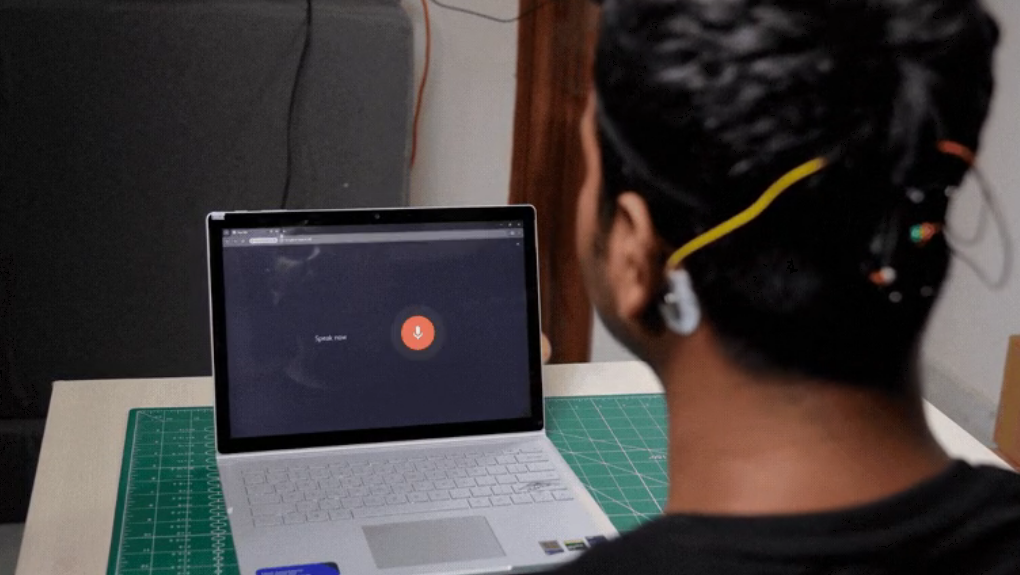
The standard computer mouse is a perfectly useful peripheral if your hands work. If you’ve got some trouble in that area, you might appreciate an alternative input solution. To that end, [Varun Adinath Patil] created a neat hands-free solution for moving a cursor around a screen.
The build is based on the Neuro PlayGround Lite, a board built for physiological signal acquisition in the Feather form factor. It’s hooked up to an IMU sensor—both a MPU6050 or BMI270 work—which tracks head movements to allow the cursor to be panned around the screen. Other biological signals are then used to activate other standard mouse functions. Clenching the jaw fires off a left click, while a triple blink fires a right click. Clicking and dragging is achieved by a double-blink. The jaw muscles are sensed via EMG signals picked up with gel electrodes on the skin, while the blinks are detected via EOG signals via the same contact points.
Commercial solutions in this realm exist, but it’s great to see how such a device can be built from the ground up. We’ve looked at other neat applications of head-tracking before, too. If you’re working on your own innovative accessibility tools, don’t hesitate to let us know via the tipsline.

The big picture: McAfee was a trusted name in the antivirus software market during the MS-DOS days. Many computers came with a copy of the company’s VirusScan freeware tool to fend off trojan horses and other virus threats. Today, McAfee is a name that’s almost exclusively trusted in the advertising and B2B markets. End users would very much prefer to avoid McAfee products at this point, which is why they tend to get angry when someone tries to push the McAfee brand through bundled advertising pop-ups.
The controversial advertising partnership between LG and McAfee has apparently come to an end after Microsoft got involved in the matter.
Pavan Davuluri, executive vice president of Windows and Devices, recently confirmed that Redmond got in touch with LG, the company that started it all. LG has “agreed” to remove the McAfee pop-up from its Windows Store app, Davuluri said, which likely means that Microsoft forced the South Korean manufacturer to stop pushing McAfee-related advertising to customers who purchased a new gaming monitor.

The controversy began earlier this month, when users discovered that the “LG Monitor App Installer” app was displaying McAfee promotions. Windows installed the app after affected users connected their brand-new LG monitors, with no easy way to uninstall the tool without resorting to third-party applications or disabling the Microsoft Store itself.
– Pavan Davuluri (@pavandavuluri) July 22, 2026
According to Davuluri’s post, Microsoft “connected” with LG before the latter agreed to remove the McAfee adware message from the LG Monitor App Installer app. Both companies apparently share a common goal of improving the Windows ecosystem and providing customers with the best possible software experience.
Per user complaints, the list of LG monitors reportedly found to automatically push the LG Monitor App Installer app onto users’ PCs includes the following models: 34GX900A-B, 45GX950-B.AEU, 32GS95UE-B, 39GX950B, 27GP83B-B, 27GN800, 32GS95UE-B, and 27GN850-B.

Apps developed through Microsoft’s Universal Windows Platform can be designed to install automatically when a user connects a specific device to a Windows machine. Put simply, Microsoft approved this practice for UWP app developers, and the LG monitor tool was simply working as designed.
The official UWP documentation even states that automatic installation can be a source of confusion because users do not receive any notification about the installation process.
Other companies known to take advantage of this auto-installation feature include Razer, Logitech, Asus, and Gigabyte.
A federal judge has ordered a public iPhone exploit taken offline after Magnet Forensics argued it wasn’t independent security research at all, but instead a stolen trade secret.
U.S. District Judge Victoria Marie Calvert partially approved Magnet’s request for a preliminary injunction. She directed Paradigm Shift and former Magnet exploit engineer Mario Del Gaudio to delete the usbliter8 article, code, technical details, and related materials in their possession by 11:59 p.m. Eastern on July 23.
By July 23, Paradigm Shift had replaced the original article with a page indicating the blog post was unavailable. The preliminary injunction will continue throughout the litigation unless the court removes it in a separate order.
Magnet’s July 7 complaint asserts that usbliter8 originated from a confidential A12 and A13 SecureROM access capability integrated into a commercial forensic product. The company alleges Del Gaudio acquired the technique while employed by Magnet and later shared it through Paradigm Shift.
Paradigm Shift originally presented usbliter8 as newly published security research before releasing it on June 18.
We reported at the time that the exploit affects devices including the iPhone XS, iPhone XR, iPhone 11 lineup, and second-generation iPhone SE. The court hasn’t made a final ruling on liability.
Calvert found that Magnet had established a likelihood of success on its trade-secret and contract claims for purposes of the preliminary injunction, based on evidence the defendants didn’t contest at the July 16 hearing.
Usbliter8 targets SecureROM, the immutable code that starts Apple’s secure boot process. It combines a flaw in a USB controller with security settings used on A12 and A13 devices to execute code while a device is in Device Firmware Update mode.
Because SecureROM is built into the processor during manufacturing, Apple can’t replace the vulnerable code through an ordinary software update. It may still be able to develop mitigations that interfere with exploitation or reduce its usefulness.
The flaw doesn’t create a remote attack or automatically expose everything stored on an iPhone. Using usbliter8 requires physical access to the device, a USB connection, DFU mode, and programmable hardware capable of sending specially constructed USB traffic.
The exploit can run unsigned code before the operating system starts, but it doesn’t directly compromise the Secure Enclave or automatically reveal a user’s passcode and encrypted data. Additional vulnerabilities or forensic techniques would be needed to cross those protections.
Those requirements make usbliter8 especially relevant to forensic investigations involving seized devices. Magnet sells investigation products to law enforcement agencies, intelligence services, government bodies, and private organizations.
Del Gaudio worked as an exploit engineer placed with Magnet from November 2023 through November 2024. He signed an agreement covering confidential information, intellectual property, and continuing restrictions that survived the end of his placement.
Magnet says Del Gaudio had access to a zero-day capability internally called “MSG,” which targeted the same A12 and A13 SecureROM vulnerability later described in the usbliter8 publication.
According to the complaint, Magnet engineers discussed the vulnerability in meetings attended by Del Gaudio by April 2024. The company says it integrated MSG into one of its products in May 2024 and that Del Gaudio used the capability dozens of times while testing another tool.
 Magnet says Del Gaudio had access to a zero-day capability internally called “MSG.”
Magnet supplied additional details in a July 17 declaration addressing questions Calvert raised at the July 16 hearing. The company’s director of iOS research said Del Gaudio attended restricted sessions during a company gathering in Denver from March 11 through March 15, 2024.
Fewer than 20 people attended the smaller iOS sessions, according to the declaration. Magnet said the group discussed the SecureROM vulnerability, MSG’s technical architecture, and its development into an access capability for the company’s products.
After his placement ended in November 2024, Del Gaudio became affiliated with Paradigm Shift, according to the complaint. The Spanish security company published “Introducing usbliter8: An A12/A13 SecureROM Exploit” on June 18.
A preserved screenshot connected Del Gaudio’s name and photograph to the @NotHdesk account associated with the research, according to Magnet. The company also says the account was linked to an email address known to belong to him.
Those details form part of Magnet’s case that Del Gaudio had access to MSG and was connected to the usbliter8 publication. The public record doesn’t include source-code comparisons, file-transfer records, or a detailed technical analysis showing exactly how MSG and usbliter8 match.
The original usbliter8 article was deliberately omitted from the complaint because Magnet argued that attaching it would further distribute the information it sought to protect. The company offered to provide the material privately for the court to review.
On June 18, Magnet sent Del Gaudio a cease-and-desist demand and contacted Paradigm Shift the next day. The demand sought removal of the article and code, identification of anyone who received the information, preservation of evidence, and return or destruction of Magnet material.
In letters dated June 22 and June 28, Paradigm Shift’s attorneys disputed Magnet’s claims and pressed the company to identify the information it considered a trade secret. Magnet filed the lawsuit on July 7 after the parties failed to reach an agreement.
Neither Del Gaudio nor Paradigm Shift appeared at the July 16 injunction hearing, despite receiving electronic notice. Calvert therefore considered an uncontested record when deciding whether temporary relief was warranted.
Magnet argues that publication let competitors study the technique without making the same investment. The company also says Apple could reduce the exploit’s value through mitigations, while the disclosure may weaken customer trust in Magnet’s ability to protect sensitive capabilities.
The dispute raises a security question over whether companies should keep zero-days secret for forensic use or disclose them so manufacturers and device owners can respond.
 Magnet argues that publication let competitors study the technique without making the same investment.
Calvert described the public-interest issue as the most difficult part of the case. The judge addressed concerns about companies and government actors stockpiling zero-day vulnerabilities rather than reporting them to affected manufacturers.
The court also questioned whether consumers were better protected by knowing about the vulnerability once its existence had become public. Calvert concluded the court couldn’t resolve that policy debate through an unopposed preliminary injunction motion.
Paradigm Shift, as reported by MacRumors, said it informed Apple Product Security before publishing on June 18. The order doesn’t prevent Apple from using information it already has to mitigate the vulnerability.
Since Apple already has the disclosure, the injunction can’t fully restore the secrecy Magnet claims gave the capability commercial value. However, Calvert found that removing the material could still limit further harm and prevent Paradigm Shift from using the research for promotion.
Magnet also sought extensive forensic access to the defendants’ computers, accounts, and storage. Calvert declined to grant that relief outside the normal discovery process.
The court observed that Magnet accepted Del Gaudio might not have required company hardware or files to replicate the capability. In Magnet’s view, familiarity with the research could have been enough.
A key question remains for future steps, such as whether Del Gaudio copied protected Magnet data or drew on technical understanding and experience kept after departing the firm.
The injunction covers material held by the defendants but can’t remove copies already downloaded or shared elsewhere. The case now turns on whether usbliter8 represents independent research or the disclosure of Magnet’s confidential forensic capability.




Ripple Payments Joins MiCA With 14 Firms, Does It Mean Anything For XRP?


The House | The City of London can help the new chancellor deliver growth in every postcode


Weekend Open Thread: Brooks Brothers


Democrats look to World Cup watch parties to register thousands of voters


Grayscale Files For Worldcoin ETF, WLD Registers Sharp Rise


Sail Virtually Aboard The “Itanic” With IA-64 Emulator


Unregistered fitter used Gas Safe logo on business flyers

Turtle Beach Command Series KB7 review: a nifty screen-equipped gaming keyboard

New Jersey voter registration controversy explained: How 6,600 noncitizens got on the rolls, and what happens next


Big Money Is Entering XRP


Kaspersky exposes OkoBot’s 20-module crypto wallet attack

Johnny Depp’s R-Rated Gothic Cult Classic Gets New Release Ahead of Sydney Sweeney Remake


Durham County Council to send out electoral registration emails


MiCA Licensing Faces Delays as ESMA Adds 14 CASPs to Register


Ethics, other provisions in crypto Clarity Act to be further discussed


Chip Stocks Enter Bear Market After Moonshot Ai Unveils Kimi K3 Model


Watch Flock Safety CEO Garrett Langley discuss the future of surveillance at TechCrunch Disrupt 2026

Shanghai science forum photos show China’s AI and robotics advances in rivalry with US


Circle’s President Sold Over 360,000 Shares, The Filings Explain Why


Subway Sandwich Computers Get a Second Life as Gaming Machines



You must be logged in to post a comment Login