Tech
Meta straps on a ‘Kick Me’ sign by mistakenly taking down video by India’s prime minister


public sector
PLUS: DeepSeek to double peak hour prices for new model; Australia hikes fines for Big Tech; Japan’s next moonshot to ride local rocket; and more!
ASIA IN BRIEF Meta last week briefly took down an unremarkable video posted by India’s prime minister Narendra Modi, earning itself days of criticism and regulatory trouble.
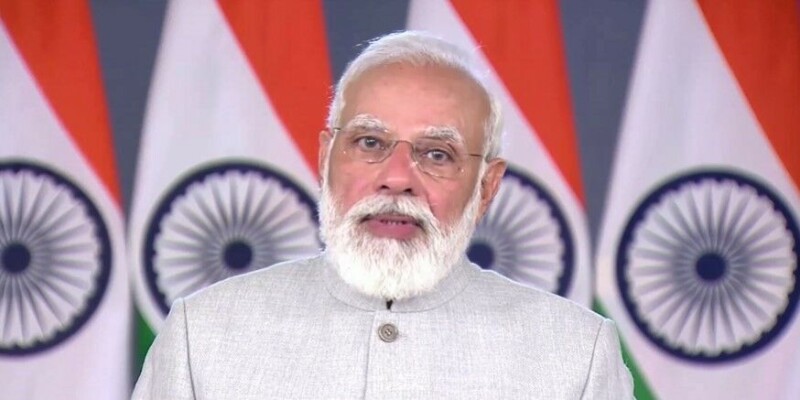
The video featured Modi announcing a new task force that will reform the exams required to secure places in many Indian universities. Those exams have become a major factor in the sudden development of a major youth protest movement in India, after the cancellation of one test amid claims that questions had leaked.
As part of his attempts to quell protests, Modi posted his first-ever selfie-style Instagram reel last week and followed it up with others –including the one Meta took down and replaced with a placeholder saying the vid was the subject of a legal complaint.
The social networking giant said that was a mistake, apologized, and restored the video.
That error gave India’s government the chance to beat up Meta in public.
S. Krishnan, the secretary of India’s Ministry of Electronics and Information Technology (MeitY), said he asked Meta “to come in at the highest level and explain what is happening and why.”
“They have agreed to come – well, they have to – and explain what the situation is,” Krishnan said. “We want to have both a policy level understanding and a technical understanding of the issues, and also adaptation to the kind of concerns India has.”
Krishnan said Meta has written to India’s government to express regret over the incident and established new protocols governing moderation of accounts run by prominent people to avoid future messes of this sort.
India has a complex relationship with Big Tech companies, sometimes celebrating their role in assisting the nation’s development, but often also lamenting their monopolistic tendencies and role in spreading content the Modi government would rather netizens don’t see.
DeepSeek teases ‘peak/valley’ pricing for new models which hit beta last week
Chinese AI upstart DeepSeek last week released a beta API for its next model, deepseek-v4-flash, and revealed a new pricing policy for its APIs.
The company says the new policy will apply “soon” and will see the cost of its services double between 09:00 and 12:00, then again from 14:00 to 18:00 – in China’s single official timezone UTC+8.
DeepSeek startled the AI market last year by releasing models that it claimed to have trained without vast fleets of Nvidia accelerators. Those claims didn’t stand up to close scrutiny, but the company is considered a significant challenger to western AI outfits such as OpenAI and Anthropic.
deepseek-v4-flash is likely to reach general availability within weeks. DeepSeek already claims it outperforms its last model, V4-Pro.
Australia proposes new tax on Big Tech – and a new out
Australia’s government has tweaked its plans to tax Big Tech companies unless they pay local media for the right to share links to their work.
The Land Down Under previously threatened tech companies with a 2.25 percent tax if they don’t fund local media. On Monday, that plan changed to a 2.5 percent levy on advertising revenue only and expanded incentives to fund small and regional publications.
Meta has previously slammed the idea as “A discriminatory tax built on a false premise.”
Also in Australia, regulators last week decided to sue Telegram after it failed to take down violent and terrorism-related content.
Kioxia profits jump by billions, as you’d expect from a memory-maker
Japanese memory-maker Kioxia last week announced [PDF] its quarterly revenue grew 451 percent year over year to reach $11.1 billion, plus profit of $5.3 billion – a massive turnaround from the $287,000 loss for the same quarter last year.
According to Japanese outlet Nikkei, CFO Yoshihiko Kawamura said the company expects even better days ahead because he believes demand for NAND storage is “still in the early stages.”
Japan’s next moonshot to ride local rocket
Japanese space startup iSpace last week announced its next mission will ride a Japanese rocket to the moon.
iSpace has launched two moon lander missions, but both failed. The company’s plan for its third mission involves new lander design called ULTRA that is capable of carrying payloads weighing several hundred kilograms to Luna.
This time around, iSpace plans to use the H3 rocket built by Mitsubishi Heavy Industries, instead of the SpaceX Falcon 9 that carried its first two missions. ®
You must be logged in to post a comment Login