Connect with us
DAPA Banner
DAPA Coin
DAPA
COIN PAYMENT ASSET
PRIVACY · BLOCKDAG · HOMOMORPHIC ENCRYPTION · RUST
ElGamal Encrypted MINE DAPA
🚫 GENESIS SOLD OUT
DAPAPAY COMING

Tech

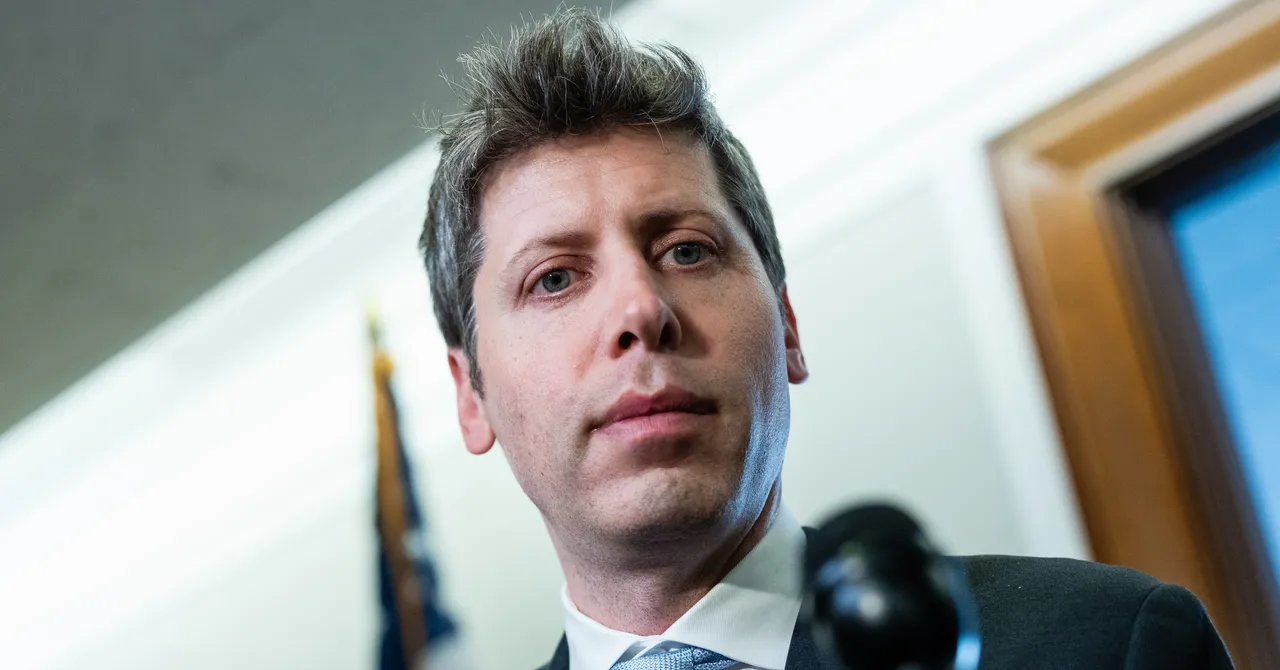
Microsoft AI chief says company was “set free” from OpenAI to pursue superintelligence

Published

on

For three years, Microsoft’s artificial intelligence story has been inseparable from OpenAI. The partnership — cemented by a cumulative investment exceeding $13 billion — gave Microsoft early access to the most advanced AI models on the planet, catapulting its Copilot products into the enterprise mainstream and adding hundreds of billions of dollars to its market capitalization. To the outside world, Microsoft’s AI strategy was OpenAI.

Mustafa Suleyman wants to change that narrative.

In an exclusive sit-down interview with VentureBeat at Microsoft Build 2026, the CEO of Microsoft AI disclosed that a contractual change with OpenAI roughly six months ago granted his division the formal authority to pursue what he openly calls “superintelligence” — using Microsoft’s own researchers, its own data pipelines, and its own custom silicon.

“We were only sort of set free from our contract with OpenAI about six months ago to formally pursue superintelligence,” Suleyman said. “So this is very early days.”

Advertisement

The comment, delivered matter-of-factly backstage at the Fort Mason Center here, offers the clearest signal yet of a strategic inflection point unfolding inside the world’s most valuable public company. Microsoft is not abandoning OpenAI. But it is building something alongside it — and, eventually, something that could stand entirely on its own.

Microsoft’s first in-house model family signals a new level of AI ambition

The most tangible evidence of that shift arrived the same day. Microsoft announced a family of seven new AI models developed entirely in-house by its AI Superintelligence Team, spanning reasoning, code generation, image creation, transcription, and voice synthesis. The models — branded under the “MAI” family name — are Microsoft’s most ambitious first-party AI release to date.

The flagship, MAI-Thinking-1, is a 35-billion-active-parameter reasoning model that Microsoft says matches leading models in its weight class on key software engineering benchmarks and demonstrates advanced mathematical reasoning. Suleyman emphasized one point repeatedly: the model was trained from scratch on clean, commercially licensed data, without distillation from third-party frontier models — a direct, if unstated, contrast to the widespread industry practice of using outputs from competitors’ systems to train cheaper alternatives.

“We train our reasoning models from scratch,” Suleyman wrote in a blog post accompanying the announcement. “We don’t distill from other labs and we don’t rely on unlicensed or opaque data.”

Advertisement

The rest of the family fills out a multimodal portfolio designed for enterprise deployment: MAI-Code-1-Flash, a lightweight coding model built specifically for GitHub Copilot and VS Code; MAI-Image-2.5, which supports both text-to-image and image editing; MAI-Transcribe-1.5, which Microsoft claims is the most accurate transcription model available, operating across 43 languages; and MAI-Voice-2, a multilingual speech-generation system. All of the models ship through Microsoft Foundry, the company’s model-hosting and deployment infrastructure, and for the first time, developers can tune model weights themselves through third-party platforms including OpenRouter, Fireworks, and Baseten.

But Suleyman made clear in the interview that the seven models are a proof of concept, not a finished product. The real project is the lab itself.

“Our job is to make sure that when we look out to 2030 and beyond, we have the capacity not just to buy models from third parties, but to build the absolute frontier, the best models in the world,” he said. “That’s a long transition.”

What “set free” from OpenAI actually means for Microsoft’s AI future

To understand what Suleyman means by “set free,” you need to understand the unusual contractual architecture that has governed Microsoft’s AI efforts for years.

Advertisement

When Microsoft invested billions into OpenAI beginning in 2019, the partnership came with a specific arrangement: OpenAI would build the frontier models, and Microsoft would serve as the exclusive cloud provider, integrating those models into its products and reselling them through Azure. The deal gave Microsoft extraordinary commercial leverage — access to the world’s most advanced AI without having to build it — but it also created a dependency. Microsoft was explicitly barred from pursuing its own AGI research, and the agreement even capped how large a model the company could train, restricting it from building systems beyond a certain computing threshold measured in FLOPS.

That arrangement was formally renegotiated. As Fortune and Axios reported in November, a revised deal with OpenAI removed those restrictions, clearing the way for Suleyman to launch the MAI Superintelligence Team and pursue what he calls “humanist superintelligence.” The result, in Suleyman’s telling at the time, was a “best-of-both environment, where we’re free to pursue our own superintelligence and also work closely with them.”

By the time he sat down with VentureBeat at Build 2026, roughly six months had passed since that self-sufficiency effort formally began. Microsoft had already started shipping in-house models — including MAI-Image-2-Efficient, a lighter-weight image generation model released in April — but the seven MAI models announced at Build are the team’s most ambitious release yet: a full multimodal family spanning reasoning, code, image generation, transcription, and voice.

Even so, Suleyman does not view the shift as a rupture with OpenAI. He described Microsoft’s current position as one of abundance, not scarcity.

Advertisement

“There’s no immediate urgent need to fill a gap in three months’ time or six months’ time,” he said. “We have OpenAI, we have Anthropic, we have thousands of models inside Foundry. So there’s already a huge amount of optionality available to us.”

The framing is telling. Microsoft’s push into first-party frontier models is not born out of a crisis in the OpenAI relationship but out of a strategic calculation: as AI becomes the most consequential technology layer in enterprise computing, the company cannot afford to depend entirely on partners for the foundational capability. “Over the next five years, we have to be able to produce state-of-the-art frontier-scale models,” Suleyman said. “That’s our mission.”

Suleyman says the shift from chatbots to autonomous AI agents has already begun

If the seven MAI models represent the technical ambition, a new capability called Frontier Tuning represents the commercial logic. Announced alongside the models at Build, Frontier Tuning allows enterprise customers to customize MAI models using their own proprietary data, workflows, and domain terminology, all within their own secure compliance boundary. The system uses reinforcement learning environments — what Microsoft calls “training gyms for AI” — that let agents learn directly from real workplace tasks without affecting production systems.

The results Microsoft shared are striking. An MAI model tuned for Excel reportedly matches GPT 5.4 performance while operating at up to ten times greater efficiency. Early enterprise adopters are seeing similar gains: when tuned for one unnamed organization’s exacting standards, the MAI model achieved the highest win rate of any model tested at roughly one-tenth the cost.

Advertisement

Suleyman framed Frontier Tuning as part of a broader evolutionary stage — a move from intelligence to action. “We’ve basically moved beyond just conversation,” he told VentureBeat. “Now we’re moving to action.”

He introduced a new framework for thinking about that progression: the shift from IQ (factual intelligence) to EQ (emotional intelligence, or the ability to follow tone and style instructions) to what he calls AQ — the “Actions Quotient.” 

Future AI agents, in Suleyman’s telling, won’t just answer questions. They will log into enterprise software, navigate complex multi-application workflows, and execute tasks across Excel, Word, Teams, Jira, Adobe InDesign, and customer relationship management systems — just as a human employee would.

“You should be able to show up on day one and almost provision credentials to a new AI agent,” he said. “The model needs to be able to move across all of these different environments, and that’s actually the great strength of Microsoft.”

Advertisement

The Build 2026 announcements bore this out in concrete product terms. Microsoft Scout, the company’s first “Autopilot” agent, operates as an always-on background assistant built on the open-source OpenClaw technology. It runs with its own governed identity inside Microsoft Entra, so its actions are auditable and attributable. Windows 365 for Agents gives AI agents their own managed Cloud PCs, allowing them to interact directly with applications and browsers inside enterprise environments. And the Foundry platform received major updates — including hosted agents with sub-100-millisecond cold starts, a new Microsoft Agent Framework, and one-click publishing to Teams and Microsoft 365 Copilot.

Why Microsoft believes enterprise data is the next AI training frontier

Suleyman also articulated why he believes Microsoft’s position is uniquely defensible — and the argument has less to do with model architecture than with where work actually happens.

“We’ve sort of hoovered up all of the obvious pools of training data,” he said, referring to the industry’s early scramble to ingest the open web. “In the next phase, we actually want to be able to give these agents to companies to train on their specific tasks with the data that they have inside of their own big workflows.”

The claim is subtle but consequential. The first wave of generative AI was trained on publicly available text — books, websites, Reddit posts, code repositories. That data is now largely exhausted, and its use is increasingly contested in court.

Advertisement

The next wave, Suleyman argues, will be trained on enterprise-specific data: the internal workflows, decision traces, and institutional knowledge that define how real organizations operate. Microsoft, which serves 493 of the Fortune 500 through Azure according to Suleyman, is already embedded inside those workflows through Microsoft 365, Teams, Dynamics 365, and the broader Azure ecosystem. Frontier Tuning is the mechanism that converts that positional advantage into model performance.

“People underappreciate that that’s going to be the next domain,” Suleyman said.

The early partner list for Frontier Tuning reflects the ambition: Mayo Clinic, where Microsoft is co-creating a frontier AI model for healthcare using de-identified clinical data; EY, which is tuning a tax-advisory agent for deployment to 75,000 professionals globally; Land O’Lakes, where Frontier Tuning delivered what the company’s product development scientist called “meaningful improvements in grounded outputs and style compliance”; and Pearson, which is using tuned models to provide learning-science-aligned feedback in its Communication Coach product.

The Mayo Clinic partnership may be the most significant. Microsoft and Mayo Clinic are collaborating to build a healthcare-specific frontier model that combines Mayo’s clinical expertise and longitudinal patient insights with Microsoft’s AI capabilities. The model will be owned by Mayo Clinic and deployed first within Mayo’s own environment before being made available to other organizations through Foundry.

Advertisement

Microsoft’s custom AI chips and GPU buying spree reveal the scale of its compute advantage

None of this works without an industrial-scale compute infrastructure, and Suleyman was unusually candid about the hardware economics underlying Microsoft’s strategy.

“We are the largest buyer of GPUs on the planet,” he said. “We’re the largest buyer of GB200s and GB300s in the world.”

Microsoft will continue purchasing Nvidia accelerators “for many, many years to come,” Suleyman said. But the company is simultaneously building its own custom silicon. Maia 200, Microsoft’s second-generation AI accelerator, is already running in production across data centers in Iowa and Arizona, with deployments planned for Italy, Australia, and South Korea. According to Microsoft, Maia 200 delivers the best tokens-per-dollar-per-watt in the company’s fleet.

Suleyman put a finer point on the economics in the interview: Maia 200 is 30 percent more cost-efficient than Nvidia’s GB200, he said. And when Microsoft co-optimizes its own MAI models to run natively on Maia silicon, the company sees an additional 1.4x improvement in performance per watt. “It is going to be cheaper in years to come to build on MAI models with Maia 200 and Maia 300 inside of Azure,” he said.

Advertisement

That claim — if it holds at scale — has profound implications for the competitive landscape. It means Microsoft is not merely buying its way to AI dominance through Nvidia; it is building a vertically integrated stack in which its own models, running on its own chips, inside its own cloud, tuned on its customers’ own data, could offer performance and cost characteristics that no competitor can replicate.

Suleyman rejects the idea that AI models are becoming commodities

Suleyman also pushed back sharply against one of the most popular narratives in Silicon Valley: that AI models are rapidly commoditizing.

“A lot of people are saying models are commoditizing,” he said. “I don’t think that’s true.”

His argument hinges on what he calls “quality tokens” — the proposition that the composition, curation, licensing, and deduplication of training data matter at least as much as raw scale. Microsoft’s new MAI models, he said, were trained on a pre-training mix composed of approximately 50 percent high-quality code, with the remainder drawn from commercially licensed and carefully curated sources.

Advertisement

The result, he argued, is a distinct “lineage” of models optimized for coding, reasoning, and agentic behavior — fundamentally different from models optimized for consumer chat, cultural content, or multilingual breadth.

“We’re going to see very distinct lineages that reflect different training objectives of different companies,” he said. “Quality tokens matter more than just brute-force scale.”

This is a strategically important argument for Microsoft to make. If models are commodities — if any lab can match the frontier within months using cheaper compute and distilled training data — then the model layer becomes a race to the bottom, and Microsoft’s billions in compute investment offer no durable advantage. But if model quality is a function of data discipline, research depth, and institutional patience, then the lab-building approach Suleyman is pursuing becomes a genuine competitive moat.

He used a specific metaphor to describe that approach, one borrowed from optimization theory: the “hill-climbing machine.” The phrase describes a system that continuously improves — cycle after cycle — by applying more compute, better data, and sharper evaluation. “The goal here is to build what we think of as a hill-climbing machine,” he wrote in his blog post. “An organization that can continuously improve, cycle after cycle.” The metaphor is revealing because it describes a process, not a destination. Suleyman is not promising that Microsoft will build the world’s best model next quarter. He is arguing that Microsoft is building the system — the research culture, the data pipelines, the silicon co-optimization, the evaluation infrastructure — that will produce progressively better models over years.

Advertisement

Inside Microsoft’s five-year plan to become a self-sufficient AI superpower

The strategic picture that emerges from Suleyman’s comments — and from the full scope of the Build 2026 announcements — is of a company preparing for a future in which AI capability is not rented from a partner but generated internally, at scale, across every layer of the stack.

Microsoft still needs OpenAI. The partnership continues to power Copilot, Azure AI services, and ChatGPT’s infrastructure. Suleyman acknowledged as much, describing Microsoft’s portfolio of model providers as a source of strength, not a problem to be solved. 

But the direction of travel is unmistakable. With its own frontier models, its own custom silicon, its own reinforcement learning environments for enterprise tuning, and its own autonomous agent infrastructure, Microsoft is constructing a parallel path — one that, by 2030, could make the company a fully self-sufficient frontier AI lab embedded inside the world’s largest enterprise software platform.

“Our ultimate goal is what we call Humanist Superintelligence,” Suleyman wrote in his blog post. “That means advanced AI systems designed to serve people and organizations, not replace them.”

Advertisement

Whether that goal is achievable — or even clearly definable — remains one of the great open questions in technology. And Suleyman expressed more confidence than caution when asked about the trajectory of progress. “I really think we’re at the tip of the iceberg,” he said. “The models are so much more powerful than we know how to extract intelligence from them.”

But confidence and execution are different things. Building a frontier lab is not an announcement; it is a decade-long commitment that requires retaining elite researchers, maintaining scientific rigor under commercial pressure, and producing results that justify the staggering capital expenditure.

Google learned this with DeepMind — which Suleyman himself co-founded in 2010, before joining Microsoft — and even that lab, widely regarded as one of the best in the world, spent years navigating the tension between pure research and product delivery.

Suleyman seemed aware of the contradiction. “If you rush it, you’ll screw it up,” he said.

Advertisement

The sticker on his laptop reads: “Patience and urgency.” It is a paradox that Microsoft now has five years — and several hundred billion dollars — to resolve.

Source link

Continue Reading
Click to comment

You must be logged in to post a comment Login

Leave a Reply

Tech

Hyundai Claims Humanoid Robot Plan Is Not Part of Talks With Striking Workers

Published

on

Ars Technica reports:


Hyundai Motor Company’s plan to put humanoid robots to work by 2028 is not part of current negotiations with striking South Korean autoworkers, according to the company.

The automaker is disputing news reports that partial labor strikes by the Hyundai Motor union at the world’s largest automotive plant in South Korea were spurred by concerns about the company’s planned deployment of humanoid robots in the United States starting in 2028. [The planned robots are built by Boston Dynamics, now a wholly-owned subsidiary of Hyundai.] A Hyundai statement shared with Ars describes the union’s demands as focusing on compensation-related issues such as wage increases, bonuses, and an extension of workers’ retirement age. “Potential deployment of robots in Korean production facilities is not part of the current labor-management discussions,” according to the Hyundai statement…

Hyundai emphasized that its current plan only covers the initial deployment of the Atlas humanoid robot at Metaplant America, an electric vehicle factory near Savannah, Georgia, starting in 2028. “Decisions about future Atlas deployment at other facilities will be made thoughtfully, in accordance with local operational needs, and in dialogue with the employees and workforce representatives at those sites,” the company stated. However, The Wall Street Journal described the Hyundai Motor union as making “unprecedented demands seeking to enshrine job protections in the era of robots and AI,” and characterized certain compensation demands as hedging against potential reductions in work hours caused by AI adoption and robotic automation. “Remember that without labor-management agreement, not a single robot using new technology will be allowed to enter the workplace,” the union told Hyundai in an internal letter reported by Reuters.

Advertisement

Hyundai management and the labor union are currently reviewing a proposed wage reform that would “provide factory workers with greater income stability even after the carmaker’s planned deployment of humanoid robots,” The Korea Times reported. But experts cautioned that the wage overhaul, which would convert hourly pay for overtime and night-shift allowances into fixed wages, could come at the expense of company productivity.

Source link

Continue Reading

Tech

High-altitude UAV acts like the world’s fastest bird with a gravity-assisted dive finale

Published

on


  • Ukraine’s falcon-inspired drone destroys aerial threats with a suicidal dive attack
  • More than 100 reported kills put Tsyklop among Ukraine’s busiest interceptors
  • Gravity becomes Tsyklop’s final weapon during high-speed aerial interceptions

Ukraine has introduced the Tsyklop interceptor, a drone that attacks hostile UAVs by diving from above like a peregrine falcon before exploding on impact.

The one-way aircraft relies on altitude and a gravity-assisted descent instead of pursuing its objective across long distances.

Source link

Advertisement
Continue Reading

Tech

Amazon Cracks Down On Use of AI Images By Sellers

Published

on

CNBC reports:


Amazon is requiring that third-party sellers label any product images or videos that contain “AI-generated people” after New York recently passed a law mandating greater transparency around “synthetic performers” in ads… The policy directs sellers to tag images [and videos or other graphics on listing pages] with specific metadata keywords before they’re uploaded. “Recent legislation requires disclosure when images or videos in advertisements contain photorealistic AI-generated people,” Amazon wrote in the announcement [clarifying that the requirement doesn’t apply to content featuring TV/video game/movie characters or content including real people, even if they’ve been altered using AI]. The company said it will “add an indicator” to listings on its website, informing consumers that images or other content feature AI-generated people, “where applicable.” It’s unclear what criteria Amazon will apply when deciding when to display the label to shoppers…

Amazon has embraced AI internally and it’s increasingly infusing the technology across its portfolio. The company has optimized listing titles and details so they’re more likely to be spotted by AI systems, invested in a recently rebranded assistant called Alexa for Shopping, and launched a feature that injects AI-generated [images of] products into its search bar in real time based on user queries. More Amazon third-party sellers are using AI to generate text, images and other content for their listings, partly by using the company’s tools.
Outside sellers account for more than 60% of goods sold on Amazon, the article points out. It adds that there’s currently no nationwide U.S. law requiring companies to disclose AI-generated advertising content, it adds — but YouTube, Meta, Pinterest, and TikTok have already added labels for AI-generated content.

And a new California law also requires large AI providers to embed watermarks in AI-generated images, video and other content…

Advertisement

Source link

Continue Reading

Tech

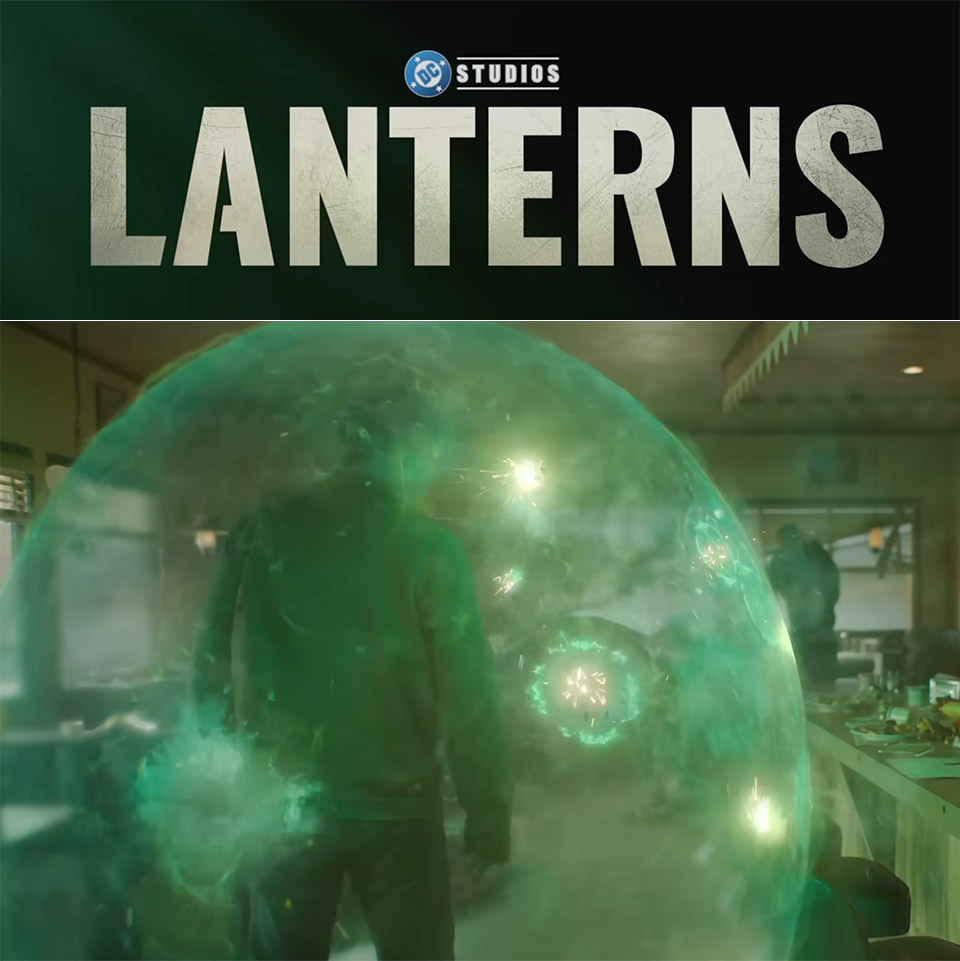
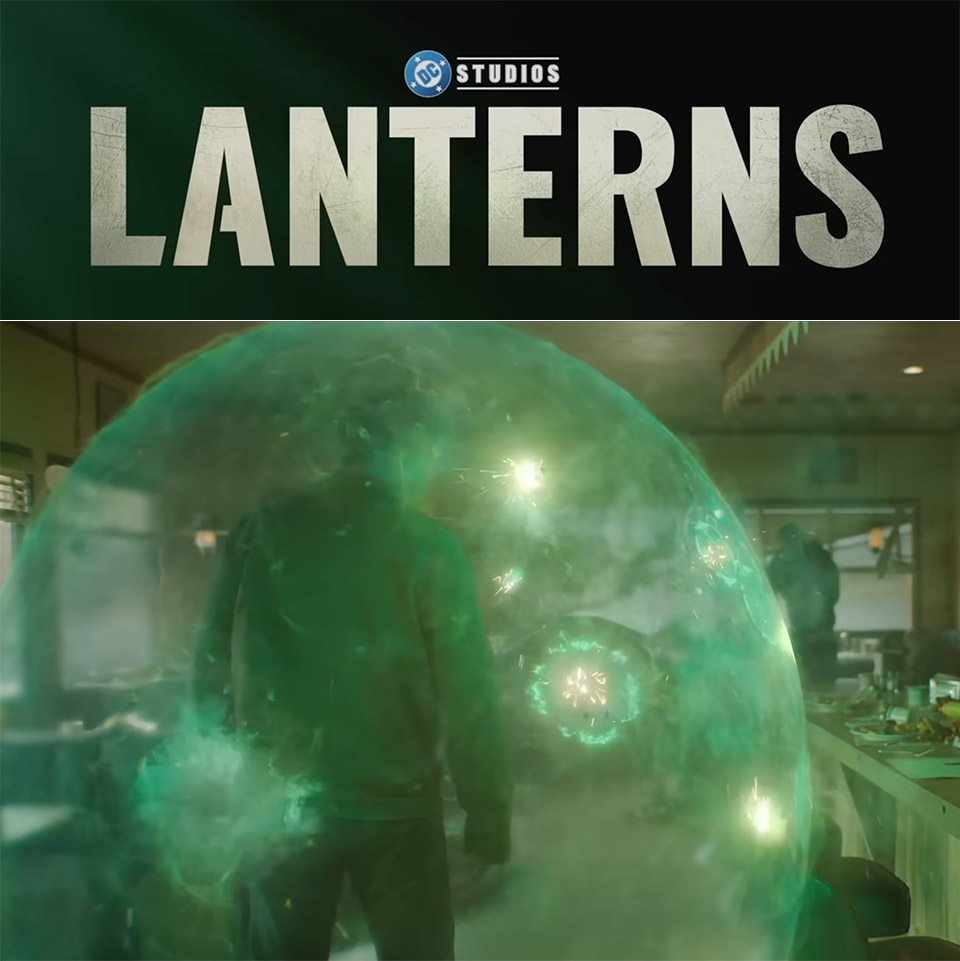
Lanterns Comic-Con Trailer Shows Hal Jordan Handing John Stewart a Ring and a Murder in Nebraska

Published

on

Lanterns Comic-Con Trailer
Green light cuts through the Nebraska night as two men who should never share a car pull into a town that has already buried one body. Kyle Chandler’s Hal Jordan, the veteran who has seen entire systems burn out, flips a power ring across the front seat to Aaron Pierre’s John Stewart and jumps from the moving vehicle before the wheels leave the road. Stewart catches the car with a construct that looks half-formed and half-desperate. That single sequence from the new Lanterns trailer, shown first in Hall H at San Diego Comic-Con, tells you everything about the series that arrives on HBO and HBO Max on August 16.


Eight episodes will follow intergalactic cops as they investigate a small-town murder as if it were any other case, only for things to get crazier until the sky itself appears to be a suspect. The official trailer debuted at the panel, which also had Chris Mundy, Damon Lindelof, and Tom King on stage, and it just keeps rolling from sandy highways and interrogation rooms into the big unknown. Hal in the trailer drives like he’s already realized that the neighborhood taco shop is probably the safest place to hang out and wait for this rookie cop who’s still adjusting to the whole ring thing.


LEGO DC Batman Arkham Asylum Building Set for Adults – Home Decor for Bedroom, Office, or Book Shelf…
  • BUILD GOTHAM’S LEGENDARY ASYLUM – Batman fans construct the city’s most iconic landmark with the LEGO DC Batman Arkham Asylum (76300) building set…
  • 16 LEGO BATMAN MINIFIGURES – Includes Batman, Batwoman, Batwing, Robin, Mr. Freeze, The Riddler, Poison Ivy, Catwoman, Scarecrow, Harley Quinn…
  • 3-LEVEL BUILD – The model splits into 3 segments (first floor, second floor and roof) with removable elements for accessing the interior and…

Manhunters play a key role in the danger, replacing the interstellar police force from the comics. The series portrays them as terrifying because they can be anyone, speak any language, and walk into a Nebraska cafe without raising an eyebrow, but it doesn’t make them any less creepy. Sinestro is the final character to appear, imprisoned in space and played by Ulrich Thomsen, the former Green Lantern who attempted to rule the Corps with an iron fist. Hal arrives in full costume to inquire about Manhuthers, and Sinestro simply gives him a wicked little smirk and says, “You don’t really think he’s your back up, do you Hal?” which is like uttering the thing that no one in the Corps wants to speak aloud: replacement. The talk is as quiet as a whisper, yet far more terrifying than any explosion.


Finally, the series will air once a week beginning August 16th, with Mundy, Lindelof, and King serving as the brains behind it all. The list of executive producers also includes James Gunn and Peter Safran. Filming took place all around California; we see the flat spaces of Nebraska on the large screen before the entire thing kicks into high gear for the space things and the ring FX.

Advertisement

Source link

Continue Reading

Tech

There’s a sneaky way to save big on the brand new Samsung Galaxy Watch Ultra 2

Published

on

Samsung’s Galaxy Watch Ultra 2 hits 5000 nits of peak brightness, making it the brightest screen you’ll find on any smartwatch right now.

That screen belongs to a watch that’s just dropped from £649 to £580, plus an extra £50 if you check out with PayPal, without needing a trade-in offer or a discount code to unlock it.

Galaxy Watch Ultra 2 on a white backgroundGalaxy Watch Ultra 2 on a white background

Save £80 on Samsung’s new Galaxy watch Ultra 2, right out of the gate

With 5000 nits of peak brightness, the brightest screen on any smartwatch, the Galaxy Watch Ultra 2 has dropped to £569, an £80 saving.

Advertisement

View Deal

Our review found that brightness genuinely holds up outdoors, staying legible even during dazzling midday sunshine that has left plenty of other wearables struggling to keep up whenever the two are checked side by side.

Advertisement

That kind of visibility matters most when you’re actually out using the thing, which is where the Galaxy Watch Ultra 2‘s dual-GPS setup earns its keep during runs, hikes and rides through genuinely tricky terrain.

Our tester walked it through Canary Wharf, an area of tall skyscrapers and rivers notorious for throwing GPS tracking off course, and the Watch Ultra 2 held its line accurately without ever once drifting off track.

Advertisement

That accuracy now extends to a brand new trail running mode exclusive to this generation, letting you load custom GPX routes complete with turn-by-turn directions and elevation tracking displayed directly on the watch face itself.

Advertisement

A professional diving mode developed alongside diving equipment specialist Mares is also arriving later this year, tracking depth, time and water temperature for anyone who takes their adventures underwater as much as out on land.

The Whatsapp LogoThe Whatsapp Logo

Get Updates Straight to Your WhatsApp

Join Now

Advertisement

None of that would matter much if the watch couldn’t keep pace day to day, and the switch to Qualcomm’s Snapdragon Wear Elite chipset means swiping through menus and opening apps now feels genuinely instantaneous.

Hands-free Gemini support means you can simply raise your wrist and ask a question without a wake word or a long press, which makes quick queries feel far more natural than fiddling with buttons and menus.

That combination of speed and outdoor toughness is exactly what makes the Galaxy Watch Ultra 2 stand out among Android smartwatches, especially for anyone who already leans on a Samsung phone for their day to day.

Advertisement

Advertisement

Still, at £580 rather than £649, the Galaxy Watch Ultra 2 remains one of the more capable Android smartwatches around, and getting it £69 cheaper right out of the gate makes the case even easier.

SQUIRREL_PLAYLIST_10148964

Source link

Advertisement
Continue Reading

Tech

God Of War Laufey Will Hit PS5 On February 16

Published

on

Venture through the afterlife of the gods while playing as Faye.

The next major installment in the God of War franchise, featuring Kratos’ wife Laufey, is set to be released on February 16 of next year. As confirmed during a San Diego Comic-Con panel and on PlayStation’s social media accounts, we’re less than a year away from playing God of War Laufey, which focuses on Laufey as she ventures through the afterlife of gods, following her death in God of War Ragnarok.

Instead of playing as the franchise’s eponymous protagonist, players will get to experience Laufey’s combat prowess, which has only been hinted at in previous games. The release date announcement comes about a month after a sneak peek of gameplay footage that showed off Laufey, also known as Faye, slicing and dicing enemies in the air and using magical abilities while fighting gods and creatures we haven’t seen in the franchise yet.

You can only add God of War Laufey to your wishlist for now, but there’s a lot more to look forward to in the franchise. During San Diego Comic-Con, Santa Monica Studio also confirmed that another Kratos-led God of War game will be coming after this installment featuring Faye, as reported by IGN.

Advertisement

Source link

Advertisement
Continue Reading

Tech

How to watch Liverpool vs Sunderland for FREE: pre-season friendly live streams

Published

on

Today’s Liverpool vs Sunderland live streams signal the start of a new era at Anfield, as Andoni Iraola takes charge of his first game as Reds manager in this pre-season friendly at Geodis Park, Nashville.

The Spaniard was appointed last month following a hugely successful three-year spell at Bournemouth, culminating in a club-record sixth-place finish in the Premier League that saw the Cherries qualify for Europe for the first time. However, expectations are very different at Liverpool, who ended last season one position above Bournemouth but still sacked previous manager Arne Slot, despite the Dutchman leading them to the title 12 months earlier. Iraola’s initial 31-man squad for the US tour, which also includes games against Wrexham and Leeds, features new signing Jeremy Jacquet and the 20-year-old centre back could get his first outing in red against Sunderland.

Source link

Continue Reading

Tech

Roku Streaming Player Prices Jump by Up to $50 as AI Memory Shortage Hits the Living Room

Published

on

Roku built its streaming player business around a simple proposition: spend relatively little money, plug one into an HDMI port and escape whatever miserable interface came installed on the television.

That escape route just became considerably more expensive.

Roku has raised the U.S. list prices of its entire standalone streaming lineup, with the Roku Ultra increasing from $99.99 to $149.99 and the Streaming Stick 4K climbing from $49.99 to $79.99. The hardware has not been redesigned, and Roku has not announced new features to soften the blow. You are paying more for the same streamer because the AI industry has apparently reached the television stand.

Roku Streaming Stick 4K and Ultra debut in 2025

New Roku Streaming Player Prices

The new U.S. list prices are:

Roku Product Previous Price New Price Increase
Roku Streaming Stick $29.99 $39.99 $10
Roku Streaming Stick Plus $39.99 $59.99 $20
Roku Streaming Stick 4K $49.99 $79.99 $30
Roku Ultra $99.99 $149.99 $50
Roku Streambar SE $99.99 $149.99 $50

The Streaming Stick 4K receives the largest percentage increase at approximately 60%, while the Ultra and Streambar SE each rise by 50%. 

Advertisement

Roku is temporarily discounting several products back to their previous prices through its online store, while Amazon, Best Buy and other retailers may continue selling remaining inventory at the older figures until it is replenished. That makes the current sale more useful than the usual countdown clock designed to create panic over a remote control. 

Why Is Roku Raising Prices?

A Roku executive told The Desk that shortages involving memory and other components forced the company to increase prices. Manufacturers have shifted more production capacity toward higher margin chips used by AI data centers, tightening supplies of the less glamorous components found inside streaming players, televisions and other consumer electronics. 

The timing is slightly awkward.

Only in May, Roku CEO Anthony Wood argued that Roku OS required less memory than competing platforms, giving the company a bill of materials advantage as component costs increased. Wood described the situation as “generally great for our business.” Less than three months later, the Roku Ultra costs another $50. 

Advertisement

Roku’s hardware business has never been the company’s largest source of profit. The devices place Roku OS inside more homes, where Roku earns money from advertising, subscriptions, transactions and The Roku Channel. Device revenue fell 16% during the first quarter of 2026, while the platform business generated more than 90% of company income. 

That makes these increases more surprising. Inexpensive hardware has always been the front door to Roku’s considerably more lucrative advertising business.

Advertisement. Scroll to continue reading.

The front door now has a cover charge.

Advertisement

Are Buyers Getting Anything New?

No.

The current Roku Streaming Stick 4K still supports 4K/60Hz video, Dolby Vision, HDR10+, HLG, long range dual band Wi Fi and Dolby encoded audio passthrough. It remains a compact and easy to use streamer, but the specifications are unchanged from the model that cost $49.99 last week. 

The Roku Ultra continues to offer HDMI 2.1, Wi Fi 6, Ethernet, USB playback, Dolby Vision, HDR10+, Dolby Atmos and the rechargeable Voice Remote Pro. Those features made sense at $99.99 and earned the Ultra a clear position above Roku’s sticks. At $149.99, the competition becomes much harder to ignore. 

roku-streaming-stick-4k-with-remote
Roku Streaming Stick 4K

How Do the New Prices Compare?

The $79.99 Roku Streaming Stick 4K now costs twice as much as Amazon’s $39.99 Fire TV Stick 4K Select, which supports 4K and HDR10+ but omits Dolby Vision. Amazon’s $34.99 Fire TV Stick HD also undercuts Roku’s new $39.99 HD model. 

Advertisement

The Google TV Streamer 4K costs $99.99, only $20 more than Roku’s Streaming Stick 4K. Google includes 32GB of storage, 4GB of memory, Dolby Vision, Dolby Atmos, Ethernet, smart home controls and Gemini for TV. It is not as small or portable, but it now looks like the stronger value for a primary home theater system. 

The Roku Ultra remains less expensive than the Apple TV 4K, which now starts at $199, but the gap has narrowed to $49. Apple offers a faster A15 Bionic processor, 64GB of storage, stronger gaming performance, HomeKit integration and tight compatibility with AirPods, HomePods and other Apple hardware. 

Roku still has important advantages. Its interface remains easier to navigate than Fire TV, the platform is broadly neutral about which service receives prominence, and its search and free television offerings are useful. Roku also supports Apple AirPlay, HomeKit, Alexa and Google Home.

The problem is that simplicity feels less persuasive when the simple box costs $150.

Advertisement

Who Should Buy One?

Existing Roku users who value the familiar interface and want another player for a bedroom or secondary television should look for remaining inventory at the old prices.

The Streaming Stick Plus remains the most sensible model for ordinary 4K televisions when discounted to $39.99. Buyers who need Dolby Vision should consider the Streaming Stick 4K, but $79.99 is difficult to recommend when the Google TV Streamer costs only $20 more.

The Ultra still makes sense for users who need Ethernet, USB playback, Wi-Fi 6 and Roku’s best remote. At $149.99, however, it is no longer the automatic premium Roku choice it was at $99.99.

Advertisement. Scroll to continue reading.
Advertisement

The Bottom Line

Roku has not ruined its streaming players. It has damaged the value proposition that made them so easy to recommend. The interface remains approachable, the app support is extensive and the hardware continues to work well. None of that changed when the price tags did.

The Streaming Stick 4K moving from $49.99 to $79.99 is the hardest increase to defend, while the $149.99 Ultra now sits uncomfortably between the more capable $99.99 Google TV Streamer and the considerably more powerful $199 Apple TV 4K.

Roku says component shortages are responsible, and there is ample evidence that AI infrastructure is consuming memory production that once supplied ordinary consumer products. That does not mean buyers need to accept the first new price they see.

Purchase remaining inventory at the old price, wait for the inevitable promotion or compare the alternatives carefully. Roku may still offer one of the cleanest ways to stream television, but cleanliness apparently costs another $10 to $50 now.

Advertisement
Roku Home Screen 2026
Roku on-screen menu

Price & Availability

The new Roku list prices are effective now in the United States.

Roku is currently offering temporary discounts on selected players that return them to their former prices. Amazon, Best Buy and other retailers may also have remaining inventory available at the previous prices.

Source link

Advertisement
Continue Reading

Tech

Top Online Sites Debate Cutting Off Google’s Crawlers

Published

on

Futurism reports:


[Some online publications] are now debating whether to cut Google off entirely, as the Wall Street Journal reports, illustrating an increasingly fraught relationship between the tech giant and the publishers that are creating content its AI models are regurgitating. According to the newspaper, prominent outlets including USA Today, Politico, the Economist, People, and Reuters are all reexamining their relationship with Google. Some are debating whether to continue to work with the tech giant at all… Even Reddit executives are reevaluating the company’s $60 million-a-year contract that allows Google to train its AI models on user-submitted content on the platform. They’ve similarly watched as Google’s AI features discourage users from navigating to Reddit…

Beyond pondering whether to cut Google off, other publishers have resorted to suing the company, accusing it of illegally rehashing their intellectual property via AI summaries.
It’s an extremely undesirable position for publishers. By severing ties with the search giant, they could face even steeper declines in traffic. At the same time, there’s seemingly little to gain from having Google’s AIs crawl their content — and in the long term, it could guarantee their destruction.
Two interesting data points from the article:

  • “Last month, Cloudflare CEO Matthew Prince noticed that automated bot traffic had overtaken human traffic for the first time in the internet’s history.”
  • USA Today has seen its traffic from US users drop by almost half over the last year.”

Advertisement

Source link

Continue Reading

Tech

TikTok risks massive EU fines over online child safety concerns

Published

on

TikTok might have failed to meet EU standards for child safety online.

Allowing content posted by minors to be pushed on TikTok’s ‘For You’ feed could be a violation of the Digital Services Act (DSA), the European Commission has said.

On TikTok, minors can choose to have a public-facing profile. According to EU preliminary findings, this setting enables content published by 16- and 17-year-olds to be algorithmically recommended worldwide.

Exposure like this could result in unwanted contact from bad actors or increase the risk of cyberbullying, the EU said.

Advertisement

The Commission launched formal proceedings into TikTok’s compliance with the DSA in early 2024, which also probed the platform’s potential addictive design and access to data, and resulted in negative preliminary results.

A different line of investigation into the company’s advertising transparency was closed through binding commitments last December.

Today’s (24 July) results are based on an analysis of TikTok’s interface, internal data and documents, as well as interviews with law enforcement officers and child protection experts, according to the Commission.

Content uploaded to the internet is rarely ever removed completely, and the EU said that minors risk lifelong consequences if their content is widely circulated online.

Advertisement

It further said that minors can be easily found through the ‘following’ and ‘followers’ lists of other users even when their accounts are set to ‘private’. Their profile photos also remain accessible to anyone on the internet, including users without a TikTok account.

Under the DSA, platforms accessible to minors must ensure a high level of privacy and safety. TikTok might be failing to meet these standards, the EU said.

The company is up for massive fines of up to 6pc of its global annual turnover if it is ultimately found to be in breach of the law.

The EU wants TikTok to adjust the default settings of minors’ ‘public’ accounts, so that their content is, by default, only visible to those who follow the minor user.

Advertisement

Older minors can have the option of a public-facing account, but their content should never be accessible to a global audience, the Commission warned, arguing that TikTok should not recommend minors’ content to other TikTok users through the For You feed.

“Minors deserve a safe experience from the moment they go online,” said Henna Virkkunen, the Commission’s executive vice-president for tech sovereignty, security and democracy. “A high level of protection should not be an opt-in – it should be the default.”

The investigation, now ongoing for more than two years, also covers the ‘rabbit-hole effect’ of TikTok’s recommender systems and the negative consequences of age-inappropriate experiences on the platform. These probes are still underway.

“Under-18 accounts are private by default and we are one of the only platforms where younger teens cannot use direct messaging or have their content eligible to appear in the For You feed,” a TikTok spokesperson told SiliconRepublic.com.

Advertisement

The ByteDance-owned company said it would continue to engage constructively with the Commission.

TikTok accounts of users under 18 are automatically set to private, the company said, noting that users must be at least 16 to use direct messaging or have their content eligible to appear in the For You feed.

The company also said that it does not recommend accounts belonging to teens to users over 18. It said that users can only find private accounts of minors using ‘followers’ lists if the minor has chosen to make the list public instead of private.

Governments worldwide are cracking down on social media platforms to protect children from online harms, with Australia becoming the first country to blanket-ban major platforms for children under 16.

Advertisement

The EU, has, for years, targeted social media giants for their addictive designs, recommender system feeds and child safety measures with its landmark DSA that carries a hefty penalty for offenders.

The bloc is now considering age-gating sites as a means to address the wider concerns surrounding social media usage by children. France, earlier this week, became the first EU country to ban social media for under-15s.

Don’t miss out on the knowledge you need to succeed. Sign up for the Daily Brief, Silicon Republic’s digest of need-to-know sci-tech news.

Advertisement

Source link

Continue Reading

Trending

Copyright © 2025