Connect with us
DAPA Banner
DAPA Coin
DAPA
COIN PAYMENT ASSET
PRIVACY · BLOCKDAG · HOMOMORPHIC ENCRYPTION · RUST
ElGamal Encrypted MINE DAPA
🚫 GENESIS SOLD OUT
DAPAPAY COMING

Tech

Microsoft is making Office 2019 for Mac users pay one way or another

Published

on

If you’re still using Office 2019 on your Mac, your time may be running out.

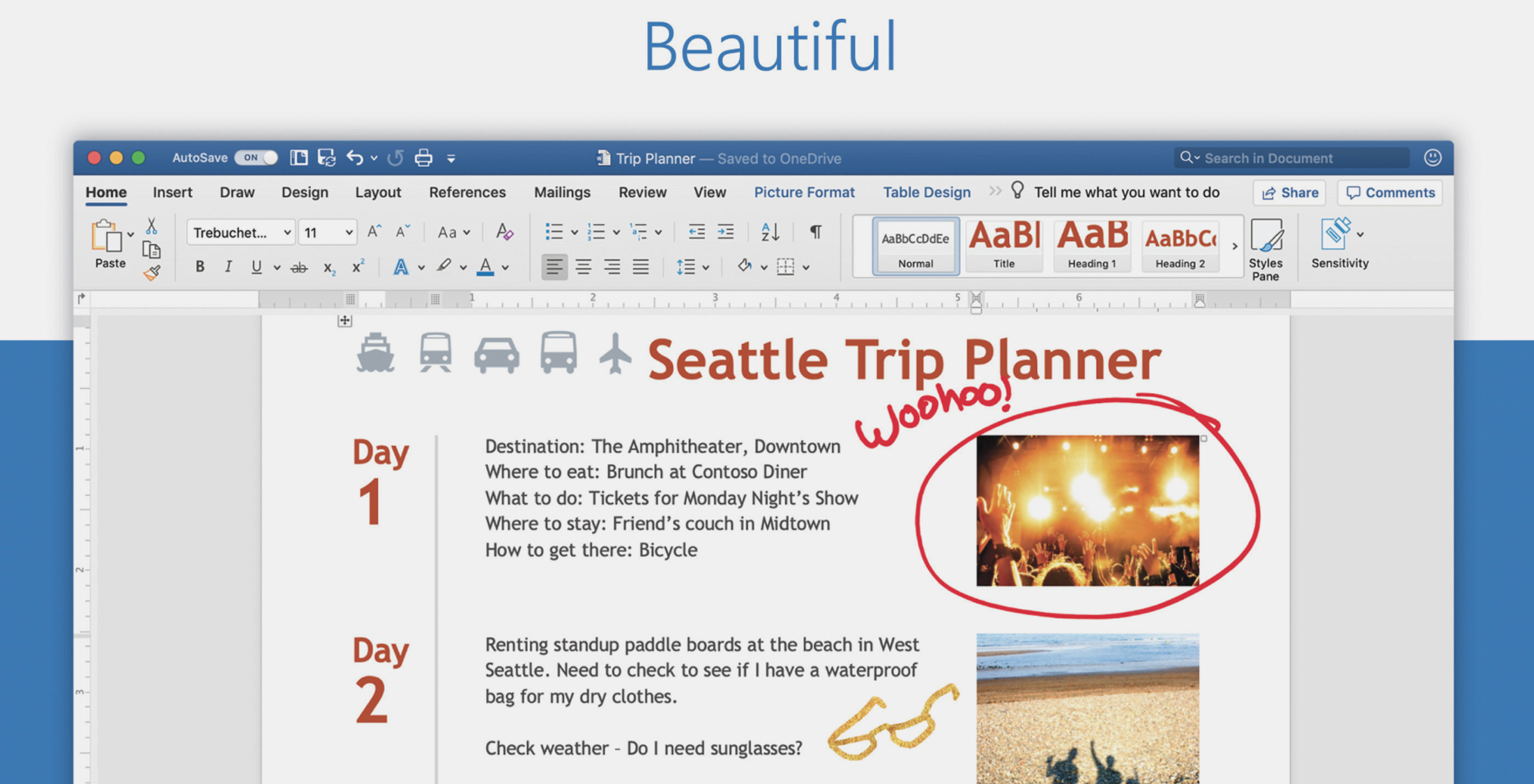
Microsoft has confirmed that from 13 July, Office 2019 for Mac will lose the ability to create, edit and save documents due to an expiring security certificate. While the apps themselves won’t suddenly disappear, they could become far less useful. This is especially problematic for anyone who still relies on Word, Excel or PowerPoint as part of their daily workflow.

The situation is unusual because Microsoft sold Office 2019 as a one-time purchase rather than a subscription. Many buyers picked it up specifically to avoid recurring Microsoft 365 fees and were happy to stick with a version that covered the basics without constantly adding new features.

Microsoft officially ended support for Office 2019 for Mac back in October 2023. Until now, that largely meant no new features or security updates, while the apps continued working as normal. The upcoming certificate expiry changes that.

Advertisement

Microsoft says it has already updated newer versions of Office to recognise the renewed security certificate. However, because Office 2019 is no longer supported, Microsoft cannot deliver the same update to that version.

Advertisement

That leaves existing users with a choice to make.

The first option is to move to Microsoft 365, which provides access to the latest versions of Office across multiple devices via a monthly or annual subscription. The second option is to purchase Office Home 2024 for Mac or Office Home and Business 2024 for Mac. Both remain available as one-time purchases.

Advertisement

Neither route is likely to please users who expected Office 2019 to keep functioning indefinitely. Besides, some customers have pointed out that Microsoft previously suggested the software would continue to work after support ended. However, references to that wording have reportedly disappeared from the company’s website.

For some users, free alternatives such as Apple’s Pages, Numbers and Keynote may be enough. However, for those who rely on Microsoft’s file formats for work, school or collaboration, switching isn’t always practical.

The result is that many long-time Office 2019 users now face an unavoidable decision: pay for a newer version or risk losing access to some of the software’s most important functions.

Advertisement

Advertisement

Source link

Continue Reading
Click to comment

You must be logged in to post a comment Login

Leave a Reply

Tech

Today’s NYT Connections: Sports Edition Hints, Answers for June 28 #643

Published

on

Looking for the most recent regular Connections answers? Click here for today’s Connections hints, as well as our daily answers and hints for The New York Times Mini Crossword, Wordle and Strands puzzles.


The World Cup is swinging into the knockout round, and today’s Connections: Sports Edition includes a World Cup category. If you’re struggling with the puzzle but still want to solve it, read on for hints and the answers.

Connections: Sports Edition is published by The Athletic, the subscription-based sports journalism site owned by The Times. It doesn’t appear in the NYT Games app, but it does in The Athletic’s own app. Or you can play it for free online.

Advertisement

Read more: NYT Connections: Sports Edition Puzzle Comes Out of Beta

Hints for today’s Connections: Sports Edition groups

Here are four hints for the groupings in today’s Connections: Sports Edition puzzle, ranked from the easiest yellow group to the tough (and sometimes bizarre) purple group.

Yellow group hint: Very cool!

Advertisement

Green group hint: Hoops data.

Blue group hint: Allez les Bleus!

Purple group hint: Where the dunking happens.

Answers for today’s Connections: Sports Edition groups

Yellow group: Style.

Advertisement

Green group: Basketball stats, abbreviated.

Blue group: Members of France’s World Cup squad.

Purple group: NBA arenas.

Read more: Wordle Cheat Sheet: Here Are the Most Popular Letters Used in English Words

Advertisement

What are today’s Connections: Sports Edition answers?

completed NYT Connections: Sports Edition puzzle for June 28, 2026

The completed NYT Connections: Sports Edition puzzle for June 28, 2026.

NYT/Screenshot by CNET

The yellow words in today’s Connections

The theme is style. The four answers are flair, panache, pizzazz and swagger.

The green words in today’s Connections

The theme is basketball stats, abbreviated. The four answers are FG, FT, PF and TO.

Advertisement

The blue words in today’s Connections

The theme is members of France’s World Cup squad. The four answers are Barcola, Gusto, Mbappé and Olise.

The purple words in today’s Connections

The theme is  NBA arenas. The four answers are Barclays, Kia, Moda and TD.

Source link

Advertisement
Continue Reading

Tech

This budget iPad alternative has a 144Hz display and a healthy Prime Day discount

Published

on

If you want a capable tablet, but an iPad isn’t for you (or your wallet) take a look at this,

The Xiaomi Pad 8 Pro is available for £324, down from £381.65 with £57.65 off for Prime Day.

Deal XIAOMI Pad 8 ProDeal XIAOMI Pad 8 Pro

The Xiaomi Pad 11.2‑inch has a genuinely strong saving right now, but with Prime Day ending today, it’s your last chance to snap it up

The Xiaomi Pad 11.2‑inch is sitting at a great price, though with Prime Day ending today, you’ll need to move quickly.

Advertisement

View Deal

The Snapdragon 8 Elite chip underneath is the same silicon powering flagship smartphones in 2025, and on a tablet, it translates into multitasking, gaming, and document work that never asks you to wait for the hardware to catch up.

Advertisement

That performance lands on a 3.2K display running at up to 144Hz with Dolby Vision support, 12-bit colour depth, and 345 PPI, so whether you’re editing a presentation or watching something on a long journey, the screen is doing full justice to whatever’s on it.

The 11.2-inch size sits in a body just 5.75mm thick and weighing 485 grams, which means the Xiaomi Pad 8 Pro fits into a bag without thinking about it and stays comfortable through sessions that would make a heavier tablet feel like work.

Advertisement

The Whatsapp LogoThe Whatsapp Logo

Get Updates Straight to Your WhatsApp

Advertisement

Join Now

Battery life is rated at up to 18 hours of continuous video streaming from the 9200mAh cell, and 67W HyperCharge brings it back quickly when you do run it down, so the charging cable rarely needs to be a fixture on your desk.

Advertisement

The quad speaker setup with Dolby Atmos support means audio holds up without headphones, which matters more on an 11-inch screen than it ever does on a phone, and HyperOS 3 ties the software experience together with system-wide AI features across apps.

Not sure whether a tablet or a phone upgrade makes more sense right now? Our best smartphones 2026 guide and best Android phones 2026 roundup lay out the strongest options across both, so you can make the call with the full picture in front of you.

The Xiaomi Pad 8 Pro is a top 11-inch contender for those who would like a Samsung Galaxy Tab S11 or iPad Pro, but can’t stomach their price tags. It costs less, while providing similar real-world results. Its screen isn’t class-leading, with lesser contrast than the best, but it only stands out because the bar is so very high in 2026.

Advertisement
  • Powerful processor

  • (Optional) Neat hinged keyboard case

  • Long battery life

  • Stylus and keyboard are pricey

  • Non-OLED screen with just OK colour depth

  • Heat regulation can cause app closures

SQUIRREL_PLAYLIST_10148964

Advertisement

Advertisement

Source link

Continue Reading

Tech

A Standalone YouTube Streaming Rig

Published

on

YouTube streaming typically involves a camera with an HDMI output, a USB3 HDMI digitiser, and a suitably beefy PC to run it all. It’s quite a process, and for [Coreymillia], more complex than it needs to be. He’s come up with something simpler, a dedicated self-contained streaming rig using a Raspberry Pi 4.

As you might expect it uses the Raspberry Pi HQ camera at the optical end, but it’s the software surrounding it that transforms it from a mere camera into a streaming rig. There’s a web based user interface, but perhaps more interesting are the companion dashboard peripherals. A Raspberry Pi or an ESP32 Cheap Yellow Display can both serve as a small in-view dashboard and controller.

We know from experience that a stream can be a difficult thing to get right even with high-end hardware, and we’re interested to see this standalone device allowing , we hope, an easier way to do it. If you’re a streamer we’re guessing you’ll be taking a closer look. Even so, this is surprisingly, not the simplest Raspberry Pi based streaming device we’ve seen.

Advertisement

Source link

Advertisement
Continue Reading

Tech

OpenAI's GPT-5.6 gets staggered release after Trump administration cites national security concerns

Published

on


Sol, the flagship model in the GPT-5.6 lineup, is built with a robust safety stack with guardrails against higher-risk activities, sensitive cyber requests, and repeated misuse. Terra is designed for balanced reasoning and agentic workloads, with OpenAI claiming that it offers similar performance to GPT-5.5 while being 2x cheaper. Luna…
Read Entire Article
Source link

Continue Reading

Tech

Apple asks Trump to allow RAM imports from banned supplier

Published

on

Apple has petitioned the Trump administration to allow it to buy Mac RAM chips from a blacklisted Chinese supplier, to ease the price pressure caused by the global memory crisis.

The tech industry is continuing to struggle with keeping the cost of manufacturing low due to the ongoing demand for memory chips. While Apple is also affected and now passing down the costs to consumers, it’s still trying to find ways around the problem.

According to six people speaking to the Financial Times, Apple has reached out to the Trump administration. It wants permission to buy memory chips from the Chinese memory supplier CXMT.

The problem is that CXMT is a memory chip maker that is on the Chinese Military Company Blacklist, or 1260H list. It is a list of firms that the Pentagon believes have links to the People’s Liberation Army, and therefore could undermine the national security of the U.S.

Advertisement

Apple has reportedly reached out to the Commerce Department over a month ago, as well as the administration and others in Washington to try and get the green light.

The naughty list

The existence of CXMT on the Chinese Military Company Blacklist doesn’t stop Apple from buying chips from it. However, the existence on the list has repercussions that would affect Apple.

The Defense Department is not able to make agreements with companies on the list, nor use any products and services from third parties that use their components. That would mean Apple would suddenly lose sales from that arm of the U.S. government.

That’s not the only problem that Apple faces, because it’s not the only list to be concerned about. In 2025, the Department of Commerce indicated that CXMT was one of a number of Chinese companies it wanted to put on to the “Entity List.”

Advertisement

At the time, the White House told the Commerce Department to hold off from adding them to the Entity List, which would’ve blocked all trade with the company completely. The administration was negotiating with China at the time to try to end the trade war.

CXMT is not on the Entity List, but that can still change. While Apple can get permission to buy from CXMT, there’s no guarantee that it could later be added to the Entity List, disrupting supplies once again.

For the moment, Apple would have to deal with a reputational risk of being associated with CXMT, but it can always get worse.

Lawmaker worries

Aside from getting permission to get the chips, Apple will also have to deal with a backlash from other U.S. lawmakers.

Advertisement

To the Republican chair of the House China Committee, John Moolenaar, it would be a “grave mistake” for Apple to make a deal. Doing so would help China succeed in dominating critical supply chains, making the U.S. tech industry more dependent on China.

Apple previously felt pressure in 2022 when it thought about sourcing memory chips from YMTC, specifically for iPhones to be sold in China. Marco Rubio, the top Republican on the Senate Intelligence Committee at the time, said Apple was “playing with fire.”

Rubio added that Apple would face extreme scrutiny from the U.S. government, even though they were for memory chips to be sold in iPhones elsewhere.

Apple does have a duty to its customers and a fiscal responsibility to its shareholders to make sales without wasting funds. Securing another memory supplier is a natural thing for it to do in this case, especially when the world is jointly facing the same memory pressures.

Advertisement

The obstacle here isn’t one of price, but in keeping the United States government on-side. Under the current political climate, that’s going to be a very tough sell, even with current CEO Tim Cook‘s years of relationship groundwork.

It may well be a political price that’s just too high. Something that consumers will pay for either way.

Source link

Advertisement
Continue Reading

Tech

Renewable Energy Just Hit 30% of America’s Electricity Generation

Published

on

America generated 10.06% more energy with renewables in the first four months of 2026 than it did in the same period the year before. That’s according to new figures from America’s Energy Information Administration, cited in this report from Electrek:

The growth was led by utility-scale solar (+21.3%), hydropower (+15.7%), small-scale solar
In April alone, wind and solar each produced more electricity than US coal plants, while the combination of solar and wind produced 57.0% more electricity than nuclear power.

The mix of all renewables, including biomass and geothermal, accounted for 30.0% of total US electrical generation during the first third of 2026 — up from 27.8% a year earlier… EIA reported that, in April, utility-scale solar capacity surpassed wind capacity for the first time (160,208.1 MW vs. 160,100.6 MW). Further, utility-scale battery energy storage capacity increased by 17,703.5 MW, or 58.1%. Nuclear added just 18.4 MW.

The combined capacity growth of all utility-scale renewable energy sources for the 12-month period (55,980.3 MW) is two-thirds more (i.e., 67.6%) than that added during the previous 12 months (33,392.0 MW).

“EIA projects no new nuclear generating capacity and a net decline of 5,200.5 MW in fossil fuel capacity.”

Advertisement

Source link

Continue Reading

Tech

Best Apple Watch Series 11, Ultra 3 Deals Still Live This Weekend

Published

on

Amazon’s Prime Day Apple Watch deals have been extended into the weekend, with the Series 11 discounted by $120 and the Ultra 3 slashed by $150.

Amazon’s Prime Day Apple Watch sale delivered the year’s lowest prices on several Series 11 and Ultra 3 models. And while Prime Day wrapped up on Friday, multiple offers have been extended into the weekend, including the Series 11 for $279 ($120 off) and the Ultra 3 for $649 ($150 off).

Buy Apple Watch S11 from $279

You can find a detailed breakdown of the lowest prices across dozens of styles in our Apple Watch Price Guide, with highlights from the weekend sale below.

Advertisement

42mm Apple Watch Series 11

  • 42mm Apple Watch Series 11 GPS (Aluminum Case, Sport Band): $279 ($120 off)
  • 42mm Apple Watch Series 11 GPS + Cellular (Aluminum Case, Sport Band): $379 ($120 off)
  • 42mm Apple Watch Series 11 GPS + Cellular (Titanium Case, Milanese Loop Band): $609 ($140 off)

46mm Apple Watch Series 11

  • 46mm Apple Watch Series 11 GPS (Aluminum Case, Sport Band): $309 ($120 off)
  • 46mm Apple Watch Series 11 GPS + Cellular (Aluminum Case, Sport Band): $399 ($130 off)
  • 46mm Apple Watch Series 11 GPS + Cellular (Titanium Case, Sport Band): $569.97 ($180 off)
  • 46mm Apple Watch Series 11 GPS + Cellular (Titanium Case, Milanese Loop Band): $639 ($160 off)

Apple Watch Ultra 3 $150 off

Source link

Continue Reading

Tech

SoftBank’s CEO isn’t the only one with questions about Elon Musk’s orbital data center hype

Published

on

Not everyone is buying Elon Musk’s vision for orbital data centers

Masayoshi Son, the founder and CEO of Softbank, argued at a recent shareholder meeting that building data centers in space won’t do much to cut costs and will take too long when “in the battle for AI, the next few years will be far more important than what might happen a decade or so from now.”

On the latest episode of TechCrunch’s Equity podcast, Kirsten Korosec, Sean O’Kane, and I discussed Son’s remarks as part of a broader discussion that included OpenAI’s plans for custom chips, chipmaker Groq’s new $650 million funding, and much more.

Kirsten noted that it’s “very ironic” that Son is playing the skeptic here, given SoftBank’s “long history of wild bets.”

Advertisement

Sean, meanwhile, said that when Musk talks about “making a constellation of satellites — satellites that need to be replaced every few years as well —  to make up an ‘orbital data center,’” he’s just “guaranteeing that much more business” for SpaceX.

Keep reading for a preview of our conversation, edited for length and clarity.

Sean O’Kane: Listen, neo-clouds are the new oil, and everybody who wants to make money is pivoting to a neo-cloud. I’m proud to announce that TechCrunch is now a neo-cloud, give us all your money.

I mean, this is the thing you do. It seems like there are so many players that are compute constrained, so anybody who has a shot at being able to lease out that compute is taking it, whether that’s Groq, a company that was semi-hollowed out by Nvidia, or Allbirds, which went into bankruptcy and and emerged from it as a new neo-cloud provider instead of selling shoes — Tim Fernholz did an interview with the new CEO of of that new effort that I would definitely recommend people go read. 

Advertisement

Or whether you’re SpaceX, where your idea was: I’m gonna build an AI platform that’s gonna have an addressable market the size of U.S. GDP, but before we get there, we’ll just rent out our compute.  And we saw this continue to happen with SpaceX, where it’s not as big as the deals that they’ve struck with Google or Anthropic, but they just signed another deal, [their] first post IPO deal, to rent out compute to another smaller player. They’re continuing down that road. 

You know, I can see this being a business for Groq in the near term. The question with all of these is how durable is it in the long term.

Anthony Ha: If we’re talking about SpaceX and their AI business and data center business, we also have to talk about these comments that Masayoshi Son, the CEO of SoftBank, made recently, where he basically said: What is the point of data centers in space? Which is a question we’ve asked on this show. 

And it speaks to, again, this sense in the industry of being really, really compute constrained — they need to build as many data centers as possible, [and] there’s all kinds of reasons why that is proving to be challenging here on Earth, so maybe space is the answer. But I think Son makes some pretty fair points about: All this stuff we’re talking about, even if it all works — and the costs are going to be very, very serious to make it work — this is not happening for years and years and years, so this is not a solution to any immediate problem, as far the current need for data centers goes.

Advertisement

Kirsten Korosec: I just want to point out that SoftBank has a long history of making wild bets. I think it says something when Son comes up and asks the question that a lot of people have asked. 

I mean, there are a lot of VCs and founders [who] have been swept up into the idea of orbital data centers and it seems like suddenly everyone’s on board. When just a couple of years ago, I think, if someone had mentioned that, it would get slapped down a little bit. So I do think it’s an important part of the process that someone who has a pretty high profile is asking that question. But it is very ironic to me that he is the one asking it, because if you look at his pitch deck, they’ve thrown a lot of money at some pretty bold ideas.

Sean: WeWork! Listen, we’re going to be saying this for a lot over the next couple years. The idea of putting these things in space is going to be an interesting engineering challenge and certainly an interesting economic challenge. 

Anthony, what you said is definitely right to a certain extent. Elon Musk is a person who hates red tape and you know, there are no NIMBYs in space so of course he’s going to try and do that. 

Advertisement

To me, it comes down to: The business as it stands now for SpaceX, especially its launch business, is just overwhelmingly reliant on Starlink. The reason that they are 80 or 90% of the launch market globally is not just because they’ve done all these things that are better than pretty much every other launch provider around the globe, it’s also because they have Starlink that is driving up that number. If you remove Starlink from the equation, they would be closer to — I don’t know, maybe 20% or 30% of the launch market, or 40%, but it certainly wouldn’t be 90%. 

And when you talk about making a constellation of satellites — satellites that need to be replaced every few years as well —  to make up an “orbital data center,” quote unquote, you’re just guaranteeing that much more business for your launch business. And I just can’t stop myself from coming back to that point.

Kirsten: I want to really quickly say that [SpaceX’s] other big business is renting out their compute, by the way. So back to the chip conversation. We’ve come full circle.

Anthony: One of the other themes that may run through this episode is this idea of talking your own book. This is not a new phenomenon. Executives at tech companies, or any other company, what they’re predicting for the future is ultimately the future that is going to be advantageous to their business. 

Advertisement

But I think it’s something that’s just always worth remembering when we’re having these conversations about big AI companies, because it is this moment of incredible uncertainty, and we’re all wondering: What does the job market look like in the future? What effect is this going to have on the environment? What are the skills I need to learn? 

All these AI CEOs or AI investors, they all have thoughts on that. And it’s not that they’re wrong or that they are being deliberately misleading, but in each case, there’s an asterisk to these predictions. In Musk’s case, he’s talking about something that would be very good for SpaceX’s business. In SoftBank’s case, they are very, very heavily invested in data center projects here on Earth. Sam Altman is the other notable figure who’s rolled his eyes a bit at the orbital data center idea — and again, he and Elon Musk obviously have a long and complicated history together.

All of which is to say that there’s just no objective, impartial observers here. It’s all these people with baggage and tremendous amounts of money at stake.

When you purchase through links in our articles, we may earn a small commission. This doesn’t affect our editorial independence.

Advertisement

Source link

Continue Reading

Tech

Claude Code turned every engineer into three. Now companies need more product thinkers

Published

on

Anthropic recently told its growth team to hire more product managers, not fewer. The reason, as reported in industry coverage, was that Claude Code had quietly turned its engineering org into a team that ships at roughly three times its actual headcount, and the bottleneck moved from the integrated development environment (IDE) to the people deciding what to build.

That detail is easy to miss in the noise of every AI productivity claim. It is also the structural shift the rest of the industry is now living through. The bottleneck in software is no longer typing. It is deciding what to type. And the engineers who treat that as someone else’s problem are about to plateau.

For most of the last decade, that decision sat with someone else. Software engineering was a craft you absorbed slowly, then practiced in a long, predictable sequence: Dive deep on the technology, write the code, ask Stack Overflow when stuck, escalate to a senior engineer when Stack Overflow failed, ship the ticket. The product manager owned the funnel. The engineer owned the build. Both sides treated this division as physics.

Then the funnel collapsed in five steps.

Advertisement

A short history of how the engineer’s day got compressed

The Stack Overflow era (2014 to late 2022): The way engineers thought lived in one place. But new monthly questions on Stack Overflow are now down roughly 77% since November 2022, which was not coincidentally when ChatGPT launched. The drop is not a referendum on the site. It is a referendum on the workflow it represented.

The browser-tab era (late 2022 to 2024): The first ChatGPT generation sat outside the IDE. Engineers ran the same loop they had always run, just with a faster oracle: Write a prompt in a browser, paste the answer back into VS Code, repeat. The work was still single-threaded and engineer-driven. The leverage was real but local.

The IDE-native era (2024 to 2025): Cursor and Claude Code moved the model inside the editor and gave it access to the full repository. The senior-engineer escalation path largely dissolved. For years, the prevailing wisdom among veteran engineers was that Bash had the longest shelf life of any tool in the stack. By 2026, for a meaningful share of working developers, the first command typed in a fresh terminal is claude.

The spec-driven era (2025 to 2026): Larger context windows turned single-session work into something that previously required tickets, design docs, and sprints. Amazon’s Kiro IDE team reportedly compressed feature builds from two weeks to two days using the same spec-driven workflow they were shipping. An AWS engineering team described an 18-month rearchitecture, originally scoped for 30 engineers, was completed by 6 people in 76 days. The bottleneck stopped being how long it takes to write the code. It started being how clearly the team can describe what correct looks like.

Advertisement

The routines era (2026): In April, Anthropic shipped Claude Code Routines: Scheduled, persistent agents that run on a cadence, on a webhook, or overnight while the laptop is closed. Cron came back. Hooks came back. The engineer’s job is now part orchestration: Spin up a swarm before bed, review a stack of pull requests in the morning. Third-party wrappers like OpenClaw, which was briefly suspended by Anthropic in April before partial reinstatement, made the same point from the open-source side.

The bottleneck moved; most teams have not

Engineering has roughly tripled. Product management has not budged. The traditional 1:8 ratio of PMs to engineers, already strained, now plays out closer to an effective 1:20 because each engineer ships more per day. For instance, LinkedIn replaced its associate product manager track with a “Product Builder” program that trains generalists across product, design, and engineering. Anthropic is hiring more PMs, not fewer. The pattern is consistent across companies that have actually deployed agentic workflows in production: The system is producing built features faster than it is producing decisions about what should be built.

For engineers, this is the most important career signal of the decade, and the easiest one to miss while the productivity stories dominate the feed.

First principles matter more, not less

The instinct to declare fundamentals obsolete in the agent era gets the trend exactly wrong.

Advertisement

When a memory leak takes down production at 3 a.m., and the cause turns out to be a subtle ownership bug pushed 4 years ago, no agent currently in the wild closes that loop end-to-end. Operating systems, networks, concurrency, and query plans still decide who can resolve a real incident. They also decide who can spot the moments when an agent’s output looks correct on the surface and is quietly, expensively, wrong underneath. The agent that wrote 70% of the code in a modern repo cannot reliably tell anyone where its assumptions about thread safety, memory ownership, or transaction isolation diverged from the runtime. The engineer who can read the diff and catch that is the engineer the rest of the team needs in the room, and that engineer is built on fundamentals, not on prompting skill.

The corollary is that fundamentals are now a leverage skill, not a hygiene skill. In 2014, knowing how a TCP retransmit worked got a debug ticket closed faster. In 2026, the same knowledge keeps an entire agent-driven release pipeline from shipping a regression at scale. The blast radius of the engineer who knows what is happening underneath has gone up, not down.

Review is the new writing

Engineers in 2026 generate code at a rate that exceeds what any of them can read carefully. The team that ships fast and survives is the team whose engineers treat reviewing AI-generated code with at least the same rigor they once reserved for writing it. The 2025 Stack Overflow developer survey put 84% of developers on AI tools, with 46% saying they do not trust the output, up sharply from 31% the year before. That gap, heavy use paired with low trust, is exactly where review skills now matter most. Coders who push lots and review little are accumulating a debt that will come due during the first real incident, and the engineer who can pay it back is the one who paired their volume with deep first-principles knowledge of the systems involved.

The new differentiator is the product funnel

Both of those are necessary. Neither is sufficient. The engineer who matters in 2026 is the one who has stopped waiting for the funnel to arrive in the form of a Jira ticket.

Advertisement

That means doing things the role was historically allowed to skip.

Talk to customers. Watch how they actually use the product. Read the support queue. Sit in on the sales call. The signal a product team gets through three layers of summary, an engineer can now get firsthand in an afternoon.

Generate ideas, not just estimates. The product manager who used to source ideas for 8 engineers cannot source ideas for 20 at the same fidelity. The engineer who shows up with a validated, scoped opportunity is no longer doing the PM’s job. The engineer is doing the job the new ratio requires.

Work backwards from the customer. Amazon has been writing the press release first for two decades. The discipline travels well to teams of one and to swarms of agents. Both produce a great deal of working software in the wrong direction without a clear statement of what “customer wins” means before any code is written.

Advertisement

Stop hiding behind bandwidth. The honest answer to “Do you have capacity for this idea?” used to be ‘No.’ With routines, hooks, and a cooperative agent stack, the honest answer is closer to “What is the idea worth?” That is a different conversation, and a much harder one to have without a real point of view on the customer.

What the next decade rewards

The five-phase history above is not really a history of tools. It is a history of which part of the job a human had to do. The part that is still human, and that will remain human for the foreseeable future, has moved up the funnel: From typing, to reviewing, to deciding, to choosing the customer to serve and the problem to solve.

The 2026 version of a great engineer is not the one who writes the most code. It is the one who knows what to build, can prove it is worth building, and has the agent fleet plus the review discipline to ship it without the system collapsing under its own velocity.

Engineers who internalize this will spend the next decade doing the most interesting work software has ever produced. Engineers who wait for a ticket will spend it watching the ticket get written by the agent next to them.

Advertisement

Ishan Gupta is a software engineer at Amazon.

Welcome to the VentureBeat community!

Our guest posting program is where technical experts share insights and provide neutral, non-vested deep dives on AI, data infrastructure, cybersecurity and other cutting-edge technologies shaping the future of enterprise.

Read more from our guest post program — and check out our guidelines if you’re interested in contributing an article of your own!

Advertisement

Source link

Continue Reading

Tech

Bringing Swift To The Apple II

Published

on

Swift is a relatively modern program language, appearing in 2014 as a replacement for Objective-C. Since then, it’s become a popular solution for programming apps across Apple platforms. That led [Yeo Kheng Meng] to a simple yet fun idea—porting Swift to the oldest Apple platform of all.

Yes, [Yeo] managed to build a development environment for Swift that targets the Apple II platform. Not just one machine, either—everything from the original Apple II up to the IIe and a little beyond. Now, the Apple II is very different from modern Macs and iPhones and the like, having debuted in 1977 with a 1 MHz 6502 CPU and a minuscule 4 KB of RAM. But that doesn’t mean you can’t use a modern language to develop for it!

[Yeo] does a great job of explaining how it all works, and how Claude Code and GPT 5.5 Codex were used to help piece things together. The compiler is set up to spit out bytecode that’s executed by a virtual machine running on the 6502. The target was to allow the setup to work on a standard 1977 Apple II from the factory, which would allow it to then run on subsequent models without issue. However, there is a small note— [Yeo]’s implementation requires the RAM to have been upgraded to 48 KB.

Advertisement

We love seeing modern stuff ported to the Apple II. This Portal port was a particular highlight.

Advertisement

Source link

Continue Reading

Trending

Copyright © 2025