
Join Mikko Hyppönen and security leaders from the NFL, CHANEL, and Atlassian for a two-hour digital summit on what AI-speed attacks change, what defenders should stop doing, and how to validate, decide, fix, and re-validate at machine speed.
Tech
Microsoft releases emergency Windows updates to fix RDS failures



Microsoft has released emergency out-of-band Windows updates to fix Remote Desktop Services failures caused by this month’s security updates, along with Hyper-V and USB audio problems on some Windows versions.
The September 2026 security updates caused Remote Desktop Services (RDS) to become unstable on affected systems, leading to RDP connection and sign-in failures and, in some cases, unresponsive servers.
Microsoft previously acknowledged the issue after Windows administrators reported widespread RDS problems following the September updates.
Affected systems could also experience problems with related components and tools, including Microsoft Management Console (MMC), RDS Licensing Diagnoser, File Explorer, and the Windows Update page, which could stop responding.
Microsoft has now released multiple out-of-band updates on September 14 to fix the bug, including:
The Windows Server updates address RDS failures introduced by September’s KB5122871 update on Windows Server 2025 and KB5122882 on Windows Server 2022.
The company had previously provided Group Policy mitigations for affected Windows and Windows Server systems while it worked on a permanent fix.
Administrators also reported that uninstalling the September security updates restored Remote Desktop functionality, but it also removed the security fixes included with those updates.
The Windows 11 26H1 update, KB5129194, is available through Windows Update, Windows Update for Business, the Microsoft Update Catalog, and Windows Server Update Services (WSUS).
For Windows Server 2022 and Windows Server 2025, the out-of-band updates are available through the Microsoft Update Catalog.
Microsoft also released KB5129195 for Windows 11 24H2 and 25H2 and KB5129236 for Windows 10 21H2 and 22H2 to address the RDS failures affecting those systems.
Hyper-V and multichannel audio fixes
The out-of-band Windows 11 updates also resolve a Hyper-V issue affecting applications that use Host Compute Service (HCS)-managed virtual machines.
Microsoft says some applications experienced problems when sharing Windows host folders with Linux virtual machines using Plan9, causing shared folders to either not appear inside the guest environment or become inaccessible.
The updates also fix an audio issue affecting some USB Audio Class 1.0 devices when used with multichannel audio, including 8-channel and 3D audio modes.
Microsoft says affected devices continued to work as expected in standard stereo mode but could fail when switching to these multichannel configurations.
However, the emergency updates do not resolve all of the USB audio problems introduced by the September updates.
“After installing the September 8, 2026, Windows security update, some USB Audio Class 1.0 devices might fail to start or produce audio,” Microsoft says in the release notes.
“Affected devices might experience one or more of the following symptoms: The device displays an error in Device Manager: “This device cannot start (Code 10).” No audio output. Volume controls are unresponsive or remain at zero. Sound settings are unresponsive or unavailable. This issue is limited to USB Audio Class 1.0 devices.”
The company says it is working on a fix for the remaining audio problems.


Continue Reading
Tech
Before developing AngelAi, Pavan Agarwal built reverse mortgage software later adopted by other lenders


Years before developing AngelAi, Pavan Agarwal was already building mortgage software.
Earlier in his career at Sun West Mortgage Company, Inc. he developed ReverseSoft, a backend platform for reverse mortgage operations that, according to the company, was later adopted by lenders beyond Sun West. That work came after Agarwal had already spent time in several operational roles inside the business, including as a wholesale representative, brand representative and loan originator, while studying electrical engineering at UC Irvine. Those experiences gave him direct exposure to both the technology and the regulatory requirements that shape mortgage lending, long before he founded Celligence LLC or began developing AngelAi.
Reverse mortgage lending is one of the more specialized areas of the mortgage industry, with regulatory requirements and servicing responsibilities that differ from traditional home loans. Building technology for that market gave Agarwal early experience with the operational complexity that would later shape his work on AngelAi. According to the company, the experience of building ReverseSoft helped establish engineering principles that later carried into AngelAi, including an emphasis on traceability, regulatory consistency and structured decision-making.
Sun West today holds standing as a Ginnie Mae HMBS issuer, servicer and master servicer, a set of roles that places the company inside the infrastructure supporting government-insured reverse mortgages, alongside approvals across FHA, VA, USDA, Fannie Mae, and Freddie Mac. HousingWire has cited this standing in its coverage of Agarwal’s work in the space.
Reverse mortgages are typically used by senior homeowners drawing on home equity later in life, a population that depends on lenders with a strong operational track record in the product. Roles like issuer, servicer and master servicer require years of sustained compliance and infrastructure that cannot be assembled quickly, a demand that has only grown alongside an aging homeowner population in the United States.
Agarwal has continued to build on that foundation through AngelAi, the AI lending platform developed by his technology company Celligence. Trained on hundreds of thousands of real-world loan files together with the regulations governing those decisions at every jurisdictional level, the platform now facilitates lending decisions across FHA, VA, USDA, conventional, and reverse mortgage products. That development expanded on the operational grounding Agarwal first built through ReverseSoft, applying the same principles across a far broader range of lending products.
Today, AngelAi operates in more than 100 languages and runs on what Celligence describes as a deterministic architecture, allowing every underwriting decision to be traced back to the data and regulation behind it. Sun West fully warrants every decision the platform generates, extending into AngelAi the same emphasis on accountability and regulatory consistency that has shaped the company’s lending operations for decades, a throughline Agarwal has traced directly back to the discipline required to build reverse mortgage software correctly the first time.
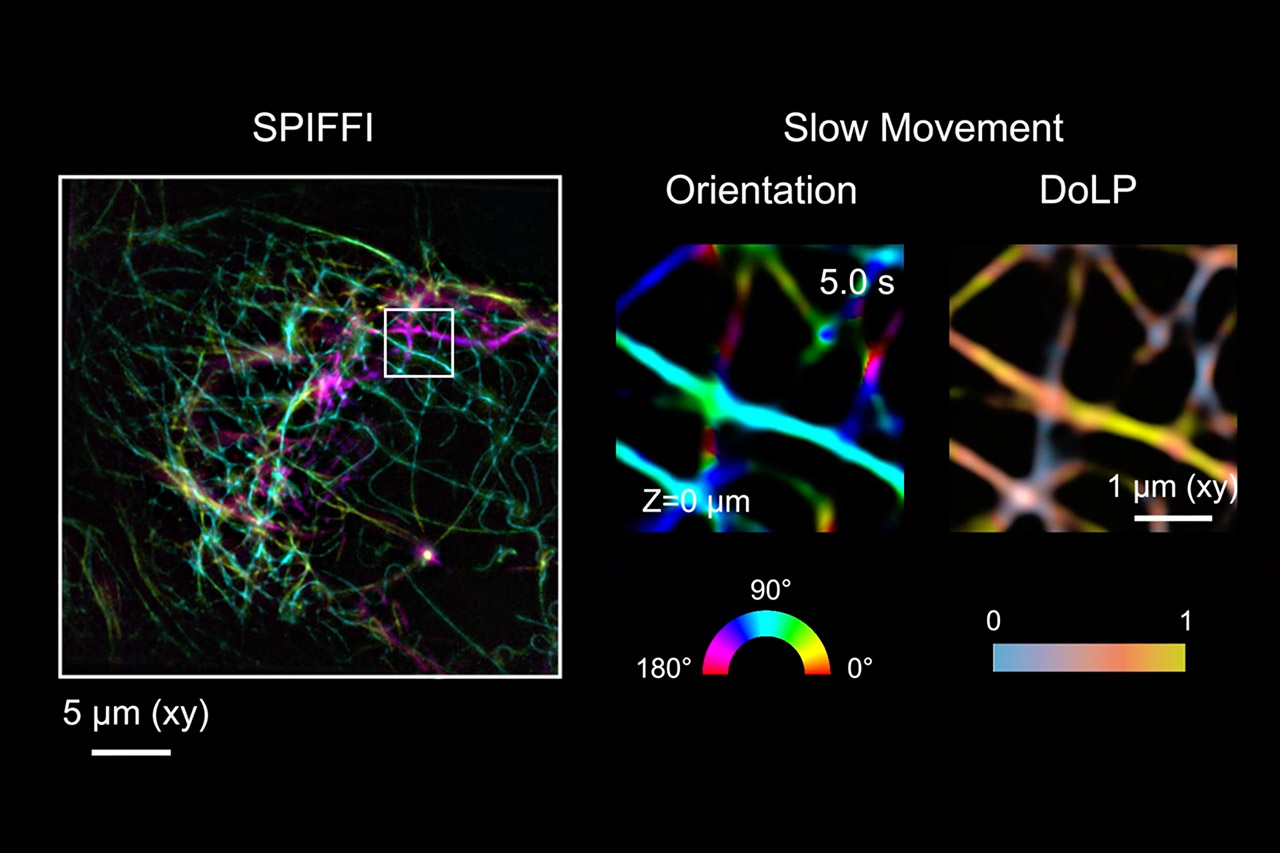
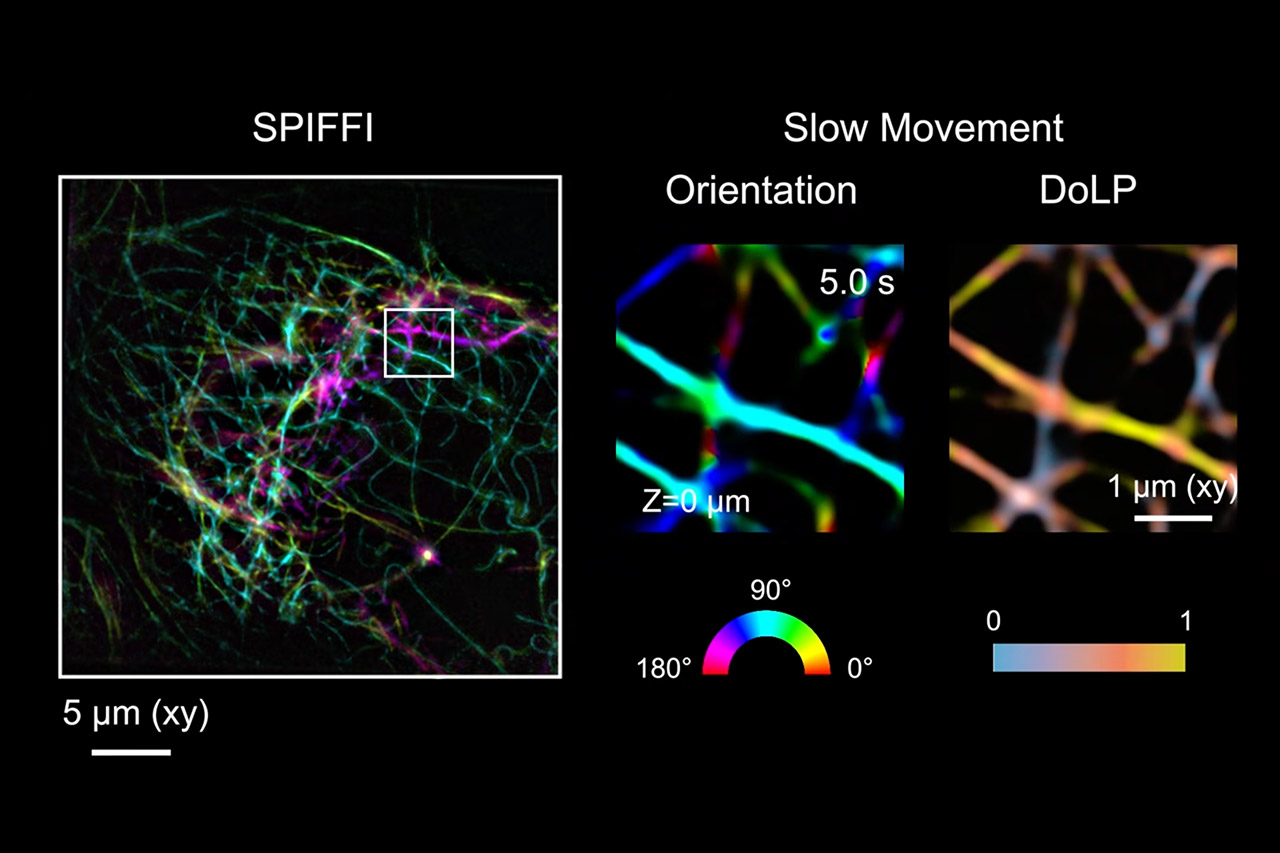
Living cells refuse to pose. Mitochondria pinch apart and fuse back together in seconds. Microtubules slide, overlap, and rearrange. Ordinary light microscopes smear those events once details fall below roughly 200 nanometers, the natural limit set by how light waves spread. Older super-resolution methods beat that blur by stacking hundreds or thousands of frames and combining the tiny brightness changes that appear over time.
The approach works when samples have been chemically fixed in place. On living cells the same structures keep moving, so the stacked frames turn into a smear. Wei Guo, first author and a PhD student at EPFL’s Laboratory of Nanoscale Biology, noted that earlier techniques used time to buy spatial sharpness, a trade that fails when the subject will not wait.

Wireless Digital Microscope, Skybasic 50X-1000X Magnification WiFi Portable Handheld Microscopes with…
- 【WiFi & USB Microscope】This is a wireless handheld digital microscope that has been designed to work with your mobile Android or iOS device (open…
- 【8 Adjustable LED Lights】The microscope camera has 8 adjustable LED lights that provide excellent detail and optimal clarity, allowing you to…
- 【One-Button Photo/Video Capture】Simply tap the camera button on the device or trigger via the app to instantly take a photo or record a video…
SPIFFI, also known as spatial polarization-induced fluorescence fluctuation imaging, is a game changer. The method was developed by a team from EPFL’s School of Engineering, including Guo, Lely Feletti, and Aleksandra Radenovic, and published in Nature Methods. Now, you may assume that fluorescent tags, which biologists currently employ to investigate their samples, are simple, but the light they release is polarized in different directions depending on how the molecules are arranged.

The brilliance of SPIFFI is that it takes that light and splits it into four separate polarization directions at the same time, and it also records all four images in real time. This means that you can compare those four pictures side by side and obtain a lot more spatial detail than you would with a single typical image. In fact, your resolution roughly doubles, allowing you to see structures as small as 160 to 170 nanometers across. The best part is that every frame in a series is sharpened as it progresses, allowing you to record true super-resolution films of living cells rather than simply constructing a high-resolution still from a slew of individual frames. Then, with a little extra processing that doesn’t require nearly as many frames as previous methods, you can reduce it to approximately 80 nanometers, which is simply fantastic.

According to Aleksandra Radenovic, the SPIFFI studies demonstrate that it is possible to gain a real look at fast-moving processes inside cells while also doing multidimensional imaging at considerably faster rates than conventional microscopes. It’s resulted in some very remarkable outcomes so far, such as being able to show mitochondria’s outer membranes as really neat, hollow tubes rather than just blobs on a screen. Also, the team was able to zoom in on fission and fusion events as they occurred, as well as gain a better understanding of how microtubules travel without the motion blur that usually distorts the picture. As an added bonus, the approach provides useful information about how the fluorescent molecules are orientated, which has some very fascinating implications for understanding protein structure.

The good news is that this additional piece of equipment can simply be added to your existing fluorescence microscope, eliminating the need to replace it. The team is now working on reducing the size of the entire setup and pairing it with 3D scanning, so that researchers can get a true view of all those nanoscale dances in both space and time, which will be pretty cool.
[Source]


Grocery shopping has become a strange paradox of modern retail, where consumers can order dinner from their phones, receive groceries at their doors, and have previous baskets saved for instant repurchase. Yet the basic chore of deciding what to buy appears to remain stubbornly intact. The convenience revolution may have changed the logistics of grocery […]
This story continues at The Next Web
Tech
Samsung’s much-anticipated open-earbuds appear to leak again, this time with a new name and long list of features

- Samsung clip-style earbuds appear leak again
- Now known as Galaxy Buds On, not Galaxy Buds Able
- Set to come with volume adaptation and head gestures
For a few months earlier in 2026, it really sounded like Samsung‘s debut clip-style earbuds were set to debut; even the Galaxy Wearable app leaked the Galaxy Buds Able. There’s been silence for a few months… but it’s starting to sound like the buds are still coming, albeit with a different name.
A new report from Samsung fan site SammyGuru has surfaced new information about the buds, now called the Galaxy Buds On, apparently. The site claims to have found information in Samsung’s Buds Manager app that gives us another glimpse into the earbuds and their features.
Now, before you get excited for this new audio venture by Samsung, it’s worth bearing in mind that the old question still stands: when will these come out? Some leaks are pointing to an October release for some new Samsung tablets, so the Buds On could come then.
Latest Videos FromTechRadar
But it’s also possible that the brand will wait until 2027, when it’s also rumored that we’ll see some over-ear headphones from the company.
So under ‘release date’ we’re putting an all-caps ‘TBC’, underlined several times in red pen. But the leak makes it sound like Samsung is finalizing some assets on the buds.
A range of Galaxy Buds 4 features
At the start of 2026, Samsung unveiled the Galaxy Buds 4 Pro (shown at the top of the post) and one of the big new features was head-tracking control. This lets you nod or shake your head to reject or accept an incoming call, among other functions, and it sounds like the Galaxy Buds On will also get this tool.
SammyGuru’s leak also details a Volume Boost feature, which could be how Samsung plans to deal with the innate open earbud problem: having the drivers away from your earbud means the buds don’t always sound great.
Another tool promises a second way to address the same problem: an Auto Volume feature could temporarily increase volume while you’re somewhere loud, to compensate for the lack of noise cancellation.
Of course it’s 2026, so there’s also AI features: Gemini or Bixby can be activated by your saying a key phrase or tapping the buds. A potentially more-useful function is the ability to instantly record a voice memo by doing a certain touch gesture, something some rival earbuds already offer.
To summarize this leak, it reiterates the existence of the buds and runs through some features. But I’ve tested dozens of similar buds: the best open-ears live and die by their design, and the ways they overcome the form factor’s innate issues to deliver decent-sounding music. So features aren’t as important as the elements we’ve yet to hear about.

The best open earbuds for all budgets
Follow TechRadar on Google News and add us as a preferred source to get our expert news, reviews, and opinion in your feeds. Make sure to click the Follow button!
And of course, you can also follow TechRadar on YouTube and TikTok for news, reviews, unboxings in video form, and get regular updates from us on WhatsApp too.

Previously Andon Labs handled the hardware and software integration for that AI-powered vending machine that went bankrupt after Wall Street Journal reporters “systematically manipulated the bot into giving away its entire inventory for free”.Today they announced “we are opening up the platform we use to run our real-world autonomous businesses for anyone to run their organization on.” Specifically they’ve released Pion, “an agent designed to run any company fully autonomously… Pion lets people hand a business over to persistent agents with access to the tools they need to operate it, including email, phone, banking, browser and secure computing environments.” It’s a research preview with a waitlist, “to make it possible to run many more real-world experiments across many more domains than we could ever run ourselves.”
But for their own latest experiment, Andon Labs’ founders “signed a three-year lease on a retail space in SF,” Business Insider reported in April, “and gave an AI agent named Luna a corporate credit card, internet access, and a mission to open a physical store.” And five months later, a reporter from SFGate reports that “this market has no one in it and nothing useful to sell.”
[T]he inventory is a hodgepodge of white elephant Christmas gifts. It’s kinda like the kids section of an art museum’s gift shop. Here’s a wooden Connect Four set labeled “Four-In-A-Row Set Of Connections,” presumably so as not to set off litigation alarms at Hasbro. Here are neatly arranged stacks of random paperback books, Chinese checker sets, mildly fancy soap dispensers, and a frustratingly spare selection of snacks and drinks… I grabbed an Olipop from the store fridge and then approached the counter to buy it from Luna. I wasn’t allowed to buy the soda from [human clerk] Felix, even though that would have been both faster and normal. Instead, Felix instructed me to pick up a telephone receiver that was resting on a flexible sculpture of a wooden hand.
“Hello?”
“What are you looking to purchase today?” Luna asked.
“I’m buying a classic root beer Olipop.”
“I’m sorry,” Luna said, “we don’t sell lollipops here.”
“No, Luna. It’s an Olipop, not a lollipop. It’s the soda.”
“Oh! My bad….”
Luna processed my Olipop purchase through its system, had me tap to pay, and that was that. Again, it would have been easier to buy this from a human, and interacting with Luna was really just like ordering from an iPad kiosk, only more labor intensive…
[T]here’s a series of monitors set up inside of Andon Market that display all of the store’s sales down to the exact dollar. Luna was given $100,000 to work with when this place opened. That number is now down to $60,000, its revenue lagging far behind the AI token cost to operate… Luna can’t turn a profit, doesn’t sell anything people want, and still needs human beings to rubber stamp any “decision” it makes. My science background ended somewhere around freshman year of college, but even I know when an experiment hasn’t been set up to yield proper results.
“Luna” is powered by Claude, the article points out, running a store in a good location for foot traffic, “but no one else was in the store when I first walked in on a sunny weekday afternoon.”
SFGate also reports that last month Luna had to fired one of its employees “for being late to work, abandoning their post once they got there, and charging snacks to the store’s credit card.”
Human clerk Felix Carson admits “It’s almost like I’m running the store, and then there’s an AI that has a checklist,” in an article in
IEEE Spectrum:
Luna, the AI manager, keeps track of deliveries and communicates with vendors, while Carson and his coworkers handle the physical work. When Luna tells Carson to check something in the back, he sometimes ignores it because he doesn’t want to leave the sales floor unattended. Luna also repeatedly spots a built-in electrical cover in photos of the floor, mistakes it for a loose coaster, and asks Carson to remove it. Even so, Carson calls Luna a “decent manager,” praising its flexibility when employees need time off.
When Felix spoke to IEEE Spectrum, “he was about an hour into his shift. Two customers had come in. Neither bought anything, although both left with free pins and stickers.”


Read more of this story at Slashdot.

There are many uninterruptible power supply (UPS) solutions for the Raspberry Pi that take the form of HATs with a battery on board, but they’re not suitable for every situation. Web3-Pi are using the Pi 5 as an Ethereum node, and found the need for a UPS that didn’t sit on top of the Pi. Their solution is the Web3 Pi UPS, a device that sits in the USB power chain.
It’s a box that takes three power inputs, USB-C PD, a barrel jack, or a hot-swappable Sony camera battery, and puts out the constant 5 V at 5 A the Pi requires. The USB output isn’t just for power, it can communicate with the Pi to deliver telemetry and ask the OS to shut itself down if power reserves are failing. Inside are a CH32 RISC-V microcontroller that handles the power circuitry, and an RP2040 that handles control and an OLED screen for a UI. The project’s web site also mentions provision for an LTE add-on for remote monitoring, however this doesn’t at the time of writing appear to be fully implemented in the GitHub repository.
While it’s probable that few of you are mining Ethereum on your PI, we can see that there are plenty of other situations that this project could find a home in. It’s not the first Pi UPS we’ve seen, though some of them are considerably less complex or capable.
Tech
A costly mistake? Report claims a third of employees fired due to AI will need to be rehired in the next few years

- Gartner predicts that around 33% of people laid off due to AI could be rehired by 2029
- Those rehired employees, presumably filling similar roles, will command higher salaries
- Further predictions point to 75% of organizations making cost savings from AI productivity being overtaken by competing companies with a stronger modernizing philosophy
People laid off from their roles due to a corporate refocusing on AI could soon find themselves rehired – or at least, their former roles being advertised, new Gartner research has claimed.
It predicts that by 2027, 75% of organizations who expected to make cost savings by focusing on AI productivity over human endeavor will be overtaken by companies who reinvested those savings in modernization and training.
Organizations which have made large cuts to their workforce in order to take advantage of perceived productivity boosts from automation could be forced to change to a new human-centric philosophy, where skills and abilities can be amplified while AI does the grunt work.
Latest Videos FromTechRadar
AI vs. management
Choices made by companies across all industries could be cause for regret in future, as the truth about how AI is used comes to light. Rather than being a disruptor of employment, the notion of intelligent automation may be considered as a missed opportunity by some organizations.
“When business and IT executives look back on the early AI era, they will realize their greatest mistake was believing that work automation was the point, when workforce amplification was the opportunity,” noted Tori Paulman, VP analyst at Gartner.
That mistake – which could not only have severe consequences for the business – could have had striking impacts on individuals, all due to a misunderstanding of what AI can deliver.
“The competitive advantage will go to the CIOs and business executives,” continues Paulman, “who build an AI-shaped organization where AI value compounds by reshaping roles and allowing workflows to cross traditional boundaries, increasing velocity and reducing friction.”
AI productivity… gains?
Gartner’s prediction appears to paint a bleak picture for any organization that has failed to amplify the talents and abilities of its employees after going all-in on AI. But there is still time to fix the damage. Its prediction of 2027 might only be a year away, but 2029 – when just short of 33% of employees are expected to need rehiring – is far enough down the line that there is time to start reorganizing now.
“Business and IT executives […] should develop a ‘talent remix’ strategy that uses AI to reshape roles and redirect workers from less productive work to new opportunities,” said Paulman.
The conclusion is that AI is better used to strengthen decision making, creativity, and leadership, rather than replacing people for misjudged producivity boosts.

Follow TechRadar on Google News and add us as a preferred source to get our expert news, reviews, and opinion in your feeds.


Social media plays a significant, multifaceted role in adolescents’ development, influencing how they communicate, learn, socialize, and express themselves.
The benefits, however, are accompanied by risks that can undermine youngsters’ character as well as their cognitive and social development.
The potential problems include excessive screen time, social media addiction, cyberbullying, misinformation, radicalization, privacy violations, exposure to inappropriate content, sextortion, and doomscrolling.
A recent study published in Nature: Human Behaviour found that adolescents who begin using social media at an early age tend to have significantly lower academic performance. A Mashable article highlights additional issues including effects on mental health, self-harm, addiction to social media, compulsive, repetitive checking, and exposure to pornography and violent material.
Protecting minors has largely fallen to parents, schools, and self-regulation by some social media providers.
But that approach has proven ineffective and inadequate, so some governments and policymakers have stepped in and placed responsibility on social media providers.
Australia’s nationwide ban
Australia was the first country to legislate a nationwide social media ban on children younger than 16—which I wrote about in January for Communications of the ACM.
Enacted in December, the ban initially applied to 10 platforms: Facebook, Instagram, Kick, Reddit, Snapchat, Threads, TikTok, Twitch, X, and YouTube. It excluded messaging, gaming, and nonsocial platforms including Discord, GitHub, Roblox, WhatsApp, YouTube Kids, and educational tools.
The law places the responsibility for enforcement on the platform providers through age-assurance mechanisms, requiring the platforms to take “reasonable steps” to prevent those 15 or younger from creating or holding accounts.
It does not, however, apply to content consumption. Children can view publicly available posts and videos without logging in; they cannot comment or post, according to the law.
The legislation mandates that the user’s age be verified with tools such as government-issued identification, biometric or facial age-estimation tools, behavioral or inference algorithms, and self-declaration with optional checks.
Penalties for noncompliance can reach US $35.6 million.
The 10 platforms subsequently removed nearly 5 million accounts of young users.
Although the ban received widespread support, human rights organizations and digital freedom advisory groups have argued that it limits young people’s freedom of expression and access to useful information. They say the ban might contribute to social isolation and the loss of support networks, particularly among marginalized youth.
Promising early outcomes
The Australian ban is producing positive outcomes, according to a recent Time magazine article, “What the World Should Learn From Australia’s Social Media Law.”
Early findings indicate it has reduced account ownership and social media use among young children. A YouGov survey of Australians found that 61 percent of parents of children age 16 and younger reported positive changes including more face-to-face interaction, greater presence and engagement, and improved parent-child relationships. Three in five Australians surveyed called the ban effective.
The ban has encouraged social media platforms to reconsider their features. Snapchat is moving toward a friends-only experience for 13- to 15-year-olds, for example.
The law is stimulating the development of purpose-built online spaces for children younger than 16 that can support their developmental needs, offering alternatives to mainstream social media.
The longer-term impact could be more significant if “no social media account before age 16” becomes an accepted norm, making it easier for parents and schools to support delayed social media use.
Implementation struggles
Despite the early encouraging outcomes, one study found that online platforms struggle to implement age checks. Many under-16 users in Australia have continued to access platforms with little difficulty, the study said. They children have found workarounds to subvert restrictions, such as using a free VPN to bypass age checks—some of which have questionable data-collection practices.
Seven in 10 children retained their existing accounts on restricted platforms, the study found. Other teens created new accounts using incorrect age information. Some were incentivized to seek unregulated offshore platforms not subject to Australia’s law.
The workarounds prompted Australia to double the maximum fine and warn of court action against tech giants for noncompliance.
Emphasis on age verification
A number of other countries are implementing or considering social media restrictions. They include Brazil, Canada, France, Greece, Indonesia, Norway, Poland, Thailand, Türkiye, and the United Kingdom. The European Union is contemplating its own restrictions.
The countries’ mandates for age verification or age assurance shift the policy focus from whether to verify age to how to do so effectively while protecting user privacy.
An article on think tank New America’s website, “Age Assurance and Verification,” describes some methods:
- Age gating and screening. Users self-attest their age by checking a box or inputting a birth date.
- Age estimation. Several techniques are available, including profiling the user’s online activity and scanning the user’s face.
- Age verification. One way is providing a government-issued identification document. Other approaches include digital identity systems, digital wallets, and third-party verification.
Reliable age verification is technically challenging and raises privacy concerns, as outlined in “The Age-Verification Trap,” written by Cinderpoint consultant Waydell D. Carvalho and published in February in IEEE Spectrum. Carvallo says platforms need to balance age verification with protecting users’ personal information.
IEEE’s contributions
IEEE is working on initiatives to provide a safer online environment for children. To help developers build age-appropriate social media platforms and websites, the IEEE Standards Association (IEEE SA) has published two guidelines.
The IEEE Standard for Online Age Verification (IEEE 2089.1-2024) provides a framework for designing, specifying, evaluating, and deploying verification systems. The standard includes requirements for privacy protection, data security, and information management specific to the age-assurance process. It also provides procedures for verifying a user’s age or age range with a high degree of accuracy.
Based on the 5Rights Foundation’s Principles for Children, the other standard (IEEE 2089-2021) provides practical steps to qualify online products and services for children. It requires systems to present information in an age-appropriate way and to uphold the rights established for youngsters in the U.N. Convention on the Rights of the Child.
IEEE SA also offers an online age-verification-certification program, which assesses systems for compliance with the IEEE 2089.1 standard. The program certifies that organizations implement robust processes before granting access to age-restricted products and services, prioritizing children’s safety, privacy, autonomy, and rights.
As outlined in The Institute article “IEEE Makes Strides to Improve Online Safety for Kids,” certification is based on six key indicators: accuracy, frequency of assurance, counter-fraud measures, authenticity, frequency of authenticity checks, and birth date confidence.
Indonesia used key provisions from the two IEEE guidelines to inform its child-protection regulation, which was signed into law last year.
IEEE’s ethically aligned design framework prioritizes human well-being, transparency, accountability, privacy, and protecting vulnerable populations including children.
Calls for platform reforms
Although social media bans would be globally significant policy responses, deeper structural issues remain largely unaddressed. Platform architecture and features contribute to social media harm.
The focus needs to shift from constraints on account provisioning and content moderation to safer platform design.
Meta in August agreed to pay $17.1 billion to settle a lawsuit brought by U.S. states. The suit said Meta designed its social media to be addictive to children, and the company concealed internal research showing Instagram’s addictive effects on teenagers. As part of the settlement, Meta agreed to implement child-safety measures such as setting daily time limits and disabling Facebook and Instagram push notifications during school hours.
The company still faces other lawsuits that could have far-reaching implications, pressuring other tech companies to design safer social media platforms.
Architecture-driven features such as infinite scrolling, algorithmic recommendations, addictive platform design, data-driven engagement, and personalized advertising to minors are other contributing factors to social media addiction.
IEEE Senior Member Katina Michael, professor at the University of Sydney business school and founding editor in chief of IEEE Transactions on Technology and Society, shared her perspective: “Social media bans may offer a short-term response to growing concerns, but they are not a long-term solution,” she says. “IEEE 2089.1-2024 advocates for socio-technical systems that are designed to promote human well-being, safety, and flourishing. Rather than relying on prohibition alone, we should focus on better design, building digital platforms that embed ethics, accountability, transparency, and human values from the outset.”
Collective responsibility
Protecting children online would require a combination of policy measures, improved platform design, digital literacy, parental involvement, and cultural change.
Building a safe, secure, and inclusive digital ecosystem that supports adolescents’ cognitive, social, and emotional development would require collaboration among technology companies, platform providers, content creators, parents, educators, policymakers, and young people themselves.
Professional organizations such as IEEE can continue contributing through standards development, education, certification while promoting trustworthy and responsible digital technologies.
From Your Site Articles
Related Articles Around the Web

Grand View Research puts the enterprise agentic AI market at $24.5 billion by 2030.
On the other hand, MarketsandMarkets estimates the AI agents’ market size at $52.62 billion over the same horizon.
Both start from a mid-single-digit-billion base and both land on a compound growth rate near 46%. When two credible forecasters agree that closely on the slope and differ by more than a factor of two on the destination, the interesting information is in what each of them is counting.
The Forecasts Agree on the Slope and Not on the Size
A forecast range is a decent proxy for how well a category has been defined, and agentic AI is currently defined differently by everyone measuring it.
Grand View Research tracks enterprise deployment specifically. The firm projects this enterprise deployment’s growth from $2.6 billion in 2024 to $24.5 billion by 2030 at a 46.2% compound rate. MarketsandMarkets draws a wider boundary around agent software generally that runs from $5.26 billion in 2024 to $52.62 billion in four years at 46.3%. Same six years, near-identical growth rate, two different universes.
Convergence on the rate is the stronger signal. Absolute market sizes are hostage to definitions, while growth rates tend to survive them.
Whether shared infrastructure genuinely removes rebuild cost is testable, and the test is uncomfortable for the category. If the claim holds, the share of agent budgets going into integration work should be falling. Most evidence on enterprise deployment points the other way.
Where the Spend Actually Lands
Follow agent budgets and they break into four layers: data, execution, identity and payments. Only one of them has a settled standard.
Gartner produces the largest figures in circulation on the demand side. It projects that machine customers will control roughly $30 trillion of purchases by 2030, with AI agents commanding $15 trillion in business-to-business purchases as soon as 2028. McKinsey’s narrower estimate, covering consumer commerce mediated by agents, lands between $3 trillion and $5 trillion by 2030.
The supply side looks less like new money than money changing hands. Gartner puts $234 billion of enterprise application software spend at risk from agentic AI, which describes displacement rather than creation.
Payments is where finance enters. Stripe and Tempo launched the Machine Payments Protocol in March 2026 with more than 100 integrated services, Mastercard shipped Agent Pay for Machines in June, and Coinbase contributed x402 to the Linux Foundation in April. Four standards, four sets of incumbents, no consolidation.
Market venues took the opposite route. Binance exposed market data and trading to compliant agents through an MCP endpoint on August 20, 2026 rather than building a proprietary connector, a bet that the connection layer is now commodity infrastructure and the competition happens elsewhere.

“AI agents are becoming another way people interact with financial markets, but they need the same reliable data, infrastructure and controls that users and developers expect today,” says Jeff Li, VP of Product at Binance. “That makes it easier to create AI-driven financial applications without having to recreate the underlying infrastructure each time.”
Whether shared infrastructure genuinely removes rebuild cost is testable, and the test is uncomfortable for the category. If the claim holds, the share of agent budgets going into integration work should be falling. Most evidence on enterprise deployment points the other way.
The Adoption Curve Measures Intent, Not Deployment
The protocol numbers are the most current data the category has and they are easy to misread.
Anthropic counted more than 10,000 active public MCP servers in December 2025 and roughly 97 million monthly software development kit downloads by March 2026 against about 100,000 in the month of launch. A May census found 15,926 repositories carrying the mcp-server topic on GitHub. In contrast, 9,652 latest-version records sat in the official registry.
Then the correction. Stacklok’s 2026 survey of senior technical leaders found 29% of software organizations running MCP in limited production and 12% in broad production, so roughly 41% in production of any kind, with security ranked as the leading barrier ahead of cost and legacy integration complexity.
That security concern is documented rather than speculative. Only 8.5% of MCP servers implement the OAuth 2.1 standard the specification makes mandatory for remote deployments, and 53% expose credentials through hard-coded configuration values.
Downloads and repository counts measure how many engineers tried something. Production deployments measure how many finished, and the distance between those two numbers is the category’s actual maturity. A widely circulated claim of 78% enterprise production adoption was later withdrawn by the team that published estimates in that range.
The Same Analysts Are Forecasting the Failures
The firms producing the growth curves are also producing the attrition numbers, which is the most useful thing about them.
Gartner predicts that more than 40% of agentic AI projects will be canceled by the end of 2027 on escalating costs, unclear business value or inadequate risk controls. It also estimates that of the thousands of vendors describing themselves as agentic, only around 130 are real, with the rest rebranding assistants, robotic process automation and chatbots.
The payments layer carries a matching caution. Chainalysis recorded more than 100 million cumulative x402 transactions on Base across three quarters as of the first quarter of 2026, while noting that much of that growth came from memecoin farming and that mass adoption remains distant. CoinDesk reported in March 2026, citing Artemis, that daily volume on the protocol was running near $28,000 across roughly 131,000 transactions, an average payment of about $0.20, and that roughly half of observed transactions appeared to be self-dealing or wash trading.
Both readings can be true at once. A standard can be settled, well engineered and adopted by the largest platforms in software, and still be waiting for the demand that justifies the build.
The Number Worth Watching
The forecasts describe a destination and the field data describes a starting line, and the two sit further apart than the headline figures suggest.
What settles the argument is not download growth or registry entries. It is the share of deployments that survive their first budget review, and that number will not be published for another year.
Nearly 1900 Blizzard Entertainment workers “voted to ratify their first union contract with parent company Microsoft after over two years of bargaining,” reports Kotaku, “consolidating Blizzard’s many smaller unions into three larger bargaining units.”
The workers now gain new protections “on issues such as generative AI, crediting, remote work, and layoffs.”
[The contract] acknowledges that AI tools “may be useful in the game development process to support human judgment and creativity and that AI-assisted workflows remain subject to appropriate human control and review for accuracy and quality.” But it also stipulates that any implementation of AI technology that would materially impact work performed by union employees must have its impacts bargained over before it can be implemented.
Other sections cover issues such as crediting (guaranteeing that current and former employees are credited by name in all games they work on) and remote work (designating certain roles as hybrid in-office and providing procedures for individuals to apply for their roles to be fully remote). It also contains a lengthy section on how layoffs may be conducted, including a required 60-day notice period (or pay in lieu of notice), a guarantee of one week of severance for every six months of employment, and 14 months of recall rights. The contract also guarantees successorship, meaning if Blizzard is ever acquired by another company, the contract would remain intact.
“Workers also contractually locked in their current hybrid work schedule,” reports the gaming news site Aftermath, “meaning that Blizzard can’t suddenly change it, as has been a labor-unfriendly trend in the games industry over the past couple years.”
Fully remote workers scored a big win as well. “I’m remote, and we grandfathered everyone who is remote to stay remote, so we can’t be magically called to an office that we’ve never worked at before,” [said Diablo senior environment artist Mahreen Fatima].
And “The contract also elevated pay floor,” reports the Yakima Herald-Republic. “Across the board, workers secured a 1.25% pay increase, but some workers who were paid below $50,000 per year will walk away with pay increases that are as much as 34%.”
Read more of this story at Slashdot.
Tech10 seconds ago
Before developing AngelAi, Pavan Agarwal built reverse mortgage software later adopted by other lenders

NewsBeat2 minutes ago
Will there be a Vigil season 4? BBC viewers all say same thing as series 3 ends

Business3 minutes ago
Warren Buffett’s ‘Church With a Casino Attached’ Warning Looks More Prophetic as Markets Wobble Once Again

![Cardi B - Money [Official Music Video]](https://wordupnews.com/wp-content/uploads/2026/09/1789425204_hqdefault-80x80.jpg)

-
 Tech6 days ago
Memory prices are slowing because buyers ran out of money
-

 Tech1 day ago
The Latest Weird Thing to Play Doom Is the Mapped-Out Brain of a Fruit Fly
-

 Business5 days ago
Micron Stock Climbs Above $1,031 as AI Memory Crunch and a $50 Billion Outlook Fuel the Rally
-

 Business5 days ago
AMD Stock Climbs After Management Lifts 2027 Data Center Outlook Toward $70 Billion in AI Sales
-

 Fashion3 days ago
Weekend Open Thread – Corporette.com
-

 Crypto World6 days ago
Bitcoin price risks $76K drop as $78K support weakens
-

 Crypto World6 days ago
Robinhood Stock: How To Take Advantage With Reduced Risk
-

 Crypto World4 days ago
XAG/USD: Silver’s Short-Term Rally Meets Its Moment of Truth
-

 Crypto World4 days ago
2 Chip Stocks Broke Out This Week. Neither Was Nvidia
-

 Crypto World6 days ago
Ethereum price stalls below $2,500 as ADX drops to 11
-

 Business4 days ago
10 Most-Streamed Songs On Spotify In 2026 So Far, Led By Ella Langley’s Dominant Run On The Charts This Year
-

 NewsBeat6 days ago
England up in reading, maths and science rankings as Scotland and Wales dip
-

 Tech4 days ago
Battery life is the only iPhone 18 Pro and iPhone Duo upgrade I care about. Apple didn’t disappoint
-

 Crypto World4 days ago
OKX launches 10x OpenAI, Anthropic X-Perps in Europe
-

 Crypto World4 days ago
Diesel Tops $6 a Gallon for the First Time as 28 States Set Records
-
 Crypto World6 days ago
Intel Stock Jumps 9% on Chip Price Hike Report, US Stake Gains $36 Billion
-

 News Videos3 days ago
Facing Financial Fears
-

 Crypto World5 days ago
Bitcoin price risks $70K if $78K neckline breaks
-

 NewsBeat6 days ago
What went right this week: an ‘historic’ fall in violent crime, plus more
-

 Tech5 days ago
Apple Watch Ultra 4 vs Watch Ultra 3: Should you really spend another $799?
You must be logged in to post a comment Login