Connect with us
DAPA Banner

Tech

Microsoft Says It Is Fixing Windows 11

Published

on

BrianFagioli writes: Microsoft says it is finally listening to user complaints about Windows 11, promising a series of changes focused on performance, reliability, and reducing everyday annoyances. In a message to Windows Insiders, the company outlined plans to bring back long requested features like taskbar repositioning, cut down on intrusive AI integrations, and give users more control over updates. File Explorer is also getting attention, with promised improvements to speed, stability, and general responsiveness.

The bigger picture here is less about new features and more about fixing what already exists. Microsoft is talking about fewer forced restarts, quieter notifications, and a more predictable experience overall, along with improvements to Windows Subsystem for Linux for developers. While the roadmap sounds reasonable, users have heard similar promises before, so the real test will be whether these changes actually show up in day to day use.

Source link

Continue Reading
Click to comment

You must be logged in to post a comment Login

Leave a Reply

Tech

Anthropic Denies It Could Sabotage AI Tools During War

Published

on

Anthropic cannot manipulate its generative AI model Claude once the US military has it running, an executive wrote in a court filing on Friday. The statement was made in response to accusations from the Trump administration about the company potentially tampering with its AI tools during war.

“Anthropic has never had the ability to cause Claude to stop working, alter its functionality, shut off access, or otherwise influence or imperil military operations,” Thiyagu Ramasamy, Anthropic’s head of public sector, wrote. “Anthropic does not have the access required to disable the technology or alter the model’s behavior before or during ongoing operations.”

The Pentagon has been sparring with the leading AI lab for months over how its technology can be used for national security—and what the limits on that usage should be. This month, defense secretary Pete Hegseth labeled Anthropic a supply-chain risk, a designation that will prevent the Department of Defense from using the company’s software, including through contractors, over the coming months. Other federal agencies are also abandoning Claude.

Anthropic filed two lawsuits challenging the constitutionality of the ban and is seeking an emergency order to reverse it. However, customers have already begun canceling deals. A hearing in one of the cases is scheduled for March 24 in federal district court in San Francisco. The judge could decide on a temporary reversal soon after.

Advertisement

In a filing earlier this week, government attorneys wrote that the Department of Defense “is not required to tolerate the risk that critical military systems will be jeopardized at pivotal moments for national defense and active military operations.”

The Pentagon has been using Claude to analyze data, write memos, and help generate battle plans, WIRED reported. The government’s argument is that Anthropic could disrupt active military operations by turning off access to Claude or pushing harmful updates if the company disapproves of certain uses.

Ramasamy rejected that possibility. “Anthropic does not maintain any back door or remote ‘kill switch,’” he wrote. “Anthropic personnel cannot, for example, log into a DoW system to modify or disable the models during an operation; the technology simply does not function that way.”

He went on to say that Anthropic would be able to provide updates only with the approval of the government and its cloud provider, in this case Amazon Web Services, though he didn’t specify it by name. Ramasamy added that Anthropic cannot access the prompts or other data military users enter into Claude.

Advertisement

Anthropic executives maintain in court filings that the company does not want veto power over military tactical decisions. Sarah Heck, head of policy, wrote in a court filing on Friday that Anthropic was willing to guarantee as much in a contract proposed March 4. “For the avoidance of doubt, [Anthropic] understands that this license does not grant or confer any right to control or veto lawful Department of War operational decision‑making,” the proposal stated, according to the filing, which referred to an alternative name for the Pentagon.

The company was also ready to accept language that would address its concerns about Claude being used to help carry out deadly strikes without human supervision, Heck claimed. But negotiations ultimately broke down.

For the time being, the Defense Department has said in court filings that it “is taking additional measures to mitigate the supply chain risk” posed by the company by “working with third-party cloud service providers to ensure Anthropic leadership cannot make unilateral changes” to the Claude systems currently in place.

Source link

Advertisement
Continue Reading

Tech

Pinterest CEO says teens under 16 should be banned from social media (but not Pinterest)

Published

on

Pinterest’s CEO has thrown his support behind an Australia measure banning social media for younger teens and is calling for governments around the world to implement similar bans. “Social media, as it’s configured today, is not safe for young people under 16,” Ready writes in a piece published by Time. “We need a clear standard: no social media for teens under 16, backed by real enforcement, and accountability for mobile phone operating systems and the apps that run on them.”

Ready is one of the highest-profile tech CEOs to come out in favor of a broad ban on social media for teens. That may also seem like a bold stance for someone who runs a platform with a user base that’s more than 50 percent Gen Z, but Ready doesn’t think that ban should apply to Pinterest. Pinterest, as he notes, already bars teens under 16 from accessing messaging features and other social features. It also makes teen accounts private by default.

A spokesperson for Pinterest confirmed the company has no plans to change its own policies regarding users under 16, and said Pinterest considers itself a “visual search platform” not social media. Pinterest, like most social media and social media-adjacent companies, doesn’t allow users under 13 to sign up.

Social media or not, Pinterest has encountered child safety-related issues in the past. In 2023, NBC News reported that Pinterest’s recommendation algorithm was surfacing photos and videos of young girls to adults who were “seeking” such content. Some of those users had created Pinterest boards featuring images of young girls with titles like “sexy little girls,” their investigation found. The company made profiles for teens under 16 private and “not discoverable” six months later.

Advertisement

According to Ready, Pinterest’s popularity with younger users is proof its policies are also good for the company’s business. “Our experience shows that prioritizing safety and well-being doesn’t push young people away; it builds trust,” he writes.

Source link

Continue Reading

Tech

Uber commits up to $1.25 billion in Rivian to deploy 10,000 robotaxis

Published

on


The deal provides both companies with strategic advantages. For Uber, access to a dedicated robotaxi fleet supports its broader push to integrate multiple self-driving partners across its platform. For Rivian, the capital infusion offers financial breathing room and a guaranteed customer as it accelerates the development of autonomous technology.
Read Entire Article
Source link

Continue Reading

Tech

Elon Musk misled Twitter investors while trying to get out of acquisition, jury says

Published

on

A civil jury in California on Friday ruled that Elon Musk intentionally misled Twitter investors when he tried to back out of his $44 billion acquisition of the platform in 2022.

At the time, Musk had tweeted that Twitter had too many bots, which is why he later tried to renege on the acquisition. (Twitter ended up suing Musk to force him to seal the deal.)

“Twitter deal temporarily on hold pending details supporting calculation that spam/fake accounts do indeed represent less than 5% of users,” Musk wrote on the platform that he has since renamed X.

In the days after Musk posted this, Twitter shares declined 8%. Investor Giuseppe Pampena filed suit against Musk on behalf of other former Twitter investors who had sold Twitter shares between May 13 (the day of the tweet) and October 4, the day the deal was finalized.

Pampena’s lawsuit argued that Musk intentionally posted about his concerns with Twitter to create uncertainty about the platform’s stability to artificially drive down its stock price, causing those who sold shares during that window to suffer losses. Musk’s attorneys argued that he was expressing legitimate concerns about the number of bots on the app. But the jury was more convinced by the plaintiff’s argument.

It is not yet clear how much money Musk will have to pay to those former Twitter shareholders, but Pampena’s attorney said that damages could reach up to $2.6 billion, according to CNBC. It’s not a huge blow for Musk, as Bloomberg estimates his net worth at over $660 billion.

This isn’t Musk’s first experience going to court over tweets. In 2018, he tweeted that he had secured funding to take Tesla private at $420 per share, meaning he planned to buy out public shareholders and delist the company from stock exchanges. The SEC alleged that these posts were misleading, charging Musk with securities fraud. Musk later had to testify in court that he was not making a marijuana joke (420 being a widely recognized reference to cannabis) and maintained that he earnestly believed that he would take Tesla private at $420 per share, which was a substantial premium on Tesla’s stock price at that time.

Advertisement

Techcrunch event

San Francisco, CA
|
October 13-15, 2026

Advertisement

Musk emerged victorious in a similar lawsuit that shareholders filed about the “funding secured” tweet, but this time, he’ll have to pay up.

After acquiring Twitter, Musk rebranded the company as X, then merged it with his newer AI company, xAI. The combined company was valued at $113 billion, according to Musk. Then, last month, SpaceX merged with xAI. Musk has said that the merger was motivated by his desire to build data centers in space.

Source link

Advertisement
Continue Reading

Tech

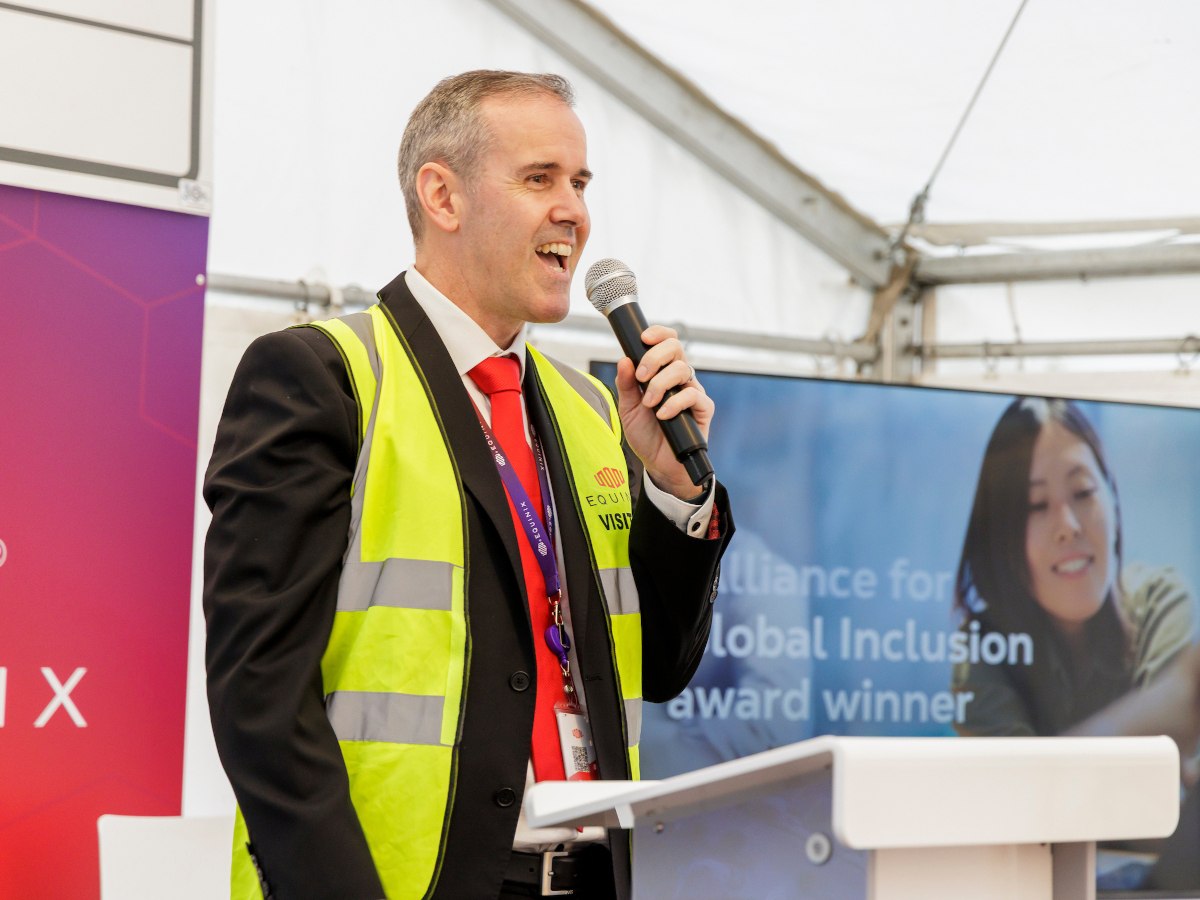
Equinix building new $92m Dublin data centre

Published

on

The new facility will require ‘no additional grid power’, Equinix has claimed.

Equinix has begun construction on a new $92m data centre in Dublin’s Blanchardstown, expected to be operational from 2028.

This adds to nine data centres that Equinix already owns in Dublin, according to Data Centre Map, including two from BT, which it acquired for €59m in 2025. The company owns more than 270 data centres worldwide.

The new centre, called DB7x, will be “100pc flexible to support the national grid” and “will require no additional grid power”, said Equinix. According to the company, the new building will be constructed on an existing Equinix site and use the power already allocated to that facility.

Advertisement

DB7x will be situated close to two of the company’s existing data centres for “enhanced connectivity”, Equinix added. Investment is expected to be split into $78m for the facility and $14m to support a retail International Business Exchange (IBX) buildout.

The company’s retail IBX data centres provide enterprises with digital infrastructure to tackle growing AI workloads and scale services locally while connecting to customers internationally.

Equinix said that retail capacity in its new data centre will directly support foreign direct investment (FDI) into Ireland, adding to the 200 FDI corporations that the company already provides its infrastructure to.

“This is an exciting development for Equinix’s operations in Ireland, as we celebrate 10 years of being in Ireland, investing in its infrastructure and economy,” said Peter Lantry, the managing director of Equinix Ireland.

Advertisement

“This announcement strongly supports the Government’s recently published Digital and AI Strategy, which outlines a path for keeping Ireland at the forefront of global digital innovation. It also reaffirms our commitment to Ireland and its importance to businesses worldwide.”

He added: “This is positive news for the Irish economy. By expanding colocation capacity in Dublin, we will enable domestic and international enterprises to scale, innovate and connect across Equinix’s global digital infrastructure platform with ease.”

Last month, Equinix announced the creation of 200 new jobs in Louth via a new facility expected to cost the company as much as $700m.

Data centre providers in Ireland are set to benefit from the Government’s new strategy for large energy users, which aims to improve hyperscale data centre developments with better State coordination and national infrastructure planning.

Advertisement

Don’t miss out on the knowledge you need to succeed. Sign up for the Daily Brief, Silicon Republic’s digest of need-to-know sci-tech news.

Source link

Advertisement
Continue Reading

Tech

Irish-founded Horizon Quantum to begin trading on Nasdaq today

Published

on

Singapore-based, but founded by Irishman Dr Joe Fitzsimons, Horizon Quantum begins trading on the Nasdaq today under the HQ symbol.

Horizon Quantum Computing specialises in software infrastructure for quantum applications, and yesterday (19 March) announced it had completed the previously announced merger with the special purpose acquisition company (SPAC) dMY Squared Technology Group.

“Recent rapid progress in advancing quantum computing hardware and breakthroughs in error correction mean that the field is reaching an inflection point,” said Dr Joe Fitzsimons, Founder and CEO of Horizon Quantum. “With today’s closing and our Nasdaq listing, Horizon Quantum is positioned to deliver the software infrastructure that will power this next phase of computing and help enable broad quantum advantage across tough computational problems.”

“While there is still much work needed before quantum computers reach their full potential, with more than 20 years in quantum computing research, I have never been more excited about the prospects and future of the technology.”

Advertisement

“Horizon Quantum is compelling because the company is approaching the quantum industry with hardware-agnostic software infrastructure that stands to benefit regardless of which way the market share ultimately falls across the competing quantum modalities, including the cloud,” said Harry You, Chairman and CEO of Las Vegas-based dMY.

Horizon Quantum says the closing of the merger yesterday provides it with gross proceeds of some $120m before transaction costs. It says this injection of cash will be used to “accelerate its investments in research and development, strengthen its hardware testbed, and further advance its integrated development environment Triple Alpha”.

Horizon Quantum is developing a way to transform programmes written in conventional programming languages such as C or Python into accelerated quantum applications. To accomplish this, the company has created a method to automatically construct quantum algorithms from conventional languages in a way that preserves the code’s original functioning in a process called algorithm synthesis.

Fitzsimons, a former professor at the Singapore University of Technology and Design and the president of the Southeast Asia Quantum Industry Association, also co-invented universal blind quantum computing – technology used to secure cloud-based quantum systems. Horizon Quantum raised $18.1m in a Series A funding round in 2023.

Advertisement

Don’t miss out on the knowledge you need to succeed. Sign up for the Daily Brief, Silicon Republic’s digest of need-to-know sci-tech news.

Source link

Advertisement
Continue Reading

Tech

Cloudflare CEO warns AI bots could outnumber humans online by 2027

Published

on

The internet you use every day could soon be dominated by artificial intelligence. Cloudflare CEO Matthew Prince says that AI bots may generate more traffic than humans within the next year or two, marking a major shift in how the web works.

Speaking about the current trends with TechCrunch, Prince said bot activity is growing rapidly as AI systems crawl and interact with websites at scale.

Before the rise of generative AI, bots were responsible for only 20% of internet traffic. Most of that traffic came from search engines like Google, and some malicious activity. Now, that number is climbing much faster.

Why is AI bot traffic growing faster?

According to Prince, the key reason behind this surge is how AI systems operate. He explains that a human might visit a handful of websites to complete a task. An AI agent, on the other hand, can hit thousands of pages in seconds to gather information and complete the same task.

This creates a huge spike in traffic. AI systems constantly scan and collect information to function, which means they generate far more requests than human users ever could. That growing demand is what could push bot traffic past human activity in the coming years.

Advertisement

How sandboxing could help manage the AI traffic surge

Prince believes this shift will require entirely new systems built for AI. One idea is creating temporary ‘sandboxes’ where AI agents can run tasks, then shut down once finished.

For example, if you ask an AI to plan a vacation, it could spin up a dedicated environment to browse, compare, and organize information before disappearing.

These sandboxed environments would allow bots to perform tasks without overwhelming websites or infrastructure.

Prince imagines millions of these sandboxes could be created every second. However, handling traffic at this scale would also require major infrastructure, including more data centers and servers to support constant AI activity.

For Prince, this is not just another tech trend. “I think the thing that people don’t appreciate about AI is it’s a platform shift,” he said, comparing it to the move from desktop to mobile. “AI is another platform shift … the way that you’re going to consume information is completely different.”

Advertisement

Source link

Continue Reading

Tech

Elon Musk misled investors during his Twitter takeover, jury finds

Published

on

A group of former Twitter investors have prevailed at a federal civil trial over Elon Musk’s actions amid his $44 billion acquisition of the social platform in 2022. A jury in San Francisco found Friday that tweets made by Musk about fake accounts on the platform had defrauded investors in the company. The jury sided with Musk on other allegations in the case.

It’s not yet clear how much Musk will owe in damages as a result of the case but, as the Associated Press reports, it could amount to billions of dollars. Jurors calculated that shareholders should get “between about $3 and $8 per stock per day.”

The class action lawsuit, one of several brought against Musk in the months following his takeover of the company, cited Musk’s tweets about fake accounts on the platform. Facing a sinking Tesla share price in the days after announcing he would buy Twitter for $54.20 a share, the suit said Musk made tweets and statements that were intentionally meant to drive down Twitter’s share price in an attempt to renegotiate or exit the deal.

The suit called out Musk’s May 13, 2022, tweet that claimed the Twitter deal was “temporarily on hold” due to the number of fake accounts and bots on the platform, as well as one a few days later that suggested fake accounts might account for more than 20 percent of users. Twitter’s stock dropped significantly following the May 13 tweet.

Advertisement

During the trial, Musk said the tweets were him “speaking his mind” and maintained that Twitter executives had “lied” about the number of bots on the platform, according to KQED. Former Twitter shareholders, on the other hand, said “they sold shares at deflated prices amid Musk’s public waffling.”

Musk faced several lawsuits during and after his $44 billion takeover of the company. That includes other shareholder lawsuits related to his delay in disclosing his stake in the company, as well as one from former executives related to unpaid severance benefits (Musk later settled those claims). He also narrowly avoided a trial over his attempts to back out of the deal.

Source link

Advertisement
Continue Reading

Tech

Why shaping company culture needs a focus on opportunity, not fear

Published

on

Liberty IT’s Emma Mullan explores how modern organisations can address workplace transformation and growth.

Emma Mullan is a senior director of talent at Liberty IT, leading the human resources and communications function. Her core focus is on shaping culture and fostering an environment that supports innovation. 

“Transformation is fundamentally about driving and managing change, and my priority is to create as much certainty as possible so people can focus on opportunity rather than fear,” Mullan told SiliconRepublic.com. 

She explained that the organisation approaches large-scale transformation as if it were a collaborative exercise, mapping impact and developing a foundational people-first culture.

Advertisement

She said: “When people feel safe to ask questions, experiment, learn from one another and share insights, capability grows sustainably – which is critical as the pace of change accelerates, especially with AI. To make this culture tangible, we’ve introduced the Culture Playbook and the Culture Stars programme.

“The Culture Playbook defines our purpose and the behaviours that guide how we work together, how we collaborate, share knowledge, support one another and continually raise the bar on quality as skills and technology evolve.”

Can you discuss recent programmes or initiatives introduced at Liberty IT?

A great example is our GenAI Learning Mission, which is a curated collection of events and resources to help everyone at Liberty IT navigate, share and develop in an AI‑augmented workplace. It’s designed to support our transformation in a practical way, by building the capabilities we’ll need for tomorrow, while reinforcing the culture and standards that matter today. It creates clear learning pathways for different roles and starting points and importantly, it’s not just for engineers. With tools like LibertyGPT and Microsoft 365 Copilot, GenAI is critical across the organisation, so our mission starts with foundational capability for everyone to encompass advanced upskilling in emerging technologies for many of our engineers

It also supports a mindset transformation. The biggest shift isn’t learning new tools, it’s about learning and adopting new ways of working. With the rapid advancement of GenAI, skills such as critical thinking, flexibility, curiosity and creativity are more important than ever. That’s why we’re investing in leadership enablement and team conversations, so people feel supported to ask questions, experiment and learn by doing. 

Advertisement
How do culture programmes help build current and future-focused skills?

Culture-focused programmes support positive employee experiences and can make skills development real by shaping what happens day to day. Leaders play a pivotal role in creating the culture of learning within their teams so that they encourage time for learning, sharing and innovating. Over the last year, we have focused on giving our leaders the tools to both manage change themselves and lead their teams through change.

We’ve been leaning into the human aspects of moving through transformation and by supporting our employees in this way, we have created a safe environment for continuous learning and development, setting them up to learn skills that they need for today and the future. As a culture, we encourage mobility as part of supporting skill development. We actively support movement between teams, whether that’s stretching opportunities, cross-team projects or transitioning into emerging areas like GenAI, people can build experience and capability in real contexts. Over time, that creates a workforce that’s more resilient, more engaged and better prepared for whatever skills the future demands.

What’s your advice for tech leaders who want to strengthen culture during transformation?

Leaders shape culture through what they prioritise, what they reward, and the behaviours they role-model every day. During transformation, people need clarity and consistency, clear direction on what’s changing, why it matters, and how teams are expected to work together as priorities and tools evolve. A big part of a positive culture today is enabling future skills development.

Leaders need to create space for learning in the flow of work, encourage knowledge sharing, and invest in the mindsets that enable adaptability, curiosity, critical thinking and confidence to try new approaches, particularly as AI becomes increasingly embedded. It’s also important to recognise the human reality of change. Transformation can bring uncertainty, so actively listening and involving teams in shaping solutions builds trust and resilience. When leaders normalise learning-by-doing, celebrate progress and remove barriers to collaboration, culture becomes a practical support system, not just a set of values.

Advertisement
Over the course of the next 12 months what do you predict for the recruitment landscape?

The industry will continue to be heavily influenced by the rapid acceleration of AI. Organisations across multiple sectors are increasingly seeking talent with experience in these emerging technologies, capability that does not yet exist at scale. This will intensify competition and increasingly require organisations to hire for potential, rather than experience. As roles continue to evolve, greater emphasis will be placed on core, transferrable skills such as problem-solving, communication, collaboration and adaptability. Individuals who demonstrate a growth mindset and curiosity about emerging technologies will remain in high demand, even as job titles and technologies continue to evolve.

In the short term, we also see a risk emerging in the market. Reduced demand for entry-level technical roles, driven by market uncertainty, could create a future shortage of experienced talent, as fewer early-career professionals are given the opportunity to enter and grow within the industry. To respond effectively, organisations will need a balanced approach. At Liberty IT, this means combining targeted hiring for critical skills with sustained investment in developing our people and rethinking how we upskill entry-level talent. 

Don’t miss out on the knowledge you need to succeed. Sign up for the Daily Brief, Silicon Republic’s digest of need-to-know sci-tech news.

Advertisement

Source link

Continue Reading

Tech

Super Micro’s co-founder is charged of smuggling servers to China

Published

on

The indictment of Super Micro’s co-founder exposes not just a $2.5 billion scheme, it exposes a system that was never built to stop one.

Somewhere in a rented warehouse in Southeast Asia, a man was using a hair dryer on a server box. Not to dry it. To loosen the adhesive on a serial-number sticker, so that it could be carefully peeled away and pressed onto a different machine, one that had never been plugged in, never booted, and was never intended to reach its declared destination.

The real servers, the ones containing Nvidia’s most advanced AI accelerator chips, had already been repackaged into unmarked boxes and shipped to China. The dummy, dressed in borrowed labels, was waiting for the auditors.

That scene, reconstructed from surveillance footage cited in a federal indictment unsealed on 19 March 2026, is the most precise image we have yet of how America’s semiconductor export controls actually work in practice. Not in theory, in practice. The answer, it turns out, involves a hair dryer.

Advertisement

The indictment charges three men: Yih-Shyan ‘Wally’ Liaw, 71, co-founder, board member, and Senior Vice President of Business Development of Super Micro Computer; Ruei-Tsang ‘Steven’ Chang, 53, general manager of the company’s Taiwan office; and Ting-Wei ‘Willy’ Sun, 44, a contractor described by prosecutors as a ‘fixer.’

Advertisement

Together, they allegedly orchestrated the diversion of approximately $2.5 billion worth of servers, many assembled in the United States and integrating Nvidia GPUs, to customers in China, via a front company in Southeast Asia, between 2024 and 2025.

During a single six-week window in the spring of 2025, at least $510 million of hardware made the journey. Liaw and Sun were arrested. Chang, a Taiwanese citizen, remains a fugitive.

The charges include conspiracy to violate the Export Controls Reform Act, conspiracy to smuggle goods from the United States, and conspiracy to defraud the government, offences carrying a combined maximum of 30 years in prison.

Super Micro, the publicly traded San Jose company that makes the hardware at the centre of the scheme, has not been named as a defendant. It placed Liaw and Chang on administrative leave and terminated its relationship with Sun. It said it had been cooperating with investigators and maintained a ‘robust compliance programme.’

Advertisement

That phrase deserves to sit with you for a moment.

According to the indictment, the defendants and their co-conspirators communicated through encrypted messaging applications to coordinate which quantities of servers to order, which locations in China to ship them to, and, critically, how to conceal the scheme from the company’s own compliance team.

When an internal audit was scheduled, they staged thousands of non-working server replicas at a warehouse rented by the front company. When a US Department of Commerce inspector arrived to examine the same facility, they deployed the same props, using heat guns to swap labels and serial numbers before the visit.

The inspector, the indictment notes, did not see the actual servers because they had already been sent to China. An auditor from within the company who should have been on-site at a separate inspection was, according to prosecutors, ‘offsite, entertaining himself at the front company’s expense.’

Advertisement

The loophole that was never a secret

The transshipment route through Southeast Asia is not a discovery. It is a known, documented, and repeatedly flagged feature of the export control architecture — one that US trade analysts, think-tanks, and the Department of Commerce itself have been warning about for years. Countries including Malaysia, Singapore, Vietnam, and Thailand have historically, as analysts at the East Asia Forum observed earlier this month, ‘lacked the enforcement infrastructure or political will to rigorously monitor re-exports.’

Between April and July 2025, Vietnamese authorities intercepted more than 2,000 shipments falsely labelled ‘Made in Vietnam’ but traced to Chinese factories, according to an analysis published by The Diplomat. Malaysian tech hubs in Penang and Johor were flagged for similar rerouting practices.

DeepSeek, the Chinese AI lab that became a household name after its January 2025 model release, was accused in reporting by Tom’s Hardware of establishing ‘ghost’ data centres in Southeast Asia to pass audits, then forwarding the GPUs onward.

A Financial Times investigation estimated that China secured roughly $1 billion in advanced AI processors in the three months immediately following the last major tightening of US export controls.

Advertisement

The pattern, in other words, is not aberrant. It is structural. The controls are enforced primarily at the point of sale and first shipment, and they rely, almost entirely, on the declared end use of the buyer and the downstream compliance of every intermediary in the chain. When the incentive to lie is measured in hundreds of millions of dollars, the honour system has limits.

The company that keeps surviving itself

Super Micro’s appearance in this case is, in the mildest possible terms, not a surprise. The company has accumulated a regulatory history that would be remarkable in isolation but begins to suggest something more systemic when viewed in sequence.

In 2018, it was temporarily delisted from Nasdaq for failing to file financial statements. In 2020, it paid a $17.5 million fine to the Securities and Exchange Commission for what the agency described as ‘widespread accounting violations’, more than $200 million in improperly recognised revenue and understated expenses, resulting in artificially elevated sales and profit margins.

Advertisement

The co-founder now facing federal charges, Wally Liaw, resigned from the company during that period. He returned as a consultant in 2021, was named a senior vice president in 2022, and rejoined the board of directors in late 2023.

In 2024, short-seller Hindenburg Research published a report alleging fresh accounting irregularities, undisclosed related-party transactions, and, notably, violations of US export controls.

Ernst & Young, the company’s auditor, resigned shortly after, saying it could no longer vouch for the accuracy of management’s financial representations. Super Micro commissioned an independent special committee review; it found no evidence of fraud. 

Through all of this, Super Micro has remained in the S&P 500. Its revenue for the most recent quarter was $12.7 billion.

Advertisement

There is a reasonable question embedded in that number: at what point does the pattern become the product? The compliance failures keep occurring. The executives implicated keep returning. The stock keeps recovering. The hardware keeps moving.

Whether Super Micro’s board and remaining leadership can provide a credible answer to that question will matter enormously, not just to investors, but to the credibility of the entire export control regime they allegedly helped to circumvent.

Enforcement in a loosening wind

Now, the irony of this week’s indictment is its timing. The Trump administration has, in recent months, been quietly relaxing the export control posture that made the hardware in question illegal to ship.

In December 2025, the White House announced it would permit sales of certain chips directly to approved customers in China.

Advertisement

In January 2026, the Bureau of Industry and Security issued revised licensing rules allowing case-by-case review, rather than a presumption of denial, for exports of earlier-generation AI hardware to mainland China.

A rule known as the Affiliates Rule, designed to close loopholes around Chinese-owned subsidiaries, was suspended for a year almost immediately after it was issued.

This creates a strange political geometry. The Justice Department is prosecuting men for shipping chips that US policy is, in a parallel track, beginning to permit.

There is a version of the story in which that tension resolves cleanly: the administration enforces the current rules while adjusting them for the future, and the two tracks do not contradict each other.

Advertisement

There is another version in which enforcement becomes selective, a tool for signalling toughness while the underlying architecture quietly softens. Which version is actually unfolding is a question worth watching closely.

Congress has been watching, and not quietly. BIS received a 23% budget increase for fiscal year 2026, with bipartisan support and explicit funding earmarked for semiconductor enforcement. Several members have sought congressional control over export licensing, frustrated by what they see as executive branch inconsistency.

What none of that resolves is the fundamental architecture of the problem. Export controls enforced at the point of sale, relying on declared end use, policed by company compliance teams that can be deceived with a hair dryer and a rented warehouse, are not, in the end, a system built for the scale of economic incentive now in play. The chip war has raised the stakes well past what the honour system was designed to hold.

The servers have already arrived. The stickers have been carefully reapplied. The dummy machines stood ready for inspection. And somewhere in a data centre in China, the real hardware is running, training models, refining weights, closing the gap.

Advertisement

The auditors are still on their way.

Source link

Advertisement
Continue Reading

Trending

Copyright © 2025