Connect with us

Tech

Military AI Governance: Who Sets the Rules?

Published

on

A simmering dispute between the United States Department of Defense (DOD) and Anthropic has now escalated into a full-blown confrontation, raising an uncomfortable but important question: who gets to set the guardrails for military use of artificial intelligence — the executive branch, private companies or Congress and the broader democratic process?

The conflict began when Defense Secretary Pete Hegseth reportedly gave Anthropic CEO Dario Amodei a deadline to allow the DOD unrestricted use of its AI systems. When the company refused, the administration moved to designate Anthropic a supply chain risk and ordered federal agencies to phase out its technology, dramatically escalating the standoff.

Anthropic has refused to cross two lines: allowing its models to be used for domestic surveillance of United States citizens and enabling fully autonomous military targeting. Hegseth has objected to what he has described as “ideological constraints” embedded in commercial AI systems, arguing that determining lawful military use should be the government’s responsibility — not the vendor’s. As he put it in a speech at Elon Musk’s SpaceX last month, “We will not employ AI models that won’t allow you to fight wars.”

Stripped of rhetoric, this dispute resembles something relatively straightforward: a procurement disagreement.

Advertisement

Procurement policies

In a market economy, the U.S. military decides what products and services it wants to buy. Companies decide what they are willing to sell and under what conditions. Neither side is inherently right or wrong for taking a position. If a product does not meet operational needs, the government can purchase from another vendor. If a company believes certain uses of its technology are unsafe, premature or inconsistent with its values or risk tolerance, it can decline to provide them. For example, a coalition of companies have signed an open letter pledging not to weaponize general-purpose robots. That basic symmetry is a feature of the free market.

Where the situation becomes more complicated — and more troubling — is in the decision to designate Anthropic a “supply chain risk.” That tool exists to address genuine national security vulnerabilities, such as foreign adversaries. It is not intended to blacklist an American company for rejecting the government’s preferred contractual terms.

Using this authority in that manner marks a significant shift — from a procurement disagreement to the use of coercive leverage. Hegseth has declared that “effective immediately, no contractor, supplier, or partner that does business with the U.S. military may conduct any commercial activity with Anthropic.” This action will almost certainly face legal challenges, but it raises the stakes well beyond the loss of a single DOD contract.

AI governance

It is also important to distinguish between the two substantive issues Anthropic has reportedly raised.

Advertisement

The first, opposition to domestic surveillance of U.S. citizens, touches on well-established civil liberties concerns. The U.S. government operates under constitutional constraints and statutory limits when it comes to monitoring Americans. A company stating that it does not want its tools used to facilitate domestic surveillance is not inventing a new principle; it is aligning itself with longstanding democratic guardrails.

To be clear, DOD is not affirmatively asserting that it intends to use the technology to surveil Americans unlawfully. Its position is that it does not want to procure models with built-in restrictions that preempt otherwise lawful government use. In other words, the Department of Defense argues that compliance with the law is the government’s responsibility — not something that needs to be embedded in a vendor’s code.

Anthropic, for its part, has invested heavily in training its systems to refuse certain categories of harmful or high-risk tasks, including assistance with surveillance. The disagreement is therefore less about current intent than about institutional control over constraints: whether they should be imposed by the state through law and oversight, or by the developer through technical design.

The second issue, opposition to fully autonomous military targeting, is more complex.

Advertisement

The DOD already maintains policies requiring human judgment in the use of force, and debates over autonomy in weapons systems are ongoing within both military and international forums. A private company may reasonably determine that its current technology is not sufficiently reliable or controllable for certain battlefield applications. At the same time, the military may conclude that such capabilities are necessary for deterrence and operational effectiveness.

Reasonable people can disagree about where those lines should be drawn.

But that disagreement underscores a deeper point: the boundaries of military AI use should not be settled through ad hoc negotiations between a Cabinet secretary and a CEO. Nor should they be determined by which side can exert greater contractual leverage.

If the U.S. government believes certain AI capabilities are essential to national defense, that position should be articulated openly. It should be debated in Congress, and reflected in doctrine, oversight mechanisms and statutory frameworks. The rules should be clear — not only to companies, but to the public.

Advertisement

The U.S. often distinguishes itself from authoritarian regimes by emphasizing that power operates within transparent democratic institutions and legal constraints. That distinction carries less weight if AI governance is determined primarily through executive ultimatums issued behind closed doors.

There is also a strategic dimension. If companies conclude that participation in federal markets requires surrendering all deployment conditions, some may exit those markets. Others may respond by weakening or removing model safeguards to remain eligible for government contracts. Neither outcome strengthens U.S. technological leadership.

The DOD is correct that it cannot allow potential “ideological constraints” to undermine lawful military operations. But there is a difference between rejecting arbitrary restrictions and rejecting any role for corporate risk management in shaping deployment conditions. In high-risk domains — from aerospace to cybersecurity — contractors routinely impose safety standards, testing requirements and operational limitations as part of responsible commercialization. AI should not be treated as uniquely exempt from that practice.

Moreover, built-in safeguards need not be seen as obstacles to military effectiveness. In many high-risk sectors, layered oversight is standard practice: internal controls, technical fail-safes, auditing mechanisms and legal review operate together. Technical constraints can serve as an additional backstop, reducing the risk of misuse, error or unintended escalation.

Advertisement

Congress is AWOL

The DOD should retain ultimate authority over lawful use. But it need not reject the possibility that certain guardrails embedded at the design level could complement its own oversight structures rather than undermine them. In some contexts, redundancy in safety systems strengthens, not weakens, operational integrity.

At the same time, a company’s unilateral ethical commitments are no substitute for public policy. When technologies carry national security implications, private governance has inherent limits. Ultimately, decisions about surveillance authorities, autonomous weapons and rules of engagement belong in democratic institutions.

This episode illustrates a pivotal moment in AI governance. AI systems at the frontier of technology are now powerful enough to influence intelligence analysis, logistics, cyber operations and potentially battlefield decision-making. That makes them too consequential to be governed solely by corporate policy — and too consequential to be governed solely by executive discretion.

Advertisement

The solution is not to empower one side over the other. It is to strengthen the institutions that mediate between them.

Congress should clarify statutory boundaries for military AI use and investigate whether sufficient oversight exists. The DOD should articulate detailed doctrine for human control, auditing and accountability. Civil society and industry should participate in structured consultation processes rather than episodic standoffs and procurement policy should reflect those publicly established standards.

If AI guardrails can be removed through contract pressure, they will be treated as negotiable. However, if they are grounded in law, they can become stable expectations.

Democratic constraints on military AI belong in statute and doctrine — not in private contract negotiations.

Advertisement

This article is adapted by the author with permission from Tech Policy Press. Read the original article.

From Your Site Articles

Related Articles Around the Web

Source link

Advertisement
Continue Reading
Click to comment

Leave a Reply

Your email address will not be published. Required fields are marked *

Tech

iOS 26.4 adds a new setting to further tone down the Liquid Glass shimmer

Published

on

The iOS 26 Liquid Glass update has been one of the most troublesome iOS releases ever. It is marred by inconsistencies and design choices that cause several UI and readability issues.

One of the issues that was more noticeable on older Apple devices with SDR screens, including the iPad mini, iPhone SE, iPhone 11, and earlier models, was the liquid glow effect that caused text and certain UI elements to become unreadable when you interacted with them.

Apple adds a new fix in iOS 26.4 developer beta 4

After the release of iOS 26, Apple has been listening to user feedback and providing options to reduce the Liquid Glass effect. One of the most prominent options was introduced with the iOS 26.1 update, which let users switch from the default “Clear” design to a “Tinted” look.

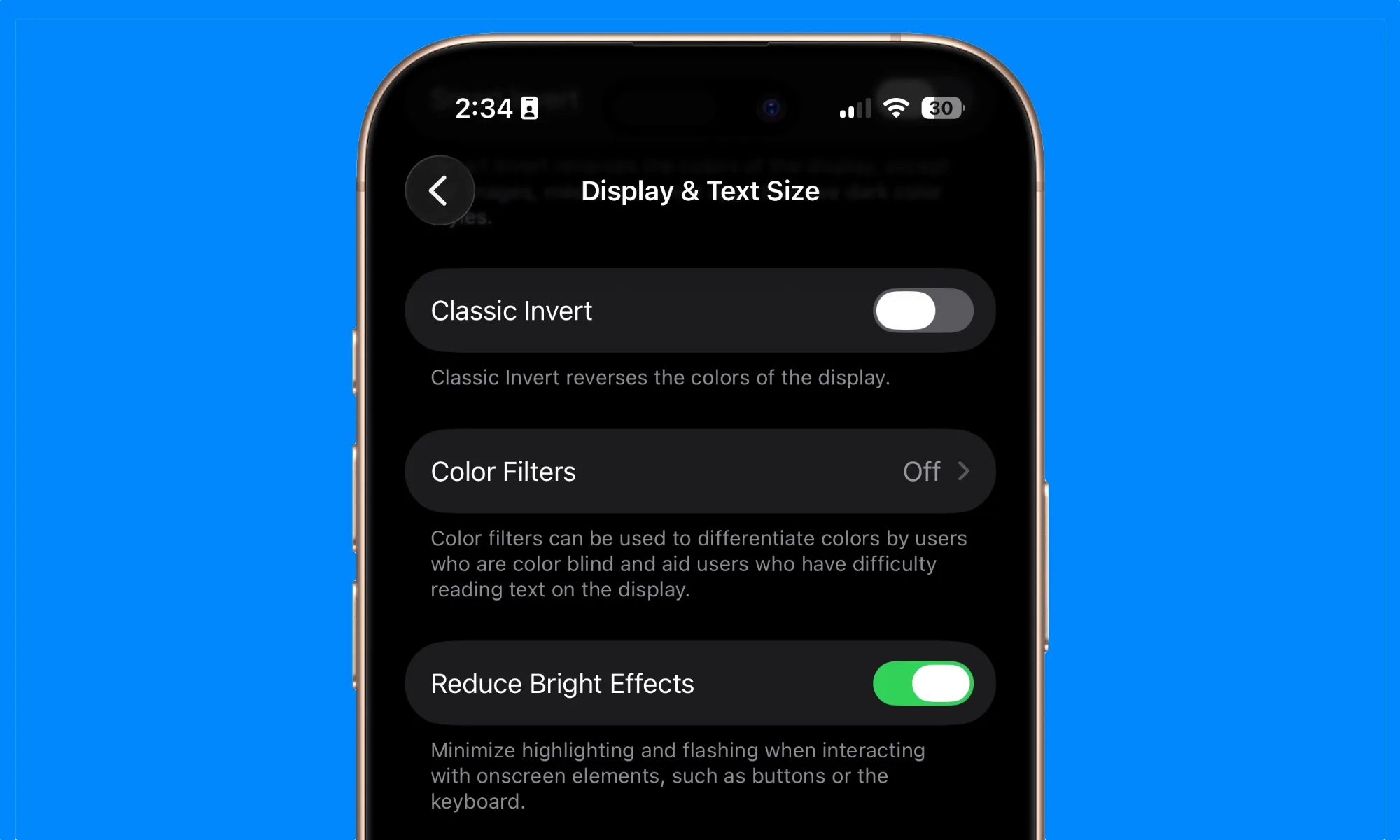
In the latest iOS 26.4 developer beta 4, Apple has added another setting called “Reduce Bright Effects” that minimizes highlighting and flashing when interacting with onscreen elements, such as buttons or the keyboard. 

Advertisement

These flashing effects were particularly prominent on Apple devices with SDR screens, as shown by an X user in his post. 

If this effect has been bothering you, you can finally turn it off using the new setting. 

How to enable the Reduce Bright Effects setting on iPhone

The new setting has been released as part of Apple’s developer beta program. To get it, you need to be on the latest iOS 26.4 developer beta 4 version. Once you have updated your device, go to Settings → Accessibility ⇾ Display & Text Size, and turn on the toggle for “Reduce Bright Effects” settings.

If you are not running the developer beta on your iPhone, which I do not recommend installing on your primary device, you have to wait for the public beta or the stable release, which should arrive in about two weeks.

Advertisement

Source link

Continue Reading

Tech

Yann LeCun’s AI start-up AMI raises $1.3bn in seed funding

Published

on

The latest funding round gives the start-up a valuation of $3.5bn, despite having only been established less than three months ago.

Advanced Machine Intelligence (AMI), which is an artificial intelligence (AI) start-up founded by former Meta AI chief Yann LeCun, has announced the raising of more than $1bn in seed funding.  The round was co-led by Cathay Innovation, Greycroft, Hiro Capital, HV Capital and Bezos Expeditions. 

AMI was also supported by long-term global investors and strategic backers such as Toyota Ventures, New Legacy Ventures, Temasek, SBVA, NVIDIA, Mark Cuban, Association Familiale Mulliez, Groupe industriel Marcel Dassault, Sea, and Alpha Intelligence Capital. Samsung and Bpifrance Digital Venture were also among the significant participants. 

The funds raised are being used to develop AMI and according to the organisation, the building of a new “breed of AI systems that understand the world, have persistent memory, can reason and plan and are controllable and safe”. AMI has also stated that the platform is growing its team of researchers and builders, in Paris, New York, Montreal and Singapore.

Advertisement

Established earlier this year and based in Paris, France, AMI explained that the company is developing ‘world models’ that learn abstract representations of real-world sensor data, ignore unpredictable details and make predictions in representation space. According to AMI, world models allow agentic systems to predict the consequences of their actions and plan action sequences that accomplish tasks.

Despite being a young start-up, AMI has already reached a valuation of $3.5bn, which is perhaps indicative of a marketplace that is moving towards greater recognition of nascent projects that explore physical space. In January of this year,  Fei-Fei Li, the ‘godmother of AI’, was reported to be in talks to raise a major investment that would value her start-up World Labs at $5bn.

World Labs describes itself as a “spatial intelligence company, building frontier models that can perceive, generate, reason and interact with the 3D world”. It describes its AI products as “large world models”.

Commenting on the potential of world models, Alexandre LeBrun, the AMI Labs CEO, told TechCrunch, “My prediction is that ‘world models’ will be the next buzzword. In six months, every company will call itself a world model to raise funding.”

Advertisement

Don’t miss out on the knowledge you need to succeed. Sign up for the Daily Brief, Silicon Republic’s digest of need-to-know sci-tech news.

Source link

Advertisement
Continue Reading

Tech

Scientists have found a way to hide data in plain sight, and hackers can’t touch it

Published

on

Data storage and security are among the biggest challenges our technology-dependent world faces today, pushing us to explore unconventional options. The good news is that researchers worldwide are actively seeking novel solutions to address these problems.

One promising development comes from researchers at UNSW Sydney and Monash University, who have recently developed a system that conceals data transmissions in plain sight using a phenomenon called “negative luminescence.” 

The result is a communication method that could be nearly impossible to hack, not because the message is encrypted, but because no one can even tell that a message is being sent.

The system works by blending signals into the natural heat radiation that everything around us constantly emits, the kind you see through a thermal camera. To any outside observer, it looks like nothing is happening at all, and only a receiver with the right equipment can detect and decode the hidden message.

Advertisement

What is negative luminescence?

Everything emits a faint glow of heat in the infrared spectrum. Negative luminescence makes that glow appear darker instead of brighter. Dr. Michael Nielsen, lead author from UNSW’s School of Photovoltaic and Renewable Energy Engineering, describes it as “a flashlight that can go darker than off.” While that’s impossible with visible light, there are materials that can create this effect in the infrared range.

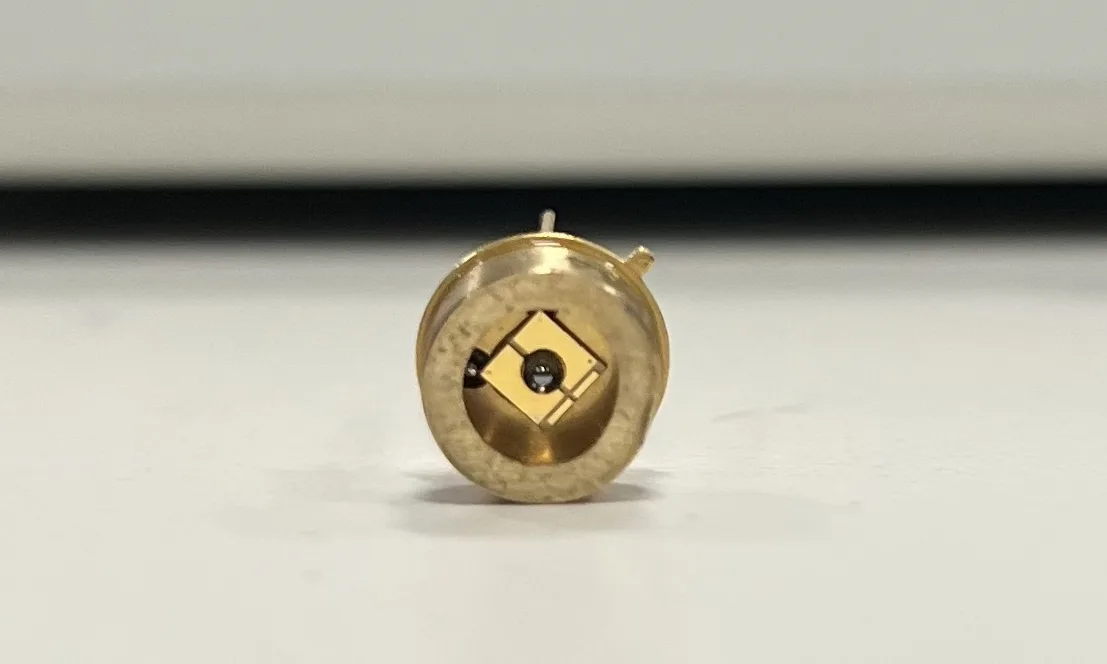
The team uses a device called a thermoradiative diode, which rapidly switches between brighter and darker-than-usual states. This creates a pattern hidden within background heat noise, making the transmission invisible to anyone unaware that data is being sent.

What could this mean for the real world?

In lab experiments, the team has achieved data transfer speeds of about 100 kilobytes per second. While this is modest for now, researchers believe the technology could eventually reach speeds of gigabytes per second as improvements are made to the emitter technology.

Colleagues at Monash University have already suggested that using graphene could push speeds to hundreds of gigabytes per second. If and when this happens, it will change the face of secure data transmission, making it almost impossible for hackers to get access to sensitive data.

Advertisement

Source link

Continue Reading

Tech

4 Home Depot Finds That Outshine Walmart In Price And Quality

Published

on


We may receive a commission on purchases made from links.

Chances are that if you do a lot of shopping at Walmart, it’s not because of their deals on DIY and home improvement equipment. You’ll find a lot at Walmart, from tech products like phones and speakers to surprisingly budget-friendly TVs, but it’s hard to recommend this retailer for its power and hand tool selection. If your DIY needs are limited to building Ikea furniture walls and hanging a couple of shelves, you could probably get away with Walmart’s own Hart — at least until Hart is discontinued for good. Hopefully Hyper Tough, the other tool brand sold by Walmart, won’t go the same way.

If you have niche DIY needs, there’s a lot you just won’t find at Walmart, but in the categories where both stores offer a number of products, the competition is tighter than you might think. Home Depot almost always has more choice, especially in the high price range, but Walmart often wins when it comes to budget solutions. These four products are exceptions to the rule, because with them, Home Depot beats Walmart both in price and quality.

Advertisement

DeWalt ToughSystem tool boxes

Both Walmart and Home Depot have some ToughSystem tool boxes, but you should get yours at Home Depot. There are two reasons for this. The first and most obvious reason is that Home Depot sells many of these same toolboxes for cheaper. For example, Walmart sells the Rolling Toolbox 2.0 for $167.99, while Home Depot has it in store for $125 — and it’s currently discounted even further, to $109.

Advertisement

If you need a reason beyond the lower price to avoid Walmart for these toolboxes, there’s the fact that Home Depot has way more ToughSystem products for sale. This is relevant because ToughSystem is DeWalt’s line of modular storage solutions, meaning it’s at its strongest when you buy more than one box. ToughSystem boxes stack on top of each other, and a locking system makes them stick to one another. They don’t have to sacrifice space for this, either, and include some of DeWalt’s biggest toolboxes.

These storing solutions mostly share the same width and depth, and many are compatible with the same ToughSystem tool trays. These trays are among the ToughSystem products available from Walmart, but they’re only offered by third-party Marketplace sellers (meaning you won’t find them in store) and they’re significantly more expensive than at Home Depot.

Advertisement

Ryobi Drill and Impact Drive Kit

Even Walmart’s highly rated Hart combo kits won’t be very useful without a set of bits to stick onto those drills and impact drivers. If you do most of your shopping at Walmart, it might make sense to stick with what you can find there, especially if you can take advantage of Walmart’s seasonal deals. Otherwise, you’re better off picking your bits at Home Depot. One of the best affordable options is the $30 95-piece Ryobi Drill and Impact Drive Kit. Considering how expensive power tools can be, $30 is a very reasonable price for pretty much every standard driver and drill bit you’ll need, many in multiple copies.

Walmart’s closest equivalent is Hart’s 60-Piece Impact Drill & Drive Bit Set, which is about as expensive as the Ryobi but includes far fewer bits. Even if you think it’s worth leaving 35 bits on the table to save a few dollars, the 95-piece Ryobi kit is less expensive than Hart’s and includes a few wood-boring bits on top of the brad point bits also present in the Walmart set.

Advertisement

Husky 9-Drawer Mobile Workbench

As one can imagine, as we get closer to specialized, expensive products, Home Depot becomes more and more often the best choice. Walmart sells some good, affordable tools for homeowners, but it can’t sell both Swiss Rolls and forklifts. Even though Walmart has a surprising amount of choice in its mobile tool chest section, it can’t compete with what Home Depot has in store, like the (relatively) affordable $403 Husky Tool Storage 9-Drawer Mobile Workbench, which comes with lockable wheels and an integrated power strip with six power outlets and two USB ports. The closest Walmart gets is with Hart’s well-reviewed $449 36-inch Mobile Tool Chest, but a closer look reveals a few important differences.

The first difference is the price. Husky is a respected brand of tool chests and workbenches, so it’s surprising to see this product sold for cheaper than the Hart equivalent. Then, there’s the fact that the two are not equivalent at all: the Husky is 46 inches wide, a whole 10 inches more than the Hart. Finally, Home Depot will sell you this workbench cabinet in a bunch of different colors for more or less the same price. With Walmart, you’re stuck with a light brown wooden top on black painted metal, with ugly blue accents on the drawers’ handles.

Advertisement

One Amp Wen Variable Speed Rotary Tool

You might expect Walmart to win out against Home Depot when it comes to cheap tools, and you’d be right. For the most part, the superstore beats the dedicated home improvement warehouse when it comes to broad appeal goods — no surprise there. What makes the Wen 1Amp Variable Speed Rotary Tool special is the fact that it (barely) beats Walmart’s closest equivalent in price and quality. For $16.28, it’s very affordable but decently powerful, with a max speed of 32,000 rpm and a minimum of 10,000. It also comes with a whole lot of accessories, including plenty of spares. It won’t do any of the heavy lifting, but all things considered, it’s a versatile tool for many jobs that require accuracy.

Advertisement

The closest product from Walmart is the Tracklife Multi-Function Rotary Tool, which is more expensive, at $19.99, and doesn’t have as good a selection of accessories as the $20.78 version of the Wen that comes with a case and numerous accessories.

Walmart has many cheaper rotary tools available, but some don’t come with any accessories (which, unlike what the name implies, are essential) while others — especially the battery-powered, USB-charged ones — are really underpowered.

Advertisement

Methodology

To select four products where Home Depot wins over Walmart on price and quality, we started by comparing the two stores. Being a specialized hardware store, Home Depot has more of an edge when it comes to specialized tools. However, we decided not to overrepresent these niche, expensive products in our list, because $2,500 rebar cutting tools are not the sort of items a reader comparing Walmart to Home Depot expects to see.

Once we had an idea of which kind of tools to look for (small power tools, hand tools and accessories, budget tool boxes and chests), we picked Home Depot’s best money-to-value proposition and compared it to Walmart’s best offer.

Advertisement


Source link

Continue Reading

Tech

Seeing The World Through Animal Eyes

Published

on

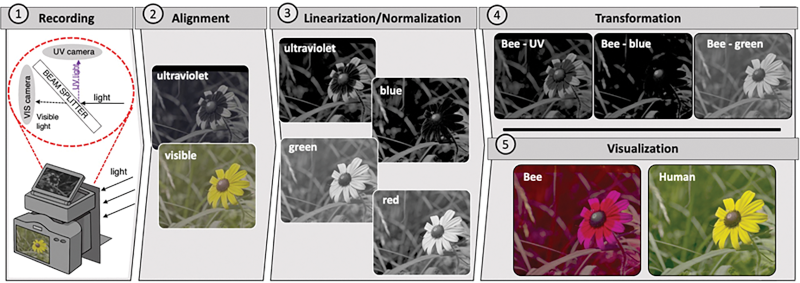
If you think about it, you can’t be sure that what you see for the color red, for example, is what anyone else in the world actually sees. All you can be sure of is that we’ve all been trained to identify whatever we do see as red just like everyone else. Now, think about animal vision. Most people know that dogs don’t see as many colors as we do. On the other hand, the birds and the bees can see into ultraviolet. What would the world look like with extra colors? That’s the question researchers want to answer with this system for duplicating different animals’ views of the world.

Of course, this would be easy if you were thinking about dogs or cats. They can’t see the difference between red and green, making them effectively colorblind by human standards. Researchers are using modified commercial cameras and sophisticated video processing to produce images that sense blue, green, red, and UV light. Then they modify the image based on knowledge of different animal photoreceptors.

We were somewhat surprised that the system didn’t pick up IR. As we know snakes, for example, can sense IR. You’d think more sophisticated animals would have better color vision, but that seems to be untrue. The mantis shrimp, for example, has 12-16 types of photoreceptors. Even male and female humans have different vision systems that make them see colors differently.

Advertisement

Maybe you need a photospectometer. You wonder if animals dream in color, too.

Source link

Advertisement
Continue Reading

Tech

Apple’s iPhone 17E vs. iPhone 17, Air, Pro, Pro Max: Comparing the Full Lineup

Published

on

Apple’s latest addition to its iPhone 17 lineup is the lower-cost iPhone 17E. Just like last year’s iPhone 16E, the iPhone 17E is priced at $599 and is meant to be Apple’s entry-level offering for the year. But the 17E has a number of upgrades over its predecessor, such as double the starting storage space at 256GB, MagSafe compatibility and a faster A19 chip. 

It’s still fairly basic compared with the Air and the rest of the iPhone 17 lineup, though. The 17E only has one camera, no Dynamic Island and no Camera Control button. Also, even though it has a 12-megapixel selfie camera, the 17E lacks the Center Stage feature — which automatically switches between portrait and landscape — that’s on the Air and the rest of the iPhone 17 series. 

Here’s how the iPhone 17E compares with the Air and the iPhone 17 lineup.

Advertisement

Watch this: iPhone 17E Packs More Features for the Same $599 Price

Design and display

With a 6.1-inch OLED display, the iPhone 17E has the smallest display compared with the rest of its siblings. Both the iPhone 17 and the 17 Pro have a slightly larger 6.3-inch display, while the iPhone Air has a 6.5-inch screen, and the 17 Pro Max has the biggest screen of them all with a 6.9-inch OLED display.

While the Air and the rest of the iPhone 17 models have a 120Hz variable refresh rate, the iPhone 17E is the only one with just a 60Hz refresh rate. That means the animations won’t be quite as smooth, and you won’t get an always-on display. However, if you’re upgrading from an older iPhone like the iPhone 16, you might not notice as big a difference. 

Design-wise, the iPhone 17E lacks the Dynamic Island that’s on the Air and the rest of the iPhone 17 series. It doesn’t have a physical Camera Control button either. 

Advertisement

It does, however, come in an aluminum frame and is protected by the Ceramic Shield 2, which is on par with the rest of the iPhone 17 lineup. The exception is the iPhone Air, which has a titanium frame. At 0.31-inch thick, the iPhone 17E is just as slender as the iPhone 17 — definitely not as skinny as the 0.22-inch thick iPhone Air. It is quite light, though, at 169 grams (5.96 ounces), which is just a bit heavier than the Air’s weight of 165 grams.

The iPhone 17E in front of flowers

The iPhone 17E has a single rear camera.

Abrar Al-Heeti/CNET

Cameras

Like the 16E, the iPhone 17E only has a single 48-megapixel rear camera. It does have sensor cropping, which offers 2x magnification. The iPhone Air also has only a single 48-megapixel rear camera. The iPhone 17 has two: a 48-megapixel wide and a 48-megapixel ultrawide. Both the 17 Pro and the 17 Pro Max have three: a 48-megapixel wide, a 48-megapixel ultrawide and a 48-megapixel telephoto that has 4x optical zoom but can double up to 8x at 12 megapixels. 

Advertisement

The 17E has a 12-megapixel front-facing camera, while the Air, the 17, the 17 Pro and the 17 Pro Max all have an 18-megapixel selfie shooter. Additionally, the 17E lacks the Center Stage feature that automatically switches between portrait and landscape orientations. 

The iPhone 17E leans against leather-bound books

The iPhone 17E starts with a base storage of 256GB.

Abrar Al-Heeti/CNET

Storage, processors and battery

The iPhone 17E starts with a base storage of 256GB, which is double that of the 16E and brings it up to par with the Air and the rest of the iPhone 17 series. All the phones are also available with 512GB, while the Pro and Pro Max are the only ones available in a 1TB configuration.

Advertisement

The 17E is powered by Apple’s latest A19 chip, which is the same as on the iPhone 17, except the 17E has a quad-core GPU while the 17 has five cores. The iPhone Air, 17 Pro and 17 Pro Max are all powered by Apple’s A19 Pro. 

As for battery, the 17E has the same battery as the 16E, with a 4,005-mAh battery and roughly 26 hours of video playback, according to Apple. That’s actually slightly larger than the iPhone 17’s 3,692-mAh battery and the Air’s 3,149-mAh battery. The 17 Pro and 17 Pro Max top out the battery charts with a 4,252- and 5,088-mAh battery, respectively. Still, the iPhone 17E’s battery should hold up well thanks to the A19 processor, C1X cellular modem and the power management of iOS 26. 

The 17E gets MagSafe, which was sorely missing in the 16E. This lets the iPhone 17E work with magnetic chargers and accessories. It also has up to 15 watts of Qi2 wireless charging. The iPhone Air and the rest of the 17 lineup offer fast charge up to 50% in 30 minutes using a 30-watt adapter or higher with MagSafe charging. 

Check out the chart below to see all the ways these phones match up.

Advertisement

Apple iPhone 17E vs. iPhone 17, iPhone 17 Air, iPhone 17 Pro, iPhone 17 Pro Max

Apple iPhone 17E Apple iPhone 17 Apple iPhone Air Apple iPhone 17 Pro
Display size, tech, resolution, refresh rate 6.1-inch OLED display; 2,532×1,170 pixels; 60Hz refresh rate 6.3-inch OLED; 2,622×1,206 pixels; 1-120Hz variable refresh rate 6.5-inch OLED; 2,736×1,260 pixels; 1-120Hz variable refresh rate 6.3-inch OLED; 2,622×1,206 pixels; 1-120Hz variable refresh rate
Pixel density 460 ppi 460 ppi 460 ppi 460 ppi
Dimensions (inches) 5.78×2.82×0.31 5.89×2.81×0.31 6.15×2.94×0.22 5.91×2.83×0.34
Dimensions (millimeters) 146.7×71.5×7.8 149.6×71.5×7.95 156.2×74.7×5.64 150.0×71.9×8.75
Weight (grams, ounces) 167g (5.88 oz.) 177g (6.24 oz.) 165g (5.82 oz.) 206g (7.27 oz.)
Mobile software iOS 26 iOS 26 iOS 26 iOS 26
Camera 48-megapixel (wide) 48-megapixel (wide) 48-megapixel (ultrawide) 48-megapixel (wide) 48-megapixel (wide) 48-megapixel (ultrawide) 48-megapixel (4x, 8x telephoto)
Front-facing camera 12-megapixel 18-megapixel 18-megapixel 18-megapixel
Video capture 4K 4K 4K 4K
Processor Apple A19 Apple A19 Apple A19 Pro Apple A19 Pro
RAM + storage RAM unknown + 256GB, 512GB RAM N/A + 256GB, 512GB RAM N/A + 256GB, 512GB, 1TB RAM N/A + 256GB, 512GB, 1TB
Expandable storage None None None None
Battery 4,005 mAh 3,692 mAh 3,149 mAh 4,252 mAh
Fingerprint sensor None, Face ID None, Face ID None, Face ID None, Face ID
Connector USB-C USB-C USB-C USB-C
Headphone jack None None None None
Special features MagSafe, Qi2 charging (up to 15W), Action button, Apple C1 5G modem, Apple Intelligence, Ceramic Shield, Emergency SOS, satellite connectivity, IP68 resistance Apple N1 wireless networking chip: Wi-Fi 7 (802.11be) with 2×2 MIMO, Bluetooth 6, Thread, Action button, Camera Control button, Dynamic Island, Apple Intelligence, Visual Intelligence, dual eSIM, 1 to 3,000 nits brightness display range, IP68 resistance; colors: black, white, mist blue, sage, lavender; fast charge up to 50% in 20 minutes using 40W adapter or higher via charging cable; fast charge up to 50% in 30 minutes using 30W adapter or higher via MagSafe Charger Apple N1 wireless networking chip: Wi-Fi 7 (802.11be) with 2×2 MIMO, Bluetooth 6, thread, Action button, Apple C1X cellular modem, Camera Control button, Dynamic Island, Apple Intelligence, Visual Intelligence, Dual eSIM, 1 to 3,000 nits brightness display range, IP68 resistance; colors: space black, cloud white, light gold, sky blue; fast charge up to 50% in 30 minutes using 20W adapter or higher via charging cable; fast charge up to 50% in 30 minutes using 30W adapter or higher via MagSafe Charger Apple N1 wireless networking chip: Wi-Fi 7 (802.11be) with 2×2 MIMO, Bluetooth 6, Thread, Action button, Camera Control button, Dynamic Island, Apple Intelligence, Visual Intelligence, dual eSIM, ProRes Raw video recording, Genlock video support, 1 to 3,000 nits brightness display range, IP68 resistance; colors: silver, cosmic orange, deep blue; fast charge up to 50% in 20 minutes using 40W adapter or higher via charging cable; fast charge up to 50% in 30 minutes using 30W adapter or higher via MagSafe Charger
US price starts at $599 (256GB) $829 (256GB) $999 (256GB) $1,099 (256GB)

Source link

Advertisement
Continue Reading

Tech

Battlefield 6's biggest launch ever couldn't stop EA from cutting staff

Published

on


IGN has learned that EA has eliminated an undisclosed number of roles across the studios responsible for Battlefield 6, including Criterion, DICE, Ripple Effect, and Motive. Internally, affected staff are being told the cuts are part of a broader “realignment” of the Battlefield organization, even as all four studios are…
Read Entire Article
Source link

Continue Reading

Tech

Apple reportedly delays its planned smart display launch to fall

Published

on

Mark Gurman at Bloomberg is back with the latest rumors about what’s afoot with Apple’s future plans, and how its ongoing difficulties with artificial intelligence seem to be creating further delays for its next wave of product launches. His sources say that Apple is expected to postpone the debut of its smart home display until later in 2026, likely September when it often introduces new gadgets. Although the hardware has reportedly been finished for months, this delay is being credited to the company’s AI-centric overhaul of Siri still not being complete.

The device, internally known as J490, has been one of Apple’s many poorly-kept secrets. Rumors about a HomePod smart speaker coupled with a screen first emerged back in 2022 and have resurfaced from time to time in the interim, often with promises that the device’s arrival was imminent. The latest claims anticipated that the official announcement was coming this spring, possibly as soon as this month. However, appears to Apple once again be hamstrung by an AI strategy that has left it scrambling to catch up to other industry leaders.

Apple has been working to incorporate more AI capabilities into Siri for more than a year as part of its Apple Intelligence package. Gurman reports that the new timeline from Apple aims to have the revamp completed for the launch of the iPhone 18 Pro, which is also expected for September. Apple may unveil this long-awaited Siri-as-chatbot during its WWDC keynote in the summer before it shows up in any devices.

Source link

Advertisement
Continue Reading

Tech

Startup Wants To Launch a Space Mirror

Published

on

A startup called Reflect Orbital wants to launch thousands of mirror-bearing satellites to reflect sunlight onto Earth at night and “power solar farms after sunset, provide lighting for rescue workers and illuminate city streets, among other things,” reports the New York Times. From the report: It is an idea seemingly out of a sci-fi movie, but the company, Reflect Orbital of Hawthorne, Calif., could soon receive permission to launch its first prototype satellite with a 60-foot-wide mirror. The company has applied to the Federal Communications Commission, which issues the licenses needed to deploy satellites. If the F.C.C. approves, the test satellite could get a ride into orbit as soon as this summer. The F.C.C.’s public comment period on the application closes on Monday. “We’re trying to build something that could replace fossil fuels and really power everything,” Ben Nowack, Reflect Orbital’s chief executive, said in an interview. The company has raised more than $28 million from investors.

[…] Reflect Orbital’s first prototype, which will be roughly the size of a dorm fridge, is almost complete. Once in space, about 400 miles up, the test satellite would unfurl a square mirror nearly 60 feet wide. That would bounce sunlight to illuminate a circular patch about three miles wide on the Earth’s surface. Someone looking up would see a dot in the sky about as bright as a full moon. Two more prototypes could follow within a year. By the end of 2028, Reflect Orbital hopes to launch 1,000 larger satellites, and 5,000 of them by 2030. The largest mirrors are planned to be nearly 180 feet wide, reflecting as much light as 100 full moons. The company said its goal was to deploy the full constellation of 50,000 satellites by 2035.

How much does it cost to order sunlight at night? Mr. Nowack said the company would charge about $5,000 an hour for the light of one mirror if a customer signed an annual contract for 1,000 hours or more. Lighting for one-time events and emergencies, which might require numerous satellites and more effort to coordinate, would be more expensive. For solar farms, he envisions splitting revenue from the electricity generated by the additional hours of light.

Source link

Advertisement
Continue Reading

Tech

Today’s NYT Connections: Sports Edition Hints, Answers for March 10 #533

Published

on

Looking for the most recent regular Connections answers? Click here for today’s Connections hints, as well as our daily answers and hints for The New York Times Mini Crossword, Wordle and Strands puzzles.


Today’s Connections: Sports Edition features a lot of team names, but that doesn’t mean it’s an easy one to solve. If you’re struggling with today’s puzzle but still want to solve it, read on for hints and the answers.

Connections: Sports Edition is published by The Athletic, the subscription-based sports journalism site owned by The Times. It doesn’t appear in the NYT Games app, but it does in The Athletic’s own app. Or you can play it for free online.

Advertisement

Read more: NYT Connections: Sports Edition Puzzle Comes Out of Beta

Hints for today’s Connections: Sports Edition groups

Here are four hints for the groupings in today’s Connections: Sports Edition puzzle, ranked from the easiest yellow group to the tough (and sometimes bizarre) purple group.

Yellow group hint: Play ball!

Advertisement

Green group hint: Not front.

Blue group hint: Certain NFL player.

Purple group hint: They play at Smoothie King Center.

Answers for today’s Connections: Sports Edition groups

Yellow group: An AL Central player.

Advertisement

Green group: Words appearing before “back,” in football.

Blue group: Associated with Derrick Henry.

Purple group: New Orleans Pelicans.

Read more: Wordle Cheat Sheet: Here Are the Most Popular Letters Used in English Words

Advertisement

What are today’s Connections: Sports Edition answers?

completed NYT Connections: Sports Edition puzzle for March 10, 2026

The completed NYT Connections: Sports Edition puzzle for March 10, 2026.

NYT/Screenshot by CNET

The yellow words in today’s Connections

The theme is an AL Central player. The four answers are Guardian, Royal, Tiger and Twin.

The green words in today’s Connections

The theme is words appearing before “back,” in football. The four answers are corner, defensive, full and running.

Advertisement

The blue words in today’s Connections

The theme is associated with Derrick Henry. The four answers are Heisman, King, Ravens and Titans.

The purple words in today’s Connections

The theme is New Orleans Pelicans. The four answers are Bey, Fears, Murphy and Queen.

Source link

Advertisement
Continue Reading

Trending

Copyright © 2025