Tech
miniDSP Tide16 Adds Dirac Live ART for Advanced Multi Channel Room Correction

Dirac Live Active Room Treatment is coming to miniDSP’s new Tide16, giving the 16 channel multi-channel processor access to Dirac’s full room optimization suite, including Dirac Live Room Correction, Dirac Live Bass Control, and ART.
That matters because Tide16 is aimed at systems where channel count, bass control, and acoustic correction are not afterthoughts. Designed for audiophiles, integrators, and system designers, the processor gives users a more flexible path to managing complex playback systems without turning the room into the villain of the story.
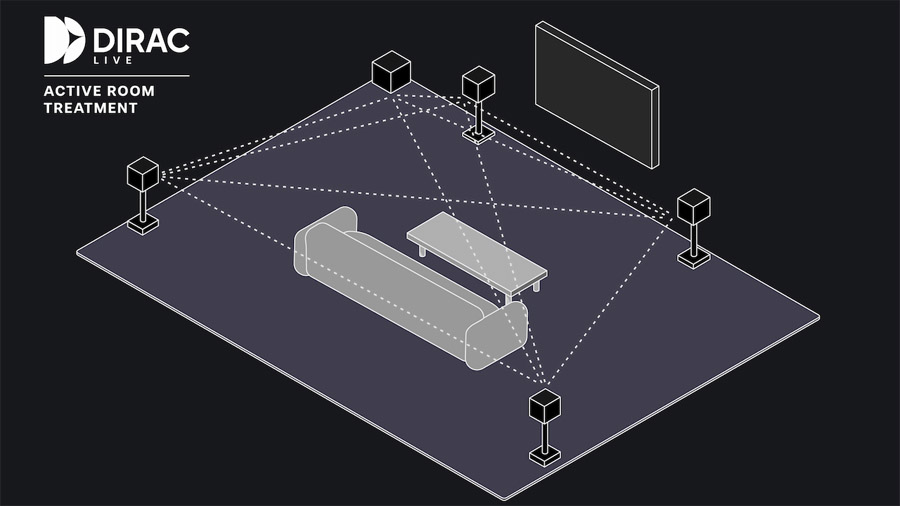
Introduced in 2023, Dirac Live ART takes the concept beyond traditional room correction by using the speakers in a system as a coordinated acoustic control network. The goal is to reduce low frequency resonances and improve bass consistency across the listening area, especially in rooms that do not behave nicely because, naturally, rooms rarely do.
“miniDSP has built a global reputation for flexible, high-performance DSP tools that empower enthusiasts and professionals alike,” said Rikard Hellerfelt, VP & Head of BA Consumer Electronics. “By integrating Dirac Live Active Room Treatment into the new Tide16, miniDSP is making cutting-edge room optimization accessible to a wider audience, unlocking studio-grade performance in real-world listening rooms.”
What Does the miniDSP Tide16 Actually Do?


The miniDSP Tide16 is not a receiver in the usual living room sense. There are no amplifier channels inside, and it is not designed to be an all-in-one box for someone plugging in five speakers and calling it a day. Think of it as the control center for a more advanced stereo, home theater, immersive audio, or custom installation system.
Its job is to accept audio from sources, process that signal, apply room correction, manage bass, decode formats such as Dolby Atmos and DTS:X, and then send the corrected signal out to external power amplifiers or active speakers. That is where the 16 balanced XLR outputs matter. Tide16 can support complex layouts, including 9.1.6 systems, depending on the source material, speaker layout, and the rest of the system.
Connectivity includes HDMI, Toslink, USB Audio, balanced XLR and unbalanced RCA stereo analog inputs, plus Bluetooth for wireless playback. That gives Tide16 enough flexibility to work in a serious two channel system, a dedicated theater, an immersive audio room, or a professional listening space. A calibrated microphone is sold separately, so buyers should factor that into the final cost and setup process.

The headline feature is the inclusion of the full Dirac Live suite out of the box: Dirac Live Room Correction, Dirac Live Bass Control, and Dirac Live Active Room Treatment. That matters because Dirac licenses are often an added expense on competing products, and those costs can add up quickly.
Dirac Live Room Correction addresses frequency and timing issues caused by the room and speaker placement. Dirac Live Bass Control focuses on integrating subwoofers with the main speakers so the low end is more consistent across more than one seat. Dirac Live ART goes further by using multiple speakers in the system as a coordinated acoustic control network. Instead of treating each speaker and subwoofer separately, ART uses Dirac’s MIMO technology to help reduce low frequency decay and room resonances.
That does not mean Tide16 replaces smart speaker placement, competent setup, or physical acoustic treatment. Anyone expecting software to turn a bad room into Abbey Road by Tuesday is going to need a chair and a quiet moment. But for systems with multiple speakers, subwoofers, and enough complexity to make manual setup painful, Tide16 gives users a powerful DSP platform with the Dirac tools already included.


The Bottom Line
The miniDSP Tide16 matters because it brings 16 channel immersive audio processing, Dolby Atmos and DTS:Xdecoding, advanced bass management, and the full Dirac Live suite into a $3,500 processor. That price is not pocket change, but it is aggressive for a processor that includes Dirac Live Room Correction, Dirac Live Bass Control, and Dirac Live Active Room Treatment rather than treating them like toll booths.
Tide16 is not a traditional AVR. There are no amplifier channels inside, so buyers still need external amplification, speakers, subwoofers, and a calibrated microphone. Its strength is control: 16 balanced XLR outputs, support for complex layouts like 9.1.6, multi subwoofer integration, and Dirac ART’s ability to use the speaker system as a coordinated tool to reduce low frequency room issues.
The right buyer is an enthusiast, integrator, or system designer building a dedicated theater, active speaker system, advanced stereo setup, or multi subwoofer room where precision matters more than plug and play convenience. At $3,500 before amps, cables, microphones, and setup time, Tide16 is not cheap. But for users who want Dirac ART and 16 channel flexibility without jumping into far more expensive processor territory, it could be a very important box.
For more information: minidsp.com
You must be logged in to post a comment Login