Tech
MIT Engineers Create Tiny Silicon Structures That Perform Calculations Using Waste Heat Instead Of Electricity

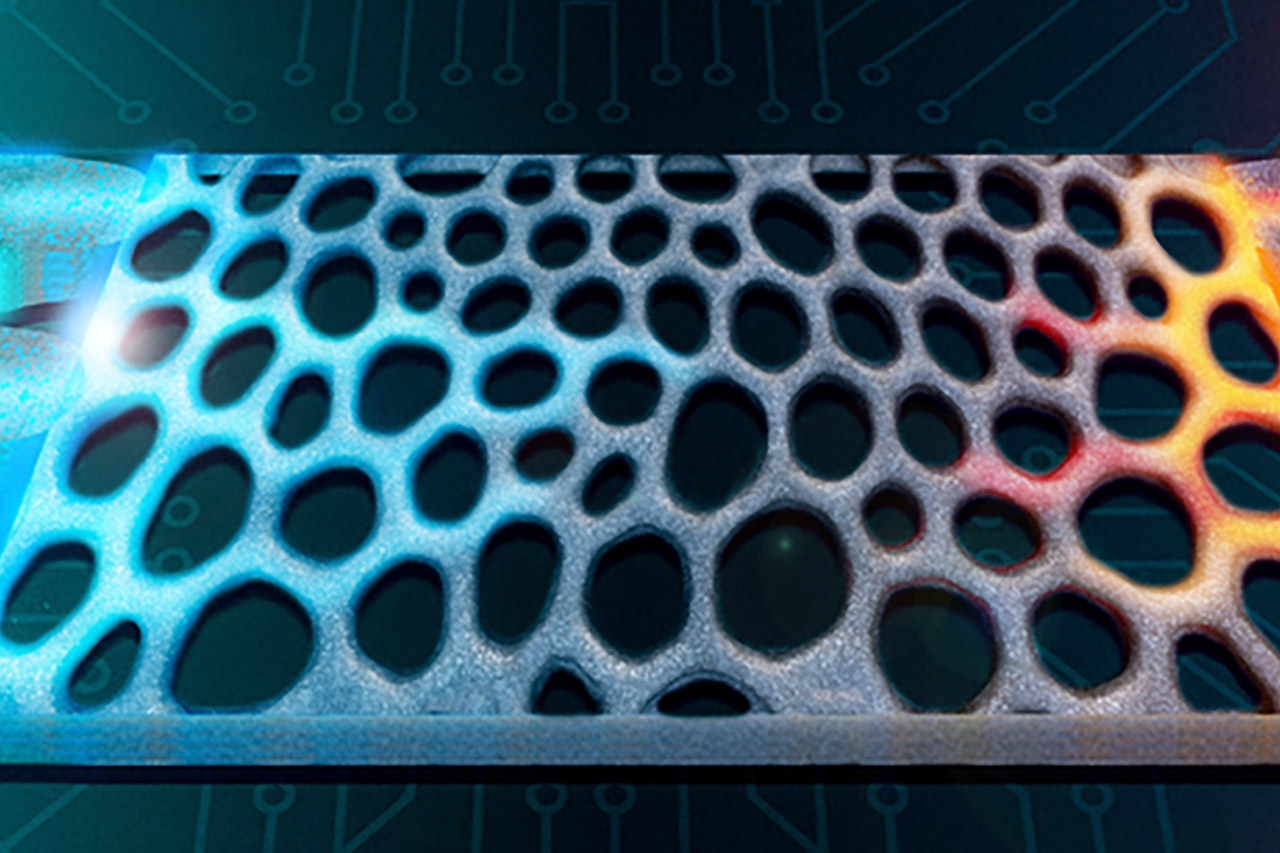
Photo credit: Jose-Luis Olivares, MIT
MIT engineers have come up with some ingenious work: they’ve created tiny silicon structures that can crunch numbers using heat that would otherwise be wasted rather than energy. It’s a game changer for dealing with heat in electronics, and a team of MIT researchers lead by undergraduate physics wiz Caio Silva has proved that it truly works. In a study published in Physical Review Applied, they show off the results of their simulation work, demonstrating that these small devices can do some rather important math operations with surprising accuracy.

The truth is, most of the time, heat from computers and chips is just a nuisance, a byproduct of processors doing their tasks that must be removed as soon as possible via fans and cooling, but the researchers at this lab did something completely different. They decided to utilize heat to represent the actual calculations themselves, and guess what? It works.


Anker Prime Charging Station, 250W 6-Port GaN USB C Charger, 2.26″ LCD Smart Display Control, Compatible…
- Super Fast 250W Output: Experience the convenience of high-capacity charging with this 250W desktop charger, featuring four USB-C and two USB-A ports…
- High-Efficiency Charger: Power up your 16-inch MacBook Pro to 50% in just 25 minutes using the first USB-C port, which delivers 140W to significantly…
- Instant Power Feedback: Monitor your charging in real time with the 2.26-inch LCD display, providing visual feedback on charging status and speed.
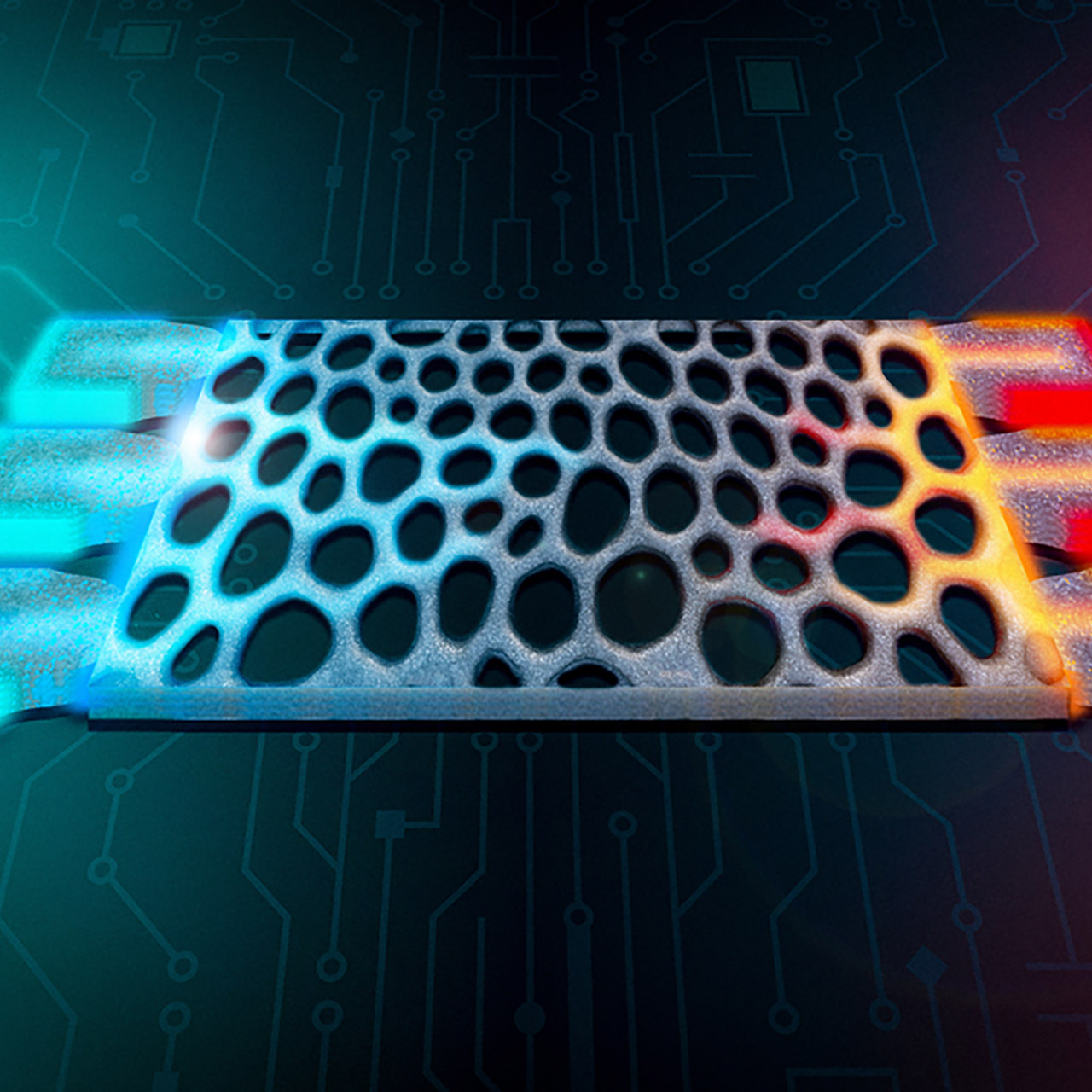
Each of these tiny structures is roughly the size of a particle of dust and is constructed of silicon with carefully arranged holes. This allows you to precisely control how heat travels through the material, which happens quite naturally. Naturally, heat goes from hot to cold. It was the researchers that came up with the idea of using this natural flow to perform actual computations. They’ve devised a method to depict the data entering a calculation as temperature patterns derived from the heat that ordinarily accumulates beneath the feet of a device. As the heat passes through the silicon, the unique shape of the structure directs the flow, resulting in your response as the quantity of power collected at a specified cooler end.


This is accomplished entirely using analog computing, which employs continuous physical processes rather than the discrete electrical impulses seen in most computers. They were able to get matrix-vector multiplication to operate, which is a calculation used in many machine learning models. The team’s simulations revealed that these teeny-tiny structures can correctly predict the answer more than 99% of the time for small matrices.


Getting all of this set up in silicon eliminates the need for traditional guesswork regarding shape. These researchers automated all of their work with an optimization technique. They give the computer what math problem they want to answer, such as a matrix of numbers indicating how the input should be converted into the output. The computer then gets to work, determining where to place the pores and how thick each component of the structure should be. All the time, it is verifying and rechecking to ensure that the heat flow is doing precisely what it should be doing in order to obtain the correct answer.
Heat conduction only travels one way, from hot to cold, thus positive values are easy to obtain; however, negative values require a method to make them work. The researchers work around this by dividing any matrix with negative integers into positive and negative ones. Each portion is ran through its own customized configuration before the results are pooled using a simple subtraction method. The ability to modify the structure’s thickness allows you to fine-tune how easy heat may pass through at certain spots.
These structures offer a wide range of possible applications beyond simple calculation, such as monitoring how heat flows through electronics without using extra power or separate temperature sensors. In many circumstances, isolated hot spots lead to the discovery of other concerns, such as when some piece of electronics is prone to failure owing to overheating or an uneven build-up of stress. The beauty of this design is that you can just embed the devices directly into the electronics, and they will automatically detect these issues as they occur, using the heat to report back to you on the status of things. Temperature gradients are basically a goldmine of information, according to Giuseppe Romano, senior researcher at MIT’s Institute for Soldier Nanotechnologies. However, if you get a heat source in a place it shouldn’t be, you know you’ve got a problem, and these structures can pick on it without having to go digital.
[Source]
You must be logged in to post a comment Login