Connect with us
DAPA Banner

Tech

Motorola Moto Watch Review: Polar-Powered

Published

on

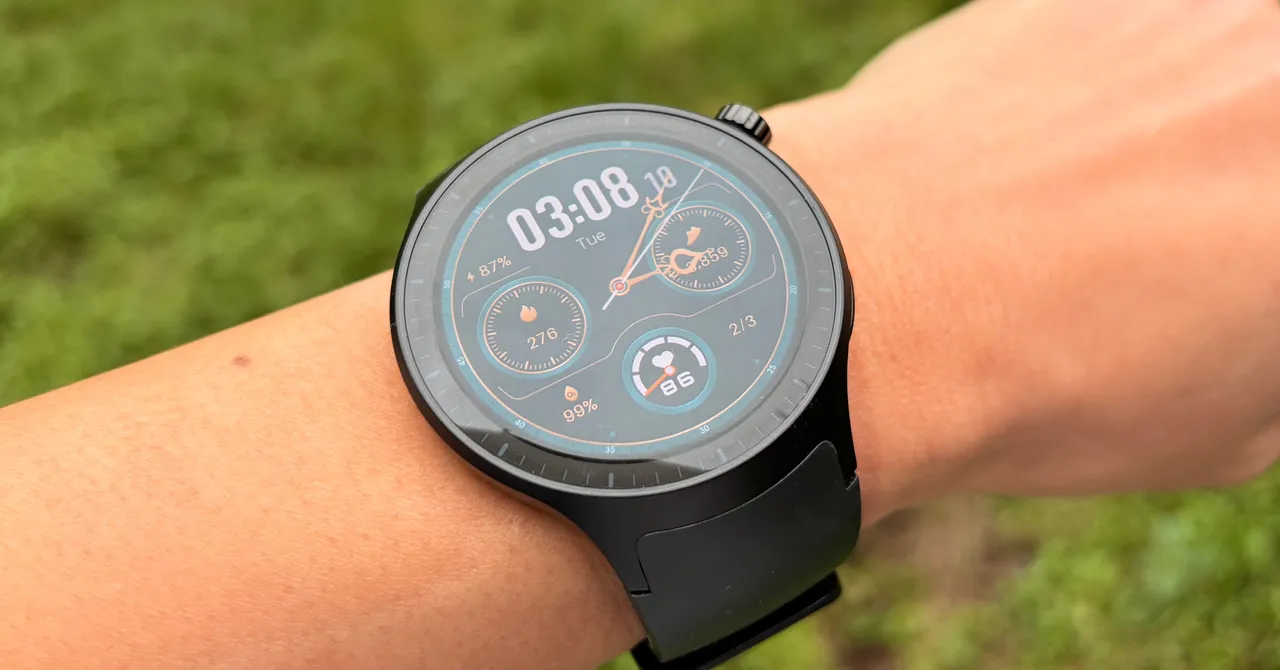
However, rendered here in Motorola’s Watch app, everything looks fun and easy! Motorola (and Polar, I guess) uses Apple’s “close your rings” approach, with active minutes, steps, and calories. I particularly like that you can now use Polar’s sleep tracking with a cheaper Android watch. Polar takes into account sleep time, solidity (whether or not your sleep was interrupted), and regeneration to give you a Nightly Recharge Status.

You can still click through and see your ANS, but there’s a lot more context surrounding it. Also, the graphs are prettier. I compared the sleep, heart rate, and stress measurements to my Oura Ring 4, and I found no big discrepancies. The Moto Watch tended to be a little bit more generous in my sleep and activity measurements (7 hours and 21 minutes of sleep instead of 7 hours and 13 minutes, or 3,807 steps as compared to 3,209), but that’s usual for lower-end fitness trackers that have fewer and less-sensitive sensors.

On that note, I do have one major hardware gripe. Onboard GPS is meant to make it easier to just run out the door and start your watch. I didn’t find this to be the case. Whatever processor is in the watch (Motorola has conveniently chosen not to reveal this), it’s just really slow to connect to satellites and iffy whenever it does. This isn’t a huge deal when I’m just walking my dog or lifting weights in my living room, but it constantly cuts out when I’m outside and doesn’t have the ability to fill in the blanks, as another, more expensive fitness tracker would do.

It’s just really annoying to constantly get pinged about satellite loss and to have a quarter-mile or a half-mile cut out of your runs. That’s how I know the speaker works—it was constantly telling me it lost satellite connection during activities.

Advertisement

Finally, the screen and buttons are really sensitive. It does give you an option to lock the screen, but even then, I found myself accidentally unlocking it from time to time and turning the recording off when I didn’t mean to.

As I write this, I have seven different smartwatches from different brands sitting on my desk. If you’re looking for a cheap, attractive, and effective Android-compatible smartwatch, I would say that the CMF Watch 3 Pro is your best choice. However, I do think the integration with Polar was well done, and the price point is not that bad. I’m definitely keeping an eye out for what Motorola might have to offer in the future.

Source link

Advertisement
Continue Reading
Click to comment

You must be logged in to post a comment Login

Leave a Reply

Tech

Why Wall Street wasn’t won over by Nvidia’s big conference

Published

on

When Nvidia CEO Jensen Huang took the stage for his annual GTC keynote on Monday, the $4-trillion-dollar company’s stock started to drop.

Wall Street investors, it seems, were unmoved by the leather jacket-clad founder’s bullish 2.5-hour speech. Instead, they placed more weight on AI’s uncertain future and fears of a bubble. The nervousness felt by Wall Street couldn’t be more different than the buzzy atmosphere in Silicon Valley, where confidence, not uncertainty abounds.

Huang talked for more than two hours about the company’s latest innovations, from new video game graphics tech and updated networking infrastructure to autonomous vehicle deals and a new chip designed with Groq to accelerate AI inference in the Vera Rubin system. He also threw out some eye-watering numbers about Nvidia’s business and beyond. Huang called the AI agent ecosystem a $35 trillion market and the physical AI and robotics industry a $50 trillion market.

Huang also said he expects to see $1 trillion worth of purchase orders for the company’s Blackwell and Vera Rubin chips — just two of Nvidia’s many products — by the end of 2027.

Advertisement

Shouldn’t that make investors excited? It’s not surprising that they aren’t, Futurum CEO Daniel Neuman told TechCrunch.

A great new uncertainty

“[AI] is so good, so transformational, and moving so fast that we don’t actually understand what it’s going to mean for all the things that are the societal constructs that we’ve come to understand,” Neuman said. “The markets hate uncertainty. The speed of innovation has actually created a great new uncertainty that I think most people never expected.”

Some of that uncertainty comes from misleading information coming out of the market, Neuman said, who added that headlines about low enterprise adoption of AI aren’t painting the full picture — at least, based on conversations he’s having.

Techcrunch event

Advertisement

San Francisco, CA
|
October 13-15, 2026

“Enterprise AI adoption is going to hit inflection and scale very quickly,” Neuman said. “I actually think it’s happening. When you say it’s not, I think what you’re probably saying is the [return on investment] and the receipts are still a little bit undefined and companies are citing the surveys and the reports that are largely six-month-old data. It just takes months to aggregate data.”

Advertisement

This sentiment holds weight when you look at Nvidia’s numbers from past quarters. While companies may not be touting their AI ROI, they are increasingly purchasing Nvidia’s tech. The company continues to not only beat its lofty goals and quarterly estimates, but soar past them. Nvidia’s revenue was up 73% year-over-year last quarter.

There is no sign that will change any time soon either. For example, just this week Nvidia confirmed Amazon made a plan to purchase 1 million GPUs, alongside other AI infrastructure, by the end of 2027 for Amazon Web Services (AWS), according to reporting from Reuters.

Kevin Cook, a senior equity strategist at Zacks Investment Research, agreed with Neuman and joked to TechCrunch that investors not being happy doesn’t change the fact that the whole stock market is propped up by Nvidia, because its tech runs the rails for many of these businesses.

“The economy is sort of orbiting around Nvidia,” Cook said. “It’s building this necessary infrastructure. All these different companies in hardware and software and physical AI — even Caterpillar is now physical AI — that are building off of these platforms.”

Advertisement

None of this means there isn’t currently an AI bubble or couldn’t be one in the future. But while GTC may not have been a boon for Nvidia’s stock, the broader uncertainty doesn’t seem to be Nvidia’s problem. The company is clearly barreling full steam ahead, bringing seemingly the entire global economy right alongside it.

“Nvidia, as you know, is a platform company,” Huang said in his GTC keynote. “We have technology. We have our platforms. We have a rich ecosystem, and today there are probably 100% of the $100 trillion dollars of industry here.

Source link

Advertisement
Continue Reading

Tech

A retro Starship Troopers shooter, a video store sim and other new indie games worth checking out

Published

on

Welcome to our latest roundup of what’s going on in the indie game space. There are a whole bunch of neat new games out this week, as well as updates on some interesting upcoming projects.

In case you missed it, the Steam Spring Sale is under way. There are lots of solid deals here, and my credit card is already screaming at me. I’ve picked up a bunch of games from my wishlist. For instance, at just $3, I couldn’t resist snagging Teenage Mutant Ninja Turtles: Splintered Fate.

Meanwhile, over on Bluesky, a prototype from developer Freya Holmér caught my eye. It’s for a falling-block game, but instead of filling a container to create straight lines that disappear, it’s based around a pivot point. As tetrominos join the mass, it rotates left or right by 90 degrees, adding a new dimension to a well-established format. I’m really hoping Holmér turns this into a full game, as it’s a rad concept.

New releases

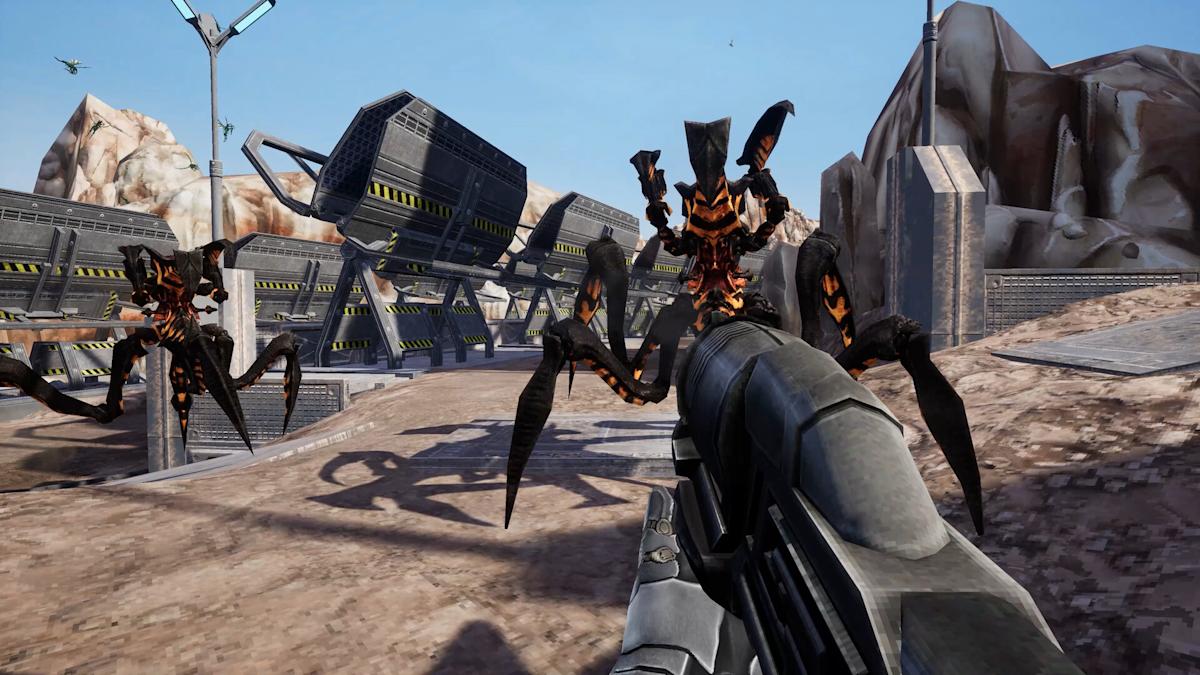
Given all the bug slaughtering and the jingoistic satire, any Starship Troopers project is going to draw comparisons with Helldivers 2. Fortunately, Starship Troopers: Ultimate Bug War! is entirely its own thing.

Advertisement

This is a retro first-person shooter from Auroch Digital (the studio behind Warhammer 40,000: Boltgun) and publisher Dotemu. The framing of the game is quite meta: it’s based on the experiences of Major Samantha Dietz, who was on the frontlines against the bugs, and it’s effectively being used as a military recruitment tool.

Starship Troopers: Ultimate Bug War! is a blast. I thoroughly enjoyed my time with it. Not that I needed one, but it gave me an excuse to watch Paul Verhoeven’s original film again since the game (while having an original story) hits some of the same beats.

The tone is spot on. The writing in the cutscenes, in which Casper Van Dien reprises his role as Johnny Rico from the movies, is funny. You can’t tell me that it isn’t a thrill to blow up a giant bug with a tactical nuke. Plus, I was tickled by the consequences of “accidentally” shooting a fellow soldier in the training base and all hell breaking loose.

Alas, the pacing feels off — there’s a bit too much space between objectives in some levels — and it’s a little one-note. Still, it only takes around four or five hours to beat, particularly if you don’t care about hunting for secrets.

Advertisement

Starship Troopers: Ultimate Bug War! is out now on Steam, PS5, Xbox Series X/S and Nintendo Switch 2. It’ll usually cost $25, but there’s a 20 percent discount until March 24.

Retro Rewind is a solid name for a video store rental sim. You’ll manage a store in the early ’90s — the heyday of VHS — by doing everything from decorating the place, filling shelves with tapes and buying bootleg films to hiring staff, making recommendations to customers and collecting late fees.

My first job was behind the counter of a convenience store that had a small movie rental section, so I’ve got a tiny bit of experience with calling up customers who have overdue films. That part of the job wasn’t exactly fun, but like the idea of running an entire rental store, an experience that’s sadly almost extinct.

Retro Rewind – Video Store Simulator is available on Steam (normally $20, with a 20 percent discount until March 24). You can try it out by playing a demo.

Advertisement

In Their Shoes looks like an intriguing spin on the visual novel. From We Are Muesli, this is billed as a mumblecore narrative vein, indicating that it’s influenced by films from that subgenre (such as the works of the Duplass brothers, Lynn Shelton and, especially in the early part of her career, Greta Gerwig). Through a few dozen interactive scenes, it follows the intertwined lives and intimate moments of seven people in Milan. Each of these dialogue-focused segments lasts around five minutes. There are timed choices and you can arrange the scenes into a timeline.

You can pick up In Their Shoes on Steam now. The full price is $13, but there’s a 25 percent discount until March 31.

For this week’s dog game, here is World’s Goodest Pup. It’s another pooch-based roguelike deckbuilder. This time around, you’ll be trying to succeed in the realm of competitive dog shows. After selecting a dog from among three breeds, you’ll start building a deck of accessories, tricks and poses and combine them in strategic ways to be most effective in competitions and challenges, which are procedurally generated.

This is a cozy game first and foremost, though. You can spoil puppers in a pet resort that you’ll build and treat them with a visit to a dog spa. Cute.

Advertisement

World’s Goodest Pup  — from Pandamander — is out on Steam (normally $7, with 10 percent off until March 26). You can try it out via a demo.

The release trailer for Bonnie Bear Saves Frogtime made me chuckle, so I had to include it. The latest project from Bonte Avond (the team behind Once Upon A Jester) is a comedy adventure game.

As Bonnie Bear, a bear in a frog onesie, you set out to defeat a local bully in a tactical frog-battling game called Frogtime. As with many real-life trading card games, you’ll buy and collect frogs to build a strong army. Most importantly, it seems to be a game about the power of community, friendship and self-worth.

Bonnie Bear Saves Frogtime is out now on Steam and Nintendo Switch for $17.

Advertisement

Upcoming

Gunbrella studio Doinksoft is back with another game that has a fantastic name. It’s a roguelite, side-scrolling action platformer with shoot-em’-up elements. And it’s called Dark Scrolls. It’s such a good title that I’m almost mad I didn’t think of it first.

There’ll be nine heroes to choose from, including a pup named Biscuit and a rat with a saxophone. The game features procedurally generated runs with branching paths, and there’s multiplayer support for two-player online co-op. I’m into the Master System-era art style and the utter chaos shown in the trailer.

The Devolver Digital-published Dark Scrolls (still not over that name) is coming to Steam and Switch later this year.

If you think about it, Scrabble is already a roguelike strategy game. Beyond Words takes that a bit further, with tiles that shift and explode, and boards that change up the rules. Much like in Balatro, you’ll be modifying, destroying and duplicating tiles as you seek powerful synergies and massive score multipliers. There are more than 300 modifiers and abilities, along with boss battles and optional time-based challenge boards.

Advertisement

What makes Beyond Words particularly interesting is that it’s from Steve Ellis and Dr David Doak — who made their names at Rare and Free Radical Design with the likes of GoldenEye 007, Perfect Dark and TimeSplitters — and their small team at MindFuel Games. PQube is the publisher of Beyond Words, which will hit Steam, PlayStation 5, Xbox Series X/S and Nintendo Switch on April 9. A demo is available on Steam now.

We’ve learned about a bunch of upcoming music rhythm games lately, and here’s another one from Guitar Hero, Rock Band and DJ Hero veterans. Echo Foundry Interactive seems to be hoping that the community-driven focus will help Sound System stand out.

When it goes into early access on Steam (October 16, $25), Sound System will have local multiplayer support. Echo Foundry Interactive plans to add online multiplayer with co-op and competitive modes. Players will be able to create charts for any song they like too.

We’ve had a dog game (or two) and a frog game. Now it’s time to wrap things up with a cat game. In Cat Me If You Can — great title, again — the Earth has frozen and lost its color. Only cats remain. By time-travelling and taking photos of them, you’ll gradually restore color to the world.

Advertisement

It’s a hidden cat puzzle game from Cosmic Stag Games that’s coming to PC, Switch and Xbox in the summer. You’ll be able to check out a demo on Steam on April 8.

Source link

Continue Reading

Tech

Sony to phase out "PlayStation Network" branding as early as this fall

Published

on


Sony reportedly sent an email to developers informing them of its decision to phase out the “PlayStation Network” and “PSN” branding across its platform, ostensibly to “properly capture the breadth of our evolving digital services.” The company insists the changes will be “purely visual” and will not introduce any technical…
Read Entire Article
Source link

Continue Reading

Tech

Twitter turned 20 and I feel nothing

Published

on

Twitter is officially 20 years old. In another reality, that might make me kind of nostalgic. I’ve been lurking and scrolling and tweeting for 16 years; most of my adult life. There was a time when Twitter was a place where some internet strangers became my IRL friends, when I was excited to “live-tweet”. When my infinitely more well-adjusted friends would send me memes, I would smugly say “I saw that on Twitter days ago.”

Twitter stopped being that place a long time ago, but I don’t have any nostalgia for it. I don’t really feel anything at all, actually.

Because I can already hear the comments: Yes, I’m still on X. I don’t spend as much time there as I did a decade ago, but it’s still quite a lot of time, an unhealthy amount, if I’m being honest. My job is to report on social media companies, so I keep (doom)scrolling. That’s what I tell myself anyway.

A few of my favorite posters are still around. Dril’s still got it. The memes are still, occasionally, good, even though X’s recommendation algorithm seems to prefer pointing me toward endless AI slop, boring hot takes from thirsty mid-tier tech execs and blatant engagement bait. X’s algorithm — what little we can learn about it, anyway — now relies on Grok’s predictions about what you’ll like.The same Holocaust-loving Grok that has spewed racism and referred to itself as MechaHitler and declared Elon Musk “the single greatest person in modern history.” The same Grok that allegedly generated thousands of images of child abuse material. Hey @grok is that true?

Advertisement

X is not Twitter but it’s also not not-Twitter. Last year, an online marketplace startup bought the 560-pound Twitter bird that once adorned the company’s San Francisco office and blew it up in a Nevada desert surrounded by Tesla CyberTrucks as part of an elaborate publicity stunt. Dumb? Yes. But also a somehow fitting adieu for “Larry.”

It’s been 20 years since Jack Dorsey sent the first-ever tweet, which was never even a good tweet anyway. It’s been five years, by the way, since he turned that tweet into an NFT (remember NFTs??) and auctioned it for nearly $3 million. It’s now functionally worthless. Another chapter in Dorsey’s confusing, complicated legacy.

Source link

Advertisement
Continue Reading

Tech

Sunday Reboot: MotionVFX, celebrations, and questionable updates

Published

on

In this week’s “Sunday Reboot,” AirPods Max 2 stretches the definition of the spec-bump update, the MotionVFX acquisition could benefit Creator Studio, and even more Apple celebrations.

Large headphones layered in pastel colors over an outdoor Apple event with dancers in white costumes and a cheering crowd, plus a bold black circular logo with a white stylized M
MotionVFX, AirPods Max 2, and a performance in China.

Sunday Reboot is a weekly column covering some of the lighter stories within the Apple reality distortion field from the past seven days. All to get the next week underway with a good first step.
This week, Apple lost in court but avoided another Apple Watch ban over blood oxygen patents, was dragged into a legal fight over AI data sourcing, and it came under fire for blocking some vibe coding apps in iOS.
Continue Reading on AppleInsider | Discuss on our Forums

Source link

Continue Reading

Tech

Carjackers Turn VA Man’s Dream Corvette Into A Repair Nightmare

Published

on


Cars have become more than a commuter’s tool. For many, they have sentimental value, hold memories, and create new experiences and connections. When one man’s beloved 2017 C7 Corvette was destroyed by carjackers, his life was turned upside down. 

Virginia outlet ABC 8News first reported on Keith Kunze’s dream car turned nightmare. The Henrico County resident had sold his first C7 Corvette back when his young family was growing. However, he decided to buy another C7 when he came back from Afghanistan as a birthday gift to himself. “This car was exactly what I wanted. It was black inside, black outside, black rims,” Kunze recalled. “And the top came off and it was a manual.” 

On October 19th, 2025, Kunze walked out of his apartment to see that his dream car was missing. He wondered if he parked it in a weird spot, unable to believe it was gone. Unfortunately, the Corvette had been stolen. The Richmond Police Department found it in Scott’s Addition, a neighborhood just under 10 miles away, but it was heavily damaged. The paint was destroyed by raw eggs, the roof was missing, and various parts were destroyed. “I’m still having a hard time wrapping my head around it because it’s…so much damage,” Kunze said.

Advertisement

Can insurance cover damage from a carjacking?

Insurance covers car theft if you have comprehensive coverage, which covers all things non-collision. If your car was carjacked and never recovered, car insurance will pay for the stolen vehicle, and some policies will even cover customization and aftermarket parts if you have additional coverage — like custom parts and equipment (CPE) coverage. 

If you recover the car, like Kunze did, insurance may cover any vandalism. But there’s a limit on how much customization will be covered, especially if you don’t have the CPE. At Progressive, for example, comprehensive coverage insures up to $1,000 in repairs and custom parts, so anything above that would require CPE coverage. Kunze claims that he put $20,000 into his car while he repaired it for three months, something that he stated his insurance won’t cover — so it’s likely he didn’t have more extensive coverage

Advertisement

Various insurance companies likely have their own processes, but in most instances, you’ll need to contact your insurance company immediately upon recovering the car. In Kunze’s case, he had proof of the theft in the form of surveillance footage, which captured two masked suspects abandoning the car. Unfortunately, the thieves have still not been caught. While insurance will help repair the C7 somewhat, the emotional damage of seeing a car you put love, sweat, and tears into get destroyed is not covered so follow these steps to keep your car safe from carjackers.


Advertisement

Source link

Continue Reading

Tech

I Tried DoorDash’s Tasks App and Saw the Bleak Future of AI Gig Work

Published

on

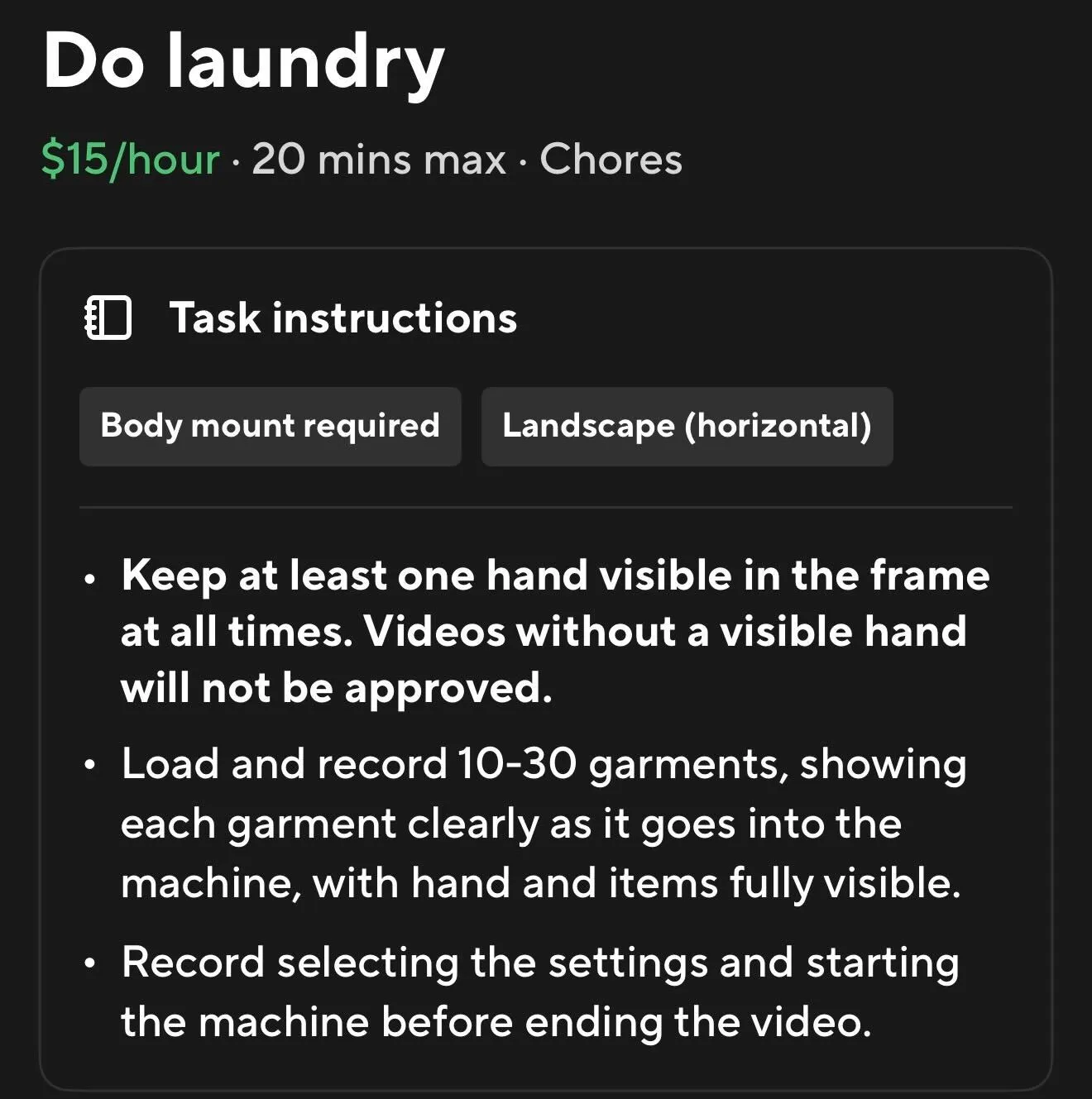
The flash from my iPhone camera illuminates my dirty socks and underwear as I hold each item up for the video recording to capture clearly. As I load my smelly clothes into the washer, I tremble a bit each time the phone loudly beeps, detecting that my hands may be out of frame. Gotta see those fingers! No, I haven’t pivoted to filming some kind of fetish content to make ends meet—I’m trying the latest gig work app from DoorDash, called Tasks.

The new Tasks app from food delivery app DoorDash has nothing to do with delivering food—it’s all about gathering training data from humans, that’s you, for improving generative AI models and humanoid robots. “This data helps AI and robotic systems understand the physical world,” reads DoorDash’s press release. “Pay is shown upfront and determined based on effort and complexity of the activity.” Most of the gigs involve strapping a smartphone to your chest and recording your hands performing specific tasks.

This kind of video data can be used by developers of AI models and robotics to improve performance. For example, thousands of videos of people folding laundry, with their hands clearly visible, could help teach a robot how to do the same task using computer vision.

Image may contain Page and Text

Photograph: Reece Rogers

DoorDash plans to expand this service to include an even wider range of tasks and users in the future. It’s unclear where exactly the app is available for users at launch in the US—residents of California, New York City, Seattle, and Colorado are explicitly blocked from using Tasks. (I was able to use the Tasks app and complete gigs while residing in Kansas.)

Advertisement

Curious about what kinds of tasks DoorDash is offering right now, I signed up to be a “dasher” and downloaded the Tasks app. After logging in, the onboarding quest was to film yourself moving three objects across a table. Easy! I turned the camera on and shifted my coffee cup, pen, and laptop from one side of my desk to the other. My reward for this wasn’t cash—DoorDash shipped a free body-mount for my smartphone camera afterward, so I could complete more gigs in the app.

After that quick onboarding session, I could see the full list of potential jobs and start making some cash. The gigs currently available in the Tasks app mainly fall into five major categories: household chores, handiwork projects, cooking food, location navigation, and foreign language conversations.

The tasks within these categories are fairly broad. The chore list includes everything from making a bed and loading a dishwasher to repotting plants and taking out the trash. The handiwork projects range from simple tasks, like changing a lightbulb, to more complex ones, like pouring cement. The cooking gigs mostly revolve around eggs: frying them, poaching them, scrambling them. Navigation gigs include exploring a museum and walking around an apartment complex. For the language-based tasks, the app requests “natural conversations” in Russian and Mandarin Chinese, as well as other languages.

Source link

Advertisement
Continue Reading

Tech

Police take down 373,000 fake CSAM sites in Operation Alice

Published

on

Police take down 373,000 fake CSAM sites in Operation Alice

An international law enforcement action called Operation Alice has shut down over 373,000 dark web sites that offered fake CSAM packages.

The investigation, led by Germany and supported by Europol, began in mid-2021 and focused on a platform called “Alice with Violence CP,” operated by a 35-year-old suspect based in China.

These sites advertised child sexual abuse material (CSAM) and cybercrime-as-a-service offerings, including stolen credit card data and access to compromised systems.

Seizure banner on one of the scam sites
Source: Europol

According to Europol, the sites used showed previews of claimed CSAM “packages” to trick users into entering their email addresses and paying between EUR 17 and EUR 250 in Bitcoin, receiving nothing in return.

“Each package had an estimated cost of between EUR 17 and EUR 215, and promised data volumes ranging from a few gigabytes to several terabytes of CSAM,” explains Europol.

Advertisement

“However, these were purely fraudulent sites where CSAM was advertised and previewed but never delivered.”

The fraudulent CSAM platform fooled around 10,000 users into paying roughly $400,000 to the operator of the sites. Of those, the authorities have identified 440 users in 23 countries, and are currently investigating 100 of them.

Although these people never received the illegal material, they still tried to purchase CSAM, financially supporting child abuse and demonstrating criminal intent. Even attempting to buy such material is prosecuted in many jurisdictions.

At its peak, the scam network’s infrastructure comprised 287 servers, with a significant portion (105) located in Germany, all of which have now been seized. German authorities have also issued an international arrest warrant for the Chinese operator.

Advertisement

Europol highlights its broader child protection work, including the Help4U support platform launched in November 2025, and its “Stop Child Abuse – Trace an Object” initiative, which invites people to identify the origin of objects seen in CSAM material that may lead to the identification of perpetrators, and the saving of children from abuse.

Malware is getting smarter. The Red Report 2026 reveals how new threats use math to detect sandboxes and hide in plain sight.

Download our analysis of 1.1 million malicious samples to uncover the top 10 techniques and see if your security stack is blinded.

Source link

Advertisement
Continue Reading

Tech

Crimson Desert won't work on Intel Arc GPUs, developer suggests users ask for refunds

Published

on


Following a slew of mostly average to quite good pre-launch reviews for Crimson Desert, Pearl Abyss’ stock price fell almost 30%. It seems many had expected the game to receive Baldur’s Gate 3-level praise.
Read Entire Article
Source link

Continue Reading

Tech

The 3DFX Voodoo Lives Again In An FPGA

Published

on

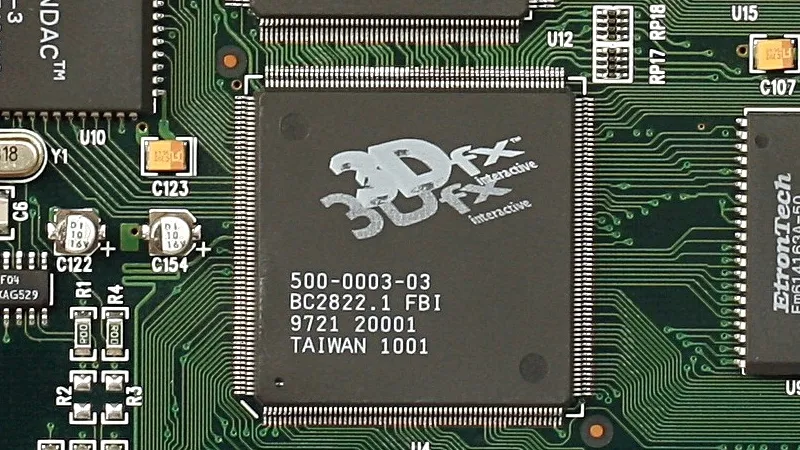
The 3DFX Voodoo was not the first dedicated 3D graphics chipset by any means, but it became the favourite for gamers among the early mass-market GPUs. It would be found on a 3D-processing-only PCI card that sat on the feature connector of your SVGA card. The Voodoo took any game that supported its Glide API into the world of (for the time) smooth and beautiful 3D. They’re worth a bit now, but if you don’t fancy forking out for mid-’90s silicon in 2026, there’s another option. [Francisco Ayala Le Brun] has implemented the 3DFX Voodoo 1 in SpinalHDL for FPGAs.

The write-up goes into the Voodoo’s architecture. Where the parts of a modern GPU are programmable for the various functions it can do, in this part they are dedicated hardware functions for the various graphics tricks the chip can perform. Implementing such an architecture on an FPGA led to bugs and timing problems, and the write-up deals with that in detail.

The whole thing can be found in a GitHub repository if you’re curious, and is definitely worth a read for anyone interested in 1990s retrocomputing. 3DFX themselves would eventually be swallowed by Nvidia, a rival whose offerings would overtake them at the end of the ’90s, but they still represent a somewhat special moment. Don’t forget, if you have the real thing, you can probably upgrade its memory.

Advertisement

Header image: Konstantin Lanzet, GFDL.

Source link

Advertisement
Continue Reading

Trending

Copyright © 2025