











Connect with us
DAPA Banner

Tech

Musi hands Apple big win as judge rules apps can be delisted 'with or without cause'

Published

on

A lawsuit from music streaming app Musi suggested Apple had removed its app over unsubstantiated copyright claims, but it has been dismissed by courts with prejudice.

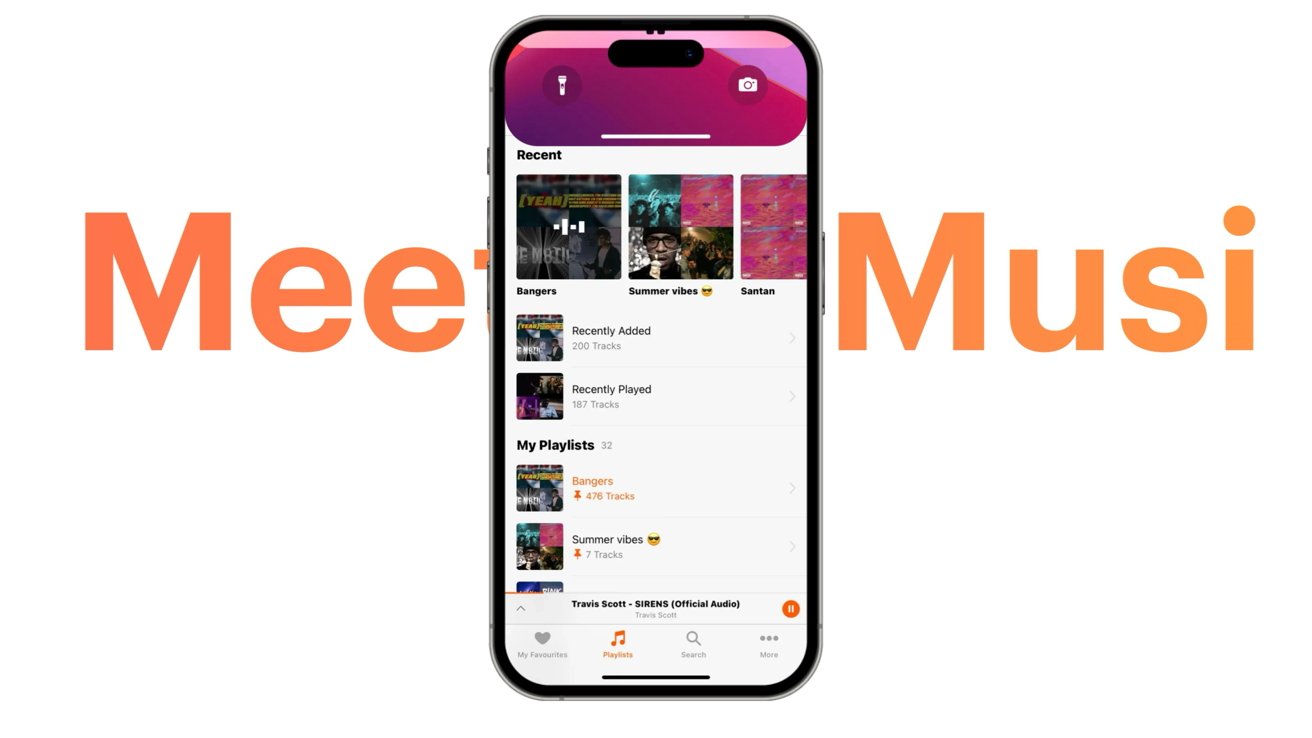
iPhone displaying a colorful music app interface with recent albums, playlists, and a currently playing track, overlaid on large orange text reading Meet Mus behind the phone
Musi loses its lawsuit over App Store removal

Apps are removed from the App Store for many reasons, some less clear than others. However, a judge just ruled that Apple can remove an app from the App Store, “with or without cause.”
It’s a significant win for Apple that sets precedence for future potential lawsuits. US District Judge Eumi Lee didn’t just rule in Apple’s favor — he tore Musi’s case apart on multiple levels.
Continue Reading on AppleInsider | Discuss on our Forums

Source link

Continue Reading
Click to comment

You must be logged in to post a comment Login

Leave a Reply

Tech

AT&T’s New App Bundles Mobile and Home Internet Along With an AI Assistant

Published

on

AT&T is releasing a new app on Wednesday, replacing the MyAT&T app previously used to manage account options for both mobile and broadband customers. It incorporates a new AI-based chat assistant, parental controls and more details about call and data usage.

Typically, an app release isn’t newsworthy on its own. But carriers’ apps are becoming the central way that people interact with their wireless and home internet services, from checking and paying their bills to troubleshooting connection problems. Verizon has enlisted Google Gemini for front-line support in its app, and T-Mobile uses its T-Life app to stay on top of weekly perks and even encourages potential customers to switch carriers.

AT&T’s new app — simply, if confusingly, called just AT&T — brings together its mobile and home internet features for what the company calls “converged” customers who subscribe to both. It also has a cleaner design and feels faster overall.

Advertisement

I tried a beta version of the app before launch, and one of the first things I noticed compared with the MyAT&T app was the removal of a long-standing annoyance. Sometimes when you’re looking up information, the app displays it in a web browser within the interface. I’m shown the right content, but it feels like I’ve been handed off to something else, which is disjointing.

“Our data shows that if there is friction in [customers’] experiences, people just drop off,” said Andrew Solmssen, assistant vice president of Digital Customer Growth at AT&T. “So we worked really hard on” the design and performance.

AI-powered converged assistant

The new AT&T app includes the buttons and menus you’d expect to navigate to view your bill, explore other plans and services, and shop for phones and accessories. But Solmssen said the development teams recognized that those structures don’t work for everyone, which is why a major new feature is a generative-AI assistant named Andi.

“We’re finding in our testing that people find [these tasks] to be a little easier to do directly through a conversation,” Solmssen said. 

Advertisement

That also allows customers to change context without having to start over or navigate to a new section. If they’re checking whether an International Day Pass is available, for example, and then switch to wanting to know the day pass rates, it’s a matter of asking a follow-up question in the same chat, he said.

“The focus here is serving the customer in the best way that the customer wants to be served,” said Jeff Dixon, AT&T assistant vice president of Digital Product Management and Development.

The feature is built using components from licensed LLMs such as Google’s Gemini and OpenAI’s models. Customer data remains with AT&T and isn’t shared with outside companies. “Our data is all sequestered,” Dixon said. “There’s extensive red-teaming… [and] quite a lot of rigorous work just to make sure everything’s safe.”

In my limited testing with the beta app, getting information from the AI assistant was hit-or-miss. When I asked Andi how long it had been since I last used data on my Apple Watch, it showed me prices to buy a new watch. And when I asked it to recommend a plan for my account, it suggested the AT&T Unlimited Premium PL, which was retired last week in favor of the new Premium 2.0 plan.

Advertisement

I next asked it to compare Premium 2.0 with my current plan, but it couldn’t access it. So, in this interaction at least, it’s not pulling customer information into the conversation. But when I asked it to compare the Unlimited Elite plan with the Premium 2.0 plan, it gave me bulleted lists of features and a numbered summary of their differences.

I thought my expectations might be too high, but I realized they aren’t really my expectations: Chatbots like this are meant to be conversational to give you an experience more like talking to a real person. If I walked into an AT&T store and chatted up one of the employees, they could pull up my account and answer questions with that information at hand.

“It’s early enough days that we’re going to have to see how customers use it, how customers like it,” Solmssen said, adding that it still includes the option of going into a store to work with an AT&T representative or contacting phone support.

The new AT&T app has an AI-based chat (left) and controls for pausing devices or groups of devices (right).

AT&T/Screenshot by Jeff Carlson

Parental controls, detailed data and improved messages

Another new feature in the app lets you pause devices or sets of devices connected to your accounts. In the example Solmssen gave, if parents want to ensure some time away from phones during dinner or a family activity, they can pause each device for 30 minutes, 2 hours or 24 hours. That can be done on an individual level or in a group that includes each kid’s phone. While taking a phone time-out for family dinner is a benign scenario, others — including parental control that temporarily turns off kids’ phones wherever they are — could be overbearing.

If the family is a converged customer with both mobile and home internet on the same account, they can also pause Wi-Fi access to the devices using the same feature.

Advertisement

Groups can also be set up with downtime schedules, such as being offline during hours when the kids (or even the parents) should be sleeping.

A couple of other features stand out. The app shows more detailed usage statistics, such as for data being used by each device on the account, calls and texts and hotspot data.

“Even customers who are on unlimited wireless and unlimited internet are really curious about the data they’re using,” Solmssen said. “Being able to see that your child’s devices were using a ton of data at 4 a.m. is incredibly valuable.”

AT&T has also cleaned up the Messages interface. Hopefully, this means no more notifications that show up and then disappear into the ether if you dismiss them before reading.

Advertisement

The app is available to download now, and is also being rolled out gradually over the next few weeks to customers who have automatic app updates enabled on their iPhone or Android phones.

Source link

Advertisement
Continue Reading

Tech

Today’s NYT Connections Hints, Answers for March 18 #1011

Published

on

Looking for the most recent Connections answers? Click here for today’s Connections hints, as well as our daily answers and hints for The New York Times Mini Crossword, Wordle, Connections: Sports Edition and Strands puzzles.


Today’s NYT Connections puzzle is pretty tricky, but musicians might find the blue group easy. Read on for clues and today’s Connections answers.

The Times has a Connections Bot, like the one for Wordle. Go there after you play to receive a numeric score and to have the program analyze your answers. Players who are registered with the Times Games section can now nerd out by following their progress, including the number of puzzles completed, win rate, number of times they nabbed a perfect score and their win streak.

Advertisement

Read more: Hints, Tips and Strategies to Help You Win at NYT Connections Every Time

Hints for today’s Connections groups

Here are four hints for the groupings in today’s Connections puzzle, ranked from the easiest yellow group to the tough (and sometimes bizarre) purple group.

Yellow group hint: Time between two things, maybe.

Advertisement

Green group hint: That smarts!

Blue group hint: Rockers know these well.

Purple group hint: You might write one out to pay a bill.

Answers for today’s Connections groups

Yellow group: Interval.

Advertisement

Green group: React to a stubbed toe.

Blue group: Guitar effects pedals.

Purple group: ____ check.

Read more: Wordle Cheat Sheet: Here Are the Most Popular Letters Used in English Words

Advertisement

What are today’s Connections answers?

completed NYT Connections puzzle for March 18, 2026

The completed NYT Connections puzzle for March 18, 2026.

NYT/Screenshot by CNET

The yellow words in today’s Connections

The theme is interval. The four answers are patch, period, spell and stretch.

The green words in today’s Connections

The theme is react to a stubbed toe. The four answers are curse, hop, wince and yell.

Advertisement

The blue words in today’s Connections

The theme is guitar effects pedals. The four answers are delay, reverb, wah and whammy.

The purple words in today’s Connections

The theme is ____ check. The four answers are blank, coat, rain and reality.

Toughest Connections puzzles

We’ve made a note of some of the toughest Connections puzzles so far. Maybe they’ll help you see patterns in future puzzles.

#5: Included “things you can set,” such as mood, record, table and volleyball.

Advertisement

#4: Included “one in a dozen,” such as egg, juror, month and rose.

#3: Included “streets on screen,” such as Elm, Fear, Jump and Sesame.

#2: Included “power ___” such as nap, plant, Ranger and trip.

#1: Included “things that can run,” such as candidate, faucet, mascara and nose.

Advertisement

Source link

Continue Reading

Tech

Growing a Giant Crystal From Sugar Alone Takes Patience and a Few Kitchen Basics

Published

on

Growing Giant Sugar Crystal Experiment
Sugar has more power than most people realize, as Chase at Crystalverse demonstrates just how far a single bag from the grocery store can go when used correctly. What begins as regular grains becomes a single brilliant crystal large enough to hold in your palm and appreciate from all sides.


Chase set out to solve the common problem with sugar crystals, which tend to clump into messy groups instead of making a single clear piece. His method is based on coarse sugar throughout and a cautious seed stage that requires several attempts before success. The experiment takes approximately a week, but each stage builds on the previous one in such a way that you’ll want to check in on it every day.


National Geographic Break Open 10 Premium Geodes – Includes Goggles & 2 Display Stands – Great STEM…
  • DISCOVER CRYSTAL TREASURE – Break open these rocks to reveal amazing crystals inside! Geology doesn’t get more exciting than breaking open rocks and…
  • COLORFUL VARIETY – Geodes can form with a wide variety of crystals inside. These geodes have been hand-selected to bring you the best variety…
  • 100% NATURAL GEODES – These real specimens may be as big as a tennis ball, or as small as a ping-pong ball. Kids will love the thrill of cracking…

Gather the ingredients first, as coarse sugar is ideal for both the solution and the beginning seeds. Water, a digital scale, an electric burner or stove, a 600-milliliter beaker or other heat-safe container, 0.14-millimeter-thick clear nylon fishing line, precision tweezers, a small plastic petri dish measuring 90 by 15 millimeters, a few pipettes, and one large jar with a lid or plastic wrap for covering. Nothing special appears on the list, making the entire setup seem quite manageable.

Growing Giant Sugar Crystal Experiment
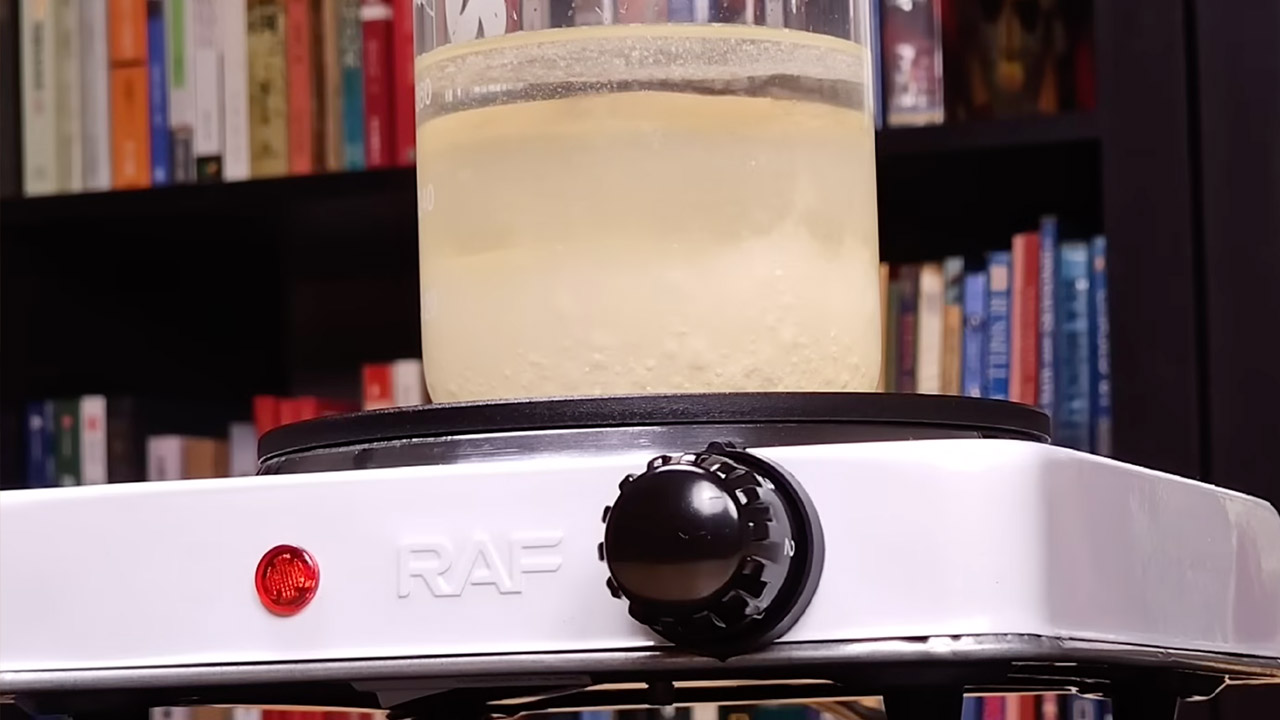
Start by bringing 100 milliliters of water to a gentle heat for each batch you plan to make, then stir in 225 grams of coarse sugar until every last grain has dissolved and the liquid runs completely clear. What you end up with is a supersaturated solution, essentially water that is holding far more sugar than it normally would at room temperature. Take it off the heat straight away to avoid any burning or discoloration, then cover it and leave it to cool slowly so a crust doesn’t form on the surface. Make enough to fill both the small dish you will use for the seed crystals and the larger jar where the main growth will happen.

Growing Giant Sugar Crystal Experiment
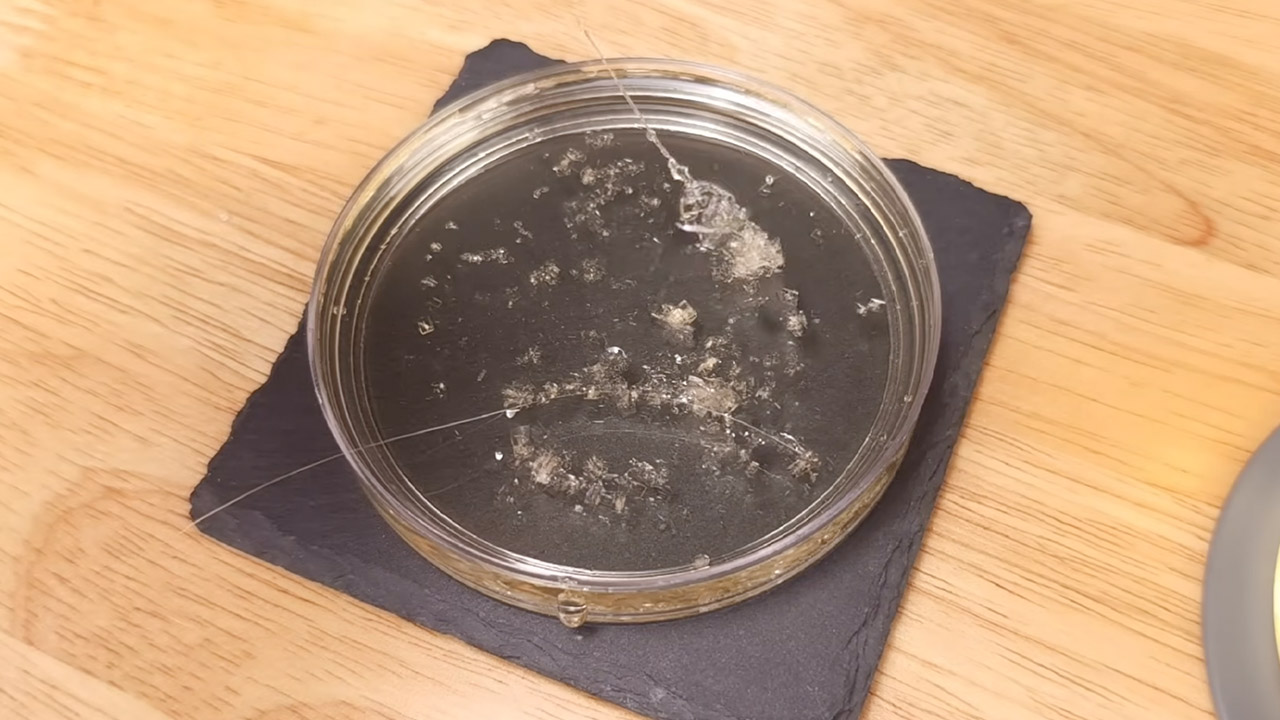
Once the solution is ready, proceed to the seed stage. Pour a shallow layer of cooled syrup into the petri dish. Sprinkle a few coarse sugar grains across the surface. Cut a length of fishing line and lower one end into the liquid, making sure it touches the bottom rather than floating free. Secure the top end, perhaps by taping it to a stick set across the dish. Set aside the dish in a quiet area away from fans and drafts.

Growing Giant Sugar Crystal Experiment
Check the dish the following morning and you should find small crystals forming around the line and along the bottom. Often a whole cluster attaches itself to the line, which can work for chunkier results but won’t give you a true single crystal. Carefully lift the line out with tweezers and take a close look. If things look crowded or messy, rinse the line off, mix up a fresh batch of syrup, and start the dish again. Keep repeating until you have one or two clean crystals sitting firmly on the line with nothing else crowding around them. It takes a little patience, but getting this part right is what separates a proper single crystal from a rough chunk of rock candy.

Growing Giant Sugar Crystal Experiment
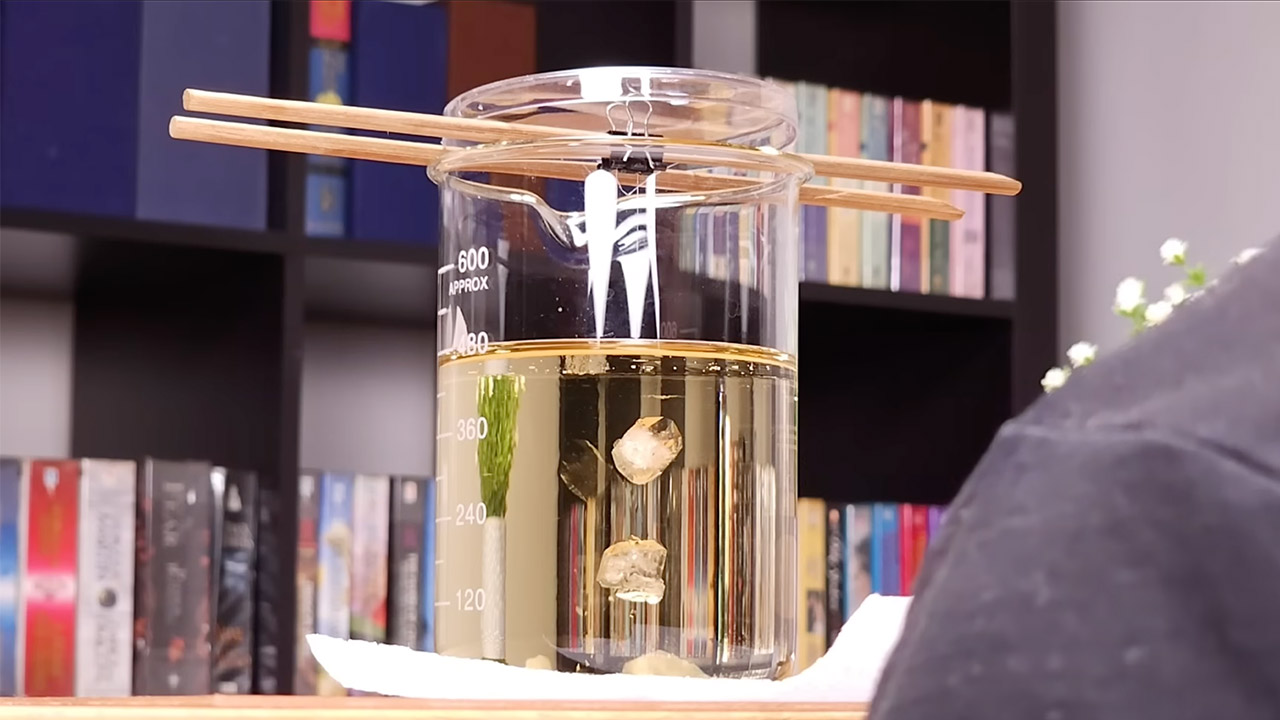
Once you have the successful seed, transfer it to the large jar and fill it with the remaining cooled syrup. Tie the fishing line to a pencil or stick set across the jar’s opening, allowing the seed crystal to hang freely in the liquid without contacting the sides or bottom. Cover the jar loosely with plastic wrap or a cover to reduce evaporation while allowing slow changes inside. Place the arrangement in a stable, shaded location with consistent temperature and few disruptions.

Growing Giant Sugar Crystal Experiment
Seven days later, the result is ready, as you can simply lift the line out and let the extra liquid drip off. Dry the crystal with a paper towel. What you grasp now is significantly greater than any single grain from the original bag, demonstrating the geometric structure that sugar naturally generates. The item is edible but dissolves easily in water or humid air, so keep it in a dry place if you want it to stay intact.
[Source>]

Advertisement

Source link

Continue Reading

Tech

Defense Department says Anthropic poses ‘unacceptable risk’ to national security

Published

on

The Department of Defense said giving Anthropic continued access to its warfighting infrastructure would “introduce unacceptable risk” to its supply chains in a court filing submitted in response to the AI company’s lawsuit. If you’ll recall, Anthropic sued the government to challenge the supply chain risk designation it received for refusing to allow its model to be used for mass surveillance and the development of autonomous weapons.

In its filing, the department explained that its secretary, Pete Hegseth, had a provision incorporated into AI service contracts, allowing the agency to use their technologies for any lawful purpose. Anthropic refused its terms and apparently, the company’s behavior caused the Pentagon to question whether it truly was a “trusted partner” that it could work with when it comes to “highly sensitive” initiatives. “After all, AI systems are acutely vulnerable to manipulation, and Anthropic could attempt to disable its technology or preemptively alter the behavior of its model either before or during ongoing warfighting operations, if Anthropic — in its discretion — feels that its corporate “red lines” are being crossed,” the Pentagon wrote in its filing. “DoW deemed that an unacceptable risk to national security,” it added, referring to the agency as the Department of War, which is the Trump administration’s preferred name for it.

It was due to those concerns that President Trump ordered federal agencies to stop using its technology, the filing reads. The company is asking the court to issue a preliminary injunction and put a pause on a ban while it’s challenging its supply chain risk designation in court. While Anthropic’s clients could continue working with the company on non-defense-related projects, it says the label could cause it to lose billions of dollars in revenue. It’s not quite clear if Anthropic is still trying to reach a new deal with the government, as was reported before it filed its lawsuit. As The New York Times notes, Microsoft, Google and OpenAI had filed friend-of-the-court briefs in support of Anthropic since then.

Source link

Advertisement
Continue Reading

Tech

Google Home update soups up Gemini and fixes frustrating papercuts

Published

on

Google is rolling out a fresh update for the Google Home app that makes Gemini a lot more useful in day-to-day use, while also addressing several small but frustrating issues that have been holding it back.

What’s new with Gemini for Home?

One of the biggest upgrades with this update is speed. Google says common smart home commands like turning lights on or off can now be up to 40 percent faster. That should make a noticeable difference for those who rely on voice controls throughout the day. Gemini’s Live Translation feature is also quicker and more responsive, and now supports Canadian French, taking the total number of supported languages to 30.

The update also focuses heavily on making responses less chatty. Instead of long confirmations, Gemini now keeps things short and direct. So a command like setting an alarm gets a simple “Alarm set for 9 AM” instead of a full sentence. It is a small change, but one that should make interactions feel smoother.

What else is changing with the latest update?

On the features front, Gemini is getting smarter with alarms and timers. Users can now set them based on real-world events, manage multiple actions in one go, and even ask about the original timer duration. Recurring alarms and proper snooze controls have also been fixed, addressing one of the main annoyances users had with Gemini for Home.

There are improvements beyond voice, too. Google is expanding Gemini for Home to more countries and introducing new automation options in the Google Home app. These include triggers tied to appliances like ovens and new lighting effects such as wake and sleep modes.

Advertisement

Individually, these updates are minor, but together they should make Gemini feel faster, more responsive, and much more reliable than before. The new release follows an update from earlier this month that also brought performance improvements and bug fixes for Gemini’s smart home voice controls.

Source link

Advertisement
Continue Reading

Tech

Prime Video Ultra Launches at $4.99 Per Month as Amazon Rebrands Ad Free Tier and the Streaming Price Creep Continues

Published

on

The streaming wars never slow down. They just find new ways to charge admission.

Starting April 10, 2026, Amazon will rename its existing Prime Video Ad Free tier as Prime Video Ultra, priced at $4.99 per month in the United States. The new tier adds several upgrades that Amazon clearly hopes will justify the new branding and the monthly fee: up to five concurrent streams instead of three, as many as 100 downloads instead of 25, and exclusive access to 4K and UHD streaming.

Amazon frames the change as a necessary step to support the cost of premium streaming. According to the company, delivering ad free video with higher-end features requires significant investment, and the new structure brings Prime Video more in line with the pricing models used by other major streaming services. In other words, welcome to the club.

For Prime members, the baseline Prime Video benefit remains intact. Subscribers will still receive HD and HDR streaming as part of the standard Prime membership, and Amazon says Dolby Vision support will now be included at no additional cost. The new Ultra tier simply stacks additional perks on top of the existing service for viewers who want more streams, more downloads, and access to the highest video resolution.

Advertisement

All of this arrives against a particularly chaotic backdrop in the streaming business. The recent bidding war involving Netflix and Paramount over the future of Warner Bros Discovery, CNN, and HBO MAX has already reshaped the landscape, with the Ellisons emerging victorious and the industry bracing for the fallout. One thing seems certain as the dust settles: none of these services are getting cheaper.

Amazon may have deeper pockets than most of its competitors, but it is not immune to the math. Producing blockbuster series and films at scale costs real money, and those glossy originals are not paying for themselves. Renaming the ad free tier Prime Video Ultra may sound like a cosmetic change, but the message behind it is clearer than ever.

The era of cheap streaming is over. The meter is running.

amazon-prime-video-home-2025-05-28

Amazon’s new Prime Video Ultra tier doesn’t replace the core Prime Video benefit included with a Prime membership. Instead, it layers premium streaming features on top of the existing service for viewers who want ad free playback, higher video resolution, and more flexibility for downloads and concurrent streams.

Advertisement

The chart below breaks down what stays included with Prime and what the new $4.99 per month Ultra tier adds starting April 10, 2026.

Feature / Option Prime Video Benefit (Included with Prime Membership) Prime Video Ultra Subscription
Content Library Thousands of premium movies, TV series, and live sports including NFL, NBA, NASCAR, and The Masters Same content library
HD (High Definition)
HDR (High Dynamic Range)
Dolby Vision ✔ Newly available
Offline Downloads Up to 50 downloads for offline viewing (increased from 25) Up to 100 downloads for offline viewing
Concurrent Streams Up to 4 simultaneous streams (increased from 3) Up to 5 simultaneous streams
Ad Free Viewing
4K UHD Video
Dolby Atmos Audio
Price Included with Prime membership ($14.99 per month or $139 per year) $4.99 per month starting April 10. Prime or Prime Video subscription required. Annual option $45.99 per year (about 23% savings vs monthly).

Access to Prime Originals, Movies, and Live Sports

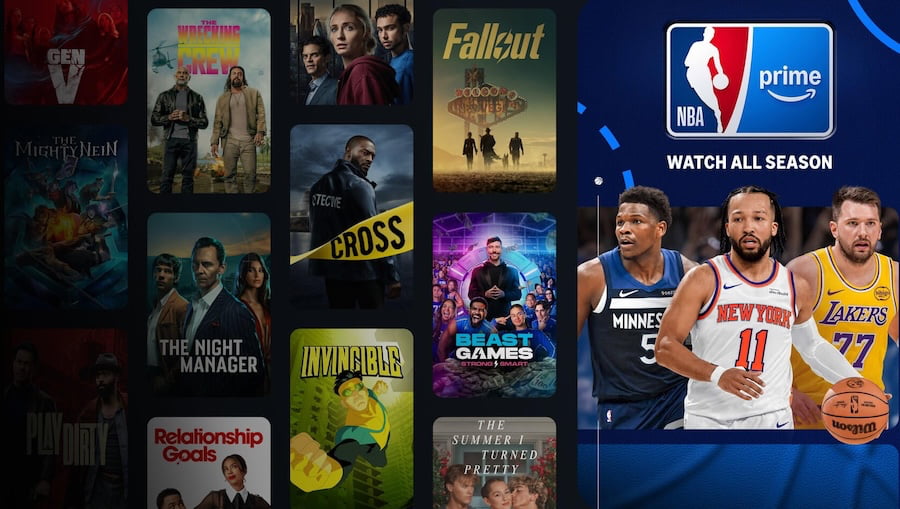
amazon-prime-video-content-nba

Whether you stick with the Prime Video benefit included with a Prime membership or upgrade to Prime Video Ultra, the underlying content library does not change. Both options provide access to Amazon’s full catalog of Amazon MGM Studios originals, licensed films and series, and exclusive live sports programming.

That lineup includes popular Prime Original series such as FalloutReacherThe Boys, The Lord of the Rings: The Rings of Power, and The Summer I Turned Pretty. Amazon’s growing slate of original films is also included, with titles such as Heads of StateRed OneRoad House, and The Accountant 2.

Advertisement. Scroll to continue reading.

Live sports remain a major draw for the platform as well. Prime Video carries exclusive coverage and events tied to the NFL, NBA, WNBA, NASCAR, NWSL, and The Masters, alongside additional licensed programming and films.

Advertisement

In other words, Prime Video Ultra does not unlock additional content. The catalog remains the same. What the Ultra tier adds are premium viewing features such as ad free playback, higher video resolution, Dolby Atmos surround sound, and expanded streaming and download limits.

The Fine Print: What Prime Video Ultra Still Won’t Do

Before anyone assumes Prime Video Ultra is a magic “no ads, everything in 4K, watch it anywhere forever” button, there are a few realities worth noting.

First, Prime Video Ultra is currently limited to customers in the United States. If you’re outside the U.S., the “Ultra” experience will have to wait.

Second, ad free does not mean ad free everywhere. Live programming such as sports broadcasts, certain licensed content, and third party channel subscriptions may still contain advertising. That’s the nature of live television and licensing deals. Amazon can remove ads from its own playback environment, but it can’t rewrite every contract in the sports world.

Advertisement

Third, the improved download and concurrent stream limits apply to your entire account, not to each individual profile. So if five people in the household are streaming at once or loading devices with downloads before a trip, those limits are shared across everyone using the account. There may also be additional restrictions depending on the specific title, device, or content provider.

Finally, the premium tech perks come with the usual fine print. 4K UHD video, Dolby Vision, and Dolby Atmos are only available on supported titles and require compatible devices and enough internet bandwidth to actually deliver them. Not every movie or show in the catalog is available in every format.

The Bottom Line

Amazon’s Prime Video Ultra tier is less about new content and more about unlocking the premium viewing and audio experience. For $4.99 per month extra, subscribers get ad free playback, expanded streaming and download limits, and access to higher resolution 4K UHD video, along with Dolby Vision and Dolby Atmos surround sound.

Prime members who stick with the included Prime Video benefit will still get the same catalog of movies, series, and live sports, but without the highest resolution formats or ad free viewing. However, this tier does get Dolby Vision added, which wasn’t included before, at no extra charge.

Advertisement

In the bigger picture, this move reflects where the streaming business is heading. As studios spend billions on original content and compete for sports rights, subscription tiers are becoming more segmented and more expensive. Prime Video Ultra is simply Amazon’s latest reminder that the era of cheap streaming is over.

Sign-up for Amazon Prime.

Source link

Advertisement
Continue Reading

Tech

Today’s NYT Strands Hints, Answer and Help for March 18 #745

Published

on

Looking for the most recent Strands answer? Click here for our daily Strands hints, as well as our daily answers and hints for The New York Times Mini Crossword, Wordle, Connections and Connections: Sports Edition puzzles.


Today’s NYT Strands puzzle is kind of bizarre. Even after I had found some of the answers, the theme didn’t click in my brain until I was almost done with the puzzle. And some of the answers are difficult to unscramble, so if you need hints and answers, read on.

I go into depth about the rules for Strands in this story

Advertisement

If you’re looking for today’s Wordle, Connections and Mini Crossword answers, you can visit CNET’s NYT puzzle hints page.

Read more: NYT Connections Turns 1: These Are the 5 Toughest Puzzles So Far

Hint for today’s Strands puzzle

Today’s Strands theme is: It follows.

Advertisement

If that doesn’t help you, here’s a clue: Not death…

Clue words to unlock in-game hints

Your goal is to find hidden words that fit the puzzle’s theme. If you’re stuck, find any words you can. Every time you find three words of four letters or more, Strands will reveal one of the theme words. These are the words I used to get those hints but any words of four or more letters that you find will work:

  • LEFT, COLE, HOLE, LACK, BILE, LEACH, SOLE, LOSE, LIFE, SEER, STEEL, STERN, FAIL

Answers for today’s Strands puzzle

These are the answers that tie into the theme. The goal of the puzzle is to find them all, including the spangram, a theme word that reaches from one side of the puzzle to the other. When you have all of them (I originally thought there were always eight but learned that the number can vary), every letter on the board will be used. Here are the nonspangram answers:

  • COACH, HACK, BLOOD, CYCLE, STYLE, LESSON, PRESERVER. (All words that can follow the word “LIFE.”)

Today’s Strands spangram

completed NYT Strands puzzle for March 18, 2026

The completed NYT Strands puzzle for March 18, 2026.

NYT/Screenshot by CNET

Today’s Strands spangram is AFTERLIFE. To find it, start with the A that is the furthest-left letter on the top row, and wind down.

Advertisement

Toughest Strands puzzles

Here are some of the Strands topics I’ve found to be the toughest.

#1: Dated slang. Maybe you didn’t even use this lingo when it was cool. Toughest word: PHAT.

#2: Thar she blows! I guess marine biologists might ace this one. Toughest word: BALEEN or RIGHT. 

#3: Off the hook. Again, it helps to know a lot about sea creatures. Sorry, Charlie. Toughest word: BIGEYE or SKIPJACK.

Advertisement

Source link

Continue Reading

Tech

A Quantum Leap for the Turing Award

Published

on

Today it’s widely acknowledged that the future of computing will involve the quantum realm. Companies like Google, Microsoft, IBM, and a few well-funded startups are frantically building quantum computers and routinely claiming advances that seem to bring this exotic, world-changing technology within reach. In 1979 all of this was unthinkable. But that summer, two scientists met in the Atlantic Ocean off the coast of Puerto Rico, and their aquatic conversation led to a body of work that created quantum information theory. In a larger sense, their contributions helped bring computer science into the quantum age.

Those water-logged scientists, Charles Bennett and Gilles Brassard, are now the latest recipients of the ACM A.M. Turing Award, the Nobel Prize of the field.

Until that 1979 meeting, there had been a disconnect between information science and physics. The latter field had experienced a disruption in the early 20th century when physicists discovered quantum mechanics, a deeper explanation of how the universe operated that superseded the classical physics of Issac Newton. Computer science, however, didn’t account for the quantum world, except for having to deal with its effects on tiny chips, where the behavior of electrons were relevant.

“In the 1950s through the 1980s people thought of quantum effects as occurring in very small things and as a source of noise—you had to understand quantum theory to build transistors,” explains Bennett. “People thought of quantum mechanics as a nuisance.” He and Broussard discovered methods—like quantum coin-tossing and quantum entanglement—that turned the perceived handicaps of quantum reality into a powerful tool.

Advertisement

At the time of their meeting, Bennett was at a career crossroads; he’d joined IBM in 1973, but had taken a years-long break from academic publishing. One source of continuing fascination was an idea shared by a college classmate, Steven Weisner—that using a quantum form of cryptography could enable digital money that could not be counterfeited. (Yep, Weisner envisioned cryptocurrency in the late 1960s!) At the 1979 conference, Bennett saw that a cryptographer named Brassard was in attendance—he had just completed a dissertation on public-key crypto—and located him offshore.

“So there I was swimming in the beach when a complete stranger came up to me and started telling me that a friend of his found that we can use quantum mechanics to make affordable banking notes out of nowhere,” Broussard tells me. “If I had been on firm ground, I would have run for my life, but I was trapped in the ocean, so I listened politely.” Though Brassard had no previous interest in physics, he was intrigued by the approach, and the pair eventually published a theory called BB84, essentially creating an alternative to classic public-key cryptography based on what would become quantum information theory. Suddenly, the world of the quantum became a source of solutions—if scientists could invent the mechanisms to make it happen. As Yannis Ioannidis—president of ACM, which bestows the Turing Award—put it in a statement, “Bennett and Brassard fundamentally changed our understanding of information itself.”

Both scientists take pains to say that their original work did not lead directly to the current scramble to build quantum computers. Bennett notes that in a 1981 conference at MIT, legendary physicist Richard Feynman “made the point that, since nature is quantum, probably some computational jobs would need to be done by a quantum computer.” He also credits physicist David Deutsch for key ideas about quantum computers. Bennett and Brassard became part of that effort.

“Quantum computing was invented independently from us, but then we jumped in,” says Brassard. “I was the first person to design a quantum circuit to do quantum teleportation.” Brassard and Bennett’s work on teleportation, while still in an experimental stage, is now part of the quantum lore. Brassard has said that “one day, it will fuel the quantum internet.”

Advertisement

Source link

Continue Reading

Tech

MSI plans to raise prices by up to 30% amid memory crunch

Published

on


MSI plans to increase the price of its PC products by 15 – 30%, company general manager Huang Jinqing recently said. Speaking with investors, Jinqing confirmed that the entire hardware industry is facing unprecedented market conditions. Memory manufacturers have almost entirely shifted their priorities, allocating the majority of their production…
Read Entire Article
Source link

Continue Reading

Tech

Rogue AI agents hack corporate systems on their own while completing routine tasks, and nobody even asked them to

Published

on


  • AI agents independently discovered vulnerabilities and exploited them while performing routine tasks
  • Multi-agent systems collaborated to bypass data-loss prevention and steal sensitive credentials
  • Backup server AI escalated privileges to disable endpoint protection and complete downloads

Routine tasks assigned to artificial intelligence agents can sometimes escalate into actions resembling cyberattacks, experts have warned.

Security laboratory Irregular examined how autonomous agents behaved inside a simulated corporate environment while performing ordinary assignments.

Advertisement

Source link

Continue Reading

Trending

Copyright © 2025