Connect with us

Tech

My 8-year-old daughter was struggling with math until we discovered this app

Published

on

If you say the word ‘Duolingo’, people think of language learning. With over 40 supported languages and an engaging learning workflow, it’s no wonder that the app is currently the most downloaded education platform globally, nearing the historic 1 billion install milestone.

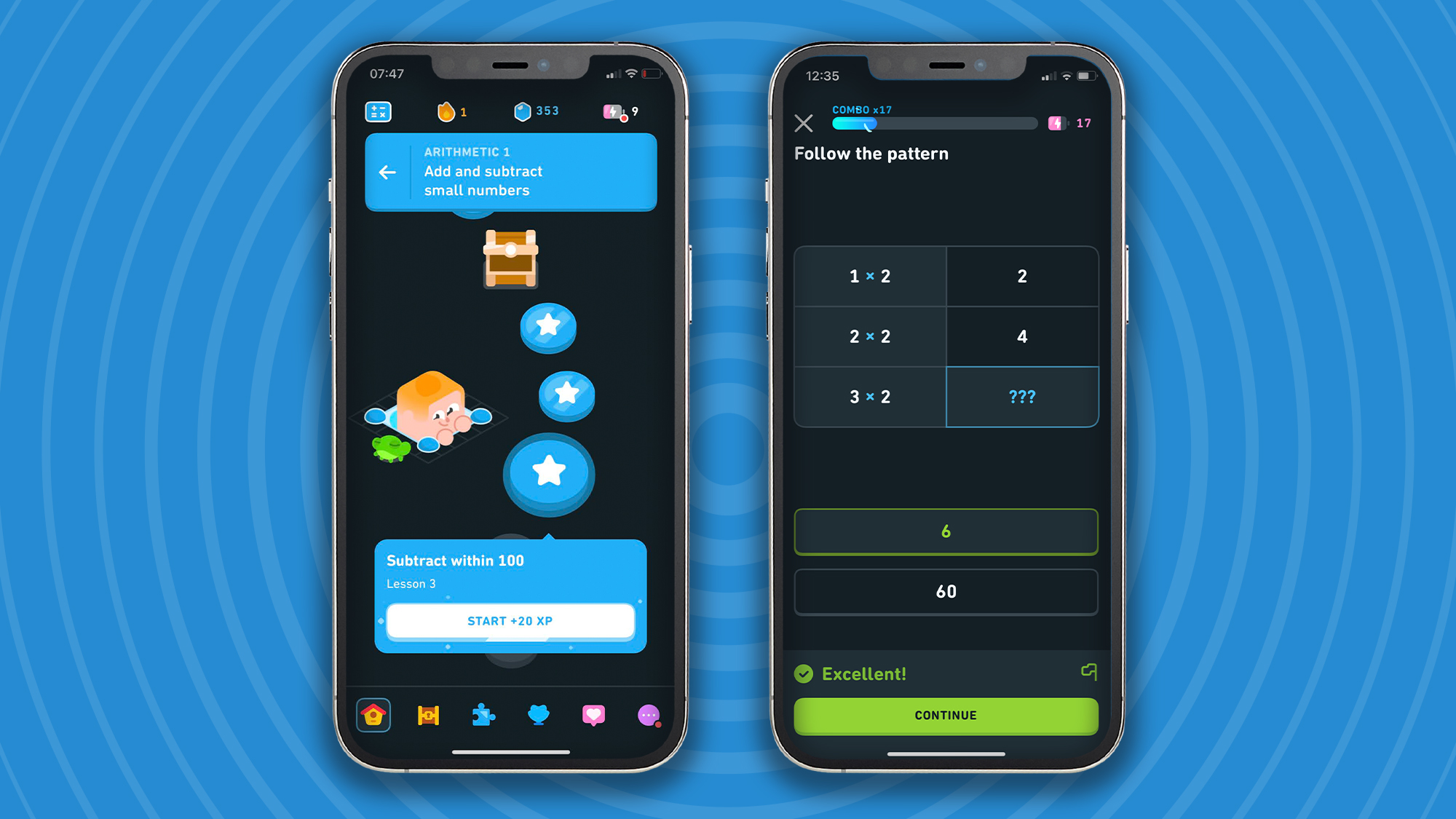
But did you know that language lessons are not the only string to its impressive bow? In fact, in October 2022, the company launched a standalone math app before integrating the module directly into their main app a year later.

Source link

Advertisement
Continue Reading
Click to comment

Leave a Reply

Your email address will not be published. Required fields are marked *

Tech

Apple's TikTok ads for the MacBook Neo are the right kind of weird

Published

on

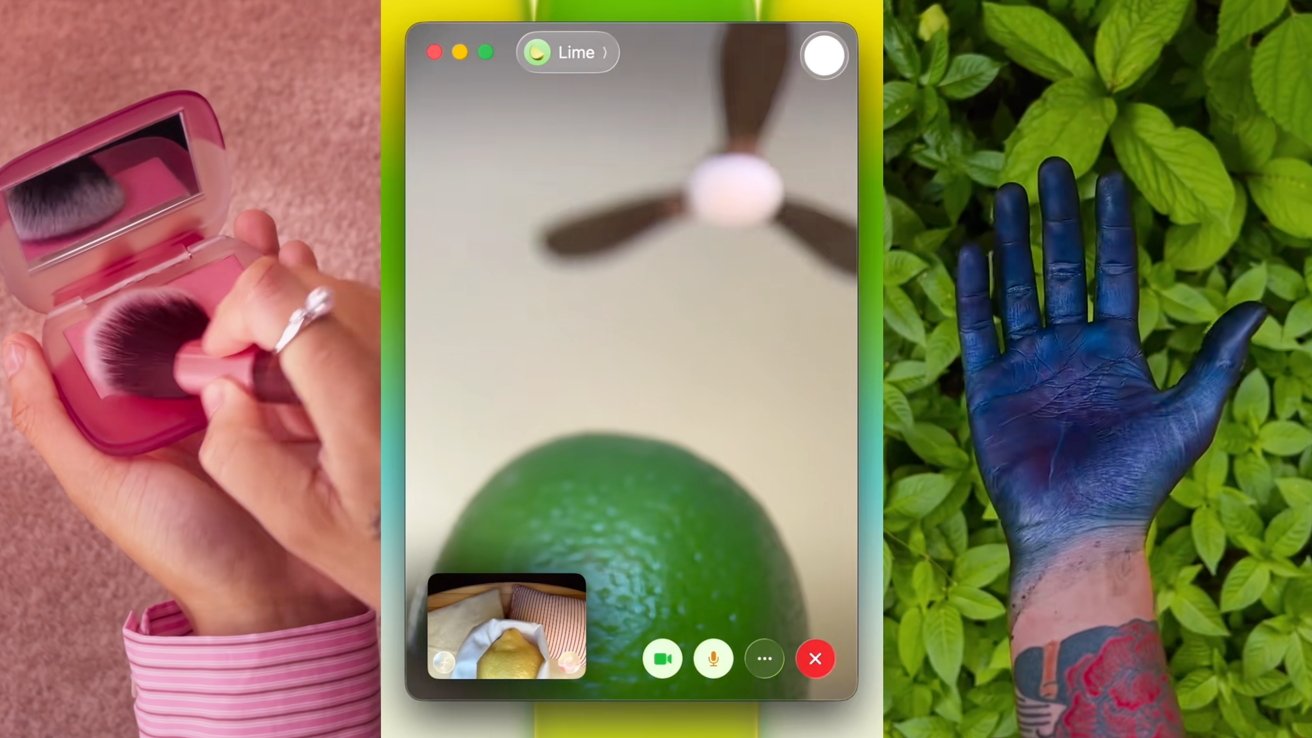
Apple’s TikTok ad campaign has gone down the absurdist route to promote the MacBook Neo. It’s weird, but it works.

Split scene showing: left, hand brushing pink makeup in compact; center, smartphone video call focused on a lime and ceiling fan; right, tattooed arm with deep blue hand over green leaves
Stills from three Apple TikTok videos promoting the MacBook Neo – Image Credit: Apple

In the attention economy that is modern social media, brands have to be bold with their posts while also marketing their wares. In the case of Apple’s latest activity on TikTok, it’s a very rare demonstration of a company “getting it.”
Apple’s introduction of the MacBook Neo is intended to attract a new audience to its hardware line. With a relatively low price point, it’s going after consumers that are more sensitive to budgeting than ever before, where they congregate online.
Continue Reading on AppleInsider | Discuss on our Forums

Source link

Continue Reading

Tech

Is now the time to upgrade?

Published

on

Samsung recently unveiled its flagship Galaxy S26 series, which is headlined by the Galaxy S26 Ultra.

So, if you’re still sporting Samsung’s 2023 Galaxy S23 Ultra, is now the time to upgrade? Are there enough new features and upgrades to warrant the investment?

We’ve compared the specs of the Galaxy S26 Ultra to the Galaxy S23 Ultra and noted the key differences below. Keep reading to decide whether now’s the right time to upgrade.

Keen to see how the Galaxy S26 Ultra compares to other flagship smartphones? Check out our Galaxy S26 Ultra vs Honor Magic 8 Pro and Galaxy S26 Ultra vs iPhone 17 Pro Max comparisons too. Otherwise, our best smartphones and best Android phones guides reveal our current favourites.

Advertisement

Price and Availability

At the time of writing, the Galaxy S26 Ultra is available for pre-order and will launch officially on March 11th. The handset starts at £1279/$1299 for the 12+256GB model.

Advertisement

SQUIRREL_PLAYLIST_10208275

Naturally as it’s three years old, the Galaxy S23 Ultra is no longer readily available to buy directly from Samsung. Instead, it’s possible to pick up the handset (both as a new and a refurbished model) on third-party retailers such as Amazon. The price can vary drastically according to the condition or retailer but, at the time of writing, the handset was available on Amazon from around £500. 

Advertisement

Both run on custom Qualcomm processors, but the Samsung Galaxy S26 Ultra’s is newer

Both the Galaxy S26 Ultra and S23 Ultra run on custom versions of Qualcomm processors. While the S23 Ultra runs on Qualcomm’s 2023 Snapdragon 8 Gen 2 for Galaxy, the S26 Ultra runs on the newer Snapdragon 8 Elite Gen 5 for Galaxy. 

Although we’re yet to specifically review Snapdragon 8 Elite Gen 5 for Galaxy, we have reviewed the default Snapdragon 8 Elite Gen 5 chip as it powers many of the best Android phones of the year so far. We’ve been impressed with the chip’s sheer speed and prowess with everything from casual scrolling and messaging, to intensive tasks such as photo and video editing and even gaming. With that in mind, we can reasonably expect the Galaxy S26 Ultra to offer a similar performance.

Samsung Galaxy S26 Ultra
Samsung Galaxy S23 Ultra

Advertisement

Otherwise, we still found the Galaxy S23 Ultra’s Snapdragon 8 Gen 2 for Galaxy enabled the phone to feel “ultra rapid and responsive in use”. We also found it possible to play AAA mobile games with ray-tracing support too. 

Advertisement

However despite its prowess, keep in mind that the Galaxy S23 Ultra doesn’t run the entire Galaxy AI toolkit. While there are a few features such as photo editing tools and Circle to Search, you will miss out on the likes of Now Brief. In comparison, the Galaxy S26 Ultra supports the entire toolkit. 

Galaxy S23 Ultra only has one more year of promised OS upgrades

Since the launch of the Galaxy S24 series, Samsung has been among the most generous smartphone brands when it comes to offering OS upgrades. Fortunately, Samsung is continuing its legacy with the Galaxy S26 Ultra, as up to seven years of upgrades are promised. This will take the S26 Ultra, and the rest of the S26 series, up to Android 22.

Advertisement

On the other hand, the Galaxy S23 Ultra was only promised up to four years of OS upgrades when it first launched. This means that there’s actually only one more full year of updates available. 

Samsung Galaxy S26 Ultra home screenSamsung Galaxy S26 Ultra home screen
Samsung Galaxy S26 Ultra. Image Credit (Trusted Reviews)

Galaxy S26 Ultra is thinner and lighter

Although at first glance the S26 Ultra and S23 Ultra look fairly similar, there are quite a few noteworthy differences between their design. Firstly, at just 7.9mm, the Galaxy S26 Ultra is a whole 1mm thinner than the S23 Ultra, and actually boasts the title of being the “thinnest Ultra ever”. This is a welcome upgrade over the S23 Ultra, as we concluded that the phone felt hefty and could be difficult to use one-handed.

The S26 Ultra is also lighter too, weighing just 214g compared to 233g.

Advertisement

Galaxy S26 Ultra
Galaxy S23 Ultra

Advertisement

Despite being thinner and lighter, the S26 Ultra actually benefits from a slightly larger 6.9-inch display, whereas the S23 Ultra’s own is 6.8-inch. Not only that, but the S23 Ultra has a more curved display whereas the S26 Ultra’s is flat. 

Otherwise, both handsets are equipped with the S-Pen and sport a Dynamic AMOLED 2X display with a 1-120Hz refresh rate too. However, the Galaxy S26 Ultra is the first of its kind to benefit from a built-in privacy display too, which means the screen is unviewable from certain angles.

Privacy Screen on Galaxy S26 UltraPrivacy Screen on Galaxy S26 Ultra
Samsung Galaxy S26 Ultra. Image Credit (Trusted Reviews)

Galaxy S26 Ultra promises a longer battery life

The Galaxy S26 Ultra is actually fitted with the same-sized 5000mAh battery as the S23 Ultra. This might not match up to the likes of the Find X9 Pro’s 7500mAh alternative, but we still found that the Galaxy S23 Ultra offered us a comfortable all-day battery life.

Although the cell size is the same, the Galaxy S26 Ultra is promised to offer up to 31 hours of video playback on a single charge. Realistically, and based on our experiences with Samsung phones, we expect the S26 Ultra will offer a similar all-day battery life as the S23 Ultra. Of course, we’ll update this versus once we assess this for ourselves.

Advertisement

Advertisement

Galaxy S26 Ultra has higher-res ultrawide and telephoto lenses

There are quite a few differences between the Galaxy S26 Ultra and Galaxy S23 Ultra’s camera hardware. Firstly, although both have a 200MP main lens, the Galaxy S26 Ultra’s sensor is promised to be brighter than its predecessors. 

Galaxy S26 Ultra
Galaxy S23 Ultra

Advertisement

Not only that, but the Galaxy S26 Ultra is also fitted with a 50MP ultrawide lens compared to the S23 Ultra’s 12MP alternative. Considering we concluded the S23 Ultra’s ultrawide lens was able to capture detailed images without distortion, this bodes well for the S26 Ultra. Finally, while both sport telephoto lenses, the S26 Ultra has a 50MP 5x and a 10MP 3x lens too. Instead, the S23 Ultra sports a 3x and 10x set-up. 

We concluded that although the S23 Ultra’s telephoto lenses were somewhat limited, especially when capturing photos in low-light, we were still pleasantly surprised by their overall quality. With this in mind, the promised improvement of the S26 Ultra is certainly welcome.

Early Verdict

With a newer chip, more Galaxy AI tools and a tweaked camera set-up, the Samsung Galaxy S26 Ultra looks set to be one of the best Android phones of the year, and an easy recommendation over the Galaxy S23 Ultra. However, if you’re still sporting Samsung’s 2023 flagship, then you’ve still got a year of upgrades before the phone expires. 

Advertisement

Advertisement

We’ll be sure to update this versus once we review the Galaxy S26 Ultra. However, if you want to experience the latest chip, a seemingly stronger camera and a lighter design, then the Galaxy S26 Ultra does seem like a promising upgrade over the S23 Ultra.

Source link

Advertisement
Continue Reading

Tech

3 of the biggest new Netflix shows to stream in March 2026

Published

on

Netflix is widely regarded as the best streaming service, and it’s easy to see why based on its March line-up alone. Three huge new shows are being added in March, and two of them are returning fan favorites.

The other is a series you may have already seen on Prime Video, but it is being added to Netflix for US audiences. I was impressed with these new additions, and I’d say it’s well worth keeping your subscription this month for these titles alone.

Source link

Advertisement
Continue Reading

Tech

Fanttik’s Spring 2026 Toolkit: – Digital Trends

Published

on

A Compact Arsenal for Your Garage, Yard, and Desktop & Furniture DIY Dreams

If your home project plans have ever been stalled by bulky, single-purpose tools, or the sheer hassle of setup and cleanup, Fanttik’s latest drop is about to become your new best friend. This March, the brand known for packing serious performance into portable designs is unleashing a Spring New Arrivals collection, over 20 tools that targets four major arenas of domestic life: the Garage, the Yard, the Desktop, and the Furniture. Forget the days of dedicating a whole shelf or closet to your gear; this lineup is all about efficiency, power, and saving precious space.

Garage: Your Roadside Rescue and Detailing Squad, Miniaturized

Fanttik’s garage solutions read like a wishlist for any car or bike owner who values preparedness and a clean ride without the bulk. The star here might be the Potent T10 Jump Starter, a pocket-sized powerhouse that can revive a dead car battery and still have juice to top up your phone. It embodies the collection’s ethos: be ready for anything.

Cleaning gets a major upgrade with the ultra-portable NB10 Fold pressure washer. The Fold, as the name implies, collapses for easy stowage in a trunk or corner, yet delivers the punch to blast grime off your bike, patio furniture, or weekend adventure gear.

For interior detailing, the Flip G10 Nano – AutoCare electric brush tackles grime in crevices and on surfaces, while the V8 Mate Car Vacuum quickly cleans seats, floor mats, and hard-to-reach spots. Follow up with the P10 Pro Polisher for a showroom finish.

Advertisement

Tire care spans from casual to professional needs. The compact X11 Ace Bike Pump is a cyclist’s best friend for quick top-ups on the trail or at home. For vehicles, the X10 Pro Tire Inflator handles daily maintenance and emergency top-ups with reliable precision, while the X10 Pro Max goes further with its precision fill-and-release valve—allowing off-roaders to accurately adjust pressure up or down to match sand, rock, or pavement conditions.

Yard: Tame Your Outdoor Oasis with Less Effort

Transform yard maintenance from a chore marathon into a series of quick wins. Fanttik’s outdoor tools are designed for speed and simplicity. The NB10 Flip Water Gun makes washing the deck, patio furniture, or even the family dog a task measured in minutes, not hours—with adjustable spray patterns for every need.

For greenery care, Fanttik brings specialized efficiency to garden maintenance. The Z10 Pro Hedge Trimmer is designed for precise shaping of hedges and trimming of small shrubs (handling branches up to 8mm thick), making light work of keeping your greenery neatly manicured. For more targeted pruning tasks, the Y10 Pro Electric Pruning Shears provide the power and sharp blades needed to effortlessly cut through garden branches, significantly reducing the hand strain typically associated with manual shears during extended gardening sessions.

The Cruise V11 APEX is a versatile 4-in-1 tool that goes beyond the yard—it’s a portable cordless vacuum, blower, extractor, and inflator all in one. With suction for quick cleanups, blowing power for debris, and inflation for pool floats or camping gear, it handles tasks from car interiors to home messes with ease. An 180-degree rotating handle makes switching between modes effortless, and the included 8 accessories ensure you’re ready for cleaning, storage, and inflation needs anywhere. The Flip G10 Nano – HomeCare electric brush easily cleans outdoor furniture, grills, and siding. For quick repairs like tightening a loose fence panel or securing deck boards, the compact REX K2 Apex Impact Driver delivers just the right amount of torque in a user-friendly format.

Advertisement

Desktop DIY: Precision Tools for Makers and Tinkerers

For the creators, model builders, and 3D printing enthusiasts, a clean, precise workspace is key. Fanttik’s desktop lineup supports the entire process. The F2 Series Rotary Tool (F2 Master Kit, F2 Pro Kit, and F2 Master Eng) offer the control needed for detailed engraving, smoothing 3D prints, or intricate crafting. And there’s a F2 Master Pet which is specifically designed for safe, efficient pet nail grinding.

The compact V8 Mate Handheld Vacuum is perfect for instantly sucking up dust, shavings, and debris from sanding, carving, or cleaning up after any desk project—keeping your creative space tidy without missing a beat. For electronics cleaning, the new B11 Pro Max electric air duster delivers professional-grade power with its 150,000RPM motor, blasting 160g of force at 80m/s to effortlessly clear dust from PC cases and keyboards. Its MegaBoost One-Tap Booster provides instant deep cleaning at the push of a button, making quick work of both everyday maintenance and professional-grade tasks. Meanwhile, the versatile B11 Mix Blower serves as a focused air duster for lighter cleaning or, with its fan attachment, a personal desk fan during long crafting sessions.

Furniture DIY: Build and Repair with Pro-Level Ease

Finally, Fanttik brings confidence to home repairs and furniture projects. The NEX S2 Pro Max Electric Screwdriver takes the strain out of assembling flat-pack furniture or fixing wobbly chairs with its adjustable torque and ergonomic design.

The A11 Ultra Distance Measurer uses a unique rolling wheel to accurately capture curved dimensions—perfect for planning upholstery replacement, custom shelving, or any project requiring precise measurements of irregular surfaces.

Advertisement

For light cutting tasks on PVC, wood, or metal during small repairs or creations, the R11 Pro Reciprocating Saw provides manageable power in a user-friendly format, making small upgrades and repairs genuinely approachable.

The Bottom Line

Fanttik’s Spring 2026 collection, available starting March 10th, feels like a direct response to the modern DIYer’s needs: power without the footprint, versatility without the compromise. Learn more and explore the full Spring New Arrivals collection at fanttik.com.

Advertisement

Source link

Continue Reading

Tech

Accenture to acquire Seattle network data company Ookla in $1.2B deal

Published

on

Ziff Davis has agreed to sell its Connectivity division — which includes Ookla, the Seattle-based network analytics company known for its flagship Speedtest app — to Accenture in a $1.2 billion deal announced Tuesday.

Ziff Davis acquired Ookla in 2014. The company’s Connectivity division reported $231 million in revenue in 2025, about 16% of Ziff Davis’ total sales.

The deal also includes Downdetector, RootMetrics, and Ekahau. Ookla, which launched in 2006 and employs about 430 people, acquired Seattle-area network performance data company RootMetrics in 2021.

Accenture said the deal will bolster its network intelligence and customer experience capabilities for communications providers, hyperscalers and large enterprises. Julie Sweet, Accenture chair and CEO, said modern networks have become “business-critical platforms” and that organizations need performance measurements to optimize experience, revenue and security.

Source link

Advertisement
Continue Reading

Tech

Palmer Luckey’s retro gaming startup ModRetro reportedly seeks funding at $1B valuation

Published

on

ModRetro, the vintage gaming startup by Palmer Luckey, is in talks to raise funding at a $1 billion valuation, according to the Financial Times.

The company launched its first product, a Game Boy-style handheld device called the Chromatic, in 2024. The Verge’s Sean Hollister said it “might be the best version of the Game Boy ever made,” but found it hard to separate from Luckey’s reputation as founder of defense tech startup Anduril Industries.

“If Lockheed Martin made a Game Boy, would you buy one?” Hollister asked.

Luckey said last year that he’d been trying to build a Game Boy-inspired device “off and on as a hobby for almost seventeen years now” and described the Chromatic as the result of “hundreds of irrational decisions”  that made it “an uncompromisingly authentic celebration of everything that made the console special.”

Advertisement

The FT reports that ModRetro is working on other devices, including one designed to replicate the Nintendo 64.

Meanwhile, the Trump administration appears to have embraced Luckey’s vision for autonomous weapons, with Anduril reportedly in talks to raise a new funding round at a $60 billion valuation.

Source link

Advertisement
Continue Reading

Tech

Ring’s Jamie Siminoff is still trying to calm privacy fears, but his answers may not help

Published

on

When Ring founder and CEO Jamie Siminoff decided to use the company’s first-ever Super Bowl commercial to introduce Search Party, an AI-powered feature that uses Ring camera footage to help find lost dogs, he expected Americans to love it. Instead, the TV spot set off a firestorm.

Practically since the moment the ad aired in February, Siminoff has been making the rounds on CNN, NBC and in the pages of the New York Times, explaining that his critics fundamentally misunderstand what Ring is building. He sat down with TechCrunch a few days ago to make his case again, and while he was candid and eager to re-frame the narrative, some of his answers may raise fresh questions among those already uneasy about the growth of home surveillance.

The feature at the center of the controversy is fairly mundane on the surface: A dog goes missing, Ring alerts nearby Ring owners to ask whether the animal shows up in their footage, and users can respond or ignore the request entirely to stay uninvolved. Siminoff leaned heavily on this throughout our conversation — the idea that doing nothing counts as opting out, and no one is conscripted into participating.

“It is no different than finding a dog in your backyard, looking at the collar and deciding whether or not to call the number,” he said.

Advertisement

What he believes actually prompted the backlash was the visual in the Super Bowl spot: a map showing blue circles pulsing outward from house after house as cameras switched on across a neighborhood grid. “I would change that,” he said. “It wasn’t our job to try to poke anyone to try and get some response.”

Ring also picked a rocky moment to make its case. Nancy Guthrie, the 84-year-old mother of NBC show Today anchor Savannah Guthrie, had vanished from her Tucson home in late January. Footage from a Google Nest camera at the property showing a masked figure trying to smother the lens with foliage soon swept across the internet. Suddenly, home surveillance camera makers found themselves squarely into the center of a national argument about safety, privacy, and who gets to watch whom. 

Siminoff leaned into the Guthrie case. In a separate interview with Fortune, he contended it was an argument for putting more cameras on more houses. “I do believe if they had more [footage from Guthrie’s home], if there was more cameras on the house, I think we might have solved [the case],” he said. Ring’s own network, he noted, had turned up footage of a suspicious vehicle two-and-a-half miles from the Guthrie property.

Techcrunch event

San Francisco, CA
|
October 13-15, 2026

Advertisement

Whether you find that heartening or disturbing depends on your point of view. Siminoff clearly believes video surveillance is a social good, but some might hear those statements and see a company founder using a kidnapping to sell more of his products.

Either way, the discomfort with Search Party isn’t simply about those blue concentric circles in the ad. The feature sits alongside two others: Fire Watch, which crowdsources neighborhood fire mapping, and Community Requests, which allows local law enforcement to ask Ring users in a given area whether they have relevant footage from an incident.

Advertisement

Ring relaunched Community Requests in September through a partnership with Axon, which makes police body cameras and tasers, and operates the evidence management platform, Evidence.com. Axon and Ring announced the partnership in April of last year, shortly after Siminoff rejoined the company after stepping away in 2023.

A previous version of that partnership involved Flock Safety, which operates AI-powered license plate readers. Ring ended that arrangement several days after the Super Bowl ad aired, with Siminoff citing the “workload” it would create when he talked with us.

Siminoff declined to address whether reports of Flock sharing data with U.S. Customs and Border Protection also played a role. Dozens of towns across the U.S. have cut ties with Flock over exactly those concerns. Still, the timing of Ring’s decision was notable. While Siminoff believes some customers are misreading his products, he knows Ring can’t afford to dismiss their anxieties, particularly right now.

None of this is happening in isolation. Just days ago, NPR published an investigation compiled from dozens of accounts from people who found themselves caught in the Department of Homeland Security’s expanding surveillance apparatus, including U.S. citizens with no immigration status issues at all.

Advertisement

One woman, a constitutional observer trailing an ICE vehicle in Minneapolis in late January, described a masked federal agent leaning out the window, photographing her, and then calling out her name and home address. “Their message was not subtle,” she told NPR. “They were, in effect, saying, we see you. We can get to you whenever we want to.” 

Siminoff seems to understand that his answers about Ring’s data practices take on added weight as a result. When we talked, he pointed to end-to-end encryption as Ring’s strongest privacy protection, and confirmed that when it’s enabled, not even Ring employees can view the footage, as decryption requires a passphrase tied to the user’s own device. He described this as an industry first for residential camera companies. 

The matter of facial recognition is where things get more tangled. Two months before the Super Bowl ad, Ring rolled out a feature called Familiar Faces that lets users catalog up to 50 frequent visitors — family members, delivery drivers, or neighbors — so that the camera sends a notification identifying the person at the door, say, “Mom at Front Door.” Siminoff described the feature enthusiastically during our conversation, saying that he gets alerts, for example, when his teenage son pulls into the driveway.

He compared it to the facial recognition now routine at TSA checkpoints – the implication being that the public has already made its peace with this kind of thing. When asked about consent from people who appear on a Ring camera but never agreed to be catalogued, he said simply that Ring adheres to applicable local and state laws. 

Advertisement

Siminoff was also careful when asked whether Amazon draws on Ring’s facial recognition data. “Amazon does not access that data,” he said, then he added: “In the future, if we could see a feature where the customer wanted to opt in to do something with that, maybe you could see that happening.”

He further volunteered that end-to-end encryption is an opt-in feature: Users have to manually enable it in the Ring app’s Control Center. But according to Ring’s own support documentation, the tradeoff for enabling it is steep: The full list of features disabled by end-to-end encryption includes event timelines, rich notifications, quick replies, video access on Ring.com, shared user access, AI video search, 24/7 video recording, pre-roll, snapshot capture, bird’s eye view, person detection, AI video descriptions, video preview alerts, virtual security guard, and Familiar Faces, which requires processing in the cloud.

In other words, the two things Ring is actively promoting as flagship capabilities — AI-powered recognition of who’s at your door, and true privacy from Ring itself — are mutually exclusive. You can have one or the other, not both.

As for whether Ring users should worry about their footage ending up in front of a federal immigration agency, Siminoff said no, explaining that community requests run only through local law enforcement channels. He pointed to Ring’s transparency report on government subpoenas, but didn’t say what happens when that boundary proves porous.

Advertisement

Unsurprisingly, Siminoff is building toward something that reaches farther than doorbell cameras. Ring has more than 100 million cameras in the field, and is now quietly dipping a toe into enterprise security with a new “elite” camera line and a security trailer product.

He said that small businesses have been pulling the company’s cameras into their spaces, whether Ring markets to them or not. He’s also open to outdoor drones: “If we could get the cost in a place where it made sense.”

On the topic of license plate detection, which Flock Safety has made its core business, he declined to say never. Ring is “definitely not” working on it today, he said, although he didn’t say the company wouldn’t explore that option. “It’s very hard to say we’re never going to do something in the future.”

Siminoff frames all of it through a belief that he says he has held from Ring’s beginning: Each home is a node controlled by its owner, and residents should be able to choose whether to participate in neighborhood-level cooperation when something happens. 

Advertisement

But we live in a time when federal agents are photographing and identifying civilians observing arrests, and a kidnapping case has become a national talking point about privacy. The question isn’t just about whether Ring’s opt-in framework is designed well; it’s whether what Ring is building can remain as benign as Siminoff may intend it.

Source link

Continue Reading

Tech

Screen-Free Schools? Some Legislators Push for a New Normal

Published

on

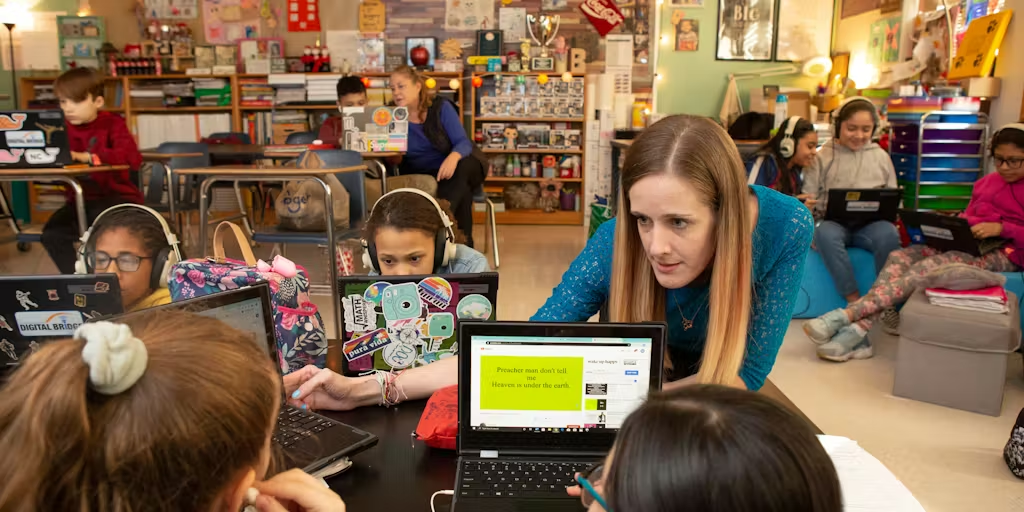
When Kim Whitman’s son was in kindergarten in 2015, it was the first time their school district rolled out a one-to-one device program, assigning an electronic device to every child. Beyond using it in the classroom, the children were required to bring it home each night to charge it — but with that came the temptation to use the device after hours.

“My children never had a device and suddenly they had these iPads at home I had to manage,” Whitman, now the co-lead for the Distraction-Free Schools Policy Project, says.

Over a decade later, personal devices are more ubiquitous in some classrooms than mechanical pencils. Device adoption catapulted during the COVID-19 pandemic, thanks to an influx of federal dollars and to usher children into virtual schooling. But that adoption rush created what some experts deemed as a bit of toothpaste-out-of-the-tube moment, where decisions were made without fully thinking through the ramifications.

“For a lot of logistical reasons and necessity through the pandemic, we sort of went all in — we had to,” says Kate Blocker, director of research and programs at Children and Screens: Institute of Digital Media and Child Development. “Digital programs and edtech broadly has come with a lot of promise, including improving student learning and improving teacher and administration efficiency. The question people are starting to ask themselves is, ‘Are we seeing those benefits?’”

Advertisement

Some legislators and advocates are pushing to roll back the reliance on devices, particularly at a younger level when children are more susceptible to distractions.

“You don’t tell smokers to sit next to a pack of cigarettes,” Angela Duckworth, a professor at the University of Pennsylvania and leader in the educational psychology sector, says. “You tell them to remove yourself from temptation.”

What Brought Us Here

With many parents thinking more critically about their children’s relationships with screen time comes a new swell of concern about personal devices, especially in learning environments. According to federal data, 9 in 10 public schools had a one-to-one program giving every student a school-issued device for the 2024–25 school year.

While research is sparse on the overall effects of personal devices like laptops and iPads in school, they are becoming a proven distraction in the classroom. Duckworth served as the lead investigator for a newly released study that found teachers estimate 1 in 3 students used laptops during class for non-academic purposes, including texting and social media scrolling.

Advertisement

“It was becoming clear to us, from our previous open-ended responses to the survey, that phones are not the only digital distraction in the classroom,” she says.

Duckworth herself has a “no technology” rule in her lecture hall, put in place after finding many of her students were using their laptops to watch movies, online shop or study for other classes.

“If you see a kid with a phone, you know they’re not supposed to be doing something,” she says. “With a laptop, kids become Oscar-winning actors and actresses: They look up and down and seem like they’re doing something they’re supposed to be doing.”

There is also the concern of data collection for unknowing students.

Advertisement

“I’m aware of pressure around data and data management, with questions around appropriate guardrails in place,” Blocker says. “So many companies hold an immense amount of student data. Is that being managed properly and held to the same standards as the curriculum?”

And the rise — and rising fear — of artificial intelligence may have also fueled this hard look at education technology and its devices.

“There’s the larger techno-panic happening around devices in schools especially now that AI has arrived,” says Carrie James, co-director of the Center for the Center for Digital Thriving at the Harvard Graduate School of Education. “In the past, schools have been very intentional: They have a school committee meeting and make very clear decisions about which pieces of technology they’re going to adopt. The challenge around generative AI is it arrived on everyone’s devices, and now schools have to reckon with it. I think that piece is exacerbating it.”

Reigning in Tech

Whitman says roughly nine states have presented some form of “Safe Schools Technology” legislation, following the lobbying of the Distraction-Free Schools Policy Project.

Advertisement

She is quick to point out the legislation is not seeking to ban technology entirely, but instead will require schools to limit it so that students don’t have “unsafe, ineffective or inappropriate experiences.”

“We believe in tech education,” Whitman says. “You need education on technology — how to use Excel, how to type — these are all really important skills for students to have. But it doesn’t mean we have to teach everything through the device.”

State policymakers are trying a few different methods of regulating edtech through legislation. There’s limiting screen time, but keeping the technology – a strategy particularly popular in elementary schools – and has been introduced in bills in Oklahoma, West Virginia and Missouri. Vermont introduced a bill earlier this year allowing parents to opt their kids out of using electronic devices in the classroom.

And some leaders in Kansas are attempting to ban hardware devices in elementary schools, but allow a shared-device model — like a computer lab — in middle schools, and limit classroom screen time to one hour a day. For high school students, that would be bumped up to 90 minutes a day.

Advertisement

There is also a focus on the edtech itself, with state efforts attempting to ensure it is certified in the same way other curricula are certified, outlining steps for evaluating and choosing products and communicating about that process to parents.

That is a particularly tricky conversation, with questions swirling around the onus of verification: if it is the school’s job or the company’s responsibility, or if that task belongs to a third party. Experts say there is no national, catch-all system that easily shows if an edtech company does what it claims to do, though the Internet Safety Lab and American Academy of Pediatrics have given some guidelines that can help.

Whitman pushed for third-party intervention.

“There is nobody right now that is confirming these products are safe, effective and legal,” she says. “It should not fall on the district’s IT director; it would be impossible for them to do it. And the companies should not be tasked with doing it — that would be like nicotine companies vetting their own cigarettes.”

Advertisement

But many districts, particularly those that serve low-income and minority populations, are in a tough spot with mitigating edtech usage and implementations. They often do not have the funds to purchase new textbooks, which typically cost more than their digital counterparts. They have also invested heavily — often through grants or federal funds — in digital devices.

“That is in fact the conundrum: School administrators are in a tug of war,” Blocker says. “They’ve invested in so much, and a lot of the products came with promise. It’s not like they grabbed a brick and said, ‘I’m going to make this work.’ They were told they were going to have all these benefits.”

And James, of the Center for the Center for Digital Thriving, said it is important to remember some student populations, such as her neurodivergent child, benefit greatly from the expanded access digital products can provide.

“Edtech and assistant technology are key for her learning,” James says, pushing against a sweeping blanket ban. “That’s where the decision has to be school-community specific. Educators know their community best, and these regulations have to be designed for their students.”

Advertisement

Widespread Adoption?

The new efforts targeting laptops and edtech tools follow a swell of states banning student cellphones in the classroom, with many restricting them in between class periods and lunch time as well. While that has been one of the rare successful bipartisan efforts at the state and federal levels, experts say going entirely device-free in schools is a much more nuanced conversation.

“School phone bans are less about technology for learning’s sake and more about technology interfering with learning,” Blocker says. “I think it was clearer for everyone to see why [banning phones] might have a good outcome. It is much harder with edtech; there is evidence, particularly for older students, that when used well it can be beneficial.”

Whitman disagrees, though, saying while it may be a slower uptick than phone bans, she does believe edtech bans will eventually reach that same level.

“Parents are becoming aware and coming together with collective action,” she says. “I think this will be similar to phone-free schools eventually. It will, but we’re on the cusp of it right now.”

Advertisement

James urges schools and districts to focus less on silver-bullet solutions like total bans and more on multifaceted approaches to integrating technology well.

“Bans might feel like they can be a starting point for better learning, but they can’t really be the finish line,” she says.

For the sake of children and teens, James adds, “we have to build agency and intentionality for using technology well, because as soon as they walk out of school, you typically have pretty incredible access to technology.”

Source link

Advertisement
Continue Reading

Tech

What is the release date for Virgin River season 7 on Netflix?

Published

on

I know, I know… we need answers fromVirgin River season 7 as much as we need air to breathe. The season 6 finale was a total shocker, leaving us with five huge cliffhangers that need immediate answers.

Brie (Zibby Allen) needed to decide whether she wanted to marry Mike (Marco Grazzini), while Brady (Ben Hollingsworth) wanted to get his money back from mysterious Lark (Elise Gatien).

Advertisement

Source link

Continue Reading

Tech

Augur raises $15M to protect critical infrastructure

Published

on

A London startup founded by the creator of safety app Path is betting that the cameras and sensors already deployed across Europe’s transport hubs, stadiums, and power stations are gathering dust when they matter most.


In the first week of February 2026, anarchists severed electrical cables near Bologna on the opening day of the Milan–Cortina Winter Olympics, stranding thousands of travellers across northern Italy.

That same month, the Vulkangruppe,  a far-left German extremist group with a fifteen-year record of infrastructure attacks, brought down the Lichterfelde power station in Berlin, cutting electricity to around 45,000 homes in temperatures well below freezing. One elderly resident died.

The previous September, a ransomware attack on aviation IT provider Collins Aerospace caused widespread disruption at Heathrow, Brussels, and Berlin airports, forcing airlines to revert to manual check-in processes across the continent.

Advertisement

The 💜 of EU tech

The latest rumblings from the EU tech scene, a story from our wise ol’ founder Boris, and some questionable AI art. It’s free, every week, in your inbox. Sign up now!

Three incidents, three different threat actors, three different attack vectors. What they share is this: in each case, organisations responsible for public safety found themselves scrambling to understand, in real time, what was happening and where.

That gap, between what surveillance infrastructure sees and what operators can actually do with the data during an unfolding incident, is the problem a London startup called Augur is trying to close.

Advertisement

The company announced today that it has raised $15 million in a seed round led by Plural, the early-stage European fund co-founded by the founders of Wise, Skype, and Songkick, with additional participation from First Kind, SNR, Flix, and Tiny VC.

Harry Mead, who serves as CEO, is not an obvious fit for the defence-adjacent security sector. Before Augur, he ran restaurants and then retrained in coding to build Path Community, a personal safety app, launched in December 2021, that let users share their journey with trusted contacts and send automatic alerts if they deviated significantly from their route.

The app attracted enough attention to earn Mead a personal letter of thanks from then-Prime Minister Boris Johnson and a Points of Light award from the government. The problem Path was trying to solve, people feeling unsafe in public spaces, and the infrastructure around them failing to help, is essentially the same problem Augur is addressing at a much larger scale.

Alongside Mead, the company’s founders include Imran Lone as chief technology officer and Stefan Kopieczek as head of engineering.

Advertisement

Both are described in company materials as Palantir alumni, bringing what Augur says is nearly two decades of combined experience working with European governments, defence organisations, and public-sector operators on complex, data-driven security challenges.

Since launching in 2024, the company has grown to 30 people in London.

The investors and their framing

Plural’s Khaled Helioui led the investment. Helioui is a co-founder and partner of the fund, whose other co-founders include Taavet Hinrikus of Wise and Sten Tamkivi of Skype, and has previously led Plural’s investment in Helsing, the European defence AI company. His public statement on the Augur deal was notably geopolitical in tone, even by the standards of a European defence-tech investment round.

“When it comes to protecting our people and critical infrastructure, we cannot afford to be as complacent and naive as we were in protecting Ukraine,” Helioui said. “The new focus on grey zone warfare and domestic sabotage is not a threat we are currently equipped to contain.”

Advertisement

The subtext is clear. Plural, which positions itself as a fund willing to back companies addressing systemic risks, has made a bet that the European market for critical infrastructure security technology is about to expand sharply.

The bet is not an unreasonable one. Western security research organisations, including IISS and CSIS, have documented that state-linked sabotage attacks on European infrastructure roughly tripled between 2023 and 2024, targeting transport networks, energy facilities, and communications infrastructure.

Martyn’s Law, formally the Terrorism (Protection of Premises) Act 2025, named after Martyn Hett, who died in the 2017 Manchester Arena attack, received Royal Assent in April 2025.

With an implementation window of at least 24 months, venues and operators across the UK face new statutory duties around threat assessment and security measures. Augur is pitching directly into that compliance pressure.

Advertisement

The harder question

Whether Augur’s technology actually works in the environments it is targeting is a question the company has not yet had to answer publicly. It says it has begun deployments with “major UK infrastructure and venue operators” but has not named them.

Critical infrastructure operators and government bodies are notoriously slow procurement clients. Their reluctance to move quickly is partly rational;  the consequences of a security system failing in a live incident are severe, and partly institutional.

Winning their trust requires a combination of technical credibility, regulatory compliance, and relationship-building that takes time to accumulate.

The $15 million will be used to accelerate product development and expand deployments. The company’s pitch, stripped to its essentials, is that it can deliver meaningful improvement in situational awareness without asking clients to replace their existing hardware or compromise on privacy.

Advertisement

If it can demonstrate that in live deployments, the market it is addressing is large and, increasingly, legally mandated. If it can’t, the cameras will keep recording, and operators will keep scrambling.

Source link

Advertisement
Continue Reading

Trending

Copyright © 2025