Tech
Naim CI-Uniti 102 Review: 150 Watts of Streaming Hi-Fi You Can Hide Almost Anywhere

The problem with creating a product that helps revolutionize an entire category is that everyone else gets years to study what you did right.
When the Naim Uniti Atom arrived in 2017, the idea of combining a serious integrated amplifier, network streamer, DAC, attractive color display and genuinely high-end industrial design in one relatively compact box still felt rather novel. There had been all-in-one systems before it, but the Atom helped change expectations about what one could look like, how easy it could be to use and, most importantly, how good it could sound.
Almost a decade later, I still consider the Uniti Atom one of the best products of its kind. It also remains in Naim’s lineup, which says something about how well the original concept has aged. There is, however, a rather large elephant sitting on top of that beautiful volume control: the Uniti Atom currently costs $3,799 in the United States.
That was easier to defend when the market for genuinely good streaming integrated amplifiers was much smaller. In 2026, consumers are swimming in them. Bluesound, NAD, WiiM, Cambridge Audio, Marantz and others have spent years driving prices down while adding more power, HDMI connectivity, room correction and increasingly sophisticated streaming platforms. Some of those products do not have the Atom’s build quality, industrial design or particular sonic character, but $3,799 buys an awful lot of amplifier today.
Which makes the Naim CI-Uniti 102 considerably more interesting than its rather anonymous black box might suggest.
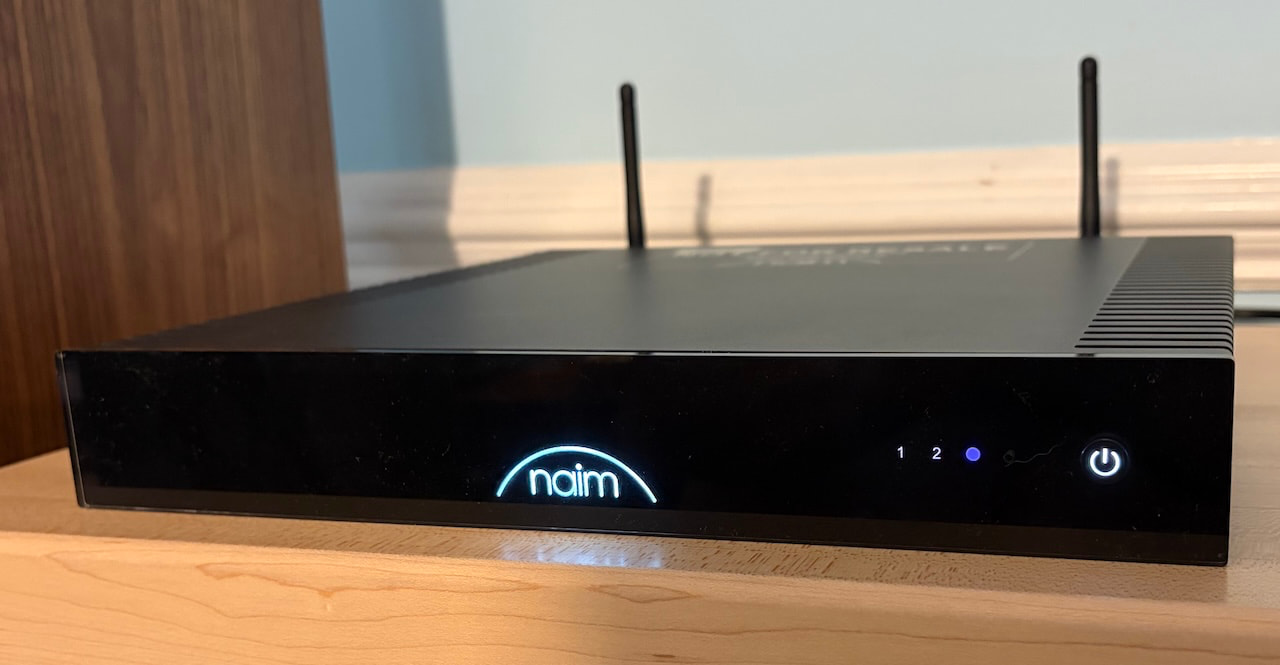

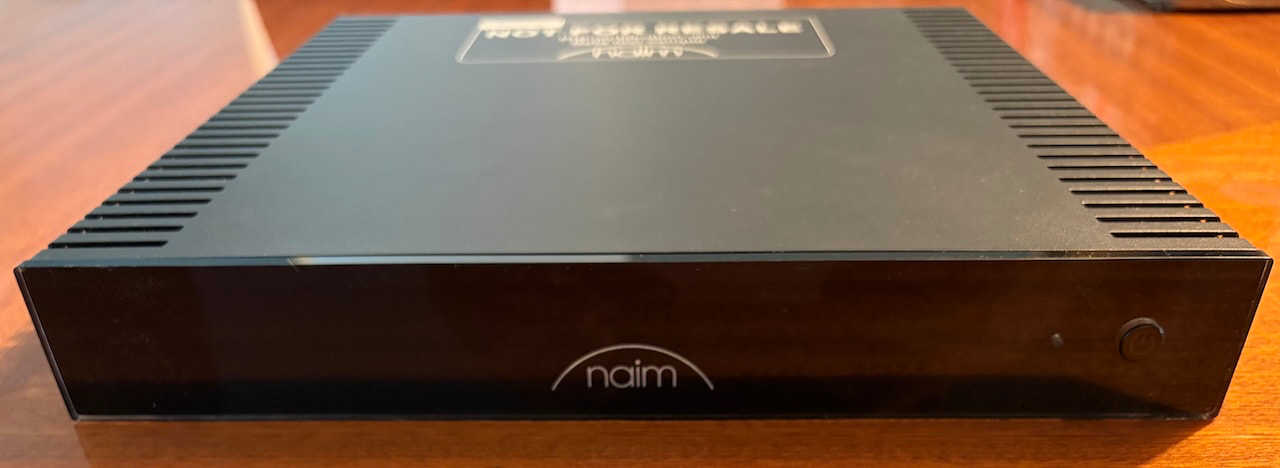
Designed primarily for custom installation, the CI-Uniti 102 strips away much of what made the Uniti Atom such an object of desire. There is no large color display dominating the front panel, no gorgeous illuminated volume control begging to be touched and very little about its appearance that screams expensive British Hi-Fi. It is meant to disappear into a rack, cabinet or installation and get on with the job.
What it gives you instead is potentially far more consequential: Naim’s streaming platform, HDMI eARC, extensive control and integration options, and 150 watts per channel into 8 ohms from a compact chassis. Its regular U.S. price is $1,799, and it is currently selling for even less through at least one major retailer.
That creates a question I did not expect to be asking when this review began. Is the CI-Uniti 102 merely a very capable custom-installation product, or has Naim inadvertently created a more rational Uniti for people who care far more about performance than having the hardware on display?
And if it can deliver enough of the experience that made the Uniti Atom so special for less than half the money, the more uncomfortable question might be what that says about the Atom’s $3,799 asking price in 2026.
Related Reviews:
More Than a Uniti Without the Pretty Bits
The CI-Uniti 102 might have been conceived for the custom installation market, but there is nothing preventing it from becoming the center of a very straightforward two-channel system. In fact, once you stop worrying about where Naim expects dealers to install it, the proposition becomes rather more interesting.
Inside the 1U chassis is a two-channel amplifier rated at 150 watts per channel into 8 ohms and 260 watts per channel into 4 ohms. That is considerably more power than the Uniti Atom and enough on paper to expand the range of loudspeakers one might reasonably consider.
Naim specifies a frequency response of 5Hz to 70kHz, THD+N below 0.006%, a 110dB A-weighted signal-to-noise ratio and support for digital audio up to 32-bit/384kHz. The entire thing measures just 11.75 inches wide and deep, 1.75 inches high and weighs 9.9 pounds.
One important distinction between the CI-Uniti 102 and the Uniti Atom is the amplifier topology. The CI-Uniti 102 uses Class D amplification, rather than the Class A/B design employed by the Atom, which helps explain how Naim is able to extract 150 watts per channel into 8 ohms and 260 watts into 4 ohms from such a compact 1U chassis.
Naim has not simply stuffed a more powerful Atom into a black box and removed the expensive display. The CI-Uniti 102 takes a fundamentally different approach to amplification, prioritizing efficiency, power density and installation flexibility while retaining Naim’s streaming platform and system integration capabilities.
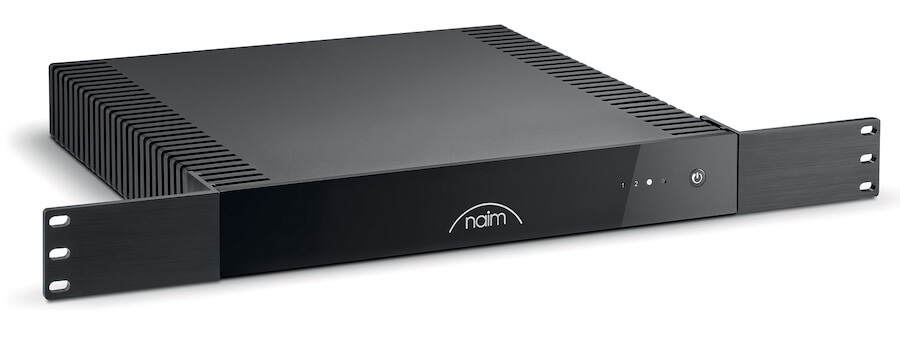

That small footprint makes the CI-Uniti 102 unusually adaptable. It can live in a conventional equipment rack using the supplied 19-inch rack mounting hardware, disappear inside a cabinet, or sit somewhere considerably less conspicuous than most integrated amplifiers. The unit itself is designed for indoor installation, although Naim specifically states that it can be used to power outdoor loudspeakers.
In other words, do not install the amplifier beside the swimming pool unless your home insurance policy has become tiresome and you are eager to meet both the claims adjuster and the local forensic pathologist. The district attorney may want a word as well.
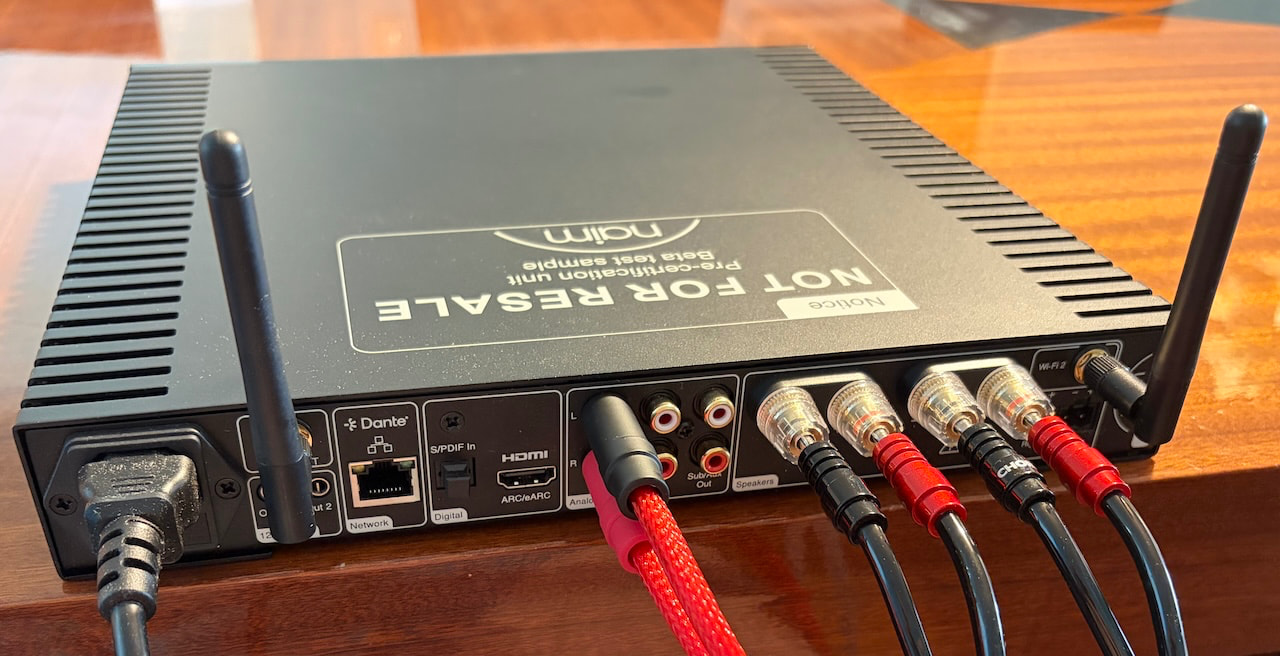
For a single-room system, the CI-Uniti 102 covers most of the sources that people actually use in 2026. Streaming support includes TIDAL and TIDAL Connect, Qobuz, Spotify Connect, Presto Music, UPnP, Internet Radio, AirPlay 2 and Chromecast, along with Bluetooth. Network connectivity is available through Gigabit Ethernet or Wi-Fi 6. There is also Dante receiver capability at 48kHz, which will matter considerably more to custom installers and sophisticated networked systems than it will to someone streaming Miles Davis in the den.
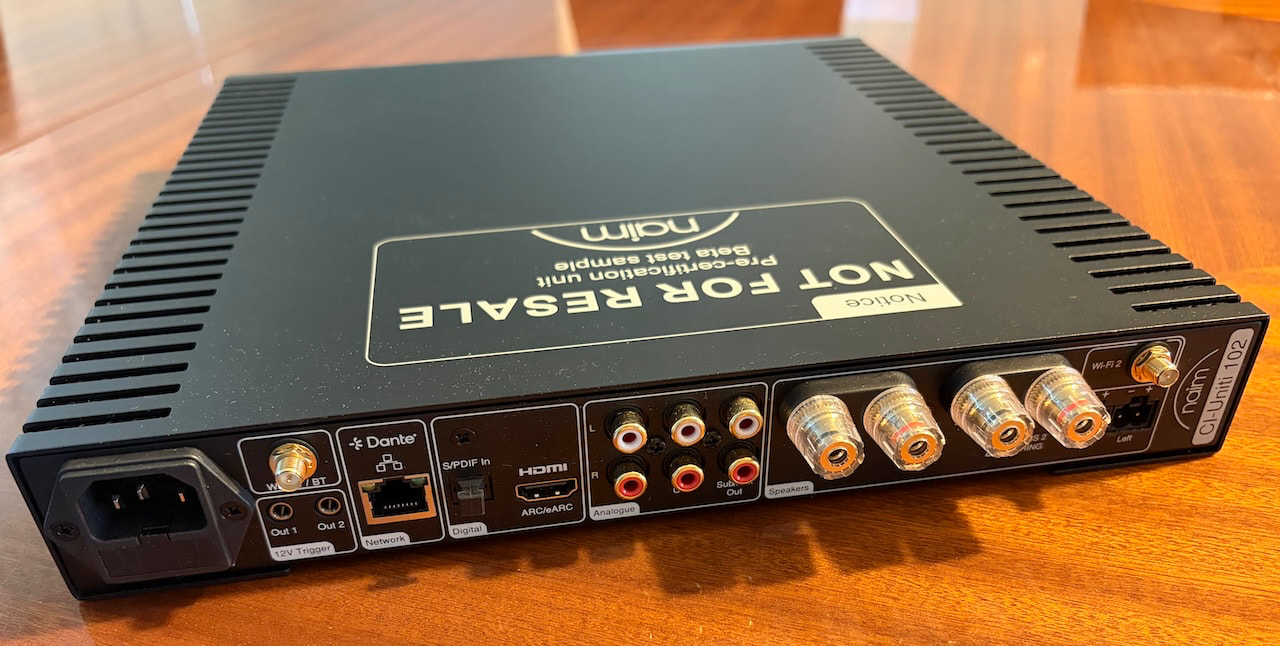

Physical connectivity includes a stereo RCA analog input, S/PDIF digital input and HDMI eARC, with the latter supporting two-channel LPCM up to 24-bit/192kHz. That makes the CI-Uniti 102 a potentially compelling alternative to a soundbar for someone who wants a proper pair of loudspeakers connected to their television without building a full home theater system.
Add a network connection and you have television audio, streaming and amplification inside one very small box. A turntable can also be used through the analog input, but you will need a turntable with an integrated phono stage or an external phono preamplifier because the CI-Uniti 102 does not include one.
Naim also provides two independent stereo RCA outputs, identified as Main and Sub/Aux, which considerably broadens what you can build around it. The Focal & Naim Manager software provides DSP configuration including EQ, limiters, active crossovers and time alignment, along with dedicated speaker profiles for compatible Focal CI loudspeakers. That means the secondary output can be configured for a subwoofer or another zone, and installers have considerably more control over how the loudspeakers and subwoofer interact than the minimalist front panel might suggest.
It is worth clarifying what Naim means by system calibration here. The CI-Uniti 102 does not perform automated room measurements in the fashion of Dirac Live. The Focal & Naim Manager software instead gives the installer or knowledgeable owner access to EQ, crossover, limiter and time-alignment tools that can be adjusted for the installation.
Speaker profiles are also available for compatible Focal architectural models. That approach requires more knowledge than pressing a button and allowing a microphone to make the decisions for you, but it also provides substantial control for someone who knows what they are doing. Baldrick with an SPL meter is probably not the recommended installer.
The CI-Uniti 102 becomes even more interesting when you stop thinking about one room.
Naim’s own multiroom platform supports up to 32 devices in a single session, and Naim states that the CI-Uniti 102 is compatible with all generations of its streamers. That opens the door to using one in the primary listening room while additional Naim components serve a kitchen, bedroom, office, patio or other zones around the house. Everything can be controlled through the Focal & Naim app, while installations built around larger home-control ecosystems can integrate with platforms including Control4, Crestron, RTI, Savant and Elan.
For larger installations, the CI-Uniti 102 can also be partnered with Naim’s CI-NAP 108 power amplifier, with 12V trigger outputs allowing synchronized standby operation. Dante support further expands its usefulness in professionally networked installations where audio needs to be distributed over Ethernet rather than through a traditional collection of analog cables.
And this is where Naim’s cunning plan starts to make considerably more sense — unusually, without requiring a turnip.
You can treat the CI-Uniti 102 as the invisible engine behind an elaborate Focal/Naim whole-home installation, which was clearly its original purpose. But you can also ignore almost all of that, connect a pair of conventional loudspeakers, a television and Ethernet cable, log into your streaming services and use it as an extremely compact streaming integrated amplifier.

The Naim That Fits Where the Atom Can’t
For those of you who are particularly good at reading between the lines, the past 24 months have been slightly rough for your favorite Hi-Fi Editor. The annual Chanukah wish list goes live in a week, so there is still time to send cash, records, brisket, or perhaps a lightly used passport. I am joking. Mostly.
There have been some hits, both mentally and physically. I survived a stretch of inpatient mental health treatment at the beginning of 2025, some fairly significant medical issues after that, and more recently shingles and my first kidney stone attack in 15 years. If you have not figured it out by now, I am both stubborn and rather difficult to kill.
The upside is that I am currently the lightest I have been in years, exercise every day, eat considerably better; which should not be confused with eating correctly — and I am getting surprisingly close to my old fighting weight. No needle in my backside once a month, either. Just the deeply irritating realization that walking, lifting things and not eating like a raccoon behind a Waffle House actually works.
All of that turmoil has had another effect: it turned my sense of home completely upside down.
Some days during treatment I was sitting in a room talking to complete strangers about things I had spent decades avoiding. Other days in Florida I was standing outside at the braai while my Cuban neighbors became rather more enthusiastic than anyone really needed them to be in their hot tub. There are things no amount of therapy or bleach can erase.
My brain has also spent a lot of time somewhere else. Cape Town. Israel. Bologna. Turin. Northern Pennsylvania. Almost anywhere, at times, other than my home base on the Jersey Shore.
Florida became particularly ugly when siblings and property entered the same sentence, and I am rather pleased to have escaped that mess with both my money and what remained of my sanity. The kids are moving forward as well. College. Careers. One looking increasingly serious about getting engaged. My youngest had her Bat Mitzvah and is now learning Japanese with the apparent intention of becoming a Demon Slayer. Having raised her, I would not bet against it.
Through all of this, I have started thinking much more seriously about space.
How much of it do I really need? Could I realistically divide my life between two smaller homes rather than maintaining one large space simply because that is what we have always done? And what happens to a Hi-Fi Editor with an absurd amount of equipment when the future might involve remaining in Long Branch, but also adding a cabin in Northern Pennsylvania, or an apartment somewhere in Bologna or Turin for those months when the Bennies descend or winter becomes too much.
That question has changed how I look at products like the Naim CI-Uniti 102.
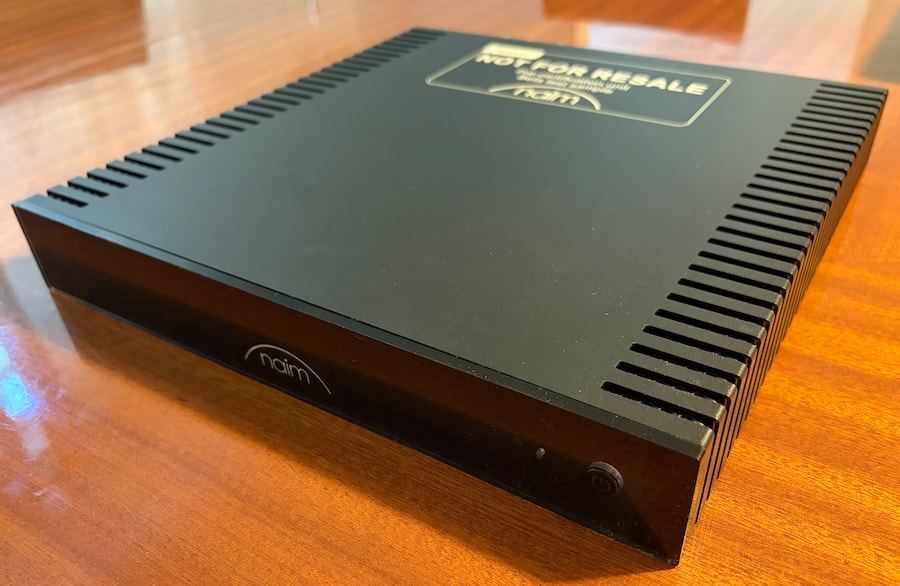
Ten years ago, I probably would have looked at this black 1U box and thought primarily about custom installation racks, wealthy homeowners and integrators running miles of CAT6 behind drywall. After actually living with it, I think that interpretation sells it considerably short.
Hi-Fi has spent decades convincing us that commitment should be measured in square footage, component count and the number of glowing boxes occupying increasingly expensive furniture. The CI-Uniti 102 quietly argues that you can keep much of the performance while getting a rather significant portion of your room back.
The CI-Uniti 102 may have been designed to disappear. That might be precisely why it makes so much bloody sense.

When the App Becomes the Remote
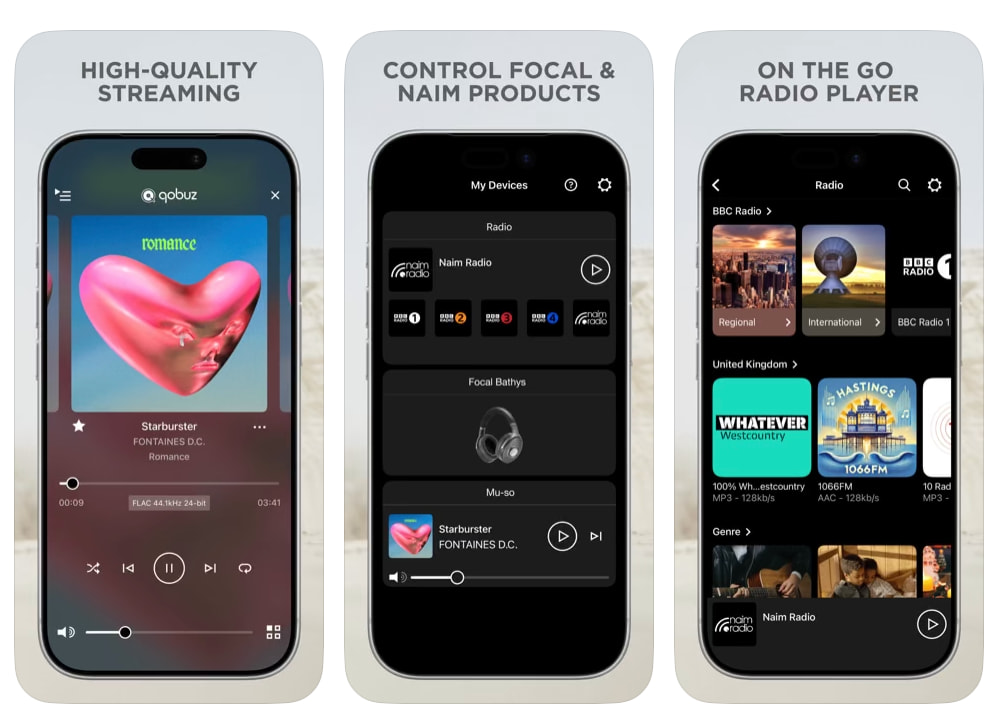
The Focal & Naim app matters more with the CI-Uniti 102 than it does with something like the Uniti Atom because there is no large display, conventional remote, or volume knob waiting on the front panel. In normal use, the app becomes the control center for volume, source selection, streaming, settings, firmware updates, and multiroom playback. Setup was straightforward, the amplifier responded quickly to commands, and moving between sources and streaming services never felt like work.
I still wish Naim included some form of physical remote control because there are moments when reaching for a phone just to change the volume feels unnecessarily modern. HDMI eARC largely solves that problem with a television, since the TV remote can handle volume, but music playback remains app-centric. The deeper EQ, crossover, limiter, time-alignment, and Focal speaker-profile adjustments are handled separately through Focal & Naim Manager, which keeps the main app relatively uncluttered and gives installers considerably more control when building a larger system.
Listening
Naim would undoubtedly prefer that I connect the CI-Uniti 102 to a pair of Focal loudspeakers, and given the relationship between the two brands, that would certainly make sense. But that wasn’t how this review was going to play out. The Q Acoustics 3020c, Acoustic Energy AE100 MKII, and Wharfedale Super Denton are all loudspeakers I own and know well, and they gave me three very different loads and sonic personalities to work with.
Digital streaming was handled primarily through my new iPhone 17, while the analog side consisted of my Thorens TD-145 MKII fitted with a Dynavector 10X5 high-output moving-coil cartridge, feeding the MOON 110LP v2 Phono Preamplifier into the Naim’s analog input. That combination also gave me a useful way to determine whether the CI-Uniti 102 was merely a very capable streaming amplifier or something I would actually want to use with records on a daily basis.
I used the supplied Naim power cord for most of the review, along with QED speaker cables and an interconnect from Chord Company. For approximately three seconds, I contemplated connecting one of my Clarus Audio power cords before realizing that it might cost more than a substantial portion of the system attached to it. Even I have limits.

We have covered the evolution of Class D amplification in considerable detail, but having owned older Naim integrated amplifiers going back to the late 1990s, and spent considerable time with both the Uniti Atom and Uniti Atom Headphone Edition, I was curious to hear whether the CI-Uniti 102 could still deliver the qualities I associate with Naim: pace, rhythm, attack, timing, and clarity.
In other words, I was not particularly interested in whether the CI-Uniti 102 sounded like a Class D amplifier. I wanted to know whether it still sounded like a Naim.
“I’m a Fool to Want You” But the Naim Knows How to Hold On
I have been on something of a Billie Holiday kick lately, and while my Classic Records reissue of Lady in Satin is not the definitive version, it still sounds pretty, pretty good. “I’m a Fool to Want You” is also probably one of the worst songs imaginable to play in front of your spouse, girlfriend, or significant other. Naturally, I hate myself enough to do exactly that.
The Wharfedale Super Denton is the warmest and thickest sounding loudspeaker of the three, and what impressed me immediately was how firmly the Naim grabbed hold of the British bulldog. Power is power, but the CI-Uniti 102 combined that authority with a surprising degree of clarity and texture. Holiday’s voice benefited from the Wharfedale’s warmer midrange and softer top end, but she was not sitting at the back of the room eating lunch and mumbling through a bag of prawn chips and a half-eaten Coffee Crisp.
Her voice was not thrust unnaturally forward either. It sat clearly in front of the loudspeakers with enough body, texture, and presence to make the performance feel intimate without becoming dry, sterile, or overly etched. That balance between grip and warmth was the first indication that the CI-Uniti 102 might have rather more traditional Naim character than its Class D topology and anonymous black chassis would suggest.
Switching to Joni Mitchell, Amy Winehouse, Dolly Parton, Sia, and Brandi Carlile confirmed something else: the CI-Uniti 102 does not homogenize voices. It does not shave off the edges or apply some pleasant Naim flavored coating to everything passing through it. Thin is thin. Dolly’s slightly quivering edges that still make me weak in the knees were intact, as were Amy’s bite and power, Joni’s more ethereal delivery, Sia’s explosive energy, and Brandi Carlile’s sheer vocal force.
The Jo Whiley Live Lounge performance of “Valerie” from Amy Winehouse’s At the BBC is a particularly useful test because it is a raw, fairly hard sounding recording. The top end offers little mercy to an amplifier or tweeter already leaning bright. Of the three loudspeakers I used, the Q Acoustics 3020c are the liveliest and, to my ears, the most transparent. The Naim did not try to sweeten the recording or sand down its rougher edges. It simply let the performance flow and unravel in front of me.
That matters when you consider that some Focal loudspeakers can be extremely revealing through the upper midrange and treble. If the CI-Uniti 102 were fundamentally thin, hard, or etched, there would be nowhere for that character to hide. Based on what I heard with the 3020c, that is not what this amplifier is doing.
Highway Anxiety and the Art of Forward Motion
Switching over to The Orb, Aphex Twin, deadmau5, Kraftwerk, and William Tyler revealed another side of the CI-Uniti 102. The Naim does a few things exceptionally well: pacing, energy, presence, and midbass punch. Those are also strengths of the Acoustic Energy AE100 MKII, and the combination had considerably more drive than its modest dimensions might suggest.
William Tyler’s “Highway Anxiety,” the nine-minute opening track from Modern Country, was especially revealing. It is a huge sounding recording built around layers of acoustic and electric guitar, keyboards, percussion, bass, and increasingly expansive textures, and the Naim gave those layers room to develop without allowing the music to lose momentum.
“Highway Anxiety” is one of those tracks that can sound enormous when a system gets it right, and disappointingly small when it doesn’t. The Naim got it right with all three loudspeakers. Tyler’s guitar had body, scale, and enough space around it to let the track breathe without turning the whole thing into some audiophile meditation exercise.
The electronic material was even more obvious. Kraftwerk had snap and precision, deadmau5 hit hard, and The Orb and Aphex Twin had the kind of propulsion and midbass punch that keeps you engaged instead of wondering what the hell happened to the rhythm section. The CI-Uniti 102 may look like something an installer forgot in the rack, but it sure as hell doesn’t sound anonymous.

Where the CI-Uniti 102 Falls Short
I am a big color and texture guy. Life is rarely black and white, and even the black-and-white cookie has a soft, cake-like crumb hiding underneath all that frosting. It is the same reason I obsess over biltong and droëwors. A little chew is fine. Tough can even be interesting. But it still needs flavor.
The CI-Uniti 102 is never going to be mistaken for a tube amplifier, and that is perfectly fine. It is not chalky, sterile, or bleached of tonal color, but I would happily give up a little more detail for additional body and richness. The soundstage is perfectly adequate rather than enormous, and imaging is good, but it does not plant performers in front of you with the same physical conviction I have heard from larger Naim integrated amplifiers such as the Supernait 3.
I also wish Naim had included an internal phono stage, although at this price something had to give. Bass is very much in the Naim tradition: tight, fast, and well defined. What I wanted was a little more meat on the bone. Not more bass for the sake of it, but more weight and color through the upper bass and lower midrange where instruments start to feel like actual instruments rather than exceptionally well organized information.
The Bottom Line
The Naim CI-Uniti 102 is easy to underestimate because it looks more like something destined for an equipment rack than the centerpiece of a serious Hi-Fi system. That is also what makes it interesting. You get 150 watts per channel, Naim’s streaming platform, HDMI eARC, multiroom capability, useful DSP tools, and enough power to drive a broad range of loudspeakers, all in a compact chassis that can effectively disappear from the room.
Sonically, it gets most of the important things right. The CI-Uniti 102 is fast, clear, energetic, and exceptionally good at preserving the character of different voices and recordings. Bass is tight and punchy, although I wanted a little more weight and tonal richness, and the soundstage is good rather than enormous. I would also have welcomed an internal phono stage and some form of physical remote control.
The real surprise is how much sense it makes outside the custom-installation world. If you want a compact two-channel system, need something that can integrate into a larger Naim multiroom setup, or simply prefer excellent sound without building an altar to your electronics, the CI-Uniti 102 deserves serious consideration. It may not have the visual drama of the Uniti Atom, but at its lower price and with considerably more power, it also makes the Atom’s current asking price rather more difficult to explain.
Pros:
- 150 watts per channel into 8 ohms from a compact 1U chassis
- Fast, punchy, energetic presentation with excellent pace and timing
- Very good clarity without sounding chalky, sterile, or overly hard
- Does not homogenize vocals or smooth over the character of recordings
- Tight, well-defined bass with strong midbass punch
- HDMI eARC makes it easy to build a serious two-channel TV system
- Strong streaming and multiroom functionality
- Useful DSP, crossover, EQ, and time-alignment tools through Focal & Naim Manager
- Works equally well as a standalone streaming amplifier or part of a larger Naim installation
- Compact design can disappear into a cabinet or rack
- Considerably more power than the Uniti Atom for much less money
Cons:
- No internal phono stage
- No conventional remote control
- Soundstage is solid rather than especially large
- Imaging lacks some of the physical solidity of Naim’s larger amplifiers
- Bass could use more weight and tonal richness
- Not as colorful or texturally rich as the best Class A/B or tube designs
- Utilitarian industrial design will not appeal to buyers who want their Hi-Fi on display
Our Ratings
★★★★★★★★★★ Sound Quality
★★★★★★★★★★ Usability
★★★★★★★★★★ Build Quality
★★★★★★★★★★ Value
You must be logged in to post a comment Login