Tech
NASA Updates Voyager 2 To Extend The 1977 Probe’s Lifespan Yet Again

A software update, sent across 13 billion miles, gives it one more year of operation.

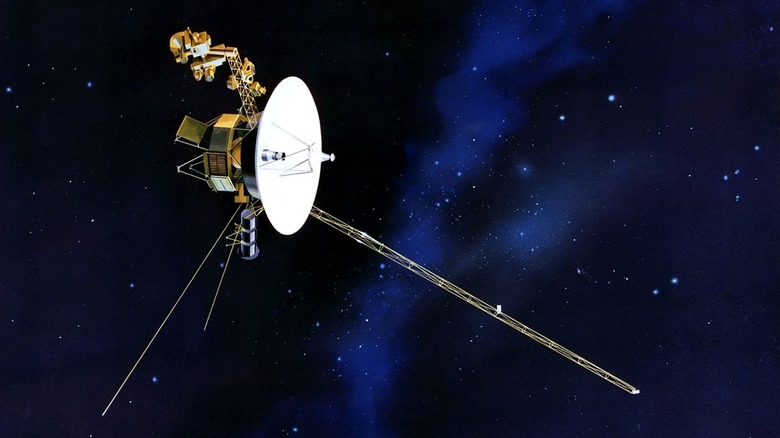
Voyager 2 has been in space for almost 50 years, but it’s not ready to retire just yet. NASA has recently made changes to its settings in an operation it called “Big Bang,” allowing it to run and do science in its current state for one more year. See, Voyager 2’s power source is its radioisotope thermoelectric generator, which converts heat from decaying plutonium into electricity. Since the plutonium gets more and more depleted, the space probe loses around 4 watts of power every year.
When the spacecraft launched in 1977, it had 10 functional scientific instruments. They’re now down to three, as NASA is forced to deactivate them in order to preserve energy. The agency would have had to shut down one more later this year if it hadn’t made the tweak. NASA said operation “Big Bang” involved turning off certain powered devices simultaneously and then replacing them with lower-power alternatives. It also had to ensure that the spacecraft would remain warm enough to operate even with those devices switched off. With NASA successfully pulling off the plan, Voyager 2’s three remaining instruments can now continue doing science until next year.
The probe launched around two weeks before its twin, Voyager 1, with the goal of observing the gas giants of our solar system. It reached Jupiter in 1979 and had visited all gas giants within the decade after that. In 2018, it entered interstellar space and has been sending back data on the density and temperature of the plasma outside the heliosphere, the bubble of space created by the sun around itself and its planets, ever since.
You must be logged in to post a comment Login