Tech
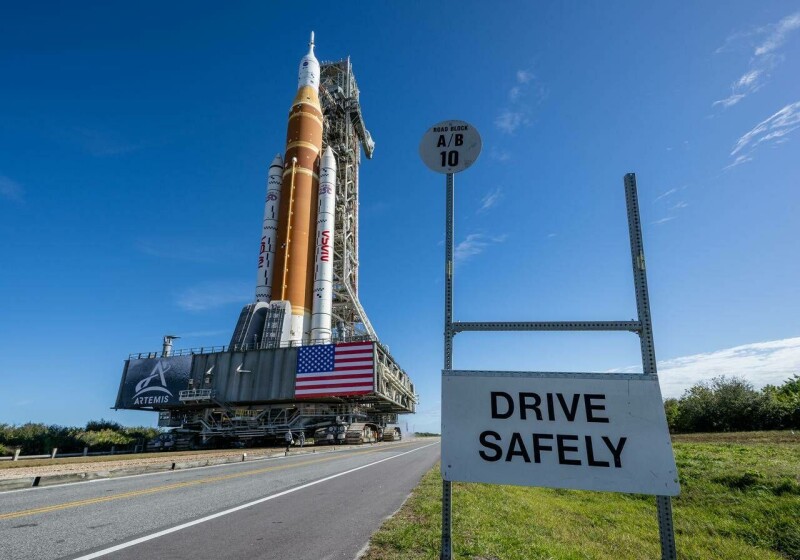
NASA’s Artemis III will need three rockets to do the job Apollo did with one


SCIENCE
Blue Origin and SpaceX get their turn to prove they can dock, loiter, and not blow up the launch pad
NASA has given an update on the Artemis III mission and, while sticking with an optimistic 2028 landing target for Artemis IV, offered a glimpse into just how much development work remains to be done at Blue Origin and SpaceX.
Artemis III has been compared to Apollo 9, which tested the Apollo Lunar Module in Earth orbit, yet neither SpaceX nor Blue Origin is flying anything as close to the lunar landers.
Blue Origin’s test lander will be based on the company’s current Mark 2 crew lander architecture, incorporating the major avionics, flight software, life support, and crew cabin. Orion, launched atop NASA’s SLS, will dock to the side of the Blue Origin spacecraft for crew transfer; two crew members in orange Orion survival suits can baord the test lander, with Orion’s software controlling the stack.
An instrumented lunar surface spacesuit mass simulator, similar to the “Moonikin” manikin that flew aboard Orion for Artemis I, will also ride along on the Blue Origin lander.
SpaceX’s test is considerably simpler – just a docking system mounted on the nose of a Starship. That requires Starship testing to have reached the orbital stage first, which is why NASA will be closely watching the upcoming Flight Test 13. Starship V3 is still flying suborbital until SpaceX proves it can reliably relight an engine for controlled re-entry.
Under the current plan, Blue Origin launches its lander into orbit first, where it can loiter for up to 30 days. Once it’s checked out, a crew launches aboard Orion to rendezvous and dock with it. After that’s complete, SpaceX launches its Starship test article to rendezvous and dock Orion in turn, though the crew won’t board Starship, just verify communications and interoperability. SpaceX’s vehicle will control that docked stack.
Notably, SpaceX’s docking capability was qualified in 2023, while Blue Origin only tested its pressurized docking system earlier this year.
Jeremy Parsons, Artemis program manager, stated, “Artemis III will be a highly choreographed dance with a demanding launch sequence across multiple launch pads and equally demanding mission operations for our ground and flight crews, making it one of the most complex and ambitious missions NASA has ever undertaken.”
He is not exaggerating. Apollo 9 needed a single Saturn V launch; Artemis III needs three – an SLS, whatever Blue Origin ultimately uses to launch its lander (the company is still rebuilding its launch pad after May’s explosion), and a Starship. The SLS has flown twice, including one lunar flyby. Starship has yet to reach orbit despite Elon Musk once claiming that uncrewed versions would be landing on Mars around now.
It’ll be an impressive feat if NASA can pull it off, even if SpaceX’s piece of the puzzle looks a lot simpler than Blue Origin’s. ®
You must be logged in to post a comment Login