Tech
NASA’s new telescope can see 100 times more sky than Hubble in a single shot

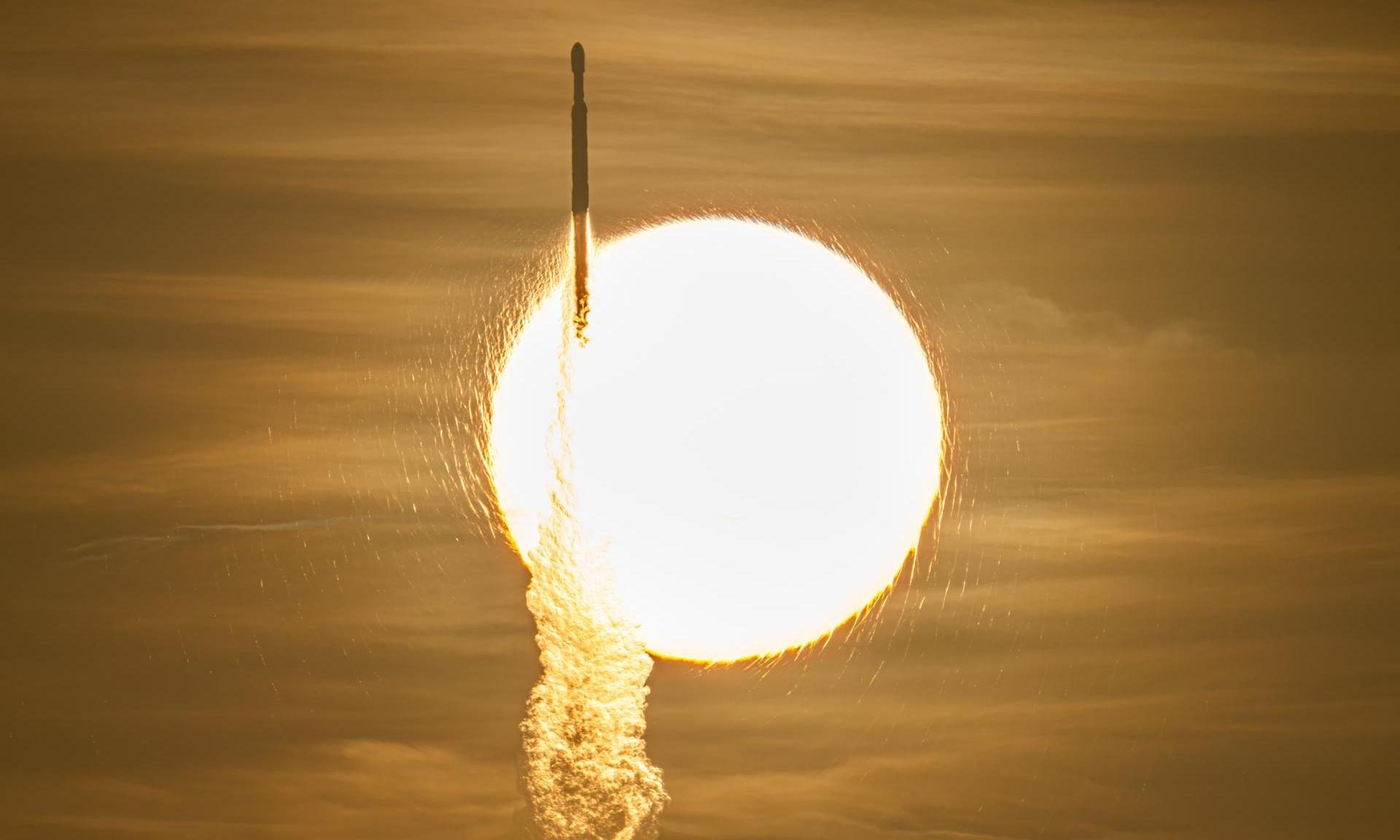
The Hubble telescope has an almost legendary status. Over the last three decades, Hubble gave us some of the most spectacular close-ups of the universe ever captured, and now, NASA’s newest space telescope wants to see the bigger picture. The Nancy Grace Roman Space Telescope successfully launched aboard a SpaceX Falcon Heavy from Kennedy Space Center in Florida at 7:26 a.m. EDT on August 30. Roman is now beginning a roughly three-month journey toward the Sun-Earth L2 point, nearly a million miles away, where it will spend its primary five-year mission surveying huge portions of the cosmos.
Roman carries a 2.4-meter primary mirror, the same diameter as Hubble’s, but its Wide Field Instrument can capture a field of view at least 100 times larger than Hubble’s. NASA expects it to use that combination of sharpness and scale to map billions of galaxies, study dark matter and dark energy, and discover enormous numbers of previously unknown worlds.
Imagine Hubble with panoramic vision

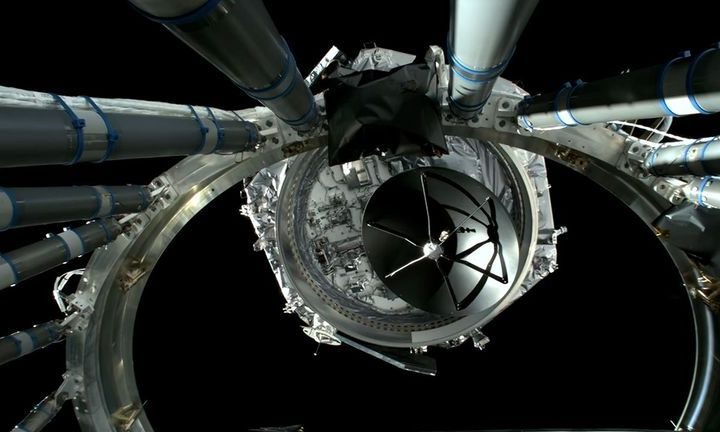
Roman won’t be replacing the Hubble or the James Webb Space Telescope. Webb is extraordinarily good at staring deeply into relatively small sections of the cosmos, while Roman will work like a survey machine. It can sweep across enormous areas while retaining the resolution needed to pick out distant objects.
NASA has previously illustrated the difference rather dramatically. In one simulated region containing millions of galaxies, Hubble would need roughly 85 years to map the area at the same depth. Roman could do it in about 63 days. This speed will help Roman construct an enormous 3D picture of the universe and track how galaxies have been distributed across cosmic history. Scientists can then use those patterns to investigate some of the universe’s biggest mysteries, like dark matter and dark energy.
According to the Reuters report, the roughly $4 billion observatory could study more than two billion galaxies over its mission. Aside from this, Roman will also be hunting exoplanets. NASA expects its surveys to uncover around 100,000 exoplanets, including worlds found through gravitational microlensing, where the gravity of an object passing in front of a distant star temporarily magnifies its light. Its experimental Coronagraph Instrument will also test technology intended to block overwhelming starlight so astronomers can directly study planets and planet-forming disks nearby.

From government optics to the dark universe
Key optics in the telescope, including its primary mirror, were originally made available to NASA by the National Reconnaissance Office. L3Harris subsequently reshaped the mirror and built upon the inherited hardware to turn it into the wide-field infrared observatory now heading into deep space.
Roman launched nine months ahead of schedule. Its baseline mission lasts five years, while the spacecraft has a 10-year mission goal. It was built to answer questions we’ve been struggling with for decades, like: Why is the universe expanding faster? Where is all the invisible matter shaping galaxies? How common are planetary systems like ours?
You must be logged in to post a comment Login