Tech
NASA’s Next Great Sky Survey Is Flying as Roman Launches from Florida at Sunrise Aboard SpaceX Falcon Heavy
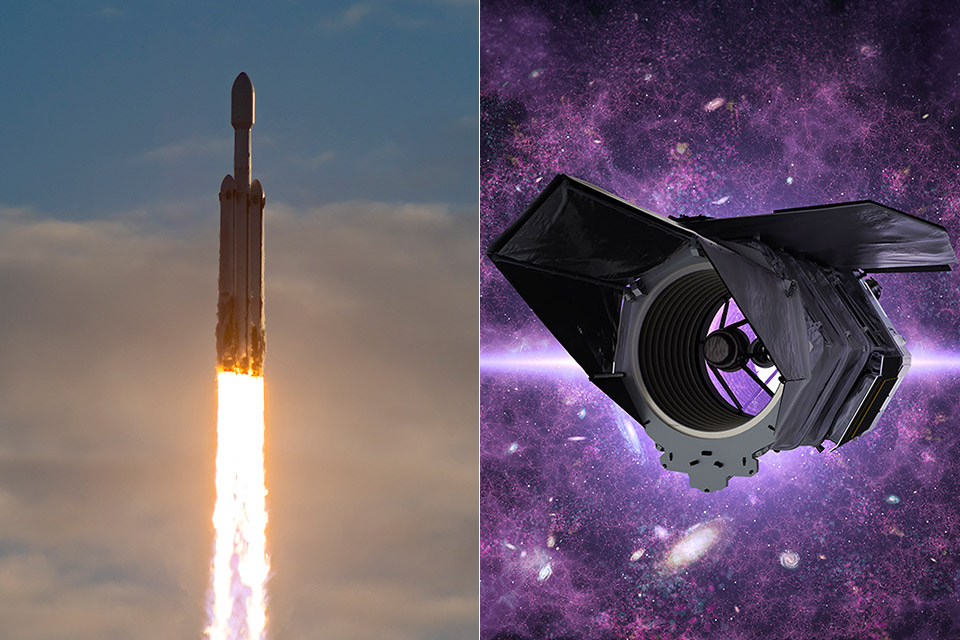
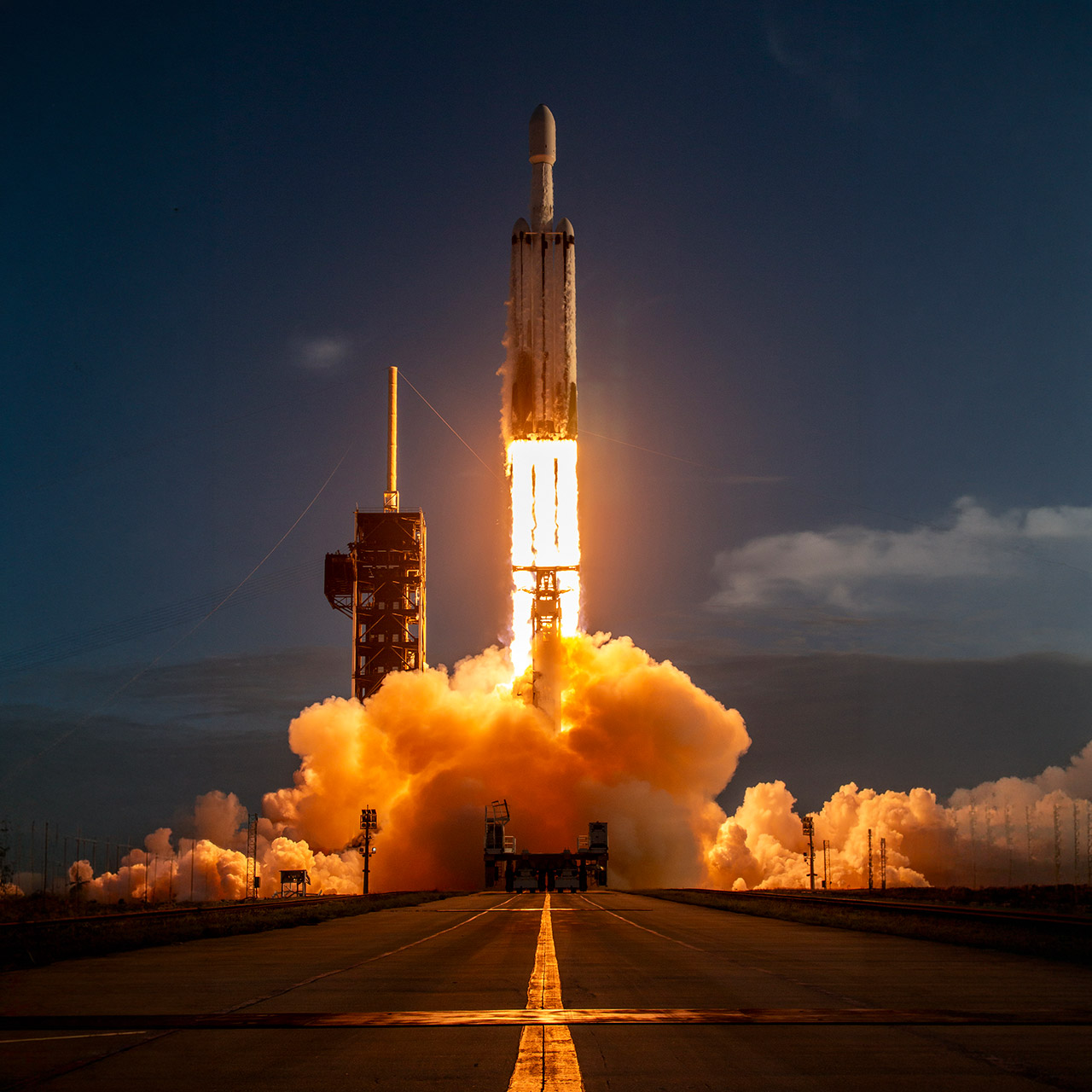
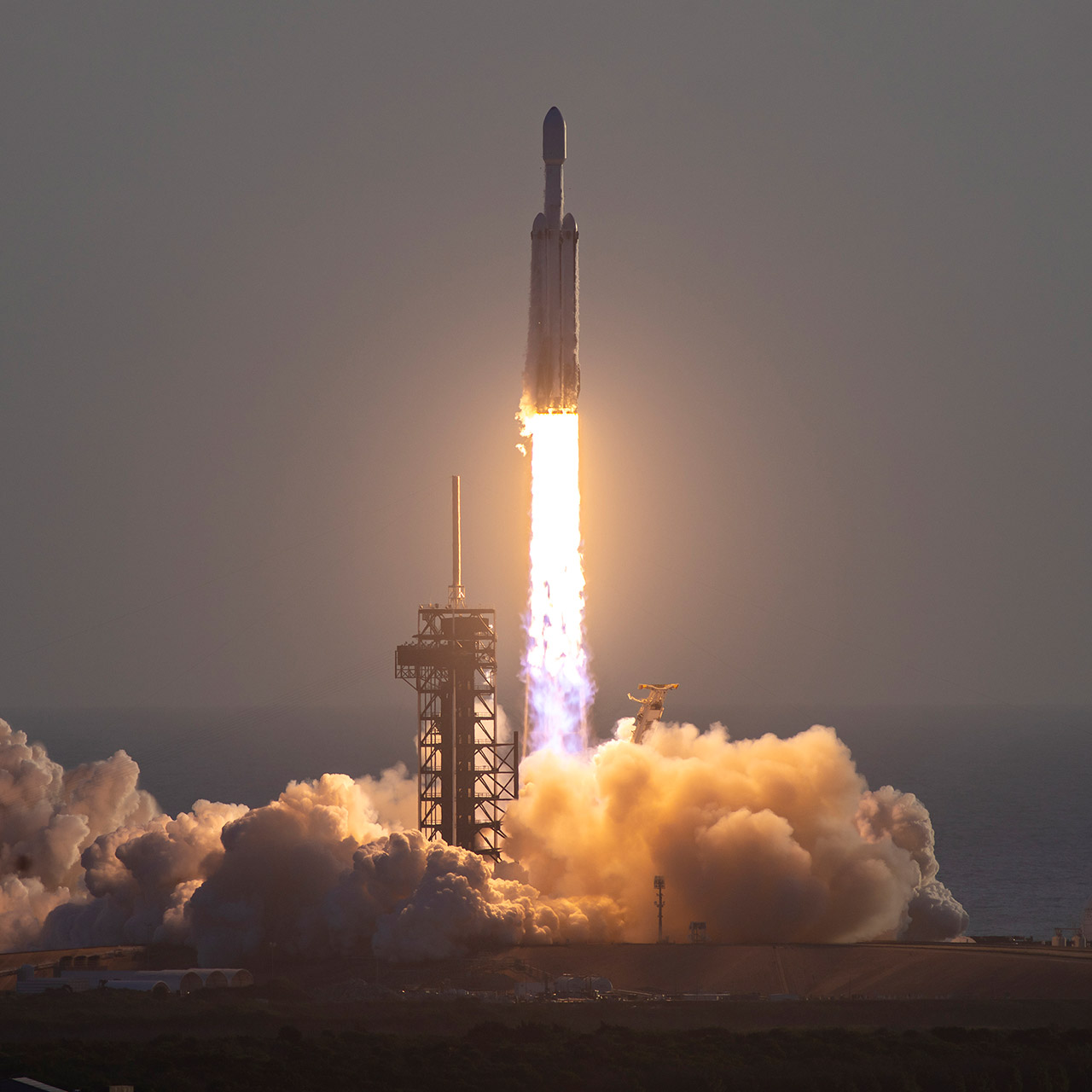
Sunday morning over Launch Complex 39A at Kennedy Space Center looked almost too calm for a rocket that would soon make more than five million pounds of thrust. At 7:26 a.m. EDT on August 30, SpaceX’s Falcon Heavy lit all 27 Merlin engines and carried NASA’s Nancy Grace Roman Space Telescope off the pad through blue Florida sky and a thin scatter of cloud. Weather had sat at 50 percent “go” overnight on cumulus and surface-electric-field rules, then improved to 70 percent in the last hour. Launch manager Denton Gibson polled the room and sent it.


Goddard controllers in Greenbelt, Maryland, began receiving telemetry data around 7 minutes after liftoff, and the side boosters were released about four minutes and 15 minutes later, returning to Cape Canaveral Space Force Station for reuse. The fairing halves eventually split apart. The second-stage engines do their thing, and Roman separates from the parent spacecraft 31 minutes into the mission. An hour and 25 minutes later, the team breathes a sigh of relief as the solar arrays and lower instrument sun screen open and perform properly. Yes, the high-gain antenna and aperture cover must yet be completed, but they will do so in due course.


LEGO Technic NASA Artemis Space Launch System Rocket Building Toy for Boys & Girls – STEM Learning…
- BUILD AN OFFICIAL NASA ROCKET – Kids prepare to explore outer space with the LEGO Technic NASA Artemis Space Launch System Rocket (42221) building…
- 3-STAGE ROCKET SEPARATION – Young builders can turn the hand crank to watch the rocket separate in 3 distinct stages: solid rocket boosters, core…
- STEM BUILDING TOY FOR KIDS – This educational rocket kit was created in collaboration with NASA and ESA to showcase the authentic system that will…
Let’s not overlook Roman’s tremendous scheduling achievement, which saw it launch 9 months early. Originally scheduled to launch in May 2027, the crew pulled it off by finalizing the hardware, staying within budget, and moving the launch date first to late September and then back to late August. NASA Administrator Jared Isaacman couldn’t help but applaud the team on this one; completing a project like this not only ahead of schedule but also on budget is something they want to see more of, especially after all of the work and effort put into making it a reality. How much will all of this development, launch, and five-year operation cost? approximately $4.3 billion.

Roman is a large unit, around the size of a school bus and weighing around 18,000 pounds. Its 2.4-meter primary mirror is the same size as Hubble’s, but it’s composed of a super-lightweight material that weighs only 410 pounds. As for how they came to create this material, it began as surplus optics from the National Reconnaissance Office, which they subsequently modified and silver-coated, making it suitable for use in an astronomy system. The Wide Field Instrument is a 300 megapixel infrared camera made up of 18 separate detectors, each about the size of a saltine cracker. It can capture a large portion of the sky in a single frame, around 1.5 times the apparent size of a full moon. And if you’re wondering how that compares to Hubble, Roman can capture the infrared field 100 to 200 times larger in a single image than Hubble can. The major game changer is Roman’s ability to scan the sky almost 1,000 times faster than its older cousin.

JPL’s Coronagraph is along for the ride, and it’s basically a test bed for some new technology that’ll block out the starlight so the telescope can look at older, colder, and closer in giant planets than other direct imaging work used to be able to spot, with the hope that success in this field will feed into later ideas for spotting Earth-sized worlds. On that basis, all scientific data will be available for everyone to view. As for how much data they expect, the daily downlink is expected to be approximately 1.4 terabytes, which equates to a nice four petabytes each year, plenty for anyone to get their teeth into.
Mission Science for Roman is divided into three distinct roles that all use the same super-sharp infrared view. First, consider how the universe has altered over time. Roman will set out to find tens of thousands of Type Ia supernovae and study the forms and clusters of hundreds of millions of galaxies. With that data, Roman will effectively tighten the rules governing dark energy, the unknown factor that appears to be causing the cosmos to expand even faster, and dark matter, which only manifests itself by bending light and keeping galaxies intact. Recently, there have been suggestions that dark energy may be diminishing with time, and Roman is designed to be able to determine whether this is true with a much bigger sample size.
The next step is to look for planets, as science believes that microlensing in the galactic bulge could show planets with only a tenth of Earth’s mass, ranging from planets in habitable zones to worlds with orbits similar to the farthest limits of our own solar system. In addition, we’ll learn about rogue planets that are floating through space without their own star. The transit observations and the coronograph add to the mix. The number of new planets is expected to range from a few thousand to more than 100,000. Not to mention the first real attempt to conduct a head count of systems like our own. The same data set will also allow us to see brown dwarfs, elderly stars that have ran out of fuel, and even new moons orbiting our own gas giants.

Finally, there’s everything else Roman will discover throughout these surveys, including black holes, collapsing stars, galaxy mergers, things in our solar system’s beyond reaches, and anything else no one had even considered looking for. Senior project scientist Julie McEnery put it simply: no one has ever looked at the universe with eyes as sharp as Roman’s. NASA’s Science Chief, Nicola Fox, described it this way: while Hubble and Webb can look through a keyhole, Roman kicks the door right down. While Webb provides depth, Roman provides broad coverage as well as quickness, combining the two to get the best of each.
[Source]
You must be logged in to post a comment Login