Tech
NESCD-001 Slides a Compact Disc Drive Under the Original Nintendo Entertainment System

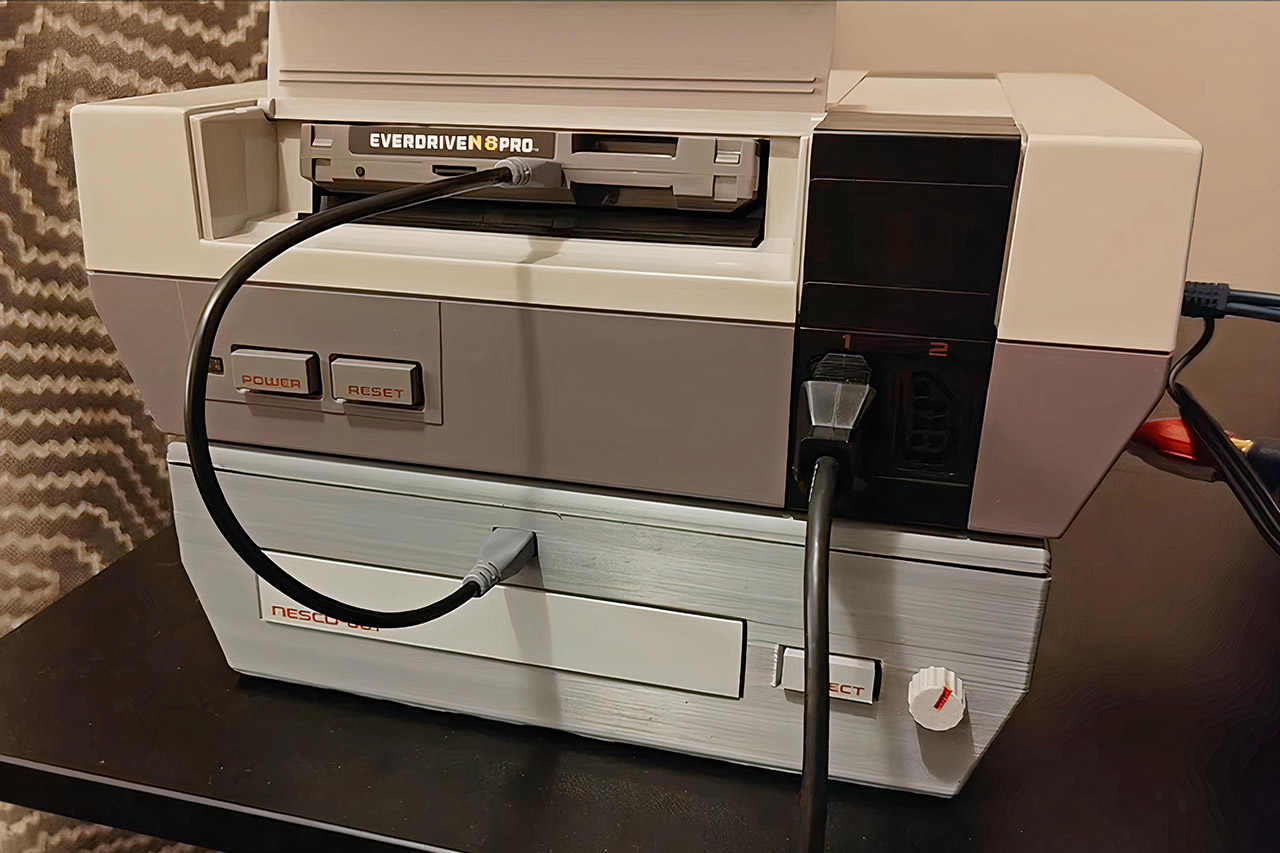
Nintendo and Sony spent the early nineties arguing over a Super NES compact disc attachment that never reached store shelves. Throaty Mumbo read that history and aimed lower, at the original front-loading NES, a console with no disc hardware and an expansion port that sat unused on the bottom of millions of gray boxes. His project page calls the result NESCD-001, an unofficial homemade compact disc add-on built for fun and documented in a build video plus a public GitHub repo.


His finished unit is a gray 3D printed slab that fits under the console in the same way as the old Famicom Disk System did. A white disk tray with glossy red lettering faces forward, accompanied by an eject button and volume knob. Inside, there’s a conventional 40-pin IDE compact disk drive (the Pacific Digital Mach 52, as seen in the movie), a custom circuit board, a PCM5102 converter, and an RP2350B microcontroller that communicates with both the drive and an Everdrive N8 Pro flash cartridge. The printable shell files and sticker art for that board layout are available in the same source as the board layout itself.
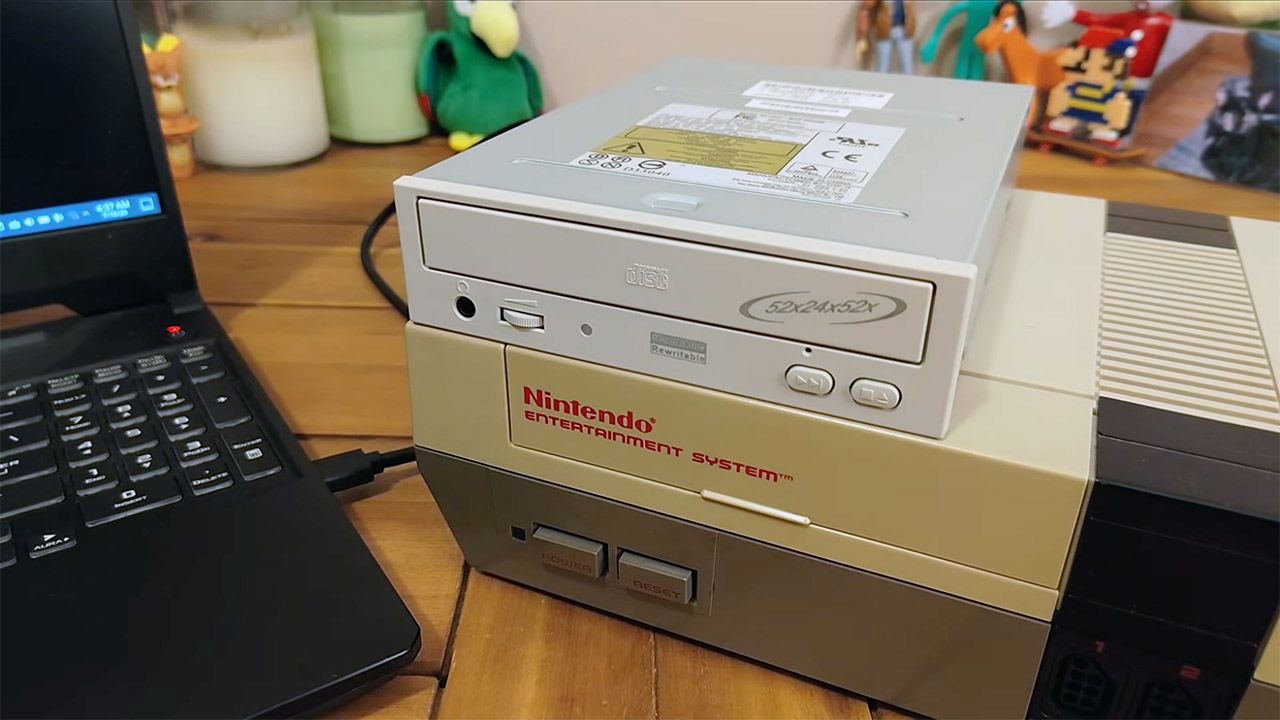
Games do not run directly from the disc in the same way as later CD consoles do. What happens is that the RP2350B reads the ROM from the disk, transfers it to the Everdrive over USB, and runs it. After things are up and running, the microcontroller monitors a CHR mailbox at memory address 0x21FF8 for any requests from the running game, which could be for additional audio or a chunk of full motion video. Frames of video are delivered over the same USB link and written into NES video memory using proprietary bitstream code from the Cyclone IV FPGA already installed on the Everdrive N8 Pro.

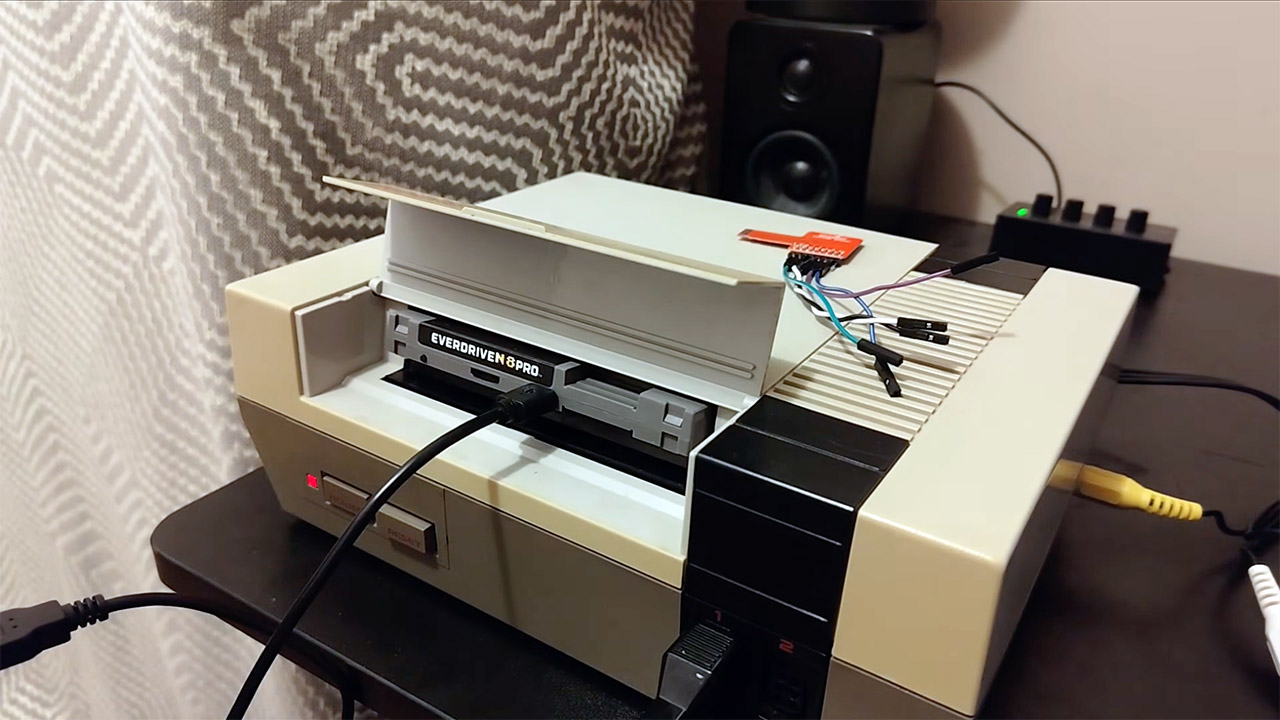
Then there’s the audio side, which has gone its own way on purpose. Compact disk sound exits the PCM5102 and enters the NES via the expansion port mixer pin, an input pin that Nintendo slipped onto American hardware but never seemed to use. That method prevents any additional sound from clogging the already congested USB link, while simultaneously allowing the front knob to do something. One Molex cable from a wall adapter supplies 5 and 12 volts to the drive and board. A buck converter then reduces the 12V to around 9.5V, allowing you to utilize a spare NES power plug to power the console from the top of the box, using only one outlet to power the entire stack. Of course, you can still use the original brick to power the NES.
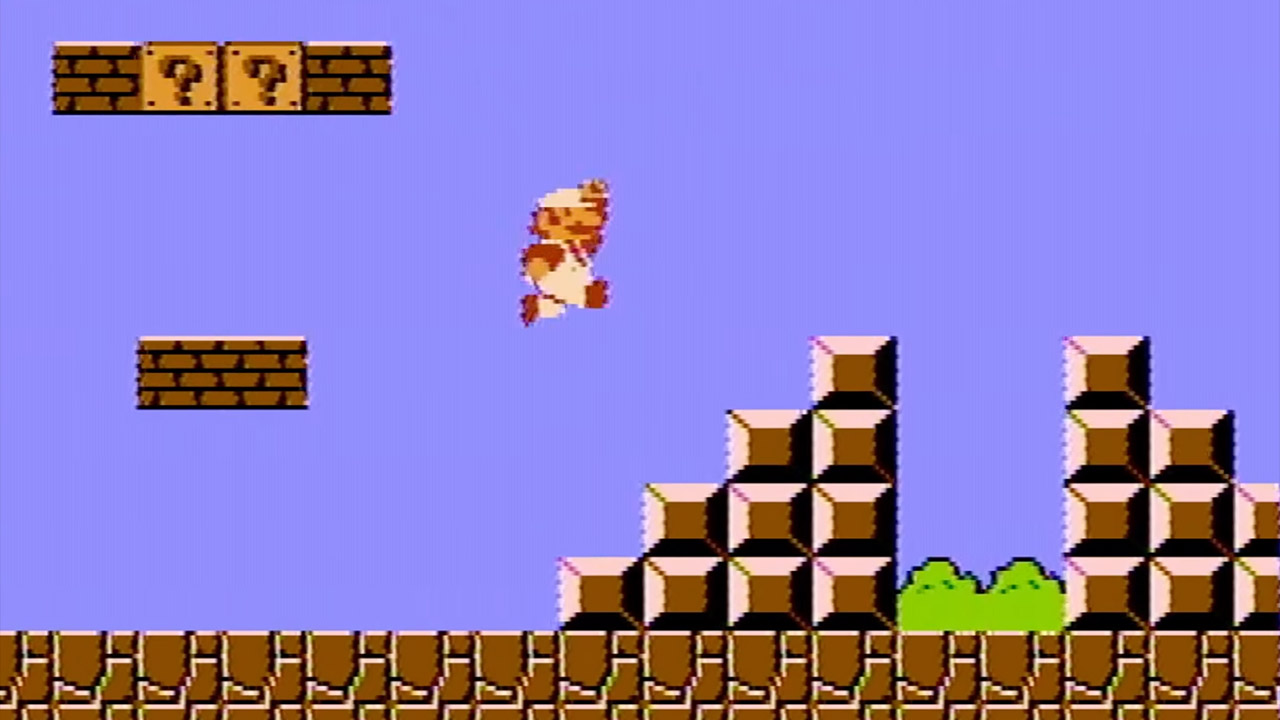
Proof of concept can be found on a homemade disc labeled “Super Mario Bros. CD edition”. Yes, it’s still the 1985 platformer, but now the music comes from compact disc recordings and small cutscenes pop in. Mario and Luigi are talking about a picnic, while Bowser is checking into a local hotel. When you take the disk out, the extra layer stops working. Early tests also ran standard cartridge games through the Everdrive while the drive and board were being wired, including a sanity check to ensure Contra was still operational when some flash carts decided to cause problems.
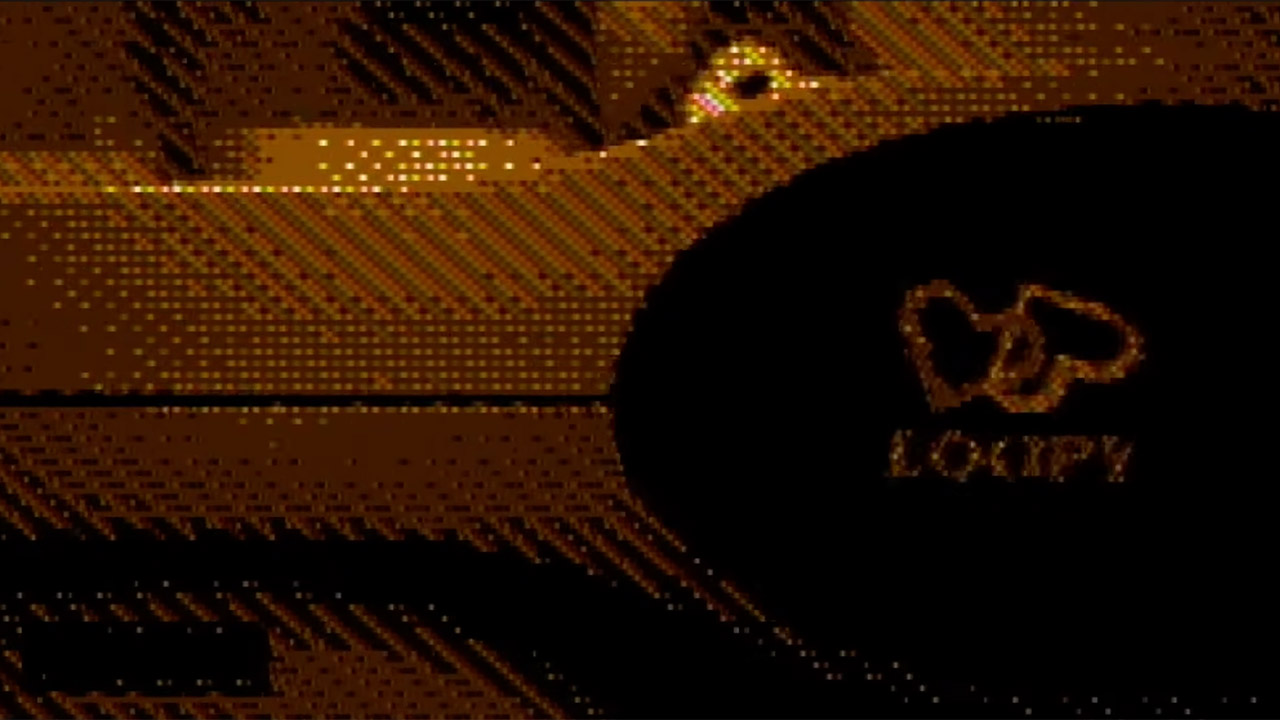
The full motion video functionality is still very much in beta. Something Nerdy Studios already showed that an Everdrive N8 Pro can push Bad Apple across the full NES screen from an SD card by stuffing tiles into CHR RAM as fast as the machine will take them. Throaty Mumbo leaned on that work for a disc-fed version, then held the firmware back because parts of it were reverse engineered from that demo.
You must be logged in to post a comment Login