




Connect with us
DAPA Banner

Tech

New AirPods Max 2 drop to $529 with this weekend's best preorder deal

Published

on

Despite preorders selling out at other retailers, AirPods Max 2 are on sale now at Walmart, with a $20 weekend discount and a preorder price guarantee.

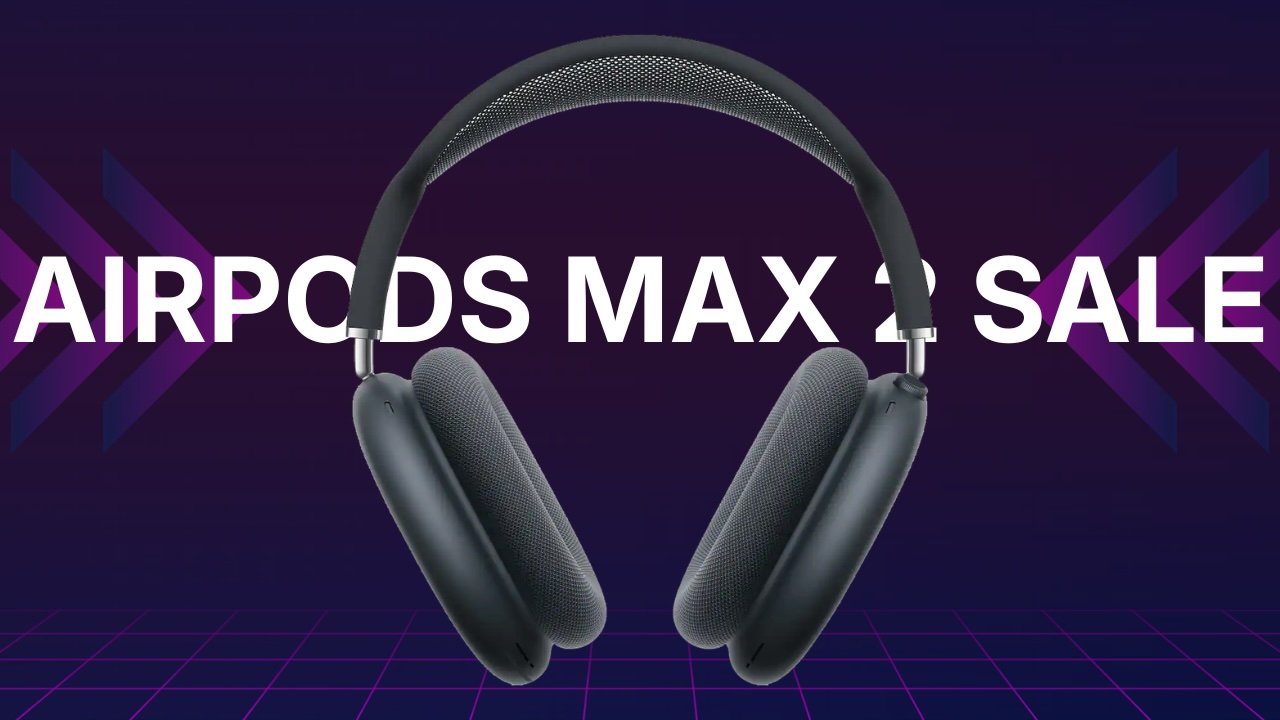
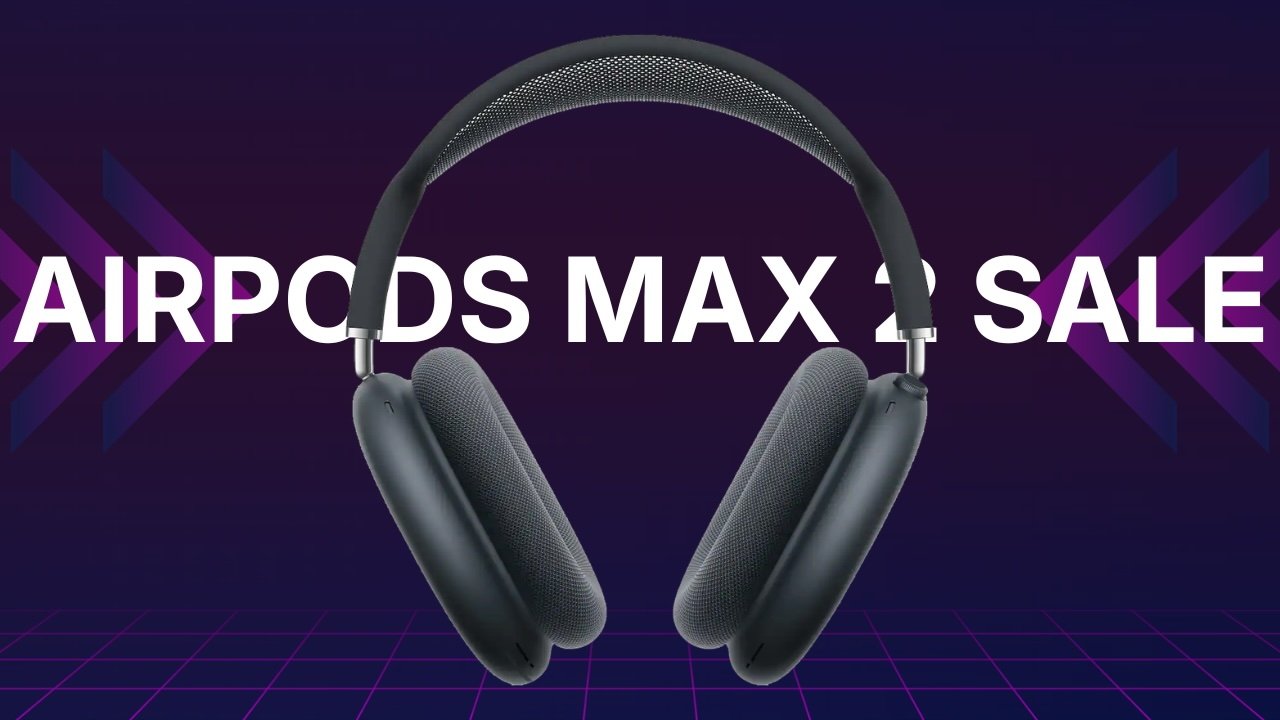
AirPods Max 2 over-ear headphones centered on a neon purple grid background with bold white text reading AIRPODS MAX 2 SALE and angled purple arrows pointing toward the headphones
AirPods Max 2 are on sale now with a preorder price guarantee – Image credit: Apple

Pick up Apple’s new over-ear headphones in Midnight for $529 at Walmart, a $20 discount off MSRP. With retailers like Amazon showing a “currently unavailable” message on its product page, ordering from Walmart allows you to snap up the lowest price on the 2026 release while securing a preorder price guarantee ahead of the early April launch.
Save $20 on AirPods Max 2
Continue Reading on AppleInsider | Discuss on our Forums

Source link

Continue Reading
Click to comment

You must be logged in to post a comment Login

Leave a Reply

Tech

Dutch Police discloses security breach after phishing attack

Published

on

Dutch Police

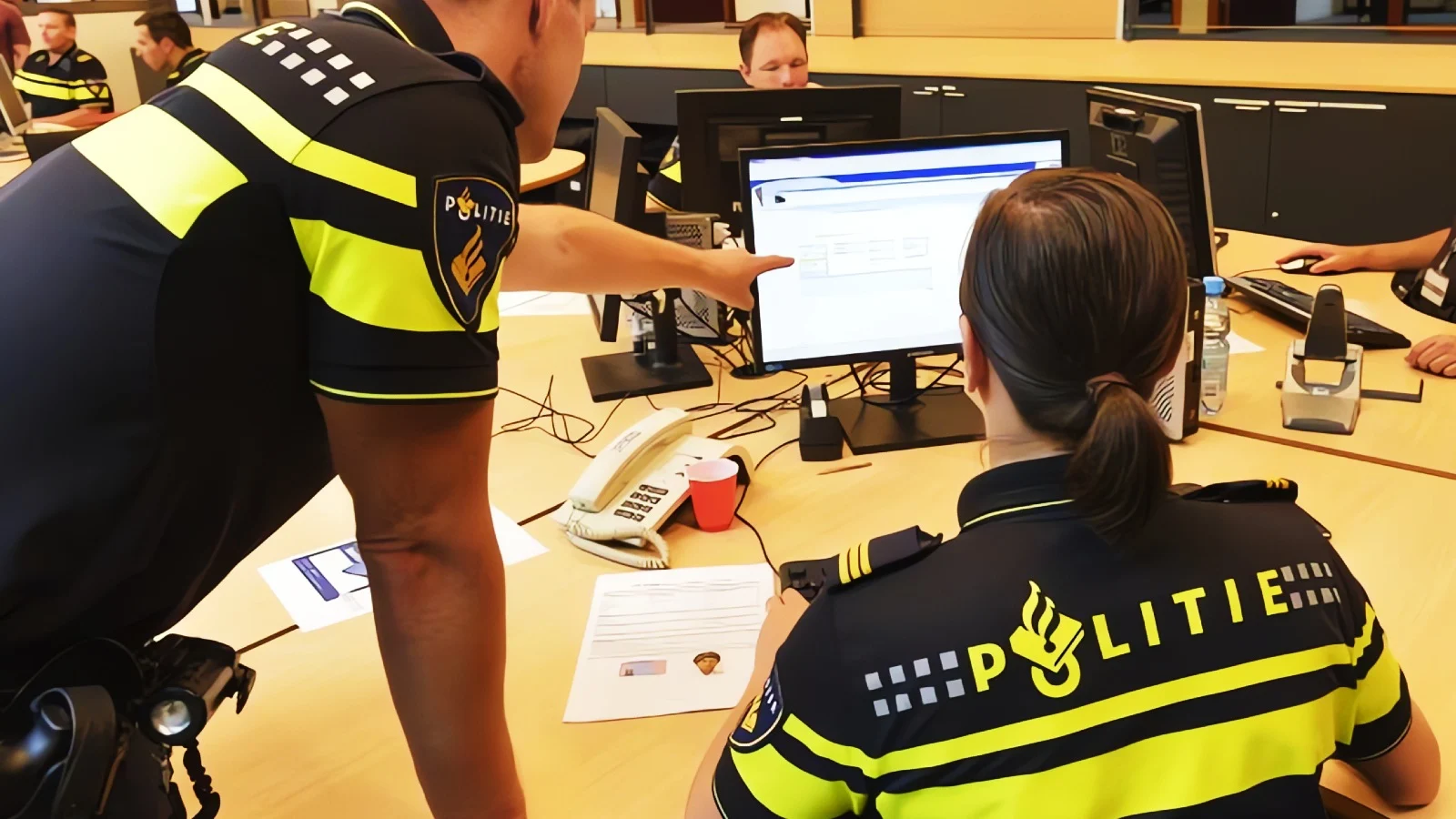
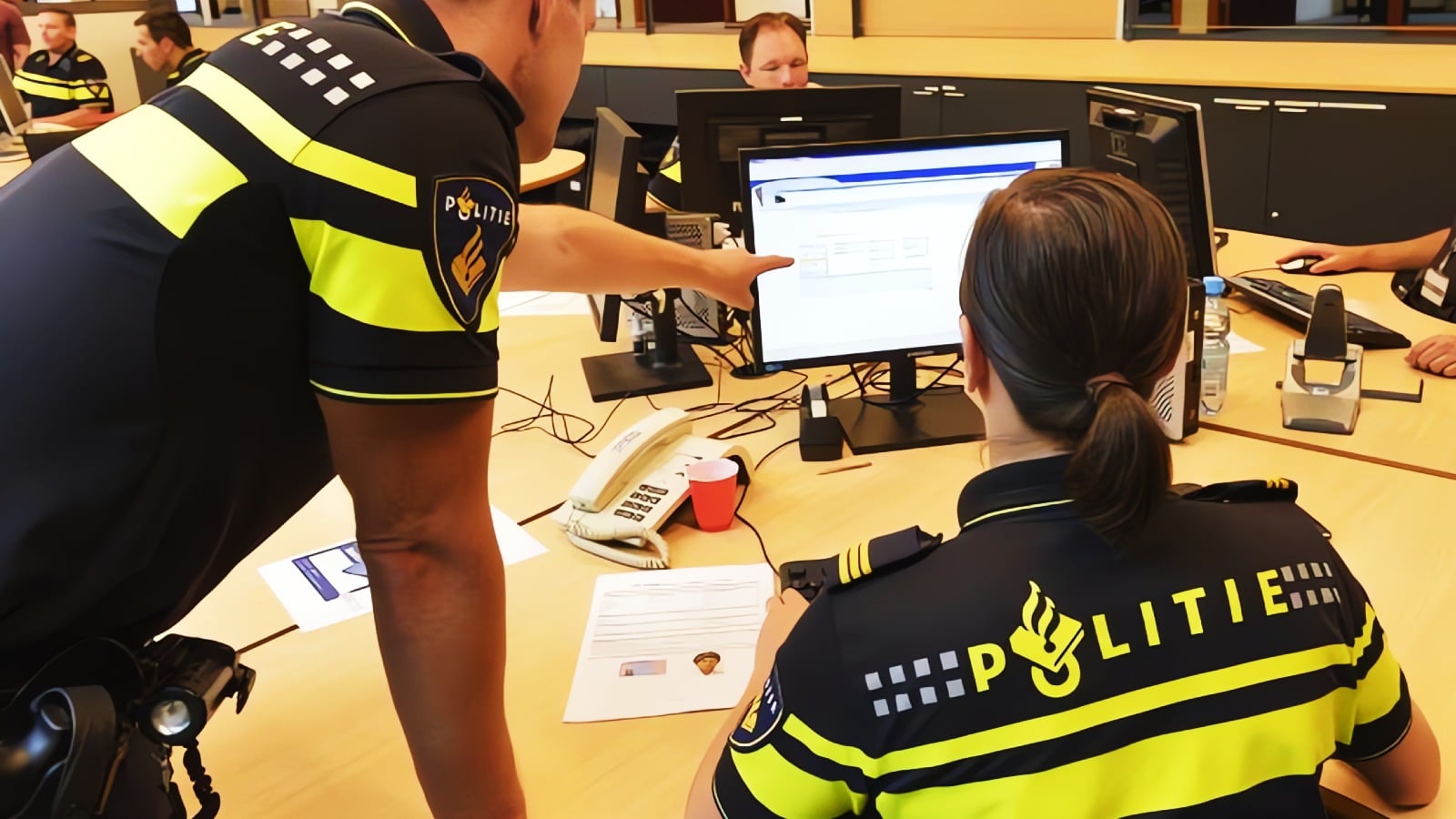
The Dutch National Police (Politie) says a security breach resulting from a successful phishing attack has had a limited impact and hasn’t affected citizens’ data.

It also stated that the incident is still under investigation by the agency’s security experts and that the attackers’ access to compromised systems has been blocked.

“The police have been the target of a phishing attack. The police’s Security Operations Center detected the incident very quickly and immediately blocked access,” the police said in a Wednesday press release.

“The impact is still being investigated but appears to be limited. Citizens’ data and investigative information were not exposed or accessed. The police have also launched a criminal investigation.”

Advertisement

The law enforcement agency has yet to disclose when the attack was detected and if any employees’ data was exposed during the breach.

A Police spokesperson didn’t immediately reply when BleepingComputer reached out for more information about the incident, including which systems or accounts were affected and whether any police officers had their data stolen, if any.

The Dutch police corps also disclosed a data breach in September 2024 following a cyberattack linked to a “state actor” that stole work-related contact information for multiple police officers, including their names, email addresses, phone numbers, and, in some cases, private data.

A follow-up investigation looking into the “nature, scope, and consequences of the data leak” is still ongoing, and the police have not publicly attributed the attack to a specific threat group or explained how it was carried out.

Advertisement

Following the attack, the police said they implemented stronger security measures to prevent future incidents, including continuously monitoring all systems for signs of suspicious activity and requiring officers to use two-factor authentication to log in to their accounts more frequently.

In February, Dutch authorities also arrested a 40-year-old man for an extortion attempt using confidential documents mistakenly shared by the Dutch police.

Automated pentesting proves the path exists. BAS proves whether your controls stop it. Most teams run one without the other.

This whitepaper maps six validation surfaces, shows where coverage ends, and provides practitioners with three diagnostic questions for any tool evaluation.

Source link

Advertisement
Continue Reading

Tech

Apple TV is now home to CrunchyRoll anime

Published

on

If you watch anime, Apple just made things a bit more convenient. Crunchyroll is now available as a channel inside the Apple TV app, where you can subscribe and watch directly without switching apps. The rollout is live in the U.S., UK, Canada, and Australia, and it comes just in time for the spring anime season.

Here’s what you get with Crunchyroll inside the Apple TV app

Apple TV users in supported regions can now subscribe to Crunchyroll directly through the app. There is a 7-day free trial, after which it costs $9.99 per month. The subscription is handled entirely through Apple’s billing system.

But there is one important catch. This version is separate from existing Crunchyroll accounts, so you cannot link your current subscription. If you want to use it through Apple TV, you will need a new subscription through the platform.

The channel includes Crunchyroll’s full catalog, depending on availability in your region. Since it is part of Apple TV Channels, you can watch everything inside the app, download content for offline viewing, and even share access with up to six people through Family Sharing.

Why is Crunchyroll expanding beyond its own app?

This partnership is a part of Crunchyroll’s efforts to reach more viewers across platforms. The service has already expanded to places like Prime Video and free streaming channels on Pluto TV, The Roku Channel, and Samsung TV Plus.

Recently, Crunchyroll increased its subscription prices, with plans now ranging from $10 to $18 per month. Bringing it to Apple TV adds another way for users to access anime without being locked into a single app.

Advertisement

For you, it comes down to convenience. If you want everything in one place, Apple TV makes it easier. But if you already have a Crunchyroll account, you might want to think twice before subscribing again.

Source link

Advertisement
Continue Reading

Tech

Get Paramount Plus for $2.99/mo for 2 months with this flash streaming deal

Published

on

A month-end streaming deal discounts Paramount Plus to $2.99 per month for two months, and the best part is you can choose any plan.

Paramount Plus logo on bright blue background, featuring a white mountain inside a circle of stars above the cursive word Paramount followed by a plus symbol.
Get Paramount Plus for just $2.99 per month for 2 months – Image credit: Paramount

From sports to original dramas, Paramount Plus has thousands of programs to watch this spring. And with this month-end streaming deal that gives new and former subscribers access to any plan for $2.99 per month for two months, there’s no better time to sign up for the service.
Get Paramount+ $2.99/mo deal
Continue Reading on AppleInsider | Discuss on our Forums

Source link

Continue Reading

Tech

iPhone 17e vs iPhone 16e: What’s new?

Published

on

Apple’s budget-friendly iPhone, the iPhone 17e, was launched just one year after its predecessor, the iPhone 16e.

With that in mind, what are the differences between the two iPhones? Did Apple do a complete overhaul with the iPhone 17e, or is the iPhone 16e still a great choice for most budget-seekers?

We’ve reviewed both the iPhone 17e and iPhone 16e, and highlighted the key differences and noteworthy similarities between them below. Keep reading to see what really separates the handsets.

Otherwise, visit our iPhone 17e vs iPhone 17 comparison to decide whether you should splurge on Apple’s standard model instead. Finally, our best mid-range phones list has all our affordable favourites from the past year.

Advertisement

Pricing and Availability

The iPhone 17e is Apple’s current affordable handset, with a starting price of £599/$599 for the 256GB handset.

Advertisement

SQUIRREL_PLAYLIST_10208288

Although it just launched back in 2025, the iPhone 16e is no longer available to buy directly from Apple and can only be purchased through authorised resellers instead. The price will vary depending on the retailer, however you can expect to pay around £499 for its 128GB iteration.

Advertisement

SQUIRREL_PLAYLIST_10207301

Design

  • Both the iPhone 17e and iPhone 16e share the same general design
  • iPhone 17e benefits from Ceramic Shield 2 at its front
  • Neither are fitted with Apple’s Camera Control button

Put the iPhone 17e and iPhone 16e next to one another and you’d be hard-pressed to find a difference. Although the iPhone 17e comes in a Pink shade alongside Black and White, both share the same dimensions, have a back glass and sport the customisable Action Button in lieu of the ringer switch.

Advertisement

However, the iPhone 17e does benefit from Ceramic Shield 2 at its front, which is promised to offer three times the scratch resistance compared to Ceramic Shield which the iPhone 16e is decked out in. Otherwise, neither handset includes the Dynamic Island nor the Camera Control button found in the iPhone 17 or iPhone 16.

Winner: iPhone 17e

Advertisement

Screen

  • Ceramic Shield 2 is the only difference between the iPhone 17e and iPhone 16e’s screens
  • Both have 6.1-inch OLED panels
  • Neither are fitted with ProMotion

The main difference with the iPhone 17e and iPhone 16e’s screens is that the former sports Ceramic Shield 2 for better scratch resistance. Otherwise, both are 6.1-inch OLED panels with a 60Hz refresh rate, as neither boast Apple’s ProMotion technology.

iphone 17e displayiphone 17e display
iPhone 17e display. Image Credit (Trusted Reviews)

Overall, both devices have decent screens, however they certainly don’t measure up to the iPhone 17 or even the iPhone 16. In fact, even if you’re upgrading from a three or four-year old iPhone, you’re unlikely to really notice the difference here.

Advertisement

Winner: iPhone 17e

Camera

  • Both have a single 48MP Fusion camera at their rear
  • No selfie camera changes
  • iPhone 17e has the next-generation portrait mode

There aren’t many changes with the iPhone 17e’s camera hardware compared to the iPhone 16e as both are fitted with just two cameras altogether: a 48MP Fusion lens at the rear and a 12MP selfie lens at the front. 

If you enjoy more versatility with your camera, and want to play around with different lenses, then neither iPhone here will likely suit your needs. Instead, you’d be better off with at least the iPhone 16 or iPhone 17, or checking out our best camera phones guide.

iphone-16e-photo-camera-dogiphone-16e-photo-camera-dog
iPhone 16e sample image. Image Credit (Trusted Reviews)

Having said that, both the iPhone 17e and 16e have capable and reliable cameras that produce detailed and vibrant shots. Even in darker conditions, both cameras are able to pull in enough light to capture decent shots.

Advertisement

Advertisement
iphone 17e portraitiphone 17e portrait
Portrait on iPhone 17e. Image Credit (Trusted Reviews)

The iPhone 17e also benefits from next-generation portrait shots with focus and depth control too, which the iPhone 16e missed out on. For this reason, we’ll give the win here to the iPhone 17e, however it’s still a close call.

Winner: iPhone 17e

Performance

  • iPhone 17e runs on Apple’s A19 chip while the iPhone 16e sports the A18 chip
  • iPhone 17e comes with 256GB by default
  • iPhone 17e includes Apple’s latest C1X modem

The iPhone 17e runs on Apple’s A19 chip while the iPhone 16e, unsurprisingly, runs on the year-older A18 chip. Although both chips have one-less GPU compared to the iPhone 17 or iPhone 16, we conclude that the two handsets run brilliantly in everyday use. In fact, both the iPhone 17e and iPhone 16e took everything from intense gaming to photo editing with ease.

iphone 17e review frontiphone 17e review front
iPhone 17e. Image Credit (Trusted Reviews)

Advertisement

Dive deeper under the hood, and you’ll find that Apple uses its own modems within the two iPhones. While the iPhone 16e was the first to include the C1 modem, the iPhone 17e benefits from the newer C1X alternative. Essentially, the modems promise users faster and more reliable mobile connectivity, without using too much power. 

While the iPhone 17e promises even faster connectivity, in our review we didn’t really notice that much of a difference between it and the iPhone 16e. 

Finally, the iPhone 17e comes with 256GB storage as standard which is double that of the iPhone 16e. This is a welcome upgrade, as games and apps are larger than ever so extra storage is always beneficial.

Advertisement

Winner: iPhone 17e

Software

  • Both have the Emergency SOS via Satellite and Crash Detection safety features
  • Both feature Apple Intelligence
  • Both support iOS 26

There’s very little difference between the two iPhones’ software. Both support iOS 26, and therefore sport the somewhat divisive Liquid Glass finish, and both surprisingly run the entire Apple Intelligence toolkit.

Advertisement

While it’s good that both the iPhone 16e and 17e support Apple Intelligence, we wouldn’t say this should be the reason you upgrade. Sure, some features like Live Translation and notification summaries are useful, but overall it doesn’t quite have the same oomph as Samsung or Google’s AI toolkits.

iphone 16e taking a photoiphone 16e taking a photo
iPhone 16e. Image Credit (Trusted Reviews)

Otherwise, both handsets also support Emergency SOS via Satellite and Crash Detection too. These features will be a welcome addition for anyone coming from an older iPhone.

Winner: Tie

Advertisement

Battery Life

  • We found the iPhone 17e and iPhone 16e run for a similar amount of time
  • iPhone 17e supports MagSafe for faster 15W wireless charging than the 16e
  • Both support 20W wired charging

The biggest difference between the iPhone 17e and iPhone 16e’s respective batteries is the inclusion of MagSafe in the former. Not only does this enable support for plenty of magnetic accessories but it offers 15W wireless charging, compared to the 7.5W on the 16e. Sure, it’s not as fast as the Xiaomi 15T Pro’s 50W, but it’s still an upgrade.

Advertisement

Otherwise, it’s pretty much business as usual with both iPhones here. Both support 20W wired charging speeds and both can comfortably last for a full day before needing a recharge. 

Winner: iPhone 17e

Verdict

Firstly, if you own the iPhone 16e then we’d argue there’s very little reason to upgrade to the iPhone 17e. Although Apple has made a few tweaks, overall the differences are negligible to really warrant splurging on the newer model. 

Advertisement

However, if you’re coming from an older iPhone and want a cheap way to upgrade to a newer iteration, then the iPhone 17e is a brilliant option. Not only will you benefit from a speedy chip, but the camera is solid and Apple Intelligence is present too. 

Having said that, if your budget is really tight, then the iPhone 16e is still a great option. Not only will you still benefit from a decent chip, Apple Intelligence support and a solid camera, but you can also pick the phone up with a hefty price drop.

Advertisement

Source link

Advertisement
Continue Reading

Tech

Windows 11 KB5079391 update rolls out Smart App Control improvements

Published

on

Windows 11

​Microsoft has released the KB5079391 preview cumulative update for Windows 11 24H2 and 25H2, which includes 29 changes, such as Smart App Control and Display improvements.

The KB5079391 update is part of Microsoft’s non-security preview schedule, which pushes updates at the end of each month to test new features and fixes that will roll out during the next month’s Patch Tuesday. However, unlike regular Patch Tuesday cumulative updates, monthly preview updates do not include security updates and are optional.

With the March 2026 optional update, Microsoft is gradually rolling out improvements to the Windows 11 Smart App Control security feature, allowing customers to toggle it without reinstalling the operating system.

“You can turn Smart App Control (SAC) on or off without needing a clean install. To make changes, go to Settings > Windows Security > App & Browser Control > Smart App Control settings. When turned on, SAC helps block untrusted or potentially harmful apps,” Microsoft said.

Advertisement

KB5079391 also includes a set of Display reliability improvements, such as support for monitors reporting refresh rates higher than 1000 Hz, native USB4 monitor connections, and improved HDR reliability.

You can install this update either by downloading it from the Microsoft Update Catalog or by opening Settings, clicking Windows Update, and then selecting “Check for Updates.”

Because this is an optional update, you will be asked whether you want to install it by clicking the “Download and install” link unless you have the “Get the latest updates as soon as they’re they’re available” option enabled, which will cause the update to install automatically.

Windows 11 KB5079391 highlights

Once installed, this optional non-security update will upgrade Windows 11 25H2 and 24H2 devices to builds 26200.8116 and 26100.8116, respectively.

Advertisement

The March 2026 preview update adds further improvements, some of the more important ones highlighted below:

  • [Performance & Reliability] This update improves stability in Windows Recovery Environment (Windows RE) when you run x64 apps on ARM64 devices. These apps run more smoothly and respond as expected.
  • This update improves the reliability of downloading required updates when you’re prompted in Settings > System > Advanced.
  • [Windows Hello] This update improves the reliability of Windows Hello Fingerprint on certain devices.
  • This update improves the design of the dialog boxes in Settings > Accounts > Other users to match the modern Windows look and support dark mode. The visibility of the dialog box option depends on whether the device has a domain-joined work or school account.

Microsoft says there are currently no known issues with this update, and the full release notes are available in this support bulletin.

Last month, the KB5077241 optional cumulative update rolled out improvements to the BitLocker Windows security, native System Monitor (Sysmon) functionality, and a new network speed test tool.

Automated pentesting proves the path exists. BAS proves whether your controls stop it. Most teams run one without the other.

This whitepaper maps six validation surfaces, shows where coverage ends, and provides practitioners with three diagnostic questions for any tool evaluation.

Source link

Advertisement
Continue Reading

Tech

Wonder Man season 2: everything we know so far about the Marvel TV show’s return on Disney+

Published

on

Wonder Man season 2: key information

– Announced in late March
– Release date or trailer yet to be revealed
– Yahya Abdul-Mateen II and Ben Kingsley set to return
– Other cast members haven’t been announced
– No confirmed plot brief, but should pick up after the season 1 finale
– Unclear if there’ll be a third season

Wonder Man season 2 is officially in development. The Marvel TV show, which debuted to critical acclaim in late January, will not only return for another run, but also reunite us with thespian besties Simon Williams and Trevor Slattery.

Those details aside, little else is publicly known about the Disney+ show’s next installment — but when has that ever stopped me from speculating? In this guide, I’ll do just that. Indeed, I’ll offer my prediction on its eventual launch, discuss its possible plot, and try to figure out which other characters may return from Wonder Man‘s first season. Altogether now: lights, camera, aaaaand… action!

Advertisement

Source link

Advertisement
Continue Reading

Tech

Two tech workers took it Offline, and opened a Seattle coffee shop that AI can’t replicate

Published

on

Offline Coffee Co. co-founders Lucy Kong, left, and Krystal Graylin behind the counter at the cafe in Seattle’s Capitol Hill neighborhood. (Sarah Goh Photo)

The meeting was running long, so someone said what they always say: “let’s take this offline.”

For Krystal Graylin, that phrase — hollow corporate shorthand for a problem deferred, not solved — became something else entirely.

She actually did it.

Graylin, a former Microsoft product manager, and her friend from college, Lucy Kong, an auditor at EY, both watched as their industries raced to automate and cut headcount. They responded by betting on the one thing they figured AI couldn’t replicate — handing someone a drink and watching that person’s face light up.

The result is Offline Coffee Co., a new cafe in Seattle’s Capitol Hill neighborhood that opened last month, drawing on Chinese cafe culture for its menu and aesthetic, leaning into the “third place,” and serving as a deliberate departure from the corporate world both founders left behind.

Advertisement
In addition to drinks and pastries, Offline Coffee Co. offers a mix of artwork and crafts for sale. (GeekWire Photo / Kurt Schlosser)

In a city full of tech and coffee, Graylin and Kong are an unlikely pair to be running a cafe. Neither had worked professionally as a barista, aside from operating their home machines and hosting apartment cafe parties with friends. One was monitoring the health of Microsoft’s Azure cloud platform. The other was auditing Amazon’s books at EY.

“Some people we talked to were like, ‘You guys have no business opening a coffee shop. You haven’t been a barista or owned a food business before. What makes you think like you can just quit your job and open a cafe,’” Graylin said, adding, it’s a “fair concern.”

Friends since their days at the University of Washington, Graylin said she and Kong joked for years about the cafe idea, but only started taking it seriously last April. They considered what it would mean to give up a steady income and sign a lease for a retail space.

“Going into this, it was not like, ‘we hate our jobs so much that we want to escape and do something completely different,’” Graylin said. “We knew it would be risky, but we knew that going through this experience, it would make us change in a way that we couldn’t pay someone to teach us.”

Offline Coffee Co. is on a street lined with apartment buildings in Capitol Hill. (GeekWire Photo / Kurt Schlosser)

They got the keys to 711 Bellevue Ave E. last July and quit their jobs in August. For several months they worked on building out the space, adding their design touches with light wood finishes, a tiled main bar, and thrifted furniture before opening in February. The menu is built around floral syrups and flavor combinations that Graylin and Kong would bring back from trips to China — cafe ingredients that she said are harder to find in Seattle.

“It feels crazy,” Graylin said. “I cried five or more times the first week we were open, because I was so stressed but also I was so happy to see all the people in here.”

Advertisement

Friends have been visiting, others work on laptops in the cafe, and neighbors are making Offline a regular stop on their dog walks. Graylin said it’s cool to become part of someone’s routine.

But the leap from tech to coffee wasn’t just about escaping the corporate grind. It turns out, Graylin said, that being a product manager prepared her for more than she expected.

Chinese decor in Offline Coffee Co. accentuates a menu that features unique flavors. (GeekWire Photo / Kurt Schlosser)

Negotiating contracts, managing people, de-escalating difficult customers, knowing how to prioritize — all of it transferred. So did a comfort with AI tools, which she and Kong have leaned on to close knowledge gaps, whether researching equipment, navigating legal questions, or estimating costs before bringing in an expert.

But it was also AI, and what she saw it do to the people around her at Microsoft, that helped push her out the door.

“So much of the focus was on, how can we use AI to 10x, and cushion the impact of layoffs to avoid losing revenue,” Graylin said. “Rather than, how is everyone on the team doing with all these layoffs? How can we [use AI] to improve the work-life balance on the team?”

Advertisement

The cafe, she said, felt like an answer to that question — a deliberate bet on what she believes advancing technology can’t touch.

“AI is good for automating things that are really tedious and unpleasant,” she said. “But social interactions — those are things that don’t need to be sped up.”

Source link

Advertisement
Continue Reading

Tech

Teams Get the Tech. The Mindset Shift Is What’s Missing.

Published

on

Red pill or blue pill

By Yair Kuznitsov, Co-Founder & CEO, Anecdotes

Every week I talk to enterprise GRC teams who understand exactly what agentic AI can do for their profession. They’ve read the articles, seen the demos, and can articulate the difference between AI that makes a workflow go a little, or even a lot faster, and an agent that replaces it entirely.

Yet still, some remain reluctant to make the shift to agentic GRC.

When I ask why, the conversation moves away from technology pretty quickly. Most of them have the “AI budget” available, but something is holding them back from making the move and they can’t always name what it is.

Advertisement

The conversations all eventually lead to the same place, even if they can’t say it in so many words: they’re not sure who they are when the operations aren’t theirs anymore. It’s an identity and even value question above all else.

Most GRC practitioners carry an implicit belief about where their value comes from. That belief isn’t wrong, but it’s describing a role that’s being restructured, and those who make the transition the fastest will be the ones leading the industry in the coming years.

The Competence That Got Us Here

GRC professionals built their expertise around operational competence. Knowing how to gather the right evidence, managing audit cycles under pressure and keeping a complex compliance program running when it’s understaffed and under-resourced have been signs of a valuable GRC team member for years.

That competence took years to develop, and the people who have it are genuinely good at what they do and are rightfully valued by their business.

Advertisement

The problem with agentic GRC is that it doesn’t reward that competence the same way. Agents can gather evidence, open remediation tasks and can manage most of the audit cycle alone. Given that agents can handle those operations, the actual question is what a GRC professional is supposed to be doing instead, and most organizations haven’t asked it yet.

Real GRC Engineers Don’t Live in Spreadsheets. They declare controls in Terraform, version them in Git, and route every update through pull requests and CI/CD pipelines. 

Download GRC Engineering 101 to learn how to get started

Download Now

The Shift They’ve Been Waiting For

GRC wasn’t designed to be an operational function. It was designed to help organizations understand and manage risk. The evidence collection, the audit cycles, the status updates were always implementations of that purpose, not the purpose itself. The practitioners who got into this field weren’t drawn to it because of the “fun” of evidence collection.

Advertisement

They cared about whether the organization was actually protected, or just appearing to be, and wanted to provide that insight to the business.

What happened over time is that the tooling didn’t scale with the programs, and the operational burden consumed everything. The people who were supposed to be thinking about risk spent most of their time keeping the machine running, not because it was ever the point of the role, but because someone had to do it and there wasn’t another way.

What Agents Do, and What They Can’t

Agentic GRC doesn’t speed up workflows, it replaces them. Evidence no longer flows through a person; it’s pulled continuously from integrated systems. Controls aren’t checked periodically; they’re monitored in real time. Remediation isn’t tracked in spreadsheets; tickets are opened, assigned, followed up on, and closed automatically.

But agents don’t design themselves.The logic that drives them (what to collect, what constitutes a pass or fail, what triggers an escalation, what the auditor will accept as evidence) comes from a key combination: data context and human insight.

Advertisement

Someone has to define the risk appetite, decide what “remediated” actually means, know when the output looks right and when something is missing that the system can’t see.

Agentic GRC in Anecdotes is built around exactly this model. The agents handle the operations end to end, based on the robust data foundation we have spent years building, and the logic the GRC team defines. 

When agents can handle the evidence chains, control testing, and audit prep, the question of what GRC should actually be doing shifts. And for practitioners with real depth, that answer is what they’ve always known how to do. But that doesn’t make the shift easy.

Redefining a role is hard and comes with real fears. Many people are worried about their jobs because of AI, some more rightfully than others.

Advertisement

For GRC professionals specifically, this is less a threat than it is the opportunity they’ve been waiting for.

The practitioners who’ve made this shift describe it less like learning something new and more like getting permission to do what they were trained to do.

Their job became telling the agents what matters: setting the right risk appetite, deciding which controls are genuinely protecting something and which ones exist because they always have, knowing when an automated finding is a real problem and when it’s noise, and translating business context into compliance logic in ways no agent can replicate, because that translation requires judgment built from years of experience.

That judgment has been sitting in GRC teams all along, waiting for the operational load to lift.

Advertisement

The organizations that move first on this won’t win because their teams are better at AI. They’ll win because their GRC teams finally have the time and the mandate to do what compliance was supposed to do: think clearly about risk, act on what actually matters, and stop managing a program and start leading one.

Why Letting Go Feels Like Losing

The reluctance that comes up in these conversations makes more sense when you frame it this way.

Practitioners aren’t afraid of losing their value; they’re afraid of losing the operations that became their identity, even though those operations were never what they wanted. Letting that go feels like losing something, which makes it hard to see what’s waiting on the other side. And what is waiting is far more aligned with why they got into this work in the first place.

The shift, when it happens, is less a transformation than a return to what the role was always supposed to be.

Advertisement

Learn more about agentic GRC with Anecdotes at anecdotes.ai

Sponsored and written by Anecdotes.

Source link

Advertisement
Continue Reading

Tech

Gen Z is using AI in job interviews as graduate unemployment climbs

Published

on

The class of 2025 graduated into the worst entry-level job market in five years. Now a growing number of them are using AI tools during live job interviews, and a cottage industry of startups is rushing to sell them the means to do it. Whether that constitutes cheating or common sense depends on which side of the hiring table you sit on, but the numbers behind the trend are not in dispute.

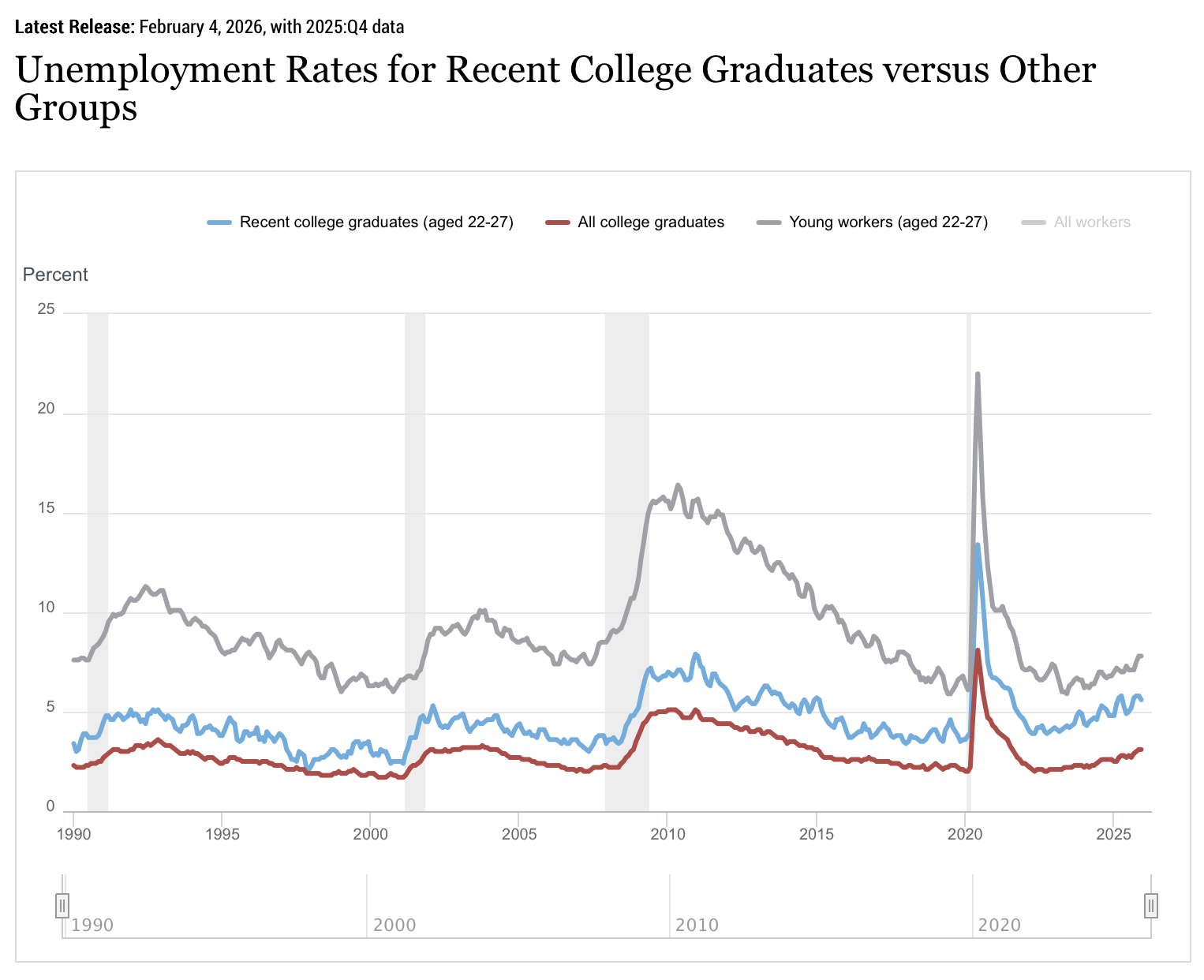
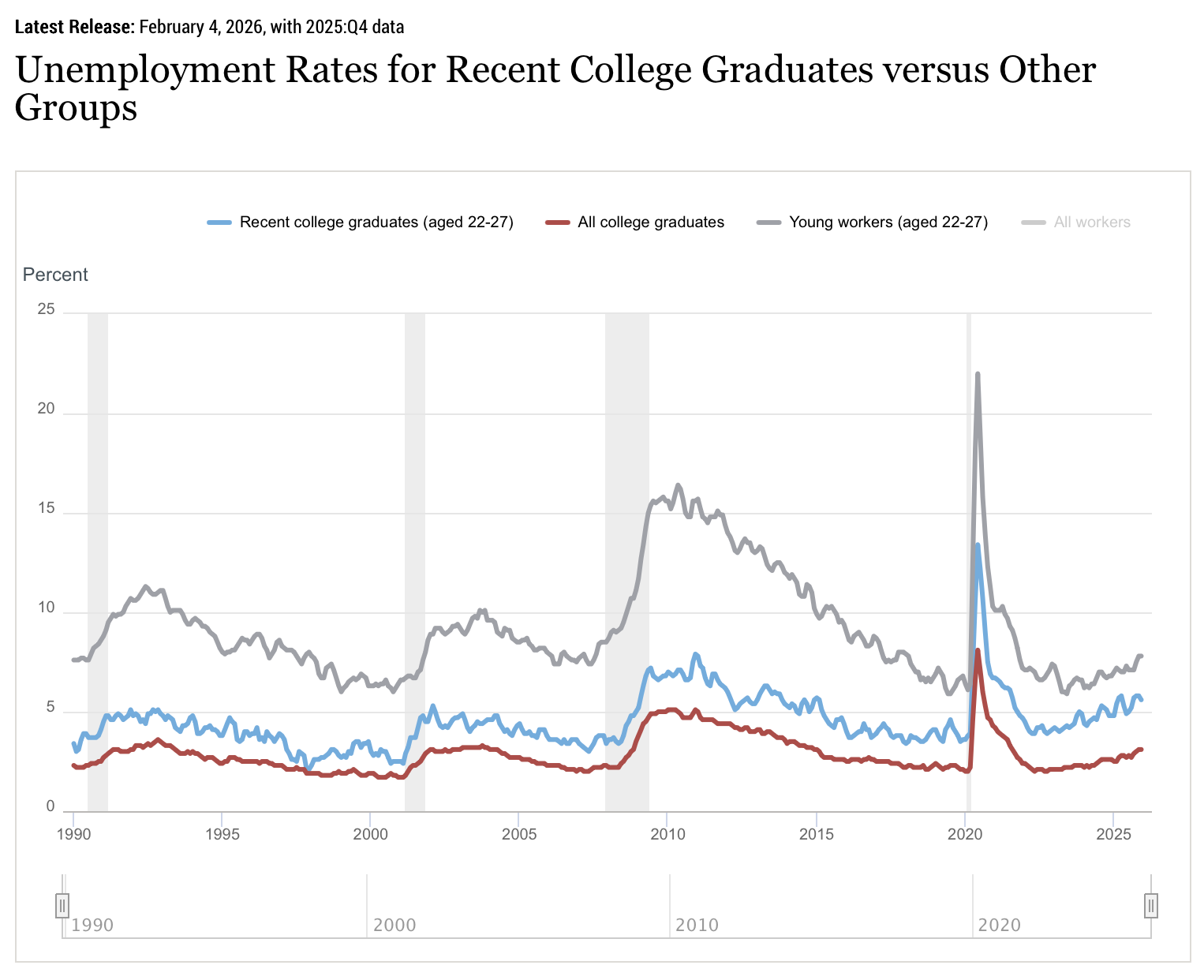
Unemployment among recent college graduates aged 22 to 27 climbed to 5.7 per cent by the end of 2025, according to the Federal Reserve Bank of New York, well above the 4.2 per cent national rate. Underemployment, which measures graduates working in jobs that do not require a degree, hit 42.5 per cent, its highest level since 2020. The tech sector, once the default destination for ambitious graduates, shed roughly 245,000 jobs in 2025, according to tracking data from Layoffs.fyi and TrueUp. Another 59,000 have gone in the first three months of 2026.

gen-z-ai-job-interviews-class-2025-hiring
Credit: FEDERAL RESERVE BANK of NEW YORK
gen-z-ai-job-interviews-class-2025-hiring

The graduates who entered this market did so having watched an older cohort get hired, promoted, and then laid off at companies like Meta, Amazon, and Google in the space of 18 months. The lesson they drew was not subtle: competence and loyalty are insufficient protection. And so they arrived armed with a technology that their universities had spent four years telling them to learn.

The tools and the companies selling them

The phenomenon surfaced this week in a press release from LockedIn AI, a startup that sells a product called DUO: a service that combines real-time AI transcription of interview questions with a live human coach who can see the candidate’s screen and provide strategic guidance during the conversation. The press release, distributed via GlobeNewswire, was framed as a trend piece about generational resilience. It was, more precisely, a product advertisement.

LockedIn AI is not alone. Its founder, Kagehiro Mitsuyami, also co-founded Final Round AI, a similar product. Both companies have faced questions about the authenticity of their marketing: reviews on Trustpilot appear to be AI-generated, and independent reviewers have noted that the software can be visible to interviewers when candidates switch between windows. A Gartner survey of 3,000 job seekers found that six per cent admitted to interview fraud, including having someone else impersonate them. Fifty-nine per cent of hiring managers suspect candidates of using AI to misrepresent themselves.

Advertisement

The market for these tools is growing precisely because the conditions that created them are getting worse, not better. The National Association of Colleges and Employers found that 45 per cent of employers characterised the job market for the class of 2026 as “fair,” down from “good” the previous year. Hiring projections for new graduates are essentially flat, at 1.6 per cent growth. For candidates submitting dozens of applications and receiving interview invitations at rates below two per cent, the temptation to use every available advantage is considerable.

The hypocrisy argument

The most effective argument in favour of AI-assisted interviewing is not about fairness in the abstract. It is about a specific inconsistency in how technology companies treat AI.

Google’s chief executive, Sundar Pichai, disclosed during an April 2025 earnings call that more than 30 per cent of the company’s new code is now generated with AI assistance, up from 25 per cent six months earlier. Amazon, Microsoft, and Meta all encourage their engineers to use AI coding tools daily. Applicant tracking systems powered by AI screen and reject resumes before a human ever reads them. The hiring pipeline is automated from end to end, except on the candidate’s side.

For graduates who spent their university years being told that AI fluency would define their careers, being asked to pretend the technology does not exist during a 45-minute interview feels less like a test of competence and more like a test of compliance. The companies asking them to do so are, in many cases, the same ones that will expect them to use AI tools from their first day on the job.

Advertisement

This argument has real force, but it also has limits. There is a difference between using AI to write code more efficiently and using AI to answer questions about your own experience, judgment, and problem-solving ability. An interview is, at least in theory, a conversation designed to evaluate what a candidate knows and how they think. Outsourcing those answers to a language model, or to a human coach whispering through an earpiece, undermines the purpose of the exercise regardless of how unfair the exercise may be.

The employer response

Companies are already adapting. In-person interview rounds rose from 24 per cent in 2022 to 38 per cent in 2025, according to hiring industry data. Seventy-two per cent of recruiting leaders now conduct at least one in-person stage specifically to combat AI-assisted fraud. Some firms have moved to whiteboard exercises, pair programming sessions, and unstructured conversations that are harder to augment with real-time tools.

The deeper question is whether the interview itself is the right mechanism for evaluating candidates in an AI-saturated labour market. If the goal is to assess what a candidate can produce with the tools they will actually use on the job, then banning those tools during the evaluation makes little sense. If the goal is to assess raw cognitive ability and domain knowledge, then AI assistance defeats the purpose entirely. Most interviews attempt to do both, which is why the current system satisfies no one.

What is clear is that the class of 2025 did not create this problem. They inherited a job market reshaped by pandemic-era overhiring, aggressive cost-cutting, and an AI revolution that is simultaneously creating and destroying opportunity at a pace that neither employers nor candidates have fully absorbed. Their decision to use AI in interviews is not rebellion. It is the predictable behaviour of rational actors in a system that has told them, repeatedly and in every other context, that AI is not optional. The fact that the system now objects to them taking that message seriously is, at minimum, worth examining.

Advertisement

Source link

Continue Reading

Tech

PS5 price increases go global, rising up to $150 depending on the model

Published

on


In the US, the standard PS5 will increase from $549 to $649, while the Digital Edition rises from $499 to $599. The PS5 Pro sees the largest jump, climbing from $749 to $899, and the PlayStation Portal moves from $199 to $249.
Read Entire Article
Source link

Continue Reading

Trending

Copyright © 2025