Tech
New Law Would Demand ‘Firearm Blocking’ Tech In Every 3D Printer


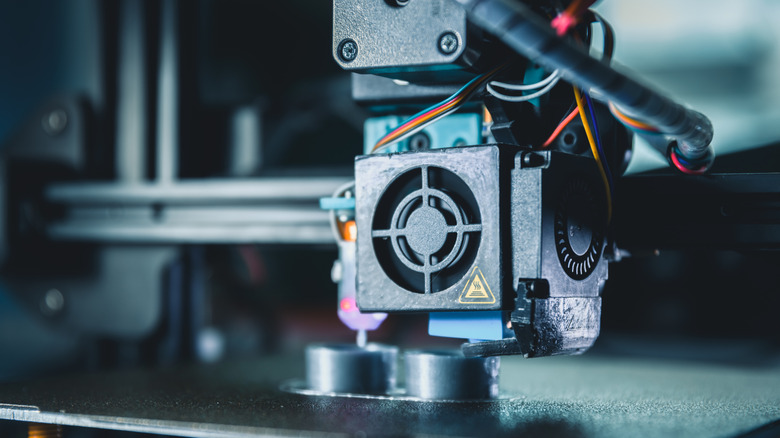
As 3D printers from a number of brands get better and less expensive, there’s always the question of 3D-printed guns. After all, 3D printers are showing up in combat roles. To counter this, at least in California, Assembly member Rebecca Bauer-Kahan introduced a bill that would mandate that every 3D printer sold in California be coded with “firearm blocking features designed to prevent the printing of dangerous gun parts and ghost guns.”
The bill, AB 2047, states: “all 3D printers sold in California will be required to include firearm detection algorithms and software controls that identify files designed to produce guns and illegal gun parts, then block those printing requests.”
The definition of “ghost gun” varies, but it usually refers to firearms without serial numbers or easily traceable markings.
According to the Bureau of Alcohol, Tobacco, and Firearms, it’s federally legal to make your own firearms and does not require a serial number as long as the firearm in question is not being sold for a profit and is “detectable” by metal detectors and X-rays.
You mostly can’t print an entire gun
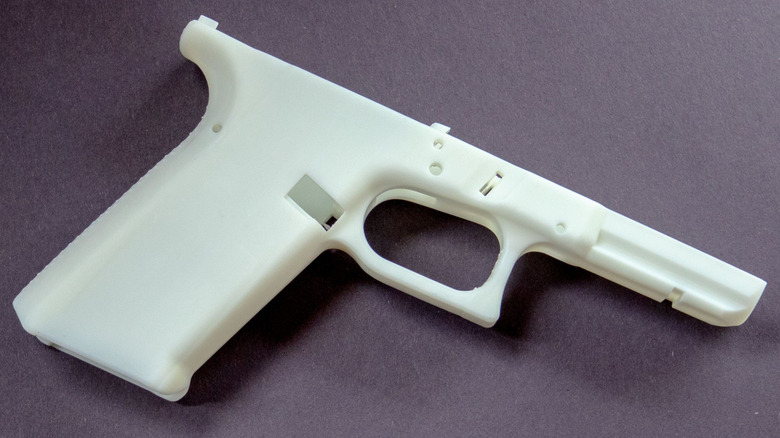
Speaking from personal experience from well over a decade of participating in shooting sports and gun-smithing, you cannot just find a file online and print a functioning gun like something out of a Tom Clancy novel. You can only print accessories and non-stressed parts of a gun, like the receiver of the popular Glock series of handguns or the lower receiver of an AR-15-style rifle.
In order to make a firearm that functions without exploding from the pressure of a fired bullet, you still need a lot of conventional gun parts like barrels, slides, and trigger mechanisms. While each gun is different, receivers are often the only part of a firearm that requires a background check and cannot be purchased online without violating federal law. Still, printing a receiver without a background check is a valid concern.
3D printer bills like the one introduced in California are obviously well-meaning in their intent. No lawmaker wants to see their constituents hurt by potentially dangerous technology. But without knowledge of the problem with 3D-printed firearm components and concrete ways to actually program 3D printers to detect gun parts, the bill might not go very far.