Tech
Noble Audio Osprey Review: $199 Audiophile Earbuds Put Sound Quality First

Noble Audio is a major player in the hi-fi arena. Founded in 2013, Noble’s vast and varied work in the IEM market has helped shape much of what we now take for granted. From CNC-machined aluminum shells to sophisticated driver configurations, there are few parts of the modern IEM scene that Noble has not influenced in some way.
Today, we’re taking a look at one of Noble’s newest and most affordable earbuds: the true wireless Noble Osprey. At $199, this hybrid TWS undercuts flagship offerings from established brands like Bose and Sony on price. But does Noble have what it takes to match them in the realm of modern tech features and quality-of-life refinement? Let’s get into it.

About My Preferences: My impressions are inevitably influenced by my personal preferences. While I try to mitigate that as much as possible during the review process, I’d be lying if I said my biases are ever completely erased. So, for you, my readers, keep the following in mind:
My ideal sound signature includes competent sub-bass, textured mid-bass, a slightly warm midrange, and extended treble.
I also have mild treble sensitivity.
Testing equipment and standards can be found here.
Related Reviews:
Key Specifications
- Drivers: 10mm dynamic driver + custom balanced armature driver
- Wireless: Bluetooth 6.0
- Bluetooth chipset: Airoha 1571
- Supported codecs: LDAC, AAC, SBC
- Noise control: Active Noise Cancellation and Hearing Through/Transparency mode
- Microphones: Dual microphones with cVc noise reduction
- Multipoint: Yes
- TrueWireless Mirroring: Yes
- Battery life: Up to 7 hours with ANC off; up to 5 hours with ANC on
- Quick charging: Approximately 2 hours of playback from a 10-minute charge
- Charging case: 500mAh aluminum case
- Charging: USB-C
- Included accessories: Aluminum charging case, USB-C cable, ear tips, and user documentation
Tech & Features
The Osprey supports Bluetooth 6.0, along with a suite of high-quality audio codecs. LDAC, AAC, and SBC are onboard, with the only notable exclusions being aptX HD and aptX Low Latency. This appears to be a concession to keep the price low, as aptX is a proprietary suite of codecs licensed by Qualcomm.
Pairing the Osprey with my Google Pixel 10 Pro was quick and easy. A brief jaunt through the user manual confirmed that the Osprey automatically launches into pairing mode when new, which was convenient. I was able to pair the Osprey seamlessly with all of my devices, including my Windows 10/11 desktop, Linux PC, and Nintendo Switch 2. The Osprey also supports multipoint connectivity, allowing it to juggle multiple active connections without requiring user intervention.
The Osprey features haptic touch controls on both earbuds and supports single, double, triple, and long-press gestures. They are fine for the most part, but can be inconsistent when trying to quickly pause or play audio. As a general rule, I prefer buttons on true wireless earbuds, and the Osprey is no exception. Being forced to tap my earbuds to pause music or adjust the volume is disruptive, especially when some of those taps are not recognized.
Further, the Osprey’s hollow construction transmits a ton of noise into my ears when using the touch controls, which is a less-than-fun experience. Thankfully, you can adjust which gestures map to which functions through the app, barring the press-and-hold control for ANC modes.
I appreciate the app’s lightweight, zero-account approach. You can update the Osprey’s firmware, select an EQ preset, or create your own using its 10-band equalizer.
While that minimalism is good for performance and storage footprint, it comes with some functional downsides. Mainstream rivals like Sony, Bose, and JBL offer more advanced features, including location-based profiles, find-my-device tools, and ear-health monitoring — useful extras that power users may miss.
The austere Noble app reflects the company’s priorities: Noble remains primarily focused on sound, leaving much of the more elaborate tech experience to the established names in the true wireless earbud space.
Build
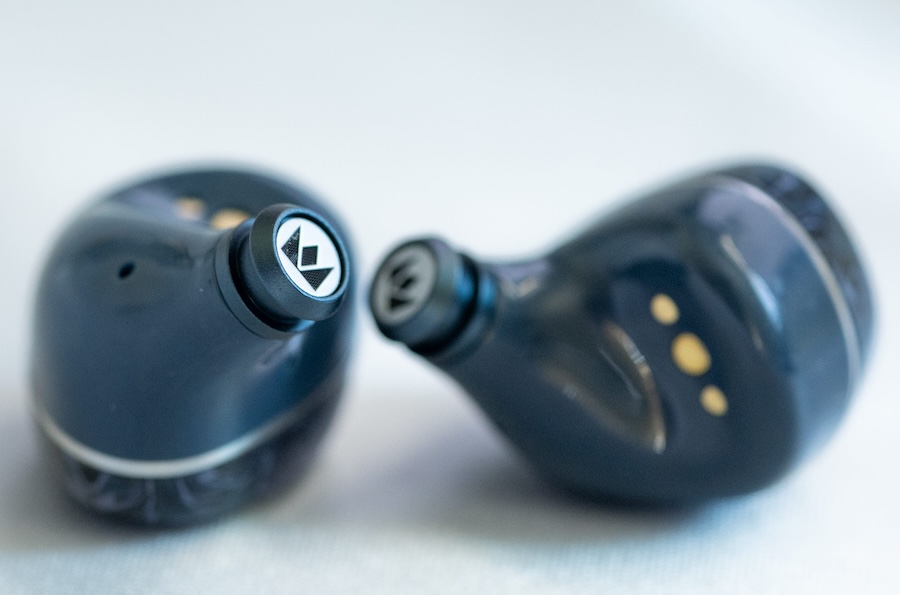
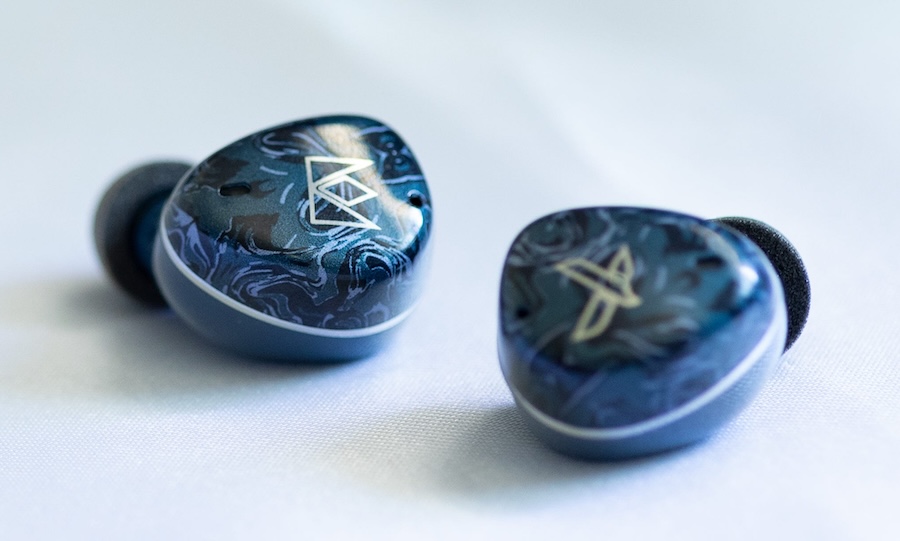
As is tradition with Noble Audio’s IEMs, the Osprey places a major emphasis on aesthetics. It features a four-piece chassis comprising a resin faceplate, plastic middle ring, resin inner face, and short aluminum nozzle. The nozzle is machined from aluminum and topped with a metal debris filter.
The Osprey’s aluminum charging case features a solid, spring-loaded lid. A charging-status LED is located on the front of the case.

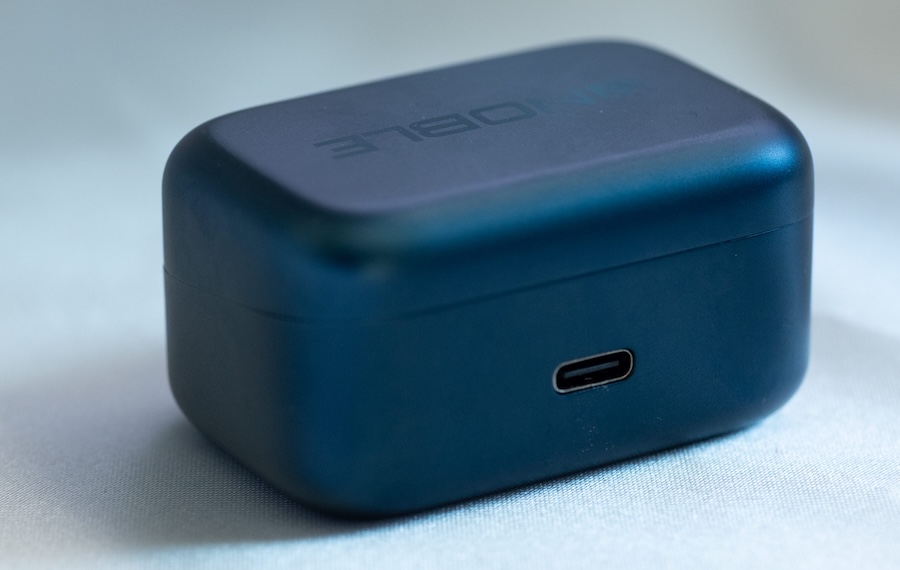

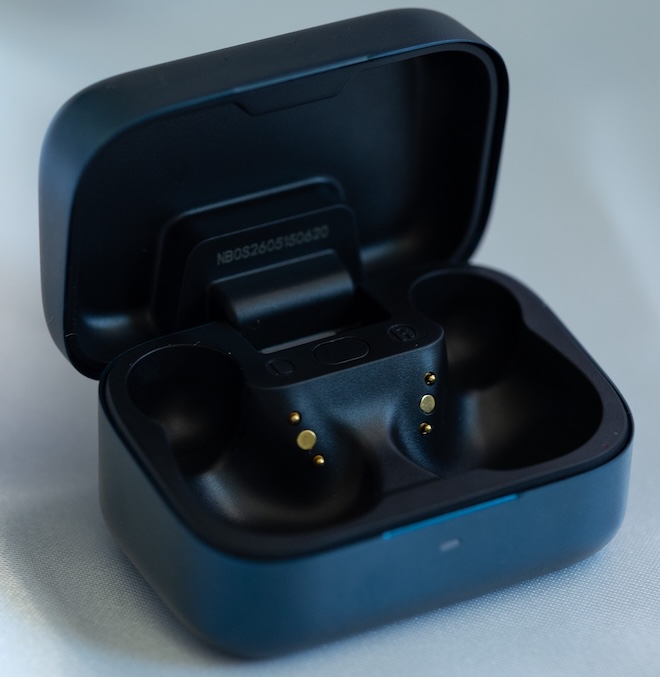
The rear of the Osprey’s case features a USB-C charging port that supports quick charging. It works with any USB-C cable that meets the USB PD standard, so aftermarket options are viable. Inside, the Osprey’s case features molded recesses for each earbud, complete with standard charging pins and magnetic attachment points.
Comfort
Comfort is a metric that depends heavily on your individual ear anatomy, so mileage will vary.
The Osprey is a lightweight, compact wireless earbud. Its shorter nozzles result in a shallower fit, but I was still able to achieve a solid passive seal with the stock eartips. The foam tips worked best for me, though the silicone options were similarly comfortable. I was able to listen comfortably for multiple consecutive hours, making the Osprey a competent companion for long days in the office.
Accessories

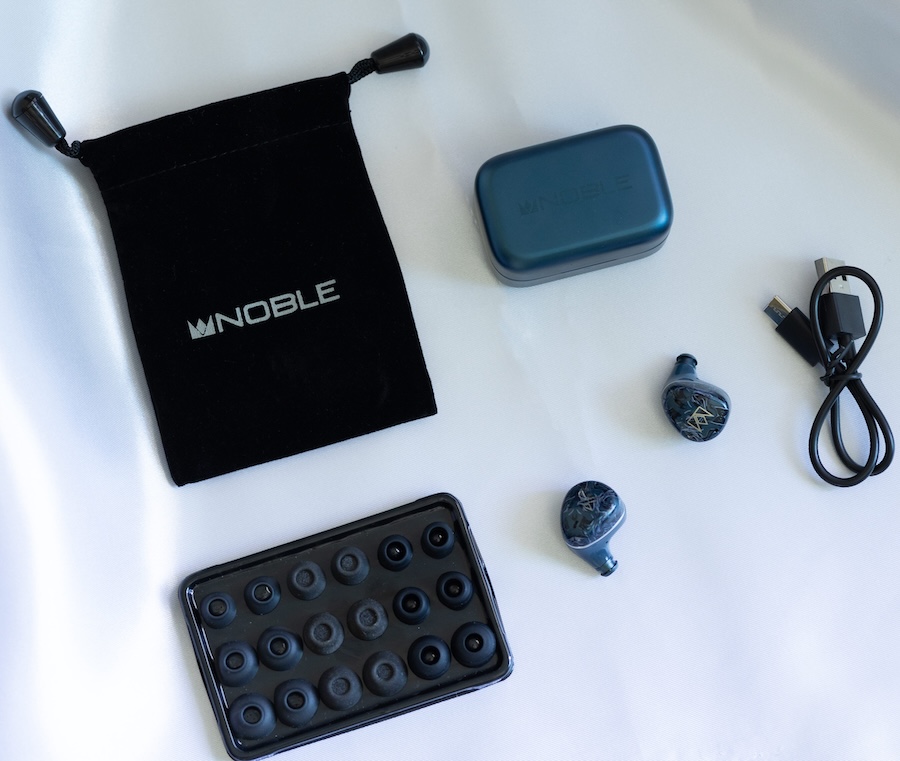
- 1x Aluminum charging case
- 1x Felt baggie
- 3x Pairs of double-flanged eartips
- 3x Pairs of foam eartips
- 4x Pairs of standard silicone eartips
- 1x USB-C to USB-A charging cable
For what amounts to an entry-level pair of wireless audiophile earbuds, this is a solid accessory package. You get a high-quality aluminum charging case, a felt baggie in which to store it, and ten pairs of eartips. The Osprey includes both silicone and foam options, along with three pairs of double-flanged tips.
The included charging cable is short and basic, though functional. I ended up swapping to a different USB-C cable, as the stock cable is too short for my use case and terminates in USB-A rather than USB-C. The case supports quick charging over USB-C, so make sure to use a quality aftermarket cable should you go that route.
Listening
The Noble Audio Fokus app supports onboard EQ, but I did not use it during this portion of the sonic analysis. Should you wish to tweak the Osprey’s sound, you can select a genre-based preset or adjust the 10-band EQ manually.
Noble’s sonic intent with the Osprey is clear: deliver a stock tuning that lives up to the audiophile promise of clear, robust sound. It features a gently V-shaped sound signature, with lifted and well-extended sub-bass, mild warmth through the lower midrange, a slight upper-midrange lift for instrumental clarity, and bright, but not sharp, treble.
Precise, Atmospheric Bass
Noble gave the Osprey’s bass a full-bodied but nimble presentation. Its sub-bass sits just behind the mid-bass, delivering depth and articulation without becoming messy.
The Osprey’s lower register is textured and quick, allowing it to convey an excellent sense of atmosphere on “The Dark” by Thrice. The track’s mix of synthetic bass lines and plucky bass guitar plays well with the Osprey’s expressive mid-bass.
The weighty drums at the beginning of “Better Strangers” by Royal Blood land with body and authority, decaying precisely into the soundstage’s black background. The gritty, filtered drop-D guitars in the foreground carry an addictive bassy undertone, giving them a physicality the track desperately needs.
Electronic tracks play well with the Osprey, leveraging its solid extension to generate tactile but respectful punch and rumble. On “The People” by Uppermost, the Osprey rendered the bass line with a robust, substantial timbre.
Beyond simple extension and speed, the Osprey’s bass tuning gives it the ability to sound complete and organic without thinning out the bottom end. That said, some tracks could really use additional bass presence. “Drunk Wishing (Hairitage Remix)” relies on a wall-of-bass effect that the Osprey’s more moderate low end does not quite produce.
You can crank the bass through the EQ to get a little closer to a basshead’s preferences, but ultimately, the Osprey does not seem interested in producing much more sub-bass than it delivers by default.
Hearty, But Lightweight, Midrange
The Osprey’s midrange sits a little north of neutral, delivering mild warmth and an overall clean tonality. Noble balances the upper and lower mids well, allowing it to give harmonically complex elements their proper weight. Acoustic guitar is particularly synergistic with the Osprey’s midrange, pulling a fantastic sense of presence and completeness from tracks like “Life of Illusion” by Foo Fighters. Electric guitar is likewise well-toned and textured. The gritty distortion in “I Got” by Young the Giant streaks from the Osprey’s drivers, staging both guitars with realism and precision.
Even during busy passages, the Osprey maintains its composure, presenting a deep array of layers. It nails the cascading, contrasting layers of instrumentation in the outro of “Endless” by Slow Hours. Each strike of the piano hammer against its strings carries distinction and air, standing apart from the bittersweet violin breathing gently in the background.
Clear & Energetic Treble
The Osprey’s treble tuning is excellent. Combined with a carefully selected, high-performance driver setup, there are not many IEMs, wired or otherwise, at this level of treble refinement.
The Osprey’s single balanced-armature driver works overtime, delivering impressive texture alongside fine-grained control over its deeply layered treble. I was particularly impressed by its ability to manage treble-heavy elements under pressure. The dense soundstage of “Weak” by Seether is a tough mix to render, but the Osprey captures the metallic slam of the hi-hats and tambourines with aplomb. It also beautifully stages the ringing bells at 1:58 in “Wish You Were Here” by Incubus, a fragile micro-detail buried deep in the track and easy to smudge.
The Osprey’s treble is clear and energetic without stepping beyond the bounds of comfort, even with my treble sensitivity. There is no hint of sharpness or sibilance, even on roughly mastered tracks like “Satisfy” by Nero.
Mic & Phone Call Quality
While I’m stoked on the Osprey’s sonic performance, its microphone performance is not quite as impressive. The dual onboard mics work well in quiet spaces, but struggle to pick up my voice when I take calls in environments with considerable background noise. The built-in noise-isolation technology also seems to struggle with vocal clarity in noisier settings, sometimes introducing harsh or unnatural artifacts.
You will also need to position each earbud carefully to maintain the proper angle for the microphones. Otherwise, the Osprey can struggle to pick up your voice when speaking quietly. Other Bluetooth IEMs offer larger microphone arrays while delivering clearer, more intelligible call audio.
Competitors like the Sony WF-1000XM4, WF-1000XM5, and WF-1000XM6, along with the Bose QuietComfort Ultra, offer materially better experiences for standard calls and PC meetings, especially when you are trying to keep your voice down.
Noise Cancelling
I’m not a big ANC guy, but I recognize its utility when trying to take an important call in a loud space. I also frequently make use of ANC when traveling by plane, especially if there’s a perturbed child onboard.
The Osprey’s ANC is middling at best, however. It can reduce interference from a TV in the next room or kitchen noise from down the hall, but it is not especially useful in crowded coffee shops or on busy streets. Top-tier ANC from true wireless IEMs like the Sony WF-1000XM6 provides a profoundly different experience, and if you rely heavily on ANC day to day, I would stick with an offering like that.
Thankfully, I rarely, if ever, use ANC in my daily routine, so this is a downside I’m willing to tolerate.
While not exactly a noise-cancelling feature, the Osprey also supports Ambient Mode, a kind of inverse ANC that pipes environmental sound into the IEMs. Parents, or anyone who needs to maintain sonic awareness of their surroundings, will be happy to know that Ambient Mode works well, even in crowded or busy places.

The Bottom Line
The Noble Osprey is an audiophile true wireless earbud designed with a clear sense of purpose. Rather than chasing every app feature, wellness metric, and ANC trick in the book, Noble has focused its efforts on the part that matters most to listeners who actually buy audiophile earbuds: the sound.
Its hybrid driver setup delivers a balanced, well-extended presentation with textured bass, a clean and articulate midrange, and unusually refined treble for $199. Detail retrieval is excellent, and the Osprey avoids the brittle, overcooked treble that often passes for “resolution” in this category. Add a compact fit, aluminum charging case, generous tip selection, LDAC support, and onboard 10-band EQ, and Noble has put together a genuinely compelling audio-first package.
That focus comes with obvious compromises. ANC is merely serviceable, microphone performance falls short in noisy environments, and the Noble Fokus app is stripped down compared with Sony, Bose, and JBL. There is no aptX support, no elaborate ecosystem of location-based profiles or device-finding features, and no illusion that these are meant to replace a top-tier mainstream travel earbud.
The Osprey is unique because it treats true wireless as a vehicle for serious portable listening rather than a feature checklist with drivers attached as an afterthought. It will not win the airport, the conference call, or a fight with a screaming espresso machine. But for listeners who value musicality, detail, comfort, and a properly sorted tuning above all else, it is one of the more persuasive options at its price.
Pros:
- Small, light and ergonomic
- Powerful hybrid driver setup
- Balanced and well-extended sound signature
- Articulate, textured midrange
- Great detail retrieval
- Solid accessory package
- Support for LDAC, SBC
Cons:
- ANC quality falls behind mainstream competitors
- Barebones app offers minimal feature-set
- No support for APT-X codecs
- Mediocre mic quality while on call
Our Ratings
★★★★★★★★★★ Sound Quality
★★★★★★★★★★ Comfort
★★★★★★★★★★ Usability
★★★★★★★★★★ Build Quality
★★★★★★★★★★ Value
You must be logged in to post a comment Login