












Connect with us
DAPA Banner

Tech

Nothing CEO Carl Pei says smartphone apps will disappear as AI agents take their place

Published

on

Carl Pei, co-founder and CEO of Nothing, is imagining a future beyond the iPhone — and it’s a device powered by AI agents, not running apps.

“In terms of AI in software, I think people should understand that apps are going to disappear,” said Pei, whose consumer electronics brand makes unique smartphones and other accessories. “So, if you’re a founder or a startup and your app is like where the core value lies, that will be disrupted whether you like it or not.”

Pei made these comments during an interview at the SXSW conference in Austin on Wednesday.

The founder has talked about an AI-first device before, as this vision helped the company close its $200 million Series C funding round last year. At the time, Nothing was pitching the idea of a new kind of smartphone using AI and personalization technology that’s accurate enough for its users to not feel they had to go behind the AI and double-check its output.

Advertisement

At SXSW, Pei expanded on his vision for the AI-first device and the steps needed to get there.

The initial step, which is being tested by some companies today, is an AI feature that can execute a command on the users’ behalf, like booking flights or hotels. Pei, however, dismissed this step as being “super boring.”

The next step is where things could get more interesting, as the AI begins to learn a user’s intentions long-term. For instance, if you wanted to be healthier, the device could give you nudges to help you accomplish your goals.

“I think it gets even more powerful when it starts surfacing suggestions for you; you don’t have to manually come up with an idea…when the system knows us so well, it will come up with things that we don’t even [know] we wanted,” Pei explained, comparing this concept to something like ChatGPT’s memory feature.

Advertisement

In describing how he pictured an AI-first smartphone, Pei said it would be a device that would do things for you without needing to be commanded to.

“The current way we use phones is very old-school. It’s pre-iPhone…there used to be Palm Pilots and PDAs back in the day. And if you think about the user experience, it’s still very similar,” Pei said. “You have lock screens, home screens, apps. You browse different apps. Each app is like a full-screen thing. There’s some kind of app store that allows you to download more apps. So it hasn’t really changed for like, 20 years.”

This frustrated him because the technology consumers are using has evolved quite a bit, but the products we use have not. Even simple tasks have us jumping through multiple steps, he explained.

“It’s very hard to get things done on a phone,” Pei said. “Let’s say we want to grab coffee. That’s an intention. But to execute that intention, we have to go through so many different steps and so many different apps. It’s probably like four apps to grab coffee with somebody — some messaging app, some kind of maps, Uber, calendar.”

Advertisement

He continued: “I think the future of smartphones or operating systems should just be: ‘I know you very well, and if I know your intention, I just do it for you,’ instead of having to go through all the apps manually.”

“It should just do it through AI,” he said.

This also means devices would have an interface that’s not focused on apps for humans to navigate, but would instead feature an interface designed for the AI agent to use.

That doesn’t mean apps are going away in the near-term, Pei cautioned. Nothing’s own operating system even allows users to vibe code their own mini apps today. But eventually, the AI will need to be able to use the “app” in a frictionless way, not trying to mimic human touch on the smartphones by moving through menus and tapping options.

Advertisement

“That’s not the future. The future is not the agent using a human interface. You need to create an interface for the agent to use. I think that’s the more future-proof way of doing it,” Pei said.

Source link

Continue Reading
Click to comment

You must be logged in to post a comment Login

Leave a Reply

Tech

The Fight to Hold AI Companies Accountable for Children’s Deaths

Published

on

His mother, Megan Garcia, is also a lawyer and one of the first parents to file a lawsuit against an AI company alleging product liability and negligence, among other claims. (In January, Google and Character.ai settled cases filed by several families, including Garcia). She testified last fall before a subcommittee of the Senate Committee on the Judiciary alongside the father of a child who died after interacting with ChatGPT. The subcommittee’s chair, Republican senator Josh Hawley, introduced a bill in October that would ban AI companions for minors and make it a crime for companies to create AI products for kids that include sexual content. “Chatbots develop relationships with kids using fake empathy and are encouraging suicide,” Hawley said in a press release at the time.

Now that AI can produce humanlike responses that are difficult to discern from real conversations, these are legitimate concerns, according to mental health experts. “Our brains do not inherently know we are interacting with a machine,” says Martin Swanbrow Becker, associate professor of psychological and counseling services at Florida State University, who is researching the factors that influence suicide in young adults. “This means we need to increase our education for children, teachers, parents, and guardians to continually remind ourselves of the limits of these tools and that they are not a replacement for human interaction and connection, even if it may feel that way at times.”

Christine Yu Moutier of American Foundation for Suicide Prevention explains that the algorithms that are used for large language models (LLMs) seem to escalate engagement and a sense of intimacy for many users. “This creates not only a sense of the relationship being real, but being more special, intimate, and craved by the user in some instances,” says Moutier. She further alleges that LLMs employ a range of techniques such as indiscriminate support, empathy, agreeableness, sycophancy, and direct instructions to disengage with others—that can lead to risks such as escalation in closeness with the bot and withdrawing from human relationships.

This kind of engagement can lead to increased isolation. In Amaurie’s case, he was a fun-loving and social kid who loved football and food—ordering a giant platter of rice from his favorite local restaurant, Mr. Sumo, according to the lawsuit. Amaurie also had a steady girlfriend and enjoyed spending time with his family and friends, said his father. But then he started going on long walks, where he apparently spent time talking to ChatGPT. According to the last conversation the family believes Amaurie had with ChatGPT on June 1, 2025—titled “Joking and Support,” which was viewed by WIRED, when Amaurie asked the bot on steps to hang himself, ChatGPT initially suggested that he talk to someone and also provided the 988 suicide lifeline number. But Amaurie was eventually able to circumvent the guardrails and get step-by-step instructions on how to tie a noose. (Per the lawsuit, Amaurie likely deleted his previous conversations with ChatGPT.)

Advertisement

While the connection felt with an AI chatbot can be strong for adults too, it is especially heightened with younger people. “Teens are in a different developmental state than adults—their emotional centers develop at a much more rapid rate than their executive functioning,” says Robbie Torney, senior director of AI Programs at Common Sense Media, a nonprofit that works toward online safety for children. AI chatbots are always available, and they tend to be affirming of users. “And teen brains are primed for social validation and social feedback. It’s a really important cue that their brains are looking for as they’re forming their identity.”

Source link

Continue Reading

Tech

U.S. District Court Issues Preliminary Injunction Against RFK, HHS For Its Vaccine Schedule Changes

Published

on

from the finally dept

It was mere days ago that we were discussing an interesting lawsuit brought by the American Academy of Pediatrics, among others, challenging RFK Jr. and HHS for violating the Administrative Procedures Act in making changes to the CDC’s ACIP panel and immunization schedules. If you’re not up on what the APA is and does, the text of the law reads:

To the extent necessary to decision and when presented, the reviewing court shall decide all relevant questions of law, interpret constitutional and statutory provisions, and determine the meaning or applicability of the terms of an agency action. The reviewing court shall-

(1) compel agency action unlawfully withheld or unreasonably delayed; and

(2) hold unlawful and set aside agency action, findings, and conclusions found to be-

(A) arbitrary, capricious, an abuse of discretion, or otherwise not in accordance with law;

(B) contrary to constitutional right, power, privilege, or immunity;

Advertisement

(C) in excess of statutory jurisdiction, authority, or limitations, or short of statutory right;

(D) without observance of procedure required by law;

(E) unsupported by substantial evidence in a case subject to sections 556 and 557 of this title or otherwise reviewed on the record of an agency hearing provided by statute; or

(F) unwarranted by the facts to the extent that the facts are subject to trial de novo by the reviewing court.

Advertisement

In other words, the law outlines how actions brought by federal agencies must follow certain established procedures and be based in facts, as well as how upon challenge the courts could review and enforce those requirements on said agencies. Remarkably, in that same case, the DOJ argued to the court that Kennedy’s actions were “unreviewable”. At one point, Judge Murphy asked the DOJ if that meant that Kennedy could advise the public to get a shot to get measles, instead of preventing it, without review or challenge. The DOJ somehow answered that question in the affirmative.

It was all very stupid on the part of this particular government, but stupid appears to be the only thing on the menu these days. But it turns out that the actions of Kennedy and HHS are in fact reviewable, as evidenced by the preliminary injunction the court just issued blocking the recent changes to the vaccination schedule and put a stay on the 13 new members appointed to ACIP by Kennedy last summer.

U.S. District Court Judge Brian Murphy in Boston put a hold on the decisions made by an influential Centers for Disease Control and Prevention vaccine advisory committee, ruling that Health Secretary Robert F. Kennedy Jr. had improperly replaced the entire committee.

The ACIP, whose members Kennedy fired and replaced largely with new members who also criticized vaccines, had issued a series of contentious recommendations, including a recommendation that not all babies should get vaccinated against hepatitis B at birth. The judge’s ruling stays the appointment of 13 committee members appointed by Kennedy since June 2025, when the previous members were fired.

Several health NGOs, including the AAP, are celebrating the ruling, understandably. Before we pop any champagne bottles, though, the government has already said it plans to appeal the ruling. This is lining up like one of those classic whipsaw legal situations where one court will rule sanely, the next will rule in favor of executive power, and then it’ll go to the Supreme Court and we’ll all learn if that compromised group of black robes will just hand more destructive power over to Trump in ignoring a law it doesn’t like, in this case the APA.

Advertisement

But in the meantime, this is at least delaying some of the damage Kennedy has attempting to foist on the American people. ACIP was set to meet this very week to talk about how else to make us less safe from preventable diseases, but that meeting has now been postponed. In the ruling itself, Judge Murphy opens with a blistering recitation of how science and process are all supposed to work.

“Science,” like law, “is far from a perfect instrument of knowledge.” Carl Sagan, The Demon-Haunted World: Science as a Candle in the Dark 29 (1997). History is littered with once-universal truths that have since come under scrutiny. Nevertheless, science is still “the best we have.”

“Procedure is to law what scientific method is to science.” In re Gault, 387 U.S. 1, 21 (1967) (cleaned up). Although sometimes seemingly tedious, “the procedural rules which have been fashioned from the generality of due process are our best instruments for the distillation and evaluation of essential facts from the conflicting welter of data that life and our adversary methods present.”

For our public health, Congress and the Executive have built—over decades—an apparatus that marries the rigors of science with the execution and force of the United States government…Unfortunately, the Government has disregarded those methods and thereby undermined the integrity of its actions. First, the Government bypassed ACIP to change the immunization schedules, which is both a technical, procedural failure itself and a strong indication of something more fundamentally problematic: an abandonment of the technical knowledge and expertise embodied by that committee. Second, the Government removed all duly appointed members of ACIP and summarily replaced them without undertaking any of the rigorous screening that had been the hallmark of ACIP member selection for decades. Again, this procedural failure highlights the very reasons why procedures exist and raises a substantial likelihood that the newly appointed ACIP fails to comport with governing law.

Chef’s kiss; no notes.

Advertisement

This administration doesn’t care much for law or procedure, of course, hence the appeal of an obviously correct decision. Kennedy all the moreso, either because this is all some flavor of grift anyway, or he’s a true-believing zealot, or both. Either way, this isn’t over.

But finally someone has drawn first legal blood on Kennedy and the chaos he’s created at his post when it comes to vaccinations.

Filed Under: acip, administrative procedure act, brian murphy, cdc, health & human services, rfk jr., vaccines

Companies: aap

Advertisement

Source link

Continue Reading

Tech

Perplexity's Comet AI-powered browser arrives on iPhone with a new surfing paradigm

Published

on

After hitting the Mac earlier, Perplexity’s Comet browser is now on iPhone and focuses on using AI to summarize and extract information instead of relying on tabs, surfing, and search results.

Perplexity search interface on a light background with a centered query box containing the text When will Comet come to iPhone and a model selection button on the right
Perplexity search interface

The release follows a short prelaunch period with App Store listings and a March window. It builds on earlier versions on Mac and other platforms that positioned Comet closer to an AI interface than a conventional browser.
On iPhone, the focus shifts toward working with the information contained instead of just rendering pages.
Continue Reading on AppleInsider | Discuss on our Forums

Source link

Continue Reading

Tech

OnePlus Nord 6 Specifications Leak Ahead of Launch: Expected Price and Features

Published

on

The OnePlus Nord 6 is expected to make its debut as the next offering in the Nord series. This is expected to be the successor to the OnePlus Nord 5, with hardware upgrades. Before its launch, new leaks have shed light on key specifications of the device.

Furthermore, it is rumored to feature hardware similar to that of the OnePlus Turbo 6, which was launched earlier in China. In the past, the Nord lineup has often reused designs and specifications from the Turbo series. Because of this, the Nord 6 may arrive as a rebranded version of the Turbo model, though the global version could include some minor upgrades.

Display and Performance

Back design of the OnePlus Nord 6

According to leaks, the OnePlus Nord 6 might feature a 6.78-inch AMOLED display with a 165Hz refresh rate for smooth visuals.

The phone is also expected to be powered by the Snapdragon 8s Gen 4 chipset, which could provide strong performance for everyday tasks and gaming. In addition, the device may come with multiple RAM and storage variants to give users more flexibility.

Camera and Battery

Different colors of the OnePlus Nord 6

For photography, the OnePlus Nord 6 may feature a 50MP primary rear sensor. Some reports suggest the global version could replace the monochrome lens with an ultra-wide camera. It is also expected to come with a 32MP front camera.

Apart from this, the battery life is also expected to be a key highlight of the OnePlus Nord 6. The device is expected to come with a 9,000mAh battery and 80W wired fast charging support. This will help charge the device much faster.

Advertisement

Expected Launch Timeline and Price in India

The OnePlus Nord 6 is also expected to launch in India soon, according to recent leaks from tipsters. As per reports, the device is expected to launch in India between late March and early April 2026. This will make it one of the first new devices from OnePlus this year. As far as the price is concerned, the new device may start at under Rs 35,000 for the base variant. This will be a slight price increase over the OnePlus Nord 5, which was launched in India at Rs 31,999.

Source link

Continue Reading

Tech

Keyboard accuracy bug quashed in iOS 26.4

Published

on

Apple is gearing up to release iOS 26.4 soon, and with it, a fix for a persistent, pesky bug that has plagued iOS 26.

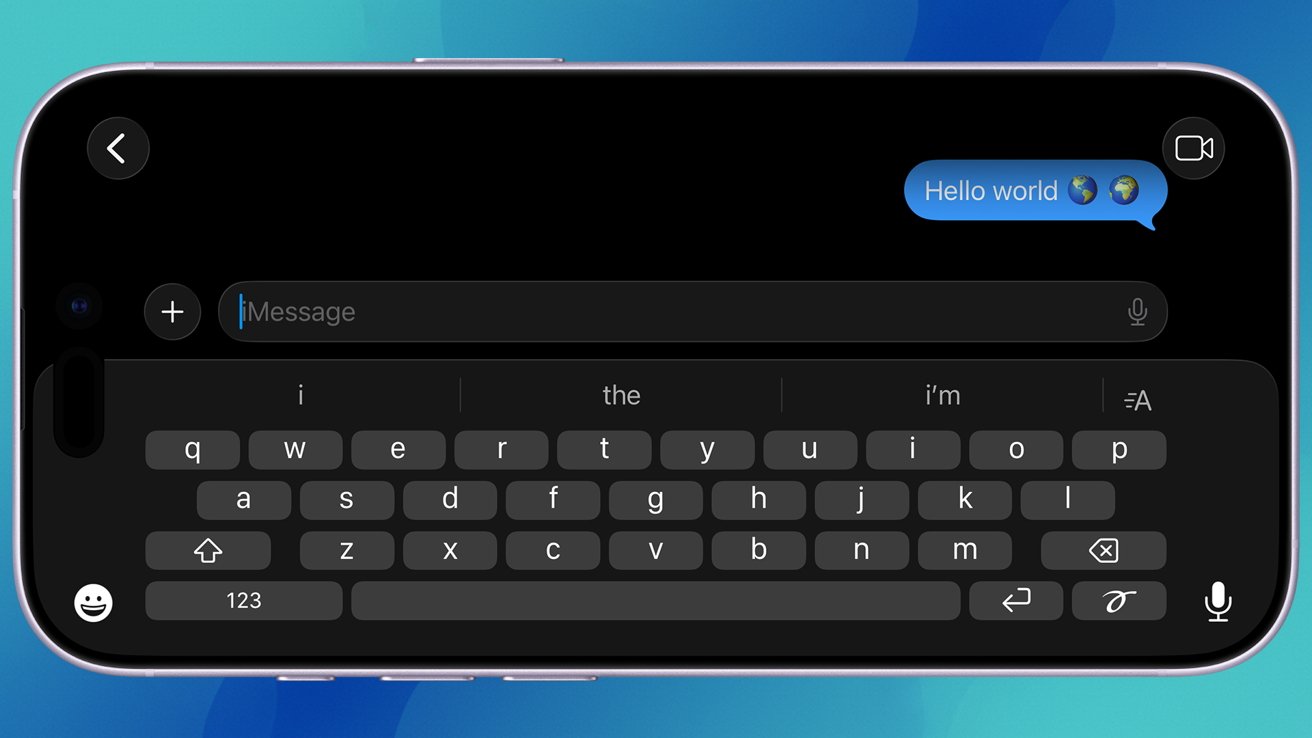
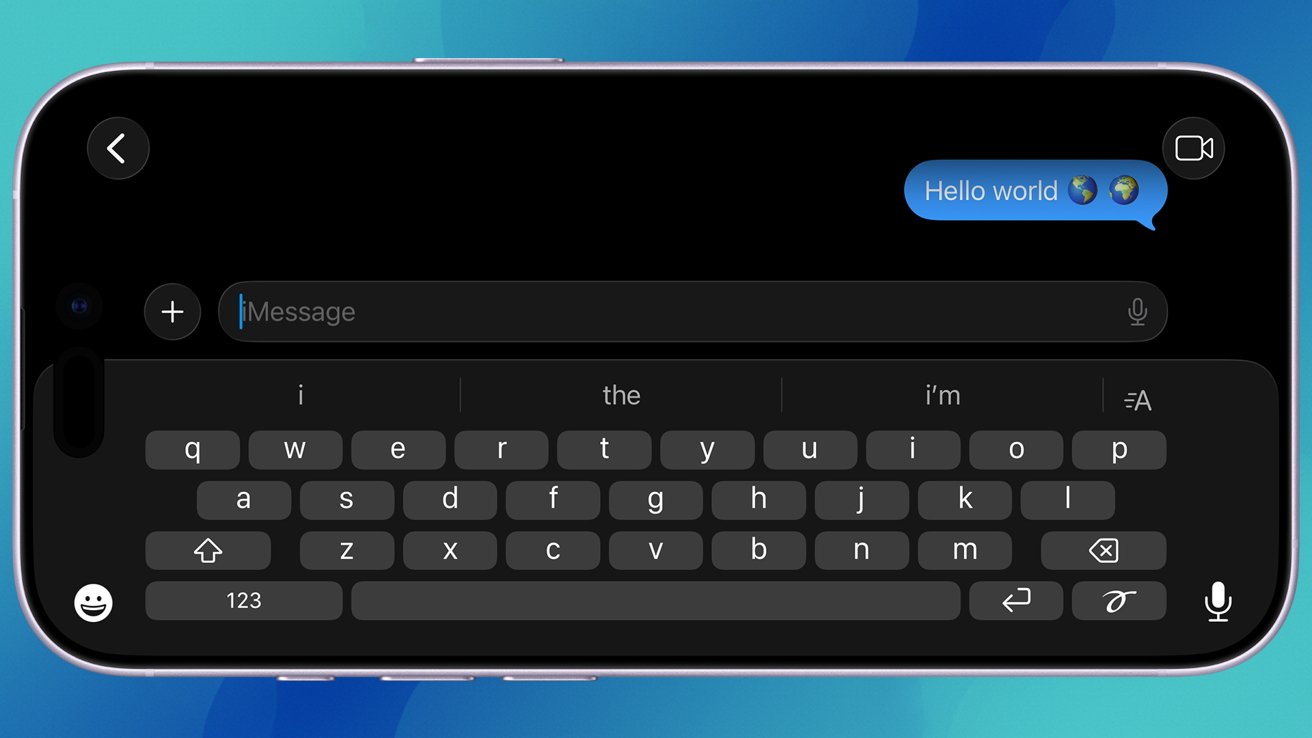
Smartphone in landscape showing iMessage conversation, dark mode keyboard, empty text field, and a single blue bubble message reading Hello world with two globe emojis
Apple quashes keyboard bug that lead to decreased accuracy in iOS 26

Many iPhone users have been complaining that the iOS keyboard has gotten worse in iOS 26. For many users, typing quickly would cause the software to miss characters.
While it would appear that the user had tapped the character, it ultimately would fail to insert into the text field.
Continue Reading on AppleInsider | Discuss on our Forums

Source link

Continue Reading

Tech

Quantum battery promises instantaneous refill and remote charging for your gadgets

Published

on

A new kind of battery that could charge almost instantly and even power devices remotely is no longer just a theory. According to reporting highlighted by The Guardian, Australian researchers have built what they describe as the world’s first working prototype of a quantum battery.

It’s a device that can charge, store, and discharge energy using the principles of quantum mechanics. The breakthrough comes from a team led by scientists at CSIRO, Australia’s national science agency, and marks the first time a quantum battery has completed a full charge–store–discharge cycle.

How does a quantum battery actually work?

Unlike traditional batteries that rely on chemical reactions, quantum batteries use light and quantum interactions to store energy. One of their most surprising properties is that they can charge faster as they get bigger, thanks to something called “collective effects.” In simple terms, adding more quantum cells actually speeds up charging, which is the exact opposite of how conventional batteries behave.

The current prototype can charge in femtoseconds (a quadrillionth of a second) and is powered wirelessly using a laser, which converts light into electrical energy. What’s more, is that same mechanism also opens the door to something even more futuristic: remote charging. Researchers say devices like drones or even cars could potentially be charged while in motion, without ever needing to plug in.

How close are we to using this in real gadgets?

Not very, at least for now. The current prototype can only store a tiny amount of energy and holds its charge for just a few nanoseconds, making it impractical for everyday devices like smartphones or laptops.

Researchers say the next big challenge is increasing both capacity and storage time. Until then, quantum batteries are more likely to find early use in niche areas like quantum computing, where their unique properties could offer real advantages. Still, the implications are hard to ignore. If the technology matures, it could potentially lead to never needing to plug in at all.

Advertisement

Source link

Continue Reading

Tech

Death Stranding 2 leaks early as unencrypted Steam build spreads online

Published

on


This kind of leak harks back to the glory days of CD-ROM software in the late 1990s, when games that had “gone gold” were often pirated before reaching retail stores. Death Stranding 2’s system requirements include 150GB of available storage, while the leaked download allegedly weighs “just” 113GB.
Read Entire Article
Source link

Continue Reading

Tech

Today’s NYT Mini Crossword Answers for March 19

Published

on

Looking for the most recent Mini Crossword answer? Click here for today’s Mini Crossword hints, as well as our daily answers and hints for The New York Times Wordle, Strands, Connections and Connections: Sports Edition puzzles.


Need some help with today’s Mini Crossword? It’s a pretty easy one today, but we’ve got all the answers in case you’re stumped. And if you could use some hints and guidance for daily solving, check out our Mini Crossword tips.

If you’re looking for today’s Wordle, Connections, Connections: Sports Edition and Strands answers, you can visit CNET’s NYT puzzle hints page.

Advertisement

Read more: Tips and Tricks for Solving The New York Times Mini Crossword

Let’s get to those Mini Crossword clues and answers.

completed-nyt-mini-crossword-puzzle-for-march-19-2026.png

The completed NYT Mini Crossword puzzle for March 19, 2026.

Advertisement

NYT/Screenshot by CNET

Mini across clues and answers

1A clue: Ghost’s word
Answer: BOO

4A clue: Magician’s “And just like that, it’s gone!”
Answer: POOF

5A clue: With 7-Across, it’s full of stars
Answer: NIGHT

Advertisement

6A clue: White bills in Monopoly
Answer: ONES

7A clue: See 5-Across
Answer: SKY

Mini down clues and answers

1D clue: Score of 4 on a par 3
Answer: BOGEY

2D clue: ___ and aahs
Answer: OOHS

Advertisement

3D clue: Frequently, in poetry
Answer: OFT

4D clue: Like the sands of Harbour Island, Bahamas
Answer: PINK

5D clue: Dissenting votes
Answer: NOS

Advertisement

Source link

Continue Reading

Tech

Meta has launched Creator Fast Track

Published

on

Meta’s Creator Fast Track programme guarantees three months of pay for established creators willing to build a following on Facebook, after the company paid out a record $3 billion to creators in 2025.


Facebook has a creator problem that three billion monthly users cannot solve. The platform is enormous, but the creators who drive the short-form video economy, the ones building loyal audiences on TikTok and YouTube, have largely looked past it.

Starting on a new platform from zero is daunting, and Facebook’s history with creators has been complicated enough that even those who’ve heard the pitch have reason to hesitate.

On Wednesday, Meta launched Creator Fast Track, a direct attempt to address that hesitation with cash. The programme offers established creators with audiences on other platforms guaranteed monthly payments for three months in exchange for posting Reels on Facebook.

Advertisement

Creators with at least 100,000 followers on Instagram, TikTok, or YouTube can earn $1,000 per month; those who have crossed one million followers on any of those platforms get $3,000 per month.

Advertisement

The eligibility requirements are not onerous. Creators need to post at least 15 Reels on Facebook within a 30-day period, spread across at least 10 different days. The content does not need to be Facebook-exclusive and can include AI-generated material, as long as it is original to the creator.

Participation also unlocks immediate access to Facebook Content Monetization, the broader invite-only programme that pays based on content performance, which means earnings continue even after the three-month guaranteed period ends.

The programme lands alongside a figure Meta is clearly pleased with: in 2025, Facebook paid content creators nearly $3 billion through its monetisation programmes, a 35% increase from the previous year and its highest annual payout on record.

That compares with $2 billion in 2024, a figure Rest of World independently confirmed in February. The number of creators earning more than $10,000 annually on Facebook grew by over 30% year-on-year.

Advertisement

The breakdown of where that money went is also notable.

Sixty per cent of the $3 billion went to Reels, while the remaining 40% was split across Stories, photos, and text posts. That last detail matters for the Creator Fast Track pitch: unlike TikTok and YouTube, which are fundamentally video-first platforms, Facebook Content Monetisation pays for almost everything a creator posts.

A writer who shares text posts, a photographer posting stills, or a creator who mainly works in Stories can all earn from the platform without committing to video production.

Facebook Content Monetisation itself has expanded dramatically over the past year. According to Rest of World’s analysis of data from the Meta Monetisation Archive in February 2026, the programme grew from roughly 2.7 million participants to 12 million in just over a year, with Indonesian-language accounts representing the second-largest cohort after English.

Advertisement

The global scale of that expansion is part of what makes the $3 billion figure credible, and part of what Facebook is hoping to leverage to attract creators who might otherwise dismiss the platform as irrelevant to younger audiences.

Meta is also introducing new metrics alongside the programme to help creators understand their earnings more precisely.

These include a Qualified View metric, views on content eligible to earn money, an Earnings Rate showing approximate pay per 1,000 qualified views, and a Non-Qualified Views breakdown explaining why certain views do not generate revenue.

The clearer feedback loop is designed to help creators optimise their content performance rather than simply guessing why their payouts vary.

Advertisement

The strategic logic of Creator Fast Track is not subtle. Facebook has been pushing Reels hard since 2020, positioning them as its response to TikTok’s dominance in short-form video.

But Reels require content, and content requires creators willing to invest the time to build on the platform. The guaranteed payment model removes the risk that typically stops established creators from experimenting with a new home: the fear of posting consistently for months and earning almost nothing while an audience is still being built.

For Meta, which reported advertising revenue of roughly $160 billion in 2025, writing cheques to a few thousand established creators is a rounding error against the potential payoff of a more creator-rich Facebook feed.

Whether creators bite depends on something harder to measure than the cash: whether Facebook’s audience and long-term monetisation potential are worth the effort of maintaining yet another profile.

Advertisement

The $1,000-a-month tier, which requires 100,000 followers to qualify, is not a transformative sum for a creator at that scale. The $3,000-a-month tier is more meaningful, though most creators at the million-follower level will be weighing it against what they already earn.

What the programme does offer, unambiguously, is a no-downside trial run, three months of guaranteed income to find out whether Facebook’s reach can surprise them.

Source link

Advertisement
Continue Reading

Tech

‘I don’t like it when doomers are out scaring people’: Nvidia on why AI rhetoric damages the US chances to lead in the AI race

Published

on

AI will save us or be the end of us. That’s not fact or even an opinion; it’s a TL;DR reduction of the very real tension between proponents of AI and those who fear it.

Interestingly, sometimes that tension resides in a single person. It is quite fair and reasonable to use ChatGPT for basic deep dive data searches and for quick answers on how to talk to an uncooperative child, but to also fear that perhaps that same AI knows too much about you and might, in its own agentic way, start to act on your behalf and do things you never intended. At scale, we worry about AI controlling weapons or even launching a catastrophic war.

Source link

Advertisement
Continue Reading

Trending

Copyright © 2025