Connect with us

Tech

Nothing shows off its next phone in fun new colors, just a day after a big leak

Published

on

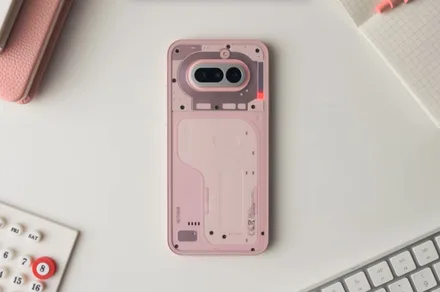
Nothing has officially teased the highly anticipated Phone 4a once again. After revealing the light pink variant last week, the full roster has now made a public appearance. But while we’re only getting tidbits from the brand, these pictures arrive just a day after a big leak revealed most of the important hardware details of the upcoming device.

Everything in the official teaser

Looking at the recent tweet, Nothing highlights the Phone 4a in bold color finishes. Sticking to the brand’s habit of making design a key talking point ahead of any specs being revealed, there’s no mention of the hardware details or pricing. Instead, we get to see the new budget phone in the basic White and Black options, along with the punchy Blue and Pink hues. From the looks of it, Nothing wants the Phone 4a to feel fun and expressive.

But what does the leak say?

While Nothing is maintaining the mystery behind the specs, a tipster has revealed plenty of details already. According to the fresh leak, the Nothing Phone 4a could start for Rs 31,999 (~$349) in the Indian market for the base 8GB + 128GB variant, with higher-tier options, like the 8GB + 256GB and the 12GB + 256GB configurations, also being available. This model will reportedly pack the Snapdragon 7s Gen 4 SoC and offer UFS 3.1 storage.

🚨 Exclusive 🚨

Nothing Phone 4a starting price will be 🔴 ₹31,999 for the 8+128GB ✅

Advertisement

There are also 8+256GB and 12+256GB

This time it got :
✅ 50MP 3.5x telephoto
✅ UFS 3.1

Also,
Phone 4a Pro will start ~40K and it’ll get a very polarising design is what I have heard‼️

— Debayan Roy (Gadgetsdata) (@Gadgetsdata) March 1, 2026

Advertisement

For photography, the rear will retain the triple camera setup like its predecessor, but bump up the optical zoom level on the telephoto lens to 3.5x. The main camera is another 50MP shooter, accompanied by an 8MP ultra-wide-angle lens and a 32MP selfie shooter. Lastly, we even get some early details of the Phone 4a Pro, which might start from around Rs 40,000 (~$437) and reportedly carry a “very polarizing design”. While this is still just a leak, the official announcement is for March 5.

Source link

Advertisement
Continue Reading
Click to comment

Leave a Reply

Your email address will not be published. Required fields are marked *

Tech

US Military Shoots Down CBP Drone, Which Certainly Instills Confidence In Its Offshore Murder Program

Published

on

from the goons-with-tech-are-still-goons dept

Wow. Imagine if you could just make this shit up.

The U.S. military used a laser Thursday to shoot down a “seemingly threatening” drone flying near the U.S.-Mexico border. It turned out the drone belonged to Customs and Border Protection, lawmakers said.

It is to LOL. Not only did the military friendly fire a CBP drone into the dirt, it also caused a bit of disruption. The military is required to notify the FAA when it engages in any anti-drone “action” in US airspace.

So it did, which is how this came out. It would be great if it were an isolated incident, but apparently this is just the sort of thing we’re doing regularly in the El Paso area.

It was the second time in two weeks that a laser was fired in the area. The last time it was CBP that used the weapon and nothing was hit. That incident occurred near Fort Bliss and prompted the FAA to shut down air traffic at El Paso airport and the surrounding area. This time, the closure was smaller and commercial flights were not affected.

The Associated Press is being far too coy in this paragraph. First off, CBP did not coordinate with the FAA before firing the anti-drone laser, which resulted in a scramble to secure the airspace after the fact, leading to a shutdown that grounded flights and raised alarm.

Advertisement

The link in the paragraph doesn’t lead to the full story. Here’s what happened the last time the laser was fired at something that shouldn’t have been fired at:

The sudden closure of El Paso’s airspace Wednesday came sometime after U.S. Customs and Border Protection officials used an anti-drone laser that was provided by the military to shoot down objects that were later identified as party balloons, four people familiar with the matter said.

I can only hope the Defense Department’s downing of a CBP drone was the result of determining the CBP itself couldn’t be trusted with the tech. If this isn’t the case, there’s a non-zero chance the CBP will shoot down its own drone at some point in the near future. I mean, it really doesn’t look like anyone is learning anything from these experiences.

But here’s what we can learn: tech is fallible. And given this chain of events, one has every right to demand more answers on the US military’s drone strike program targeting alleged drug traffickers in international waters. Even if you choose to ignore the legal issues, the logistics issues should be enough to keep you up at night. I mean, we’re only seeing what the administration chooses to share with us. What’s happening out there that we’re not seeing on DoD X timelines?

If drone-detecting lasers are being used to (1) shoot down friendly drones and (2) FAIL to shoot down party balloons, why should we believe the drones themselves are a better option when it comes to neutralizing threats? In both cases, humans are making mistakes, but their mistakes trigger tech that’s capable of killing people. Fuck around enough and there’s a chance someone with a federal paycheck is going to down an airliner.

Advertisement

It’s not really a matter of “if.” It’s a matter of when. This administration cranked up the proverbial heat, encouraging a shoot-first, sort-through-the-wreckage-later approach to pretty much everything. For the love of all that is unholy, it has rebranded the Defense Department as the Department of War. It’s all hair triggers and under-trained personnel. A national tragedy awaits, willed into being by an administration that considers collateral damage little more than viral content.

Filed Under: cbp, defense department, drone strikes, dumbfuckery, el paso, national security

Source link

Advertisement
Continue Reading

Tech

Hands-on with the Xiaomi 17 Ultra: three upgrades I love and two things I wish it had

Published

on


The Xiaomi 17 Ultra boasts a refined design, an impressive camera with a 1-inch sensor and a variable telephoto zoom, plus a huge battery.

Source link

Continue Reading

Tech

macOS Tahoe 26.4 absent from third round of developer betas

Published

on

Apple’s developer beta program has reached the third round, with fresh builds of iOS 26.4, iPadOS 26.4, watchOS 26.4, tvOS 26.4, and visionOS 26.4 testable, but not macOS Tahoe 26.4.

Various Apple devices including a laptop, tablet, smartphone, smartwatch, and VR headset displayed together on a white background.
Apple’s hardware that works with the 26-generation operating systems – Image Credit: Apple

The third developer betas for iOS 26.4, iPadOS 26.4, watchOS 26.4, tvOS 26.4, and visionOS 26.4 arrive after the second, which appeared on February 23. The first round landed on February 16.
However, it’s not a clean sweep of builds, as there’s not a third developer beta for macOS Tahoe 26.4. It could still be introduced at a later point in the coming week.
Continue Reading on AppleInsider | Discuss on our Forums

Source link

Continue Reading

Tech

Bytedance’s Upcoming Project Swan VR Headset Wants to Be the Computer Meta’s Isn’t Yet

Published

on

In the last few months, Meta has seemingly taken its foot off the gas when it comes to developing next-generation VR hardware and experiences. The Beijing-based Chinese competitor, ByteDance, the creator of TikTok, is going the other way — and it appears focused on expanding its work beyond just gaming.

The Pico Project Swan, announced at Mobile World Congress in Barcelona this week, is a lot of head hardware. Coming “later this year,” according to ByteDance, it doesn’t sound cheap. An onboard micro OLED display will have 40 pixels per degree of resolution density, which should be in line with what the Apple Vision Pro and Samsung Galaxy XR offer. The headset will have similar capabilities to create mixed-reality overlays of graphics in real-world settings using passthrough cameras.

The headset is also powered by its own dual-chip custom processors that ByteDance claims are twice as powerful as Qualcomm’s Snapdragon XR2 Gen 2 chip that’s on Meta’s Quest 3 and 3S headsets, and in a stepped-up version on Samsung Galaxy XR. While that may still lag behind Apple’s M5 chip on the Vision Pro, it’s a lot for a mixed reality headset.

Advertisement

As for the price of Project Swan and what software it’ll run, that’s still a mystery. Pico headsets already run Android apps and can connect to Windows PCs, but the landscape of VR/AR is changing rapidly.

Apple and Samsung’s headsets feel like prototypes for future computers that still don’t have enough unique software yet. Meta’s emphasis on smaller AR glasses to come mirrors planned moves by Google and Samsung, and Apple could be following suit.

Meanwhile, Valve’s gaming-focused Steam Frame headset, coming later this year, shows another interesting wrinkle in the mix. Valve is running Steam on smaller ARM chips, which could mean Steam OS running on other XR hardware after that. Running more types of software on smaller chipsets is exactly what VR headsets needed more of in the first place.

I’m curious about Project Swan, though. At the least, it shows that other companies are keeping the ball rolling on high-end headsets, even if Meta currently seems not to be. 

Advertisement

Source link

Continue Reading

Tech

Honor’s New Foldable Phone Is Forbidden Fruit Of The Most Frustrating Kind

Published

on


A few things remain consistent about Honor phones from year to year. They will be powerful, they will be very thin, they’ll have awesome cameras, and they won’t be coming to the Unites States. All of those look to be consistent this year as well. The Honor Magic V6, launched at MWC 2026, is another version of that same theme.

Lovely hardware and a long-lasting battery lead the charge for this phone to make it one you should definitely consider if you’re in the market for a new, book-style foldable. There are also a few common themes from last year, including extraordinary thinness, a camera island that has its own zip code, and a case with the same ring/stand for extra grip.

I’m a fan of Honor foldables, and I’m thankful for the chance to play with one, even though most of my fellow countrymen won’t get the same chance. It should be mentioned that this isn’t a full review (in the traditional sense) since the software on the phone is still not complete. As such, we can’t include camera samples or performance metrics. But I’ve been using the phone for two weeks, and these are my thoughts so far.

Advertisement

Hardware is still stunning.

The Honor Magic V5 sample I got last year was black and has a vegan leather backplate. It came along with a case that covered the back, along with a flap over the hinge that was fun to play with, fidget-toy style, and added a ring stand that flips out from around the camera island and makes the phone easier to hold when it’s open. I primarily used it when reading, or when I wanted to stand the phone up to watch something.

This year’s phone case has all those same features which is great. My review sample is the gold colorway, which looks really nice — much preferred over black. There’s also a red colorway with a marble pattern to it that looks stunning, though some reports indicate it feels weird to hold. I haven’t tried that one myself, but if you’re considering that version, you might want to try to find it at a store to try out before you order it.

Advertisement

Both screens are AMOLED LTPO 2.0 with the dynamic refresh rater of 1-120Hz. They’re both extremely bright, with the outside screen reaching 6,000 nits and the inner screen achieving 5,000 nits of brightness at their peaks. Speaking of the screens, the outside screen checks in at 6.52 inches while the inner screen is just shy of eight.

Advertisement

Where the hardware goes a little wild.

Foldable screens are already a little crazy, but Honor has really outdone itself with the hardware this time. Starting off with the fact that this phone has a 6,660 mAh silicon carbon battery which is as insane as it sounds. I can’t speak to actual longevity numbers because of the beta software, but I found this was easily a two-day phone without breaking a sweat. I’ll have to wait until the production software rolls in, but this bodes well.

The phone itself is just 4mm thick when opened (not including the camera bump, of course), and 8.57mm when closed, with is by the way about the same thickness as an iPhone 17 Pro Max. It’s also a couple of dozen grams lighter than Apple’s biggest handset.

The folding screen has a crease that is just as visible as any other foldable on the market (though Samsung showed off a remarkably flat folding screen at CES 2026). The hinge is rated for up to 500,000 folds, though full disclosure — I didn’t test that actual metric.

Advertisement

Water and dust protection king.

Where this phone really stands out is in its IP68 and IP69 water resistance ratings. This is a book-style foldable that is achieving water and dust resistance ratings that were first reached just over a year ago on a bar-style phone — the OnePlus 13. Since then, a number of other phones have reached those same levels of dust and water resistance, but not in a foldable.

The closest we’ve gotten so far is in the Pixel 10 Pro Fold that has an IP68 water resistance rating. The difference between the two, is that IP69 is resistant to heated water jets. You can put this foldable into a dishwasher. Just let that sink in — no pun intended.

Again, in the interest of disclosure I should point out that I did not actually test that capability. I like testing phones to their extremes, but even that is a little too far outside the lines for me. Also, I tested this phone during the winter, so there were no trips to the beach for me. That is something I would happily test once the mercury climbs higher in Chicago.

Advertisement

Apple ready, so to speak.

One thing Honor is happy to talk about is how well its phones work with the Apple ecosystem. I feel like a broken record here, but as far as an Apple ecosystem is concerned, I do not have any Apple devices outside of the iPhone 17, iPhone Air, iPhone 17 Pro, and a last-generation iPad mini, so my capabilities in testing these features were negligible.

I could, and did, test the ability to transfer files between an iPhone and the Honor Magic V6 and it worked…fine. This is achieved via Honor Connect, an app that allows you to transfer files by way of a QR code. The app needs to be installed on the receiving iDevice, so this is not the seamless transfer that you can get with Airdrop, nor even the Airdthe drop functionality that Google built into Pixels.

Other Honor apps will allow you to connect an Apple Watch, or extend your MacBook’s screen to the phone, and even transfer a file from the phone to the MacBook by tapping it. Honor is directly addressing the fact that Apple does not have a folding phone yet, which is a gap that some people may want to take advantage of. The real question is how seamless it’ll feel in practice.

Advertisement

So far, so good, to a point.

Overall, we’re hampered by the fact that we don’t have final software yet. We’ll be sure to update this article when more facts come to light. We don’t have camera samples, we don’t have battery tests, and we don’t have benchmarks. I can tell you that historically, Honor cameras are usually top notch, and Honor still makes my favorite portrait mode I’ve ever had on a phone.

The Snapdragon 8 Elite Gen 5, which resides in the Magic V6, is still the undisputed king of phone processors. At last year’s Snapdragon Summit, it handily beat the best processors by Apple and MediaTek. So, this phone is a beast in multiple ways.

Advertisement

We still don’t know pricing, nor general availability, except that it won’t come to the U.S. But we do know that this phone is excellent in multiple ways, and the U.S. phone market is poorer for not being able to experience it. When I went to CES 2026, the Magic V5 was my main phone because of its camera and battery life, and it did not disappoint. When IFA and CES roll around next year, the V6 will likely take its place.


Advertisement

Source link

Continue Reading

Tech

Is Claude Down? Anthropic Says It’s Resolved the AI Tool’s Outage

Published

on

A reported outage for Anthropic’s Claude AI lasted more than two hours on Monday morning. The company said it had resolved errors for Claude.AI, Claude Code and its Claude Opus 4.6 model shortly before 11 a.m. ET (8 a.m. PT).

The outage started just before 7 a.m. ET Monday. Anthropic’s status page showed continued errors more than two hours later.

Advertisement
CNET AI Atlas badge; click to see more

Anthropic said in a statement at 11 a.m. ET that all services were up and running again. “We’re grateful to our users while the team works to match the incredible demand we’ve seen for Claude in recent days,” the company said.

Read moreTrump Slams Anthropic as ‘Woke,’ Orders Feds to Stop Using Claude AI

Downdetector showed reported problems with Claude spiking around 6:45 a.m. ET, with nearly 2,000 reports. That number had dropped to 275 by 9:30 a.m. ET. (Disclosure: Downdetector and CNET are both owned by the same parent company, Ziff Davis.)

Source link

Advertisement
Continue Reading

Tech

Homemade Liquid Oxygen Demonstrates Paramagnetism

Published

on

Liquid nitrogen isn’t exactly an everyday material, but it’s acquired conveniently enough to be used in extreme overclocking experiments, classroom demonstrations, chemistry and physics experiments, and a number of other niche applications. Liquid oxygen, by contrast, is dangerous enough that it’s only really used in rocket engines. Nevertheless, [Electron Impressions] made some of his own, and beyond the obvious pyrotechnic experimentation, demonstrated its unusual magnetic properties. Check out the video, below.

The oxygen in this case was produced by electrolysis through a proton-exchange membrane, which vented the hydrogen into the atmosphere and routed the oxygen into a Dewar flask mounted at the cold end of a Stirling cryo-cooler. The cooler had enough power to produce about 30 to 40 milliliters of liquid oxygen per hour, enough to build up an appreciable amount in short order. As expected, the pale blue liquid caused burning paper to disappear in a violent flame, and a piece of paper soaked in it almost exploded when ignited.

More interestingly, a piece of oxygen-soaked paper could also be picked up with a strong enough magnet. This is due to molecular oxygen’s paramagnetism, which is too weak to be significant in a gas made of quickly-moving molecules, but becomes noticeable in a liquid. When some liquid oxygen was poured onto a strong magnet, it stuck to the edges of the magnet, whereas liquid nitrogen just splashed away. Even as the liquid oxygen evaporated, it was possible to faintly see some of the cold vapours sticking close to the magnet. [Electron Impressions] tried to create a kind of coil gun by wrapping a coil around a test tube containing liquid oxygen, but it didn’t really work. Any effect was imperceptible among the disturbances caused by boiling oxygen and the physical jolt of the power supply connecting.

It’s not a process we’ve seen before, but the boiling point of liquid nitrogen is lower than the boiling point of oxygen, so if you have a convenient source of liquid nitrogen, it’s simple enough to make liquid oxygen.

Advertisement

Source link

Advertisement
Continue Reading

Tech

Engineers Risk Their Lives to Repair Ukraine Power Grid

Published

on

Every time Russia attacks Ukraine’s power infrastructure, Ukrainian engineers risk their lives in the scramble to get electricity flowing again. It’s a dangerous job at best, and a lethal one at worst. It also requires creativity. Time pressure and equipment shortages make it nearly impossible to rebuild things exactly as they were, so engineers must redesign on the fly.

These dangerous, stressful conditions have led to more engineers being hurt or killed. The rate of injuries among Ukrainian workers in electricity generation, transmission, and distribution jumped nearly 50 percent after Russia’s full-scale invasion began four years ago, according to data provided by Antonina Nagorna, who leads the Department of Epidemiology and Physiology of Work at the Kundiiev Institute of Occupational Health, in Kiev. By her count at least 48 people had died on the job through the end of 2025, either while repairing damage or during the bombardment itself.

Transmission mastermind Oleksiy Brecht joined that grim count in January. Brecht, who was director for network operations and development at the Ukrainian grid operator Ukrenergo, died while coordinating work at Ukraine’s most attacked electrical switchyard, Kyivska, west of the capital. He was 47 years old.

Brecht’s life and death are a window into the realities of thousands of Ukrainian engineers who face conditions beyond what most engineers could imagine. “The war completely transformed the professional life of a top-manager engineer,” says Mariia Tsaturian, an energy analyst and chief communication officer at the think tank Ukraine Facility Platform, who previously worked with Brecht at Ukrenergo. “As for junior staff, their world was turned upside down entirely. A substation engineer working under shelling is something no one had ever seen or experienced before,” she says.

Advertisement

How Russia Attacks Ukraine’s Grid

Over the course of the war, Russia has increasingly focused on destroying Ukraine’s energy infrastructure. It sends attack drones almost daily during the winter there, when heat and electricity is needed most to survive the bitter cold. Every 10 days or so it barrages Ukraine’s power system with combinations of missiles and hundreds of drones, repeatedly mangling equipment and cutting off power. The cold imposed on Ukrainian homes is especially hard on former prisoners of war held in Russia, where cold is routinely employed as a form of torture.

In the first two years of the war, keeping the grid flowing was a 24/7 job. But Ukrenergo has adapted to the impossible since then, says Vitaliy Zaychenko, Ukrenergo’s CEO, who somehow found a moment to speak with Spectrum via video call. Now, “we are more prepared for each attack. We have well-trained teams. We have support from Europe,” he says.

But the risk involved in repairing the grid remains unnerving. Last month a crew from DTEK, Ukraine’s biggest private-sector energy firm, was traveling between locations when it was targeted by a Russian drone. They heard the drone coming and escaped before their bucket truck was destroyed. Russian forces have employed “double tap” attacks against DTEK’s crews, targeting their power infrastructure with a follow-up strike designed to kill first responders—a practice confirmed by the U.N.

When Russia began targeting power infrastructure in October 2022, Brecht’s job shifted from high-level direction of grid planning and maintenance to near-constant triage and real-time system reengineering. Most weeks, Brecht spent several days in the field, crisscrossing the country to coordinate work at smashed substations. Brecht would often be found on site figuring out how to restart power using whatever equipment was available. “It was a unique decision every time,” says Zaychenko.

Advertisement

Oleksiy Brecht seated in a conference room while listening intently to a virtual Ukrenergo meeting projected onto the wall. Oleksiy Brecht died in January while overseeing repairs to a bombed-out substation near Kyiv. He called his employees at Ukrenergo “my fighters. They called him “our general.”Ukrenergo

Zaychenko noted Brecht’s “genius” for finding creative grid fixes, his passion and leadership skills, and his credibility with power brokers in Ukraine and abroad. Brecht scoured the globe sourcing critical replacement parts, including stockpiled or older equipment from international utilities. Transformers, which can take a year or more to source, are especially precious.

When the right equipment wasn’t forthcoming, Brecht figured out how to make do. For example, he would deploy transformers from Western Europe rated for 400 kilovolts to restart a 330-kV circuit. He would adapt transformers designed for 60-hertz alternating current for emergency use on Ukraine’s 50-Hz grid. “He would find a way,” says Zaychenko, who worked closely with Brecht for over 20 years.

Brecht’s assistant at Ukrenergo, Svitlana Dubas-Veremiienko, says he also contributed to the teams’ morale and confidence. She shared on Facebook that he smoked “like a locomotive” at the worst times, and yet exuded calm: “In his presence, chaos subsided,” she wrote. Brecht was not easy to intimidate. “He was someone who never feared anything or anyone,” adds Tsaturian.

Brecht’s work proved so essential that Ukrenergo’s former Deputy CEO Andrii Nemyrovskyi recalls telling Ukraine’s Ministry of Defense in 2022 that the military must protect two people: Zaychenko, because he ran grid operations, and Brecht because “system operations requires that the system exists.” Last week, President Zelenskyy posthumously named Brecht a “Hero of Ukrainefor “strengthening the energy security of Ukraine under martial law.”

Advertisement

Ukraine’s Power Infrastructure Under Fire

Brecht joined Ukrenergo in 2002 after earning his degree in power engineering from Igor Sikorsky Kyiv Polytechnic Institute. Over the next 20 years, he held leadership positions in dispatching and grid planning and development. He joined Ukrenergo’s management board in June 2022 and served as its interim leader in 2024.

Brecht’s contributions to Ukraine’s wartime survival began with several key upgrades to Ukrenergo’s technical capabilities ahead of the February 2022 invasion. He reintroduced “live line” techniques, providing training and equipment that enable crews to work on circuits while they continue to carry power to homes and to sustain critical needs.

Brecht also led preparations for Ukraine’s disconnection from the Russian grid and synchronization with Europe’s. When the invasion began, Ukraine’s Minister of Energy at the time, Herman Halushchenko, had argued that switching from Russia’s grid to Europe’s was too risky, according to Tsaturian and Nemyrovskyi. But Brecht insisted—correctly, as hindsight has shown—that synchronizing with Europe would provide crucial stability and backup power. At his urging, the switch was completed in daring fashion during the first weeks of the invasion.

(Halushchenko was dismissed last year following longstanding allegations of corruption and Russian influence in Ukraine’s energy sector that gave way to indictments in November 2025 that have rocked President Zelenskyy’s government. In January, Halushchenko was detained while attempting to leave the country and charged with money laundering.)

Advertisement

Two power grid workers in heavy coats preparing a bucket truck for power line repairs on a snowy residential street. DTEK workers conduct repairs on 26 January following a Russian attack in Kyiv.Danylo Antoniuk/Cover Images/AP

A Ukrainian Electrical Engineer’s Final Day

Brecht’s final act of service followed the mass destruction of January 19—a day when Kyiv’s high temperature was –10° C. That night, Russian forces targeted Ukraine’s energy infrastructure with 18 ballistic missiles, a hypersonic cruise missile, 15 conventional cruise missiles, and 339 drones.

The impact included catastrophic damage at the 750-kV Kyivska substation, which feeds electricity to the capital and ensures cooling power for two nuclear power plants.

Brecht was leading a team of about 100 people who were undoing the damage when he made a deadly choice. He picked up a section of busbar—solid conduits that connect circuits within substations. It had been blasted to the ground and, unbeknownst to Brecht, was carrying lethal voltage. It’s unclear whether its circuit was still connected, or if it had picked up voltage from another circuit.

Zaychenko says an investigation is ongoing to provide answers. “I don’t know why he touched this busbar. Maybe because of tiredness. Maybe something else,” he says. “He was trying to help the team to do this job quickly. It was a huge mistake and a huge loss for us.”

Advertisement

From Your Site Articles

Related Articles Around the Web

Source link

Advertisement
Continue Reading

Tech

Apple either over- or under-invested in server hardware, depending on how you read this report

Published

on

Years of under-investment in data centers may mean that Apple will increase its reliance on Google when the revamped Siri launches. Or it may not, it’s hard to tell from the inconsistent report.

A future iPhone with enhanced Siri
The improved Siri will use Google servers to meet demand

Even back in 2021, Apple was Google’s largest corporate cloud customer , as the company preferred leasing data centers rather than build up its own network of servers. That’s reportedly worked well, even now when Apple Intelligence requires more servers.
According to The Information, what servers Apple does own are proving to be vastly underused. Citing unspecified former Apple employees, the report claims that on average, only 10% of Apple’s Private Cloud Compute capacity is in use.
Continue Reading on AppleInsider | Discuss on our Forums

Source link

Continue Reading

Tech

iPhone 17e vs. iPhone 16e: What's new on Apple's latest $599 handset

Published

on

Apple’s most affordable iPhone just got an upgrade, but how does the new iPhone 17e compare to the iPhone 16e? Well, thankfully the price remains the same at $599, which is good news in our current economic climate. An immediate difference you might notice is that one of them now comes in a third color: pink. That’s at least one win for me because I am all for putting more color into tech.

There are a few differences under the hood as well, namely that the iPhone 17e is arriving with the A19 chip and double the storage. We’ve already seen what’s possible with an A19 chip in the standard iPhone 17 — it’s not a super exciting upgrade, but it is a boost nonetheless.

Pre-orders start at 9:15AM ET on March 4, and while we work on a full review, let’s take a deeper dive into what has changed on this year’s model and what that might mean in the real world.

Of course, the biggest difference in the design for the iPhone 17e is the shiny new pink color. I’ve long complained about how many major tech companies stick to the safety of black, white or gray colorways. Thankfully, the iPhone 17e’s pink hue is a departure from that approach. It’s also an understated shade that’s elegant, compared to the typically brighter and louder tones reserved for cheap(er) phones.

Advertisement

Both the iPhone 17e and iPhone 16e measure 5.78 x 2.82 x 0.31 inches. However, the iPhone 17e did get a bit heavier at 5.96 ounces compared to the iPhone 16e’s 5.88 ounces. It’s very unlikely you’ll notice the 0.08 ounce difference, though. (And if you do, you have a gift.)

In terms of durability, the iPhone 17e is outfitted with Ceramic Shield 2, which is a glass face that Apple said is three times more scratch-resistant than the iPhone 16e’s original Ceramic Shield. Ideally, it’ll survive falls to the ground (within reason) and spare you a scratched up display from casual wear and tear.

There doesn’t seem to be any change in the display — whether that be in its brightness or color rendering capability — but that isn’t too shocking. Both the iPhone 17e and iPhone 16e feature a 6.1-inch Super Retina XDR OLED panel with a 1,200-nit peak brightness. That’s bright enough to combat the ambient glare from the sun, so you should be able to read it outside relatively easily. They’re also specced out with a 2,532 x 1,170 resolution at 460 ppi — meaning text and lines will be clean and sharp.

I didn’t expect a huge bump in camera technology, especially if Apple intended to keep the price the same. We’ve got upgrades in other categories for sure, but it would’ve been nice to see an extra camera on the back. Like the iPhone 16e, the iPhone 17e is kitted out with Apple’s 48-megapixel Fusion 2-in-1 camera with a 12MP 2x Telephoto setting. You also get digital zoom up to 10x. Take a look at our iPhone 16e review to see exactly what that looks like in practice, but to sum up our experience: it’s solid.

Advertisement

There’s a great level of detail and vibrancy, but like I said, it’s limited. Without a potential ultrawide camera, you cannot capture as much of your surroundings because you’re not getting that 0.5x zoom option. 

One major upgrade, however, is that the iPhone 17e is now capable of recognizing dogs and cats in Portrait mode. It also saves depth information so you can turn regularly captured photos into portraits after the fact. This might be a noteworthy upgrade, considering the iPhone 16e struggled in Portrait mode, incapable of capturing non-human faces and objects.

There’s also the 12MP TrueDepth camera on the front, which we didn’t have many complaints about, and don’t expect to disappoint on the iPhone 17e.

Apart from the color, the biggest differences between the iPhone 17e and iPhone 16e is their starting storage and overall performance. The new iPhone is packed with an A19 chip, while the latter comes with an A18 chip.

Advertisement

Yes, you’re getting a performance bump with the A19 chip, but casual users are unlikely to feel the difference. If you’re a power user trying to get the most out of an affordable iPhone and want to get crunchy about it, there’s roughly a 5 percent difference in CPU speed and over 10 percent in GPU performance (according to CPU Monkey).

Despite that bump, the battery life hasn’t changed. With both devices, Apple says you’re getting up to 26 hours of video playback and up to 21 hours streamed. The company doesn’t typically share specifics on battery sizes, but GSMArena is reporting that both models come with a 4,005mAh battery. What has changed, however, is being able to receive double the wattage from wireless charging. The iPhone 17e can now take up to 15W for Qi2 fast wireless charging — compared to 7.5W from the Qi support on the iPhone 16e.

At a glance, there does not seem to be any difference in what the iPhone 16e and iPhone 17e offer in terms of iOS and Apple Intelligence capability. However, it’s relevant to note that you will likely get better performance out of the iPhone 17e with regards to AI features because of its superior A19 chip.

In case you wanted to do the numbers comparison yourself, we’ve compiled a nifty table here so you can eyeball them with ease. But for a sense of how the iPhone 17e holds up in the real world and whether it’s worth the money, stay tuned for our full review.

Advertisement

Spec

iPhone 17e

iPhone 16e

Price

Advertisement

$599

$599

Processor

A19 chip

Advertisement

A18 chip

Display

Super Retina XDR, 6.1‑inch, 2,532 x 1,170, OLED display at 460 ppi

Super Retina XDR, 6.1‑inch, 2,532 x 1,170, OLED display at 460 ppi

Advertisement

RAM

8GB

8GB

Storage

Advertisement

256GB, 512GB

128GB, 256GB, 512GB

Wireless charging

Up to 15W

Advertisement

Up to 7.5W

Rear camera

2-in-1 camera — 48MP Fusion main, 12MP 2x Telephoto, digital zoom up to 10x

2-in-1 camera — 48MP Fusion main, 12MP 2x Telephoto, digital zoom up to 10x

Advertisement

Front camera

12MP selfie cam

12MP selfie cam

SIM

Advertisement

Dual SIM (two active eSIMs)

Dual SIM (two active eSIMs)

Connectivity

Wi-Fi 6E, Bluetooth v5.3, NFC

Advertisement

Wi-Fi 6E, Bluetooth v5.3, NFC

OS

Launched with iOS 26

Launched with iOS 18

Advertisement

This article originally appeared on Engadget at https://www.engadget.com/mobile/iphone-17e-vs-iphone-16e-whats-new-on-apples-latest-599-handset-162009364.html?src=rss

Source link

Continue Reading

Trending

Copyright © 2025