



Connect with us

Tech

Nothing’s “Essential Apps” let you build personalized widgets with text-based prompts

Published

on

One of Nothing’s boldest ideas, Essential Apps, is now available for Phone 3 users, unlocking a new way to create highly personalized, AI-generated widgets for your home screen without any coding wizardry.

The feature, currently rolling out in beta through the web-based Nothing Playground platform, is an early step toward the company’s long-term vision of an AI-native operating system called Essential OS.

Create apps shaped exactly around your specific needs and context.

That’s what Essential Apps are.

You describe what you need. AI builds it. It appears on your phone’s home screen, ready to use.

Advertisement

One billion apps for one billion people.

Beta starts today on Nothing Playground. pic.twitter.com/tgqi0aq64r

— Essential (@essential) February 10, 2026

What can Essential Apps do?

But what is Essential Apps anyway? Think of it as tiny yet useful tools that do very specific things for users, in the form of a widget.

Advertisement

Want a widget that can track your water intake? Or one that finds the highest-rated restaurants in the locality (could be very useful if you travel around)? Well, the promise here is that you can create personalized widgets that perform specific tasks (tailored to your daily requirements) without writing a single line of code.

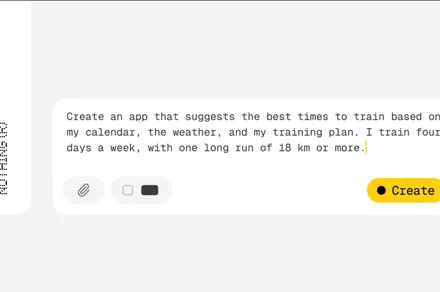
Nothing’s own example includes a widget that finds the best days and time to run outside (taking into consideration the weather and calendar).

You should only have to describe what you want in a simple text-based command (the widget’s purpose, what it does, its size, etc.), and Nothing Playground should take care of the rest.

We were promised there would be “an app for that” and for a while, it felt true. But open app stores gradually gave way to the same few default apps and platforms – built by a handful of companies, for billions of people at once.

Essential Apps start from a different belief:… https://t.co/oOZiTRD6uL

Advertisement

— Carl Pei (@getpeid) February 10, 2026

Essential Apps can only access three device permissions for now

You can even change or edit the widget’s design or functionality after creating it. The widgets can access information from the internet as well, so that’s a plus point.

For now, the Essential Apps can access three different permissions from your smartphone: Location, Calendar, and Contacts. So, you should be able to create location or calendar-based reminders, countdowns, and one-tap navigation widgets.

In the future, the widgets should be able to access additional permissions, including camera, microphone, notifications, calling, vibration, and Bluetooth.

Advertisement

As mentioned in the beginning, the Nothing Essentials Apps Beta is currently available to Phone 3 users via a waitlist. However, the company should extend support to more devices running Nothing OS 4.0 in the near future.

Source link

Advertisement
Continue Reading
Click to comment

Leave a Reply

Your email address will not be published. Required fields are marked *

Tech

‘Observational memory’ cuts AI agent costs 10x and outscores RAG on long-context benchmarks

Published

on

RAG isn’t always fast enough or intelligent enough for modern agentic AI workflows. As teams move from short-lived chatbots to long-running, tool-heavy agents embedded in production systems, those limitations are becoming harder to work around.

In response, teams are experimenting with alternative memory architectures — sometimes called contextual memory or agentic memory — that prioritize persistence and stability over dynamic retrieval.

One of the more recent implementations of this approach is “observational memory,” an open-source technology developed by Mastra, which was founded by the engineers who previously built and sold the Gatsby framework to Netlify.

Unlike RAG systems that retrieve context dynamically, observational memory uses two background agents (Observer and Reflector) to compress conversation history into a dated observation log. The compressed observations stay in context, eliminating retrieval entirely. For text content, the system achieves 3-6x compression. For tool-heavy agent workloads generating large outputs, compression ratios hit 5-40x.

Advertisement

The tradeoff is that observational memory prioritizes what the agent has already seen and decided over searching a broader external corpus, making it less suitable for open-ended knowledge discovery or compliance-heavy recall use cases.

The system scored 94.87% on LongMemEval using GPT-5-mini, while maintaining a completely stable, cacheable context window. On the standard GPT-4o model, observational memory scored 84.23% compared to Mastra’s own RAG implementation at 80.05%.

“It has this great characteristic of being both simpler and it is more powerful, like it scores better on the benchmarks,” Sam Bhagwat, co-founder and CEO of Mastra, told VentureBeat.

How it works: Two agents compress history into observations

The architecture is simpler than traditional memory systems but delivers better results. 

Advertisement

Observational memory divides the context window into two blocks. The first contains observations — compressed, dated notes extracted from previous conversations. The second holds raw message history from the current session.

Two background agents manage the compression process. When unobserved messages hit 30,000 tokens (configurable), the Observer agent compresses them into new observations and appends them to the first block. The original messages get dropped. When observations reach 40,000 tokens (also configurable), the Reflector agent restructures and condenses the observation log, combining related items and removing superseded information.

“The way that you’re sort of compressing these messages over time is you’re actually just sort of getting messages, and then you have an agent sort of say, ‘OK, so what are the key things to remember from this set of messages?’” Bhagwat said. “You kind of compress it, and then you get in another 30,000 tokens, and you compress that.”

The format is text-based, not structured objects. No vector databases or graph databases required.

Advertisement

Stable context windows cut token costs up to 10x

The economics of observational memory come from prompt caching. Anthropic, OpenAI, and other providers reduce token costs by 4-10x for cached prompts versus those that are uncached. Most memory systems can’t take advantage of this because they change the prompt every turn by injecting dynamically retrieved context, which invalidates the cache. For production teams, that instability translates directly into unpredictable cost curves and harder-to-budget agent workloads.

Observational memory keeps the context stable. The observation block is append-only until reflection runs, which means the system prompt and existing observations form a consistent prefix that can be cached across many turns. Messages keep getting appended to the raw history block until the 30,000 token threshold hits. Every turn before that is a full cache hit.

When observation runs, messages are replaced with new observations appended to the existing observation block. The observation prefix stays consistent, so the system still gets a partial cache hit. Only during reflection (which runs infrequently) is the entire cache invalidated.

The average context window size for Mastra’s LongMemEval benchmark run was around 30,000 tokens, far smaller than the full conversation history would require.

Advertisement

Why this differs from traditional compaction

Most coding agents use compaction to manage long context. Compaction lets the context window fill all the way up, then compresses the entire history into a summary when it’s about to overflow. The agent continues, the window fills again, and the process repeats.

Compaction produces documentation-style summaries. It captures the gist of what happened but loses specific events, decisions and details. The compression happens in large batches, which makes each pass computationally expensive. That works for human readability, but it often strips out the specific decisions and tool interactions agents need to act consistently over time.

The Observer, on the other hand, runs more frequently, processing smaller chunks. Instead of summarizing the conversation, it produces an event-based decision log — a structured list of dated, prioritized observations about what specifically happened. Each observation cycle handles less context and compresses it more efficiently.

The log never gets summarized into a blob. Even during reflection, the Reflector reorganizes and condenses the observations to find connections and drop redundant data. But the event-based structure persists. The result reads like a log of decisions and actions, not documentation.

Advertisement

Enterprise use cases: Long-running agent conversations

Mastra’s customers span several categories. Some build in-app chatbots for CMS platforms like Sanity or Contentful. Others create AI SRE systems that help engineering teams triage alerts. Document processing agents handle paperwork for traditional businesses moving toward automation.

What these use cases share is the need for long-running conversations that maintain context across weeks or months. An agent embedded in a content management system needs to remember that three weeks ago the user asked for a specific report format. An SRE agent needs to track which alerts were investigated and what decisions were made.

“One of the big goals for 2025 and 2026 has been building an agent inside their web app,” Bhagwat said about B2B SaaS companies. “That agent needs to be able to remember that, like, three weeks ago, you asked me about this thing, or you said you wanted a report on this kind of content type, or views segmented by this metric.”

In those scenarios, memory stops being an optimization and becomes a product requirement — users notice immediately when agents forget prior decisions or preferences.

Advertisement

Observational memory keeps months of conversation history present and accessible. The agent can respond while remembering the full context, without requiring the user to re-explain preferences or previous decisions.

The system shipped as part of Mastra 1.0 and is available now. The team released plug-ins this week for LangChain, Vercel’s AI SDK, and other frameworks, enabling developers to use observational memory outside the Mastra ecosystem.

What it means for production AI systems

Observational memory offers a different architectural approach than the vector database and RAG pipelines that dominate current implementations. The simpler architecture (text-based, no specialized databases) makes it easier to debug and maintain. The stable context window enables aggressive caching that cuts costs. The benchmark performance suggests that the approach can work at scale.

For enterprise teams evaluating memory approaches, the key questions are:

Advertisement
  • How much context do your agents need to maintain across sessions?

  • What’s your tolerance for lossy compression versus full-corpus search?

  • Do you need the dynamic retrieval that RAG provides, or would stable context work better?

  • Are your agents tool-heavy, generating large amounts of output that needs compression?

The answers determine whether observational memory fits your use case. Bhagwat positions memory as one of the top primitives needed for high-performing agents, alongside tool use, workflow orchestration, observability, and guardrails. For enterprise agents embedded in products, forgetting context between sessions is unacceptable. Users expect agents to remember their preferences, previous decisions and ongoing work.

“The hardest thing for teams building agents is the production, which can take time,” Bhagwat said. “Memory is a really important bit in that, because it’s just jarring if you use any sort of agentic tool and you sort of told it something and then it just kind of forgot it.”

As agents move from experiments to embedded systems of record, how teams design memory may matter as much as which model they choose.

Source link

Advertisement
Continue Reading

Tech

So, You’ve Hit An Age Gate. What Now?

Published

on

from the getting-around-the-age-gate dept

EFF is against age gating and age verification mandates, and we hope we’ll win in getting existing ones overturned and new ones prevented. But mandates are already in effect, and every day many people are asked to verify their age across the web, despite prominent cases of sensitive data getting leaked in the process.

At some point, you may have been faced with the decision yourself: should I continue to use this service if I have to verify my age? And if so, how can I do that with the least risk to my personal information? This is our guide to navigating those decisions, with information on what questions to ask about the age verification options you’re presented with, and answers to those questions for some of the top most popular social media sites. Even though there’s no way to implement mandated age gates in a way that fully protects speech and privacy rights, our goal here is to help you minimize the infringement of your rights as you manage this awful situation.

Follow the Data

Since we know that leaks happen despite the best efforts of software engineers, we generally recommend submitting the absolute least amount of data possible. Unfortunately, that’s not going to be possible for everyone. Even facial age estimation solutions where pictures of your face never leave your device, offering some protection against data leakage, are not a good option for all users: facial age estimation works less well for people of colortrans and nonbinary people, and people with disabilities. There are some systems that use fancy cryptography so that a digital ID saved to your device won’t tell the website anything more than if you meet the age requirement, but access to that digital ID isn’t available to everyone or for all platforms. You may also not want to register for a digital ID and save it to your phone, if you don’t want to take the chance of all the information on it being exposed upon request of an over-zealous verifier, or you simply don’t want to be a part of a digital ID system

If you’re given the option of selecting a verification method and are deciding which to use, we recommend considering the following questions for each process allowed by each vendor:

Advertisement
  • Data: What info does each method require?
  • Access: Who can see the data during the course of the verification process?
  • Retention: Who will hold onto that data after the verification process, and for how long?
  • Audits: How sure are we that the stated claims will happen in practice? For example, are there external audits confirming that data is not accidentally leaked to another site along the way? Ideally these will be in-depth, security-focused audits by specialized auditors like NCC Group or Trail of Bits, instead of audits that merely certify adherence to standards. 
  • Visibility: Who will be aware that you’re attempting to verify your age, and will they know which platform you’re trying to verify for?

We attempt to provide answers to these questions below. To begin, there are two major factors to consider when answering these questions: the tools each platform uses, and the overall system those tools are part of.

In general, most platforms offer age estimation options like face scans as a first line of age assurance. These vary in intrusiveness, but their main problem is inaccuracy, particularly for marginalized users. Third-party age verification vendors Private ID and k-ID offer on-device facial age estimation, but another common vendor, Yoti, sends the image to their servers during age checks by some of the biggest platforms. This risks leaking the images themselves, and also the fact that you’re using that particular website, to the third party. 

Then, there’s the document-based verification services, which require you to submit a hard identifier like a government-issued ID. This method thus requires you to prove both your age and your identity. A platform can do this in-house through a designated dataflow, or by sending that data to a third party. We’ve already seen examples of how this can fail. For example, Discord routed users’ ID data through its general customer service workflow so that a third-party vendor could perform manual review of verification appeals. No one involved ever deleted users’ data, so when the system was breached, Discord had to apologize for the catastrophic disclosure of nearly 70,000 photos of users’ ID documents. Overly long retention periods expose documents to risk of breaches and historical data requests. Some document verifiers have retention periods that are needlessly long. This is the case with Incode, which provides ID verification for Tiktok. Incode holds onto images forever by default, though TikTok should automatically start the deletion process on your behalf.

Some platforms offer alternatives, like proving that you own a credit card, or asking for your email to check if it appears in databases associated with adulthood (like home mortgage databases). These tend to involve less risk when it comes to the sensitivity of the data itself, especially since credit cards can be replaced, but in general still undermine anonymity and pseudonymity and pose a risk of tracking your online activity. We’d prefer to see more assurances across the board about how information is handled.

Each site offers users a menu of age assurance options to choose from. We’ve chosen to present these options in the rough order that we expect most people to prefer. Jump directly to a platform to learn more about its age checks:

Advertisement

Meta – Facebook, Instagram, WhatsApp, Messenger, Threads

Inferred Age

If Meta can guess your age, you may never even see an age verification screen. Meta, which runs Facebook, Threads, Instagram, Messenger, and WhatsApp, first tries to use information you’ve posted to guess your age, like looking at “Happy birthday!” messages. It’s a creepy reminder that they already have quite a lot of information about you.

If Meta cannot guess your age, or if Meta infers you’re too young, it will next ask you to verify your age using either facial age estimation, or by uploading your photo ID. 

Face Scan

If you choose to use facial age estimation, you’ll be sent to Yoti, a third-party verification service. Your photo will be uploaded to their servers during this process. Yoti claims that “as soon as an age has been estimated, the facial image is immediately and permanently deleted.” Though it’s not as good as not having that data in the first place, Yoti’s security measures include a bug bounty program and annual penetration testing. Researchers from Mint Secure found that Yoti’s app and website are filled with trackers, so the fact that you’re verifying your age could be not only shared to Yoti, but leaked to third-party data brokers as well. 

You may not want to use this option if you’re worried about third parties potentially being able to know you’re trying to verify your age with Meta. You also might not want to use this if you’re worried about a current picture of your face accidentally leaking—for example, if elements in the background of your selfie might reveal your current location. On the other hand, if you consider a selfie to be less sensitive than a photograph of your ID, this option might be better. If you do choose (or are forced to) use the face check system, be sure to snap your selfie without anything you’d be concerned with identifying your location or embarrassing you in the background in case the image leaks.

Advertisement

Upload ID

If Yoti’s age estimation decides your face looks too young, or if you opt out of facial age estimation, your next recourse is to send Meta a photo of your ID. Meta sends that photo to Yoti to verify the ID. Meta says it will hold onto that ID image for 30 days, then delete it. Meanwhile, Yoti claims it will delete the image immediately after verification. Of course, bugs and process oversights exist, such as accidentally replicating information in logs or support queues, but at least they have stated processes. Your ID contains sensitive information such as your full legal name and home address. Using this option not only runs the (hopefully small, but never nonexistent) risk of that data getting leaked through errors or hacking, but it also lets Meta see the information needed to tie your profile to your identity—which you may not want. If you don’t want Meta to know your name and where you live, or rely on both Meta and Yoti to keep to their deletion promises, this option may not be right for you.

Google – Gmail, YouTube 

Inferred Age

If Google can guess your age, you may never even see an age verification screen. Your Google account is typically connected to your YouTube account, so if (like mine) your YouTube account is old enough to vote, you may not need to verify your Google account at all. Google first uses information it already knows to try to guess your age, like how long you’ve had the account and your YouTube viewing habits. It’s yet another creepy reminder of how much information these corporations have on you, but at least in this case they aren’t likely to ask for even more identifying data.

If Google cannot guess your age, or decides you’re too young, Google will next ask you to verify your age. You’ll be given a variety of options for how to do so, with availability that will depend on your location and your age.

Google’s methods to assure your age include ID verification, facial age estimation, verification by proxy, and digital ID. To prove you’re over 18, you may be able to use facial age estimation, give Google your credit card information, or tell a third-party provider your email address.

Advertisement

Face Scan

If you choose to use facial age estimation, you’ll be sent to a website run by Private ID, a third-party verification service. The website will load Private ID’s verifier within the page—this means that your selfie will be checked without any images leaving your device. If the system decides you’re over 18, it will let Google know that, and only that. Of course, no technology is perfect—should Private ID be mandated to target you specifically, there’s nothing to stop it from sending down code that does in fact upload your image, and you probably won’t notice. But unless your threat model includes being specifically targeted by a state actor or Private ID, that’s unlikely to be something you need to worry about. For most people, no one else will see your image during this process. Private ID will, however, be told that your device is trying to verify your age with Google and Google will still find out if Private ID thinks that you’re under 18.

If Private ID’s age estimation decides your face looks too young, you may next be able to decide if you’d rather let Google verify your age by giving it your credit card information, photo ID, or digital ID, or by letting Google send your email address to a third-party verifier.

Email Usage

If you choose to provide your email address, Google sends it on to a company called VerifyMy. VerifyMy will use your email address to see if you’ve done things like get a mortgage or paid for utilities using that email address. If you use Gmail as your email provider, this may be a privacy-protective option with respect to Google, as Google will then already know the email address associated with the account. But it does tell VerifyMy and its third-party partners that the person behind this email address is looking to verify their age, which you may not want them to know. VerifyMy uses “proprietary algorithms and external data sources” that involve sending your email address to “trusted third parties, such as data aggregators.” It claims to “ensure that such third parties are contractually bound to meet these requirements,” but you’ll have to trust it on that one—we haven’t seen any mention of who those parties are, so you’ll have no way to check up on their practices and security. On the bright side, VerifyMy and its partners do claim to delete your information as soon as the check is completed.

Credit Card Verification

If you choose to let Google use your credit card information, you’ll be asked to set up a Google Payments account. Note that debit cards won’t be accepted, since it’s much easier for many debit cards to be issued to people under 18. Google will then charge a small amount to the card, and refund it once it goes through. If you choose this method, you’ll have to tell Google your credit card info, but the fact that it’s done through Google Payments (their regular card-processing system) means that at least your credit card information won’t be sitting around in some unsecured system. Even if your credit card information happens to accidentally be leaked, this is a relatively low-risk option, since credit cards come with solid fraud protection. If your credit card info gets leaked, you should easily be able to dispute fraudulent charges and replace the card.

Advertisement

Digital ID

If the option is available to you, you may be able to use your digital ID to verify your age with Google. In some regions, you’ll be given the option to use your digital ID. In some cases, it’s possible to only reveal your age information when you use a digital ID. If you’re given that choice, it can be a good privacy-preserving option. Depending on the implementation, there’s a chance that the verification step will “phone home” to the ID provider (usually a government) to let them know the service asked for your age. It’s a complicated and varied topic that you can learn more about by visiting EFF’s page on digital identity.

Upload ID

Should none of these options work for you, your final recourse is to send Google a photo of your ID. Here, you’ll be asked to take a photo of an acceptable ID and send it to Google. Though the help page only states that your ID “will be stored securely,” the verification process page says ID “will be deleted after your date of birth is successfully verified.” Acceptable IDs vary by country, but are generally government-issued photo IDs. We like that it’s deleted immediately, though we have questions about what Google means when it says your ID will be used to “improve [its] verification services for Google products and protect against fraud and abuse.” No system is perfect, and we can only hope that Google schedules outside audits regularly.

TikTok

Inferred Age

If TikTok can guess your age, you may never even see an age verification notification. TikTok first tries to use information you’ve posted to estimate your age, looking through your videos and photos to analyze your face and listen to your voice. By uploading any videos, TikTok believes you’ve given it consent to try to guess how old you look and sound.

If TikTok decides you’re too young, appeal to revoke their age decision before the deadline passes. If TikTok cannot guess your age, or decides you’re too young, it will automatically revoke your access based on age—including either restricting features or deleting your account. To get your access and account back, you’ll have a limited amount of time to verify your age. As soon as you see the notification that your account is restricted, you’ll want to act fast because in some places you’ll have as little as 23 days before the deadline passes.

Advertisement

When you get that notification, you’re given various options to verify your age based on your location.

Face Scan

If you’re given the option to use facial age estimation, you’ll be sent to Yoti, a third-party verification service. Your photo will be uploaded to their servers during this process. Yoti claims that “as soon as an age has been estimated, the facial image is immediately and permanently deleted.” Though it’s not as good as not having that data in the first place, Yoti’s security measures include a bug bounty program and annual penetration testing. However, researchers from Mint Secure found that Yoti’s app and website are filled with trackers, so the fact that you’re verifying your age could be leaked not only to Yoti, but to third-party data brokers as well.

You may not want to use this option if you’re worried about third parties potentially being able to know you’re trying to verify your age with TikTok. You also might not want to use this if you’re worried about a current picture of your face accidentally leaking—for example, if elements in the background of your selfie might reveal your current location. On the other hand, if you consider a selfie to be less sensitive than a photograph of your ID or your credit card information, this option might be better. If you do choose (or are forced to) use the face check system, be sure to snap your selfie without anything you’d be concerned with identifying your location or embarrassing you in the background in case the image leaks.

Credit Card Verification

If you have a credit card in your name, TikTok will accept that as proof that you’re over 18. Note that debit cards won’t be accepted, since it’s much easier for many debit cards to be issued to people under 18. TikTok will charge a small amount to the credit card, and refund it once it goes through. It’s unclear if this goes through their regular payment process, or if your credit card information will be sent through and stored in a separate, less secure system. Luckily, these days credit cards come with solid fraud protection, so if your credit card gets leaked, you should easily be able to dispute fraudulent charges and replace the card. That said, we’d rather TikTok provide assurances that the information will be processed securely.

Advertisement

Credit Card Verification of a Parent or Guardian

Sometimes, if you’re between 13 and 17, you’ll be given the option to let your parent or guardian confirm your age. You’ll tell TikTok their email address, and TikTok will send your parent or guardian an email asking them (a) to confirm your date of birth, and (b) to verify their own age by proving that they own a valid credit card. This option doesn’t always seem to be offered, and in the one case we could find, it’s possible that TikTok never followed up with the parent. So it’s unclear how or if TikTok verifies that the adult whose email you provide is your parent or guardian. If you want to use credit card verification but you’re not old enough to have a credit card, and you’re ok with letting an adult know you use TikTok, this option may be reasonable to try.

Photo with a Random Adult?

Bizarrely, if you’re between 13 and 17, TikTok claims to offer the option to take a photo with literally any random adult to confirm your age. Its help page says that any trusted adult over 25 can be chosen, as long as they’re holding a piece of paper with the code on it that TikTok provides. It also mentions that a third-party provider is used here, but doesn’t say which one. We haven’t found any evidence of this verification method being offered. Please do let us know if you’ve used this method to verify your age on TikTok!

Photo ID and Face Comparison

If you aren’t offered or have failed the other options, you’ll have to verify your age by submitting a copy of your ID and matching photo of your face. You’ll be sent to Incode, a third-party verification service. In a disappointing failure to meet the industry standard, Incode itself doesn’t automatically delete the data you give it once the process is complete, but TikTok does claim to “start the process to delete the information you submitted,” which should include telling Incode to delete your data once the process is done. If you want to be sure, you can ask Incode to delete that data yourself. Incode tells TikTok that you met the age threshold without providing your exact date of birth, but then TikTok wants to know the exact date anyway, so it’ll ask for your date of birth even after your age has been verified.

TikTok itself might not see your actual ID depending on its implementation choices, but Incode will. Your ID contains sensitive information such as your full legal name and home address. Using this option not only runs the (hopefully small, but never nonexistent) risk of that data getting accidentally leaked through errors or hacking. If you don’t want TikTok or Incode to know your name, what you look like, and where you live—or if you don’t want to rely on both TikTok and Incode to keep to their deletion promises—then this option may not be right for you.

Advertisement

Everywhere Else

We’ve covered the major providers here, but age verification is unfortunately being required of many other services that you might use as well. While the providers and processes may vary, the same general principles will apply. If you’re trying to choose what information to provide to continue to use a service, consider the “follow the data” questions mentioned above, and try to find out how the company will store and process the data you give it. The less sensitive information, the fewer people have access to it, and the more quickly it will be deleted, the better. You may even come to recognize popular names in the age verification industry: Spotify and OnlyFans use Yoti (just like Meta and Tiktok), Quora and Discord use k-ID, and so on. 

Unfortunately, it should be clear by now that none of the age verification options are perfect in terms of protecting information, providing access to everyone, and safely handling sensitive data. That’s just one of the reasons that EFF is against age-gating mandates, and is working to stop and overturn them across the United States and around the world.

Republished from the EFF’s Deeplinks blog.

Filed Under: age gating, age verification, credit cards, face scans, id, privacy

Companies: facebook, google, instagram, meta, tiktok, whatsapp, youtube

Advertisement

Source link

Advertisement
Continue Reading

Tech

Harbor Health acquires Seattle dementia care startup Rippl

Published

on

Rippl co-founder and CEO Kris Engskov. (LinkedIn Photo)

Rippl, a Seattle-based software startup that built a dementia care platform, has been acquired by Harbor Health, an Austin-based healthcare company. Terms of the deal were not disclosed.

Founded in 2021, Rippl provides specialized dementia care and support — including personalized care plans, medication assessments, and 24/7 access to care navigators and licensed clinicians — with the goal of improving outcomes for patients and caregivers. It aims to help seniors living with dementia stay at home and reduce emergency room visits. The company serves multiple states and works in coordination with partners such as the Alzheimer’s Association.

Rippl’s platform will be integrated into Harbor Health’s broader healthcare services for chronic conditions. Harbor Health, founded in 2022, pairs healthcare with insurance plans designed to better align benefits and clinical guidance. It raised $130 million in September.

“We couldn’t be more excited to begin an entirely new chapter of growth and development as we join the Harbor team with an ambition to set the standard for smarter, more effective and lower cost dementia care,” Kris Engskov, Rippl’s co-founder and CEO, wrote in a LinkedIn post.

Engskov previously led Bellevue, Wash.-based Aegis Living as president and is a former longtime exec at Starbucks. Other Rippl co-founders include Inca Coman, a venture partner at ARCH Venture Partners, and Robert Nelsen, managing director at ARCH.

Advertisement

Rippl raised a $23 million investment round in 2024 and a separate $32 million round in 2022. In a press release announcing the acquisition, Rippl said its investors are “making a new commitment to the combined company.” Its existing backers include Kin Ventures, ARCH Venture Partners, General Catalyst, GV (Google Ventures), F-Prime Capital, JSL Health, and Mass General Brigham Ventures.

Under the acquisition, Rippl’s services will continue to be available to people receiving care through Harbor Health and affiliated clinics.

Source link

Advertisement
Continue Reading

Tech

How to bring back macOS Launchpad with this neat command-line tool

Published

on

Apple power users on macOS Tahoe are deliberately undoing parts of Apple’s latest interface overhaul in order to remove the Liquid Glass design.

Open MacBook laptop displaying macOS Launchpad with colorful app icons on a blue background, set against a vibrant multicolor gradient desktop backdrop
Bring back Launchpad to macOS Tahoe

There’s an unofficial workaround that brings back the classic Launchpad app grid and reduces Liquid Glass’s heavy translucency. The tool allows users to enjoy macOS Tahoe’s performance and feature updates without fully embracing its new visual style.
Liquid Glass looks polished in screenshots and marketing videos, with layered blur and reflections giving a sense of depth and motion. In daily use, those effects can feel intrusive, particularly on large displays or detailed wallpapers.
Continue Reading on AppleInsider | Discuss on our Forums

Source link

Continue Reading

Tech

Samsung to hold its Galaxy S26 event on February 25

Published

on

Samsung sent out invites Tuesday to its next Galaxy Unpacked event, scheduled for February 25 in San Francisco, where the company is expected to launch its Galaxy 26 series of smartphones.

AI features will be at the forefront again, as the company said the upcoming phones are “built to simplify everyday interactions, inspire confidence and make Galaxy AI feel seamlessly integrated from the moment it’s in hand.”

A standout feature the company has teased is a privacy display expected to debut on the Galaxy S26 Ultra.This feature will allow users to hide certain areas of the phone’s screen from onlookers to protect sensitive information. For instance, users will be able to hide the notification area from prying eyes.

Reports suggest that the top phone in the lineup will run Qualcomm’s latest Snapdragon Elite Gen 5 processor in the U.S. and China. Samsung will likely opt for its own Exynos 2600 processor in other regions. The distinction matters, but increasingly less so. Snapdragon processors have historically outperformed Samsung’s Exynos chips in benchmarks and thermal efficiency, but the performance gap has been narrowing.

Advertisement

According to a report from the tech site SamMobile, the S26 will also have a 5,100 mAh (milliamp-hour, a standard unit of battery capacity) battery and will support 60W wired charging along and 25W wireless charging.

In addition to phones, Samsung is likely to release updated Galaxy Buds 4 wireless earbuds. The company plans to update the design from the previous generation, which drew widespread comparisons to Apple’s AirPods.

The event will begin at 10 AM PT/ 1 PM ET/ 7 PM CET, and will be streamed live on Samsung’s website and its YouTube channel.

Techcrunch event

Advertisement

Boston, MA
|
June 23, 2026

Samsung is offering a $30 promotional credit to anyone who pre-registers interest it its upcoming devices. Pre-registering is merely an expression of interest; consumers will still get the credit as a discount toward other Samsung products even if they don’t end up buying the new devices. If you pre-register and then pre-order one of the devices, the company will increase that to a $150 credit — no trade-in required.

Advertisement

Source link

Continue Reading

Tech

Samsung’s Galaxy S26 Unpacked event is on February 25

Published

on

After kicking off CES 2026 with its “First Look” event, Samsung is ready to announce the first of what should be several new Galaxy smartphones this year. The company is officially hosting a Galaxy Unpacked event on February 25 at 1PM ET, where it’ll introduce the Galaxy S26 series and updates to Galaxy AI.

Leaks that have trickled out ahead of the event suggest that the Galaxy S26, S26+ and S26 Ultra will feature a new Snapdragon 8 Elite Gen 5 chip, and could come with more RAM and storage. Only the Galaxy S26 Ultra is expected to include major hardware changes, though, with an updated camera system, and possibly proper support for Qi2 charging. Alongside new smartphones, Samsung is also expected to introduce the Galaxy Buds 4 and 4 Pro, which will reportedly feature a new design, support for head gestures and an Ultra Wideband chip so they’re easier to find using Google Find Hub.

As in previous years, Samsung has an optional deal for anyone who wants to lock in a discount before the company’s new smartphones and accessories are announced. If you reserve Samsung’s new devices now, you can receive a $30 credit and be entered to win a $5,000 Samsung.com gift card. When you do pre-order, the company also claims that it’ll offer up to an additional $900 in savings if you trade-in a device or $150 off even without a trade-in if you pre-order through Samsung.com.

Engadget will have coverage of everything Samsung announces at Galaxy Unpacked right here, but if you want to watch along, you can catch the company’s livestream of the event on Samsung’s YouTube channel, the Samsung Newsroom page or at Samsung.com.

Advertisement

Source link

Continue Reading

Tech

HP ScanJet Pro 4200 s1 Review

Published

on

Verdict

If you’re after a scanner to tackle a mound of paperwork, or even just to stay on top of correspondence and photos, the HP ScanJet Pro 4200 s1 could be just the trick. It’s fast, produces good quality images, and can even handle passports and ID cards – useful if you’re running a B&B or similar business. While we wouldn’t recommend this for everyday scanning, it’s a decent document scanner, and worthwhile if that’s what you’re looking for.


  • Fast document scanning

  • Reasonably simple software

  • Good document image quality

  • Not the most fully featured software

Key Features


  • Trusted Reviews IconTrusted Reviews Icon


    Review Price: £470

  • A colour document scanner


    This scanner is designed to capture high volumes of printed pages very quickly. It can even scan both sides of each page at once, or capture ID documents including passports.


  • Searchable PDFs

    Advertisement


    The ScanJet Pro 4200 s1 supports a variety of file formats, including PDF files with recognised, searchable text.

Introduction

While the general-purpose scanners built into multifunction printers are great for capturing kids’ drawings, photos, or the odd letter, they’re not usually ideal for digitising whole stacks of correspondence. Step forward the HP ScanJet Pro 4200 s1, a sheet-fed document scanner capable of ingesting and digitising up to 40 A4 pages per minute.

The 4200 s1 is designed for the desktop, and built for single users – it connects to one PC via USB, not several over the network.

It’s designed specifically for front-of-house duties, such as a reception desk at a hotel, B&B or health club, where its ability to capture ID cards and passports could be quite a time and hassle saver.

Advertisement

Advertisement

Talking of less hassle, this scanner is duplex (double-sided) ready, meaning it can image both sides of each sheet as it passes through – in this mode it captures up to 80 images (sides) per minute (ipm).

Design and Features

  • Convoluted design looks best when closed
  • Good physical features
  • Lacks advanced scan workflow software

Built specifically to power through long documents and archival jobs, the HP ScanJet Pro 4200 s1 isn’t your run-of-the-mill scanner – that’s reflected in its fairly high price. If you’re mostly interested in document scans you can find cheaper choices than this, but rivals don’t all have this scanner’s party trick: the ability to capture thicker ID documents in a comparatively quick and simple way.

That said, ‘simple’ isn’t the adjective I’d use for this scanner’s design. It follows a reversed U-path, which is a grand way of saying that pages are fed in from a front tray, and ejected into a parallel output tray behind it. When out of use, this output folds up around the scanner body, keeping dust out – in this closed configuration the 4200 s1 looks great.

Front top view of the closed scanner, showing fetching blue top panel.Front top view of the closed scanner, showing fetching blue top panel.
Image Credit (Trusted Reviews)

Advertisement

Detail view of the power, start and stop buttonsDetail view of the power, start and stop buttons
Image Credit (Trusted Reviews)

Unfurl the rear tray and it doesn’t feel especially rugged, although there is a clever stand that drops down to desk level for extra support. Next you’ll need to pull up the input tray, which feels a bit more solid, with adjustable paper guides. Configured ready for work this scanner suddenly looks a lot more light grey and utilitarian.

View of the scanner with both trays extended. It looks... business-like.View of the scanner with both trays extended. It looks... business-like.
Image Credit (Trusted Reviews)

Still, it’s a decent design. If any paper gets jammed during scanning you can open the mechanism lid, or tilt the whole centre section back to get at anything wedged in the bottom feed. That bottom slot is where you’ll offer up any driver’s licenses, passports or other ID – documents presented here are drawn backwards in a straight path, essential for plastic cards, and helpful if you don’t want irate guests with bent passports.

This being 2026 there’s no software in the box – you’ll need to download it from HP’s website. The HP ScanJet Pro 4200 s1 comes with a fully-featured version of HP’s usual scan interface, which in this case is both a blessing and a curse. I usually criticise this software for being oversimplified, but here it mostly does a good job of blending advanced features with a comparatively intuitive interface.

Advertisement

More experienced users might wonder where all the features are: most are hidden in the Document tab on the ‘More’ page. I’ll come back to this shortly, but for now I want to highlight that you don’t get the advanced workflow or batch scanning options common on Canon’s ImageFORMULA or Epson’s WorkForce document scanners – only likely an issue in an enterprise setting.

Advertisement

Scan speed and quality

  • Very fast scanning
  • Good quality on documents, less so on photos

I was disappointed with my first test scans with the HP ScanJet Pro 4200 s1. Most document scanners are configured to slightly over-expose white paper, but not its contents, creating a crisp image without a dingy, photorealistic background. Not this one, and not even with the autoexposure feature turned on. I had to delve into the settings to find the ‘Remove background (make white)’ feature, which fixed this issue – it seems odd this isn’t on by default.

Document page of the detailed scan settings, adjusting the background settingsDocument page of the detailed scan settings, adjusting the background settings
Image Credit (Trusted Reviews)

Talking of which, neither is the blank page removal feature, useful if you’re scanning a stack of double-sided paper, not every page of which is printed on both sides. One thing I couldn’t fix is that you can set this scanner to simplex (single-sided) or duplex scanning, but there’s no auto-detect feature to work it out for you.

With the software tweaked a bit more to my liking, the HP ScanJet Pro 4200 s1 started to deliver excellent document scans. Once finished with the physical part of the job, you get to preview thumbnails of the pages you’ve just captured. On this screen you can rotate any disorientated sides, or delete any blanks that may have crept through before accepting and saving the job.

Thumbnails appearing in the post-scan viewerThumbnails appearing in the post-scan viewer
Image Credit (Trusted Reviews)

Advertisement

I found I had to tweak the blank page detection, increasing the sensitivity somewhat, after which it got it right every time. One nice feature here is that sides detected as blank are shown in the preview, but marked, so it’s easy to spot if a lightly-printed page has been wrongly flagged as blank.

Advertisement
Document page of the detailed scan settings, adjusting the blank page detection settingsDocument page of the detailed scan settings, adjusting the blank page detection settings
Image Credit (Trusted Reviews)

If you’re not familiar with document scanners, prepare to be amused by just how quickly they work. I piled a stack of 10 sheets in the input tray, and the scanner needed just 19 seconds to capture them all single-sided. A duplex version of the same job was no slower. This scanner’s fastest performance on my test was to capture a 12-page, 24-side duplex job in 21 seconds, a rate of 34.3 pages per minute (ppm), or 68.6 images per minute (ipm) – I’ve no doubt it would get closer to the stated 40ppm/80ipm maximum on a longer job.

Next I loaded the input with a truly unpleasant document comprising a mix of ageing, very thin magazine pages and a few A4 sheets. This particular document has passed through at least 50 scanners multiple times over the years, and it represents about the toughest test there is. The HP ScanJet Pro 4200 s1 fed it without any issues, no matter how haphazardly I arranged it in the input.

View of the scanner with trays extended and a source document loadedView of the scanner with trays extended and a source document loaded
Image Credit (Trusted Reviews)

Like every document scanner I’ve tested, the 4200 s1 struggled to correct the orientation of one huge title page from a magazine, but otherwise the scanned document was straight and correctly orientated. I had no misfeeds, double-feeds or crumpling in my tests, although I expect the wide-opening mechanism would make it easy to retrieve anything that did get stuck.

Advertisement

Upping the resolution to the maximum 600 dots per inch (dpi), I fed the scanner a batch of 22 postcard-sized photos. You can only scan the front side of these, which is a shame if you have a stack of actual postcards to capture, but it fed them through safely without bending them noticeably. The scanner moves more cautiously at this detail level, but it still completed the full job in a minute and a quarter.

Finally, I tried scanning my driving licence and passport. Here I found the bottom slot was a bit more picky about how you presented documents, but once I’d worked it out it proved reliable and fast.

Advertisement
Front right view of the scanner with an Irish passport loaded in the lower slot.Front right view of the scanner with an Irish passport loaded in the lower slot.
Image Credit (Trusted Reviews)

I was very pleased with the quality of general document scans – at least I was once I’d tweaked the settings. Text and images were clear, and the sharpness and exposure were perfectly good enough for archival use in an office. ID card scans were fine, too, easily capturing numbers, photos and signatures.

This isn’t marketed as a photo scanner, and I wasn’t surprised to find the quality was a little weak. In particular, the HP ScanJet Pro 4200 s1 struggled to get the details from dark shots, like the ripples on the water of a busy port at night. I used a Kodak Q60 colour target to check the scanner’s dynamic range; sure enough, it struggled to distinguish between very light shades, and it clumped together the darkest shades too. While photo scans were fine for occasional use, this wouldn’t be the right device to digitise your photo archive, even if doing so would be quick.

Front left view of the closed scannerFront left view of the closed scanner
Image Credit (Trusted Reviews)

Advertisement

Should you buy it?

Buy if you need a front-of-house scanner

This is a specialised scanner, and it’s great for its intended role. If you need front-of-house scanning in a shop, hotel, bank or similar, it will do the job nicely.

Advertisement

Don’t buy for more general use

Advertisement

For everyday scans I’d recommend an MFP instead – ideally one with an automatic document feeder.

Final Thoughts

This looks like an overcomplicated scanner, but for the most part it’s very capable. It’s great for long documents, or for working your way through years of correspondence, and it’s ideal if you also need to capture ID. I love the way it closes up into a small, smart accessory when you’re not using it.

Advertisement

That said, it’s a niche device. While it may be excellent for front desk or reception work, it’s not the best value document scanner I’ve tested, and its software may be a little lacking for power users. For everyday use, I’d choose an MFP with an automatic document feeder (ADF), but if you do run a hotel you’ll love it.

Test Data

  HP ScanJet Pro 4200 s1

Full Specs

  HP ScanJet Pro 4200 s1 Review
Model Number 8Q4W2A#B19

Source link

Continue Reading

Tech

She turned her knitting hobby into a hand-dyed yarn biz, winning US & Canada fans.

Published

on

Parkour Kitties Fibers claims to be one of the first hand-dyed yarn businesses in Singapore

Mentioning “parkour” to anyone generally evokes a mental image of a particularly athletic individual, overcoming barriers and obstacles with ease. Or, maybe that specific scene from The Office may come to mind.

For 55-year-old Lois Teo, however, parkour is simply what her three relentlessly playful rescue cats were constantly up to. Their states of perpetual motion led Lois to label her felines as “parkour kitties”.

As an homage, Lois decided to name her business Parkour Kitties Fibers. Like the kittens, the brand would come to embody curiosity and a refusal to stay within rigid boundaries. Today, Parkour Kitties Fibers is recognised as one of Singapore’s earliest hand-dyed yarn businesses, operating in a niche that barely existed locally previously.

We spoke with indie yarn dyer Lois to find out what it means to be one of Singapore’s first hand-dyers.

Advertisement

Stitching through recovery

lois teo cat parkour kitties fibers knittinglois teo cat parkour kitties fibers knitting
Lois and her cats./ Image Credit: Parkour Kitties Fibers

Since her teenage years, Lois had knitted and crocheted, learning from a knitting book she inherited from her sister. Over time, knitting became a quiet ritual—something she returned to whenever she needed calm.

In 2016, Lois took a one-year sabbatical from a stressful corporate job after suffering from a medical emergency during a business trip. During this period, knitting shifted from hobby to therapy. The repetitive motions, textures, and focus offered comfort at a time when her body and life felt uncertain.

When the overseas posting she was slated for offered no possibility of a part-time arrangement, Lois made the difficult decision to leave her corporate role entirely in 2017.

The following year was spent recovering, knitting, and learning to live at a slower pace. It was during this limbo that Parkour Kitties Fibres began to take shape—long before it had a name or customers.

During her usual shopping for yarns online, Lois discovered art of hand-dyed yarn, where the fibres saturated with layered colours, speckles, and gradients that felt alive. 

Advertisement

“I realised a lot of them dye the yarn at home, in a home studio or garage,” Lois said. “I was like, ‘Oh, I can do that at home too’ and started converting my kitchen into a home studio!”

The founder shared that previously, there was only one other person hand-dyeing yarn in Singapore at that time, and it was limited to a hobby.

Lois began researching the process, watching YouTube tutorials and learning about acid dyes—how they work, and how they can be safely used on natural fibres. Through much practice, what started as curiosity quickly turned into passion and eventually a business.

Learning the ropes and rinses

lois teo cat parkour kitties fibers knitting dyeing processlois teo cat parkour kitties fibers knitting dyeing process
The dyeing process./ Image Credit: Parkour Kitties Fibers

In 2019, Lois officially began dyeing yarn and selling it online. The earliest offerings were simple, basic colourways that were listed on Etsy. Unexpectedly, there were many customers from the US and Canada, who were willing to pay international shipping for yarn hand-dyed halfway across the world. 

Her strong Etsy presence caught the attention of a local Etsy team, who encouraged Lois to take part in her first pop-up at its annual Etsy Craftivist, a crafter’s market held at Esplanade in 2019.

Advertisement

That moment marked Parkour Kitties Fibers’ transition from a quiet online presence into a visible part of Singapore’s small but passionate yarn scene.

Today, Lois has expanded into novelty yarns, including bases embellished with sequins and beads. When dyed black, these yarns can become garments that feel classy and semi-formal.

Lois had also noticed that many customers treat her yarn as a “special occasion” material due to its uniqueness in colourways compared to mass-dyed yarn. 

“I’ve observed that many customers don’t use my yarn immediately but save it for more intricate projects,” Lois shared. 

Advertisement

Years later, customers would reach out to Lois with their finished projects, proudly sharing sweaters, shawls, and cardigans made from Parkour Kitties yarn. Sometimes, these posts spark renewed demand for past colourways, which Lois happily accommodates.

A single skein starts at S$32, a price point Lois maintains to reflect the reality of local production costs. 

However, Lois is persistent in making natural fibre, especially hand-dyed ones, more accessible and affordable.

To lower the barrier of entry, she also produces mini-skeins, allowing customers to experiment with smaller projects like headscarves and socks. These smaller quantities also let people feel the difference in texture and quality when knitting or crocheting with natural fibre, compared to synthetic ones.

Advertisement

Lois is also part of knitting groups where she and other knitters share their love, inspirations, and techniques for creating new works. 

The craft behind the colours

parkour kitties fibers headscarves mini regular skeinsparkour kitties fibers headscarves mini regular skeins
Mini and regular skeins, alongside headscarves knitted by Lois./ Image Credit: Parkour Kitties Fibers

Lois works primarily with animal fibres such as merino wool and cashmere, while synthetic fibres like polyester are avoided as much as possible. Such synthetic materials may be cheaper, but they do not retain warmth and durability over time in the same way natural fibres do, Lois emphasised.

“If you buy synthetic, it’s $10 compared to $20 for a natural fibre. It depends on whether you are looking for value or quality.” Lois said.

While knitting with natural fibre is undeniably more expensive than synthetic ones, Lois believes natural yarn is worth it for its craftsmanship and longevity. A store-bought knitted sweater made from natural fibre, she estimated, would retail for S$500 to S$600.

Outside of formal collections, Lois draws inspiration from the world around her: the colours and patterns of insects, birds, and flowers, as well as visual culture such as animations. These influences have even been translated into one to two colourways released a month, and even bundled skein colourways, where multiple colours tell a cohesive story. 

Advertisement
parkour kitties fibers studio ghibli parkour kitties fibers studio ghibli
(L to R) Studio Ghibli collection, which includes the Swimming with Ponyo colourway./ Image Credit: Parkour Kitties Fibers

“My Studio Ghibli-inspired skeins have surprisingly sold quite well and usually sell out as fast as I can produce them.” Lois reflected.

Each dye batch usually yields around six skeins in five different yarn weights per colourway. The full dyeing process—cooking the yarn with acid dye, allowing it to cool, rinsing, and drying—takes about two days. During rainy periods, drying time can stretch even longer, depending on the yarn weights involved.

Occasionally, the final hue turns out differently than expected because various yarn bases absorb the dye in diverse ways—a natural quirk of hand-dyeing that always offers Lois a fresh lesson in her art.

“No two skeins are identical, that’s the beauty of hand-dyed yarn,” Lois reflected on her craft.

Binding off Etsy

parkour kitties fibers craft atelier geylang seraiparkour kitties fibers craft atelier geylang serai
(L to R) Parkour Kitties Fibers’ stocks at Craft Atelier; colourway inspired by Geylang Serai./ Image Credit: Parkour Kitties Fibers

As Etsy grew more expensive and prone to imitators, Parkour Kitties moved fully to sell on her website through Shopify in 2024. 

Later that year, a customer-turned-friend opened a knitting shop, Cast On Yarn Shop, which gave Parkour Kitties Fibers a physical retail spot to stock yarn regularly. Lois now drops by often, functioning almost like an in-house dyer. 

Advertisement

As part of her love for knitting and the community, she also spends considerable time helping customers estimate how much yarn is needed for their projects, like sweaters—typically three to four skeins for a small to medium size, depending on yarn weight.

Moreover, that year, as part of a collaboration with the National Heritage Board and weaving and fibrecraft studio Craft Atelier, Lois created a yarn featuring a vibrant orange, green, and purple palette inspired by the culture and history of Geylang Serai. The yarn was offered in several blends, including merino and mulberry silk.

Besides stocking at Cast On Yarn Shop and Craft Atelier, Parkour Kitties Fibers has also found international stockists in Australia, Indonesia, and Japan, driven by interest in Lois’ novelty yarns—particularly her bold offerings like neon colourways amongst her other creations. Lois noticed that her core customers tend to be working adults ranging from their 20s to 60s, most of whom knit garments such as sweaters and cardigans.

At pop-ups, Lois offers ready-made products alongside her hand-dyed skeins, and the offerings shift according to the audience. High-end events like Boutique Fair feature large shawls, while festivals aimed at younger, budget-conscious crowds, such as Mercury Festival, will see Lois’ smaller bandanas, beanies and headscarves for sale. 

Advertisement

Custom dye requests are increasingly common. One recent order involved “chill colours” in blues and greens for a very large shawl, beginning with five skeins and later asked for an additional three skeins to complete the piece.

The pressure behind the palette

parkour kitties fibers Peranakan Heritage 2025 Advent Calendarparkour kitties fibers Peranakan Heritage 2025 Advent Calendar
(L to R) Fidelity colourway inspired by butterflies, and pink lotus colourway of the Peranakan Heritage 2025 Advent Calendar./ Image Credit: Parkour Kitties Fibers

Among the usual creative challenges Lois has faced, the latest Peranakan Heritage 2025 Advent Calendar stands out as the most demanding, but also one of the most fulfilling ones. 

Her friend from Cast On Yarn Shop asked Lois to come up with 24 entirely new colourways. Lois got to work and decided on a Peranakan culture theme, where some colourways were inspired by butterflies and pink lotus in Peranakan motifs.

Initially hesitant, Lois only decided to go ahead with it later and had two weeks ahead of a Dec 1 delivery deadline to deliver the colourways. Nonetheless, she managed to do it with intense discipline, research and trial-and-error.  Moreover, Lois visited the Peranakan Museum to ensure the heritage-inspired colourways were accurate and respectfully represented.

Operational challenges have also emerged, particularly in international shipping. Severe restrictions and high flat fees introduced by SingPost for US-bound parcels has forced Lois to find slightly more affordable shipping companies.

Advertisement

To manage still high shipping costs, Parkour Kitties lists shipping fees transparently on its website and offers refunds for any difference. 

“Despite the higher shipping prices, US customers continue to place orders and are willing to pay for it!” Lois shared.

Picking up the next stitch

parkour kitties fibers 2025 Peranakan Kebaya Collectionparkour kitties fibers 2025 Peranakan Kebaya Collection
(L to R) 2025 Peranakan Kebaya Collection./ Image Credit: Parkour Kitties Fibers

Besides personal milestones in launching the Peranakan Heritage 2025 Advent Calendar, popular Studio Ghibli bundles and becoming a near-resident dyer at a friend’s yarn shop, Lois’ SG60-themed colourways inspired by Peranakan Kebaya prints also marked a new phase of visibility and collaboration.

Looking ahead, Lois hopes to develop more kits and curated sets. New colourways frequently sell out upon release—sometimes before they even reach physical shelves—necessitating frequent dyeing sessions.

In terms of scale, Lois has been increasingly receiving a rising number of custom requests, apart from creating over 100 colourways so far.

Advertisement

One of the most ambitious ideas on the horizon emerged from a conversation with her yarn shop–owning friend: the possibility of opening a yarn shop in the airport. Lois believes tourists would be drawn to locally hand-dyed yarn as a meaningful gift or a portable souvenir.

For others considering turning their love for craft into a business, Lois offered a firm piece of advice: “Do not under-sell your craft just because everybody’s doing it. Do not under-sell the time you spend on your craft.”

In every skein of Parkour Kitties Fibers’ yarn lies not just colour, but care, labour, and the conviction that slow, intentional making is worth every effort in this fast-paced world.

  • Learn more about Parkour Kitties Fibers here.
  • Read more stories we’ve written on Singaporean businesses here.

Featured Image Credit: Parkour Kitties Fibers

Advertisement

Source link

Continue Reading

Tech

Laptop All USB Ports Suddenly Stopped Working Windows 10

Published

on

USB ports are used to connect external devices such as the mouse, keyboard, joystick, and printers to your computer. Different ports are used to connect different external devices at a time. And it is so frustrating if any of them stops working while you are using any external device, or even if you want to connect any device.

In this article, you will find the reason why your USB ports are not working properly or are stopping working in Windows.

Identifying Issues in Port

To fix the USB port issue, it is necessary to find out the reason behind the problem occurring while using these devices.

Advertisement

To identify the reason, here is a list of some issues that occur in USB ports in Windows.

Device Not Recognized: This is the basic reason for the USB ports to stop working. When you connect your external device, your computer does not recognize the device.

Error Messages: You may encounter messages like ‘USB device not recognized,’ ‘Power on the USB port,’ and ‘Overvoltage on USB port.’ These pop up for a lot of reasons, like outdated drivers, power management settings, connectivity issues, or faulty ports.

Intermittent Connectivity: This is the unstable connectivity of the external device after connecting to your computer. The external device connects and disconnects repeatedly.

Advertisement

Slow in Data Transfer: The transfer process becomes unusually slow when the USB device is not connected to the computer properly.

These are the issues you face while connecting any external device, such as a mouse, keyboard, joystick, and many others. To resolve some basic problems, you can simply install drivers for external devices like the USB Joystick Driver and for any other device.

How to Fix USB Port Issues?

Follow the given steps when you face issues with USB ports in Windows, and resolve those issues in quick and easy ways.

Physical Damage

The first step to follow to fix the USB port is to check the external device in the port you are connecting to. Ensure that the USB port or the device you are connecting to is dust-free. Check for the loose connections of the device from your computer.

Advertisement

Restarting the Computer

Restarting your computer simply refreshes the system and automatically installs new drivers in your operating system. After restarting the computer, it recognizes the missing USB drivers.

Check for BIOS Settings

Enable all the USB ports in your computer. Keep the USB ports enabled for easy connectivity from the external devices to your computer.

The following are the steps used to enable the BIOS settings.

Step 1: Turn on the power switch in your CPU.

Advertisement

Step 2: Press the F2 key repeatedly until your computer starts.

Step 3: BIOS settings configuration appears on your screen.

Step 4: Open USB configuration, or USB ports, in ‘Integrated Devices.’

Step 5: Select and enable USB ports. Save changes and exit.

Advertisement

Now your USB port or external port is enabled; if it is not working yet, follow the next steps.

Adjust Power Management Settings

Your operating system may have disabled the USB devices to save power. To enable these USB ports, here are the steps.

Step 1: Right-click on the Windows option present in the left corner of the taskbar.

Step 2: Go to USB controllers.

Advertisement

Step 3: Right-click on ‘USB root hub’ and then go to ‘Properties.’

Step 4: Go to the ‘Power Management’ tab. Unselect ‘Allow computer to turn off this device to save power.’

Step 5: Repeat the process for all ‘USB Root Hubs,’ and then restart your system.

Disable Selective Suspend

The selective suspend feature works for the interference of external devices in your system.

Advertisement

Here are the steps to disable this feature.

Step 1: Go to the ‘Start’ menu and search for ‘Edit Power Plan.’

Step 2: Open ‘Change Advance Power Settings.’

Step 3: Select USB settings, and then open ‘USB selective suspend,’ and disable it.

Advertisement

Step 4: Restart your system to save changes.

Uninstall and Reinstall USB Controllers

Malicious controller drivers in your system are a reason why your system is not recognizing external devices.

Here are the steps to uninstall and reinstall your drivers.

Step 1: Go to the ‘Start’ button on the taskbar.

Advertisement

Step 2: Select ‘Device Manager’ and open the ‘USB controller.’

Step 3: Go to every option in the list and select it, then right-click ‘Uninstall Device.’

Step 4: Restart your computer or laptop.

Step 5: Your system automatically reinstalls the essential drivers.

Advertisement

To connect external devices, the USB ports are the quickest method. And if these USB ports stop working, follow the given steps and information and fix USB port issues in your computer and laptops.

Source link

Continue Reading

Tech

Custom-Built Mechanical Battery Powered by a Pendulum

Published

on

Pendulum-Powered Mechanical Battery Tom Stanton
A big pendulum hangs in Tom Stanton’s workshop, ready to go. He heaves the weighted arm to one side, lets it go, and watches it swing for a long time thanks to the low friction bearings. This is a simple device for storing energy, as gravity converts potential energy into kinetic energy with each pass, then back the other way again. Most people store electricity in batteries, but Stanton took a different approach, storing it mechanically and then converting it back to electricity on demand.


He begins with a basic experiment involving a magnet dangling from a piece of rope and swinging over a solid copper block. As the magnet passes past the copper, the moving magnetic field induces a current in the copper, and those currents form their own opposing fields, slowing the magnet and converting its motion into heat, but Stanton noticed something interesting. Instead of letting the heat triumph, he reasoned, why not replace the copper block with a coil of wire? When the magnet swings by, the current passes through the wire rather than being dissipated as heat.

Sale


RunningSnail Emergency Hand Crank Radio With LED Flashlight For Emergency, AM/FM NOAA Portable Weather…
  • 【HOME & OUTDOOR NECESSARY】As reported, we used to experience several times natural disasters per year like hurricanes”Harvey”, Wildfire, and so…
  • 【2000mAh PHONE CHARGER】When we are trapped in an emergency,This emergency radio with a 2000mAh emergency power bank may be our life-saving tool…
  • 【3-WAY POWER SOURCES】The solar crank radios with multiple power backup options are the best choice in the emergency package. 3 Power Source…

Stanton began with some fairly basic versions and obtained alternating current that would light an LED for a moment or two during its swing, but to make the output more useful for devices that require a steady supply, he added a full-bridge rectifier, which is four diodes arranged to allow current to flow in only one direction. He also used a capacitor to smooth out the pulses and provide a steady voltage. Even with small swings, the capacitor would now charge sufficiently to keep the LED light between swings.

Advertisement

Pendulum-Powered Mechanical Battery Tom Stanton
Then he got to have some fun by scaling everything up. He used an existing triangular frame from a prior trebuchet build as the foundation. He mounted an aluminum arm on precision bearings and then installed many powerful magnets along the arm in an alternating pole pattern. He also added several small magnets that rotated between the bigger ones to make a Halbach array, which directed the magnetic field strongly in one direction. To strengthen the field even further, he attached a mild steel plate behind the magnets, which focused the field by creating a convenient return path for the magnetic field lines.

The coils came next, with thick enameled copper wire twisted onto 3D-printed shapes to make six pickup coils. Each pair of coils is connected to its own rectifier on a small circuit board. To store the rectified energy, he used two enormous capacitor banks totaling 100,000 microfarads.

Pendulum-Powered Mechanical Battery Tom Stanton
Energy calculations demonstrate how limited it is. With a 40-kilogram weight lifted 18 centimeters, the pendulum can carry around 51 joules, which is comparable to 0.014 watt-hour. That amount of energy is sufficient to power six LEDs at an average of 0.28 watts for three minutes, while the swing height decreases by 13 centimeters. However, higher swings provide a higher voltage because the speed of the swing is more important than the height in induction, but they also reduce the amount of time you can use the energy. Getting the appropriate combination of swing height and weight produces more stable power.

So he put it all to the test by shorting the coils, which caused the pendulum to come to a halt in a single swing due to the magnetic field’s enormous braking effect. An oscilloscope revealed that the peaks of the AC voltage mid-swing were around 80 volts, but after rectification, it settled down to roughly 30 volts DC. The stored charge is sufficient to operate a small fan for a short period of time, as well as an electromagnetic launcher that propels a paper plane across the room with a single swing. Phone charging is a sluggish process; a normal battery would only last about a thousand full cycles because its energy density is not as high as that of lithium batteries.
[Source]

Source link

Advertisement
Continue Reading

Trending

Copyright © 2025