Connect with us
DAPA Banner

Tech

Nvidia introduces Vera Rubin, a seven-chip AI platform with OpenAI, Anthropic and Meta on board

Published

on

Nvidia on Monday took the wraps off Vera Rubin, a sweeping new computing platform built from seven chips now in full production — and backed by an extraordinary lineup of customers that includes Anthropic, OpenAI, Meta and Mistral AI, along with every major cloud provider.

The message to the AI industry, and to investors, was unmistakable: Nvidia is not slowing down. The Vera Rubin platform claims up to 10x more inference throughput per watt and one-tenth the cost per token compared with the Blackwell systems that only recently began shipping. CEO Jensen Huang, speaking at the company’s annual GTC conference, called it “a generational leap” that would kick off “the greatest infrastructure buildout in history.” Amazon Web Services, Google Cloud, Microsoft Azure and Oracle Cloud Infrastructure will all offer the platform, and more than 80 manufacturing partners are building systems around it.

“Vera Rubin is a generational leap — seven breakthrough chips, five racks, one giant supercomputer — built to power every phase of AI,” Huang declared. “The agentic AI inflection point has arrived with Vera Rubin kicking off the greatest infrastructure buildout in history.”

In any other industry, such rhetoric might be dismissed as keynote theater. But Nvidia occupies a singular position in the global economy — a company whose products have become so essential to the AI boom that its market capitalization now rivals the GDP of mid-sized nations. When Huang says the infrastructure buildout is historic, the CEOs of the companies actually writing the checks are standing behind him, nodding.

Advertisement

Dario Amodei, the chief executive of Anthropic, said Nvidia’s platform “gives us the compute, networking and system design to keep delivering while advancing the safety and reliability our customers depend on.” Sam Altman, the chief executive of OpenAI, said that “with Nvidia Vera Rubin, we’ll run more powerful models and agents at massive scale and deliver faster, more reliable systems to hundreds of millions of people.”

Inside the seven-chip architecture designed to power the age of AI agents

The Vera Rubin platform brings together the Nvidia Vera CPU, Rubin GPU, NVLink 6 Switch, ConnectX-9 SuperNIC, BlueField-4 DPU, Spectrum-6 Ethernet switch and the newly integrated Groq 3 LPU — a purpose-built inference accelerator. Nvidia organized these into five interlocking rack-scale systems that function as a unified supercomputer.

The flagship NVL72 rack integrates 72 Rubin GPUs and 36 Vera CPUs connected by NVLink 6. Nvidia says it can train large mixture-of-experts models using one-quarter the GPUs required on Blackwell, a claim that, if validated in production, would fundamentally alter the economics of building frontier AI systems.

The Vera CPU rack packs 256 liquid-cooled processors into a single rack, sustaining more than 22,500 concurrent CPU environments — the sandboxes where AI agents execute code, validate results and iterate. Nvidia describes the Vera CPU as the first processor purpose-built for agentic AI and reinforcement learning, featuring 88 custom-designed Olympus cores and LPDDR5X memory delivering 1.2 terabytes per second of bandwidth at half the power of conventional server CPUs.

Advertisement

The Groq 3 LPX rack, housing 256 inference processors with 128 gigabytes of on-chip SRAM, targets the low-latency demands of trillion-parameter models with million-token contexts. The BlueField-4 STX storage rack provides what Nvidia calls “context memory” — high-speed storage for the massive key-value caches that agentic systems generate as they reason across long, multi-step tasks. And the Spectrum-6 SPX Ethernet rack ties it all together with co-packaged optics delivering 5x greater optical power efficiency than traditional transceivers.

Why Nvidia is betting the future on autonomous AI agents — and rebuilding its stack around them

The strategic logic binding every announcement Monday into a single narrative is Nvidia’s conviction that the AI industry is crossing a threshold. The era of chatbots — AI that responds to a prompt and stops — is giving way to what Huang calls “agentic AI“: systems that reason autonomously for hours or days, write and execute software, call external tools, and continuously improve.

This isn’t just a branding exercise. It represents a genuine architectural shift in how computing infrastructure must be designed. A chatbot query might consume milliseconds of GPU time. An agentic system orchestrating a drug discovery pipeline or debugging a complex codebase might run continuously, consuming CPU cycles to execute code, GPU cycles to reason, and massive storage to maintain context across thousands of intermediate steps. That demands not just faster chips, but a fundamentally different balance of compute, memory, storage and networking.

Advertisement

Nvidia addressed this with the launch of its Agent Toolkit, which includes OpenShell, a new open-source runtime that enforces security and privacy guardrails for autonomous agents. The enterprise adoption list is remarkable: Adobe, Atlassian, Box, Cadence, Cisco, CrowdStrike, Dassault Systèmes, IQVIA, Red Hat, Salesforce, SAP, ServiceNow, Siemens and Synopsys are all integrating the toolkit into their platforms. Nvidia also launched NemoClaw, an open-source stack that lets users install its Nemotron models and OpenShell runtime in a single command to run secure, always-on AI assistants on everything from RTX laptops to DGX Station supercomputers.

The company separately announced Dynamo 1.0, open-source software it describes as the first “operating system” for AI inference at factory scale. Dynamo orchestrates GPU and memory resources across clusters and has already been adopted by AWS, Azure, Google Cloud, Oracle, Cursor, Perplexity, PayPal and Pinterest. Nvidia says it boosted Blackwell inference performance by up to 7x in recent benchmarks.

The Nemotron coalition and Nvidia’s play to shape the open-source AI landscape

If Vera Rubin represents Nvidia’s hardware ambition, the Nemotron Coalition represents its software ambition. Announced Monday, the coalition is a global collaboration of AI labs that will jointly develop open frontier models trained on Nvidia’s DGX Cloud. The inaugural members — Black Forest Labs, Cursor, LangChain, Mistral AI, Perplexity, Reflection AI, Sarvam and Thinking Machines Lab, the startup led by former OpenAI executive Mira Murati — will contribute data, evaluation frameworks and domain expertise.

Advertisement

The first model will be co-developed by Mistral AI and Nvidia and will underpin the upcoming Nemotron 4 family. “Open models are the lifeblood of innovation and the engine of global participation in the AI revolution,” Huang said.

Nvidia also expanded its own open model portfolio significantly. Nemotron 3 Ultra delivers what the company calls frontier-level intelligence with 5x throughput efficiency on Blackwell. Nemotron 3 Omni integrates audio, vision and language understanding. Nemotron 3 VoiceChat supports real-time, simultaneous conversations. And the company previewed GR00T N2, a next-generation robot foundation model that it says helps robots succeed at new tasks in new environments more than twice as often as leading alternatives, currently ranking first on the MolmoSpaces and RoboArena benchmarks.

The open-model push serves a dual purpose. It cultivates the developer ecosystem that drives demand for Nvidia hardware, and it positions Nvidia as a neutral platform provider rather than a competitor to the AI labs building on its chips — a delicate balancing act that grows more complex as Nvidia’s own models grow more capable.

From operating rooms to orbit: how Vera Rubin’s reach extends far beyond the data center

Advertisement

The vertical breadth of Monday’s announcements was almost disorienting. Roche revealed it is deploying more than 3,500 Blackwell GPUs across hybrid cloud and on-premises environments in the U.S. and Europe — the largest announced GPU footprint in the pharmaceutical industry. The company is using the infrastructure for biological foundation models, drug discovery and digital twins of manufacturing facilities, including its new GLP-1 facility in North Carolina. Nearly 90 percent of Genentech’s eligible small-molecule programs now integrate AI, Roche said, with one oncology molecule designed 25 percent faster and a backup candidate delivered in seven months instead of more than two years.

In autonomous vehicles, BYD, Geely, Isuzu and Nissan are building Level 4-ready vehicles on Nvidia’s Drive Hyperion platform. Nvidia and Uber expanded their partnership to launch autonomous vehicles across 28 cities on four continents by 2028, starting with Los Angeles and San Francisco in the first half of 2027. The company introduced Alpamayo 1.5, a reasoning model for autonomous driving already downloaded by more than 100,000 automotive developers, and Nvidia Halos OS, a safety architecture built on ASIL D-certified foundations for production-grade autonomy.

Nvidia also released the first domain-specific physical AI platform for healthcare robotics, anchored by Open-H — the world’s largest healthcare robotics dataset, with over 700 hours of surgical video. CMR Surgical, Johnson & Johnson MedTech and Medtronic are among the adopters.

And then there was space. The Vera Rubin Space Module delivers up to 25x more AI compute for orbital inferencing compared with the H100 GPU. Aetherflux, Axiom Space, Kepler Communications, Planet Labs and Starcloud are building on it. “Space computing, the final frontier, has arrived,” Huang said, deploying the kind of line that, from another executive, might draw eye-rolls — but from the CEO of a company whose chips already power the majority of the world’s AI workloads, lands differently.

Advertisement

The deskside supercomputer and Nvidia’s quiet push into enterprise hardware

Amid the spectacle of trillion-parameter models and orbital data centers, Nvidia made a quieter but potentially consequential move: it launched the DGX Station, a deskside system powered by the GB300 Grace Blackwell Ultra Desktop Superchip that delivers 748 gigabytes of coherent memory and up to 20 petaflops of AI compute performance. The system can run open models of up to one trillion parameters from a desk.

Snowflake, Microsoft Research, Cornell, EPRI and Sungkyunkwan University are among the early users. DGX Station supports air-gapped configurations for regulated industries, and applications built on it move seamlessly to Nvidia’s data center systems without rearchitecting — a design choice that creates a natural on-ramp from local experimentation to large-scale deployment.

Nvidia also updated DGX Spark, its more compact system, with support for clustering up to four units into a “desktop data center” with linear performance scaling. Both systems ship preconfigured with NemoClaw and the Nvidia AI software stack, and support models including Nemotron 3, Google Gemma 3, Qwen3, DeepSeek V3.2, Mistral Large 3 and others.

Advertisement

Adobe and Nvidia separately announced a strategic partnership to develop the next generation of Firefly models using Nvidia’s computing technology and libraries. Adobe will also build a cloud-native 3D digital twin solution for marketing on Nvidia Omniverse and integrate Nemotron capabilities into Adobe Acrobat. The partnership spans creative tools including Photoshop, Premiere Pro, Frame.io and Adobe Experience Platform.

Building the factories that build intelligence: Nvidia’s AI infrastructure blueprint

Perhaps the most telling indicator of where Nvidia sees the industry heading is the Vera Rubin DSX AI Factory reference design — essentially a blueprint for constructing entire buildings optimized to produce AI. The reference design outlines how to integrate compute, networking, storage, power and cooling into a system that maximizes what Nvidia calls “tokens per watt,” along with an Omniverse DSX Blueprint for creating digital twins of these facilities before they are built.

The software stack includes DSX Max-Q for dynamic power provisioning — which Nvidia says enables 30 percent more AI infrastructure within a fixed-power data center — and DSX Flex, which connects AI factories to power-grid services to unlock what the company estimates is 100 gigawatts of stranded grid capacity. Energy leaders Emerald AI, GE Vernova, Hitachi and Siemens Energy are using the architecture. Nscale and Caterpillar are building one of the world’s largest AI factories in West Virginia using the Vera Rubin reference design.

Advertisement

Industry partners Cadence, Dassault Systèmes, Eaton, Jacobs, Schneider Electric, Siemens, PTC, Switch, Trane Technologies and Vertiv are contributing simulation-ready assets and integrating their platforms. CoreWeave is using Nvidia’s DSX Air to run operational rehearsals of AI factories in the cloud before physical delivery.

“In the age of AI, intelligence tokens are the new currency, and AI factories are the infrastructure that generates them,” Huang said. It is the kind of formulation — tokens as currency, factories as mints — that reveals how Nvidia thinks about its place in the emerging economic order.

What Nvidia’s grand vision gets right — and what remains unproven

The scale and coherence of Monday’s announcements are genuinely impressive. No other company in the semiconductor industry — and arguably no other technology company, period — can present an integrated stack spanning custom silicon, systems architecture, networking, storage, inference software, open models, agent frameworks, safety runtimes, simulation platforms, digital twin infrastructure and vertical applications from drug discovery to autonomous driving to orbital computing.

Advertisement

But scale and coherence are not the same as inevitability. The performance claims for Vera Rubin, while dramatic, remain largely unverified by independent benchmarks. The agentic AI thesis that underpins the entire platform — the idea that autonomous, long-running AI agents will become the dominant computing workload — is a bet on a future that has not yet fully materialized. And Nvidia’s expanding role as a provider of models, software, and reference architectures raises questions about how long its hardware customers will remain comfortable depending so heavily on a single supplier for so many layers of their stack.

Competitors are not standing still. AMD continues to close the gap on data center GPU performance. Google’s TPUs power some of the world’s largest AI training runs. Amazon’s Trainium chips are gaining traction inside AWS. And a growing cohort of startups is attacking various pieces of the AI infrastructure puzzle.

Yet none of them showed up at GTC on Monday with endorsements from the CEOs of Anthropic and OpenAI. None of them announced seven new chips in full production simultaneously. And none of them presented a vision this comprehensive for what comes next.

There is a scene that repeats at every GTC: Huang, in his trademark leather jacket, holds up a chip the way a jeweler holds up a diamond, rotating it slowly under the stage lights. It is part showmanship, part sermon. But the congregation keeps growing, the chips keep getting faster, and the checks keep getting larger. Whether Nvidia is building the greatest infrastructure in history or simply the most profitable one may, in the end, be a distinction without a difference.

Advertisement

Source link

Continue Reading
Click to comment

You must be logged in to post a comment Login

Leave a Reply

Tech

Ternary RISC Processor Achieves Non-Binary Computing Via FPGA

Published

on

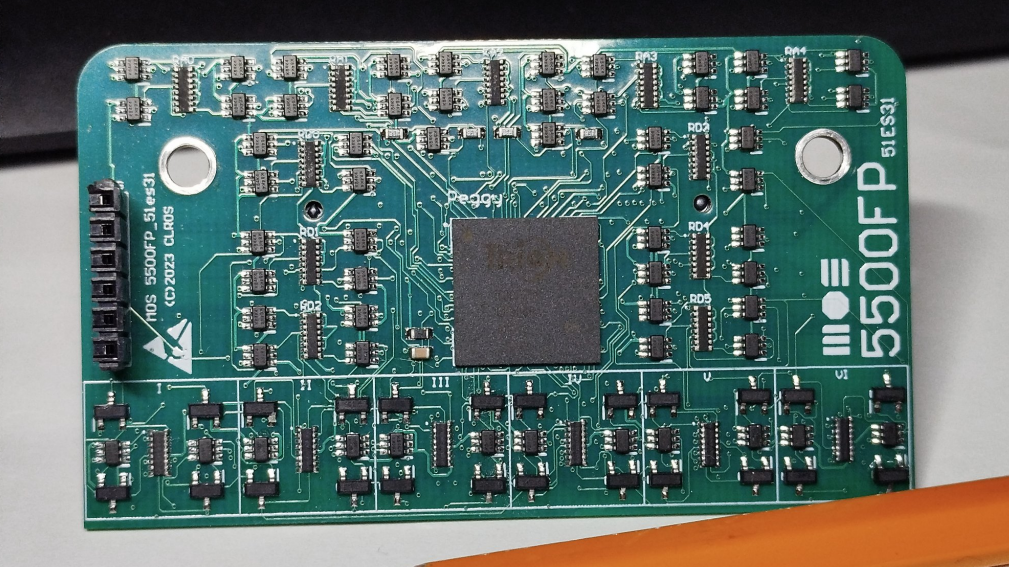
You would be very hard pressed to find any sort of CPU or microcontroller in a commercial product that uses anything but binary to do its work. And yet, other options exist! Ternary computing involves using trits with three states instead of bits with two. It’s not popular, but there is now a design available for a ternary processor that you could potentially get your hands on.

The device in question is called the 5500FP, as outlined in a research paper from [Claudio Lorenzo La Rosa.] Very few ternary processors exist, and little effort has ever been made to fabricate such a device in real silicon. However, [Claudio] explains that it’s entirely possible to implement a ternary logic processor based on RISC principles by using modern FPGA hardware. The impetus to do so is because of the perceived benefits of ternary computing—notably, that with three states, each “trit” can store more information than regular old binary “bits.” Beyond that, the use of a “balanced ternary” system, based on logical values of -1, 0 , and 1, allows storing both negative and positive numbers without a wasted sign bit, and allows numbers to be negated trivially simply by inverting all trits together.

The research paper does a good job of outlining the basis of this method of computing, as well as the mode of operation of the 5500FP processor. For now, it’s a 24-trit device operating at a frequency of 20MHz, but the hope is that in future it would be possible to move to custom silicon to improve performance and capability. The hope is that further development of ternary computing hardware could lead to parts capable of higher information density and lower power consumption, both highly useful in this day and age where improvements to conventional processor designs are ever hard to find.

Advertisement

Head over to the Ternary Computing website if you’re intrigued by the Ways of Three and want to learn more. We perhaps don’t expect ternary computing to take over any time soon, given the Soviets didn’t get far with it in the 1950s. Still, the concept exists and is fun to contemplate if you like the mental challenge. Maybe you can even start a rumor that the next iPhone is using an all-ternary processor and spread it across a few tech blogs before the week is out. Let us know how you get on.

Source link

Advertisement
Continue Reading

Tech

This Modern Gold Mining Method Begins With Your Old Electronics

Published

on


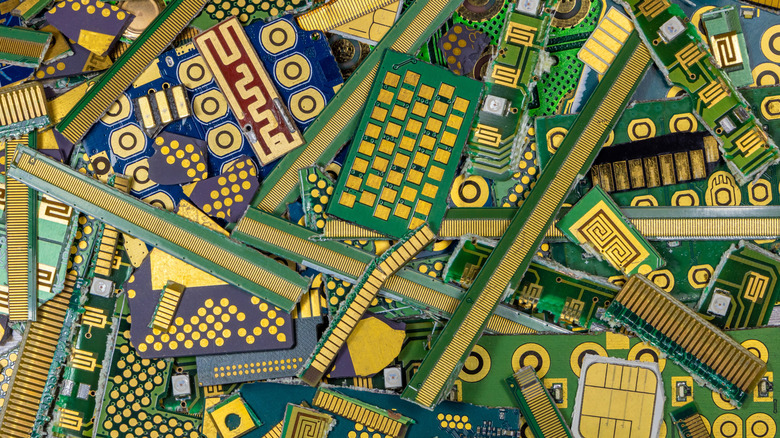
For many people, gold mining conjures images of an old prospector sifting sandy water through a metal pan in the blazing sun. But these days, the process is far more advanced than the 1800s gold rush era of the western United States. In fact, researchers have actually developed a method to recover gold from electronic waste. This means that yes, there’s gold inside your household electronics. So your drawer of outdated devices may be a goldmine—at least in theory.

A study published in Advanced Materials describes how this was achieved with a process using protein amyloid nanofibrils. Extracted from whey, these materials are tiny, thin protein fibers with a huge surface area. This allows them to precisely remove gold from dissolved electronic components like computer motherboards. The process then converts gold ions into single particles, resulting in high-purity gold nuggets.

The study shows that this method of gold recovery costs around $1.10 per gram, a far cry from the market value of about $50 per gram for 22-carat gold. The process is also more eco-friendly than traditional mining methods, as it uses fewer organic materials and produces less waste overall. Additionally, the protein gels used to extract the gold are reusable, and represent a circular approach. The end result is that electronic waste, as well as food waste, is recycled and repurposed into a different substance.

Advertisement

The value and history of gold in electronic devices

A typical smartphone has anywhere from 7 to 34 milligrams of gold in its circuit boards and connectors. This equals around $1.16 to $5.81 total value as of this writing. Of course, larger devices like desktop computers can have more gold, though it’s still not an impressive amount. While it’s illegal to throw away electronics in many states, millions of devices are tossed every year, which means the value of the gold inside can add up very quickly.

The reason gold is often used in electronic devices is because of its physical and chemical properties. First, gold conducts electricity very well. It’s also durable and doesn’t corrode over time as other metals can. Plus, it can easily be shaped into thin wires without breaking. All of these features combined better ensure reliable signal transmission, and smooth, extended performance. That’s why gold is the ideal substance for circuit boards, connectors, and other components, inside smartphones, computers, and more.


Advertisement

The use of gold in electronic devices dates back to the mid-20th century. Both computers and military communications equipment required more reliable and longer-lasting connections than what were available at the time. So gold was eventually integrated, becoming an important addition to these devices. As time went on, the military defense sector of the US utilized the precious metal extensively. This led to widespread adoption by NASA, who used the metal in golden records on the Voyager missions, and in various equipment as well.


Advertisement

Source link

Continue Reading

Tech

Podcast: Chord DACs Explained with Rob Watts

Published

on

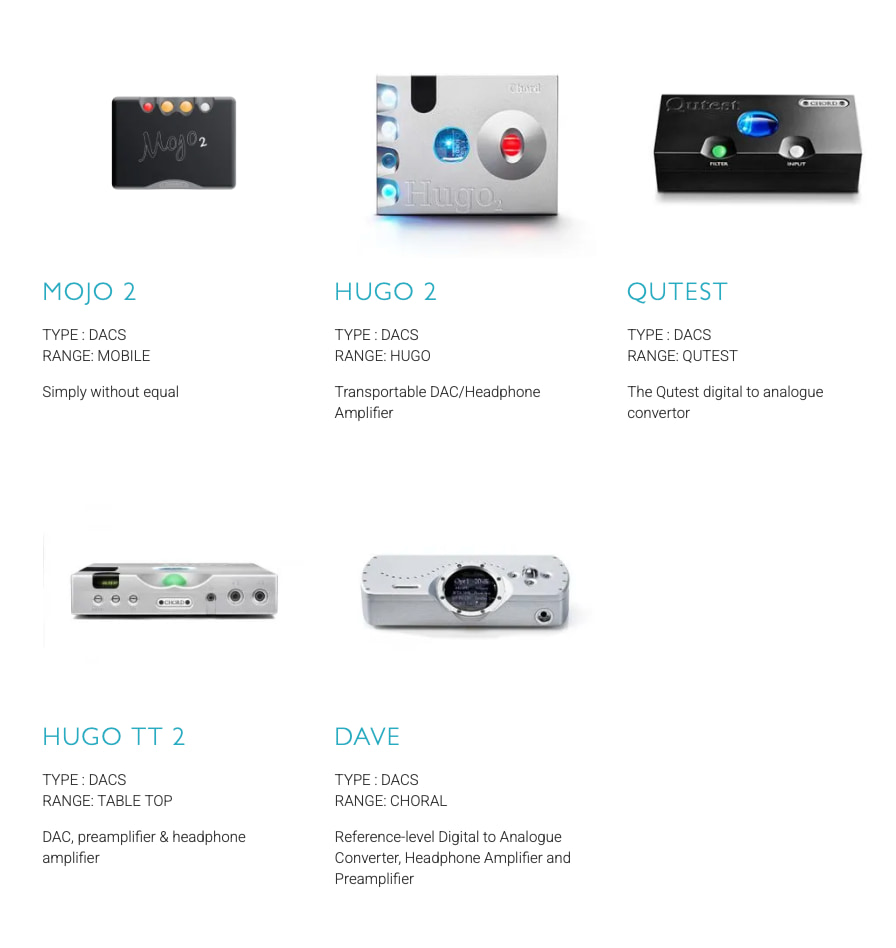
Chord Electronics’ digital audio consultant Rob Watts takes us on a deep dive into the challenges of reproducing lifelike sound from 16-bit/44.1kHz PCM digital audio (CD quality music from compact discs or streaming). From his groundbreaking DAC designs priced from $650 to $20,000, to why off-the-shelf chips can’t compete, Rob explains how his unique approach to D/A (digital to analog) conversion goes beyond conventional measurement-based audio engineering. He also previews Chord’s next flagship product, the Quartet M Scaler, which will build on the Hugo M Scaler, and shares his thoughts on DSD, the importance of cables, and hidden sonic factors like RF and power supply issues. Even 45 years after the CD’s debut, there’s still high-resolution audio left to uncover.

Sponsor: Thank you to our sponsor SVS for your support.

This episode was recorded on October 28, 2025.

Advertisement

Where to listen:

On the Panel:

  • Rob Watts, Digital Audio Consultant, Chord Electronics
  • Brian Mitchell, eCoustics Founder
chord-dacs-2026

Where to buy Chord DACs:

Credits:

Advertisement. Scroll to continue reading.

Source link

Continue Reading

Tech

Stryker attack wiped tens of thousands of devices, no malware needed

Published

on

Stryker attack wiped tens of thousands of devices, no malware needed

Last week’s cyberattack on medical technology giant Stryker was limited to its internal Microsoft environment and remotely wiped tens of thousands of employee devices.

The organization says in an update on Sunday that all its medical devices are safe to use but electronic ordering systems remain offline, and customers must place orders manually through sales representatives.

Stryker emphasizes that the incident was not a ransomware attack and that the threat actor did not deploy any malware on its systems.

Last week, Stryker was the target of a cyberattack claimed by the Handala hacktivist group, believed to be linked to Iran.

Advertisement

The attacker alleged that they wiped “over 200,000 systems, servers, and mobile devices” and stole 50 terabytes of data. However, investigators did not find any indication that data was exfiltrated.

Following the disruption, Stryker employees in multiple countries started to complain that their managed devices had been remotely wiped overnight.

Some employees had their personal devices enrolled in the company network and lost personal data during the wiping process.

Hackers had Global Admin privileges

A source familiar with the attack told BleepingComputer that the threat actor used the wipe command in Intune, Microsoft’s cloud-based endpoint management service, to erase data from nearly 80,000 devices between 5:00 and 8:00 a.m. UTC on March 11.

Advertisement

The attacker carried out the action after compromising an administrator account and creating a new Global Administrator account.

The investigation is being conducted by the Microsoft Detection and Response Team (DART) in collaboration with cybersecurity experts from Palo Alto Unit 42.

Stryker’s update highlights that the attack did not impact any of its products, connected or otherwise, and was limited exclusively to the internal Microsoft corporate environment.

“All Stryker products across our global portfolio, including connected, digital, and life-saving technologies, remain safe to use,” the company says.

Advertisement

Restoration efforts are currently underway, the main focus being on resuming shipping and transactional services. Customers are encouraged to maintain normal communication with company personnel while the infrastructure is steadily recovered.

Any order placed before the cyberattack will be honored as systems are restored, while those placed during the disruption will be processed when systems are back online, and the supply flow resumes to normal.

The company is working with its global manufacturing sites to deal with potential operational impact.

Stryker’s current priority is to restore the supply-chain system and resume customer orders and shipping. “Our core transactional systems are already on a clear path to full recovery,” the company says.

Advertisement

Malware is getting smarter. The Red Report 2026 reveals how new threats use math to detect sandboxes and hide in plain sight.

Download our analysis of 1.1 million malicious samples to uncover the top 10 techniques and see if your security stack is blinded.

Source link

Continue Reading

Tech

Fujifilm’s Instax Mini 13 Finally Gets It Right, Captures Selfies That Actually Look Good

Published

on

Fujifilm Instax Mini 13 Instant Camera
Fujifilm has just introduced the Instax Mini 13, the latest addition to one of the best selling instant camera lines in the world. It sits comfortably in the palm of your hand from the moment you pick it up, and a metallic silver logo on the front adds a subtle touch of shine without making the whole thing feel fussy or overcomplicated.


Simply twist the lens ring and you’re good to go in one fluid action. Twist it again, and the close-up mode appears, allowing you to take close-up photographs of whatever is directly in front of you. Because of built-in parallax correction, the viewfinder lines up perfectly with the lens, ensuring that everything is centered.

Sale


Fujifilm Instax Mini 12 Instant Film Camera – Pastel Blue
  • Compact and cute design. Easily twist the lens to turn on and off
  • Built-in selfie mirror for easy selfies Close-up mode with parallax correction
  • Features automatic exposure and flash control for bright photos that are not “washed-out”


There’s a tiny mirror on the front to help you line up your own pictures perfectly. You have dual timers built in that clock down from two to ten seconds depending on whether you’re taking a group shot or flying solo. Fujifilm also includes a small wedge piece that snaps into the strap and then be used to raise the camera up on a level surface. The countdown will run automatically while you get everything in place. The exposure settings are also automatically adjusted, regardless of the lighting conditions. The flash has its own small control mechanism that performs an excellent job of balancing the results whether you’re in full light or just in the shade.

Advertisement


If you put two regular AA batteries in the bottom, it will print about a hundred times before needing to be replaced. The camera also includes a feature that allows it to turn off after five minutes of inactivity, which helps to extend the battery life. The film loads at the back, just like any other Instax Mini. Each finished print measures approximately 3.5 x 2 inches overall, with a photo area of 2.5 x 1.75 inches. You’ll have to wait around 90 seconds for the colors to appear properly, however if you’re in cool air, it may take a little longer.

Fujifilm Instax Mini 13 Instant Camera
There are five colors, including Dreamy Purple, Frost Blue, Candy Pink, Lagoon Green, and Clay White. The camera alone costs $94 MSRP, and Fujifilm is also releasing a new film pack called Pastel Galaxy, which includes sparkling cosmic motifs in ultra delicate pastel tones along the edges. That gives a fun touch to each print. If you scan prints into your phone, you will find that the companion app now does a better job of isolating the image from the background, resulting in cleaner-looking digital copies. Availability begins in late June.
[Source]

Source link

Advertisement
Continue Reading

Tech

Canva Affinity adds Light UI, Convert to Curves, and Live Tone Blend

Published

on

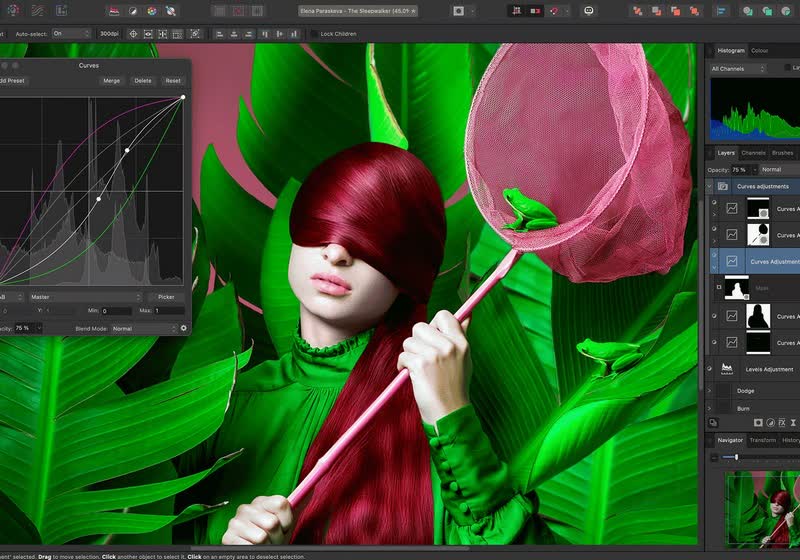
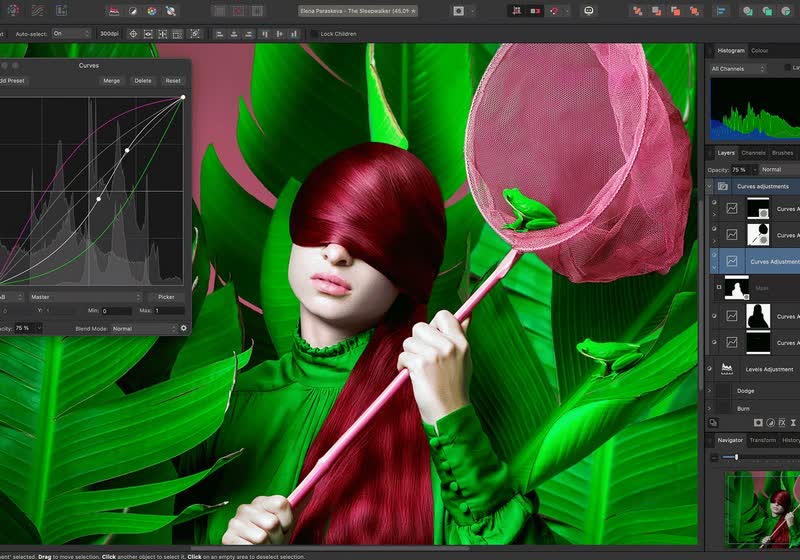
Affinity’s latest update to introduces Light UI for a brighter and cleaner workplace, Convert to Curves to eliminate manual tracing by transforming objects into a fully editable vector curves, and Live Tone Blend Groups which blends layers dynamically and non-destructively.

Read Entire Article
Source link

Continue Reading

Tech

A Voltage Regulator Before Electronics

Published

on

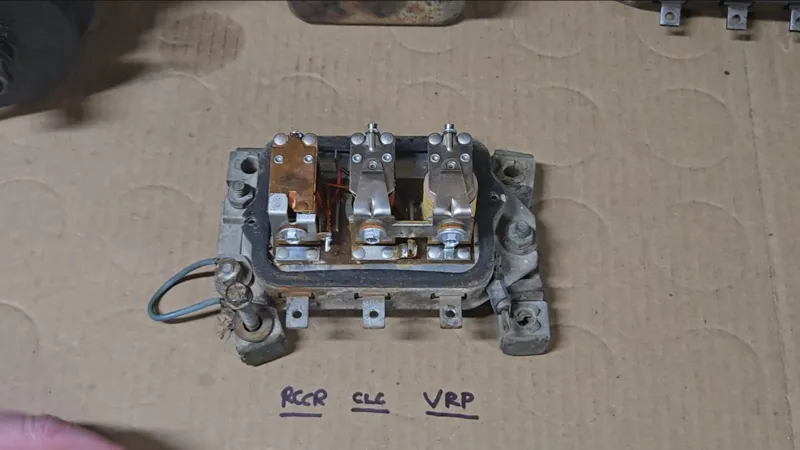
Did you ever wonder how the mechanical voltage regulator — that big black box wired up to the generator on a car from the ’60s or before — worked? [Jonelsonster] has some answers.

For most people in 2026 an old car perhaps means one from the 20th century, now that vehicles from the 1990s and 2000s  have become the beloved jalopies of sallow youths with a liking for older cars and a low budget. But even a 1990s vehicle is modern in terms of its technology, because a computer controls the show. It has electronic fuel injection (EFI), anti-lock braking system (ABS), closed loop emissions control, and the like.

Go back in time to the 1970s, and you’ll find minimal electronics in the average car. The ABS is gone, and the closest thing you might find to EFI is an electronic ignition where the points in the distributor have been replaced with a simple transistor. Perhaps an electronic voltage regulator on the alternator. Much earlier than that and everything was mechanical, be that the ignition, or that regulator.

The video below the break has a pair of units, it seems from 1940s tractors. They would have had a DC generator, a spinning coil with a commutator and brushes, in a magnetic field provided by another coil. These things weren’t particularly powerful by today’s standards and sometimes their charging could be a little lackluster, but they did work. We get to see how, as he lifts the lid off to reveal what look like a set of relays.

Advertisement

We’re shown the functions of each of the three coils with the aid of a lab power supply; we have a reverse current relay that disconnects the generator if the battery tries to power it, an over-current relay that disconnects the field coil if the current is too high, and an over-voltage relay that does the same for voltage. The regulating comes down to the magnetic characteristics, and while it’s crude, it does the job.

We remember European devices with two coils and no field terminal, but the principle is the same. There is never a dull moment when you own an all mechanical car.

Advertisement

Source link

Continue Reading

Tech

Nvidia’s version of OpenClaw could solve its biggest problem: security

Published

on

Nvidia CEO Jensen Huang thinks every company should have an OpenClaw strategy. And Nvidia is here to provide it.

Nvidia has developed NemoClaw, an enterprise-grade AI agent platform, Huang announced during his GTC keynote on Monday. The platform is built on top of OpenClaw, the popular open-source framework for building and running AI agents locally on a company’s own hardware.

The new open source platform is essentially OpenClaw with enterprise-grade security and privacy features baked in. The idea is to turn OpenClaw into a secure platform that enterprises can tap into with one command, giving them control over how agents behave and handle data, according to Nvidia.

“For the CEOs, the question is, what’s your OpenClaw strategy?” Huang said onstage. “We need it. We all have a Linux strategy. We all needed to have an HTTP HTML strategy, which started the internet. We all needed to have a Kubernetes strategy, which made it possible for mobile cloud to happen. Every company in the world today needs to have an OpenClaw strategy, an agentic systems strategy.”

Advertisement

Nvidia worked with OpenClaw’s creator Peter Steinberger to develop NemoClaw, Huang said.

Once released, NemoClaw users will be able to tap any coding agent or open-source AI model, including Nvidia’s NemoTron open models to build and deploy AI agents. The platform allows users to access cloud-based models on their local devices. The platform is hardware agnostic — it doesn’t need to run on Nvidia’s own GPUs — and integrates with NeMo, Nvidia’s AI agent software suite.

For now, Nvidia is describing NemoClaw as an early-stage alpha release. “Expect rough edges. We are building toward production-ready sandbox orchestration, but the starting point is getting your own environment up and running,” the company stated on its website in a note directed toward developers.

Techcrunch event

Advertisement

San Francisco, CA
|
October 13-15, 2026

Building enterprise AI agent platforms has become the du jour obsession of the AI space in recent months.

Advertisement

OpenAI launched Frontier, its open platform for enterprises to build and manage AI agents, in February. In December, global research firm Gartner released a report about how governance platforms for AI agents would be the crucial infrastructure needed for enterprises to adopt the AI tech. Nvidia clearly got the message.

“OpenClaw gave us, gave the industry exactly what it needed at exactly the time,” Huang said. “Just as Linux gave the industry exactly what it needed at exactly the time, just as Kubernetes showed up at exactly the right time, just as HTML showed up. It made it possible for the entire industry to grab on to this open source stack and go do something with it.”

Source link

Advertisement
Continue Reading

Tech

Boox’s new Go E Ink tablet includes a 10-inch display and runs Android 15

Published

on

There are , but most of them are basically digital notebooks. They are great for reading and handwriting notes, but not so great for doing all of that regular tablet stuff like checking emails and doomscrolling. Boox, however, has released a number of E Ink tablets that can , opening up users to the wide world of traditional smartphone apps.

The company’s latest product is a refresh of the Go 10.3 tablet, called the Go 10.3 Lumi. This introduces plenty of new features and, as the name suggests, one is a front light. The tablet has been designed for both natural sunlight and low-light environments. The previous model was great, but it turns into a useless paperweight without access to ambient light.

A tablet.

Boox

Despite the front-facing light, the Go 10.3 Lumi is still lighter than its predecessor, at 12.8 ounces. It’s also on the thinner side, with a 4.8mm profile.

The basic specs are similar to the Go tablet, with an octa-core processor, 4GB of RAM and 64GB of internal storage. It runs on , which is a massive improvement for both security and access to apps. The previous iteration ran on Android 12, and Google . That means no more critical security updates.

Advertisement

In addition to beefed up security, Boox promises the upgrade to Android 15 offers users improved memory management, better multitasking and smoother UI interactions. E Ink devices can be sluggish so I’m all for anything that speeds things up.

It integrates with external keyboards and boasts integrated speakers, which will certainly come in handy when navigating apps downloaded from the Play Store. Despite the screen technology, this is an Android tablet. It should be able to run just about any app available.

However, the E Ink technology will likely run into hiccups with video-based apps and games. It’s just not made for that. This could be a great little gadget for emails and text-based social media, but not for something like TikTok. It should be able to handle non-animated games just fine, like crossword puzzles and stuff like that.

Boox says the tablet gets “substantial battery life” and has been “optimized for extended usage cycles.” The company hasn’t announced detailed battery specs, but did say people “can work all day without looming battery anxiety.” E Ink devices tend to last a good while, so I’m not worried about that.

Advertisement

The Boox Go 10.3 Lumi is available to order right now and costs $450. If you want to save a few bucks and have no interest in a front light, there’s a stripped down version that also runs Android 15 but costs $420.

Source link

Continue Reading

Tech

Gateway Global AI’s approach to business automation

Published

on

Artificial intelligence has become a central topic in business strategy discussions, yet many organizations continue to struggle with how to integrate it into everyday operations. Gateway Global AI, a technology company developing voice-first infrastructure, is approaching that challenge from a different angle. According to CTO Jason Trindade, the company focuses on simplifying how businesses deploy AI systems by consolidating multiple functions into a single operational framework.

Gateway Global AI has developed a platform that integrates AI voice systems with business infrastructure. Rather than treating artificial intelligence as a standalone feature, the company’s architecture positions AI as a central operational layer. In practice, that means customer interactions, voice interfaces, and system routing can operate through one coordinated structure rather than a collection of disconnected tools.

Trindade explains that his interest in this area developed while building websites and experimenting with different digital systems over several years. During that process, he began exploring how artificial intelligence interacts with human behavior. He studied behavioral frameworks such as DISC (Dominance, Influence, Steadiness, and Conscientiousness) personality profiles and explored how those concepts might influence AI communication design. According to him, those ideas eventually shaped how Gateway Global AI approaches voice-driven interaction.

I spent a long time studying how people communicate and how behavior works,” Trindade says. “When we started applying those ideas to AI systems, it became clear that giving AI a behavioral framework can be more effective than simply giving it rules.

Advertisement

The result is a voice-first platform designed to allow businesses to integrate AI agents into communication channels such as customer calls, service requests, and internal workflows. Instead of functioning as a simple chatbot or voice assistant, the system is designed to operate as a routing layer for AI interactions

According to Trindade, the router acts as a central entry point for AI interactions across a business. Traditional organizations often have a single point of entry for communication, such as a main phone line or contact system. In a similar way, Gateway Global AI’s platform is designed to allow companies to manage incoming AI-driven interactions through one infrastructure layer. According to Trindade, swapping the phone numbers for QR codes puts voice AI on the IP network, which eliminates bottlenecks and latency.

What businesses will eventually need is a single point of entry for AI,” he explains. “If artificial intelligence is handling communication and processes, organizations will want one system that manages those interactions in a controlled way.

A key part of the platform is its portability. The system is designed to run on a single server architecture that can be installed onto existing infrastructure. Trindade notes that this approach grew out of his own development process, during which he spent months reviewing documentation, testing systems, and refining the platform’s structure.

Advertisement

I built the platform so it can be packaged and deployed like an operating system,” he says. “You can place it onto a server and have the same architecture running almost immediately.


Gateway-Global-AI-McDonald's
Credit: Gateway Global AI
Gateway-Global-AI-McDonald's

Gateway Global AI also places a strong emphasis on voice interaction. “Voice AI allows businesses to have natural conversations with customers while still connecting those interactions to the company’s existing digital services,” Trindade says. “In many situations, it can guide people to information that already exists within the company’s ecosystem, whether that’s a website, catalog, or other resources.

Trindade notes that the broader goal is to make AI systems easier to deploy and manage. In his view, many organizations approach AI projects by focusing first on user interfaces and external features rather than infrastructure. That sequence, he suggests, can make implementation more complicated over time.

From Trindade’s perspective, the company’s platform is designed with scalability in mind, particularly for organizations that operate across multiple locations or serve large customer bases. The architecture supports multi-tenant deployment, he notes, which means a single platform can manage operations across many branches or business units.

Advertisement

Gateway Global AI also plans to expand its ecosystem through developer collaboration. Trindade says the company intends to support software developers who want to build applications on top of the platform’s core infrastructure. The aim is to create a foundation that other developers can extend through APIs and development tools.

Looking ahead, Trindade believes voice-driven interaction will continue to play a growing role in how businesses communicate with customers and manage operations. From his perspective, the next phase of AI adoption will depend not only on new algorithms but also on systems that simplify how organizations implement the technology.

Through Gateway Global AI, Trindade is exploring how infrastructure design, behavioral insights, and voice-based technology might converge to shape that next phase of business AI integration. “Artificial intelligence is evolving quickly,” he says. “The opportunity now is to build infrastructure that allows companies to actually use it in a practical way.

Advertisement

Source link

Continue Reading

Trending

Copyright © 2025