

Tech
Nvidia is leveling up game visuals with the new DLSS 4.5 update

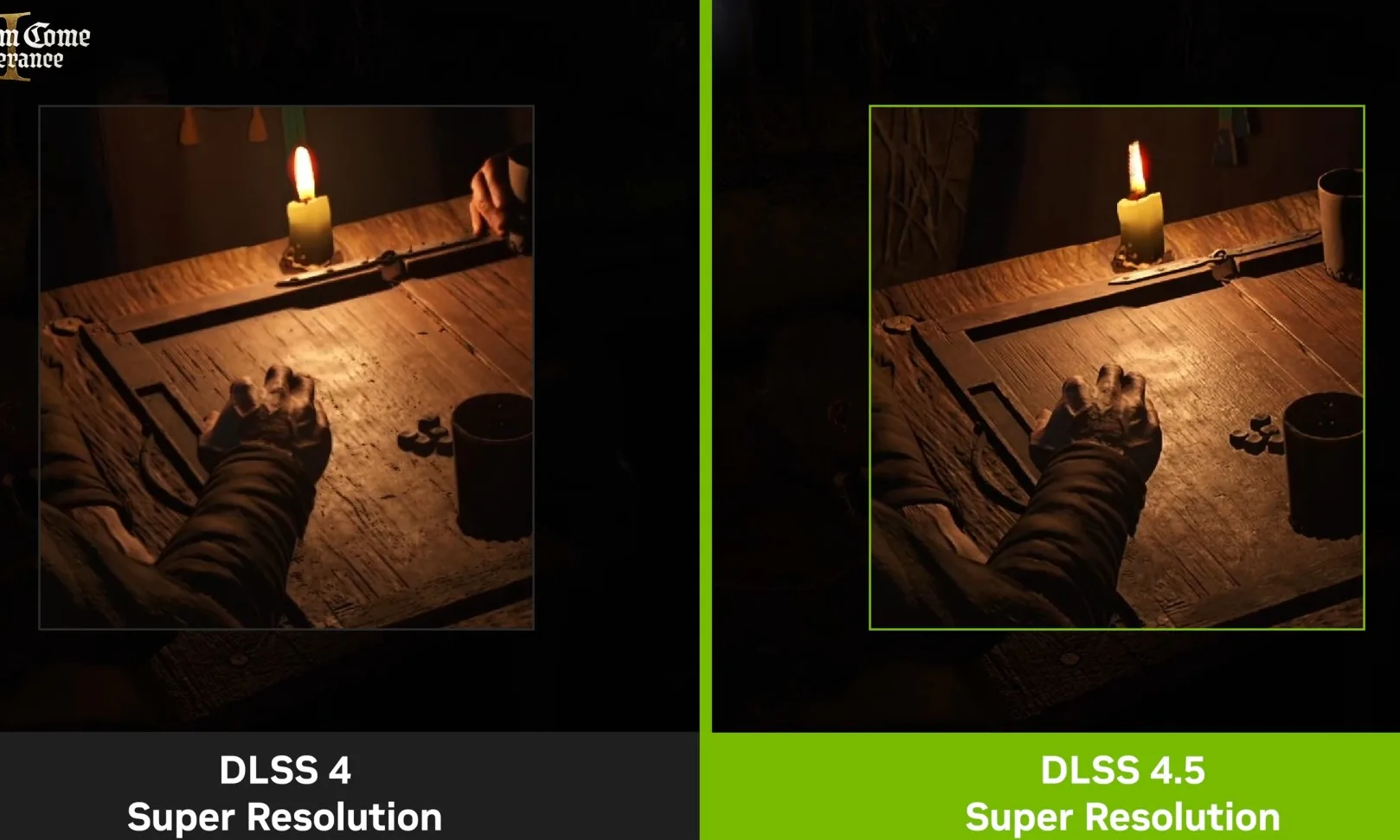
Nvidia has just announced DLSS 4.5. The update brings new AI-powered graphics technology, and the improvements offer a noticeable impact on how modern PC games look and perform. It was revealed alongside other RTX announcements during GDC 2026, focusing on boosting both visual quality and frame rates in demanding titles.
DLSS (Deep Learning Super Sampling) has become a big part of Nvidia’s gaming ecosystem. It uses AI models running on RTX GPUs to reconstruct higher-resolution images and generate additional frames that allow games to run more smoothly without sacrificing visual fidelity. With DLSS 4.5, the technology is getting even better.
Smarter frame generation with DLSS 4.5

One of the notable new additions in DLSS 4.5 is Dynamic Multi Frame Generation, which automatically adjusts how many AI-generated frames are created during gameplay. Rather than sticking to a fixed multiplier, the system dynamically tweaks frame generation in real time to hit the target refresh rate. This approach lets compatible GPUs maintain smoother performance during demanding scenes while avoiding unnecessary frame generation when workloads drop.
DLSS 4.5 also introduces the 6X Multi Frame Generation, which can generate up to five additional frames for every traditionally rendered frame. The result is significantly smoother gameplay, particularly in high-fidelity titles that use advanced rendering techniques like path tracing.
AI upgrades for sharper visuals

Aside from the performance improvements, DLSS 4.5 also upgrades Nvidia’s Super Resolution technology using a second-generation transformer AI model. It is designed to improve image clarity by reducing artifacts such as ghosting, shimmering, and jagged edges in motion-heavy scenes.
Coming to RTX 50 series GPUs soon
Nvidia has confirmed DLSS 4.5 features like Dynamic Multi Frame Generation and the 6X mode will roll out starting March 31 through the Nvidia app. It will first debut in GeForce RTX 50-series GPUs, and will be supported in around 20 games like 007 First Light and Control Resonant.


from the public-domain-ftw dept
We’ve been covering Stephen Thaler’s quixotic quest to get copyright (and patent) protection for works generated entirely by his AI system “DABUS” for years now. If there’s one thing Thaler has proved beyond all reasonable doubt, it’s that you can be comprehensively, thoroughly, and repeatedly wrong at every level of the American legal system and still keep going. He loses everywhere, every time, at every level. The Copyright Office rejected him. A federal district court rejected him. The DC Circuit rejected him. The Patent Office rejected him. Courts rejected his parallel patent claims. Even the Trump administration—not exactly known for its nuanced intellectual property positions—told the Supreme Court not to bother hearing his appeal.
And now, the Supreme Court has declined to take up the case, putting the final period on what has been one of the most impressive losing streaks in recent IP law history.
Plaintiff Stephen Thaler had appealed to the justices after lower courts upheld a U.S. Copyright Office decision that the AI-crafted visual art at issue in the case was ineligible for copyright protection because it did not have a human creator.
That was always the fatal flaw with his argument. He wasn’t making the more nuanced claim that a human who uses AI as a tool should get some copyright protection. He was making the maximalist claim: the AI did it all by itself, and it (or rather, he, as the AI’s owner) should get the copyright anyway.
The image in question—”A Recent Entrance to Paradise,” of train tracks entering a portal surrounded by green and purple plant-like imagery—was, according to Thaler, created entirely by DABUS with no human creative input. Every single institution that looked at this said no.
A federal judge in Washington upheld the office’s decision in Thaler’s case in 2023, writing that human authorship is a “bedrock requirement of copyright.” The U.S. Court of Appeals for the District of Columbia Circuit affirmed the ruling in 2025.
Thaler’s lawyers, for their part, tried to argue that the stakes were too high for the Court to sit this one out:
With a refusal by the court to hear the appeal, Thaler’s lawyers said, “even if it later overturns the Copyright Office’s test in another case, it will be too late. The Copyright Office will have irreversibly and negatively impacted AI development and use in the creative industry during critically important years.”
That’s rich. The Copyright Office is already working through the genuinely harder questions in cases involving tools like Midjourney—cases where humans actually did have meaningful creative input. Those cases are moving through the system right now. The problem for Thaler is that he chose the worst possible vehicle to force a Supreme Court showdown: a case so maximalist in its claims (the AI did everything, humans did nothing, give us the copyright anyway) that courts could rule against him on the narrowest possible grounds without ever having to engage with the nuanced questions at all. His all-or-nothing bet made this an easy case.
Still, the question of what happens when a human uses AI as a creative tool—rather than letting the machine do everything—isn’t actually as novel or unsettled as many people seem to think.
Copyright law has required human creative choices since at least Burrow-Giles Lithographic Co. v. Sarony all the way back in 1884 in a case about whether or not photographs get covered by copyright. And the wonderful Feist Publications v. Rural Telephone Service from 1991 (a case we cite often) hammered the point home by establishing that copyright demands original creative expression. Consider how this already works with photography. A photographer who frames a shot of a landscape gets copyright protection in the creative choices they made—the composition, the angle, the timing, the lighting. But the landscape itself? No human created that. It gets no copyright. The camera mechanically captured what was in front of it, but the human’s original creative decisions (and only those original creative decisions) are what copyright protects.
AI-generated works should work roughly the same way. If a human’s creative input—through a sufficiently specific and expressive prompt, through selection and arrangement, through iterative creative choices—meaningfully shapes the output, that human contribution can be protected. But the parts that the AI generated autonomously, without human creative direction? Those are “the landscape.” They’re the thing no human authored.
There will certainly be disputes at the margins about exactly how much human input is enough, and where the line sits between “I told the AI to make something cool” and genuine creative direction. But the fundamental framework for handling this already exists. We’ve been here before with every new creative tool, from cameras to Photoshop. The principle has always been the same: copyright protects human creativity, regardless of the tool used to express it.
Thaler chose to fight for the one position that had no support in law (or in common sense). His losing streak is now complete, and there’s nowhere left to appeal. But the legacy of his many, many losses is actually kind of useful: he has, through sheer persistence, generated an incredibly clear and consistent body of authority establishing that purely AI-generated works, with no human creative input, do not get copyright protection.
So, thanks for that, I guess. Oh, and I guess we can confidently post that “Recent Entrance to Paradise” image as it, like the monkey selfie before it, is officially in the public domain.

Filed Under: ai, copyright, copyright office, copyrightable subject matter, dabus, human creativity, stephen thaler, supreme court
Tech
HiFiMAN Arya WiFi and HE1000 WiFi First Impressions at CanJam NYC 2026: Are Wireless Planar Headphones Finally Ready for Audiophiles?

For years, the biggest challenge in the wireless headphone space hasn’t been convenience or features. It’s been performance. High-end brands have spent the past decade refining flagship wired models that rely on dedicated headphone amplifiers and carefully tuned drivers, and translating that level of performance into a self contained wireless design is not a trivial exercise. That’s the context for the HiFiMAN Arya WiFi and HiFiMAN HE1000 WiFi, two open back wireless planar magnetic headphones introduced at CanJam NYC 2026.
HiFiMAN took its time with these for a reason. Integrating the necessary wireless electronics, amplification, DAC architecture, and battery systems into both earcups and the headband, while still preserving the acoustic character of the award winning wired Arya and HE1000 was not going to happen overnight.
HiFiMAN has experimented with wireless concepts before, but the Arya WiFi and HE1000 WiFi represent its most serious attempt yet to bring high bandwidth wireless audio to planar magnetic headphones.
Both models still support Bluetooth with codecs like aptX HD and LDAC, and they can function as USB Audio devices when connected directly. But those options are really just the supporting cast.
The real story here is WiFi. That’s where the bandwidth lives, and where HiFiMAN believes wireless listening can finally approach the kind of fidelity that planar magnetic headphones are known for.

Hymalaya R2R DAC: A Ladder Inside the Headphones
Both the HiFiMAN Arya WiFi and HiFiMAN HE1000 WiFi incorporate HiFiMAN’s proprietary Hymalaya R2R DAC, along with integrated amplification inside the earcups and planar magnetic drivers derived from the company’s established designs. That combination turns each headphone into something closer to a complete playback system rather than a passive transducer waiting for a DAC and amplifier to do the heavy lifting.
The Hymalaya DAC is built around a classic R2R ladder architecture, a design long favored in high end audio for its precise timing and direct signal conversion. Instead of relying on the delta sigma DAC chips found in most wireless headphones, an R2R DAC converts digital audio through a network of precision resistors that translate binary data directly into analog voltage. The upside can be excellent transient response and tonal accuracy. The downside is that traditional ladder DACs tend to be large, complex, and hungry for power.
HiFiMAN’s solution was to rethink the architecture from the ground up. The Hymalaya platform combines the R2R ladder with FPGA control and extremely low power consumption, allowing the company to shrink the circuit dramatically while maintaining support for high resolution formats. What makes this particularly impressive is the scale. Each earcup houses a compact DAC stage containing hundreds of precision resistors, carefully matched and integrated alongside the internal amplification and wireless electronics.

Packing that level of circuitry into both sides of a headphone while keeping noise low, power consumption manageable, and heat under control is not trivial. From an engineering standpoint alone, this is one of the more ambitious wireless headphone designs we encountered at CanJam NYC 2026.
At a private post-show gathering on Saturday evening, HiFiMAN explained that developing a product like the HiFiMAN HE1000 WiFi or HiFiMAN Arya WiFi can take 12 to 18 months, even when starting with established passive designs.
The company chose the HE1000 and Arya platforms for two key reasons. First, both models are built on proven driver technologies, which reduces the number of variables when integrating the DAC, amplification, wireless circuitry, and battery systems directly into the headphone. Second, these sit at the higher end of HiFiMAN’s lineup, where production volumes are naturally lower. That allows the company to maintain tighter control over quality and consistency while manufacturing the smaller batches required for a design this complex.
HiFiMAN also made it clear that this technology will not immediately trickle down to more affordable models. A Sundara-based WiFi version is not on the roadmap anytime soon, and neither is a version with active noise cancellation. The company’s view is that both would need to meet the same performance standards relative to their price points before they would consider bringing them to market with so much established competition.
You May Want to Sit Down for the Price
The HiFiMAN HE1000 WiFi isn’t cheap. Not even close.
The flagship of HiFiMAN’s new WiFi headphone lineup carries an expected retail price of $2,699, placing it squarely in the same territory as many high-end wired reference headphones.
That number shouldn’t come as a total shock when you consider what’s inside. The HE1000 WiFi is essentially a self contained planar magnetic system with its own DAC, amplification, wireless receiver, battery system, and internal signal chain built directly into the headphone. In other words, it’s doing the job that normally requires a DAC, headphone amplifier, and source component sitting on your desk.
Still, there’s no getting around the sticker shock. Spending nearly three grand on wireless headphones will raise eyebrows even in the audiophile community. But compared to what it would cost to assemble a comparable desktop system for the wired HiFiMAN HE1000 lineage, the math starts to look a little less insane.
And if that price feels steep, the HiFiMAN Arya WiFi exists as the slightly less punishing option at around $1,449, though “budget” isn’t exactly the word most people would use here either. Focal and DALI have options around the same price that we’ve already reviewed for those interested in closed-back options.

Two Ways to Go Wireless: HiFiMAN HE1000 WiFi and Arya WiFi
The HE1000 WiFi and Arya WiFi are built on the same basic premise, but they are not the same headphone with different price tags slapped on the box.
Both are open back wireless planar magnetic designs with WiFi as the primary connection, backed up by Bluetooth with LDAC and aptX HD and USB Audio support. Both also integrate HiFiMAN’s Hymalaya R2R DAC, internal amplification, and battery powered electronics directly into the headphone. That alone is unusual. Most wireless headphones still lean on Bluetooth and off the shelf chipsets. HiFiMAN decided to build something far more ambitious and a lot more complicated.
Where they begin to separate is with the driver platform.
The HE1000 WiFi is based on the company’s more upscale Nano Diaphragm driver architecture, paired with Stealth Magnet technology to reduce wave diffraction and preserve a cleaner path for the soundwave. It feels like the more luxurious and visually striking of the two, and frankly, at this price it had better. Chris Boylan and I both found it very manageable on the head. Not super lightweight, but certainly not some neck killing science project either. Clamping force felt right, and the changes to the suspension headband, yoke, and internal cable routing were very well executed.
The Arya WiFi uses a similar overall layout, but swaps in HiFiMAN’s Super Nano diaphragm driver, a thinner planar diaphragm intended to improve transient response and efficiency. It still uses Stealth Magnet technology, integrated amplification, and the Hymalaya DAC, but it is positioned as the more accessible entry into this new WiFi based range. Same core concept. Different driver implementation. Lower price of admission. Slightly less “you may need to explain this purchase to your family” energy.
Both also offer something you won’t find on the HE1000 Unveiled or Arya Unveiled: protective grilles in front of the drivers. HiFiMAN explained that because these headphones may be used in a wider range of real world environments, they needed to protect the drivers in a way the more purist home oriented wired models do not. That makes sense. Open back headphones this expensive do not need extra ways to get murdered.
What also deserves real credit is the comfort and mechanical design. Because both earcups contain the DAC, amplification stage, wireless electronics, and battery systems, HiFiMAN had to rethink how the internal cabling runs through the headband and how the added hardware would affect overall balance and long term wear.
That could have gone badly. It didn’t.
The revised suspension headband, yoke structure, and internal cable routing appear to have been carefully engineered so the additional electronics don’t create pressure points or imbalance across the headband. Both Chris Boylan and I tried them and while neither headphone is super lightweight, they felt very manageable. Clamping force is well judged and the weight distribution works far better than one might expect from a headphone with this much hardware built into both earcups.
Visually, the HE1000 WiFi in particular is rather gorgeous. At nearly $2,700, it probably needs to be.
Setup is also a little more involved than typical Bluetooth pairing. We were given a quick walkthrough at the show, and while there are a few extra steps, the payoff is immediately noticeable. The WiFi connection offers significantly higher sound quality than Bluetooth, which is the entire point of the design.

So How Do they Actually Sound?
If you’re familiar with the HiFiMAN HE1000 Unveiled or HiFiMAN Arya Unveiled, their wireless siblings get you a sizable percentage of the way there. That’s impressive on its own, but it also needs a bit of context.
The Wi-Fi environment at the hotel in Times Square during CanJam NYC 2026 was far from ideal. Thousands of attendees were hammering the network all day streaming music and uploading content, and even 45 floors above the city the connection on our smartphones and tablets was inconsistent at best.
In other words, what we heard was likely only a glimpse of what these headphones are capable of under more controlled conditions.
My personal experience with the HE1000 Unveiled is that it rewards better electronics. Feed it a strong amplifier and a good DAC and it delivers a well balanced, near neutral presentation. There’s enough life and energy to keep things engaging without tipping into the sterile or analytical. Sub bass isn’t exactly seismic, but unless you live exclusively in EDM territory, it feels honest and realistic for a planar magnetic design.
The HE1000 WiFi gets surprisingly close to that presentation. The sub bass won’t rattle your fillings, but the pacing, detail, and overall resolution are very solid. Vocals come across clean and natural, and the soundstage is large and well organized with precise imaging.
Compared to something like the Focal Bathys MG, the character is very different. The Bathys MG is punchier and more forward, designed to sound impressive right out of the gate. The HiFiMAN approach leans more toward spaciousness, neutrality, and detail retrieval, which will feel far more familiar to anyone who spends time with open back planar headphones.
In other words, these still sound like HiFiMAN headphones. The surprise is how much of that DNA survived the jump to WiFi.
Reviews of both coming in April.
Related Reading:

Prediction market Kalshi is making it easier for its users to have conversations on Meta’s social network Threads. Kalshi now offers a share option that will automatically embed the relevant prediction market chart into a Threads post.
Whether people want to discuss who’s going to win Best Picture or which reality TV contestant is going to go home (and possibly bet on the outcome on Kalshi), “with this integration, people can share their opinions alongside the forecasts they’re seeing on Kalshi,” the company said in a blog post.
It’s a move that echoes a successful social media strategy for both Kalshi and its biggest rival, Polymarket, on X. However, things have gotten complicated for Kalshi on X recently. In June, X named Polymarket as its “official” prediction market partner.
Last month, Kalshi removed its affiliate badges from X accounts run by its sponsored traders. This came after X enacted a policy that prohibits sponsored accounts from posting about sports betting. That policy was adopted after the prediction markets were reportedly busted for partnering with fake sports insiders who spread misinformation.
While the share button is not as significant as what the prediction markets have with X, it is a vote of confidence in the X rival just a couple of months after user data appeared to show Threads growing faster than X.
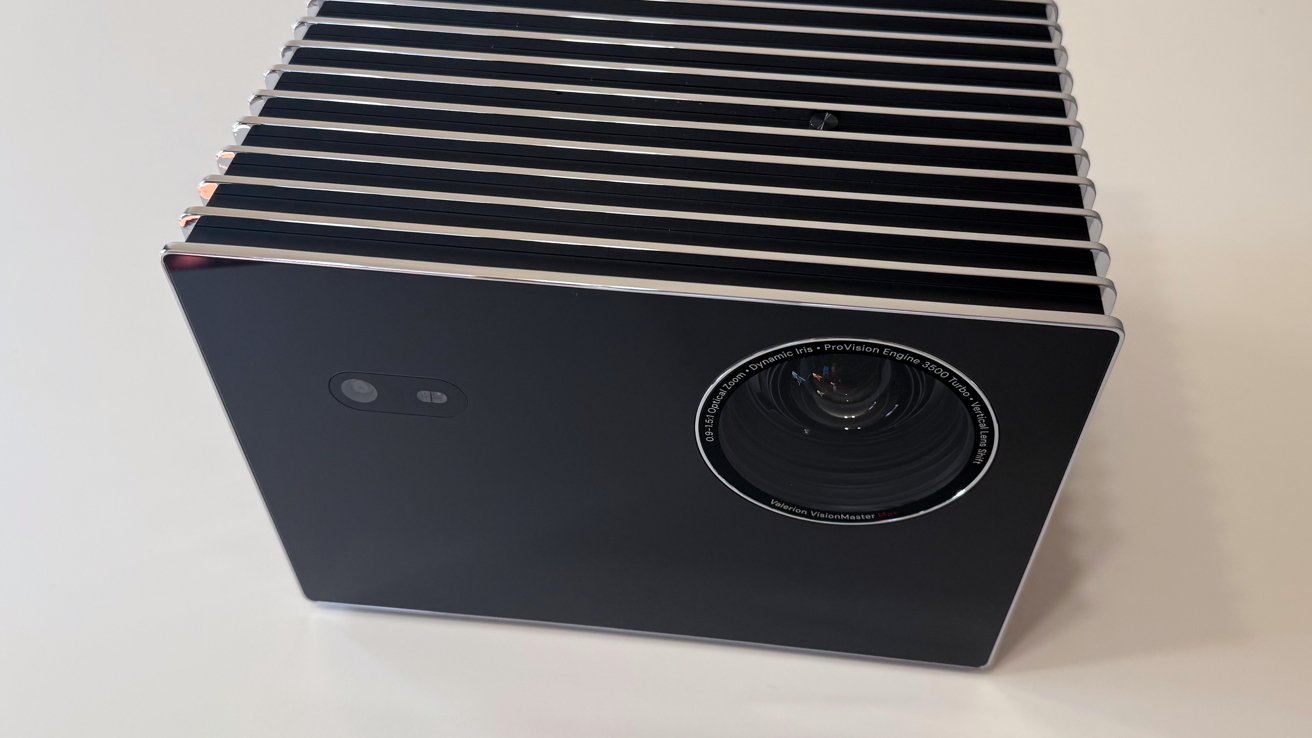
The Valerion VisionMaster Max is a super-premium 4K home theater projector that manages to get extremely close to the professional-grade experience for less than half the cost.
Valerion VisionMaster Max review
For anyone constructing their own home theater, the choice between a projector and a television is frequently determined by budget. A massive TV provides most of the benefits and few of the drawbacks, but you just don’t get the same sort of experience as you would when using a projector.
However, there are other factors that weigh into the home projector experience, not the least of which is managing the light in your theater space to get the ideal image. Your choice of projector also makes a massive difference to what you can eventually see on your wall or projector screen.
Continue Reading on AppleInsider | Discuss on our Forums

An anonymous reader quotes a report from IEEE Spectrum: Worried that your latest ask to a cloud-based AI reveals a bit too much about you? Want to know your genetic risk of disease without revealing it to the services that compute the answer? There is a way to do computing on encrypted data without ever having it decrypted. It’s called fully homomorphic encryption, or FHE. But there’s a rather large catch. It can take thousands — even tens of thousands — of times longer to compute on today’s CPUs and GPUs than simply working with the decrypted data. So universities, startups, and at least one processor giant have been working on specialized chips that could close that gap. Last month at the IEEE International Solid-State Circuits Conference (ISSCC) in San Francisco, Intel demonstrated its answer, Heracles, which sped up FHE computing tasks as much as 5,000-fold compared to a top-of the-line Intel server CPU.
Startups are racing to beat Intel and each other to commercialization. But Sanu Mathew, who leads security circuits research at Intel, believes the CPU giant has a big lead, because its chip can do more computing than any other FHE accelerator yet built. “Heracles is the first hardware that works at scale,” he says. The scale is measurable both physically and in compute performance. While other FHE research chips have been in the range of 10 square millimeters or less, Heracles is about 20 times that size and is built using Intel’s most advanced, 3-nanometer FinFET technology. And it’s flanked inside a liquid-cooled package by two 24-gigabyte high-bandwidth memory chips—a configuration usually seen only in GPUs for training AI.
In terms of scaling compute performance, Heracles showed muscle in live demonstrations at ISSCC. At its heart the demo was a simple private query to a secure server. It simulated a request by a voter to make sure that her ballot had been registered correctly. The state, in this case, has an encrypted database of voters and their votes. To maintain her privacy, the voter would not want to have her ballot information decrypted at any point; so using FHE, she encrypts her ID and vote and sends it to the government database. There, without decrypting it, the system determines if it is a match and returns an encrypted answer, which she then decrypts on her side. On an Intel Xeon server CPU, the process took 15 milliseconds. Heracles did it in 14 microseconds. While that difference isn’t something a single human would notice, verifying 100 million voter ballots adds up to more than 17 days of CPU work versus a mere 23 minutes on Heracles.

The gaming headset and wireless earbuds category has exploded over the past decade, growing into a multi billion dollar market fueled by competitive gaming, streaming, and the rise of cross platform play across PCs, consoles, and mobile devices. Brands that once focused solely on traditional PC hardware have expanded aggressively into gaming audio, and ASUS sits firmly in the deep end of that pool.
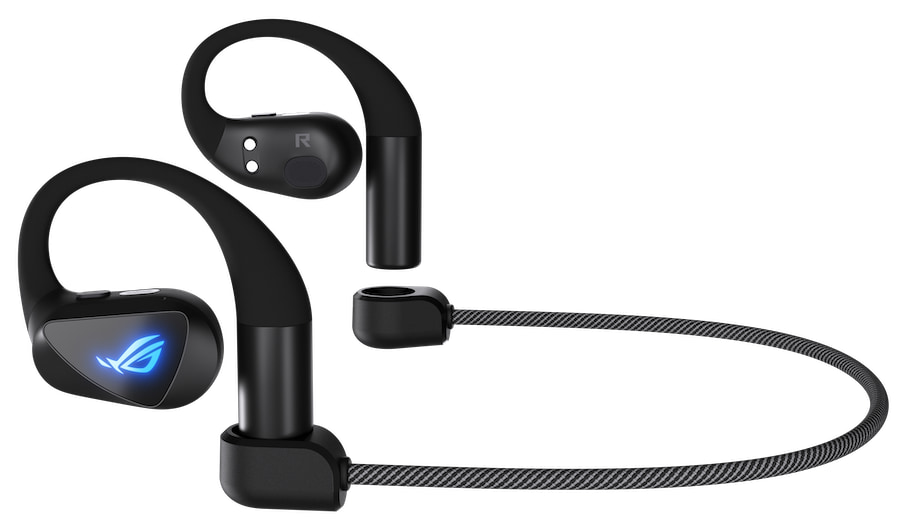
Best known for its laptops, gaming PCs, and high performance monitors, ASUS has steadily built out its audio lineup through its Republic of Gamers (ROG) division, targeting PC gamers who want the same level of engineering and performance from their headsets and earbuds. After recently introducing the ROG Kithara Open-back Planar Gaming Headset, ASUS is expanding the concept with something far more portable: the ROG Cetra Open Wireless Gaming Earbuds, designed for players and listeners who want immersive audio without completely shutting out the world around them.

Designed to combine immersive sound with real world situational awareness, the Cetra Open Wireless targets gamers, music listeners, and active users who want premium audio performance in a form factor better suited to life away from the desk.
ASUS ROG Cetra Open Wireless Features
Open Ear Design: The open ear earhook construction is ultra lightweight and designed for a comfortable, stable fit. This allows users to hear music, voice chat, and game audio while remaining aware of their surroundings.
Controls: Physical control buttons provide tactile feedback and remain responsive in rain or during intense activity. Unlike touch controls, they reduce accidental inputs and offer more consistent operation.
Drivers: The Cetra Open Wireless uses large 14.2 mm diamond like carbon coated drivers designed to deliver high resolution audio with crisp highs, clear mids, and solid bass impact. The diamond like carbon coating helps reduce distortion while improving clarity and soundstage, making the earbuds suitable for both gaming and music playback.

Dual Mode Connectivity: Supports seamless switching between Bluetooth and ultra low latency 2.4 GHz ROG SpeedNova wireless technology for synchronized in game audio and responsive gameplay.
Wireless Dongle: The included USB C 2.4 GHz wireless dongle supports passthrough charging, allowing users to power their device while the earbuds remain connected. This ensures uninterrupted gameplay, streaming, or voice chat.
Sound Modes: Built in sound modes let users tailor the listening experience. Phantom Bass enhances perceived low end response for more impact, while Immersion Mode reduces ambient noise to help maintain focus during gameplay or listening sessions.

Customization: Gear Link and Gear Link apps (iOS, Android) enable EQ fine-tuning, lighting options, and more to create personalized listening experiences.
IPX Rating: With an IPX5 splash resistance rating, the Cetra Open Wireless is designed to handle sweat, light rain, and everyday outdoor use.
Battery Life: On a full charge, the earbuds provide up to 16 hours of playback in Bluetooth mode with RGB lighting and sound modes disabled and the microphone muted. A quick 15 minute charge delivers up to 3 hours of listening time.
Quad Mic with AI Noise Cancellation: Four integrated microphones with an omnidirectional pickup pattern work alongside AI noise cancellation to capture voice communication with improved clarity during gaming, calls, or streaming.
Active Lifestyle Support: Designed for extended wear, the Cetra Open Wireless features ergonomic liquid silicone ear hooks and includes a detachable reflective neck strap for added stability during workouts and outdoor activities.

ASUS ROG Cetra Open Wireless Gaming Earbuds Specifications
| Asus ROG Model | Cetra Open |
| Product Type | Open-Ear Wireless Gaming Earbuds |
| Price | $229.99 |
| Wireless | 2.4Ghz Bluetooth |
| Support Platform | PC MAC PlayStation 4 PlayStation 5 Nintendo Switch iOS Android Bluetooth device |
| Driver Material | Diamond-Like Carbon Coated Diaphragm Drivers |
| Driver Size | 14mm |
| Headphones Impedance | 16 ohms |
| Headphones Frequency Response | 20Hz – 20kHz |
| Microphone Pick-up Pattern | Omnidirectional |
| Microphone Sensitivity | -38dB |
| Microphone Frequency Response | 100Hz – 8kHz |
| AI Noise Cancelling Microphone | Yes |
| Number of Channels | Stereo |
| Lighting | ASUS Aura RGB Lighting: Offers up to 16.8 million colors and includes four preset effects |
| Weight | 11g (earbuds) 116g (charging case) |
| Color | Black |
| Cable | 0.6m USB-C to USB-A charging cable |
| Package Contents | ROG Cetra Open Wireless Open-Ear Headphones Wireless 2.4 GHz USB-C dongle Neck Strap USB-C to USB-A charging cable Quick start guide Warranty booklet |
The Bottom Line
The ASUS ROG Cetra Open Wireless stands out by targeting a very specific intersection of users: gamers who want low latency wireless audio but also prefer the comfort and situational awareness of an open ear design. The inclusion of ASUS’ ROG SpeedNova 2.4 GHz wireless connection alongside standard Bluetooth makes these more versatile than most open earbuds, especially for players who move between PC, consoles, and mobile devices.
That flexibility is what makes the Cetra Open Wireless unique. Many open fit earbuds are designed primarily for fitness or casual listening, while ASUS is clearly aiming at cross platform gaming and everyday mobility in a single product.
There is no shortage of competition. Cleer Audio’s Arc 3 Gaming Edition targets gamers with a similar open ear concept, while Shokz OpenFit focuses more heavily on comfort and fitness use. Clip style alternatives such as TCL’s Crystal Clip and Sony’s LinkBuds Clip offer another take on the open ear category for users who want minimal ear fatigue during long listening sessions.
The ROG Cetra Open Wireless makes the most sense for mobile gamers, PC players who want a lightweight alternative to traditional headsets, and active users who prefer open ear awareness while listening to music or chatting online. If ASUS can deliver on its promises of low latency performance and solid sound quality, the Cetra Open could carve out a meaningful niche in one of the fastest growing segments of personal audio.

Price & Availability
The ASUS ROG Cetra Open Wireless Earbuds are available now for $229.99 at Amazon in black.
Tip: For those looking for an earbud that fits deeper in the ear, the ASUS ROG Cetra True Wireless Earbuds are available for $219.99 at Amazon in black or white.
Related Reading:


As if the traffic wasn’t already some of the worst in the state, Los Angeles drivers now have to deal with some of the highest fuel costs, as well. With so much uncertainty surrounding oil as global tensions continue to rise overseas, one Los Angeles gas station actually started charging people $8.21 a gallon to fill up.
While Gas Buddy says the statewide average currently sits around $5.26 a gallon (as of this writing), there’s nothing stopping a gas station from charging more than the other guys. It’s not a crime, either. California only has laws against price gouging during emergencies (though the state does reserve the right to investigate and penalize excessive margins outside of those scenarios).
It’s a pain point people are feeling not just in California but coast to coast as well. According to that same Gas Buddy data, the national average is above $3 in every state but Kansas and Oklahoma since the outbreak of war in Iran. And even then, they’re only a few cents away from crossing the threshold themselves. That’s on top of seasonal trends that typically send gas prices higher this time of year anyway.
Why gas is so much more expensive in California

If it feels like you’re always hearing about higher gas prices in California over all the other states, it’s because they have a few factors working against them. For one, the state’s excise taxes, environmental fees, and climate programs all contribute to the price people pay at the pump. California also requires a specialized cleaner-burning gasoline blend. That’s both more expensive to produce and made by a smaller number of refineries. In line with basic supply and demand economics, that gives them the freedom to charge more for it. To top it all off (no pun intended), less in-state gasoline production has led to an even higher demand.
Sure, you could say this one specific gas station is just trying to get media attention, but they might not be alone for long. Some state lawmakers fear that the combination of global instability and California’s unique fuel market could drive prices that high across the entire state. A recent report cited by state Sen. Suzette Valladares suggested gasoline could reach $8 per gallon statewide by the end of 2026 if current trends continue.

The Department of Defense is putting more pressure on employees to volunteer to support the Department of Homeland Security’s immigration crackdown.
In a February 19 memo sent to civilians across the DOD, secretary of defense Pete Hegseth wrote that he expects “every supervisor to encourage their civilian employees to volunteer. Leadership must continue to promote this detail program and educate their civilian employees on its importance.” The memo, which was titled “Department of War Guidance to Encourage Support to the Department of Homeland Security Southern Border and Internal Immigration Enforcement Missions,” was sent to thousands of civilian DOD employees. The memo was first reported by GovExec and was also viewed by WIRED.
The instructions follow a June 2025 memo in which Hegseth authorized civilian employees to be detailed to DHS. But an Army civilian employee who spoke to WIRED on the condition of anonymity for fear of retaliation says that there is “definitely more pressure” now, “at least on the supervisory chain.”
The DOD and DHS did not respond to a request for comment.
“I received the obligatory announcement email with the first memo when it came out, and no one has talked about it at all, so much so that I had forgotten about it entirely,” says the Army civilian employee. “I don’t know anyone who has taken the job.” In a statement from August 2025, the DOD claims that “nearly 500 DoD civilians have signed up to participate and bring their skill sets to the border security and immigration enforcement mission at the participating DHS agencies.”
“While details and other short-term professional development opportunities are common for Army civilians, I have never heard of supervisors being REQUIRED to approve such details,” they say.
The employee noted that, as part of the Trump administration’s efforts to cut back on government jobs in the name of “efficiency,” Hegseth has sought to cut the department’s workforce. “I have taken up the duties of three departed colleagues on top of the job I was hired for as a result,” they say. This means it would be difficult for the department to lose anymore staff or for workers to step away from existing projects. The employee described this kind of request to volunteer for another federal agency as “very not common.” It’s not like the Defense Department has any spare time at the moment, either: Hegseth and DOD leadership are currently engaged in directing the US’s role in conflict with Iran.
DOD employees who want to volunteer to be detailed to DHS need to apply through USAJobs. According to the job posting, the Federal Emergency Management Agency (FEMA), which is part of DHS, will be reviewing applications. Volunteers will not only be sent to the southern border, but to “several ICE and CBP facilities throughout the interior of the United States.”
While some volunteer roles appear to be mundane tasks like “data entry,” others appear to be in the thick of immigration enforcement operations. These include assisting ICE and CBP in “developing concepts of operation and campaign plans to execute internal arrests and raids as well as patrols along the Southwest Border”; assisting ICE and CBP in “managing the physical flow of detained illegal aliens from arrest to deportation, as well as manage associated data”; and “managing the logistical planning to move law enforcement personnel, operational capabilities, and support equipment across the United States.”
The memo is just the latest in a series of changes across the federal government meant to enforce president Donald Trump’s immigration agenda. At the Department of Housing and Urban Development, a new rule would bar families with immigrant members from receiving certain forms of support from the agency, and at the General Services Administration, staff have been asked to assist ICE in procuring new physical spaces across the country.


For more than a year, a Russian-speaking threat actor targeted human resource (HR) departments with malware that delivers a new EDR killer named BlackSanta.
Described as “sophisticated,” the campaign mixes social engineering with advanced evasion techniques to steal sensitive information from compromised systems.
It is unclear how the attack begins, but researchers at Aryaka, a network and security solutions provider, suspect that the malware is distributed via spear-phishing emails.
They believe that targets are directed to download ISO image files that appear as resumes and are hosted on cloud storage services, such as Dropbox.
One malicious ISO analyzed contained four files: a Windows shortcut (.LNK) disguised as a PDF file, a PowerShell script, an image, and a .ICO file.

Source: Aryaka
The shortcut launches PowerShell and executes the script, which extracts data hidden in the image file using steganography and executes it in system memory.
The code also downloads a ZIP archive containing a legitimate SumatraPDF executable and a malicious DLL (DWrite.dll) to load using the DLL sideloading technique.

Source: Aryaka
The malware performs system fingerprinting and sends the information to the command-and-control (C2) server, and then performs extensive environment checks to stop execution if sandboxes, virtual machines, or debugging tools are detected.
It also modifies Windows Defender settings to weaken security at the host, performs disk-write tests, and then downloads additional payloads from the C2, which are executed via process hollowing, inside legitimate processes.
BlackSanta EDR killer
A key component delivered in the campaign is an executable identified as the BlackSanta EDR killer, a module that silences endpoint security solutions before deploying malicious payloads.
BlackSanta adds Microsoft Defender exclusions for ‘.dls’ and ‘.sys’ files, and modifies a Registry value to reduce telemetry and automatic sample submission to Microsoft security cloud endpoints.
The researchers’ report (PDF) notes that BlackSanta can also suppress Windows notifications to minimize or completely silence user alerts. The core function of BlackSanta is to terminate security processes, which it does by:
- enumerating running processes
- comparing the names against a large hardcoded list of antivirus, EDR, SIEM, and forensic tools
- retrieving the matching process IDs
- using the loaded drivers to unlock and terminate those processes at the kernel level

Source: Aryaka
Aryaka did not share details about the target organizations or the threat actors behind the campaign, and couldn’t retrieve the final payload used in the observed case, as the C2 server was unavailable at the time of their examination.
The researchers were able to identify additional infrastructure used by the same threat actor and discovered multiple IP addresses related to the same campaign. This is how they learned that the operation had been running unnoticed for the past year.
Looking at the IP addresses, the researchers uncovered that the malware also downloaded Bring Your Own Driver (BYOD) components that included the RogueKiller Antirootkit driver v3.1.0 from Adlice Software, and IObitUnlocker.sys v1.2.0.1 from IObit.
These drivers have been used in malware operations (1, 2) to gain elevated privileges on the compromised machine and suppress security tools.
RogueKiller (truesight.sys) allows manipulation of kernel hooks and memory monitoring, while IObitUnlocker.sys allows bypassing file and process locks. This combination provides the malware with low-level access to system memory and processes.
Aryaka researchers say the threat actor behind the campaign shows strong operational security and uses context-aware, stealthy infection chains to deploy components such as BlackSanta EDR.

Malware is getting smarter. The Red Report 2026 reveals how new threats use math to detect sandboxes and hide in plain sight.
Download our analysis of 1.1 million malicious samples to uncover the top 10 techniques and see if your security stack is blinded.

from the the-death-of-informed-consensus dept
Ideally, the U.S. public is supposed to be able to comment on government policy proceedings, and the government is supposed to listen to that input.
Of course, it doesn’t really work that way: For years we’ve noted how U.S. regulatory comment proceedings are full of bots and fake comments from industries trying to game regulators, and make shitty policy (giant mergers, mindless deregulation, the elimination of consumer protection) seem like it has broad public support (remember when dead people opposed net neutrality?).
Unsurprisingly the U.S. hasn’t done anything to seriously rein in this problem. And when officials do act, it tends to be largely toothless, resulting in the problem getting steadily worse.
And that was before AI made it significantly easier for bad actors to quickly automate this sort of gamesmanship. Washington State has been exploring the RADICAL SOCIALIST ANTIFA EXTREMIST idea of having the state’s rich actually pay their taxes. That’s not been received particularly well by the extraction class, which has been making empty promises about leaving the state.
Recently the state opened up the public comment system to input, and not too surprisingly it was immediately flooded with upwards of 37,000 fake comments opposing the idea of taxing the rich:
“Beyond those individual cases, organizers said they identified 37,824 additional opposition sign-ins generated through thousands of duplicate name submissions across House and Senate hearings combined. In more than 15,000 instances, they said, identical names were entered repeatedly — sometimes 50 to 100 times. Many of the submissions were filed late at night or in rapid succession.”
The state’s wealthy (and the lawmakers paid to love them) are still trying to claim that the flood of provably false opposition to the bill only supports their claims that nobody wants the state’s wealthiest to actually pay a little more for regional societal improvements:
“Opponents of the tax, including state Republican leaders and hedge fund manager Brian Heywood, have leaned on the wave of opposition sign-ins as proof the proposal lacks public support.
“More than 60,000 people signed in against SB 6346 when it received a rushed hearing in the Senate,” Sen. John Braun, R-Centralia, said in a Feb. 16 statement. “That is so impressive that Democrats have tried to say bots are responsible, even though the Legislature blocks bots.”
(The legislature did not effectively block bots).
These are, it might go without saying, generally the same kinds of folks waging an all out war on U.S. journalism. More broadly this is a war on informed consensus, and it doesn’t take too much time looking around to see which side of this particular war is winning. Regardless of what policy you support, we’re supposed to, at the very least, be capable of a useful, honest conversation about policy.
But as we noted way back when the telecom industry was caught stuffing the FCC comment system with fake comments by fake and dead people opposing net neutrality (they even used my name, if you recall), you just know your position is a winner when you have to create entirely fake people to support it.
Filed Under: fake comments, law, public input, tax the rich, washington state

The 90s Series Finale So Insulting Its Star Refuses To Acknowledge It

Home Secretary grants police request to ban Al Quds Day march

The 2 Worst-Hit Stocks Since the Iran War Started Drop Again. Why There’s Hope.


-
Business4 days ago
Form 8K Entergy Mississippi LLC For: 6 March
-

 News Videos2 days ago
10th Algebra | Financial Planning | Question Bank Solution | Board Exam 2026
-

 Fashion4 days ago
Weekend Open Thread: Ann Taylor
-

 Tech6 days ago
Bitwarden adds support for passkey login on Windows 11
-

 Crypto World1 day ago
Paradigm, a16z, Winklevoss Capital, Balaji Srinivasan among investors in ZODL
-
 Sports5 days ago
499 runs and 34 sixes later, India beat England to enter T20 World Cup final | Cricket News
-

 Sports3 days ago
Three share 2-shot lead entering final round in Hong Kong
-

 Sports3 days ago
Braveheart Lakshya downs Lai in epic battle to enter All England Open final | Other Sports News
-

 Politics5 days ago
Top Mamdani aide takes progressive project to the UK
-

 Business10 hours ago
ExxonMobil seeks to move corporate registration from New Jersey to Texas
-

 NewsBeat5 days ago
Piccadilly Circus just unveiled ‘London’s newest tourist attraction’ and it only costs 80p to enter
-

 Entertainment4 days ago
Hailey Bieber Poses For Sexy Selfies In New Luscious Lip Thirst Traps
-

 Business2 days ago
Search for Nancy Guthrie Enters 37th Day as FBI Probes Wi-Fi Jammer Theory
-
 NewsBeat1 day ago
Pagazzi Lighting enters administration as 70 jobs lost and 11 stores close across Scotland
-

 Tech1 day ago
Despite challenges, Ireland sixth in EU for board gender diversity
-
Entertainment6 days ago
Harry Styles Has ‘Struggled’ to Discuss Liam Payne’s Death
-

 Crypto World6 days ago
New Crypto Mutuum Finance (MUTM) Reports V1 Protocol Progress as Roadmap Enters Phase 3
-

 Tech6 days ago
ACIP To Discuss COVID ‘Vaccine Injuries’ Next Month, Despite That Not Being In Its Purview
-

 Business1 day ago
Search Enters 39th Day with FBI Tip Line Developments and No Major Breakthroughs
-
 NewsBeat6 days ago
Good Morning Britain fans delighted as Welsh presenter returns to host ITV show