Tech
Nvidia posts another record quarter, predicts explosive AI-driven growth will last through 2028

The takeaway: Nvidia this week reported blockbuster results for the quarter ending in July 2026 and issued ambitious revenue guidance that topped Wall Street consensus estimates. The company’s stock jumped more than 7% in early trading on Thursday after Nvidia confirmed that it expects demand for high-end AI accelerators to remain strong in the near future.
According to Nvidia’s official filing with the SEC, quarterly revenue for the three-month period ending in July 2026 reached $96.22 billion, beating the $91.90 billion expected by Wall Street. Net income more than doubled to $53.95 billion, up from $24.76 billion in the previous quarter. Adjusted earnings came in at $2.22 per share, higher than the $2.08 expected by analysts.
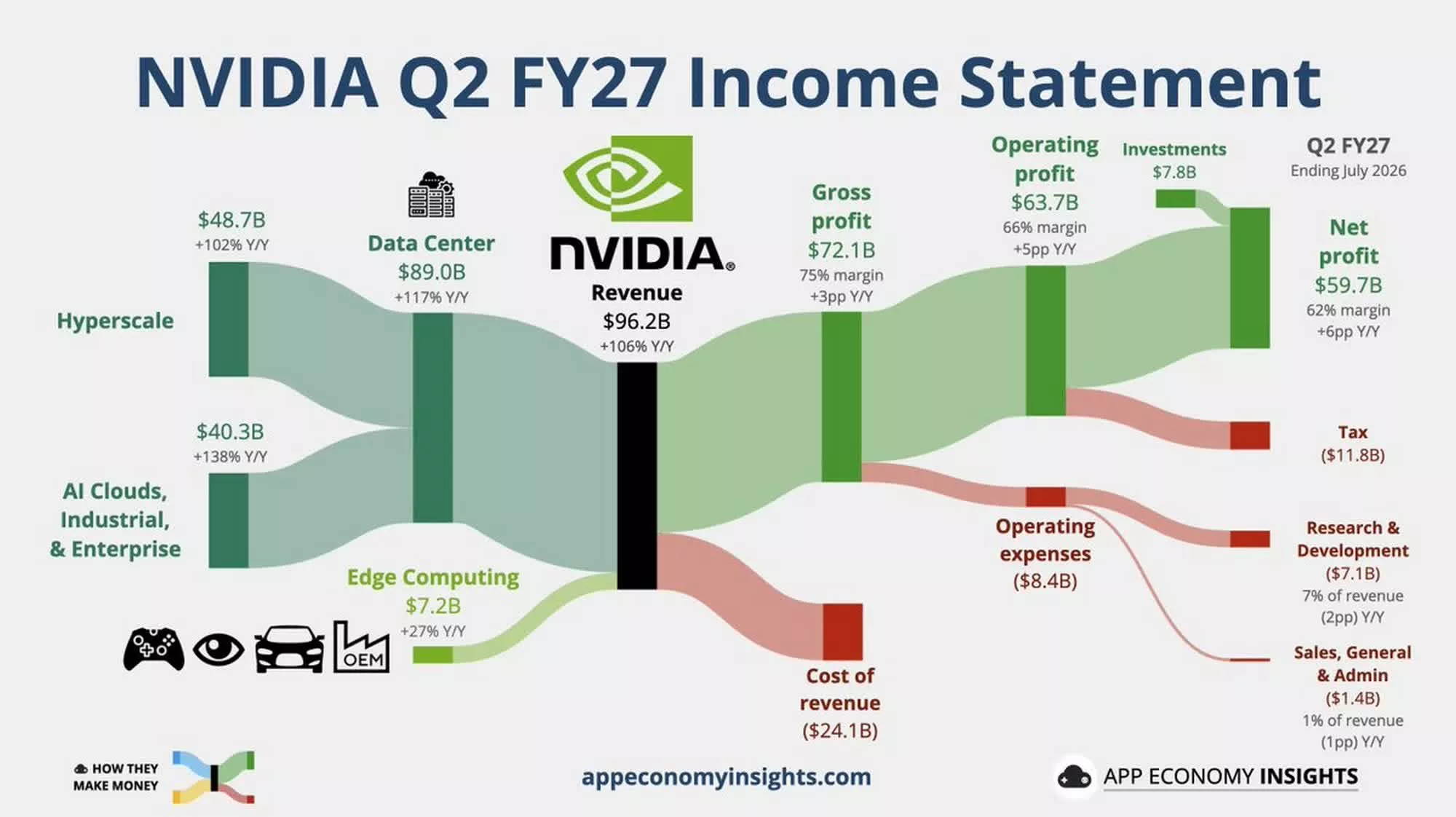
Credit: App Economy Insights
In the current quarter, Nvidia expects revenue to reach around $108 billion. The projection is largely in line with analyst estimates, with most banks and brokerage firms forecasting sales between $105.2 billion and $110 billion. In fiscal 2028, the company expects revenue to grow by around 70%, significantly higher than the 45% projected by analysts.
Speaking to reporters during a post-earnings conference call, Nvidia CFO Colette Kress claimed that demand for AI accelerators is seeing an uptick among data center customers, despite warnings from many institutional investors about a potential AI bubble. “Customers’ forecasts point to our growth doubling next year,” she added.
During the same conference call, Nvidia CEO Jensen Huang noted that the company’s next-generation AI accelerator, codenamed Vera Rubin, is now in production. The so-called AI “Superchip” was officially unveiled at CES 2026 in Las Vegas in January after being showcased at the company’s GPU Technology Conference (GTC) in Washington last October.
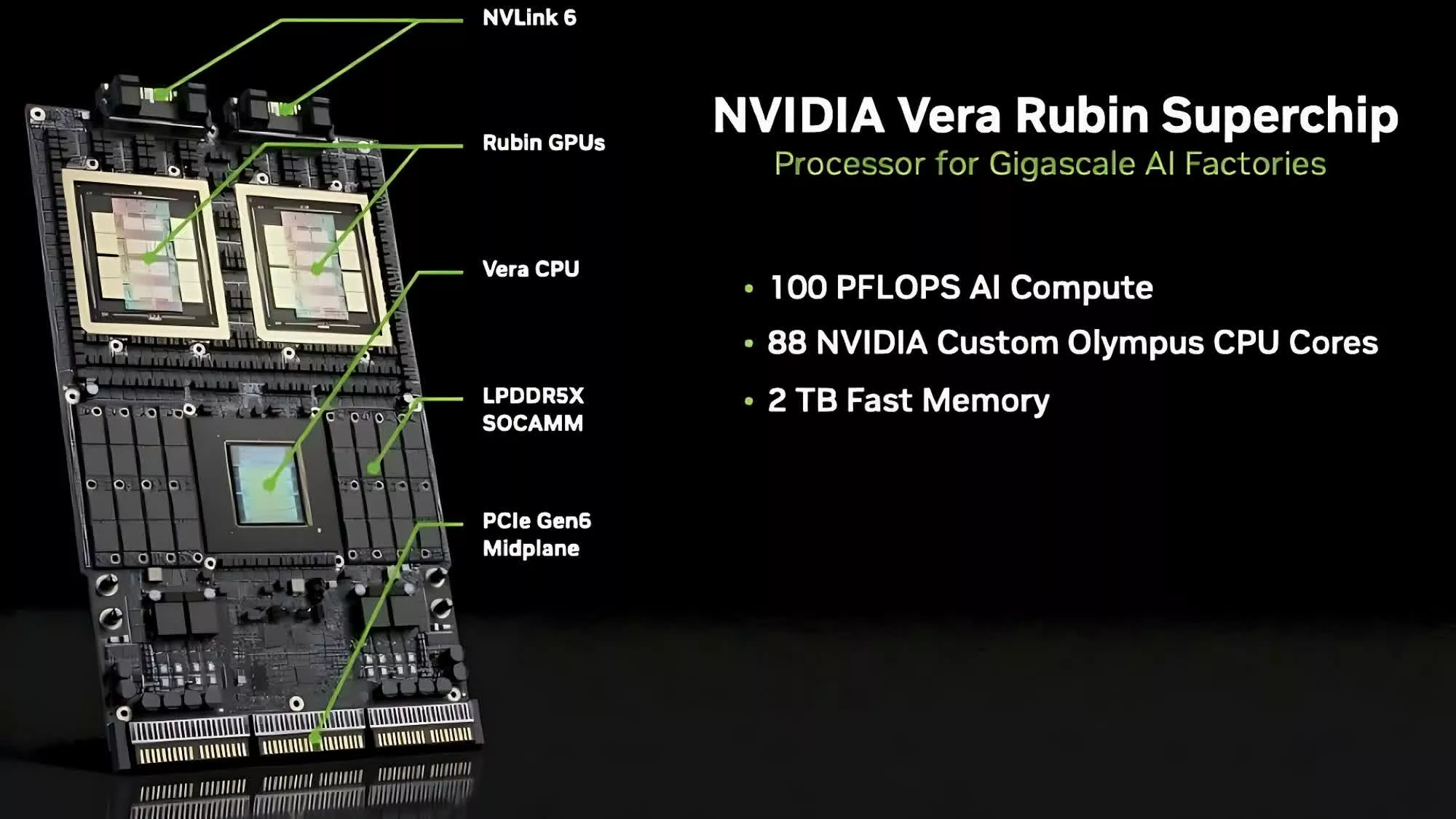
The ambitious projections and assurances from Nvidia’s top executives regarding continued demand for AI hardware appear to have eased some investor concerns about a potential AI bubble. However, uncertainties remain over the supply constraints faced by Nvidia’s main contract manufacturer, TSMC, as well as the rising cost of high-bandwidth memory.
Nvidia made its name as a GPU designer for gaming PCs and professional workstations, but its recent pivot to AI chips has propelled its market capitalization to more than $5 trillion. The company is now preparing to expand its AI hardware business beyond data centers and into the consumer market by teaming up with Perplexity to launch the “Portable Computer” AI agent, which is designed to run locally on PCs and workstations.
You must be logged in to post a comment Login