Tech
Ofra Haza, Kefaya & Elaha Soroor, Box Office Horror and Braai Time: Editor’s Round-Up

The first proper holiday stretch of summer is here: Canada Day on July 1, America’s 250th birthday on July 4, and a few glorious days in which flags, fireworks, traffic, and questionable potato salad that took 3 days to assemble will compete for public attention. Before the inflatable eagle goes up and someone declares a gas grill “close enough,” this Editor’s Round-Up begins with Ofra Haza, whose connection to Yemeni musical tradition remains as powerful as ever, and Songs of Our Mothers from Kefaya and Afghan Hazara singer Elaha Soroor.
Released in 2019, the Bella Union album reworks folk songs traditionally performed by Afghan women into something vivid, defiant, and far more essential than another AI-generated summer playlist.
At the multiplex, horror has been having a rather good June while some much costlier studio ideas contemplate their own shallow graves. Toy Story 5 is leading the month, but Obsession, Scary Movie, and Backrooms have all landed near the top of the domestic chart, proving once again that a sharp premise, actual suspense, and an audience willing to be scared can still accomplish what nine-figure franchise maintenance cannot.

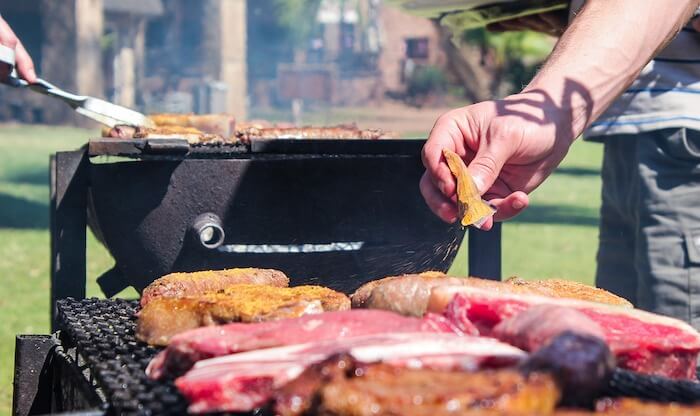
With Canada preparing for July 1 and the U.S. marking 250 years of independence on July 4, the soundtrack is ready, the movies are weirdly scary, and there is only one sensible next move: get the backyard braai going before somebody serves a sad burger directly from the package.
Ofra Haza, Elaha Soroor, and Middle Eastern Music That Makes Your Holiday Food Taste Rather Bland


Ofra Haza was one of Israel’s great popular singers: a Tel Aviv-born daughter of Yemeni Jewish immigrants who took the musical language of her family and community to a global audience without sanding off its character. Growing up in the working-class Hatikva neighborhood, she began singing young, became a major Israeli star, and then broke internationally with Yemenite Songs and “Im Nin’alu,” her electrified interpretation of poetry by the 17th-century Yemeni rabbi Shalom Shabazi.
She was not simply a crossover success. Haza helped place Mizrahi and Yemenite Jewish music at the center of the conversation, where it belonged, while proving that ancient melodies and modern pop could meet without either becoming a museum piece.
Haza was already part of my musical world as I began my teen years: elegant, dramatic, spiritually charged, and nothing like the mostly Anglo pop culture surrounding me in Toronto. As an Ashkenazi kid, I did not yet understand how much of that sound would eventually feel like home.

Nearly 21 years in the Sephardic and Syrian Jewish world later, I hear Haza differently: not as an exoticized “world music” detour, but as an artist carrying language, faith, memory, and family across generations. In Deal, NJ, a last name like White does not earn automatic kibbeh, yebra, or lachmagine privileges. White by name, perhaps, but not by musical taste or what ends up on my plate. Haza died far too young in 2000, at 42, from AIDS-related complications; the loss still feels enormous because there was nobody else quite like her.


The move from Ofra Haza to Songs of Our Mothers is not a neat geographical handoff so much as a reminder that women’s voices, tradition, and resistance do not require a marketing department to be powerful. And credit where it is due: John DeVore turned me on to this one. The founder of DeVORE Fidelity builds his exceptional loudspeakers by hand in the Brooklyn Navy Yard, and he has the equally important qualification of having extraordinarily good taste in music. Not every speaker designer’s playlist survives the first side of an LP.
Released by Bella Union in 2019, Songs of Our Mothers pairs London collective Kefaya, founded by guitarist Giuliano Modarelli and keyboardist Al MacSween, with Elaha Soroor, the Afghan Hazara singer who was born in Iran to Afghan refugee parents and later fled Afghanistan after threats connected to her music and public profile. Soroor chose a collection of folk songs traditionally sung by Afghan women; Kefaya surrounds her voice with an adventurous but never cluttered mix of spiritual jazz, dub, Indian classical music, and electronica.
The result is not “world music” wallpaper for people who own one tasteful rug. These are songs of joy, grief, sensuality, survival, and defiance, carried forward by a singer who understands exactly what it costs for a woman’s voice to be heard. Soroor is commanding throughout, while Kefaya gives the material shape and propulsion without turning it into a fusion-food-court mess. Songs of Our Mothers belongs on the shortlist of records that reward serious listening, preferably through great speakers made in a former shipyard by someone who clearly knows the difference between music and noise.
When Will Hollywood Learn Its Lesson?
Hollywood keeps insisting that audiences only leave the couch for giant franchises and nine-figure spectacle. Then three comparatively modest horror titles show up with actual hooks, creators who understand their audiences, and budgets that do not require the GDP of a small European nation to recoup. Curry Barker’s Obsession was made for roughly $750,000, though Focus Features reportedly paid $15 million to acquire it, and has reached about $370.1 million worldwide. Kane Parsons’ Backrooms cost around $10 million and has grossed roughly $330.1 million worldwide.
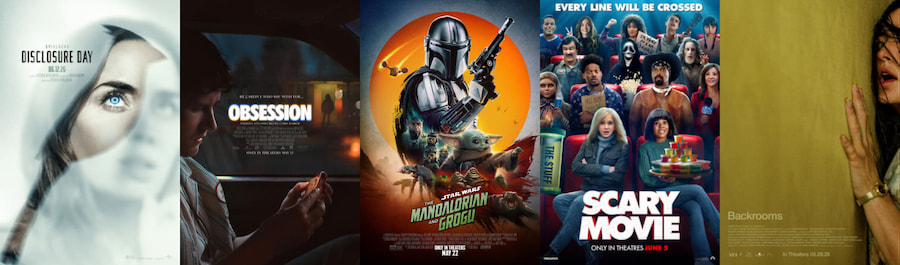

The Wayans brothers’ Scary Movie revival, hardly micro-budget but still a relative bargain at $30 million, has earned about $215.3 million worldwide. Together, those three films represent roughly $40.75 million in production spending and $915.5 million in global ticket sales. That is not a trend. That is a brick through the executive-suite window.
The comparison is especially brutal. Disney’s The Mandalorian and Grogu has taken in about $322 million worldwide against a reported $165 million production budget. Spielberg’s Disclosure Day stands at roughly $193.7 million worldwide from a reported $115 million production budget, with reports also placing its marketing spend near $80 million and its theatrical break-even point around $300 million.
To be exact, Obsession has beaten both films worldwide; Backrooms has also moved past The Mandalorian and Grogu; and Scary Movie has overtaken Disclosure Day but remains behind the Star Wars release.
So no, each film did not individually bury both Disney and Spielberg. Collectively, however, they have made the argument for smaller, audience-savvy genre filmmaking with the subtlety of a knife through a conference-table budget presentation. I am exactly the sort of glutton for punishment who watches all of this stuff, and even I came away from The Mandalorian and Grogu thinking the helmet should have stayed on.
As for Spielberg’s Disclosure Day, audiences appear to have made their own disclosure: enough already. This is the same filmmaker who gave us Jaws, Close Encounters of the Third Kind, Raiders of the Lost Ark, Schindler’s List, and Jurassic Park. Not every swing clears the fence, but this one barely made it out of the dugout.
The reason for this success is not complicated. Obsession and Backrooms arrived with built-in online communities, creators who already knew how younger audiences discover and discuss horror, and concepts that could be understood in a trailer without requiring six prior movies, a Disney+ subscription, and a family tree diagram. Horror also remains one of the few genres that creates a genuine communal reason to go to theaters: people want to jump, laugh, scream, and then argue about the ending with strangers in the lobby.
The lesson is not that every studio should chase liminal yellow hallways, possessed girlfriends, or another masked killer with a reboot clause. It is that original ideas, modest costs, and filmmakers who understand their audience can outperform expensive brand maintenance. Hollywood will almost certainly forget this by Tuesday.
A Braai, Not a Barbecue

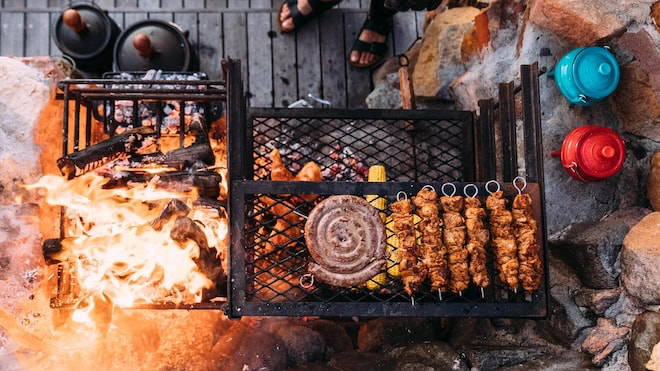
A braai is, at its most basic, a South African barbecue. But in practice, it is usually more than throwing meat on a grill: it is a slower social ritual built around wood or coals, family and friends. Think boerewors, lamb chops, sosaties, pap, chakalaka, braaibroodjies, and enough opinion about fire management to make an audiophile cable forum seem emotionally stable.
Yes, Americans barbecue. We own grills, we burn burgers, we argue about brisket, and some of us even deploy propane with the grim confidence of people who think convenience is a personality. But a braai is not primarily about feeding people quickly. It is about the ritual around the coals: the host, the pace, the conversation, the shared labor, and the understanding that nobody should be rushing the fire.
Call it a barbecue if you must, but do not be surprised when a South African regards your gas grill the way I regard cable manufacturers who boast online that their “products” are best appreciated by high-net-worth men chasing a more holographic soundstage: like biltong displayed in a velvet case, something perfectly good made needlessly precious for people who confuse price with taste.
The odd thing is that I grew up around South Africans and nobody ever mentioned braais. Not once. I learned about them much later in life, when I had enough sense to understand that food traditions are rarely just about food. They are geography, family, memory, politics, hospitality, and occasionally a very serious argument over whether somebody has touched the meat before the braaimaster was ready.
I had hoped to experience a proper one in Cape Town. That is not happening now, which is a genuine pity. There are worse things to miss, obviously, but few with the same combination of smoke, generosity, and the strong possibility that someone will insist you have another lamb chop.

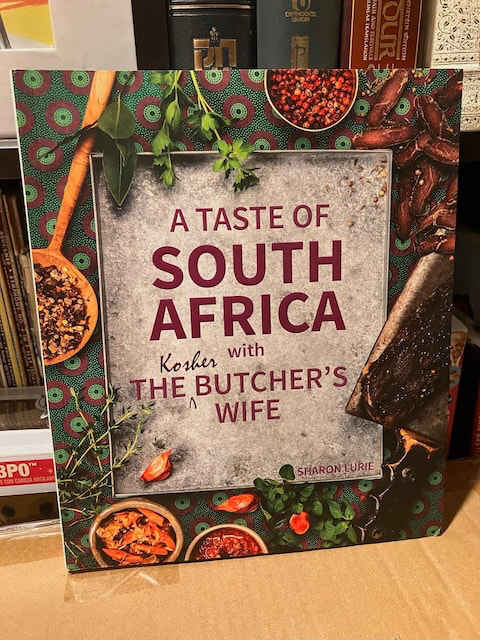
Before you attempt your first proper braai, buy Sharon Lurie’s A Taste of South Africa with the Kosher Butcher’s Wife. It was a gift, I use it often, and it is magnificent: a smart, generous collection that brings South African classics and Jewish cooking together. There are braai recipes, biltong, ribs, roosterkoek, and proper meat dishes, and enough flavor to expose the limits of most July 4th menus.
Consider it required reading before you appoint yourself braaimaster, start giving orders around an open flame, and discover that Table Mountain is not the only thing in South Africa that will make you look small.
Gelukkige Onafhanklikheidsdag!
You must be logged in to post a comment Login