In Singapore, few snack brands are as ubiquitous as Old Chang Kee. Chances are, you’ve grabbed a curry puff, sotong head, or fried chicken wing from them at some point.
After all, the brand operates more than 80 outlets across Singapore, and nearly 30 more overseas—a scale that cements its status as one of the country’s most recognisable homegrown F&B brands.
But what many might not know is that the company’s international ambitions haven’t always gone according to plan. After tasting failure in its earlier overseas push, it took years before Old Chang Kee decided to venture out again—this time, more careful and far more calculated.
So what went wrong the first time around? And what is it doing differently now to avoid repeating history?
Advertisement
An aggressive expansion push
Old Chang Kee initially began modestly in 1956, when Hainanese immigrant Chang Chuan Boon set up a small curry puff stall at Koek Road. After stints at Albert Street and later Mackenzie Road near Rex Cinema, its puffs, sold at S$0.35 each, became affectionately known as the “Rex curry puffs.”
Old Chang Kee stall in the ’50s vs its flagship coffee house at Rex today./ Image Credit: Old Chang Kee
The turning point for the business came in 1986, when Chang retired and sold the business to Han Keen Juan. With S$70,000 pooled from investors, Han took over the Mackenzie Road stall and set about modernising what had been a humble hawker operation.
He rebranded the business with a new logo and the tagline “Old Chang Kee—it’s a better puff,” standardised recipes, mechanised production, and slowly expanded across Singapore.
By 1991, the company had 12 outlets and revenue had more than doubled to S$1.6 million. A factory in Ubi was also set up, churning out over 10,000 curry puffs a day.
Then came the brand’s aggressive overseas push.
Advertisement
Between 1993 and 1997, Old Chang Kee rapidly expanded through franchises into eight countries, including Malaysia, Indonesia, China, Japan, India and even South Africa. Sales in Indonesia and Malaysia alone surpassed S$1 million by 1994.
Declining sales & mounting quality complaints
While the growth was rapid, it was unfortunately difficult to sustain.
Overseas franchisees began facing declining sales and mounting complaints over product quality and consistency.
Image Credit: Old Chang Kee
The brand’s CFO, Song Yeow Chung, told Vulcan Post that during its first overseas push, Old Chang Kee exported only curry powder, leaving franchisees to prepare the rest of the spice mix on their own, a model that led to variations in taste across markets.
Brand familiarity was another challenge.
Advertisement
Song noted that in the 1990s, international travel was far less common than it is today. Consumers in overseas markets were largely unfamiliar with Old Chang Kee and had little prior exposure to its products or brand identity.
By 2002, the overseas outlets had eventually become unprofitable. Han made the decision to terminate all 24 franchises, incurring losses of around S$50,000.
Doubling down on Singapore
Image Credit: Old Chang Kee
While its international ventures faltered, Old Chang Kee doubled down on its Singapore growth, recording S$14 million in sales that year.
Today, the brand operates 77 Old Chang Kee outlets, alongside two sub-brands, including Curry Times, a curry‑themed restaurant concept, and Dip N Go, a grab‑and‑go concept focused on snack items paired with sauces, bringing its total footprint in Singapore to around 82 outlets.
Image Credit: Dewi Abiha, Anderson Ooi via Google Reviews
Consistency is at the heart of its strategy. The curry puff recipe—a core trademark—has remained unchanged over the years, so much so that it is locked in a safe, inaccessible even to the CFO.
While the curry puff remains the brand’s flagship product, Old Chang Kee has also gradually diversified its offerings and expanded its menu.
Advertisement
“We have products like the steamed curry bao, big curry buns, and we’ve collaborated with other players to introduce a curry sandwich. We’re trying to innovate beyond the core product, but not moving too far away from it,” explained Song.
Seasonal ranges, like the chicken mushroom puff, are tested in small batches. If they resonate with customers, they are added permanently to the menu.The brand leverages its large central kitchen, capable of producing up to 50,000 curry puffs daily, to run these experiments.
“It is a constant series of small experiments,” Song said. “The experiments don’t cost us a lot, and are easily reversible in case they don’t work out.”
These efforts earned Old Chang Kee the Overall Winner Award in the Product Excellence category at the Singapore Manufacturing Federation’s inaugural Singapore Innovation and Manufacturing Excellence Awards (SIMEA) 2026, recognising its commitment to quality, innovation, and pushing boundaries in the manufacturing sector.
Advertisement
A more measured overseas strategy
The same approach now guides the brand’s overseas strategy.
When the company officially re‑entered international markets in 2005, it prioritised strict quality control, establishing regional factories to ensure its curry puffs tasted consistent across borders.
Instead of shipping curry powder, the company now sends ready-made curry paste, reducing preparation steps for franchisees. Products are also adapted for local tastes, with roughly 70% of offerings maintaining the core identity and 30% customised.
Old Chang Kee outlets in Indonesia./ Image Credit: RnC Studio via Shutterstock.com
Markets are also chosen more strategically, with a focus on countries like Malaysia and Indonesia, where fried foods are popular, and curry flavours resonate with local palates. The company operates around 30 outlets in Indonesia, run by a master franchisee, and three in Malaysia.
London is another market the company has targeted. While it may seem unconventional, the move into the country in 2017 is part of Old Chang Kee’s strategy to experiment internationally while leveraging Singapore’s culinary reputation.
Advertisement
The move seems to have worked out: the company has been in London for nearly a decade, appealing to consumers with a taste for curry.
Old Chang Kee’s London outlet./ Image Credit: Tripadvisor
But not all international experiments have been as successful for Old Chang Kee, such as its expansion into Perth.
While the market was initially chosen for its large population of Malaysians and Singaporeans, the specific outlet location—a suburban shopping centre with limited footfall—ultimately failed to attract enough customers, leading to its closure.
The company is now exploring whether relocating to a city-centre location could make the venture viable.
Growing in the retail & non-retail space
Image Credit: Michelin Guide/ United Square
As a homegrown F&B brand with decades of experience, these lessons have played an important role in shaping Old Chang Kee’s strategy, guiding its decisions both at home and abroad.
When asked about future overseas ventures, the company remains open to new opportunities—albeit with a more careful and calculated approach.
Advertisement
At the same time, maintaining and growing its Singapore footprint remains just as important, particularly in a competitive and ever-changing F&B landscape.
“Currently, we have 82 outlets in Singapore,” Song said. “For comparison, Starbucks has around 140 outlets and McDonald’s, over 150. So there’s still leeway for us to grow to 140 or 150 outlets—there’s promise in Singapore for further expansion.”
Beyond just retail, Old Chang Kee is also exploring other revenue streams to drive growth.
While over 90% of revenue still comes from its stores, the brand’s non-retail segments, including delivery, catering, and event services, are expanding “much faster,” and are seen as key areas for future growth.
Advertisement
Delivery and packaged meals allow the company to reach more customers without the constraints of storefront manpower, while catering ranges from small office orders to full-scale corporate events. The brand’s O’ My Darling food truck also participates in national initiatives, such as the National Day Parade, offering free snacks to participants while boosting brand visibility.
Song noted that these non-retail initiatives are supported by Old Chang Kee’s strong brand recognition and Halal certification.
“Businesses already know and trust Old Chang Kee, so they’re willing to order our bento meals or catered snacks. Being Halal-certified also means our products can be served to everyone, which is a big advantage for corporate clients.”
Read other articles we’ve written on Singaporean businesses here.
Featured Image Credit: Old Chang Kee/ @eileen_eats_alotvia Instagram
Apple’s iPhone 5C is apparently getting a second life, and this time it is not because it was a hidden gem that was slept on.
In an NBC News segment, the network highlights a small but noticeable social media comeback for Apple’s old iPhone 5C. The sudden popularity is largely driven by Gen Z users who seem drawn to its colorful design, “throwback” camera quality, and overall retro charm.
The story is less about raw utility and more about the vibes. So after the iPod, the colorful iPhone is the next to get a revival.
Apple
Why Gen Z is suddenly into the iPhone 5C again
The appeal behind the iPhone 5C is pretty simple. Gen Z is drawn to how different it feels from modern phones. Today’s smartphones mostly look like polished slabs of metal and glass. The iPhone 5C, on the other hand, is bright, plastic, cheerful, and a little awkward in a way that now reads charming rather than cheap.
NBC notes that another reason for the renewed interest is the camera. One of the on-screen captions specifically notes that the iPhone 5C is trending thanks to its grainy photo quality. The softer and lower image quality fits neatly into the broader social media obsession with imperfect digital aesthetics, particularly with older digital cameras.
Advertisement
So what used to feel outdated now reads as character.
Apple
Nostalgia plays a big role
Back when it was first released in 2013, the iPhone 5C failed to meet sales expectations because it failed to be affordable, despite its “budget iPhone” pitch. It lacked the popular Touch ID, and the plastic was perceived as “cheap”.
The segment brought in Clay Routledge, an existential psychologist and author of Past Forward, to explain the deeper pull behind retro tech. He also gives the story a broader cultural frame. The comeback is not just about one old iPhone model. It is about how younger users are increasingly drawn to gadgets that feel less optimized, less overwhelming, and less trapped in today’s hyper-polished digital culture.
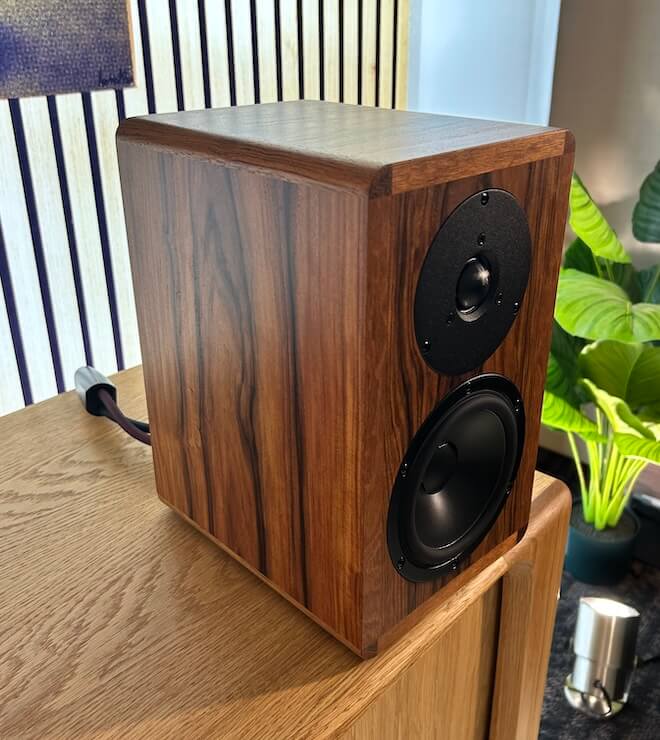
At AXPONA 2026, where six-figure systems are aplenty and it’s not unusual to stumble into rooms pushing past $500,000 or even flirting with $1 million, most of what’s on display exists for a very small slice of the population. That’s part of the spectacle, but it’s not always where the story is. The Dynaudio Legend bookshelf speakers stopped me cold because they don’t rely on excess to make their point. Compact, handcrafted in Denmark, and built around real-world usability, they deliver the kind of scale, detail, and physical presence that makes a lot of those megabuck systems feel like overkill. In a show full of gear chasing perfection at any cost, this is the rare product that actually makes you question where that line should be drawn — which is $7,000 in this particular case.
Danish Craft, No Shortcuts: Why the Dynaudio Legend Stands Out
Listening to music should feel like a break from everything else. At a busy show, that’s harder than it sounds—but the Dynaudio Legend made a convincing case without trying too hard. That was clear before I even realized they’re using Dynaudio’s best tweeter here, which explains a lot about the control and refinement I was hearing.
Dynaudio doesn’t cut corners. It never has. That shows up here in a straightforward way: consistent parts, consistent tuning, and a compact design that doesn’t try to overreach. What changes from pair to pair is the finish.
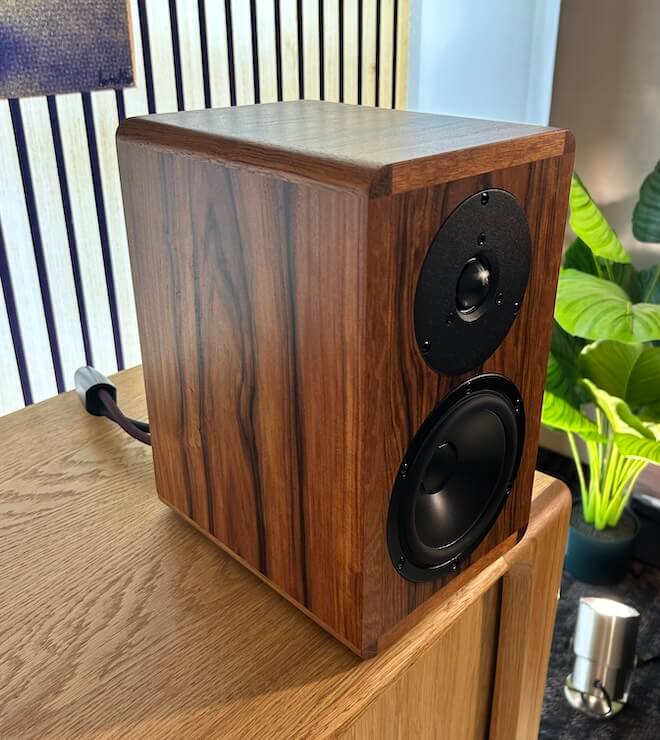
Each cabinet uses natural rosewood veneer that’s selected and matched by eye, paired with Jatoba hardwood corner pieces that complement the grain. Final assembly is done by hand in Denmark. No two pairs look exactly the same, but they’re all built to the same standard.
The finish deserves mention because it’s noticeably better in person than in photos—more depth, more texture, less “factory uniform.” It’s the kind of detail you notice up close, not from across the room. And for those losing their minds online because they don’t look like $7,000 loudspeakers—the reality is they look sensational in person, and that’s what actually matters.
Advertisement
I’ll admit they got my attention for practical reasons as well. As I think about building out a home office and splitting time between New Jersey, Florida, and Texas; this is the type of speaker that makes sense: compact, well-built, and visually distinct without being over the top.
There’s nothing complicated about the pitch here. Every pair is unique in appearance, but the approach is consistent. And that consistency is really the point.
Specifications and System Context
The Dynaudio Legend is a compact two-way, rear-ported bass reflex bookshelf speaker designed for smaller spaces and more focused listening setups. It uses a 28mm Esotar 3 tweeter with Hexis; Dynaudio’s top-tier high-frequency driver paired with a single 15cm MSP (magnesium silicate polymer) mid/bass unit. The crossover is set at 3,500Hz with a second-order topology, and the rated impedance is 6 ohms.
On paper, the sensitivity is a modest 83 dB (2.83V/1m), with frequency response specified from 60Hz to 28kHz. Power handling is rated at 150 watts, which tells you everything you need to know: these are not speakers you throw on the end of a budget integrated and call it a day. They need current, and they respond to it.
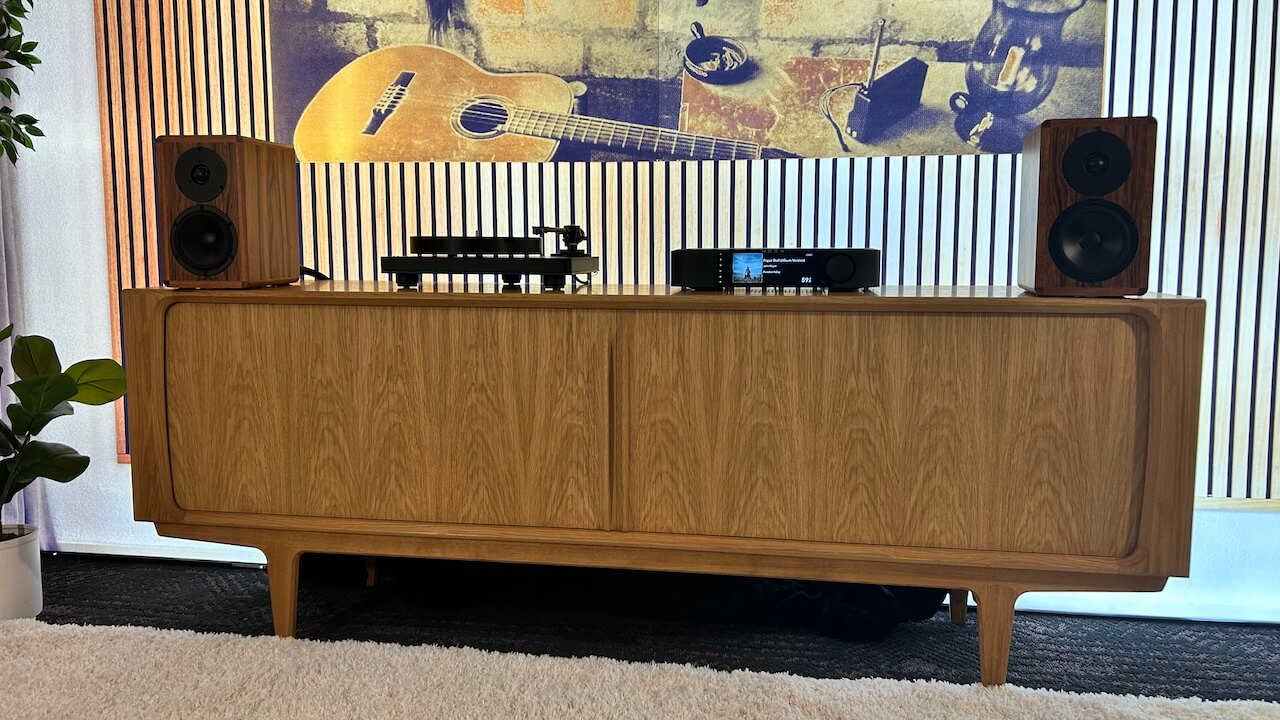
That explains the rather serious MOON by Simaudio network amplifier used in the demo system. Even in a relatively small room: think den, bedroom, or office, the pairing made sense. This wasn’t about filling a cavernous space; it was about control, headroom, and getting the most out of that low sensitivity.
Advertisement
Physically, the Legend measures 31.1 cm (12 1/4 inches) tall, 18.6 cm (7 1/3 inches) wide, and 27.1 cm (10 2/3 inches) deep, with a weight of 6.3 kg (14 lbs) per speaker. In practice, that translates to an easy fit on proper stands or a solid shelf setup.
Advertisement. Scroll to continue reading.
The system I heard leaned into nearfield listening from a leather sofa positioned fairly close to the speakers. In that context, the Legend’s scale and control made a lot of sense—this is a speaker designed to work in real rooms, not just showrooms pushing six figures.
The Danes Heard the Internet Naysayers and Carried On Anyway
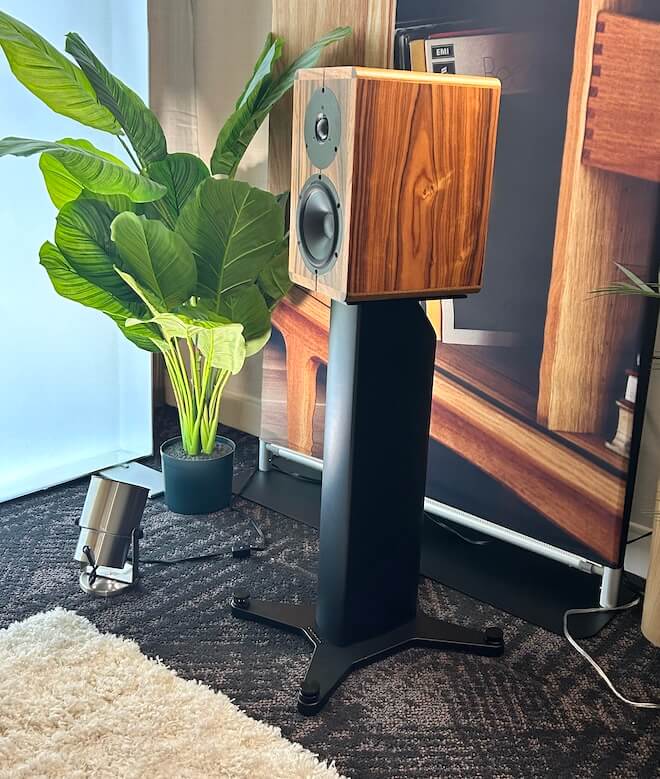
Right off the bat, what stood out was how composed they stayed at higher listening levels. These are passive bookshelf speakers, and while Dynaudio offers a dedicated stand, it felt a bit too low in this setup. I preferred them on a media credenza, which brought the drivers into a better position and made the overall presentation more convincing.
Advertisement
You can push these harder than you probably should. Not that you need to because they’re engaging at lower levels, but when the volume goes up, they don’t lose their grip. With electronic tracks that lean on impact and control, the Legend held together without sounding strained or thin.
That also puts to rest one of the louder online takes floating around from people who haven’t actually heard them: that there’s no meaningful bass below 60 or 70 Hz. That’s not what I heard. In-room, with proper amplification, there’s usable, convincing low-end extension. No, they’re not replacing a subwoofer on paper, but the idea that they fall off a cliff down low doesn’t line up with reality.
In fact, I found them to be rather hard hitting. For my listening; electronic, metal, new wave, and progressive synth rock, I wouldn’t feel the need to add a subwoofer.
The midrange leans warm, but it’s controlled and doesn’t drift into thickness. Vocals have weight, instruments have body, and nothing feels pushed forward just to grab attention. It sounds intentional, not romanticized.
Advertisement
Up top, this is where things separate quickly. Dynaudio is using its best tweeter here, and it shows. The treble is open and extended with real air, plenty of energy, and strong detail retrieval, but it never turns hard or brittle. You get resolution without edge, which is harder to pull off than it sounds.
What caught me off guard was the overall sense of scale. These don’t sound like small bookshelf speakers. The presentation is wider than expected, with a soundstage that stretches well beyond the cabinets and holds together even when things get busy.
And yes, there were moments where I actually laughed out loud with familiar tracks. Not because I forgot my meds, though thanks for the reminder, but because they delivered something I wasn’t expecting. These are better than they have any right to be based on size alone, and they make that point pretty quickly.
In the context of AXPONA 2026, where it’s easy to get desensitized by six-figure systems, the Dynaudio Legend stands out for a simpler reason: it makes sense. Solid engineering, real-world size, and performance that holds up under scrutiny. At $7,000, it’s not inexpensive, but most certainly one of the few speakers that I listened to so far that I would consider buying.
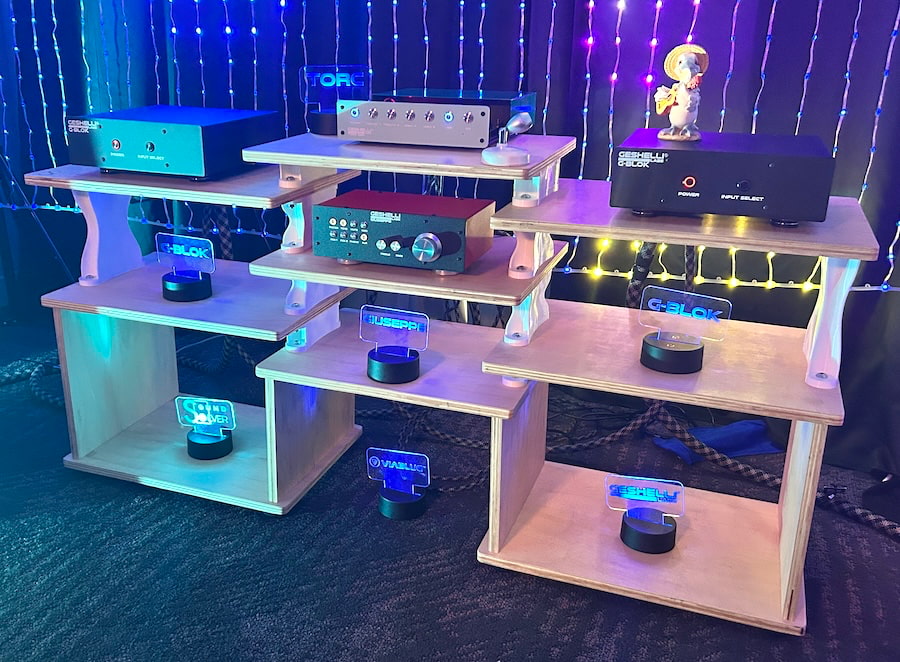
Geshelli doesn’t do “launch hype.” Maybe a little. They build something, tear it apart, rebuild it again, and only then let it out into the world. The $699.99 TORC DAC that showed up at AXPONA 2026 isn’t some carryover from last fall; it’s the version that survived that process. And it shows. After spending time with their gear at CanJam NYC 2026, we were already paying attention. The TORC gave us a reason to stop and then stay while it took control of the room with some Metallica and a rather large pair of SVS floorstanders. Add one of the most colorful setups at the show and it felt less like a demo and more like a full-blown music party under the sea.
Which is impressive, considering we’re in Schaumburg. Closest thing to an ocean here is Lake Wazzapamani and even that’s a rather heavy ask.
Because this isn’t just another DAC with a new chip and a slightly shinier faceplate. The TORC is Geshelli doubling down on what they do best: practical engineering, modular thinking, and pricing that doesn’t assume you just sold a kidney to be here.
And here’s the part that makes some of the room a little uncomfortable; it’s a family operation, it’s built in the U.S., you can actually afford it, and it’s not cutting corners to get there. That combination isn’t supposed to exist. But here we are.
Advertisement
Finally a DAC That Doesn’t Expire the Second a New Chip Drops
The TORC is built around a genuinely modular architecture and not the usual marketing version where “upgradeable” really means “buy the next model.” At its core is a swappable DAC module (the GDAC card), which lets you choose between different conversion paths; AKM, ESS, Burr-Brown, even R2R, and change them later without replacing the entire unit. Each module has its own onboard power regulation, so you’re not just swapping chips, you’re changing how the DAC behaves at a fundamental level.
Geshelli didn’t stop there. The TORC uses four socketed mono op-amps instead of the typical dual configuration, which improves channel separation and gives you direct control over the output stage. If you want to tweak the sound, you physically swap op-amps. No menus. No DSP tricks. Just hardware doing the work.
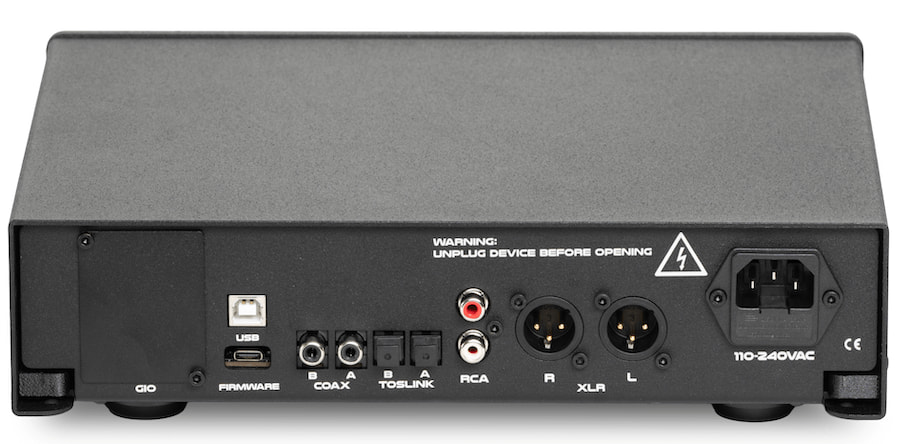
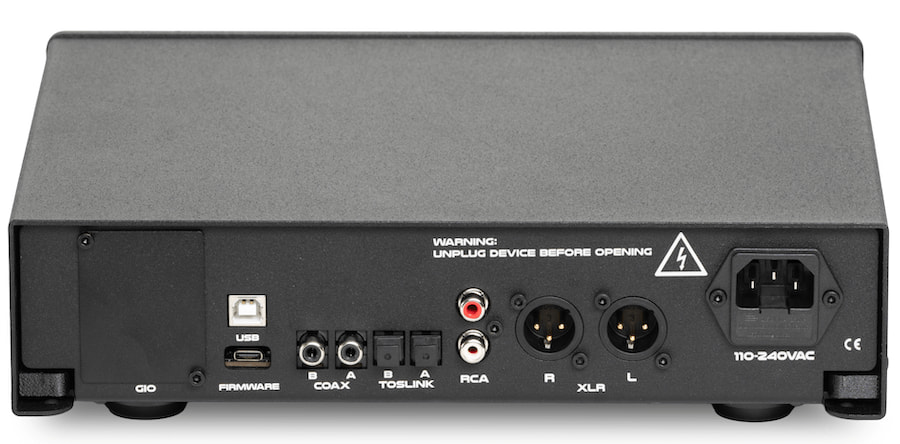
On the digital side, inputs are relay-switched—an old-school approach that physically disconnects unused inputs to reduce noise. It’s more complex to implement, but it works better than the shortcuts most DACs take. You get a solid baseline of connectivity with dual coaxial and dual Toslink inputs supporting up to 24-bit/192kHz PCM, and there’s an optional Amanero USB interface that pushes things much further; up to 32-bit/768kHz PCM and DSD512, depending on the DAC module installed.
Power is handled internally with a 20W AC/DC supply using a standard IEC connection, and it’s not just a single rail feeding everything. The TORC separates digital (7V, 5V, 3.3V) and analog (±11V) power rails, each with its own filtering, plus an isolated supply for the optional expansion card. That kind of separation keeps noise where it belongs—away from the signal path.
Advertisement
Output options are equally flexible, with both RCA (unbalanced) and XLR (balanced) connections standard. And if that’s not enough, the optional GIO (Geshelli Input/Output) expansion adds AES input, additional SPDIF connections, extra RCA output, and even a 4.4mm balanced output.
Which brings us to the part most companies conveniently ignore longevity. The TORC is designed to evolve. You can swap DAC modules, change op-amps, upgrade inputs and outputs, and update firmware as needed. At $699.99, it’s not trying to be disposable and it doesn’t behave like it either.
Most DACs are a dead end. New chip drops, new box shows up, and your “investment” becomes a paperweight.
Advertisement. Scroll to continue reading.
Advertisement
What Is This Going to Cost Me?
The Geshelli Labs TORC starts at $699.99, and that gets you a fully functional DAC with your choice of standard DAC modules; AKM4493, Burr-Brown PCM1794, or ESS ES9039Q2M along with OPA1655 or OPA1641 op-amps. At that price, you’re not getting a stripped-down entry point; you’re getting the core experience with balanced (XLR) and unbalanced (RCA) outputs, multiple SPDIF inputs, and the modular platform already in place.
Where things get interesting—and more expensive—is when you start customizing. Upgraded DAC modules range from about $128.99 to $259.99 if installed at purchase, including options like the ESS ES9026PRO, ES9039PRO, AKM4499 (single or dual mono), and even the AD1862R R2R module at $249.99. If you want to own multiple DAC boards to swap later, those run separately between $178.99 and $309, depending on the configuration. That’s the whole point of the TORC—you’re not replacing the DAC, you’re swapping its personality.
Op-amp rolling is another rabbit hole. Since the TORC uses four mono op-amps and all four must match, your upgrade cost lands between roughly $159.60 and $240 depending on whether you go with Sparkos, Sonic Imagery, Staccato, or Burson options. It’s not mandatory, but if you’re chasing a specific sound signature, it’s part of the appeal.
Add-ons are relatively painless by comparison. The optional Amanero USB input is $50, and the GIO expansion board, adding AES, additional SPDIF, RCA, and even 4.4mm balanced output—is another $50. Cosmetic choices like case color, LED ring, and feet don’t appear to impact pricing, but they do let you personalize the unit far more than most gear in this category.
Advertisement
So where do you land? Stick with the base unit and you’re in at $699.99. Add a better DAC module and USB, and you’re realistically in the $850 to $1,000 range. Go all-in with multiple DAC boards, premium op-amps, and expansion options, and you can push past $1,200 without trying too hard. The difference here is that you’re building one DAC that evolves with you and not replacing it every time something new drops.
For Whom the DAC Tolls and It Hits Hard
Nothing like some older Metallica requested by a couple of listeners in their 20s to get things moving. The TORC was feeding a pair of G-BLOK monoblocks, each a fully balanced Class A/B differential design rated at 200 watts into 8 ohms, and they didn’t exactly ease into For Whom the Bell Tolls. The presentation was robust, clean, and tight right out of the gate, with real grip in the low end and no sense of strain as the volume climbed. If there was a slight dryness to the overall balance, it was hard to pin on one culprit; the amps were clearly in control, but the TORC wasn’t adding any extra warmth to soften the edges either.
What makes the TORC unique is simple; it doesn’t expire. Modular DAC boards, swappable op-amps, and expandable I/O mean it evolves instead of getting replaced.This is a platform, not a dead end. And after hearing it here, we’re absolutely down to get one into the home system and see what it can really do.
In case you’ve been asleep, what appears to be an increasingly mentally unstable Donald Trump has further destabilized the middle east with a war nobody asked for or wanted. Most U.S. media coverage of Trump’s disastrous Iran war hasn’t been great, but they’ve still occasionally managed to communicate the pointlessness of the endeavor to the electorate (which speaks more of the unpopularity of the war than their reporting chops).
Some news outlets, like CNN, simply reported directly on what Iran had claimed. This, as you might expect, upset Donald Trump and his top FCC censor Brendan Carr, who are now threatening an “investigation” of CNN for simply repeating what was publicly stated:
Not mentioned (of course) is the fact that Fox News also reported the Iran statement, yet avoided being called out by the president:
Trump later would issue another statement over at his right wing propaganda website, calling for criminal action against CNN (and CNN only), while making up a whole bunch of nonsense (he may or may not believe is actually true):
Advertisement
Trump’s sensitivity here suggests they’re well aware that a massive, superior military has been getting dog-walked by Iranians because Trump and his advisors were too stupid to understand modern, cheap drone warfare and how shipping in the Straight of Hormuz actually worked. The shipping logjam is driving up gas prices and making life difficult for Republicans ahead of the midterms.
There is, of course, absolutely zero basis for any meaningful criminal action against CNN here of any kind that wouldn’t be laughed out of court on free speech grounds. As we’ve seen with corporate media that doesn’t mean they won’t still capitulate embarrassingly, but so far CNN is standing its ground. As it should, since again, all it did was report on an Iranian statement in a very basic way alongside dozens of other news outlets.
At which point, Trump will move on to threatening any remaining U.S. corporate media outlets that haven’t either embarrassingly capitulated or been purchased by a right wing billionaire. This is, as I keep repeating, an exact copy of Victor Orban’s autocratic media policy in Hungary, which involves having party-loyal oligarchs buy up all corporate media outlets and pummel the public with propaganda while the government strangles what’s left of real, independent reporting just out of frame.
With each new game console, there’s an effort to get around whatever restrictions exist to run your own software on it. In the case of the Nintendo Wii, the system was cracked through one of its most popular games — The Legend of Zelda: Twilight Princess. How this hack works was recently covered in detail by [Skawo].
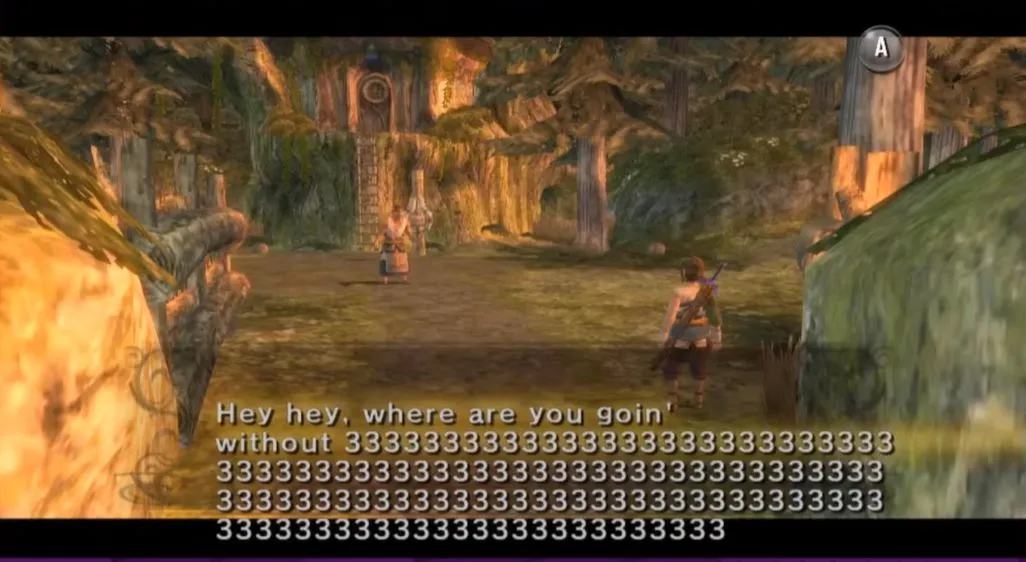
The key for this ‘Twilight Hack‘ is to use a modified game save that allows you to run arbitrary code from an SD card, something which was first patched out of the Wii firmware with version 3.3. As shown in the video using the source code, the basic concept is that the name of Link’s horse in the game is changed in the save file to be longer than the allocated buffer, which leads to a buffer overflow that can be used to reach the application loader code.
Interestingly, while the horse’s name can only be 8 characters long, and the buffer is 16 bytes (due to ShiftJS two-byte encoding), the save file loading code allocates no less than 100 bytes, for some reason. Since the code uses strcpy() instead of strncpy() (or C11’s strncpy_s()), it will happily keep copying until it finds that magic 0x00 string terminator. Basically the horse can have any name that fits within the save file’s buffer, just with no null-byte until our specially crafted payload has been copied over.
Although it took Nintendo a few months to respond to this hack, eventually it was patched out in a rather brutal fashion by simply searching for and wiping any modified save files. Naturally this didn’t stop hackers from finding ways to circumvent this save file check, which led to more counter-fixes by Nintendo, which led to more exploits, ad nauseam.
Advertisement
Even with firmware update 4.0 finally sunsetting the Twilight Hack, hackers would keep finding more ways to get their previous Homebrew Channel installed, not to mention so that they could keep watching DVDs on a Wii.
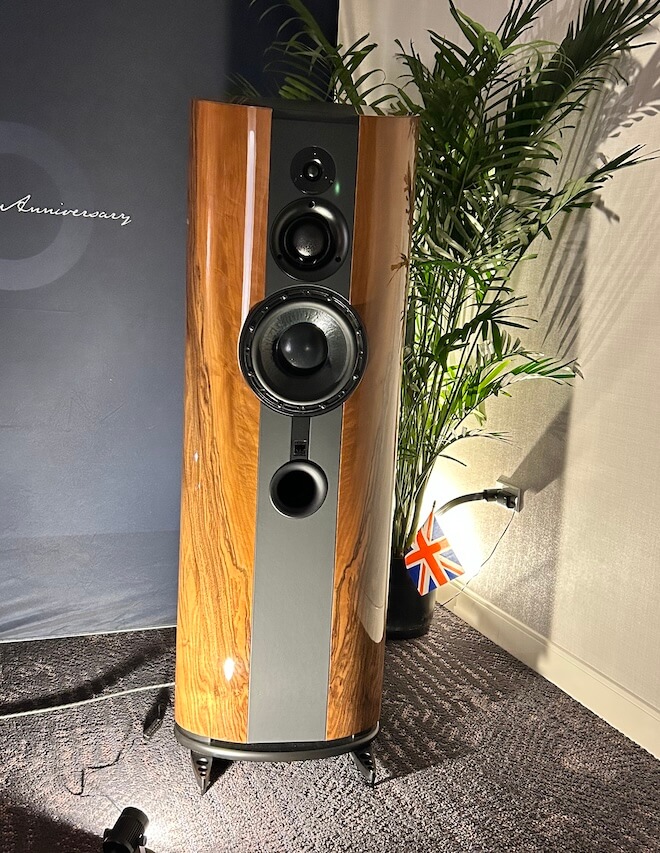
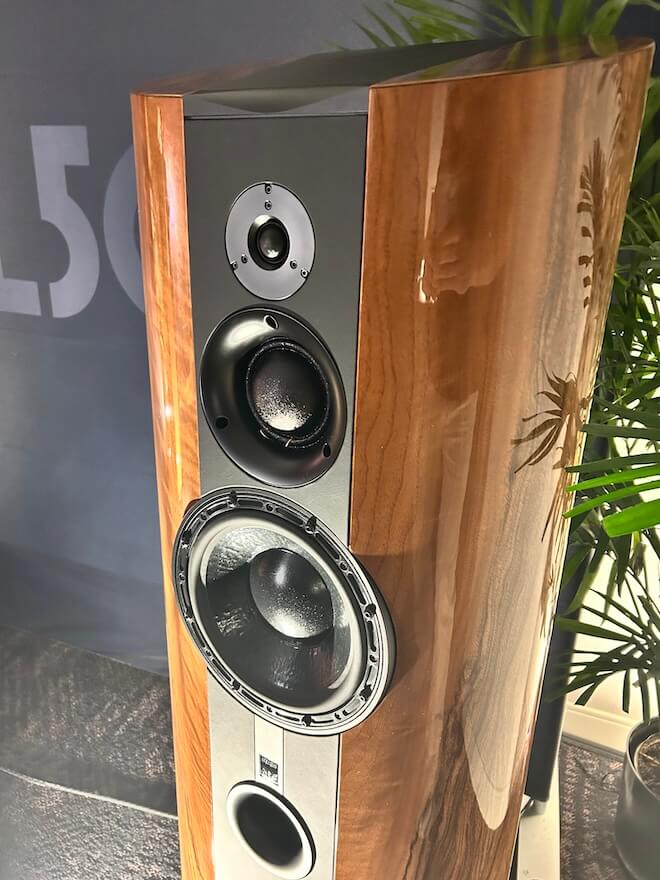
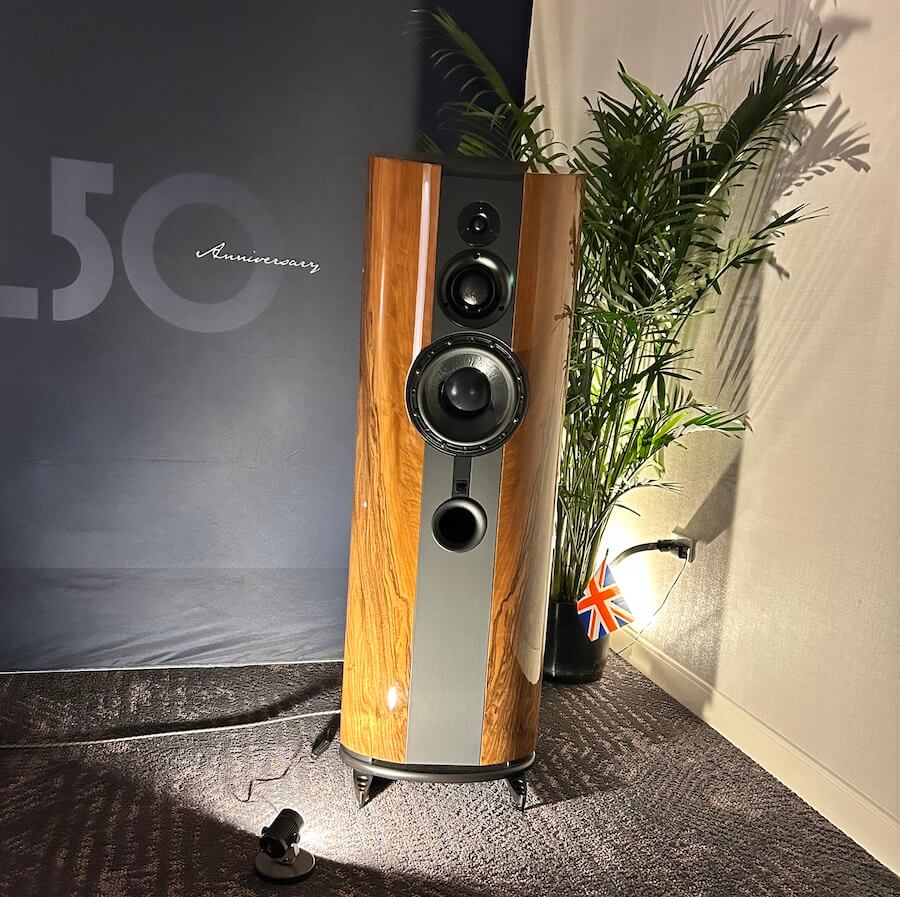
$99,999 is a lot of money for almost anything. Let alone a pair of loudspeakers. It’s a king’s ransom. The ATC EL50 Anniversary Active loudspeakers roll into AXPONA 2026 carrying that number like it’s no big deal, but let’s not pretend otherwise.
I have a weird allergy to most speakers over $20,000. I’ve heard plenty, and once you get anywhere near six figures, I stop being impressed by specs and start looking for something that actually justifies the insanity. So far at this show, only two systems in that range have managed to do that. Everything else? Expensive, competent, and ultimately forgettable.
ATC doesn’t usually play the hype game. Their reputation is built on studio-grade accuracy and engineering that actually shows up in the listening. But at $99,999, none of that gets a free pass. The ATC Statement EL50 Anniversary loudspeakers needed to be mindblowing. Did they succeed? Let’s take a look.
Press breakfasts are part of the routine at trade shows like AXPONA 2026, but let’s not confuse hospitality with influence. I’m always up for a proper English breakfast minus the bacon or bangers because kosher rules still apply. Coffee, eggs, maybe some toast. That’s not a payoff. That’s survival.
Advertisement
What it actually is: “Morning, boys. You spent a few grand to get here. Here’s something so you don’t pass out before noon.” Fair enough. We appreciated it and moved on.
Let’s get one thing out of the way before anyone starts sharpening knives on social media. Breakfast doesn’t buy coverage. It doesn’t buy opinions. And it definitely doesn’t buy a pass on a $99,999 loudspeaker that better deliver something more than a polished sales pitch.
There was some noise last week from a certain Editor and Publisher on Facebook suggesting otherwise. That we’re all somehow in the pocket. That access equals allegiance. That’s a convenient narrative if you’re not actually in the room doing the work. And was he including himself in that rant? I have stories.
But here’s the reality. If a plate of eggs is enough to sway your editorial integrity, that says a lot more about you than it does about anyone sitting at that table.
Advertisement
Now that the air is clear, back to the part that actually matters. The gear.
Why the ATC EL50 Anniversary Costs $99,999
The ATC EL50 Anniversary is expensive for a very specific reason. It is not a passive loudspeaker that needs to be matched with external amplification. It is a fully active 3 way system with amplification, crossover, and drivers all engineered to work together as a single platform. The crossover is handled at line level using a fourth order Linkwitz-Riley active design with crossover points at 380Hz and 3.5kHz, which allows each driver to be controlled more precisely than in a traditional passive speaker. Each driver has its own dedicated amplifier channel with 200 watts for the bass, 100 watts for the midrange, and 50 watts for the tweeter, all using ATC’s discrete grounded source MOSFET Class A/B amplification running fanless with convection cooling.
ATC also builds its own drivers in house, and that has been central to its design philosophy for decades. The system is designed to cover a frequency range from 32Hz to 25kHz within a -6dB window, which is sufficient for full range reproduction in most rooms without relying on a subwoofer. Distortion is kept extremely low, with THD around 0.0015 percent just below rated power, and matched pair tolerance is held to ±0.5dB, which ensures consistency between channels. Maximum output is rated at 112dB per pair at one meter in anechoic conditions, which gives it enough headroom for larger spaces without strain.
Advertisement. Scroll to continue reading.
The cabinet design follows the same thinking. The curved enclosure and softened edges are intended to reduce diffraction and improve off axis behavior, while the multi layer construction increases rigidity and reduces unwanted resonance. Each speaker stands just under 56 inches tall, over 18 inches wide, and nearly 14 inches deep, and weighs 139 pounds. This is a physically large and heavy loudspeaker, and that mass contributes to overall stability and reduced cabinet interaction.
Advertisement
Connectivity is straightforward but purposeful. The EL50 uses a balanced XLR input with switchable input sensitivity, along with a bass shelf adjustment from -2dB to +3dB to help with room integration. There is also a 12V trigger input and link for system control, and built in protection circuits for DC offset and thermal management with active limiting to maintain reliability under load.
In practice, you are paying for a system where the major variables have already been addressed at the design stage rather than left to system matching. That approach has long been part of ATC’s presence in professional studios, and it carries over directly into a product like the EL50.
The room at AXPONA 2026 was not especially large, which likely worked in its favor. The rest of the system included a balanced ATC preamplifier, along with an Innuos ZENith NG network player and a Playback Designs MPD-8 DAC. That digital front end alone totals close to $50,000, with cabling handled by WireWorld.
No Place to Hide at $99,999
Where do you even begin with something like this? Fine. Here goes.
I was the first one in the room. Of course I was. I’ll show up early for my own execution. Expectations were high, borderline unreasonable, but that comes with the territory at this level. I’ve been burned before by speakers in this price range. Big promises. Impressive specs. And then…nothing. Polite. Safe. Forgettable. I wasn’t in the mood for that again. I was still hungry.
Advertisement
There’s a moment most speakers completely fumble. That split second before the music actually starts. The air shifts, the room tightens, and you’re waiting for something to happen. Your brain knows what’s coming, but your body hasn’t caught up yet. When it’s done right, your heart skips. When it’s not, you’re already checking out before the first note lands.
ATC didn’t miss.
That first transient hit and something locked in. Not exaggerated. Not hyped. Just there—with a sense of presence and control that felt immediate and real. It didn’t creep up on you. It arrived. And it hit with the kind of conviction that makes you sit up without thinking about it.
It’s hard to explain without sounding ridiculous, but it felt like the first time you finally kiss someone you’ve been thinking about for way too long. There’s anticipation, sure, but then there’s that moment where it actually happens and it’s better than you built it up to be. More intensity. More weight. More passion. And suddenly you’re not analyzing anything anymore. You’re just in it.
Advertisement
And that was the first 20 seconds.
At that point, I wasn’t thinking about price, specs, or whether this was “worth it.” I was just trying to keep up.
Advertisement. Scroll to continue reading.
Another huge positive? The bass is actually under control.
Advertisement
Not polite. Not neutered. Controlled. And that’s a big deal because this is where a lot of speakers in this category fall apart. They either overdo it to impress in five minutes or they hold back and sound like they’re afraid of their own capabilities.
The EL50 doesn’t do either.
If the bass is in the recording, it shows up with authority. If it’s not, the speaker doesn’t invent it. The midbass in particular is doing a lot of heavy lifting here—resolute, tight, well defined, and absolutely critical to how this speaker holds everything together. There’s no bloom, no excess weight hanging around where it shouldn’t be, and no sense that the room is being pushed past its limits.
And let’s be clear, this is not a small speaker. It looks imposing. The bass driver looks like it has a job to do and zero interest in compromise. But the presentation never tipped into something disproportionate or overblown. It sounded big, yes—but in a way that felt grounded. Real, for lack of a better word.
Advertisement
That’s the part that stuck with me.
It never overloaded the room. It never tried to dominate the space just because it could. It just scaled naturally with the music, which is harder to pull off than most designers would care to admit.
At some point, I realized I was mentally rearranging my entire review schedule for May and June just to figure out how to spend more time with these. That’s not normal behavior.
I will never be able to afford these. And that’s fine.
No, it isn’t. But it’s what I’ll be telling myself for a very long time. Bugger.
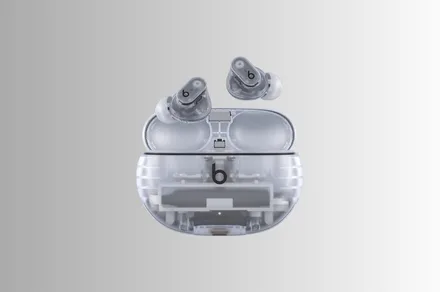
The Beats Studio Buds+ are down to $99.95, a $70 saving off their $169.95 list price, and that gets you true wireless noise canceling, spatial audio, and sweat resistance at a price that most competing earbuds with this feature set can’t touch. For anyone using an iPhone or an Android device, these cover the bases better than most things at this price.
What you’re getting
The Studio Buds+ improved on the original Studio Buds in two meaningful ways: better ANC performance and the addition of spatial audio, which delivers a more immersive, three-dimensional listening experience on compatible content. The noise-canceling handles commuting and office environments well, and transparency mode is responsive enough to actually use when you need to stay aware of your surroundings.
What sets the Studio Buds+ apart from most earbuds at this price is the cross-platform compatibility. They pair seamlessly with iPhone through the Apple ecosystem while offering full Android integration through the Beats app, one-touch Google Assistant access, and Find My Device support. Most earbuds at this price favor one platform at the expense of the other; the Studio Buds+ don’t make that compromise.
The built-in microphone handles calls clearly, the IPX4 sweat resistance makes them a practical gym companion, and the compact charging case keeps the overall package travel-friendly.
Advertisement
Why it’s worth it
Spatial audio and ANC together in a wireless earbud typically push the price well above $100. The Beats Studio Buds+ at $99.95 bring both to a price point where the decision becomes considerably easier, particularly for anyone who switches regularly between Apple and Android devices and doesn’t want to sacrifice features to do so.
The bottom line
The Beats Studio Buds+ at $99.95 are a well-rounded wireless earbud at a price that makes the feature set look considerably more expensive than it is. The ANC, spatial audio, and genuine dual-platform compatibility add up to an earbud that’s difficult to beat at this price, and the $70 saving makes it the right time to pick them up.
Conditions in the hardware market remain strained, with prices for nearly all components rising sharply as AI companies place unprecedented pressure on supply chains for future demand. In this environment, stricter market regulation may be warranted, but there appears to be little appetite in Washington for increased government intervention. Read Entire Article Source link
Whoop, the makers of a screen-free fitness tracker of the same name, could soon have some competition. Fitbit teased its take on a Whoop-style band with the help of Steph Curry at the end of March, and based on a trademark filing spotted by Gadgets & Wearables, Garmin appears to be working on its own band that tracks similar health metrics.
This new Garmin wearable, called “CIRQA” in the trademark filing submitted in February, is designed to measure “the body’s physical parameters and other physiological data, bio-signals, and bodily behavior.” That could broadly describe the smartwatches and fitness trackers Garmin already sells. But the CIRQA apparently goes further, by also measuring “recovery from physical and emotional stress, human alertness level, and performance,” a set of more granular, wellness-focused features that could bring the unreleased wearable into the same ballpark as a Whoop.
Garmin accidentally leaked that it was working on a new wearable via a hastily removed store page in January, Android Authority reports. While some phantom web pages and a trademark do not guarantee Garmin is working on a new device, or that the band will be screen-free in the same way the Whoop is. If the company is preparing a competitor, though, the timing makes sense. Where other devices try to split the difference between tracking biometrics and offering real-time information or other smartwatch features, Whoop is decidedly data-first. Its wearables monitor as much information as possible through a nondescript band, and then analyze and display what it learned via a smartphone app. The approach is attractive to anyone tired of dealing with screens, and the growing number of people obsessed with optimizing their health. In fact, Whoop just raised $575 million on the back of its current success. It would make sense that Garmin and Google (via its Fitbit brand) would want a piece of the company’s audience, too.
Whoop-style bands are also a perfect fit for future uses of AI in health and fitness tracking. Google is interested in having users turn to Fitbit’s AI-powered health coach for everything from workout tracking to nutrition advice. If health data processing is going to happen in the cloud, and you’re going to have to pull out your smartphone to view that data anyway, it makes sense to sell a tracker without a screen.
Sick! The Federal Aviation Administration is targeting gamers in its most recent job advertisement for air traffic controllers. The administration’s annual hiring window opens at 12AM ET on April 17, and considering the ongoing shortage of air traffic controllers, it’s calling this a period of “supercharged hiring.” Rad! The FAA’s YouTube video draws parallels between gaming and directing air traffic, and notes that the average salary for the role after three years is $155,000. Hella!
The FAA is clearly seeking players who are at least old enough to remember the Xbox One and Bjergsen in the LCS, which puts would-be candidates around their early 20s at least. It’s either that, or the ad editors really just picked videos at random from the pile of stock footage marked gamerz. But I won’t lie, it made me smile to see that Xbox One logo appear out of nowhere. Nostalgia is a hell of a thing.
“To reach the next generation of air traffic controllers, we need to adapt,” US Transportation Secretary Sean P. Duffy said. “This campaign’s innovative communication style and focus on gaming taps into a growing demographic of young adults who have many of the hard skills it takes to be a successful controller.”
The FAA has been losing more air traffic controllers than it can hire and retain since the 2010s, and this trend only worsened during the pandemic in the 2020s, according to a report released in December by the US Government Accountability Office. The administration increased hiring every year since 2021, but at the end of 2025 it employed 13,164 air traffic controllers, 6 percent fewer than in 2015, the report said. At the same time, the number of flights in the air traffic control system increased by about 10 percent, to 30.8 million.
Advertisement
Or, as the FAA put it on the ATC hiring page: “Join the BEST AND BRIGHTEST, the elite squad of 14,000 controllers protecting 2.9 million daily passengers.” Applicants must be a US citizen, under 31 (maybe those video editors do know what they’re doing), and be able to speak fluent English. An aptitude test, medical screening and academy training follows, among other steps.


























































You must be logged in to post a comment Login