Tech
One YouTuber’s Bare-Chip Cooling Gamble Pours Water Straight Onto Silicon

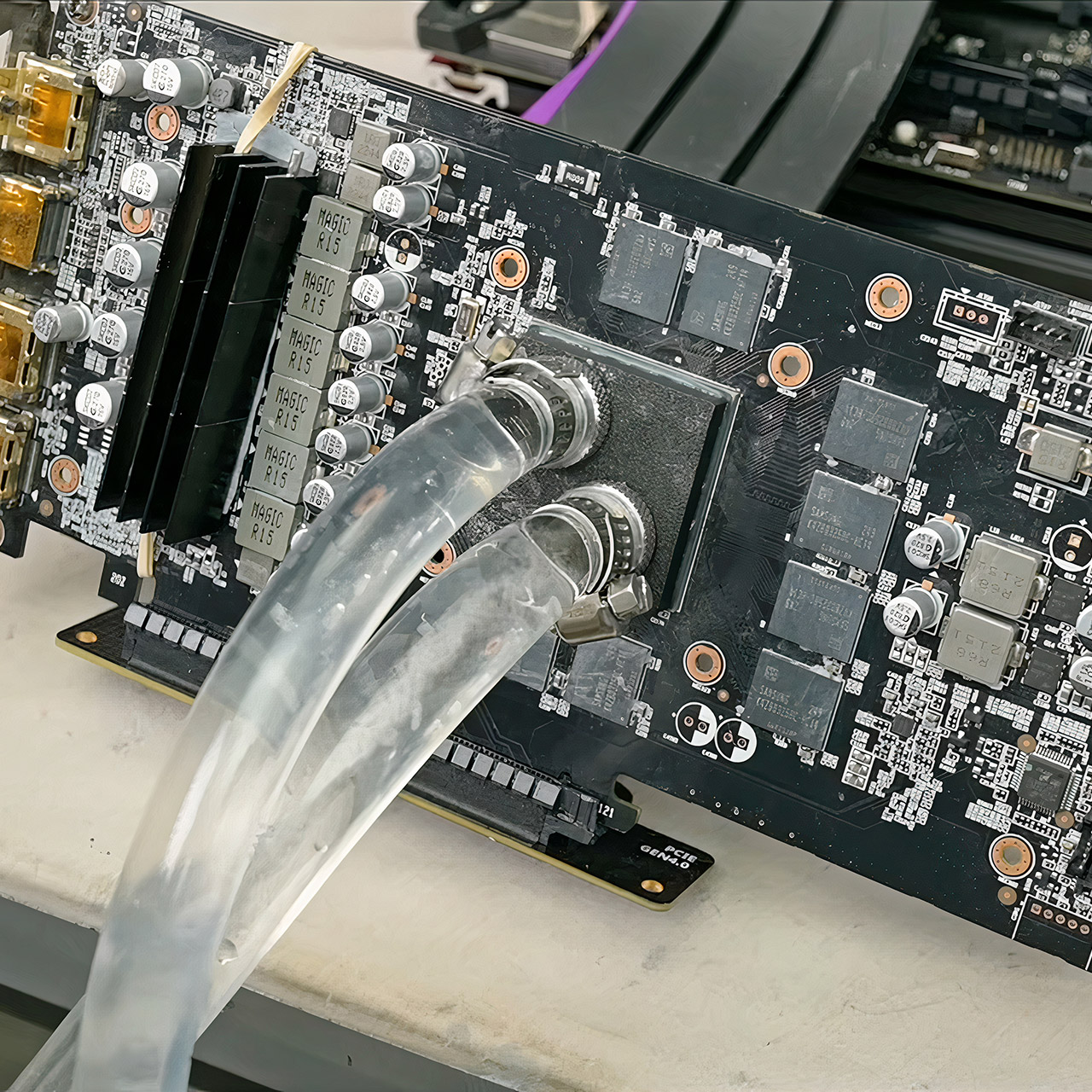
TrashBench decided ordinary water blocks were optional. In a recent experiment the channel stripped everything away and simply pumped water across the exposed dies of a graphics card and a processor. A 3D-printed plastic fitting, some epoxy, and a willingness to risk hardware produced results that surprised even the person running the tests.


Work began by attempting to seal the leaks on a dead RTX 3060 card. Early attempts to use translucent plastic prints proved ineffective, as water seeped straight thru the layers. Adding some nail polish and epoxy helped, but it wasn’t until he switched to black PETG as well as adjusted the print settings that he was able to get the part to maintain pressure. Once he had the chamber fixed and it wasn’t leaking everyplace, he moved on to a live GTX 980. Water flowed directly over the exposed silicon, but to his surprise, it did not destroy the card. It turned out that the chamber on that older GPU was much larger, which helped keep the temperatures lower than he’d expected for such a basic setup.
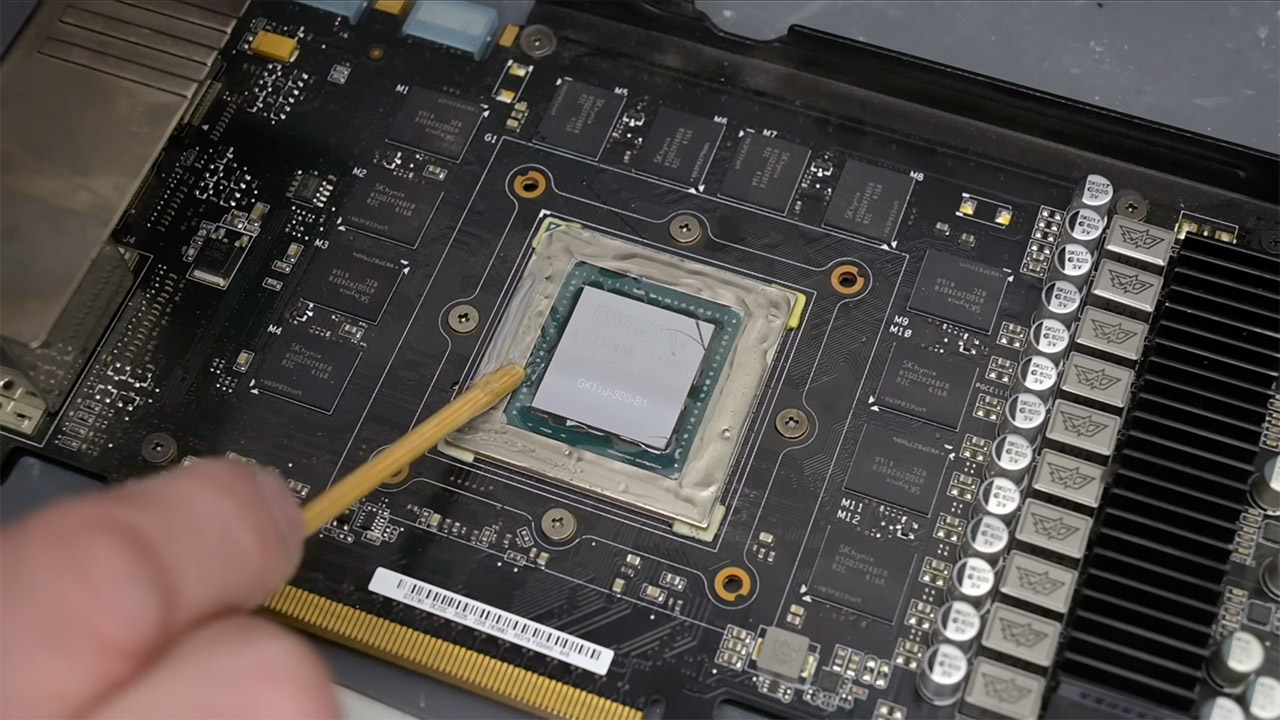
A fair comparison with an RTX 2060 SUPER was finally possible, and the results were rather interesting. The card operated at a high temperature of 70 °C under load with stock air cooling, but when we installed a standard AIO cooler, it decreased to around 36 °C. Then he installed the 3D printed direct water connection and, well, you could say it blew the competition away in both Unigine Heaven and Cyberpunk 2077, resulting in a decisive victory for the homemade block over the commercial one. Of course, there was no metal in the way, so the heat just passed into the water running past it. It’s worth noting that while the water warmed up over time, the CPU remained cooler than the polished copper block throughout testing.

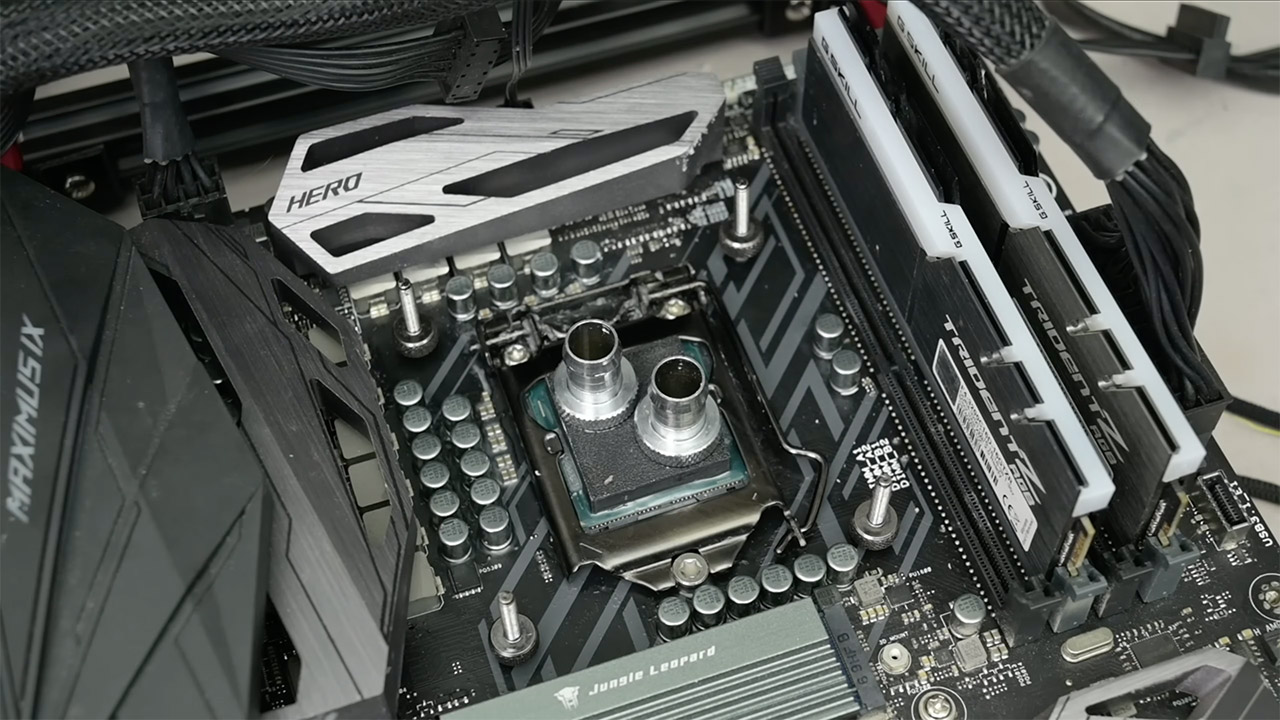
Next, he tried sub-zero coolant, and while temperatures did drop, the difference was not as dramatic as switching from air to room-temperature water. It seems that the size of the chamber and the contact area made a far bigger difference than how cold the liquid was. He was able to adapt the same concept to operate with a delidded Intel i5-7600K, but the small die and limited mounting space made it much more difficult to fit into a smaller chamber. Unfortunately, he realized that the majority of the heat was concentrated in a small area, and the water just couldn’t keep up. The GPU’s huge die was not an issue because the heat was uniformly distributed across it, but the CPU’s dense hotspot proved difficult to keep cool.
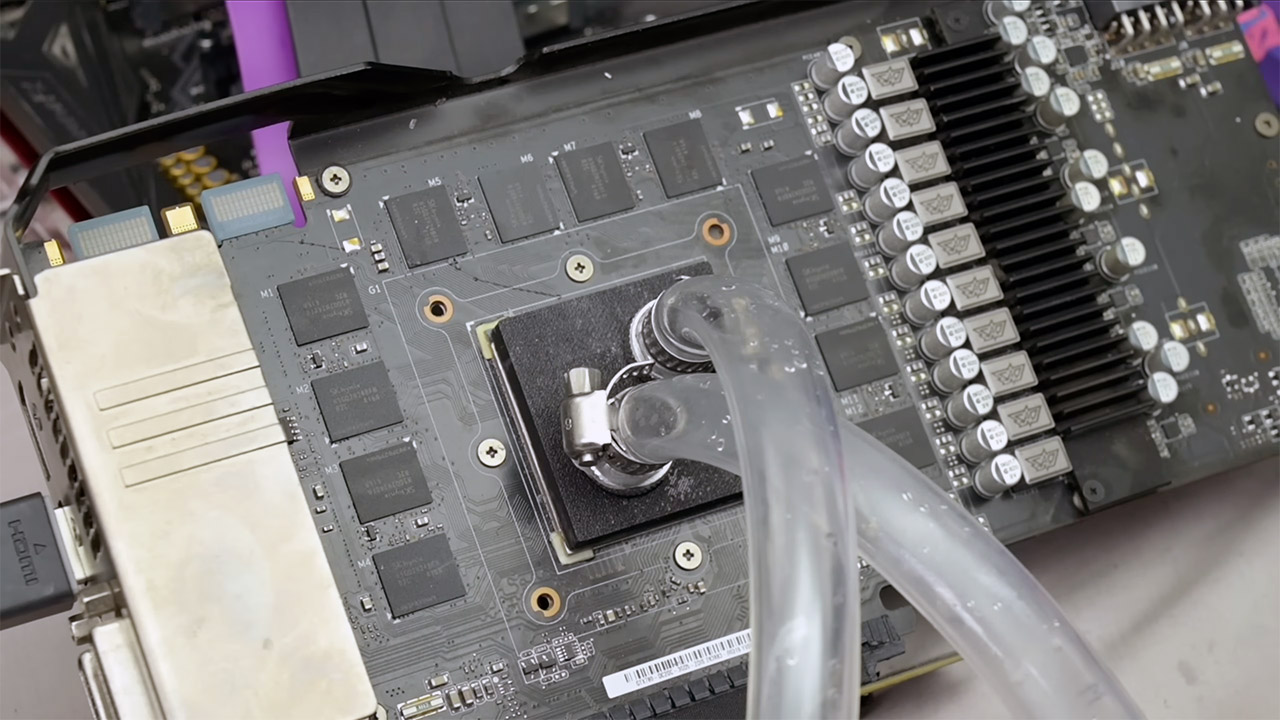
Leaks continued to appear as water escaped around the fittings, and he came close to losing the hardware several times. Putting extra epoxy on the broken parts helped to patch things up, but the risk was evident. It’s evident that direct liquid contact can work; immersion cooling has been available for years, but the large difference in outcomes between GPU and CPU was surprising. The GPU is a perfect choice for this type of cooling due to its larger surface area and lower heat density, but doing the same method on a compact processor die is difficult to keep cold.
[Source]
You must be logged in to post a comment Login