Tech
Onkyo Creator GX-AiO Series Pairs 2.1 Sound With HDMI ARC and Phono From $399

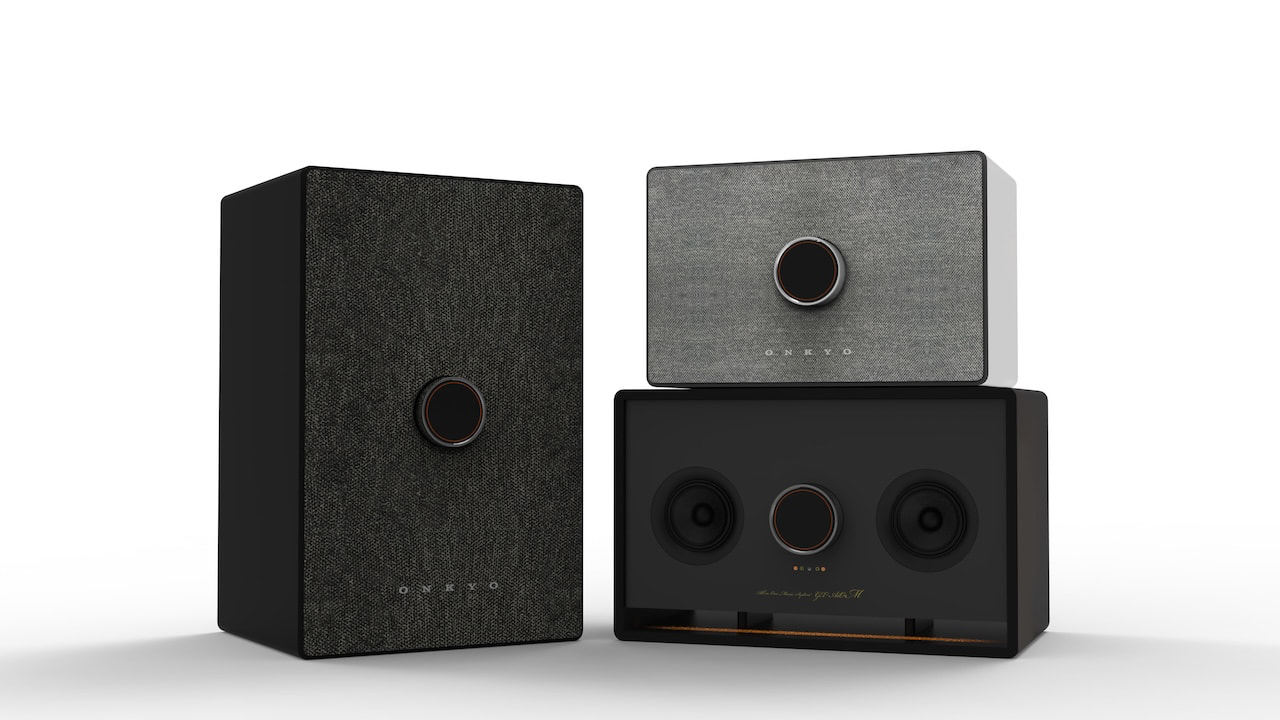
Onkyo is taking its Creator Series off the desktop and into the rest of the house with three new GX-AiO wireless music systems that combine stereo speakers, a dedicated subwoofer and amplification inside a single enclosure.
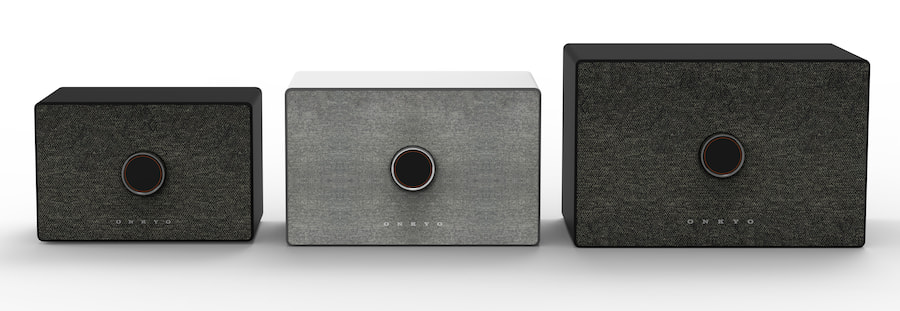
The Onkyo Creator GX-AiO 50, GX-AiO 100 and GX-AiO 150 (small, medium, and large wireless speakers) start at $399 and offer considerably more flexibility than the average Bluetooth tabletop speaker. HDMI ARC, USB-C, optical digital and a switchable line/phono input allow the GX-AiO to work with televisions, computers, turntables and other sources without requiring an external amplifier or a growing collection of little black boxes.
Onkyo clearly wants these to function as compact stereo systems rather than expensive kitchen speakers that spend their lives streaming playlists from a phone.
Related Reading: Onkyo Marks 80 Years With Muse Streaming Amplifier And Creator Powered Monitors At High End Vienna 2026
Creator Series Moves Beyond the Desktop

Onkyo introduced the Creator Series with the GX-10DB and GX-30ARC powered speakers, targeting computer users, gamers, content creators and listeners who wanted better sound without giving up half their desk.
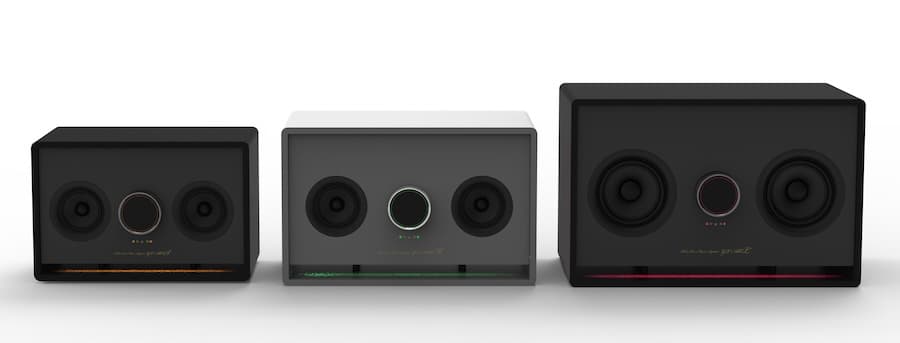
The GX-AiO range extends that concept into bedrooms, kitchens, living rooms and other spaces where a conventional pair of speakers might not make sense. Each model uses what Onkyo calls a true 2.1-channel architecture, combining two main drivers with a dedicated, independently amplified subwoofer inside the same cabinet.
That subwoofer is one of the more interesting elements of the design. Instead of asking two compact drivers to handle the entire frequency range, Onkyo gives the lower frequencies their own driver and acoustically optimized enclosure, with the bass-reflex duct incorporated into the illuminated rear slit. Full-digital Class D amplification and DSP handle the signal processing and amplification.
There is, however, a rather significant hole in the launch specifications. Onkyo has not disclosed the individual driver sizes, amplifier output, frequency response, dimensions or weight for the GX-AiO 50, 100 or 150, nor has it explained exactly what changes internally as buyers move from $399 to $499 and then $599.
Those are not insignificant details when three models occupy the same product family, and we will be looking for answers at CEDIA.

HDMI ARC, Phono and USB-C
Connectivity might be the strongest reason to pay attention to the GX-AiO Series. All three models include Bluetooth 5.3, HDMI ARC, USB-C audio and playback, optical digital and a switchable line/phono input, creating enough flexibility for a television, computer, turntable and additional digital source.
The inclusion of a phono input is particularly useful because it eliminates the need for an external phono preamplifier with compatible turntables. HDMI ARC also gives the GX-AiO considerably more television flexibility than many traditional tabletop music systems, without turning the product into a soundbar.
Onkyo specifies support for 32 kHz, 44.1 kHz and 48 kHz sampling rates at 16-bit and 24-bit resolution. The supplied specifications do not indicate support above 24-bit/48 kHz, so anyone expecting 24/96 or 24/192 playback should adjust expectations accordingly.
Also absent from the launch specifications is Wi-Fi. Onkyo does not list AirPlay, Google Cast, Spotify Connect or another integrated network streaming platform, which makes the GX-AiO a very different proposition from the growing number of smart wireless speakers built around an app and streaming ecosystem.

Two Boxes Make a Real Stereo Pair
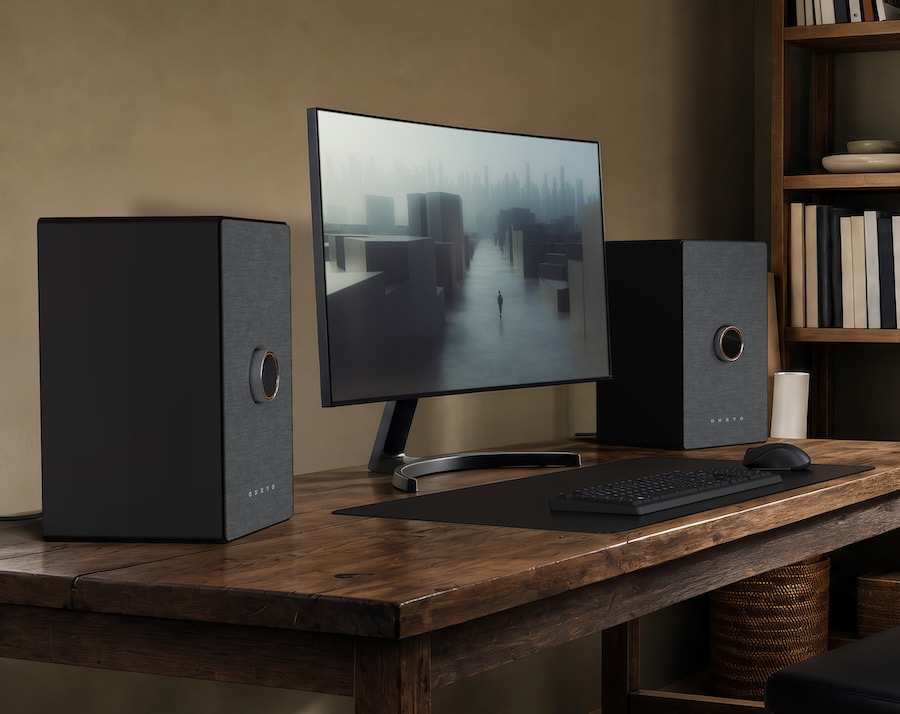
Onkyo does offer another useful wireless trick. Two GX-AiO systems can be paired using True Wireless Stereo, with one enclosure becoming the dedicated left channel and the other handling the right.
That creates real physical channel separation rather than attempting to manufacture a giant stereo image through DSP from a single cabinet. For listeners who begin with one GX-AiO and eventually want something closer to a conventional stereo system, the upgrade path is already built in.
The math becomes more interesting at the top of the range. Two GX-AiO 150 systems would cost $1,198, which puts the combination against some very capable powered stereo speakers. Convenience is wonderful, but it has never been granted immunity from comparison shopping.

Three Power Modes and Flexible Placement
Each GX-AiO offers Eco, Standard and Max power modes. Eco is intended for lower-volume listening and smaller spaces, Standard covers normal everyday use, and Max provides the greatest available output for larger rooms or gatherings.
All three modes retain the same 30-step volume scale while changing the available output range. The Onkyo Controller app communicates over Bluetooth Low Energy and can be used to select power modes, manage inputs and customize the integrated illumination around the front control ring and bass-duct area.
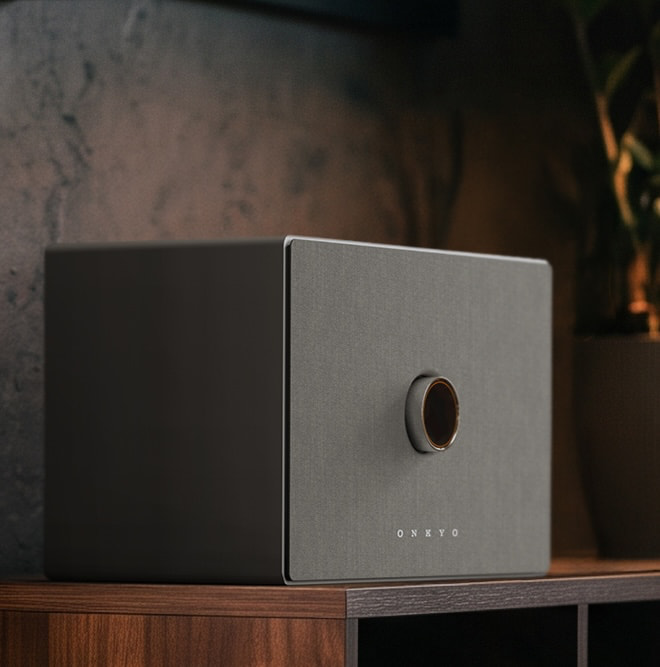
Onkyo also designed the GX-AiO for either vertical or horizontal placement. Magnetic fabric grilles work in both orientations, while black and white smudge-resistant finishes should make the systems relatively easy to integrate without demanding that the entire room be redesigned around them.
Competition
The Klipsch The Three Plus might be the most obvious competitor, and not merely because both brands reside under the same corporate roof. The $399 Klipsch is also a single-cabinet 2.1 system and includes Bluetooth 5.3, USB-C, optical digital and an RCA input with a built-in phono preamp. Its 120-watt amplifier drives two 2.25-inch full-range drivers and a 5.25-inch woofer, although it lacks the Onkyo’s HDMI ARC connection.
The Marshall Woburn III occupies the other end of the GX-AiO pricing range at $599. Marshall combines a 90-watt woofer amplifier with four 15-watt Class D channels and provides Bluetooth, HDMI, RCA and 3.5mm analog inputs. The Onkyo counters with optical digital, USB-C audio and an integrated phono stage, making the GX-AiO potentially more flexible for traditional audio sources.
The JBL Authentics 500 takes a more network-centric approach. Its 270-watt 3.1-channel configuration includes a 6.5-inch subwoofer, Dolby Atmos Music, Wi-Fi, Bluetooth and integrated streaming features. JBL is clearly chasing the smart wireless speaker customer, while Onkyo appears more interested in buyers who still connect televisions, computers and turntables with actual cables. Some of us remain stubborn that way.
The Bottom Line
The Creator GX-AiO Series lands somewhere between a Bluetooth tabletop speaker, powered stereo system and compact TV audio solution, which may be exactly why it makes sense.
HDMI ARC handles the television, the phono input takes care of vinyl, USB-C and optical cover digital sources, and the built-in subwoofer means owners do not immediately need to find room for another box on the floor. The option to add a second GX-AiO and create dedicated wireless left and right channels also gives the platform somewhere to go after the initial purchase.
What remains unanswered is how much performance separates the three models. Onkyo has given us the pricing and shared feature set, but not the individual driver configurations, amplifier output or frequency response that would tell us why somebody should spend $599 instead of $399.
CEDIA seems like a good place to ask.

Price & Availability
The Onkyo Creator GX-AiO 50, GX-AiO 100 and GX-AiO 150 are expected to be available in the United States during Fall 2026 in black and white finishes.
- GX-AiO 50: $399
- GX-AiO 100: $499
- GX-AiO 150: $599
You must be logged in to post a comment Login