This marks the seventh co-founder exit since xAI was founded in 2023.
Toby Pohlen is the latest co-founder to leave xAI, announcing his decision to resign just weeks after two others left.
The Elon Musk-owned xAI lost three co-founder in the weeks after his space-tech company SpaceX bought xAI for a reported $250bn. The combined business is worth an estimated $1.25trn, and could gain more after a planned initial public offering this year.
In a post on X, Pohlen thanked Elon Musk for taking him on board. “I’ve learnt more about execution, speed, and product perfectionism than I could ever have imagined. Thanks for everything,” he said. Musk responded, “Thanks for helping get xAI to where it is.”
Pohlen is the seventh co-founder to exit xAI in three years, following Jimmy Ba and Tony Wu, who left earlier this month. Kyle Kosic left in 2024, followed by Igor Babuschkin and Christian Szegedy in 2025.
Greg Yang, another co-founder, announced last month that he would be stepping down after being diagnosed with Lyme disease. Pohlen had worked in Google DeepMind as a research engineer for more than six years before founding xAI.
The flurry of exits leaves behind Musk, Manuel Kroiss, Zihang Dai, Guodong Zhang and Ross Nordeen at the company.
Meanwhile, a year-long inquiry by French authorities has expanded to probe Grok’s possible role in disseminating Holocaust denials and sexual deepfakes. California also launched a similar investigation into X and Grok’s parent company xAI last month.
Honor is preparing to take battery innovation to the next level with its upcoming Silicon-Carbon Blade Battery. The company today shared a teaser offering a first look at the ultra-thin power pack, and it’s anything but conventional.
In the short clip, Honor showcases a battery as thin as a playing card, hurled through the air by a Guinness World Record-holding card thrower. The dramatic demonstration not only highlights the battery’s razor-thin profile but also its durability, as it slices through pieces of fruit mid-flight.
While Honor has yet to disclose detailed specifications, it claims the Silicon-Carbon Blade Battery features higher silicon content and greater capacity than the fifth-generation silicon-carbon pack set to debut in the upcoming Honor Magic V6. That battery, developed in partnership with China-based battery manufacturer ATL, reportedly features 25% silicon content and a sizeable 6,600mAh capacity without increasing the device’s thickness.
Advertisement
A big battery leap in a slim foldable
In contrast, last year’s Magic V5, which held the title of the thinnest foldable, packed a 5,820mAh silicon-carbon battery. The jump to 6,600mAh would mark a substantial year-on-year increase. It could also give the Magic V6 a clear edge over rival book-style foldables such as the Galaxy Z Fold 7, which features a 4,400mAh battery, and the Google Pixel 10 Pro Fold, which houses a 5,015mAh cell.
If Honor delivers a 6,600mAh battery in a chassis that remains ultra-thin, the Magic V6 could set a new benchmark for endurance in the foldable segment without compromising on design. The device is set to debut during the company’s MWC keynote on March 1, where it will also share more details about the Silicon-Carbon Blade Battery.
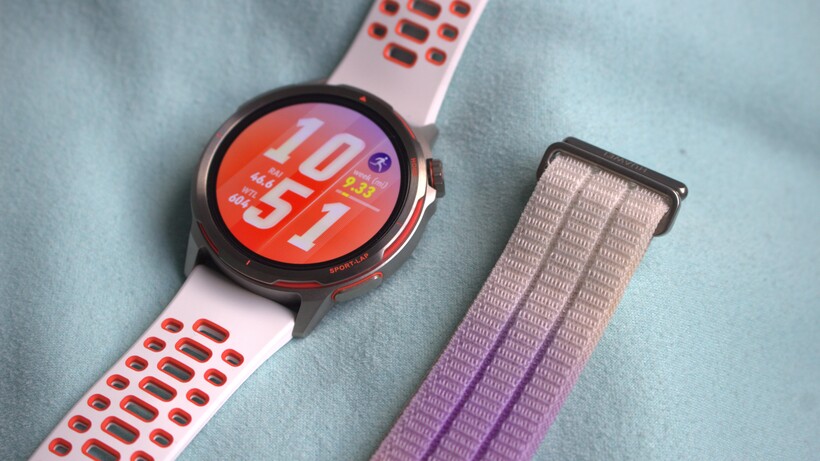
Huawei just dropped a new wearable, the Watch GT Runner 2. This isn’t your average fitness tracker; it’s a professional-grade running smartwatch that was co-created with none other than marathon legend and two-time Olympic champion, Eliud Kipchoge.
It’s built to help you train smarter, whether you’re gunning for a marathon PR or just trying to finish your first 5K.
The collaboration brings together Huawei’s top-tier wearable tech with insights from world-class athletes, ensuring precision tracking, science-driven training, and, most importantly, all-day comfort.
This watch is loaded with innovations perfect for serious marathon prep. One of the coolest features is the 3D floating antenna architecture, which should offer ultra-precise GPS, so losing your signal in a tunnel or a heavily shaded trail is practically a thing of the past. Huawei has also integrated its lactate threshold detection algorithm and running power metric.
Advertisement
Basically, you get detailed data on your training intensity and muscle strength, allowing you to fine-tune your workouts and nail that perfect race strategy. Plus, the industry-first Intelligent Marathon Mode offers dynamic pace guidance, smart refuel reminders, and real-time race support, all right there on your wrist.
Advertisement
Crafted from lightweight nanomolded titanium alloy, the Watch GT Runner 2 is Huawei’s lightest running watch yet, tipping the scales at a mere 43.5 grams. It looks great, too, coming in three sharp colorways: Dawn Orange, Dusk Blue, and Midnight Black. It includes a breathable AirDry woven strap and a bonus fluoroelastomer strap in the box.
Oh, and for extra convenience, the watch debuts Curve Pay integration, meaning you can grab a post-run smoothie without fumbling for your wallet.
The Huawei Watch GT Runner 2 is a better running smartwatch than the GT Runner, offering great features and impressive tracking for less cash than the competition.
Comfortable to wear and two strap options
Useful new training and racing modes
Plenty of smartwatch features and other sports modes
User interface is the same as other Huawei Watches
Prof Nir Eisikovits and Jacob Burley of the University of Massachusetts Boston discuss the ethics of AI in higher education and the technology’s role in ‘cognitive offloading’.
Public debate about artificial intelligence in higher education has largely orbited a familiar worry: cheating. Will students use chatbots to write essays? Can instructors tell? Should universities ban the tech? Embrace it?
These concerns are understandable. But focusing so much on cheating misses the larger transformation already underway, one that extends far beyond student misconduct and even the classroom.
Advertisement
Universities are adopting AI across many areas of institutional life. Some uses are largely invisible, like systems that help allocate resources, flag ‘at-risk’ students, optimise course scheduling or automate routine administrative decisions. Other uses are more noticeable. Students use AI tools to summarise and study, instructors use them to build assignments and syllabuses, and researchers use them to write code, scan literature and compress hours of tedious work into minutes.
People may use AI to cheat or skip out on work assignments. But the many uses of AI in higher education, and the changes they portend, beg a much deeper question: As machines become more capable of doing the labour of research and learning, what happens to higher education? What purpose does the university serve?
As these technologies become better at producing knowledge work – designing classes, writing papers, suggesting experiments and summarising difficult texts – they don’t just make universities more productive. They risk hollowing out the ecosystem of learning and mentorship upon which these institutions are built, and on which they depend.
Advertisement
Nonautonomous AI
Consider three kinds of AI systems and their respective impacts on university life.
AI-powered software is already being used throughout higher education in admissions review, purchasing, academic advising and institutional risk assessment. These are considered ‘nonautonomous’ systems because they automate tasks, but a person is ‘in the loop’ and using these systems as tools.
These technologies can pose a risk to students’ privacy and data security. They also can be biased. And they often lack sufficient transparency to determine the sources of these problems. Who has access to student data? How are ‘risk scores’ generated? How do we prevent systems from reproducing inequities or treating certain students as problems to be managed?
These questions are serious, but they are not conceptually new, at least within the field of computer science. Universities typically have compliance offices, institutional review boards and governance mechanisms that are designed to help address or mitigate these risks, even if they sometimes fall short of these objectives.
Advertisement
Hybrid AI
Hybrid systems encompass a range of tools, including AI-assisted tutoring chatbots, personalised feedback tools and automated writing support. They often rely on generative AI technologies, especially large language models. While human users set the overall goals, the intermediate steps the system takes to meet them are often not specified.
Hybrid systems are increasingly shaping day-to-day academic work. Students use them as writing companions, tutors, brainstorming partners and on-demand explainers. Faculty use them to generate rubrics, draft lectures and design syllabuses. Researchers use them to summarise papers, comment on drafts, design experiments and generate code.
This is where the ‘cheating’ conversation belongs. With students and faculty alike increasingly leaning on technology for help, it is reasonable to wonder what kinds of learning might get lost along the way. But hybrid systems also raise more complex ethical questions.
One has to do with transparency. AI chatbots offer natural-language interfaces that make it hard to tell when you’re interacting with a human and when you’re interacting with an automated agent. That can be alienating and distracting for those who interact with them. A student reviewing material for a test should be able to tell if they are talking with their teaching assistant or with a robot.
Advertisement
A student reading feedback on a term paper needs to know whether it was written by their instructor. Anything less than complete transparency in such cases will be alienating to everyone involved and will shift the focus of academic interactions from learning to the means or the technology of learning. University of Pittsburgh researchers have shown that these dynamics bring forth feelings of uncertainty, anxiety and distrust for students. These are problematic outcomes.
A second ethical question relates to accountability and intellectual credit. If an instructor uses AI to draft an assignment and a student uses AI to draft a response, who is doing the evaluating, and what exactly is being evaluated? If feedback is partly machine-generated, who is responsible when it misleads, discourages or embeds hidden assumptions? And when AI contributes substantially to research synthesis or writing, universities will need clearer norms around authorship and responsibility – not only for students, but also for faculty.
Finally, there is the critical question of cognitive offloading. AI can reduce drudgery, and that’s not inherently bad. But it can also shift users away from the parts of learning that build competence, such as generating ideas, struggling through confusion, revising a clumsy draft and learning to spot one’s own mistakes.
Autonomous agents
The most consequential changes may come with systems that look less like assistants and more like agents. While truly autonomous technologies remain aspirational, the dream of a researcher ‘in a box’ – an agentic AI system that can perform studies on its own – is becoming increasingly realistic.
Advertisement
Agentic tools are anticipated to ‘free up time’ for work that focuses on more human capacities like empathy and problem-solving. In teaching, this may mean that faculty may still teach in the headline sense, but more of the day-to-day labour of instruction can be handed off to systems optimised for efficiency and scale. Similarly, in research, the trajectory points toward systems that can increasingly automate the research cycle. In some domains, that already looks like robotic laboratories that run continuously, automate large portions of experimentation and even select new tests based on prior results.
At first glance, this may sound like a welcome boost to productivity. But universities are not information factories; they are systems of practice. They rely on a pipeline of graduate students and early-career academics who learn to teach and research by participating in that same work. If autonomous agents absorb more of the ‘routine’ responsibilities that historically served as on-ramps into academic life, the university may keep producing courses and publications while quietly thinning the opportunity structures that sustain expertise over time.
The same dynamic applies to undergraduates, albeit in a different register. When AI systems can supply explanations, drafts, solutions and study plans on demand, the temptation is to offload the most challenging parts of learning. To the industry that is pushing AI into universities, it may seem as if this type of work is ‘inefficient’ and that students will be better off letting a machine handle it. But it is the very nature of that struggle that builds durable understanding. Cognitive psychology has shown that students grow intellectually through doing the work of drafting, revising, failing, trying again, grappling with confusion and revising weak arguments. This is the work of learning how to learn.
Taken together, these developments suggest that the greatest risk posed by automation in higher education is not simply the replacement of particular tasks by machines, but the erosion of the broader ecosystem of practice that has long sustained teaching, research and learning.
Advertisement
An uncomfortable inflection point
So what purpose do universities serve in a world in which knowledge work is increasingly automated?
One possible answer treats the university primarily as an engine for producing credentials and knowledge. There, the core question is output: Are students graduating with degrees? Are papers and discoveries being generated? If autonomous systems can deliver those outputs more efficiently, then the institution has every reason to adopt them.
But another answer treats the university as something more than an output machine, acknowledging that the value of higher education lies partly in the ecosystem itself. This model assigns intrinsic value to the pipeline of opportunities through which novices become experts, the mentorship structures through which judgement and responsibility are cultivated, and the educational design that encourages productive struggle rather than optimising it away. Here, what matters is not only whether knowledge and degrees are produced, but how they are produced and what kinds of people, capacities and communities are formed in the process. In this version, the university is meant to serve as no less than an ecosystem that reliably forms human expertise and judgement.
In a world where knowledge work itself is increasingly automated, we think universities must ask what higher education owes its students, its early-career scholars and the society it serves. The answers will determine not only how AI is adopted, but also what the modern university becomes.
Nir Eisikovits is a professor of philosophy and founding director of the Applied Ethics Center at the University of Massachusetts Boston. Eisikovits’s research focuses on the ethics of war and the ethics of technology and he has written many books and articles on these topics.
Jacob Burley is a junior research fellow at the University of Massachusetts Boston, specialising in the ethics of emerging technologies. His work explores how artificial intelligence reshapes human decision-making, responsibility and knowledge practices, with particular attention to the normative and epistemic challenges posed by increasingly autonomous systems.
Don’t miss out on the knowledge you need to succeed. Sign up for the Daily Brief, Silicon Republic’s digest of need-to-know sci-tech news.
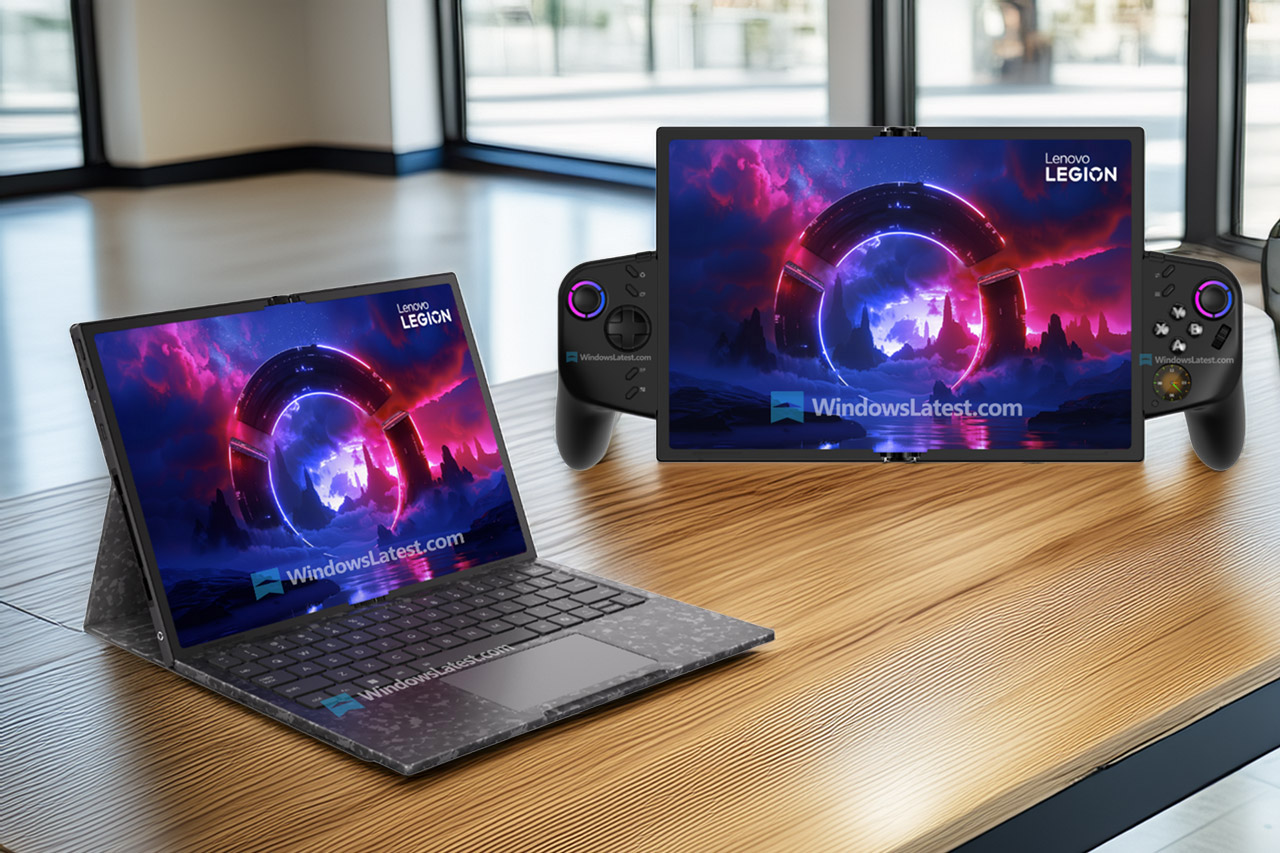
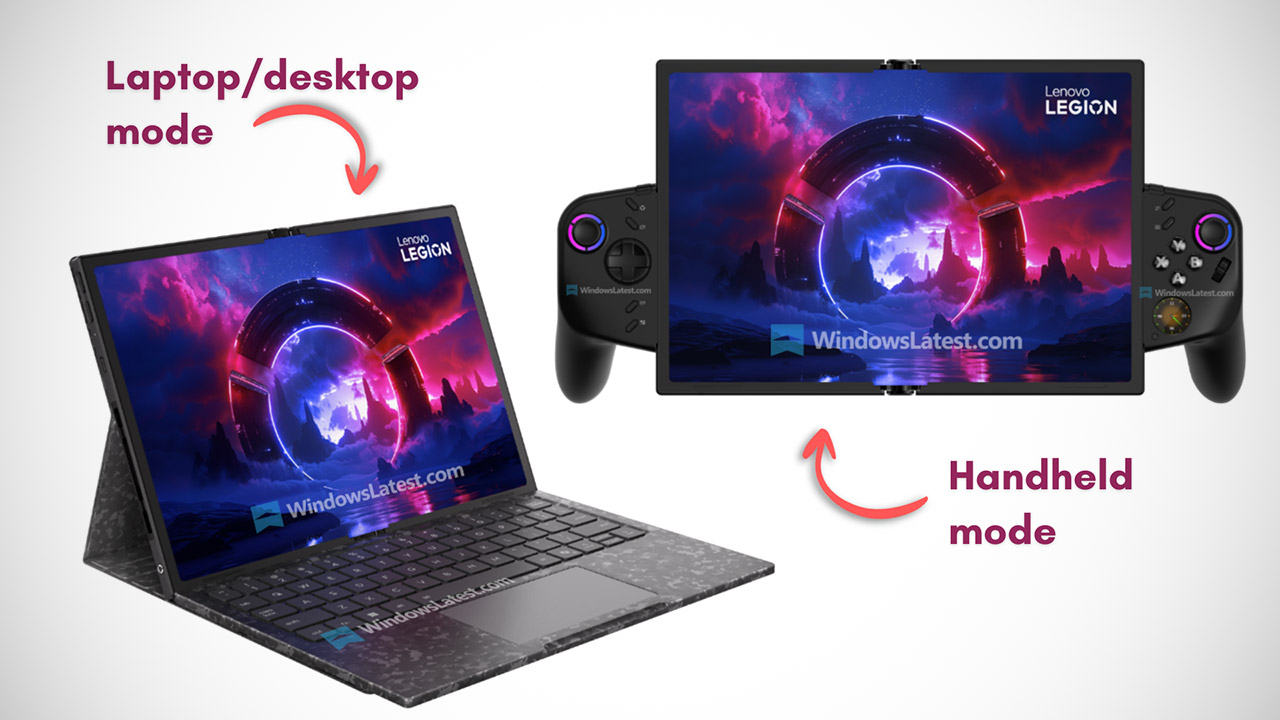
Photo credit: Windows Latest The Lenovo Legion Go Fold debuts as a novel attempt to combine the portability of a gaming handheld with the versatility of a small laptop, all in a single foldable chassis. Lenovo will unveil this at the Mobile World Congress in Barcelona on March 2, 2026, and as of now, it appears that the device will be a game changer.
At its center is a flexible pOLED screen, which when folded up measures 7.7 inches across the diagonal, making it ideal for gripping like a traditional handheld. As you open it, the screen stretches all the way to 11.6 inches. That’s a lot of real estate, almost like you’re using a compact tablet. The way it unfolds is also very fascinating, as it simply opens along a central crease, giving you a broader view of two halves of about 7.7 inches each, or stacked vertically.
XBOX EXPERIENCE BROUGHT TO LIFE BY ROG The Xbox gaming legacy meets ROG’s decades of premium hardware design in the ROG Xbox Ally. Boot straight into…
XBOX GAME BAR INTEGRATION Launch Game Bar with a tap of the Xbox button or play your favorite titles natively from platforms like Xbox Game Pass…
ALL YOUR GAMES, ALL YOUR PROGRESS Powered by Windows 11, the ROG Xbox Ally gives you access to your full library of PC games from Xbox and other game…
Lenovo is powering it with an Intel Core Ultra 7 258V CPU, a Lunar Lake chip that has been tuned for battery longevity in ultra-slim laptops. With a huge 32GB of RAM, this device can handle demanding games and multitasking without blinking an eye, even in its portable form. It is powered by a 48Wh battery, although if you use the screen in full immersion mode, the battery life may be reduced.
Here’s the cool part: there are detachable controllers that snap into the sides when used in handheld mode, and they have the familiar grips and buttons you’d expect for comfortable gameplay. One of the controllers has an additional little screen built in that displays your performance information, quick settings, and even hotkeys. Furthermore, in some situations, the same controller can morph into a vertical mouse for ultra-precise aiming in first-person shooters. When you unfold the screen, you can switch to split-screen mode, which allows one half to run a game while the other half streams or chats on the web. Alternatively, you may choose full-screen horizontal mode, which gives you an entire 11.6 inches for gaming. If you do opt to use it on a desk, it comes with a wireless keyboard and a touchpad that connects to the folding screen, transforming it into a makeshift laptop with the controller performing mouse functions.
One thing that’s missing right now is any information on how many ports it has or how thick it is, but I believe it’s safe to say that Lenovo’s priority here is getting the flexibility right rather than cramming in every feature under the sun.
As a concept, the Legion Go Fold has no set release date or pricing, but it does show a lot of promise. Lenovo has previously turned ideas like this into genuine devices, so who knows? This one may be itching to get out of the lab and into the market at some point, but that is entirely just a pipe dream for the time being. [Source]
Spotify is launching Audiobook Charts for the U.S. and U.K., the company announced on Friday. Similar to the streaming giant’s Music and Podcast Charts, the Audiobook Charts will be updated weekly and highlight the top audiobooks overall and by genre. These rankings are based on listening behavior and engagement on the streaming service, the company says.
The new charts are accessible to both free and paying users within the audiobooks hub. You can find them by tapping the search button in the app and selecting the “Audiobooks” tile to enter the hub. Then, you need to scroll down to the “Dive deeper” section to find the charts.
The move marks Spotify’s latest investment in the audiobooks space, following its official support of the format in 2022.
Since then, Spotify has continued investing in audiobooks with additional features like the recently-launched “Page Match” tool, which lets users scan a page from a physical book to instantly transition to that spot in the audiobook, and “Audiobook Recaps,” which are short audio summaries to catch you up on what you’ve already read so far.
Advertisement
Spotify says the new Audiobook Charts will benefit both readers and authors by giving listeners a trusted way to discover popular titles, while also creating new opportunities for authors and the publishing industry to reach wider audiences.
“As we’ve proven with Music and Podcasts Charts, when content is easier to access, discover, and enjoy, the demand grows,” said Duncan Bruce, Spotify’s Director of Audiobook Partnerships and Licensing, in a blog post. “We are delighted to now bring that to audiobooks, to help provide even more ways for users, publishers, and authors to discover what’s trending on Spotify, and make books more connected with culture in real time.”
It’s worth noting that Spotify isn’t only interested in audiobooks, as the streaming giant also recently ventured into physical book sales. Spotify announced earlier this month that users in the U.S. and the U.K. will soon be able to purchase physical copies of books directly within the app through a partnership with Bookshop.org.
It’s a busy week for TV fans, with new seasons of some popular shows premiering on the world’s best streaming services. From addictive period romance and staggering Monsterverse action, to a hit political thriller and long-dormant medical comedy, there’s something for nearly every taste.
As for new movies, there’s an action-adventure swashbuckler that ticks every Friday night box, including iconic stars, non-stop explosive pacing, and plenty of high-stakes thrills. Get ready to bid farewell to February with our pick of the week’s best new releases. – Amelia Schwanke, senior entertainment editor
Bridgerton season 4 part 2 (Netflix)
Bridgerton Season 4 | Part 2 Official Trailer | Netflix – YouTube
The second half of Bridgerton season 4 — read my Bridgerton season 4 part 2 ending explainer once you’ve watched it — thankfully course corrects Sophie’s (Yerin Ha) life for the better. Benedict (Luke Thompson) finally puts his big boy boots on and throws caution to the wind, fighting for the love that society doesn’t want him to have.
Advertisement
As with volume 1 of the Netflix show’s latest season, I think Violet (Ruth Gemmell) has the most interesting storyline, but watch out for Francesca (Hannah Dodd). You’ll be swooning for Benophie, but Francesca’s journey in season 4 part 2 will rip your heart out. If you’ve read the books, you’ll know exactly what I’m talking about. — Jasmine Valentine, entertainment reporter
Paradise season 2 (Hulu/Disney+)
Paradise Season 2 | Official Trailer | Hulu – YouTube
I’ve already stated my belief that Paradise season 2 is the best show of 2026 so far, but I’ll happily remind you why here. This time, Xavier (Sterling K. Brown) leaves the bunker behind to try and find estranged wife Teri (Enuka Okuma), and we meet medical school dropout-turned-Graceland tour guide Annie (Shailene Woodley), who has to hide out in the King’s mansion for the three years after the Doomsday event.
Frankly, it’s widening the outside world that really makes this series pop. Woodley is heart-breaking while wearing her heart on her sleeve, changing our understanding of the doomsday impact in the blink of an eye. Don’t rule out Sinatra (Julianne Nicholson), though… I wouldn’t trust her as far as I could throw her. — JV
The Bluff (Prime Video)
The Bluff – Official Trailer | Prime Video – YouTube
Priyanka Chopra and Karl Urban lead the cast of this new Amazon movie, which was also produced by Marvelgiants Joe and Anthony Russo. Despite the huge names attached, though, The Bluff hasn’t received glowing reviews, with critics awarding it 68% on Rotten Tomatoes.
Sign up for breaking news, reviews, opinion, top tech deals, and more.
It does have all the ingredients for a decent swashbuckler, though. In it, we follow a former pirate who must protect her family when her past catches up to her. It’s also set in the 19th century, and there’s some excellent costumes, naturally, so it may be worth setting sail towards Prime Video this weekend to get your action fix if this ticks all the right boxes. — Lucy Buglass, senior entertainment reporter
Scrubs revival (Hulu/Disney+)
Scrubs Revival | Official Trailer | ABC & Hulu – YouTube
Almost 25 years before The Pitt became a tour de force, another medical comedy-drama in Scrubs was appointment viewing on ABC (US), Channel 4 (UK), and other TV networks globally.
Well, it’s time for millennials to cry “Eeeaaaaggle!” again and return to Sacred Heart, because the beloved dramady has been resuscitated for the streaming era. Hopefully, Scrubs‘ 10th season picks up sometime after season 8 and won’t prescribe its incredibly forgettable follow-up as required viewing…
Anyway, the Scrubs revival’s two-episode premiere is out now on ABC and Hulu stateside, and Disney+ everywhere else. Give me reams more sass from Doctor Cox and the Janitor, J.D. and Turk being the best bromance on TV, and plenty of laughs and heart-breaking moments, and I won’t be calling for Scrubs to be taken off life support again. — Tom Power, senior entertainment reporter
Advertisement
DTF St. Louis (HBO Max)
DTF St. Louis | Official Trailer | HBO Max – YouTube
DTF St. Louis is a new HBO Max series that features quite the ensemble. David Harbour, Jason Bateman, Linda Cardellini, Joy Sunday, and Richard Jenkins all star in this seven-part dark comedy with a very intriguing plot.
Indeed, it centers around a complicated love triangle between three adults all experiencing “middle-age malaise”, which leads to one of them ending up dead. It’s not quite how any of them expected all that to go and the resulting downward spiral is inevitable. Who knew a casual hook up app could be so deadly?
Advertisement
New episodes will be released weekly, so that’s my Friday nights sorted for the foreseeable future. — LB
Monarch: Legacy of Monsters season 2 (Apple TV)
Monarch: Legacy of Monsters — Season 2 Official Trailer | Apple TV – YouTube
Ready for more Titan on Titan action in Legendary’s Monsterverse? You’re in luck. Season 2 of interquel show Monarch: Legacy of Monsters has debuted on Apple TV — and, judging by its official trailer, it’ll have less of the laborious human drama and more big thing-fighting-big thing action spectacle this time around.
Start those engines, because it’s time to head back into the Formula 1 paddock for eight more episodes of behind-the-scenes action. Formula 1: Drive to Survive season 8 has raced onto Netflix and it revisits the biggest moments from the 2025 Formula One World Championship.
The title fight went down to the wire between Lando Norris, Max Verstappen, and Oscar Piastri, with the trio neck-and-neck heading into the 24th and final Grand Prix, making it one of the closest finishes in more than a decade. No spoilers for anyone who didn’t hear who won, but what I will say is season 8 also spotlights the four rookies who made their debut, Christian Horner’s Red Bull exit, and plenty of other pivotal moments from the season.
Advertisement
With the 2026 championship around the corner, the new season sets the stage perfectly for the battles to come. — AS
FiiO’s product pipeline has been relentless. Over the past two years, the company has introduced a few dozen new models spanning portable DACs, Bluetooth amplifiers, IEMs, headphones, desktop gear, and now increasingly innovative home audio components. Some have been clear hits. Others have felt like experiments in a very crowded field. That is the reality when a brand moves this fast.
The $199 FiiO BTR17, launched in late 2024 as a portable Bluetooth DAC and headphone amplifier, arrived during the early phase of this surge. At the time, it drew rave reviews and strong word of mouth. Now in 2026, it is no longer the newest device in the lineup, but it may be one of the most durable and worthwhile.
Behind the scenes, it is clear that FiiO has no intention of slowing down. What we have seen offline suggests that 2026 and 2027 will bring even more ambitious desktop and home audio components that push the brand further upmarket. Against that backdrop, the BTR17 stands out as one of the earlier releases from this cycle and possibly one of the most complete.
In a market overflowing with portable DAC and amplifier options between $99 and $299, the question is simple. Is the BTR17 still relevant in 2026, and was it quietly one of FiiO’s best moves during this recent run?
Advertisement
Specifications & Technology
Let’s start where it actually matters with the BTR17: the DAC and the amplification stage.
Digital to analogue conversion is handled by a pair of ESS Sabre ES9069Q chips. On paper, they are serious performers, rated at up to 130 dB dynamic range with THD plus noise hovering around -120 dB, all while keeping power consumption in check. These are not entry level DACs thrown in to hit a price point. They are modern, efficient, and more than capable of resolving fine detail without adding grit or glare of their own.
On the amplification side, FiiO opted for the THX AAA 78+ platform. The design uses eight op-amps in a parallel configuration and can deliver up to 650 mW from the balanced 4.4 mm output into 32 ohm headphones. There is an important caveat. That full output is only available in wired Desktop mode. In portable use, maximum output drops to 300 mW, which is still respectable but not the headline number.
Power delivery inside the BTR17 is not an afterthought. The internal supply is divided into three distinct stages to keep things stable and controlled:
Advertisement
Stage 1: Filtering and overvoltage protection
Stage 2: DC to DC boost conversion
Stage 3: High precision LDO voltage stabilization
Critical sections such as the DAC chips and the amplifier each receive power from dedicated rails, a design choice intended to reduce interference and improve overall performance. Whether that translates into audible benefits is something we will dig into in the listening section.
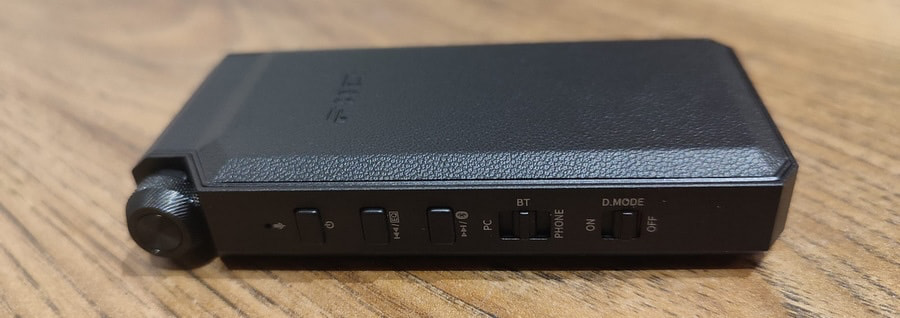
A quick word on Desktop mode, because it is one of the BTR17’s more practical features. Flip the switch and connect power to the dedicated USB C “power in” port, and the unit runs from an external supply instead of its internal battery. That means you can use it at a desk all day without cycling the battery. For anyone planning to use this as a compact home DAC and amp, that is not a small detail.
There are two additional operating modes: BT and PHONE.
Advertisement. Scroll to continue reading.
BT mode is exactly what it sounds like. It is engaged when using the BTR17 wirelessly. The unit runs Bluetooth 5.4 via Qualcomm’s QCC5181 platform, with support for transmission rates up to 2100 kbps, along with LDAC and aptX Lossless. In practical terms, that puts it at the front of the pack for high resolution wireless audio support at this price.
PHONE mode is more about power management. In this setting, the BTR17 shares the load with the connected source device rather than drawing heavily from it. The idea is to reduce battery drain on your phone or tablet during wired use. It is a thoughtful inclusion for anyone who has watched their phone battery nosedive during a long listening session.
Back to the hardware.
FiiO fitted the BTR17 with an XMOS XU316 USB processor, which is not bargain bin silicon. It offers low latency, stable data transmission, and support for 32-bit/768kHz PCM and native DSD512. Even with the built in parametric EQ engaged, it can handle up to 192 kHz. In short, there is more than enough headroom here for any real world use case.
Speaking of EQ, you get a full 10 band parametric setup to fine tune the sound. That means proper control over frequency, gain, and EQ, not just a handful of preset tone tweaks. Profiles can be saved, imported, exported, and shared through the FiiO Control app, so if you have a dialed in curve for a specific IEM or headphone, you can pass it along instead of trying to describe it over text like a lunatic.
Advertisement
The FiiO Control app also handles core settings and firmware updates. Most adjustments can be made directly on the device, but the app makes deeper configuration easier and keeps the unit current with software refinements.
As for battery life, FiiO rates the BTR17 at roughly eight hours using the 4.4 mm balanced output. In practice, that figure held up during continuous use with LDAC over Bluetooth. For a compact all in one DAC and amplifier at $199, that is a solid, realistic result rather than marketing fantasy.
Design & Build Quality
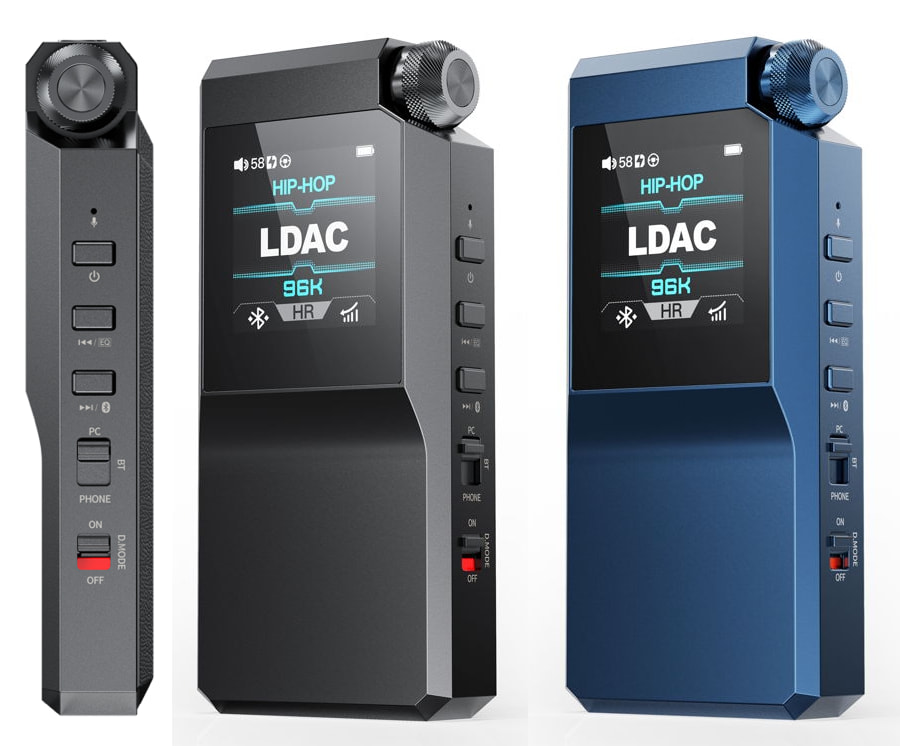
The centerpiece of the BTR17’s design is its display. The 1.3 inch IPS screen, with a 240 x 240 resolution, is bright enough for outdoor use and delivers surprisingly vibrant color for a device this small. Key information is always front and center, including volume level, active Bluetooth codec, and sampling rate. Each codec is color coded, which makes it easy to see at a glance what you are actually streaming.
FiiO makes a point of highlighting the tactile, stepped volume knob. In practice, it is serviceable but not exactly luxurious. The rotation feels a bit light, and the integrated push button comes across slightly hollow and sticky when pressed. It works, but I have handled more refined implementations on competing devices.
The back panel is wrapped in raw leather, which adds some welcome texture and grip. The main chassis is aluminum alloy, something that still is not guaranteed in the sub $200 category. The overall construction feels solid even if the control hardware is not class leading.
Advertisement
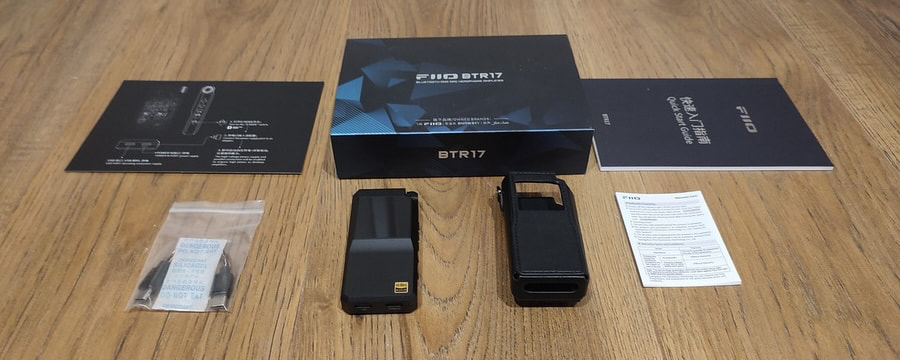
In the box, FiiO includes the usual documentation, a well made leatherette case, and an eight stranded USB C to C cable that looks and feels more premium than expected at this price.
Physically, the BTR17 measures 16.3 mm x 41.2 mm x 86.6 mm, which translates to roughly 0.64 x 1.62 x 3.41 inches. It weighs about 73.4 grams, or approximately 2.6 ounces. In daily use, it is compact and light enough to disappear into a pocket. Our review sample was black, but it is also available in a striking blue finish.
On the right side of the chassis you will find the physical controls. Just below the volume knob sits the power button. Beneath that are the forward and backward track buttons, which also double as EQ preset selectors. Further down are the switches for power mode selection and Desktop mode activation.
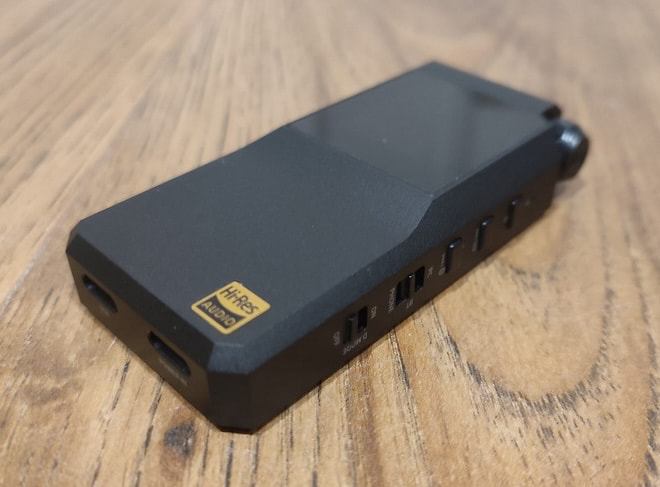
Along the bottom edge are two USB-C ports. One handles data transfer and charging, while the second is dedicated to external power input when using Desktop mode. Up top are the headphone outputs: a standard 3.5 mm single ended jack and a 4.4 mm balanced Pentaconn connection.
Advertisement
Advertisement. Scroll to continue reading.
Listening & Headphone Synergy
With output figures that edge toward a full watt in Desktop mode, the BTR17 has more than enough muscle for the vast majority of full size over ear headphones. Even in portable mode, there is sufficient headroom for anyone who listens at spirited levels.
At that point, the conversation shifts. Raw power is only part of the equation. The real question is how clean, controlled, and refined that power sounds. Quality of amplification matters just as much as quantity, and in many cases more.
It is also worth saying that using a Bluetooth DAC and amplifier in general feels liberating. Being able to move around freely without being anchored to a desk changes the experience in a very real way. That freedom alone makes listening more enjoyable, and it gives the BTR17 an advantage that is not captured on a spec sheet.
The first thing I noticed after plugging the HiFiMAN HE1000 Unveiled into the BTR17 was a subtle but clear sense of added weight down low, even with no EQ engaged. I do not believe the unit is altering frequency response in any dramatic way, but there is a perceptible increase in bass impact and authority compared to some other solid state DAC and amp combinations.
Advertisement
On “Why So Serious?” by Hans Zimmer and James Newton Howard, the subterranean swell that creeps in around the three and a half minute mark had more physical presence and drive than I heard from the FiiO JM21 DAP I reviewed recently. The BTR17 gives that moment extra grunt, which makes the track feel more visceral without tipping into exaggeration.
That translates into a slightly warm overall character, but not one that sounds bloated or soft. The midrange remains articulate and clean, and there is a mild lift in the upper mids that enhances perceived detail. Dynamics are lively across the spectrum, with good separation and fine note clarity. Treble extension is intact with no obvious roll off, though it stops short of the most ethereal or shimmering presentation I have heard. Even so, the delicate triangle hits in L’Impératrice’s “La Lune” came through clearly and without any significant loss of detail.
I have often felt that the HE1000 Unveiled can use a touch more foundation in the bass. The BTR17 does not transform it into a reference caliber headphone in that range, but it does add just enough authority down low to counterbalance the headphone’s inherent treble energy. The pairing felt cohesive and well judged rather than artificially thickened.
Listening was split between wired Desktop mode and wireless operation over LDAC from my phone. Despite the lower maximum output and reduced sampling rate in Bluetooth mode, I was genuinely hard pressed to identify meaningful sonic differences between the two in casual and focused listening. That should reassure anyone planning to use this primarily as a wireless solution.
That said, perspective matters. Moving over to a dedicated desktop chain like the SMSL DO400 paired with the Aune S17 Pro immediately delivered greater soundstage width, more defined layering, and a higher level of micro detail. The BTR17 gets impressively close for a compact all in one device, but a serious desktop stack still has the edge in outright scale and refinement.
The Bottom Line
The FiiO BTR17 gets the fundamentals right.
It delivers clean, controlled power with a slightly warm tilt that adds welcome body without sacrificing clarity. The dual ESS DAC implementation, THX AAA amplification, XMOS USB stage, and full 10 band parametric EQ are not filler features. They translate into real flexibility and performance that push this well beyond basic Bluetooth dongle territory. In Desktop mode, it has enough output to handle demanding full size headphones. In wireless mode over LDAC or aptX Lossless, it retains far more composure and resolution than most portable solutions in this price bracket.
Advertisement. Scroll to continue reading.
Advertisement
What it does not do is replace a serious desktop stack. You will still get greater scale, layering, and ultimate refinement from a dedicated DAC and amplifier chain. The volume control hardware is also merely adequate rather than premium. If you are chasing the last word in micro detail or build finesse, this is not that device.
What makes the BTR17 compelling in 2026 is the combination of genuine audiophile architecture, robust codec support, proper EQ control, and real world usability in a device that fits in your pocket. It is as comfortable on a desk in Desktop mode as it is clipped to a jacket streaming from your phone.
Who should consider it? Anyone who wants near desktop performance without being chained to a desk and headphone enthusiasts with multiple pairs of headphones and IEMs to drive; and that includes commuters and business travellers who have not ventured down the wireless earbud or headphone rabbit hole.
In a cycle where FiiO has released dozens of products, the BTR17 stands out as one of the more complete and mature executions. Not perfect. Not revolutionary. But very, very well executed for $199.
Advertisement
Pros:
Powerful for the size – Up to 650 mW balanced in Desktop mode with enough headroom for most full size headphones, including higher impedance models.
Excellent wireless support – Bluetooth 5.4 with LDAC and aptX Lossless delivers near wired performance in real world use.
High end internal architecture – Dual ESS ES9069Q DACs, THX AAA 78+ amplification, and XMOS XU316 USB stage at $199 is strong value.
Full 10 band parametric EQ – Deep tuning capability with profile import and export via the FiiO Control app.
Flexible use cases – Desktop mode, PHONE mode power management, balanced and single ended outputs, compact and genuinely portable.
Cons:
Not a true desktop replacement – Dedicated DAC and amplifier stacks still outperform it in staging, layering, and ultimate refinement.
Volume knob feels average – Tactile response and integrated button lack a premium feel.
Power drops in portable mode – Maximum output is reduced outside Desktop mode.
Treble is clean but not exceptional – Extended and articulate, though not the most airy presentation.
Feature density may overwhelm casual users – Extensive settings and modes require some learning curve.
Google just launched Nano Banana 2, and this model produces professional-grade photos at warp speed while still providing the kind of control you’d only get from premium models in the past. Powered by the Gemini 3.1 Flash architecture, it replaces the previous Nano Banana on all main platforms. Users now have access to significantly more detail, richer textures, and brilliant lighting in every photo. You may create photographs ranging from ultra low-resolution to 4K, and you have complete control over how they appear, whether you want a square portrait or a vast, theatrical scene.
One of the most noteworthy features is the generator’s speed, which allows you to experiment with different ideas without having to wait. Edits appear quickly, whether you’re adjusting the lighting, composition, or a single element. This makes it ideal for rapid experimentation, whether you’re working on a single concept or testing out a variety of images.
Google Pixel 10a is a durable, everyday phone with more[1]; snap brilliant photography on a simple, powerful camera, get 30+ hours out of a full…
Unlocked Android phone gives you the flexibility to change carriers and choose your own data plan; it works with Google Fi, Verizon, T-Mobile, AT&T…
Pixel 10a is sleek and durable, with a super smooth finish, scratch-resistant Corning Gorilla Glass 7i display, and IP68 water and dust protection[4]
It’s not only about speed; the control is far more precise than ever before. Complex directions are accurately picked up; you may even request tiny nuances in style or tone, and it will be perfectly executed. Object consistency is also far more reliable; you can have up to five characters or figures that seem same from one image to the next. The model can also accommodate up to 14 separate items in a single scene without losing a step, making it ideal for agricultural scenes with animals and tools, as well as highly complex multi-panel storytelling.
Text rendering also looks much better, with words and phrases appearing crisp and clear, making it an ideal tool for infographics, signs, diagrams, and marketing materials. With Gemini’s real-time expertise, the tool can even extract exact details for objects, scenarios, or data visualizations, resulting in a diagram of the water cycle with the proper labels and ingredients.
Nano Banana 2 is currently available in the Gemini app, with options for fast, thoughtful, and pro modes. Google Search has received an AI boost, and technologies such as Flow, AI Studio, Google Cloud, and Ads will include the model in the coming months. Free users will have access to fewer generations, whilst premium subscribers will have far more.
Finding an inexpensive, quality inkjet printer isn’t a challenge. But getting affordable replacement ink is another matter entirely.
You might be shocked to learn that replacement ink cartridges can cost as much as the printer itself, if not more. It’s because printers are often sold at a loss, with the company expecting to make its profit on the ink.
This strategy, also known as the “razor-and-blades model,” is common in consumer goods, including printers, coffee makers (the ones that use disposable pods) and its namesake, shaving razors.
Advertisement
Printer manufacturers, however, claim there are several reasons why ink costs so much, beyond revenue. Here are the main reasons why printer ink is so expensive.
The razor blade business
The razor-and-blade business model provides a continued revenue stream for printer-makers after a customer buys the hardware. It also locks that customer into an ecosystem. Just as some razor handles are compatible with only a specific blade, printers support only certain inkjet or toner cartridges.
Manufacturers typically offer different printer models, but they likely use different cartridges that aren’t interchangeable. The cartridges also aren’t refillable by design. While it may seem manipulative, this business model is legal and common practice. It also keeps prices high due to a lack of competition.
It’s all proprietary (aka intellectual property)
Advertisement
Thanasi/Getty
Another way consumers are locked into a closed ecosystem is that many ink and toner cartridges contain chipsets that communicate with the printer, such as the amount of ink or toner left, so the printer can estimate how many pages it can print. They also verify whether the cartridge is authentic (i.e., from the printer manufacturer) or has been refilled. In either case, the printer could reject the cartridge.
While some third-party suppliers have found ways around this, printer cartridges are proprietary, the intellectual property of the original manufacturer. Customers are usually limited in replacement options other than buying from their printer’s original equipment manufacturer.
This isn’t about the cost of research and manufacturing, or at least, not just about that. Printer-makers claim that their technology ensures consumers get the best print quality from their ink or toner, as well as proper performance and accurate color or monochrome prints.
For example, inkjet printer ink is formulated to flow smoothly through the tiny printhead nozzles, while laser printer toner powder must be heated and applied evenly. That ink or toner also has to dry quickly on paper without smudging, which is another key reason. The official cartridges also include security features that manufacturers claim protect against malware.
So, although cartridges look simple on the outside, their embedded technology adds to manufacturing costs. Companies say this helps ensure high print quality, but consumer advocacy groups say it is designed to keep out competition while shifting the cost to users.
Advertisement
If you print often, expect to spend more on consumables
Gettyimages/Photoplus magazine
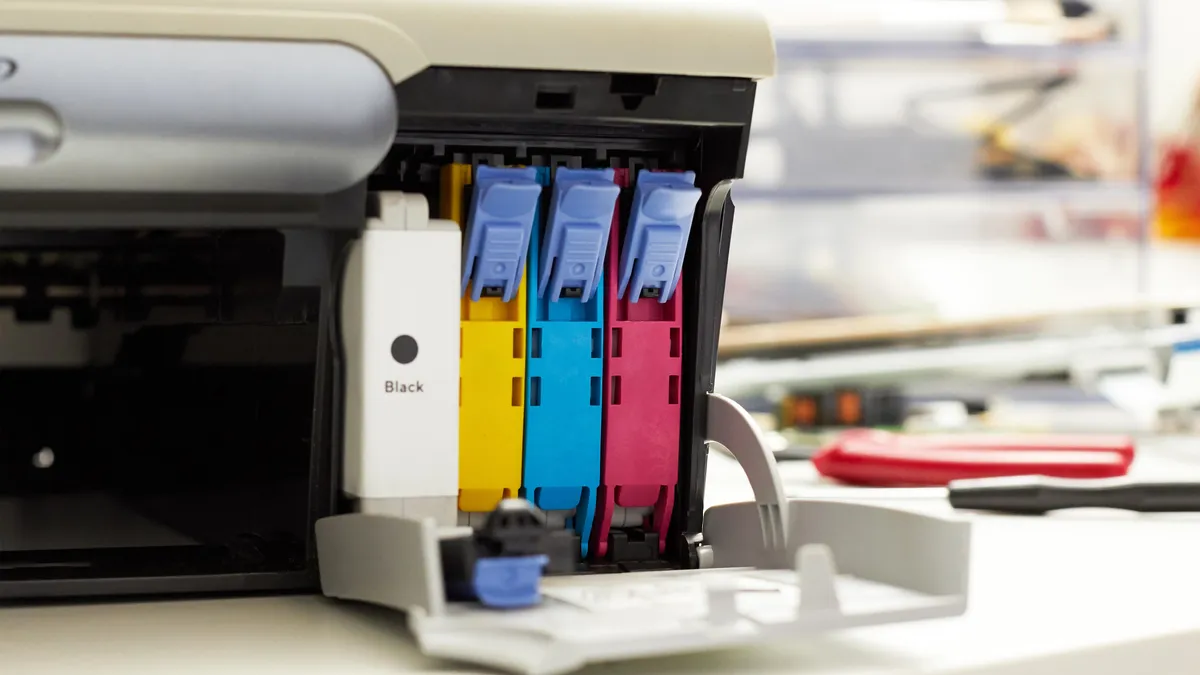
Obviously, the more ink or toner used, the sooner replenishment is needed. This is especially the case with inkjet printers, as cartridges often contain a low yield of ink (between 150 to 300 pages). And, if the printer uses multiple cartridges, those costs add up quickly. If you run out of one color, you might not even be able to print black-and-white documents.
Worse, new inkjet printers include “starter ink cartridges” that offer even lower yields. Laser printer toner cartridges also require replacing, but they tend to have higher yields than their inkjet counterparts.
Also, if you don’t print often, the ink in the cartridges can dry out, requiring replacement before you can print anything.
How to reduce printer ink costs
Advertisement
Epson/CNET
There’s no way around it: Inkjet printers need ink, which will eventually run out. But there are a few ways to save some money.
High-yield cartridges
Some printers support high-yield ink or toner cartridges, which double the output of standard options. They cost a bit more, but you may be able to reduce the frequency of ink replacements. They also might be cheaper per page printed.
Refillable ink
Refillable inkjet printers, also known as supertank printers, have gained popularity. As the name suggests, a user pours ink into tanks built into the printer, much like refilling a soap bottle. Refillable inks are cheaper than ink cartridges and offer a much higher yield. (They also produce less waste in general.) However, the printers themselves are more expensive to purchase upfront.
HP
Subscription programs
HP offers its Instant Ink program, which automatically ships you a replacement when ink runs low (the printer sends this info to HP when connected to Wi-Fi). Starting at $1.79 a month, HP sends new high-yield cartridges only when needed and recycles your old cartridges to reduce e-waste. HP says Instant Ink offers a savings of up to 50% when compared to buying off the shelf, and most Wi-Fi-enabled HP printers support the program.
Epson launched a new service called ReadyPrint, where, for a monthly fee (starting at $15), you get a printer and unlimited refillable ink. ReadyPrint is available only on select models.
Advertisement
Print in draft mode and limit color
Oftentimes, lower-quality draft mode is more than sufficient for most print jobs. This can help increase page yields. Nearly all inkjet printers can output in color, but that doesn’t mean you should. Make sure you disable color in your print settings and enable it only when needed.
Consider a laser printer
Laser toner cartridge.
Getty Images/Smith Collection
Evaluate the amount and type of printing you plan to do. If it’s mostly black-and-white documents, it may be more economical to invest in a laser printer, since toner offers higher yields and doesn’t dry out between infrequent uses.
Advertisement
Then, if you need to occasionally print color or photos, print them professionally at FedEx, pharmacies like CVS and any number of local or online photo print shops. In the long run, this might be cheaper than owning your own color printer if you don’t print regularly.
Third-party supplies
Third-party ink supplies can offer significant savings, but printer manufacturers have strongly fought against this option. They’ve even implemented measures to prevent their use. However, it’s not illegal for consumers to use third-party inks. Before you choose this option, know that the savings may come at the cost of print quality, and some third-party inks could damage the hardware.
While using third-party ink won’t void the warranty, the printer manufacturer may not cover repairs or replacements if third-party supplies are found to be the source of damage. It’s best to choose a reputable retailer or service known for high-quality third-party inks, and that will stand behind them.
The upcoming BGMI 4.3 update will introduce a new racing-style feature to classic matches, adding an action-packed element to the traditional battle royale experience. The update brings drag-style checkpoints that players can activate during regular games, turning certain map zones into timed vehicle challenge areas.
Once a squad enters a flagged race zone, a timed driving challenge begins. Players must move quickly through designated checkpoints before the timer expires. Finishing the run successfully rewards additional loot, which may provide a game-changing boost during mid-game situations. Nevertheless, such paths are commonly placed in open areas, making the vehicle vulnerable to enemy fire. This is a strategic choice – pursue reward routes or play it safe.
The racing system is a part of the overall mobility emphasis in the 4.3 update. Vehicles are about to play a more strategic role rather than being confined to rotation or escape routes. Such checkpoints can be used by teams as mid-game objectives, aggressive loot routes, or even quick shortcuts.
In this way, the update combines speed challenges with survival gameplay to keep matches interesting and less predictable. Casual gamers and pro squads will actively use the feature to secure bonus loot and strengthen their map position. The checkpoints in the update ensure that the players act quickly and do not hesitate.


































![Can this CPF Update Finally Resolve Financial Anxiety of the Middle Class? [Chills 255, Budget 2026]](https://wordupnews.com/wp-content/uploads/2026/02/1772208129_maxresdefault-80x80.jpg)