
When Sam Altman first told her that he’d never let OpenAI go corporate, that what he and his colleagues were building was too powerful to be driven by investors, Catherine Bracy more or less believed him.
Tech
OpenAI built a $180 billion charity. Will it do any good?


The conversation took place in 2022, when Bracy, CEO and founder of the social mobility-focused nonprofit TechEquity, was interviewing Altman for a book she was writing about the dangers of venture capital. It was before Altman’s mysterious firing and unfiring a year later, after which he mostly stopped responding to Bracy’s texts.
And ever since then, OpenAI — which was initially founded as a nonprofit in 2015 to “advance digital intelligence in the way that is most likely to benefit humanity as a whole, unconstrained by a need to generate financial return” — has been publicly trying to escape the confines of its charitable roots. Today, OpenAI contains both a corporate arm focused on building and selling AI and a nonprofit arm with a stated mission of ensuring that AI benefits people.
During the controversial process of trying to fully sever the two in 2024, OpenAI lost about half of its AI safety staffers and much of its senior leadership. That was followed by an intensified scrutiny from state attorneys general, nonprofit legal experts, competitor companies, effective altruists, Nobel Prize winners, vast swaths of California’s philanthropic community, and one of its original funders, Elon Musk. Different sides had different interests, but the overall argument was that shifting to a for-profit model would create a fiduciary duty to investors that would inherently clash with its original mission of safety and public benefit.
Is OpenAI’s new foundation a $180 billion distraction?
- Last October, OpenAI agreed to make its nonprofit arm very rich. The OpenAI Foundation is now worth about $180 billion and it has two main objectives:
- Helping the world adapt to and benefit from AI by giving money to charity.
- Acting as a moral compass for OpenAI the company, especially when it comes to safety and security decisions.
- The foundation has already given away about $40.5 million so far, a small fraction of the billions it plans to eventually donate. But critics see the donations as a distraction.
- While OpenAI says its foundation has the final say on security and safety-related decisions, the company has come under scrutiny in recent months for striking a deal with the Pentagon, fighting against statewide AI legislation, and testing ads for free users.
- Even if the foundation does eventually give away billions of dollars, it may never be enough to make up for what the public lost in allowing OpenAI to go corporate.
Nonetheless, OpenAI did finally strike a contortive restructuring deal last October. Essentially, the for-profit arm became what is known as a public benefit corporation (PBC), called the OpenAI Group. The original nonprofit became the OpenAI Foundation, which has a 26 percent stake currently worth $180 billion in the PBC, plus a sliver of exclusive legal control over certain major decisions.
One effect of the transition was that it essentially required OpenAI to put a number on what it owed the public for converting what had been a project for all humanity into something that most directly benefits the company’s investors. The resulting stake of the OpenAI Foundation is big enough to instantly make it one of the wealthiest charities in the country, or in OpenAI’s words, the “best-equipped nonprofit the world has ever seen.” On paper, at least, the foundation is now significantly richer than the entire country of Luxembourg. Even the Gates Foundation has only $77.6 billion in assets, less than half of what the OpenAI Foundation can draw from, though it’s important to note that most of the wealth of the OpenAI Foundation is locked in fairly illiquid shares within the still private company, which limits how quickly any money can be given away.
Still, its sheer size means that the OpenAI Foundation stands to eventually be a transformative presence on the philanthropic stage, one way or another. But while OpenAI says the foundation will eventually give out many billions of dollars in philanthropy to ensure that “artificial general intelligence benefits all of humanity,” it’s uncertain that a socially beneficial philanthropy can exist side by side with a company that is fighting an existential battle over who will dominate the AI industry.
“The unspoken truth here is that they’re never going to make a decision that is bad for the company,” Bracy said. “These two entities cannot live under the same roof” where “the mission is in control.” (Disclosure: Vox Media is one of several publishers that have signed partnership agreements with OpenAI. Our reporting remains editorially independent.)
The foundation’s first gifts came in the form of $40.5 million in no-strings-attached grants to over 200 community nonprofits, like churches, food banks, and afterschool programs. Notably, most grantees had little to no connection to AI or technology — and just as notably, several of these early grantees just so happen to be members of EyesOnOpenAI, a coalition of California nonprofits critical of OpenAI’s privatization that formed in 2025.
But there are signs the foundation will soon pivot into grantmaking that’s more obviously relevant to the company’s original charter, which aimed to ensure that the benefits of AI are broadly distributed while also prioritizing long-term safety in the technology’s development. On Feb. 19, OpenAI — the company, not the foundation — announced a $7.5 million grant in conjunction with Microsoft, Anthropic, Amazon, and other major tech companies for a new, international project aimed at researching how to make AI systems safer.
“The unspoken truth here is that they’re never going to make a decision that is bad for the company.”
— Catherine Bracy, TechEquity founder and CEO
The real questions around the OpenAI Foundation have less to do with how much it is giving and to whom than whether it is actually able to carry out its contractual oversight role. In theory, the foundation should be ensuring that OpenAI is the standard-bearer for ethical decision-making at the frontier of AI development. That would be a unique contribution to the field — and an embodiment of OpenAI’s original mission — that no amount of grantmaking could replace. Yet, a series of troubling recent decisions by the company hardly seems to bear out that vision.
OpenAI has begun its new corporate journey by debuting ads on its free tier service, firing an executive who raised safety concerns about a soon-to-come NSFW mode for ChatGPT on charges of sexual discrimination against a male colleague, and burning cash while its president funnels millions of dollars into Donald Trump’s super PAC. OpenAI President Greg Brockman has also teamed up with the private equity firm Andreessen Horowitz and Palantir’s co-founders to fund a $125 million super PAC aimed at promoting AI-friendly policies. Along with Google, xAI, and Anthropic, OpenAI has also come under scrutiny in recent weeks for its defense contracts with the Pentagon.
When OpenAI succeeded in its campaign to cede its foundational new technology from nonprofit control, it opened the door for many of these decisions. Even $180 billion in charity might not be enough to make up for the difference.
How OpenAI shed its nonprofit skin
Corporate charity is ubiquitous in the tech world, especially among the biggest players. Microsoft plans to donate $4 billion in cash and AI cloud technology to schools and nonprofits by 2030. Google gives away some $100 million annually, often to organizations focused on artificial intelligence and technology.
But from the beginning, OpenAI was different. Rather than making money and giving some of it to charity, OpenAI was the charity. It was founded as a nonprofit research lab with about $1 billion in start-up donations, mostly from tech titans like Altman, Brockman, and Elon Musk.
There are some structural advantages to being a charity. You can’t accept investments, but you can accept donations and you don’t have to pay most taxes. What’s more, in those early days, OpenAI’s stated mission — to build safe AI without the pressures of financial incentive — gave it a major boost when it came to recruitment for rarified talent. Machine learning prodigy Ilya Sutskever told Wired in 2016 that he chose to leave Google to become OpenAI’s chief scientist “to a very large extent, because of its mission.”
But there were limits to being a fully nonprofit entity. In pursuit of financing amid the rising computing costs of cutting-edge AI, OpenAI created its capped-profit subsidiary in 2019 to manage a new $1 billion investment from Microsoft. Three years later, ChatGPT took the world by storm. Sutskever, and other members of OpenAI’s board, tried and ultimately failed to oust Altman amid accusations of dishonesty in 2023. (Altman denied those accusations.) In 2024 — one year after Sutskever and other members of OpenAI’s board tried and ultimately failed to oust Altman amid accusations of dishonesty — the organization announced its intention to go fully corporate and splinter off the nonprofit into its own fully independent entity.
The transition to for-profit “just didn’t smell right,” said Orson Aguilar, head of LatinoProsperity, an economic justice nonprofit and Bracy’s co-leader at EyesOnOpenAI. He wasn’t alone: By early 2025, a dozen former OpenAI employees filed an amicus brief aimed at stopping the conversion because it would “fundamentally violate its mission.” And more than 60 nonprofit, philanthropy, and labor leaders, many of them based in OpenAI’s home state of California, agreed that the attempt to privatize felt unfair given the extent to which the company benefited from its tax-free status during its early development.
To grasp what this all means, try thinking of OpenAI’s for-profit arm as an angsty tween and the nonprofit as her well-meaning, but often powerless parent. For years, the tween had been allowed to do her own thing, but only within certain limits — she still had to do her homework and get home by a certain time. Now imagine, she’s sick of having a curfew. “Nobody else has one!” She still lives in her mother’s house, but she wants to follow her own rules.
That’s kind of what happened here. Up until now, OpenAI’s for-profit subsidiary had a capped-profit model, meaning there were limits on how much money investors could make. But this new deal paved the way for the for-profit to become a full-time corporate girlie, charitable bylaws be damned. And while OpenAI’s new public benefit corporation still technically exists under the original nonprofit’s control, it mostly follows its own rules. It can raise as much money as it wants and eventually, it will likely go public.
But California history did provide some hope that the public might at least get some meaningful benefit from the transition. Back in the 1990s, California’s branch of the health insurer Blue Cross Blue Shield — then a nonprofit called Blue Cross of California — decided to privatize. After some haggling with state regulators, the company agreed to forfeit all of its assets, worth $3.2 billion, to a pair of independent nonprofits in exchange for going private. The result was the California Endowment, which is now the state’s largest health foundation.
Many nonprofit leaders in California hoped that OpenAI, which is headquartered in the state, would strike a similar deal, ceding a majority of its assets to a fully independent nonprofit. And those assets were and are enormous.
Gary Mendoza, a former state official who oversaw the Blue Cross deal, estimated the OpenAI nonprofit’s rightful assets at over $250 billion, or half the company’s $500 billion worth. “Anything short of 50 percent,” he told the San Francisco Examiner last year, “is a missed opportunity.” And beyond money for the public, assuming the nonprofit kept its shares, it would add up to enough influence to really shape OpenAI’s corporate decision-making at a key moment for the future of artificial intelligence.
Given that the OpenAI Foundation ended up with little more than a quarter of the final company, this is obviously not what happened. But EyesOnOpenAI’s years-long lobbying effort was not a total bust. The criticism proved powerful enough that last May, OpenAI was forced to give up on an initial plan to restructure away its nonprofit assets into a new organization wholly disconnected from OpenAI, which would have left the nonprofit with no legal control over the for-profit arm.
On paper, the new deal includes some meaningful concessions. It contractually requires the nonprofit mission to come first on safety and security issues, with no regard to shareholder interests. The memorandum also calls on OpenAI to “mitigate risks to teens” specifically. It made the foundation the controlling shareholder of the corporation, affording it the right to appoint corporate directors and oversee critical decisions like a sale.
If OpenAI abided by all of its terms and eventually started giving away billions of dollars of philanthropy each year, then the world — or at least California, where many of OpenAI’s grants have been concentrated — could stand to greatly benefit from it.
Random acts of corporate kindness
And this brings us to the $40.5 million that OpenAI gave to over 200 nonprofits toward the end of last year.
Many of these charities applied to the grant with sophisticated ideas around how to help their communities integrate or adapt to AI, though they can ultimately use the grants however they see fit. Among them were public libraries, Boys and Girls Clubs, churches, food banks, and legal aid nonprofits. Coming at a moment when the majority of the country’s nonprofits face existential funding cuts, “it was just the perfect timing,” said Thomas Howard Jr, head of Kidznotes, a North Carolina nonprofit focused on music education that received $45,000 in OpenAI’s first round of grants.
“There’s nothing I’ve seen that gives me reassurance that they’ll catch the important safety issues when they come up — or that they’ll be doing a thorough investigation of the grantmaking opportunities.”
— Tyler Johnston, Midas Project executive director
So civil society’s fight over the OpenAI transition won at least enough concessions to help these worthy organizations and retain some semblance of nonprofit control over some of the for-profit’s activities. So why do so many people in the philanthropic community remain so negative about the foundation?
“I’m all for nonprofits getting money,” said Bracy, the head of TechEquity. “I don’t begrudge any organizations that took the money, but I don’t think it’s some indication that OpenAI is living up to the mission of the nonprofit.”
$40.5 million, of course, is only 0.02 percent of the OpenAI Foundation’s on-paper $180 billion windfall. How the foundation will eventually spend the other 99.98 percent remains to be seen, though the foundation has said that at least $25 billion will ultimately go to scientific research and what it’s calling “technical solutions for AI resilience.” The company plans to announce a second wave of grants directed at organizations using AI to work across issues like health in the coming months.
“We are doing the important work of engaging with experts, learning from communities, and shaping a point of view of where Foundation investments can make the greatest difference,” the OpenAI Foundation’s board of directors said in response to a request for clarity on where future funding will go. “We look forward to sharing more soon.”
But so far, critics remain skeptical. OpenAI has done little to prove that its newfound philanthropy is more than just “a smoke and mirrors show,” argued one member of the Coalition for AI Nonprofit Integrity (CANI) — a coalition composed largely of AI insiders, including former OpenAI employees, furiously opposed to the restructuring. He spoke on the condition of anonymity because he feared retaliation from OpenAI, which has accused CANI of being a front funded by Musk. (CANI has denied receiving any such funds — though not for lack of trying. If you scroll to the bottom of OpenTheft, a website created by CANI, you’ll find a direct plea to Musk for donations.)

While a spokesperson for OpenAI said that the foundation is in the process of building a dedicated team, and has sought the input of both nonprofit leaders and experts in how society can adapt to AI, the company has yet to make any major staffing announcements for its grantmaking arm. For now, with the exception of Zico Kolter, the head of the nonprofit’s safety committee, the foundation board still shares the same members as the corporate board, including CEO Sam Altman. The idea is that these board members can put on different hats when meeting about nonprofit versus corporate priorities, asserting the foundation’s oversight when needed. But it has created the appearance of a conflict of interest.
When asked for mechanisms and examples for how the foundation has responded to situations where its mission conflicts with shareholder interests, given the overlapping board membership, the spokesperson said that OpenAI has conflict-of-interest policies and governance procedures in place to ensure its directors only consider the mission when they meet, as they regularly do, about nonprofit issues.
The company also said the foundation board constantly exercises its oversight role, including for all new major product releases, like the release of GPT‑5.3‑Codex, an advanced agentic coding model, last month. The AI watchdog group the Midas Project, a frequent thorn in OpenAI’s side, accused the company of violating safety standards, an allegation that OpenAI fervently denied.
In any case, since the OpenAI Foundation is not a separate entity with its own independent board, some critics have compared it to other feel-good corporate social responsibility ventures, like the McDonald’s Ronald McDonald House, Walmart’s healthy foods program, and Home Depot’s work with veterans.
Corporate social responsibility has its place, and it can do real good. But Bracy believes that based on the OpenAI Foundation’s structuring and how they’ve conducted their grantmaking so far, it will probably never fund anything “they see as a threat to the growth of the company,” said Bracy, despite the fact that the need for guardrails on unrestricted AI development featured prominently in the company’s original mission. “They’re going to do what’s best for the bottom line of the for-profit.”
Critics like Bracy also doubt the OpenAI Foundation’s other main prerogative, which is to govern all safety and ethics-related issues for the broader organization, including the responsibility to review new products.
“Instead of a vehicle to serve humanity, it’s become a vehicle to serve one individual and a few of his friends and investors.”
— Anonymous member of CANI
While the nonprofit and its mission do legally retain control over the OpenAI corporation — particularly when it comes to safety issues — that may add up to little, given that the OpenAI Foundation doesn’t seem to be an independently governed foundation. It is not, in fact, even technically a foundation, but a public charity, which means it is not required to pay out a certain percentage of its assets each year under IRS requirements.
And while the nonprofit retains significant oversight powers on paper — including the authority to halt AI releases it deems unsafe — in practice, critics say, it’s unclear whether it would ever use them.
Increasingly, OpenAI has also been wading into political lobbying efforts that seem at odds with its mission to promote long-term safety in AI development. When California lawmakers were debating SB 53, a law requiring transparency reports from leading AI companies, OpenAI lobbied against it. And the company has come under intense scrutiny in recent weeks for its contract with the Pentagon, which has blacklisted its rival company Anthropic for raising ethical concerns about the use of its technology.
Why the fight is not over
OpenAI’s new corporate arrangement is very, very new. It’s still possible that OpenAI’s grantmaking arm really does staff up, and the nonprofit builds an independent board that has the power to enforce hard ethical decisions for the company, even when it hurts investors’ returns.
“They have a lot of freedom to continue to do good,” said Tyler Johnston, executive director of the Midas Project, but that would require them to “actually shake things up” and “show that they’ve created the scaffolding that will enable them to actualize their mission.”
But so far, “there’s nothing I’ve seen that gives me reassurance that they’ll catch the important safety issues when they come up,” he said. “Or that they’ll be doing a thorough investigation of the grantmaking opportunities.”
If OpenAI does not abide by the terms of its new contract — if the company, for example, tries to thwart an attempt to roll back a dangerous new tool — then California’s attorney general does have the power to demand answers from the company, and in theory, revisit the agreement’s terms.
Beyond the agreement, there are a few quite public means by which OpenAI’s former lovers, skeptics, and nemeses are still trying to press rewind on the restructuring.
Chief among them is Elon Musk, OpenAI’s most prominent original donor and co-founder. In between trading embarrassing jabs with Altman on X, Musk took OpenAI to court last year over claims that he was “assiduously manipulated” into donating tens of millions of dollars to a nonprofit research lab that turned into an “opaque web of for-profit OpenAI affiliates.”

A judge has found enough cause for the case to proceed to trial this April. Musk is suing for up to $134 billion in damages, though OpenAI has told its investors that it believes it would only be on the hook for Musk’s $38 billion in original donations. OpenAI, for its part, has accused Musk of an “unlawful campaign of harassment.”
Meanwhile, CANI is still holding out hope that it can convince the people of California to vote for a hyperspecific ballot measure, the California Charitable Assets Protection Act, which could reverse the decision to allow OpenAI — or any other “organizations developing transformative technologies” — to go corporate.
“They’re cutting corners on safety because of the race to artificial general intelligence that they just want to win,” said the member of CANI. “Instead of a vehicle to serve humanity, it’s become a vehicle to serve one individual and a few of his friends and investors.”
So maybe the fight over OpenAI’s restructuring isn’t completely over — but it’s probably on its last legs. And if they continue on the same path, it’s unlikely that the public will ever really benefit in the way they ought to, given the charitable benefits OpenAI enjoyed in its early days. At the very least, $40.5 million is just not going to cut it. Even $180 billion might fall far short.
“I think it’s them saying, ‘Listen, I dare you to enforce this,’” said Bracy, who believes OpenAI is “banking on the fact that they’re worth almost a trillion dollars, and they have endless resources — and the state of California does not.”

Continue Reading
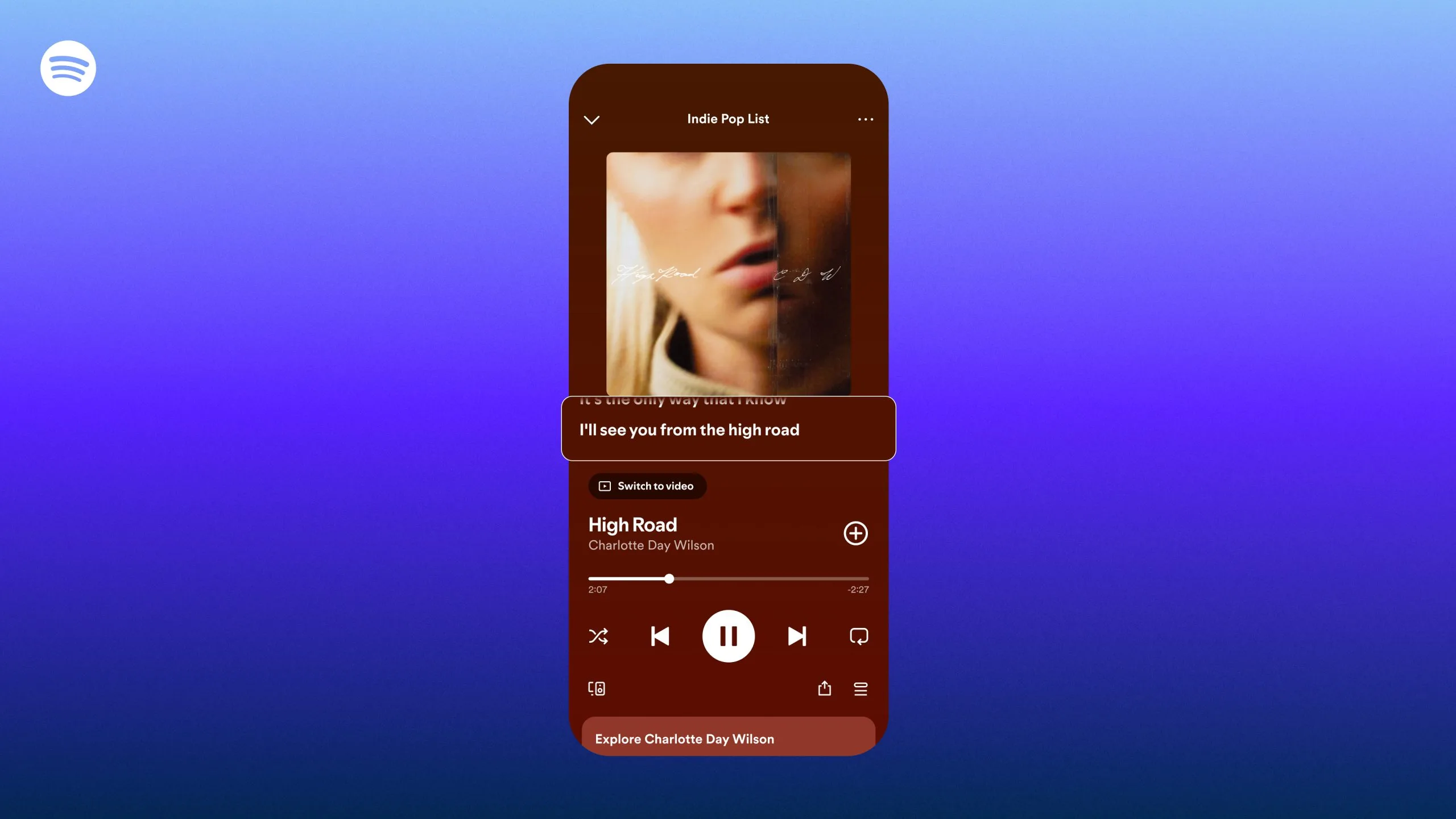
Spotify is rolling out a new Exclusive Mode on desktop for listeners who care about audio quality. This feature gives you more control over how sound is delivered, reducing system interference and allowing bit-perfect playback.
In simple terms, your music can now reach your headphones or speakers without being altered by your computer’s audio system. This update is currently available on the desktop app for Windows, with Mac support coming later.
What is Exclusive Mode in Spotify, and how does it work?
Exclusive Mode is designed for people who use external DACs or high-end audio setups, where even small processing changes can affect sound.

Normally, your operating system mixes audio from different apps, which can resample or modify the signal. Exclusive Mode changes that by letting Spotify take full control of the audio output.
When you turn on Exclusive Mode, Spotify bypasses the system mixer. That means your music is sent directly to your audio device without being changed. This is what allows bit-perfect playback, where the audio data remains exactly as intended.
It also reduces interruptions from other apps. Since Spotify controls the output, other system sounds are blocked while you are listening.
How to turn on Exclusive Mode in Spotify?

To enable Exclusive Mode, first connect your external audio device, such as a DAC or audio interface, to your computer. If your system already has a headphone or speaker port, it may include a built-in DAC.
Next, open the Spotify desktop app and go to Settings. Scroll down to Playback, then under Output, select your audio device from the dropdown menu. Once that is set, turn on Exclusive Mode.
Spotify also suggests turning off certain features in its settings for the best playback. This includes Automix, Crossfade, Equalizer, and Normalize Volume, all available under Settings > Playback.
If you want to turn it off, go back to Settings and switch off Exclusive Mode. This will return audio control to your system, allowing other apps to play sound alongside Spotify.
Last September, Spotify brought higher-quality audio to users by finally introducing lossless streaming for Premium users.
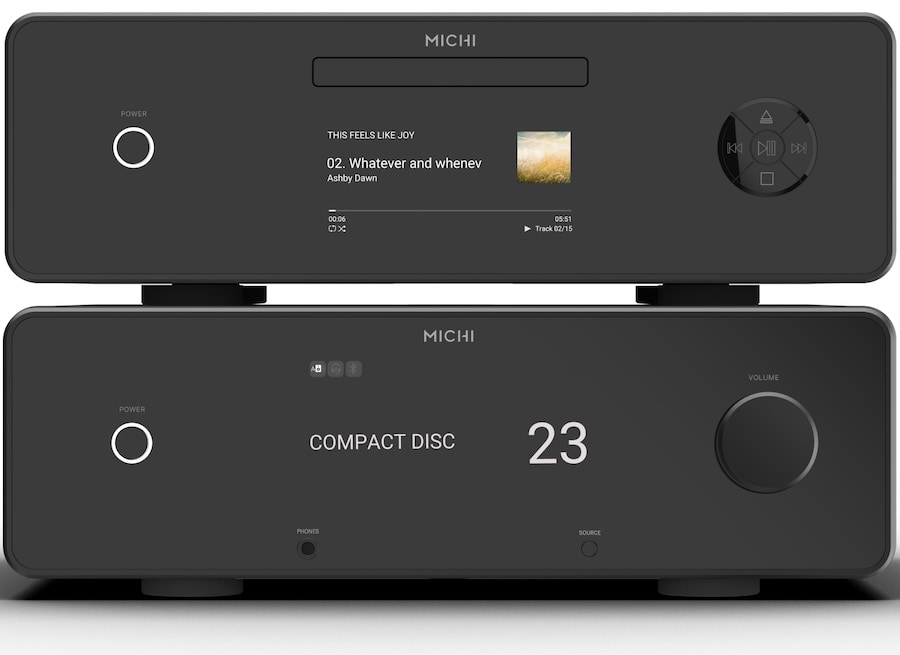
Rotel’s luxury Michi brand has expanded its digital lineup with the Michi Prestige Q430 CD Player, a full-function disc player designed for listeners who still take Red Book CD playback seriously. Unlike a transport-only design, the Q430 includes its own internal DAC while also offering a digital output for those who prefer to experiment with an external converter. Rotel already has a long track record in the two-channel component space, and while we’ve covered the brand extensively at eCoustics, the Michi line sits firmly at the company’s high-end tier.
The Prestige Q430 now enters a surprisingly competitive premium CD player category that includes impressive new models from Marantz, Quad, Hegel, TEAC, Shanling, and several other brands determined to prove that the compact disc still has plenty of life left in it.
In recent years, we’ve also covered several other Michi products including the Q5 CD Transport DAC (2024), the Series 2 Amplifiers and Preamplifiers (2023), and our full review of the Michi X3 Integrated Amplifier (2022); all of which reinforced the brand’s focus on premium construction, refined industrial design, and performance aimed squarely at the higher end of the hi-fi market.
Michi Prestige Line Adds the Q430 CD Player
The Michi Prestige line is designed to give listeners a clear entry point into ultra-high-performance components built with the same design discipline, power supply priorities, and craftsmanship expected of reference-level audio.
Drawing on more than 60 years of Rotel amplifier and circuit development, Prestige models aim to deliver effortless dynamics, exceptional clarity, and the kind of long-term reliability that serious two-channel systems demand.
For 2026, Michi has introduced two new additions to the series: the Prestige Q430 CD Player and the X430 Integrated Amplifier. We covered the X430 in a companion article, but here the focus shifts to the Q430 CD Player, a premium disc player designed for listeners who still value dedicated CD playback in a high-end system.
Building on Michi’s heritage of precision engineering and industrial design, the Q430 combines a high-quality floating CD mechanism capable of playing Red Book CD, CD-R, and CD-RW discs with a meticulously designed proprietary power supply built in-house. Multiple stages of isolated voltage regulation reduce noise at the source, helping deliver exceptionally low distortion and a very quiet acoustic background where subtle details and ambient cues can emerge clearly from the mix.
At the heart of the digital stage is an ESS SABRE ES9028PRO 8-channel DAC, configured and optimized for stereo playback. The DAC is intended to deliver precise, neutral sound with wide soundstage presentation and strong resolution through both single-ended RCA and balanced XLR analog outputs, providing flexibility when integrating the player into a wide range of high-end systems.
Measured performance is equally ambitious. The Q430 is rated for ultra-low distortion (THD below 0.0006%) and a signal-to-noise ratio exceeding 120 dB, helping preserve transient impact and low-level detail even in complex musical passages. Channel separation greater than 105 dB at 10 kHz further supports precise stereo imaging and spatial detail, contributing to a convincingly three-dimensional soundstage.
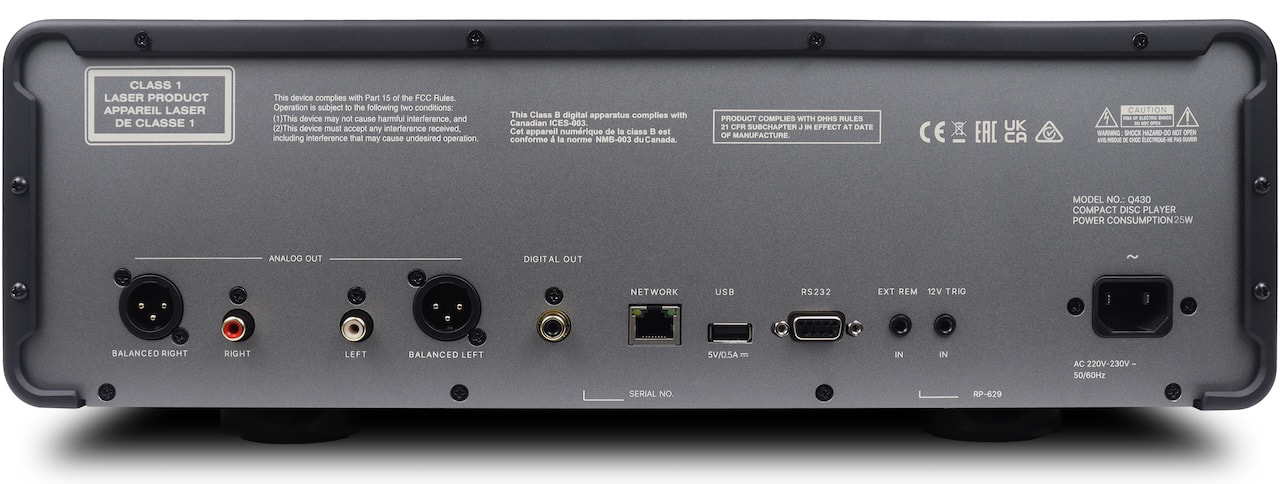
Connectivity is straightforward but purposeful. In addition to its analog outputs, the Q430 includes a coaxial digital output, allowing the player to function as a dedicated CD transport when paired with an external DAC for listeners who prefer to experiment with different digital conversion stages.
However, there are a few notable omissions for a player positioned at this level. The Q430 does not support SACD playback, which some listeners may expect given its price category and the capabilities offered by competing models. In addition, the internal DAC cannot be used with external digital sources or streamers, a feature that has become increasingly common in 2026 as manufacturers try to broaden the utility of standalone disc players within modern streaming-focused systems.
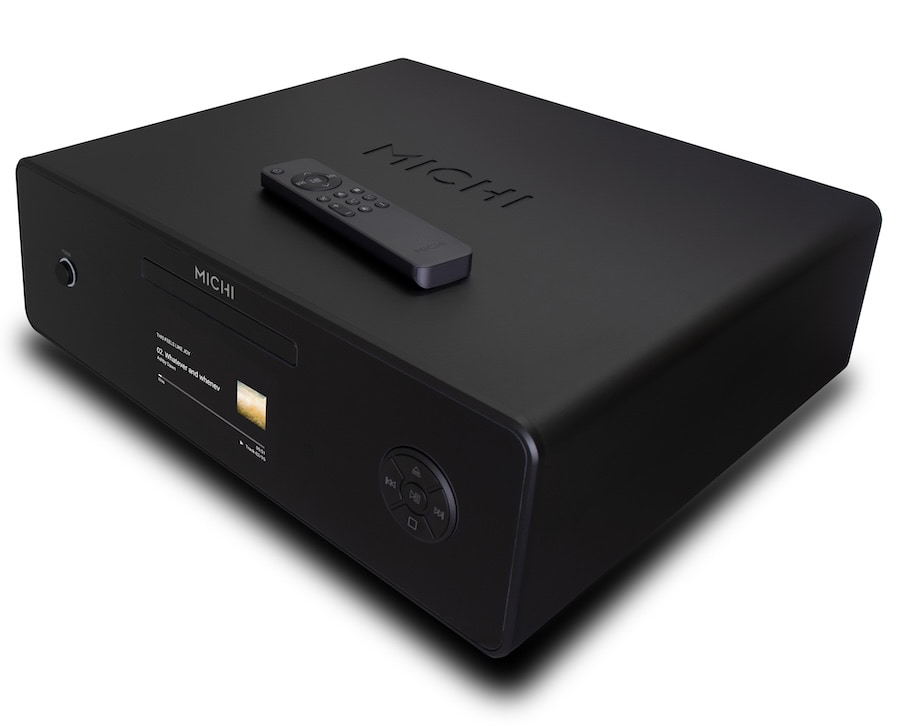
For ease of operation, the Michi Prestige Q430 CD Player includes a wireless remote control that allows listeners to navigate album artwork, settings, and disc information displayed on the front panel’s full-color TFT display. The interface is designed to make browsing and playback straightforward while providing clear visual feedback during use.
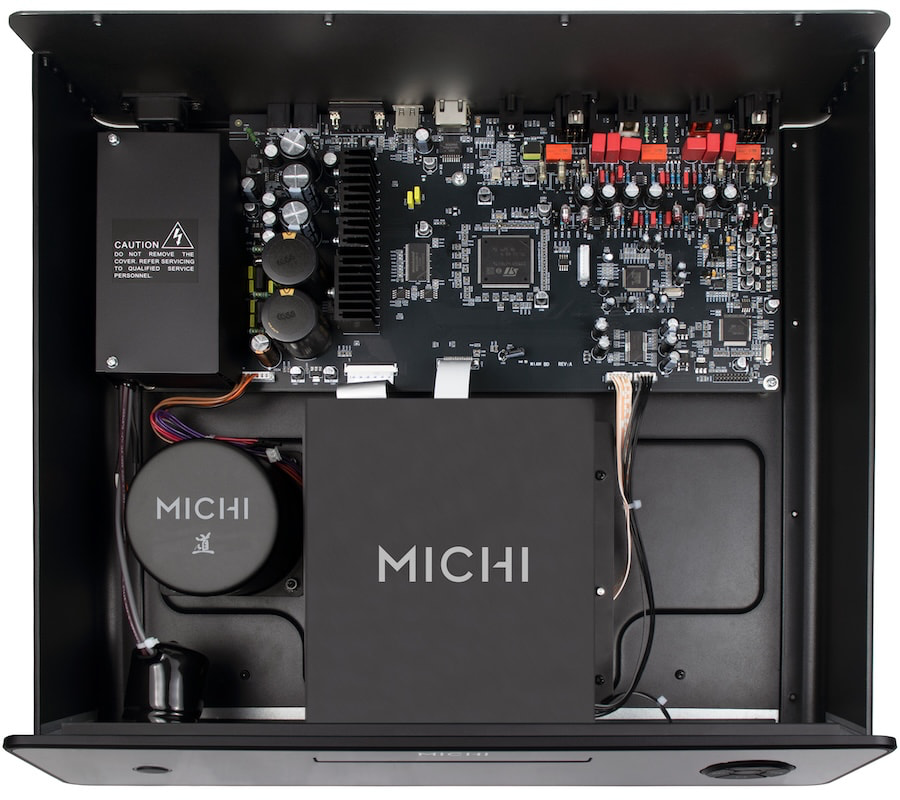
All of the internal components are housed inside a precision-milled aluminum chassis that reflects Michi’s design philosophy of durability, performance, and long-term reliability. The solid enclosure also helps minimize vibration and electrical interference, supporting stable disc playback and consistent sonic performance.
The Q430 measures 431 x 148 x 385 mm (17 x 6 x 15-1/4 inches) with a front panel height of 131 mm (approximately 5-1/6 inches). The unit weighs 8.8 kg (19.5 lbs), reflecting the robust chassis construction and internal power supply design typical of Michi components.
Comparison
| Michi Prestige Q430 (2026) |
Michi Q5 (2025) |
|
| Product Type | CD Player | CD Transport/DAC |
| Price | $3,999 | $7,499 |
| CD Playback Compatibility | CD, CD-R, CD-RW | CD, CD-R, CD-RW |
| Digital Input | N/A | 1 x Coaxial 1 x Toslink |
| Analog Output | 1 x XLR 1 x RCA |
1 x XLR 1 x RCA |
| Digital Output | 1 x Coaxial | 1 x Coaxial 1 x Toslink |
| THD | < 0.0006% | < 0.0006% |
| Intermodulation Distortion | Not Indicated | < 0.002% |
| Frequency Response | 20 Hz – 20 kHz (+0 dB, -0.3 dB) | 20 Hz – 20k Hz (+0 dB, -0.1 dB) 10 Hz – 70k Hz (+0 dB, -3 dB) |
| Channel Balance | ± 0.5 dB | ± 0.5 dB |
| Channel Separation | Unbalanced (RCA) > 105 dB @ 10 kHz Balanced (XLR) > 110 dB @ 10 kHz |
> 104 dB @ 10k Hz |
| Signal to Noise Ratio (IHF A-Weighted) | Unbalanced (RCA) > 120 dB Balanced (XLR) > 125 dB |
> 115 dB |
| Dynamic Range | > 99 dB | > 99 dB |
| Input Sensitivity | Not Indicated | 0 dBfs / 75 ohms |
| CD Output | Not Indicated | Digital output (16-Bit / 44.1k Hz, 0 dBFS) |
| Analog Output Level / Impedance | Unbalanced (RCA) 1.96 V / 100 ohms
Balanced (XLR) 4.2 V / 2 k ohms |
Unbalanced (RCA) 2.3 V / 100 ohms
Balanced (XLR) 4.9 V / 4K ohms |
| Digital to Analog Converter | ESS ES9028PRO DAC | ESS ES9028PRO DAC |
| Digital Output | Coaxial Out | SPDIF LPCM (up to 24-bit / 192 kHz) |
| PC-USB | USB provided for power and firmware updates only. | USB Audio Class 2.0 (up to 32-bit / 384k Hz)* *Driver installation required
Support native DSD (up to 4X, 11.2M) and DoP (up to 2X, 5.6M) Support MQA and MQA Studio (up to 24-bit / 384 kHz) |
| Power Requirements | Europe 230 V, 50 Hz USA 120 V, 60 Hz |
Europe 230 V, 50 Hz USA 120 V, 60 Hz |
| Power Consumption | 25 watts | 25 watts |
| Standby Power Consumption | < 0.5 watts | < 0.5 watts |
| Full-color TFT Display | Yes | Yes |
| Control | Wireless Remote, RS232, Ethernet, 12V Trigger | Wireless Remote, RS232, and Ethernet |
| Dimensions (WxHxD) | 431 x 148 x 385 mm (17 x 6 x 15-1/4 inches) |
485 x 150 x 452 mm (19 x 6 x 17-3/4 inches) |
| Front Panel Height | 131 mm (5-1/6 inches) |
132 mm (5-1/4 inches) |
| Net Weight | 8.8 kg (19.5 lbs) |
23.5 kg (51.8 lbs) |
| Finish | Black | Black |
The Bottom Line
The Michi Prestige Q430 CD Player is aimed at listeners who still value dedicated Red Book CD playback and want a component that matches the build quality and aesthetic of a high-end two-channel system. With its floating transport mechanism, ESS SABRE ES9028PRO DAC optimized for stereo use, balanced and single-ended outputs, and robust aluminum chassis, the Q430 is clearly designed to deliver refined CD performance rather than serve as a digital hub for multiple sources.
However, its focus is also its limitation. At $4,000, the Q430 lacks several features that competing players in this price category increasingly offer, including SACD playback and digital inputs that would allow the internal DAC to be used with external streamers or transports. For some buyers, those omissions will be difficult to ignore.
Ultimately, the Q430 is best suited for high-end two-channel listeners who still maintain a substantial CD collection and want a dedicated player that prioritizes build quality and straightforward disc playback rather than broad digital flexibility. For everyone else, especially those looking for SACD support or a more versatile DAC—the competition from brands like Marantz, Esoteric, TEAC, and Shanling may offer a more compelling case.
Price & Availability
Priced at $3,999, the Michi Q430 CD Player will initially be available in North America beginning March 2026, with global availability to follow early in the second quarter of 2026 through Rotel’s Dealer Network at €3,999 or £3,599.
For more information: rotel.com/product/q430
Related Reading:
Tech
A DJI Pocket 4 might be on its way, but right now the ‘class-leading’ Pocket 3 is at a new lowest-ever price


Rumors are swirling that a DJI Pocket 4 is on its way, but don’t let the promise of a shiny new action cam distract you from what’s available right now — the DJI Osmo Pocket 3 is currently cheaper than ever. Although it’s nearly three years old now, the Pocket 3 is still an extremely capable camera. With features like a portrait filming mode and a 2-inch screen that’s ideal for viewing a live camera feed, the Pocket 3 has proven hugely popular with vloggers and content creators in particular.
In our DJI Osmo Pocket 3 review, our tester called it “class-leading”, and highlighted the “amazing video quality and beautiful slow-motion scenes”. It was awarded a near-perfect 4.5 stars. TechRadar’s camera editor Tim Coleman thinks it’s well worth considering, even with the Pocket 4 on the horizon, commenting: “For many solo vloggers it will serve their needs perfectly, and for a much lower price than the latest models.”
Today’s best DJI Osmo action cam deals
More DJI Osmo action cam deals
The Osmo Pocket 3 deals sit amongst a variety of excellent DJI action cam price drops available right now — there are also lowest-ever prices on the likes of the “seriously feature-packed” DJI Osmo Action 5 Pro and “fantastic” Osmo Action 4.
I’ve checked prices across leading retailers, and the best prices right now are at Amazon, but many options are available for only a few cents more at Best Buy. Typically, these cameras are sold in Essential, Standard, or Adventure Combos, with each bundle, respectively, including more accessories.
Shopping in the US? Here’s the lowdown on the DJI action cam deals for you.


Protex AI, Altra, Barespace, Tines, Nory and CleverCards also made it to this year’s list.
Despite the usual London dominance in Sifted’s annual list of the 100 fastest-growing Irish and UK start-ups, Dublin’s Kota has managed to place in the top 10 this year.
The Irish insurance and employee benefits platform has made it to the ninth spot on the 2026 list, with a two year revenue CAGR (compound annual growth rate) of more than 640pc. The four-year-old start-up last raised $14.5m in May 2025, taking its total raise to date to nearly $23m.
“This ranking is a reflection of the work we’ve done over the last three years building out our infrastructure and network of insurance and pension providers, and the value that lets us deliver to customers,” Kota celebrated in a post on LinkedIn.
The company’s employee health insurance and benefits platform aims to empower start-ups and scaling organisations to automate and manage team benefits.
Others in this year’s list include the Dublin-based Limerick-founded workplace safety start-up Protex AI, which secured $36m early last year to expand across the US. The 2021-founded company ranked 21 on the Sifted list with a CAGR of 313pc.
Protex’s AI-powered platform plugs into CCTV devices and uses computer vision to capture unsafe events autonomously. The start-up already has around 80 employees.
Meanwhile, Care-tech Altra placed number 41 with a CAGR of just above 200pc. Founded in 2019, the start-up has reached profitability. “This recognition reflects a real shift in the care sector,” the company said.
Dublin’s Barespace, on the other hand, which bills itself as the “operating system” for the hair and beauty industry, has made it to the 56th spot – and the highest ranking seed start-up on the list.
Founded in 2022, the company has around 32 employees. Last September, it announced a €2.9m round to accelerate its UK and European expansion.
Irish automation unicorn Tines has climbed 12 positions on the list since last year, reaching the 70th spot with a CAGR of 136pc. The company, which has around 400 workers, recently announced 100 new jobs in Boston as demand for its AI tools rise in the US.
Founded in 2018, Tines reached unicorn status in February 2025 after a $125m Series C round. The company has raised $272m to date from investors including Goldman Sachs, SoftBank, Felicis, Addition, Accel, Blossom Capital and Lux Capital.
Food sector-focused AI start-up Nory has dropped seven spots since last year, reaching the 44th rank in this year’s list. The dual-headquartered start-up in Dublin and London raised $37m last September, also to drive expansion in the US. Nory has a two-year revenue CAGR of around 182pc.
While insurtech CleverCards dropped 27 spots to the 54th rank on the 2026 list. Founded it 2019, CleverCards’s payments technology allows businesses and public sector organisations to create prepaid digital Mastercards and send them to anyone. The service was launched to market in 2023.
Previous year’s entrants, that did not rank this year include e-SIM provider Holafly, VR simulation training provider VRAI, data company CitySwift, e-commerce financier Wayflyer, and AI copyright protection provider Ceartas.
Don’t miss out on the knowledge you need to succeed. Sign up for the Daily Brief, Silicon Republic’s digest of need-to-know sci-tech news.
The San Francisco startup emerges from stealth with Mayfield backing and a pitch that treats ad creative as a continuous learning loop, not a quarterly deliverable.
Every B2B marketing team knows the problem. A campaign launches, the creative is fresh, the targeting feels right, and then, slowly, it starts dying. Audiences tune out. Click rates fall.
The agency comes back for a creative refresh and the cycle begins again. Matt Jayson calls this “decaying ads,” and it is, by his account, a structural failure of how digital advertising is built: campaigns that start losing effectiveness the moment they go live, because the feedback loop between what customers actually say and what the ads actually say is too slow.
On Wednesday, the startup Multiply emerged from stealth with $9.5 million in funding to tackle that problem. The round was led by Mayfield, with participation from Sorenson Capital, Instacart co-founder Max Mullen, and Josh Woodward, Google’s VP of Labs and Gemini, the executive credited with building NotebookLM and overseeing Google’s flagship AI app.

The 💜 of EU tech
The latest rumblings from the EU tech scene, a story from our wise ol’ founder Boris, and some questionable AI art. It’s free, every week, in your inbox. Sign up now!
Executives from HubSpot, Braze, Brex, Sierra, and Common Room also joined the round.
Multiply’s pitch is that modern B2B companies are already sitting on the data they need to run far better advertising, they just aren’t using it. Sales call recordings, CRM pipelines, and closed-won deal data contain precise information about why customers actually buy.
Multiply’s system plugs directly into those sources and uses a suite of AI agents to translate them into continuously improving ad campaigns on Google Search and LinkedIn.
Hundreds of structured experiments run in parallel each week, testing messaging, audiences, and creative, with winners scaled and losers cut automatically.
The agent architecture breaks down into five components. A Customer Insights Agent extracts language from sales calls to personalise ad copy. An ICP Agent analyses closed-won deals to tighten audience targeting.
A Quality Score Agent tunes keyword alignment and copy for Google’s ranking signals. A Creative Design Agent refreshes imagery on a weekly cycle. An A/B Testing Agent runs the experiments and identifies what’s working.
Human media buyers sit above all of it, providing brand oversight and compliance review, the “hybrid” in what Multiply describes as a hybrid AI-plus-human agency model.
Jayson, who previously worked at Google in user acquisition and then at Brex as Head of Product for core experiences, describes the gap the company is trying to close: the insights that land deals, the specific objections, the competitor comparisons, the language that actually resonates, rarely make their way back into ad campaigns quickly enough.
His co-founder and CTO, Ashish Warty, spent five years as SVP of Product and Engineering at HackerOne and held senior engineering roles at Airship and Dropbox.
“Modern companies already have all the data needed to create radically better ads,” Jayson said in a statement. “Sales conversations, CRM systems, and pipeline outcomes reveal exactly why customers buy, yet those insights rarely make their way into ad campaigns fast enough.”
The timing is deliberate in another sense. Multiply’s infrastructure is, the company says, already being positioned for ChatGPT advertising, a format that OpenAI has signalled it intends to launch but has not yet released at scale.
The argument is that the same campaign learning systems built for search and social can extend into conversational and AI-driven ad formats as they emerge. That is a forward-looking claim that will depend entirely on how those platforms eventually structure their ad products.
“There is a major shift happening in the $50 billion B2B advertising market,” said Patrick Salyer, Partner at Mayfield and a Multiply board member, in a statement. “Service-as-Software is redefining how companies grow, and Multiply has built the first AI model for B2B advertising.”
The $50 billion market figure comes from Mayfield’s own framing and has not been cross-referenced against independent market data.
Multiply is, in essence, making a structural argument about where the ad agency model breaks down: not in creative execution, but in the speed of the feedback loop.
Whether a $9.5 million AI stack can fix that faster than incumbents adapt is the question its pipeline metrics are presumably meant to answer.

sciencehabit shares a report from Science.org: In The Martian, fictional astronaut Mark Watney survives the wasteland of Mars by growing potatoes in lunar soil — with a bit of help from human poop. The idea may not be so far-fetched. In a preprint posted this month on bioRxiv, researchers show potatoes can indeed grow in the equivalent of Moon dust, though they need a lot of help from compost found on Earth. To make the discovery, scientists first had to re-create lunar regolith — the loose, powdery layer that blankets the Moon’s surface. To replicate that in the lab, David Handy, a space biologist at Oregon State University (OSU), and his colleagues used a mix of crushed minerals and volcanic ash that matched the chemistry of the Moon.
But lunar regolith is entirely devoid of the organic matter that plants need to grow. “Turning an inorganic, inhospitable bucket of glorified sand into something that can support plant growth is complex,” says Anna-Lisa Paul, a plant molecular biologist at the University of Florida not involved with the work. So Handy and his colleagues added vermicompost — organic waste from worms — into the regolith. They found that a mix with 5% compost allowed the potatoes to grow while still emulating the stressful conditions of the lunar environment. After almost 2 months of growth, the team harvested the tubers, freeze-dried them, and ground them up for further testing.
Analysis of the potatoes’ DNA showed stress-related genes had been activated. The potatoes also had higher concentrations of copper and zinc than Earth-grown ones, which may make them dangerous for human consumption. The plants’ nutritional value, though, was similar to traditional potatoes — a surprise to the scientists, who expected lower levels of nutrition “because the plants might have been working overtime to overcome certain stressors,” Handy says.
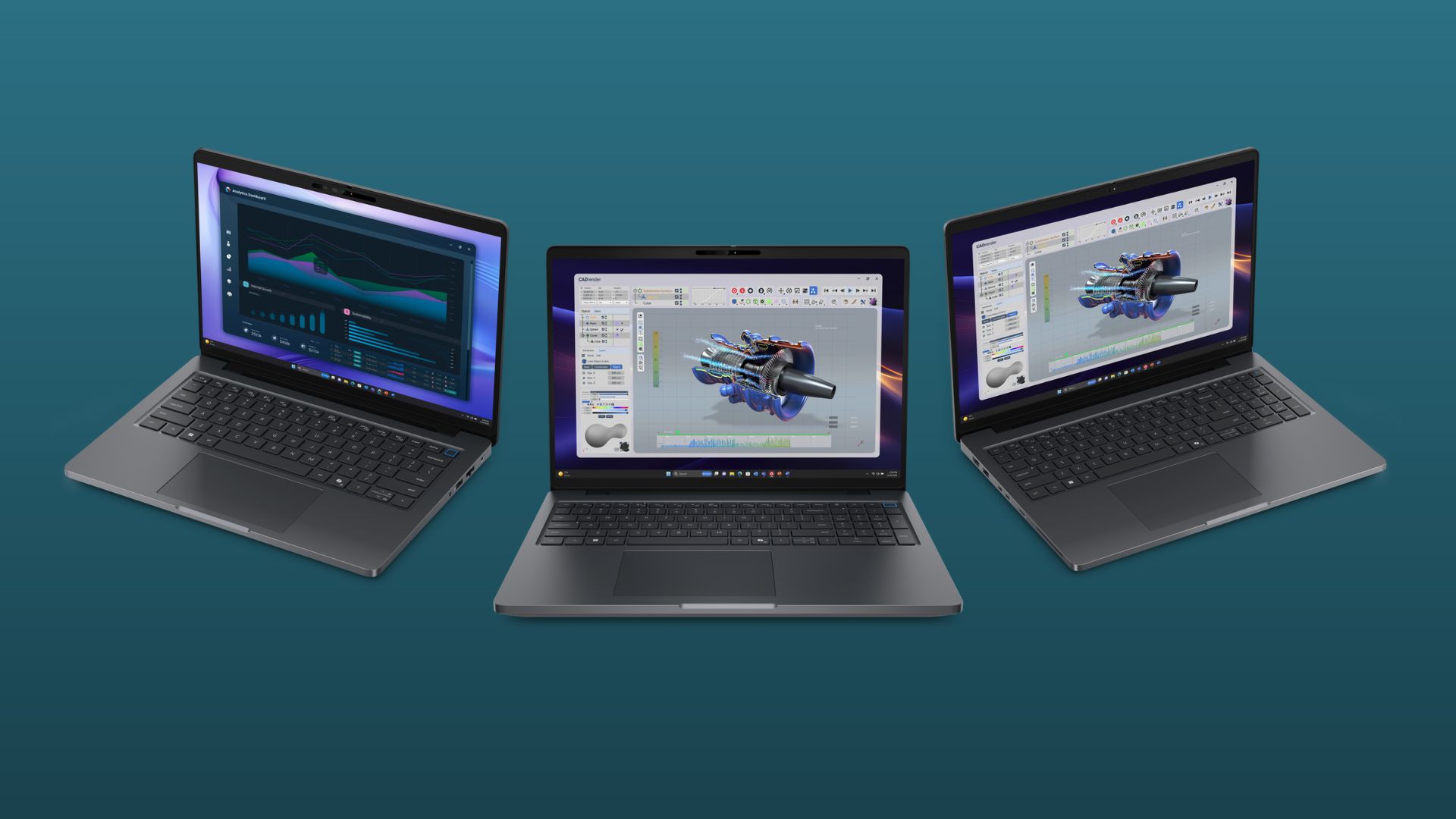
Dell is doubling down on AI-powered computing with a new lineup of Pro Precision workstations designed to bring serious AI performance directly to desks.
At the centre of the announcement is a refreshed Dell Pro Precision range. It includes both tower and mobile workstations built specifically for AI-heavy workloads like model training, simulations, and creative production.
The idea is straightforward: instead of relying on cloud infrastructure, Dell wants AI development to happen locally. This way, teams can experiment faster and keep control over their data.
The new Pro Precision 9 tower series, available in T2, T4, and T6 configurations, is aimed at high-end users who need sustained performance. The top-end T6 model pushes things furthest, with support for up to Intel Xeon processors (up to 86 cores), multiple NVIDIA RTX PRO Blackwell GPUs, and as many as 15 PCIe slots. Dell says it’s its most scalable workstation yet, built to handle long-running AI workloads without slowing down.
Moreover, that same focus is now extending to laptops. Dell’s updated Pro Precision 5 and 7 Series mobile workstations bring AI-ready performance into more portable designs, powered by the latest Intel and AMD chips with improved NPUs.
These systems are designed for on-device AI tasks, including local inferencing, without needing constant cloud access. Optional RTX PRO GPUs, faster memory, and Gen 5 storage round out the package.
Dell isn’t stopping at traditional workstations, either. It’s also introducing Pro Max systems with NVIDIA’s GB10 and GB300 platforms, which aim to bring data centre-level AI capabilities to a desk setup. The GB300 model, in particular, is built around NVIDIA’s Grace Blackwell architecture and is designed to run large AI models locally, reducing latency and ongoing cloud costs.
All of this ties into what Dell calls its AI Factory with NVIDIA — a broader ecosystem that connects local development to large-scale deployment, whether on-premises or in the cloud. The goal is to let teams move from prototype to production without needing to rebuild workflows.
In practice, this is less about flashy features and more about shifting how AI work gets done. By pushing more compute power into desktops and laptops, Dell is betting that faster iteration, lower costs, and better data control will matter just as much as raw performance.
Tech
Pete Hegseth: We Can’t Wait For Larry Ellison To Turn CNN Into Another Right Wing Propaganda Mill
from the we-are-incapable-of-subtlety dept
We’ve noted repeatedly how the U.S. authoritarian right is buying up all of our new and old media companies because they’re trying to mimic what Viktor Orban created in Hungary. Namely, a media where all the major outlets are owned by rich autocratic allies, who spew propaganda 24/7 while the government strangles real, independent journalism just out of frame.
Of course, you’re supposed to try and have some subtlety in this so the public isn’t fully aware of the con. But the Trump administration doesn’t do subtlety.
Last week Secretary of Defense Pete Hegseth apparently got upset by the fact Trump’s war in Iran isn’t going very well. Poor Donald clearly didn’t understand the evolving nature of modern and inexpensive drone warfare (despite all the brutal evidence in Ukraine), and has gotten the country bogged down in precisely the sort of clusterfuck the fake populist pretended he opposed last election season.
Even our soggy corporate press has occasionally been making this clear to the public, something that upsets Pete Hegseth very much. Hegseth apparently got particularly upset with CNN recently insisting that the Iran War had “intensified.” It made him so upset that he openly pined for the moment when Larry Ellison (and his nepobaby son) control CNN, so they can cheerlead for war:
One of the funniest parts about this is that claims the war had “intensified” was made by his own agency in a press release!
It’s very clear that the U.S. right wing won’t be satisfied until the entirety of U.S. media is owned by a handful of rich right wingers like Larry Ellison and Elon Musk, allowing them to create a North Korea bullhorn of daily, uniform propaganda that does nothing but lavish praise upon them. To build something like that here in the States requires a level of subtlety they’re simply not capable of:
Democrats historically suck on media policy and reform (even the progressive wing of the party is fairly incompetent on the subject), so you can’t expect much help there.
But there are several things working in our favor, including America’s sheer size (it’s very difficult to maintain the kind of control they’re looking for), our diversity, the decentralized nature of the modern internet, and the fact that most of the nepobabies (David Ellison) and brunchlords (Bari Weiss) integral to their plans appear to have absolutely no Earthly idea what they’re actually doing.
For example, all the debt Ellison has adopted from the purchase of CBS and Warner Brothers is going to force them to engage in massive, unprecedented cost cuttings and layoffs, making it hard to maintain informational control and build an effective, ratings-grabbing propaganda operation (even if Bari Weiss knew what she was doing, which she assuredly does not).
And the public still has agency. Larry Ellison can buy TikTok and Elon Musk can buy Twitter, but they can’t control the flow of the public as they flee to other, less white supremacist, right wing friendly alternatives. It’s sheer hubris to think they can maintain information control in a country this massive and diverse, and there will be some useful entertainment value in watching them set money on fire trying.
Filed Under: 1st amendment, agitprop, consolidation, free speech, iran war, journalism, larry ellison, media, pete hegseth, propaganda
Companies: cbs, cnn, paramount
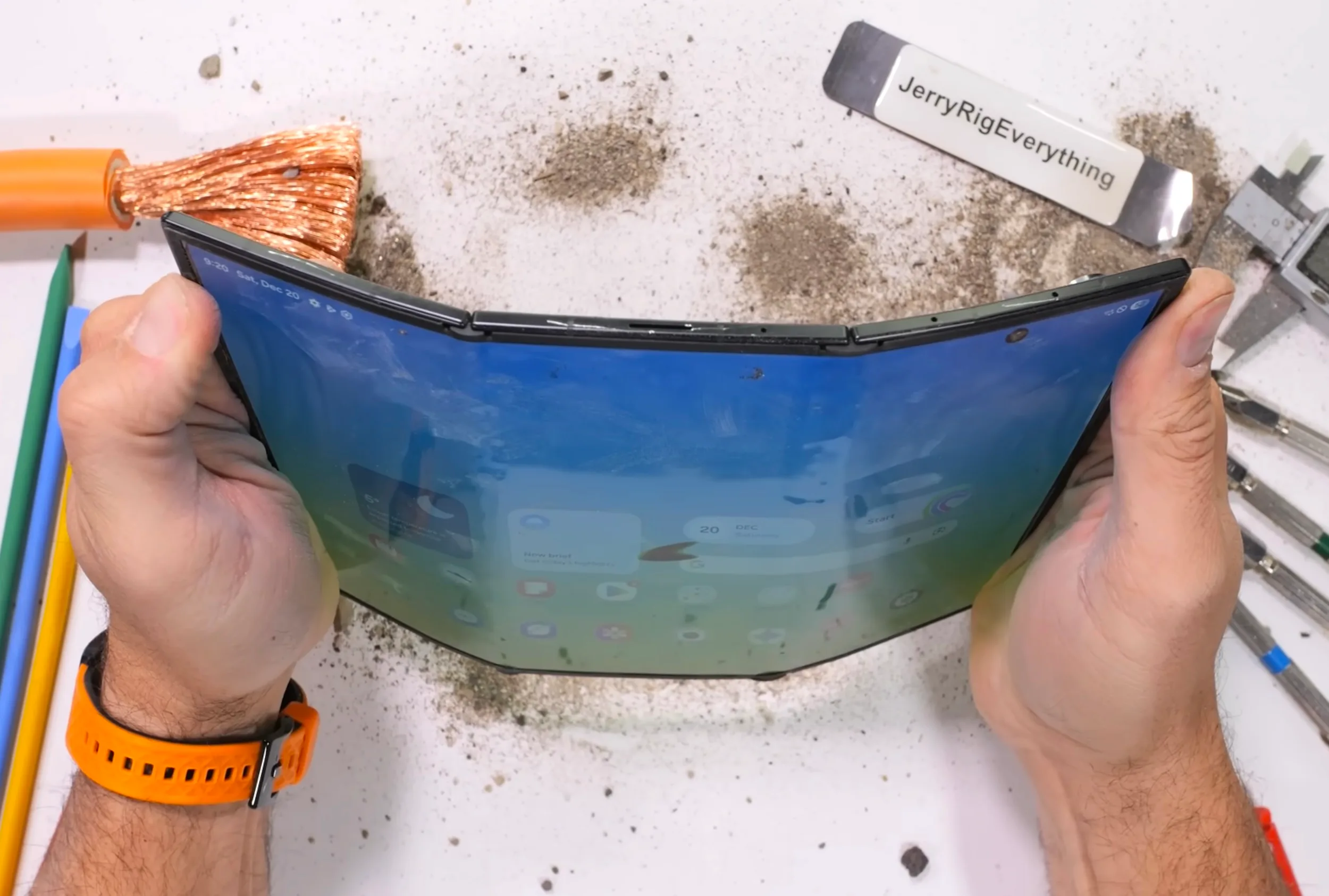
The Samsung Galaxy Z TriFold is already on its way out. A new report suggests that the company is killing sales for the triple foldable phone just three months after its debut, putting an end to its $2,899 experimental showcase.
But while the Galaxy Z TriFold sales are being halted, it’s apparently not the end of the road for such an ambitious smartphone.

What’s left to unfold?
Amid the TriFold’s reported phase-out, fresh rumors hint that Samsung doesn’t plan on abandoning the concept entirely. It would appear that the brand is doubling down with a better successor, which is slimmer and more refined than the original Z TriFold.
Samsung took feedback on the first-generation TriFold, and the thickness seems to be one of its biggest drawbacks. Early tri-folding designs being bulky isn’t a surprise, considering their multi-hinge structure. But Samsung could make the next version even thinner, and refine the overall form factor to make it more practical for everyday use.

Why thickness matters for tri-fold devices
One of the biggest challenges of any foldable phone is its overall width when folded, which is especially true for a triple-folding design. The multiple folding sections can make the device a lot thicker than standard foldables when folded, which can affect everything from portability to in-hand comfort.
In comparison, the notebook-style and clamshell folding flip phones are more mature in their designs. Even the first-gen Galaxy Fold had its fair share of issues, which were ironed out with each passing generation. So Samsung seems to be making a quicker move to improve the TriFold concept before pushing it further.

The chair starts at $8,995, but that doesn’t include the side table or ottoman. Add those and it costs $10,995. The model pictured above uses Alpaca wool fabric and brings the cost up to $14,995. (There are more than 300 fabrics and colors to choose from, and the swiveling table comes in various woodgrains.) The Herman Miller Eames, of which the Diffrient Lounge also takes inspiration, costs roughly $8,500 today, depending on which leather you choose.
“The Eames is obviously an iconic design—it’s timeless, it’s beautiful—but it’s not something you can work comfortably in for a long time,” Silva says.
.jpg)
Don’t let the Lounge in the name fool you. Silva assures me that every chair the company designs is built with ergonomic comfort in mind, with the adjustable work surface and headrest allowing for different postures. While traditional lounge chairs focus on style, Silva says the Lounge prioritizes comfort. In my brief time on the chair, it indeed felt enveloping and cushy yet supportive. And the mechanical levers made it easy to shift the chair into a more active sitting position or a more relaxing posture, without disrupting the ergonomics with a laptop on the table.
Diffrient had been tinkering with the idea of a lounge chair that could double as a workstation for a long time, Silva says, and believed that technology allowed people to work in different ways.
“The chair acknowledges the fact that creativity and productivity don’t necessarily happen when you’re tied to your desk,” he says. “They happen in different postures; more relaxed or moving around the office, and this chair supports those transitions.”
King recites a famous quote from Diffrient: “The best chair is a bed.” When you sit upright, your weight compresses your spine, but when you lean back, a large portion of that weight goes into the backrest, so when you’re lying down, there’s significantly less pressure on your spine. “Reclining is really healthy,” King says. “He always thought it would be a good way to work.”
Luxe Seat
How does a chair come to cost $15,000? Silva highlights Humanscale’s long-standing approach to simplicity. After all, it’s a hallmark of the original Freedom chair. While the Diffrient Lounge may not look very complex, that’s by design, cleverly masking the engineered mechanical system with clean lines and curves. There’s even some automation in the headrest. If you’re fully reclined and the headrest is in a forward position to support your head, as you come back up, the headrest will automatically go into a neutral position.


NewsBeat42 seconds ago
‘We help homeless people but London’s rough sleeping problem is too much to handle’ | News UK
Business2 minutes ago
SThree buys 857,933 shares for employee benefit trust

Crypto World3 minutes ago
Kraken shelves IPO plans amid market headwinds: CoinDesk


-
 Crypto World4 days ago
HYPE Token Enters Net Deflation as HyperCore Buybacks Outpace Staking Rewards
-

 Fashion5 days ago
Weekend Open Thread: Addict Lip Glow
-

 Tech3 days ago
Your Legally Registered ‘Motorcycle’ Might Not Count Under Proposed US Law
-
Sports4 days ago
Why Duke and Michigan Are Dead Even Entering Selection Sunday
-

 Sports7 days ago
PWHL, Senators discussing plan to keep Charge in Ottawa
-

 NewsBeat7 days ago
Residents reaction as Shildon murder probe enters second day
-

 Business3 days ago
Search for Savannah Guthrie’s Mother Enters Seventh Week with No Arrests
-

 Business4 days ago
US Airports Launch Donation Drives for Unpaid TSA Workers as Partial Government Shutdown Enters Fifth Week
-
 Tech23 hours ago
Are Split Spacebars the Next Big Gaming Keyboard Trend?
-
Crypto World4 days ago
Coinbase and Bybit in Investment Talks: Could Bybit Finally Enter the US Crypto Market?
-

 Business4 days ago
Country star Brantley Gilbert enters growing non-alcoholic beer market
-

 Business2 days ago
Australian shares drop as Iran war enters third week
-

 Crypto World2 days ago
Crypto Lender BlockFills Enters Chapter 11 with Up to $500M in Liabilities
-

 Sports5 days ago
College Basketball Best Bets: Conference Tournament Semifinal Picks
-

 Politics6 hours ago
The House | The new register to protect children from their abusers shows Parliament at its best
-
 Crypto World7 days ago
Three Binance Charts May Be Hinting at Bitcoin’s Next Move
-

 Business6 days ago
Trump demands Powell cut rates as Iran conflict raises energy prices
-

 Crypto World6 days ago
Senate Votes to Include CBDC Ban in Bipartisan Housing Bill
-

 Fashion2 days ago
25 Celebrities with Curly Hair That Are Naturally Beautiful
-

 NewsBeat6 days ago
Deane Road crash near Bolton colleges and university


You must be logged in to post a comment Login