As India pitches itself as a global hub for applied artificial intelligence, OpenAI has partnered with Pine Labs to integrate AI-driven reasoning into the fintech firm’s payments stack, automating settlement and invoicing workflows in a move the companies say could help accelerate AI-led commerce in India.
The partnership will see Pine Labs embed OpenAI’s application programming interfaces — software tools that let companies plug AI into their existing systems — within its payments and commerce infrastructure, the companies said on Thursday, all with the aim of enabling AI-assisted settlement, reconciliation, and invoicing workflows.
The deal underscores OpenAI’s broader push to expand its footprint in India, one of its fastest-growing markets, as it looks to move beyond being known primarily as the maker of ChatGPT and embed its technology into education, enterprise, and infrastructure. Earlier this week, OpenAI partnered with leading Indian engineering, medical, and design institutions to bring AI tools into higher education, betting that India’s large developer base and more than a billion internet users will play a central role in the next phase of AI adoption.
Pine Labs is already using AI internally to automate parts of its settlement and reconciliation process, cutting the time it takes to clear daily settlements from hours to minutes, according to Chief executive B Amrish Rau. The Noida-based company previously relied on manual checks by dozens of employees to process funds from multiple banks before markets opened each day, a workflow that is now largely handled by AI-driven systems, he said in an interview.
Advertisement
For Pine Labs, the partnership is intended to extend those AI-driven efficiencies beyond internal operations to merchants and corporate clients, starting with business-to-business use cases such as invoice processing, settlements and payments orchestration, Rau told TechCrunch. He noted the company sees faster adoption in B2B workflows, where AI agents can handle large volumes of repetitive financial tasks under predefined rules, before similar capabilities reach consumer-facing payments.
“People talk about retail AI, but the bigger impact of all of this is really efficiency improvement, especially in B2B,” Rau said. “If you look at invoicing and settlement, those are workflows where agents can actually drive the process end to end, and that’s where adoption can happen faster.”
The rollout of more autonomous, agent-led payment workflows will move faster in overseas markets where regulations already allow such transactions, Rau said, while India is likely to see a more gradual adoption focused on AI-assisted commerce rather than fully agent-initiated payments. He said that Pine Labs is already prototyping agent-driven payments in parts of the Middle East and Southeast Asia, even as Indian regulations require tighter controls on how payments are authorized.
Techcrunch event
Advertisement
Boston, MA | June 23, 2026
For OpenAI, the partnership offers a route deeper into India’s payments and enterprise ecosystem as it looks to move beyond consumer-facing tools and embed its models into high-volume, regulated workflows. Rau said the collaboration is aimed at increasing merchant stickiness and expanding Pine Labs’ role from a payments processor to a broader commerce platform, with higher transaction volumes over time translating into incremental revenue.
Advertisement
Pine Labs says it works with more than 980,000 merchants, 716 consumer brands, and 177 financial institutions, and has processed over 6 billion cumulative transactions valued at over ₹11.4 trillion (about $126 billion), per its prospectus published last year. The fintech operates across 20 countries, including Malaysia, Singapore, Australia, parts of Africa, the UAE, and the U.S., giving the OpenAI partnership reach across both Indian and international markets.
Rau said the partnership does not involve revenue sharing between the two companies, with Pine Labs not taking a cut if its merchants choose to embed OpenAI’s tools. “We’ve kept it completely independent of each other — anything related to payment and payment services, we will get the benefit of it, and anything related to OpenAI revenues will go to them,” he said.
The arrangement, Rau added, is also non-exclusive. He compared it to OpenAI’s partnership with Stripe in the U.S. and said Pine Labs remains open to working with other AI providers.
Rau said Pine Labs is building additional security and compliance layers around AI-driven workflows to ensure that sensitive merchant and consumer transaction data remains protected, as the company integrates AI more deeply into its payments systems. He said the focus is on ensuring transactions remain secure and compliant even as more workflows are automated by AI.
The new announcement comes as India hosts its AI Impact Summit in New Delhi, where global AI companies including OpenAI, Anthropic, and Google are showcasing their latest capabilities alongside Indian startups demonstrating AI applications aimed at large-scale deployment across sectors such as finance, healthcare, and education.
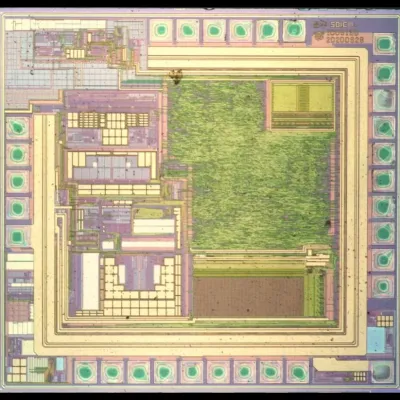
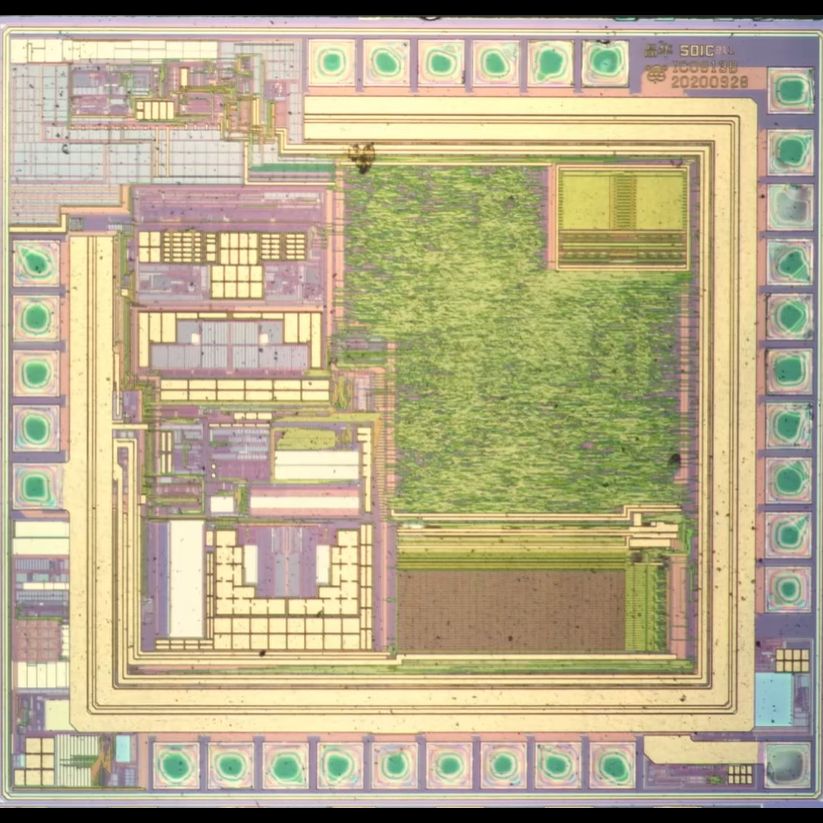
The SDIC 8-bit MCU. (Credit: electronupdate, YouTube)
In this wonderful world of MEMS technology, sensor technology has been downsized and reduced in cost to the point where you can buy a car tire pressure sensor for less than $3 USD on a site like AliExpress. Recently [electronupdate] got his mittens on one of these items to take a look inside, and compare it against his trusty old mechanical tire pressure gauge.
Perhaps unsurprisingly, there isn’t a whole lot inside these devices once you pop them open to reveal the PCB. The MEMS device is a tiny device at the top, which has the pressurized air from the tire guided to it. The small hole inside the metal can leads to the internals that consist of a thin diaphragm with four piezoresistors that enable measurements on said diaphragm from which pressure can be determined.
Handling these measurements and displaying results on the small zebra connector-connected LCD is an 8-bit MCU manufactured by Chinese company SDIC. Although the part number on the die doesn’t lead to any specific part on the SDIC site, similar SDIC parts have about 256 bytes of SRAM and a few kB of one-time programmable ROM.
This MCU also integrates the clock oscillator, thus requiring virtually no external parts to work. Finally, its sigma-delta ADC interacts with the MEMS device, rounding out a very simple device that’s nevertheless more than accurate enough for a spot check as well as quite portable.
For decades, modern navigation has relied heavily on GPS, but another, less visible system plays an equally critical role in helping aircraft, ships, smartphones, and military platforms determine their position.
Earth’s magnetic field, constantly shifting and evolving, underpins the World Magnetic Model (WMM), a global reference that supports navigation systems used by billions of people every day.
Maintaining the accuracy of that model depends on reliable measurements of the magnetic field, yet much of the satellite infrastructure used to gather this data is aging, while the field itself is changing at an accelerating rate.
Advertisement
Article continues below
Quantum diamond magnetometers
These pressures have driven a search for new technologies capable of monitoring the magnetic field with greater precision and frequency.
Advertisement
In response, the US National Geospatial-Intelligence Agency (NGA) launched the MagQuest Challenge in 2019, a seven-year, multi-million-dollar competition designed to identify next-generation sensing technologies.
The goal is to develop compact, highly accurate systems that can provide continuous magnetic data, reducing reliance on periodic measurements and helping ensure the long-term reliability of global navigation systems.
One of the companies emerging from this effort is SBQuantum, a Canadian firm specializing in quantum sensing technology. Its approach centers on quantum diamond magnetometers, compact devices that use the principles of quantum physics to measure magnetic fields with exceptional sensitivity.
Sign up to the TechRadar Pro newsletter to get all the top news, opinion, features and guidance your business needs to succeed!
Advertisement
Recently, the company reached a major milestone when its sensor was launched into orbit as part of the final phase of the MagQuest program. The deployment represents a step toward continuous, space-based monitoring of Earth’s magnetic field and highlights the growing role of quantum technologies in navigation, defense, and public safety.
To better understand the development of this technology, the challenges involved in bringing it to space, and the potential applications beyond navigation, I spoke with David Roy-Guay, Founder of SBQuantum.
Before we start, can you give us a brief overview of what the WMM is and why it is so important for us.
The World Magnetic Model (WMM) is what powers every electronic compass, including the one in your watch and cellphone. It is essential to keep up to date as the Magnetic North Pole is moving. It was in the Canadian north and is now shifting toward Siberia. This has a real impact on the precision of every analog and digital compass.
Everyday, we use the WMM, just think of the blue arrow in your favorite navigation application telling you to head left or right as you exit a subway station or a hotel. This directional information is complementary to GPS, which provides location information, but doesn’t tell you which way you are facing.
Advertisement
You mentioned that the satellites feeding it with data are reaching their end of life. What happens next?
Typically the WMM is updated every 5 years when a new official version is released. However recently a new update was released after only 4 years because the movement of the field had accelerated.
Once the mission of the current ESA SWARM constellation of satellites comes to an end, the existing magnetic field maps will be of little value 2-3 years after that. This means the navigation systems on board aircraft and drones will be off significantly, especially in the northernmost areas, possibly up to dozens of degrees. I can think of one example in Alaska when recently a landing strip had to have its numbers changed since it was no longer facing the same direction according to the WMM.
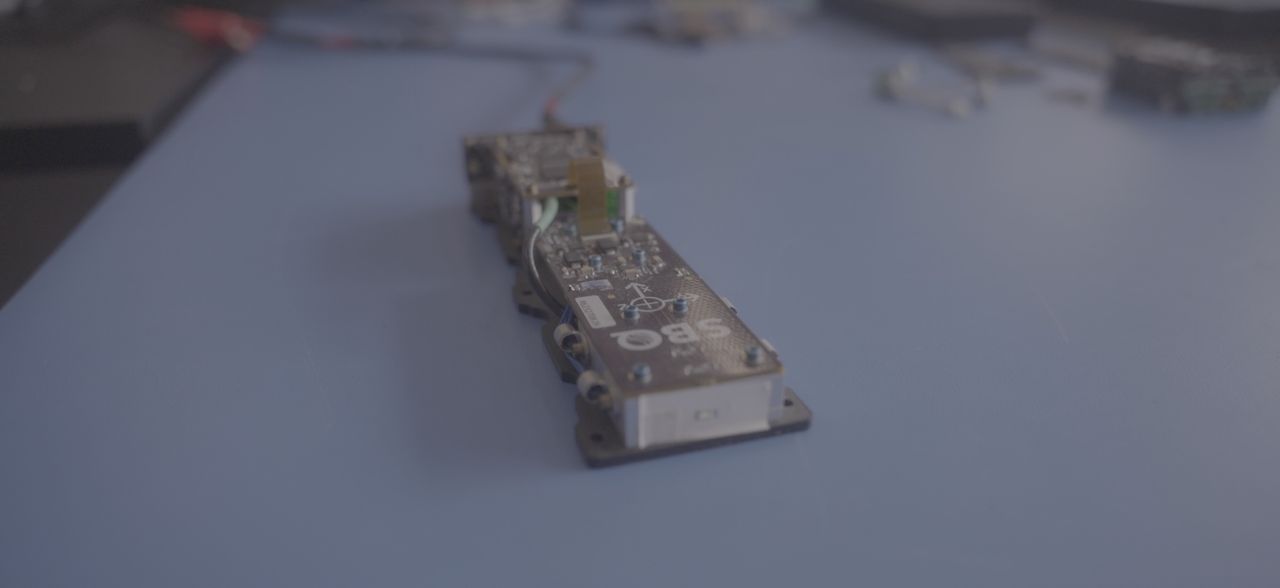
In comparison, our platform ‘Diamond Polaris – 1’ will allow the continuous production of magnetic data for the WMM. This approach is far more cost-effective, gathers and assembles faster, and offers data well suited for accurate positioning.
How does the data from the WMM project convert into something that can be an alternative to the ubiquitous GPS?
Data collected over a year of orbit is processed and curated by the US NOAA and the US NGA, to inform future versions of the WMM. Although the data is coarse it is applicable to compass applications. Higher resolution versions can be produced by deploying multiple satellites and drones to gather data at different altitudes.
These high-resolution maps will act as a calibration reference to navigation systems (INS systems) and could provide positioning data without GPS to up to 100m precision.
Our spring 2026 space-launch came after years of testing and retesting with NASA and other organizations. SBQuantum’s sensor was deemed to be fit for use in space. This first space deployment is the next step on the road to making magnetic navigation widely available as an alternative to GPS which cannot be jammed or distorted.
Advertisement
Your company built something called a diamond quantum magnetometer. Why diamond and why quantum?
Being solid state, diamonds are exceptionally stable and provide the right environment to preserve quantum coherence for an extended period, even at room temperature. This enables highly sensitive and very accurate magnetic field measurements for extended satellite missions at a global scale.
Furthermore, the atomic structure of diamonds is well suited to provide measurement of magnetic fields along three axes. For the purposes of navigation it is essential to gather all of that in order to provide directional information.
You mentioned the size of the device (roughly a quart of milk — about 1L in metric or a cube with 10cm size). Does your roadmap contain products that are smaller? What would something “better” differ in terms of features?
We are still in the early stages of this diamond technology. One of its advantages is that it can eventually be shrunk further, to about the size of a matchbox, without degrading its performance.
This is not the case for classical directional magnetometer technologies. We expect to reach that point in about 3 years, once we scale the production to industry standard wafers, which are of course widely used in the semiconductor industry.
How does the data captured by a quantum sensor allow for “advanced interpretation algorithms” that conventional sensors simply cannot support? What other applications could these sensors have?
By building an array of directional diamond magnetometers, we can enable real-time magnetic signals interpretation in a way which was otherwise not possible. For instance, we can locate metallic objects underwater, in real-time.
This is also true for metallic objects on the other side of a wall or underground. We are therefore also looking to employ the technology to support security and defense applications.
For instance this could be used for tracking submarines from a drone, or enhancing security at sporting events, or even security at schools and corporate events.
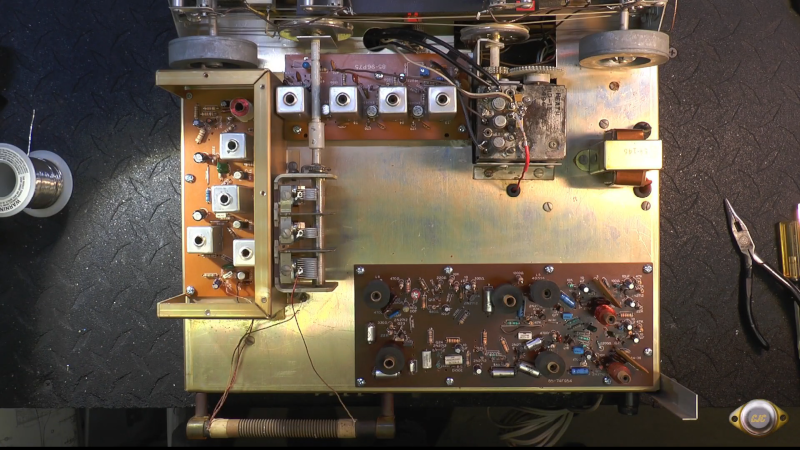
We miss the old Heathkit. You could build equipment that rivaled or even surpassed commercial devices. The cost was usually reasonable and, even if you could get by with less, the satisfaction of using gear you built yourself was worth a lot. Not to mention the knowledge you’d gain and your confidence in troubleshooting should the need arise. So we were jealous of [RCD66] when he found a Heathkit AJ-43C stereo tuner in the recycle bin.
As you can see in the video below, it needed a lot of love to get back to its former self. The device dates from around 1965, when the kit cost $130. In 1965, that was a lot of money. Back then, that would have bought you about four ounces of gold and would have been a great down payment on a $1,500 VW bug.
Things were a bit of a mess, so he removed all the parts and replaced most of them. Unsurprisingly, the electrolytic capacitors all tested bad. The transistors were all germanium, but if they tested good, his plan was to reuse them. There were several PCBs inside, and he made some changes, such as replacing the zener diode power supply with something more modern.
Advertisement
How did it sound? Watch the video and see for yourself. We usually like troubleshooting specific problems on gear like this, but in this case, it was probably smart to just do a total rework.
Season 1 hasn’t even aired yet, and Star Wars: Maul – Shadow Lord is already coming back for more. Chief Creative Officer Dave Filoni has announced that Season 2 is officially in the works at Lucasfilm Animation.
Star Wars: Maul – Shadow Lord Season 1 kicks off on Disney+ with a two-episode premiere on April 6, dropping two episodes weekly after that. No release date for Season 2 has been shared yet, but the early renewal signals serious confidence in the show.
This 10-episode animated series picks up after The Clone Wars, with Maul trying to rebuild his criminal syndicate on a planet the Empire hasn’t touched. Along the way, he encounters a disillusioned young Jedi Padawan, who might become the apprentice he needs.
With Season 2 locked in before Season 1 even premieres, Maul’s story is clearly just getting started.
Advertisement
The stellar cast includes Golden Globe winner and Oscar nominee Wagner Moura as Brander Lawson, Richard Ayoade as Two-Boots, Dennis Haysbert as Master Eeko-Dio Daki, Gideon Adlon as Devon Izara, and several others.
When are the new episodes of Star Wars: Maul – Shadow Lord season 1 coming?
Star Wars
Star Wars: Maul – Shadow Lord follows a two-episode-per-week format, rolling out every Sunday this month. Here’s the full breakdown:
April 6 – Episodes 1 and 2: “The Dark Revenge” and “Sinister Schemes”
April 13 – Episodes 3 and 4: “Whispers in the Unknown” and “Pride and Vengeance”
April 20 – Episodes 5 and 6: “Inquisition” and “Night of the Hunted”
April 27 – Episodes 7 and 8: “Call to the Oblivion” and “The Creeping Fear”
May 4 – Episodes 9 and 10: “Strange Allies” and the as-yet-untitled Season 1 finale
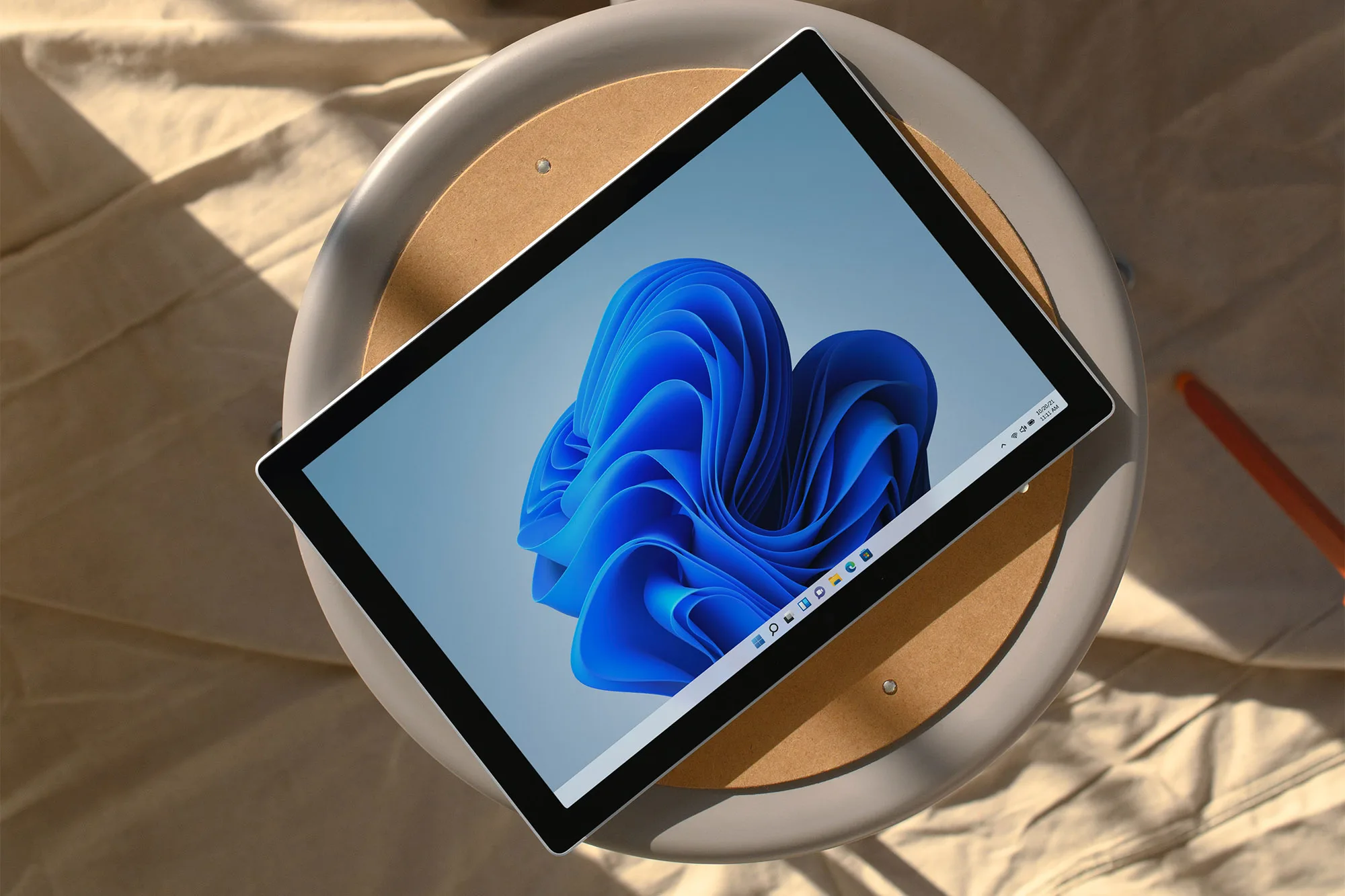
Windows PCs are about to get a little more touchy. Microsoft is now testing a new kind of interaction in Windows 11 that doesn’t just show you what’s happening on screen, but it lets you feel it too.
Microsoft
Rolling out in the latest Insider build, the update introduces haptic feedback for a bunch of everyday actions. It’s subtle, it’s optional, and if done right, it could make Windows feel a lot more responsive.
What’s changing in Windows 11 with haptics?
With Windows 11 Insider Preview Build 26300.8155, Microsoft is adding haptic feedback effects to compatible devices like advanced trackpads and possibly some mice. The idea is simple: certain actions across the OS will now trigger a small physical response, almost like a tap or vibration.
Microsoft
These aren’t random buzzes either. The system is designed to respond to specific interactions, things like snapping windows into place, resizing them, aligning objects in apps like PowerPoint, or even hovering over the close button. The feature lives under input settings, where users can toggle it on or off and tweak how it behaves. And importantly, it’s limited to hardware that actually supports haptics, meaning this won’t magically show up on every old laptop.
Microsoft
Alongside the headline haptics feature, this build also brings a few smaller but useful refinements. The Xbox full-screen experience is now rebranded as Xbox mode, with a smoother first-run setup to make things feel more seamless for gamers. There are also under-the-hood improvements, including faster startup app launches, fixes for recent sign-in issues in certain apps, and a patch for a printing-related crash that had been affecting some Insider users.
Why Windows suddenly wants you to “feel” your actions
Haptics have long been a natural part of smartphones, adding subtle vibrations to confirm taps and gestures, while Windows has mostly relied on visuals and sounds. Now, Microsoft is bringing that same tactile layer to PCs, especially as more devices adopt haptic trackpads and stylus-friendly designs. The idea is simple: reduce the need to constantly look for on-screen confirmation by letting users feel their actions.
It also signals a broader shift in how Windows is evolving, moving toward a more immersive experience that blends sight, sound, and touch. If done right, it could make everyday interactions feel more intuitive and responsive—but it’s a delicate balance. Too much feedback could get annoying, but if Microsoft nails it, this might end up being one of those features that quietly becomes hard to live without.
Perplexity, one of the fastest-growing AI search tools right now, is suddenly facing some serious heat. And this time, it’s not about accuracy or hallucinations.
Perplexity
A fresh lawsuit is raising uncomfortable questions about what actually happens to user data behind the scenes, especially when people assume their chats are private. And if the allegations hold any weight, this could be one of those moments that prompts many users to rethink how casually they share information with AI tools.
Is Perplexity’s “incognito mode” actually private?
According to a newly filed class-action lawsuit by an anonymous Perplexity user, John Doe, not quite. The complaint alleges that Perplexity’s so-called incognito mode is essentially a “sham” that fails to protect user data as most people would expect.
Tushar Mehta / Digital Trends
The lawsuit claims that user conversations, including potentially sensitive topics like financial advice, health concerns, or legal queries, were shared with third parties like Google and Meta. And as reported by Ars Technica, this happened even when users explicitly chose incognito mode, which is supposed to limit tracking and data collection.
Joe Maring / Digital Trends
What’s more concerning is the kind of data allegedly involved. Reports suggest that information such as IP addresses, email IDs, geolocation data, and even full chat transcripts may have been passed along for ad targeting purposes. The lawsuit also accuses Perplexity of embedding tracking tools similar to those used in online advertising, without clearly informing users. In some cases, it even claims that entire conversations could be accessed via publicly reachable links.
Why this lawsuit could change how we trust AI
This goes beyond one app as AI tools feel personal, which makes oversharing easy. The lawsuit also claims years of chats were shared with ad giants, and that Perplexity doesn’t clearly surface its privacy policy like rivals do.
If true, it could force stricter transparency across AI platforms. For now, they’re just allegations, but enough to make that next AI prompt feel a little less casual.
Tencent Holdings has launched ClawPro, an enterprise AI agent management platform built on OpenClaw, the open-source framework that has become the fastest-growing project in GitHub’s history and the unlikely centrepiece of a national technology craze in China. The tool, released in public beta by Tencent’s cloud division on Thursday, allows businesses to deploy OpenClaw-based AI agents in as little as 10 minutes, with controls for template selection, model switching, token-consumption tracking, and security compliance. During its internal beta, ClawPro was adopted by more than 200 organisations across finance, government, and manufacturing, sectors that require the kind of strict data governance that the open-source version of OpenClaw was never designed to provide.
ClawPro is the latest and most commercially significant addition to Tencent’s growing suite of OpenClaw products, which now spans individual users, developers, and enterprises. In March, the company released QClaw, a mini-programme that embeds OpenClaw inside WeChat, giving the framework access to the app’s 1.3 billion users. It simultaneously launched WorkBuddy, a workplace AI agent tested by more than 2,000 non-technical employees across human resources, administration, and operations, and ClawBot, a WeChat plugin supporting multi-modal interactions. The speed of the rollout reflects Tencent’s determination to position WeChat not just as a messaging platform but as the primary interface forthe agentic AI wave that is reshaping how software gets used.
The object of all this enterprise engineering is a tool created by Peter Steinberger, an Austrian developer who published the first version under the name Clawdbot in November 2025. The software, built to let large language models operate computers, call tools, and execute tasks autonomously, was renamed twice in three days in late January 2026, first to Moltbot after Anthropic raised trademark concerns over the phonetic similarity to “Claude,” then to OpenClaw because Steinberger found Moltbot “never quite rolled off the tongue.” In February, he announced he would be joining OpenAI and transferring the project to an open-source foundation. By that point, the project had already passed React to become the most-starred software repository on GitHub, a record it reached in 60 days that took React more than a decade. As of late March, OpenClaw had 335,000 GitHub stars, 27 million monthly visitors, 2 million active users, and more than 13,700 community-built skills on its ClawHub marketplace.
In China, the adoption curve has been extraordinary. The country now has more OpenClaw users than any other, roughly double the activity of the United States according to analysis by SecurityScorecard. The phenomenon has been given a name: “raise a lobster,” after OpenClaw’s crustacean logo and mascot, which Steinberger chose because a lobster sheds its shell to grow. Tencent organised public installation sessions in Shenzhen that drew retirees and students. Baidu held similar events in Beijing. A cottage industry of technicians began charging 500 yuan, around $72, for on-site installations. Nvidia’s Jensen Huang told CNBC that OpenClaw was “definitely the next ChatGPT.” The Chinese state media apparatus amplified the enthusiasm. “Claw-powered” one-person companies became a talking point at the National People’s Congress, and local governments began offering grants to startups building applications on the framework.
The enthusiasm collided with reality almost immediately. In March, China’s National Computer Emergency Response Team warned that OpenClaw had “extremely weak default security configuration” and that attackers could exploit the tool by embedding malicious instructions in web pages or distributing poisoned plugins. The Ministry of Industry and Information Technology’s National Vulnerability Database published formal security guidelines urging users to run only the latest version, minimise internet exposure, and grant the agent the minimum permissions necessary. State-owned enterprises and government agencies, including the country’s largest banks, received notices warning them against installing OpenClaw on office devices. Several were instructed to report existing installations for security review and possible removal. Bloomberg reported that China moved to curb OpenClaw use at banks and state agencies, a striking reversal for a tool the government had been celebrating weeks earlier.
Advertisement
Tencent’s own relationship with OpenClaw has not been without friction. On 11 March, Tencent Cloud launched SkillHub, a Chinese-localised mirror of OpenClaw’s ClawHub marketplace, by scraping more than 13,000 skills from the original registry. The bulk scraping pushed Steinberger’s server costs into five digits and caused slowdowns on official servers. He complained publicly on X. Five days later, Tencent Cloud and Tencent AI appeared on OpenClaw’s official sponsor list, providing lightweight application servers for one-click deployment. The episode encapsulated a dynamic familiar in Chinese tech:a European project supplies the foundational innovation, Chinese companies scale it faster than anyone else, and the relationship between creator and commercialiser oscillates between parasitism and partnership.
The competitive context is fierce. Alibaba, which holds a 35.8 per cent share of China’s AI cloud market compared with Tencent’s smaller position, integrated its Qwen AI assistant across Taobao, Tmall, Alipay, and other consumer platforms, reaching 300 million monthly active users by early 2026 and delivering roughly 140 million first-time AI shopping experiences during a Chinese New Year promotional campaign. ByteDance is pursuing platform independence through Douyin and a state-media partnership. Baidu’s AI-powered business now accounts for 43 per cent of its core revenue, up from 26 per cent a year ago. Tencent’s strategy depends on WeChat’s unmatched distribution, its 1.3 billion users, and the bet that AI agents will become features of existing super-apps rather than standalone products. The company spent 18 billion yuan on AI products in 2025 and plans to double that in 2026.
ClawPro is the piece of that strategy designed to generate cloud revenue. Enterprise AI agent deployments require infrastructure, compute, model hosting, security layers, and compliance tooling, all of which Tencent can bill for even when the underlying agent framework is free. The 200 organisations that trialled ClawPro during its internal beta represent the beginning of a conversion funnel: take the enthusiasm for a consumer phenomenon, channel it through enterprise-grade tooling, and extract recurring cloud revenue from the result. It is the same playbook thatEuropean cloud companies have used to monetise open-source software, applied at a scale and speed that only the Chinese tech ecosystem can achieve.
The security concerns are not trivial. OpenClaw, by design, grants AI agents broad access to local files and the ability to communicate with external services. In an enterprise context, a misconfigured agent could exfiltrate sensitive documents, execute unauthorised transactions, or expose internal systems to prompt-injection attacks. The tension between the open-source community’s permissive defaults and the compliance requirements of banks, government agencies, and manufacturers is precisely the gap that ClawPro is designed to fill. Whether Tencent’s security layer is robust enough to satisfy Chinese regulators, who have already demonstrated their willingness to restrict the tool entirely, will determine whetherthe year of governed AIproduces governed AI agents or merely governed press releases about them.
Advertisement
The broader significance of the OpenClaw phenomenon is what it reveals about the geography of AI adoption. The tool was built by a single developer in Austria, renamed after a trademark dispute with an American AI company, transferred to an open-source foundation after its creator joined OpenAI, and then adopted at a velocity in China that dwarfs anything that has happened in the West. The country that produced DeepSeek, the AI model thatrattled Silicon Valley’s assumption that scale required American infrastructure, is now demonstrating that it can also adopt, adapt, and commercialise foreign AI tools faster than the markets that created them. Tencent’s ClawPro is, in that sense, less a product launch than a proof of concept for a pattern that will repeat: the open-source AI stack is global, but the speed of enterprise adoption is determined by the ecosystems that can distribute it. In China, that ecosystem runs through WeChat, and WeChat runs through Tencent.
There are many events so far in 2026 that could reasonably have been predicted, but perhaps one which couldn’t is a Hackaday scribe in Europe unexpectedly finding herself with a constant earworm from Afroman. The rapper, who most of us know only from his year 2000 hit single about getting high, made the news after an inept police raid on his house, and in turn a court case over his musical denunciations of the authorities.
We won’t pretend that Hackaday’s mathematical expertise stretches beyond that needed for engineering, but for the more advanced numberphiles among us the university’s write-up goes into some detail about their use of group theory to study the patterns and symmetry in a given piece of music. It’s a new approach that joins other more famous guides to musical success, so perhaps if you couple it with the stuff your music teacher failed to tell you in school, you could be on your way to the top of the charts. Meanwhile here at Hackaday we’ll stick to more conventional inspiration.
A former core infrastructure engineer has pleaded guilty to locking Windows admins out of 254 servers as part of a failed extortion plot targeting his employer, an industrial company headquartered in Somerset County, New Jersey.
According to court documents, 57-year-old Daniel Rhyne from Kansas City, Missouri, remotely accessed the company’s network without authorization using an administrator account between November 9 and November 25.
Throughout this time, he allegedly scheduled tasks on the company’s Windows domain controller to delete network admin accounts and to change the passwords for 13 domain admin accounts and 301 domain user accounts to “TheFr0zenCrew!”.
The prosecutors also accused Rhyne of scheduling tasks to change the passwords for two local admin accounts, which would affect 3,284 workstations, and for two more local admin accounts, which would impact 254 servers on his employer’s network. He also scheduled some tasks to shut down random servers and workstations on the network over multiple days in December 2023.
Advertisement
Subsequently, on November 25, Rhyne emailed a number of his coworkers a ransom email titled “Your Network Has Been Penetrated,” saying that all IT administrators had been locked out of their accounts and that server backups had been deleted to make data recovery impossible.
Additionally, the emails threatened to shut down 40 random servers daily over the next ten days unless the company paid a ransom of 20 bitcoin (worth roughly $750,000 at the time).
“On or about November 25, 2023, at approximately 4:00 p.m. EST, network administrators employed at Victim-1 began receiving password reset notifications for a Victim-1 domain administrator account, as well as hundreds of Victim-1 user accounts,” the criminal complaint reads.
“Shortly thereafter, the Victim-1 network administrators discovered that all other Victim-1 domain administrator accounts were deleted, thereby denying domain administrator access to Victim-1’s computer networks.”
Advertisement
Forensic investigators found that on November 22, Rhyne used a hidden virtual machine and his account to search the web for information on clearing Windows logs, changing domain user passwords, and deleting domain accounts as he planned his extortion plot.
One week earlier, Rhyne made similar web searches on his laptop, including “command line to remotely change local administrator password” and “command line to change local administrator password.”
Rhyne was arrested in Missouri on Tuesday, August 27, and released after his initial appearance in federal court. The hacking and extortion charges to which he pleaded guilty carry a maximum penalty of 15 years in prison.
Earlier this month, a North Carolina data analyst contractor was found guilty of extorting his employer, Brightly Software (a Software-as-a-Service company previously known as SchoolDude), for $2.5 million.
Advertisement
Automated pentesting proves the path exists. BAS proves whether your controls stop it. Most teams run one without the other.
This whitepaper maps six validation surfaces, shows where coverage ends, and provides practitioners with three diagnostic questions for any tool evaluation.
Ronan Rogers and Ruth Callanan discuss innovation in the west of Ireland and the evolution of Ireland’s STEM careers.
Ireland’s medtech sector is moving beyond traditional biomedical engineering, according to Ronan Rogers, the senior R&D director for cardiac ablation solutions at Medtronic. He explained the region has built “real depth”, not just in medtech, but across key areas such as pharmaceutical science, advanced analytics and digital technology. Areas that are now “increasingly converging”.
“That diversity of opportunity is a huge strength for Ireland,” he told SiliconRepublic.com. “It allows people from different professional backgrounds to find meaningful, high‑impact careers in healthcare, while helping Ireland move further up the value chain as a centre for complex, globally relevant innovation.”
Having recently expanded its Galway-based pharmaceutical laboratory, the Medtronic facility now serves as a west of Ireland hub for high-tech innovation and the evolving needs of the global healthcare space. Rogers is of the opinion that this is reflective of the convergence of the country’s medtech divisions.
Advertisement
Noting that the primary purpose of the lab “is to integrate pharmaceutical, engineering and analytical expertise under one roof to address the complex challenges of combination products, [that is] where a medical device and a medicine work together”.
“We see that convergence very clearly in this laboratory and there is a wide range of career paths in our industry, whether that’s a pharmacist drawn to the faster innovation cycles and applied science of medtech, or a software developer who wants to use their skills to solve real healthcare challenges and code with a deeper sense of purpose.”
What opportunities exist?
With the expansion comes the opportunity for students and professionals to consider a new role, either as part of Medtronic or within Galway’s thriving life science and medtech spaces.
“Galway offers a unique innovation ecosystem where infrastructure, academic partnerships and a significant medtech footprint all provide a strong foundation for sustaining Ireland’s leadership in the life sciences sector,” said Ruth Callanan, Medtronic’s director of site quality.
Advertisement
With the investment focused on significantly expanding R&D capability and technical depth within a critical space in the Irish medtech sector, Medtronic has increased lab space by almost a half and introduced analytical technologies that didn’t exist there before.
Callanan said: “This creates the conditions for future high‑value work as programmes grow. It strengthens Galway’s ability to attract and retain highly specialised talent, pharmaceutical scientists, chemical and materials engineers and it allows work that was previously outsourced internationally to be done here in Ireland.
“Over time, as demand and activity scale, we do expect this capability to support additional specialist roles, phased in over the coming years. Importantly, it reinforces Ireland’s position at the forefront of advanced medtech R&D and reflects a broader industry trend toward self-sufficiency in high-tech analytical testing.”
Step into the future
She explained the new lab will enable experts to integrate processes as the facility will be responsible for the entire life cycle of product development, from early phase R&D through to post-market oversight.
Advertisement
She added: “The laboratory utilises advanced LCMS [liquid chromatography-mass spectrometry] and GCMS [gas chromatography-mass spectrometry] technologies, which act as ‘molecular microscopes’. This allows our scientists to identify unknown compounds or impurities at extremely precise levels.”
According to Rogers, the new lab has a role to play in what he believes to be the reshaping of how STEM careers in Ireland are perceived and pursued, with Callanan noting this creates for students and professionals opportunities to engage with careers that bridge the gap between various scientific disciplines.
“A laboratory of this size and complexity requires students and professionals with a wide range of skills and experience across multiple disciplines,” she said.
“Just as importantly,” added Rogers, “we’re sending a clear signal to pharmacists, chemists and analytical scientists that medtech offers deep, intellectually challenging career paths that go well beyond traditional manufacturing or even classical biomedical engineering.”
Advertisement
Don’t miss out on the knowledge you need to succeed. Sign up for the Daily Brief, Silicon Republic’s digest of need-to-know sci-tech news.



























































You must be logged in to post a comment Login