
Tech
OpenAI pauses Stargate UK as energy costs and copyright rules block the path

In short: OpenAI has paused its Stargate UK data centre project, citing the high cost of industrial electricity in Britain and an unfavourable regulatory environment around AI copyright. The project, announced in September 2025 alongside Nvidia and Nscale, had planned to deploy 8,000 GPUs at sites in north-east England, scalable to 31,000 over time. OpenAI says it will move forward “when the right conditions” allow, though it has given no timeline. The pause is a significant setback for the UK government’s AI Growth Zones initiative and arrives as OpenAI prepares for a public listing.
What Stargate UK was supposed to be
Stargate UK was announced in September 2025 as a sovereign AI infrastructure project: a partnership between OpenAI, Nvidia, and British cloud provider Nscale to build data centre capacity in north-east England that would allow OpenAI’s models to run on local computing power. The sites earmarked were Cobalt Park near Newcastle and Blyth, both within the UK government’s designated AI Growth Zones, a framework the government had positioned as a centrepiece of its industrial strategy for artificial intelligence. The project was unveiled during US President Donald Trump’s state visit to Britain, giving it diplomatic as well as commercial significance. The initial phase involved off take of approximately 8,000 Nvidia AI processors, with an ambition to scale that to 31,000 GPUs over time, capacity that would have enabled OpenAI to serve critical public services, regulated industries such as finance, and national security partnerships without routing data through US-based infrastructure. OpenAI never disclosed the total investment figure associated with the UK project. The broader US Stargate project remains on track with data centre construction under way across the United States, backed by a $40 billion bridge loan SoftBank secured to finance its participation, making the UK pause a geographic exception rather than a signal of retreat from AI infrastructure spending overall.
The energy cost problem
The most concrete obstacle OpenAI identified is the cost of electricity in Britain. UK industrial electricity prices are among the highest of any IEA member state, more than four times those in the United States, Finland, Norway, and Sweden. For a data centre drawing 100 megawatts, that differential is not a line-item concern but a structural one: the economics of running large-scale AI inference workloads at a site where power costs four times as much as they do in Virginia or Texas are fundamentally different, and that gap compounds as capacity scales. The problem is not simply a matter of electricity tariffs. Grid connection requests in the UK surged from 41 gigawatts in November 2024 to 125 gigawatts by June 2025, with an estimated 75 gigawatts of that queue attributable to data centre projects. Buildings can be constructed in 18 to 24 months; grid connections take three to eight years. That mismatch means that even if a project clears the financial hurdle, it faces an infrastructure queue that the current regulatory and planning framework has not been designed to process at AI-infrastructure speeds. The UK government’s AI Growth Zones policy, published in November 2025, was intended in part to address exactly this bottleneck, but the zone designations do not resolve the underlying grid constraints, and OpenAI’s decision to pause suggests that the policy framework has not yet translated into the conditions that would make the investment viable.
The copyright sticking point
The regulatory concern OpenAI cited alongside energy costs points to a separate and more politically charged problem: the UK’s unresolved approach to AI copyright. UK lawmakers have been working to update the rules governing how AI models are trained on copyrighted material. The government’s preferred approach, a broad text and data mining exception with an opt-out mechanism for rights holders, was rejected by the majority of respondents to the government’s own consultation, with creative industries, publishers, and news organisations arguing that a broad exception would allow generative AI companies to train on their works without compensation or meaningful consent. The consultation produced no consensus, and the government has since delayed any legislative change. For OpenAI, which trains large language models on text scraped from the internet, the uncertainty about whether that training will be lawful, and on what terms, is a material business risk. A UK data centre is not simply a power facility, it creates legal jurisdiction. If the UK eventually adopts a copyright framework that restricts training data use more tightly than the US, operating infrastructure in Britain could expose OpenAI to liability or compliance costs that do not apply to its US operations. The pause allows OpenAI to wait for that regulatory picture to clarify before committing capital.
A pause, not a cancellation, and the IPO context

The 💜 of EU tech
The latest rumblings from the EU tech scene, a story from our wise ol’ founder Boris, and some questionable AI art. It’s free, every week, in your inbox. Sign up now!
OpenAI’s statement was calibrated to leave the door open. “We continue to explore Stargate U.K. and will move forward when the right conditions such as regulation and the cost of energy enable long-term infrastructure investment,” the company said, framing the decision as contingent rather than final. The timing, however, is notable. OpenAI closed a $122 billion funding round at an $852 billion valuation in late March 2026, extending participation to retail investors for the first time in a move widely interpreted as groundwork for a public offering analysts expect as early as the fourth quarter of 2026. Companies approaching an IPO typically tighten their capital allocation discipline, avoid open-ended international commitments that could weigh on reported cash burn, and reduce exposure to projects with uncertain timelines. Pausing a data centre project that faces both energy cost headwinds and an unresolved copyright regime fits that pattern. The UK government, which had promoted Stargate UK as a signal of international investor confidence in Britain’s AI ambitions, described the decision as disappointing and said it remained in dialogue with OpenAI. OpenAI’s international Stargate expansion has not been without complications elsewhere either, its Abu Dhabi data centre plans drew an explicit threat from Iranian authorities amid escalating regional tensions, suggesting that sovereign AI infrastructure projects carry geopolitical risk profiles that are becoming a distinct factor in OpenAI’s site selection calculus. Meanwhile, Oracle appointed a new CFO this week to manage its $50 billion data centre construction programme as the central operating partner in the US Stargate project, a contrast that illustrates where AI infrastructure spending remains active and where it is being reconsidered. The year 2025 established infrastructure access and energy as the primary competitive variables in AI, and for the UK, OpenAI’s pause is a signal that it has not yet solved either.

A VPN is one of the simplest and highest-impact privacy tools you can add to your Android phone. It encrypts all traffic leaving your device, masks your IP address, and prevents your mobile carrier, network administrators, and anyone sniffing public Wi-Fi from reading what you send and receive. The problem is that the market is saturated with hundreds of options — and some of them are actively worse than using no VPN at all.
This guide covers five vetted options for Android in 2026, chosen based on independent speed testing, verified no-log audit status, and real-world usability on Android. Pricing is accurate as of publication; use the links below to confirm current rates before subscribing.
Quick Take:Best overall: NordVPN — fast, independently audited, feature-complete Android app
Best for privacy purists: Mullvad — no email, no account details, flat pricing
Best free option: ProtonVPN Free — no data cap, no ads, no data selling
Best for streaming: ExpressVPN — fastest tested speeds, reliable geo-unblocking
Best for households: Surfshark — unlimited simultaneous devices on one subscription
What to Look for Before You Choose
The VPN market has two distinct quality tiers, and the difference isn’t always visible from app store screenshots. Before picking any option — paid or free — apply these four filters:
- Independent no-log audit: Any VPN can claim it doesn’t log your traffic. Only a handful have had that claim verified by an external cybersecurity firm with access to their infrastructure. Prioritise providers that have passed at least one named, published audit.
- Protocol quality: WireGuard is the current standard for speed and security. OpenVPN is battle-tested but slower. Proprietary protocols (NordLynx, Lightway) are acceptable when built on WireGuard or audited independently. Avoid providers that use only outdated PPTP or L2TP.
- Kill switch: If the VPN connection drops, a kill switch halts all internet traffic until the tunnel is restored. Without it, your real IP and unencrypted traffic briefly expose themselves every time the connection interrupts — which happens more on mobile than on desktop.
- Business model transparency: If the product is free and there is no visible paid tier, advertising revenue, or clear funding source — your data is the product. This is not speculation; it is documented by independent research.
1. NordVPN — Best Overall for Android
NordVPN is the most balanced option across speed, privacy verification, and Android-specific features. Its NordLynx protocol — built on WireGuard — delivered less than 20% speed reduction on a 250 Mbps connection in Security.org’s independently conducted Android VPN speed tests in early 2026. That puts it consistently above average for mobile use.
On the privacy side, NordVPN completed its sixth independent no-logs assurance engagement in February 2026, with auditors given full access to servers, employee interviews, and infrastructure configurations. The result confirmed NordVPN stores no connection logs, IP addresses, traffic logs, or browsing activity.
The Android app includes a built-in ad and tracker blocker (Threat Protection Lite), split tunneling, and an automatic kill switch. It supports up to 10 simultaneous devices per subscription.
- Server count: 6,000+ in 111 countries
- Protocol: NordLynx (WireGuard-based), OpenVPN
- No-log audit: Yes — 6 completed, most recent Feb 2026
- Starting price: From approximately $3.09–$4.39/month (2-year plan)
- Free tier: No — 30-day money-back guarantee only
- Google Play rating: 4.3/5
Best for: Users who want a one-app solution that handles speed, privacy, ad blocking, and streaming without configuration.
2. ProtonVPN — Best for Privacy-First Users (and the Best Free Option)
ProtonVPN occupies a unique position: it is the only free VPN recommended in this guide, and it earns that position by having a completely different business model from other free offerings. The free tier is funded by paid subscribers, not by data collection or advertising. There is no data cap on the free tier — an extremely rare offering in this market.
ProtonVPN passed its fourth consecutive independent no-logs audit in 2025, conducted by Securitum. The company also publishes a transparency report documenting every legal request for user data — and because it logs nothing, it has nothing to hand over. Its apps are fully open source, meaning the code is publicly inspectable by any security researcher at any time.
Speed is near the top tier. Independent testing in 2026 showed ProtonVPN slowing download speeds by roughly 8% — compared to NordVPN’s 6% — a difference that is imperceptible in real-world use. The paid VPN Accelerator feature reportedly improves speeds on distant servers by 40–50%.
- Server count: 9,500+ in 112 countries (paid); limited server selection on free
- Protocol: WireGuard, OpenVPN, Stealth (obfuscated)
- No-log audit: Yes — 4 completed, most recent 2025
- Starting price: Free (no data cap) | Paid from approximately $2.99/month
- Free tier: Yes — unlimited data, 3 server locations, 1 device
- Open source: Yes — full client source code publicly available
Best for: Users who want the strongest privacy credentials, anyone on a budget who needs a genuinely trustworthy free tier, and anyone who wants to verify the code before trusting it.
Free tier limitation to know: The free tier restricts access to three server locations (US, Netherlands, Japan) and one device. For most basic privacy needs — securing public Wi-Fi, hiding traffic from your carrier — this is sufficient. For streaming geo-restricted content, you will need a paid plan.
3. ExpressVPN — Best for Speed and Streaming
ExpressVPN has held its position as a top-tier speed performer for several years, and that remains true in 2026. Its proprietary Lightway protocol delivered an average of 214 Mbps download and 207 Mbps upload in Android-specific testing — among the fastest recorded for any mobile VPN. CNET’s 2026 best Android VPN evaluation named it their top pick, citing outstanding streaming performance, geo-unblocking reliability, and ease of use.
The Android app is polished and simple — a single tap connects to the recommended server. It includes a kill switch, split tunneling, and threat manager (blocks known malicious domains). ExpressVPN operates from the British Virgin Islands, outside the EU and Five Eyes data-sharing arrangements.
- Server count: 3,000+ in 105 countries
- Protocol: Lightway (proprietary, audited), OpenVPN, IKEv2
- No-log audit: Yes — multiple completed
- Starting price: From approximately £1.99/month (promotional) | Regular from $6.67/month
- Free tier: No — 30-day money-back guarantee
- Google Play rating: 4.1/5
Best for: Users whose primary use case is streaming geo-restricted content, travelling users who need reliable connections across regions, and anyone who values a fast, no-configuration mobile experience.
One trade-off: ExpressVPN is among the more expensive options at its standard rate. The promotional price requires a long-term commitment; monthly plans cost significantly more. Factor in the full cost if you prefer flexibility.
4. Mullvad — Best for Maximum Anonymity
Mullvad is the most privacy-radical mainstream VPN available. It requires no email address and no personal information to create an account — you are assigned a 16-digit account number and that is your entire identity on the platform. Payment is accepted via cash by post, cryptocurrency, and card. No name, no email, no phone number is ever stored.
As Engadget’s 2026 budget VPN guide notes, Mullvad’s pricing has not changed since 2009: €5 per month, with no long-term contracts and no promotional pricing. What you see is what you pay. It supports up to five simultaneous devices.
- Server count: 900+ in 46 countries
- Protocol: WireGuard, OpenVPN
- No-log audit: Yes — independently audited
- Starting price: €5/month (flat — no annual discount)
- Free tier: No — 30-day refund policy
- Account signup: No email required
Best for: Journalists, activists, lawyers handling confidential cases, or anyone for whom account anonymity matters as much as traffic privacy. Also ideal for technically-minded users who dislike email-based accounts and marketing relationships with software vendors.
When not to use Mullvad: If your primary need is streaming, Mullvad’s smaller server network offers less geo-unblocking coverage than NordVPN or ExpressVPN. It is a privacy tool first, a convenience tool second.
5. Surfshark — Best Value for Multiple Devices
Surfshark’s defining advantage is its device policy: unlimited simultaneous connections on one subscription. Every other major VPN imposes a device cap (typically 5–10). If you need to cover a phone, tablet, family member’s device, laptop, and smart TV simultaneously, Surfshark removes that constraint entirely.
Speed and privacy credentials are solid — it uses WireGuard, maintains a no-log policy, and its Android app includes ad and malware blocking (CleanWeb), a kill switch, and split tunneling. It consistently appears in multi-product roundups from PCMag, TechRadar, and RTINGS as a strong second-tier option.
- Server count: 3,200+ in 100 countries
- Protocol: WireGuard, OpenVPN, IKEv2
- No-log audit: Yes — independently audited
- Starting price: From approximately $2.19/month (2-year plan)
- Free tier: No — 30-day money-back guarantee
- Device limit: Unlimited
Best for: Users covering a whole household, multi-device power users, or anyone who wants a capable VPN at the lowest per-month price point without compromising on verified privacy credentials.
How These VPNs Compare
| VPN | Best For | No-Log Audit | Free Tier | Starting Price | Devices |
|---|---|---|---|---|---|
| NordVPN | Overall best | Yes (6 audits) | No | ~$3.09/mo | 10 |
| ProtonVPN | Privacy + free tier | Yes (4 audits) | Yes (unlimited data) | Free / ~$2.99/mo | 10 (paid) |
| ExpressVPN | Speed & streaming | Yes | No | From ~£1.99/mo | 8 |
| Mullvad | Maximum anonymity | Yes | No | €5/mo (flat) | 5 |
| Surfshark | Multi-device value | Yes | No | ~$2.19/mo | Unlimited |
Free VPNs — A Risk Most People Underestimate
Warning: The majority of free VPN apps on the Google Play Store are not privacy tools. Many are data collection tools wearing a VPN’s interface.
A Zimperium zLabs study of more than 800 free VPN apps — published in October 2025 — found that nearly two-thirds relied on vulnerable code, leaked personal data, or provided no meaningful privacy protection. Separately, Tom’s Guide reported research projecting that by 2025, 80% of free VPN apps would embed tracking features, with data sales to third parties affecting up to 60% of the category.
The mechanism is straightforward: a free VPN app has no paid revenue. The cost of operating VPN infrastructure — servers, bandwidth, maintenance — is real. Something funds it. In many cases, that something is selling aggregated user traffic data to advertising networks and data brokers. Installing such an app to “protect your privacy” achieves the opposite.
The exception is ProtonVPN Free, listed above. It is funded by paid subscribers and has an independently verified no-log policy. Outside of that and a small number of other verified providers, treat free VPNs as a significant risk rather than a safe default.
VPN Protocols — What the Labels Mean
You will encounter protocol names in VPN settings and marketing. Here is what they mean in plain terms:
- WireGuard: The current speed and security standard. Lean codebase (~4,000 lines vs OpenVPN’s ~400,000), fast handshakes, and strong cryptography. If available, use this.
- NordLynx (NordVPN): NordVPN’s implementation of WireGuard, with an additional privacy layer to resolve WireGuard’s default IP assignment behaviour. Functionally WireGuard with an extra step.
- Lightway (ExpressVPN): ExpressVPN’s proprietary protocol, designed for fast connection and reconnection on mobile networks. Independently audited. Performs comparably to WireGuard in speed tests.
- OpenVPN: The long-standing standard. Battle-tested and extensively audited over many years. Slower than WireGuard on modern hardware but universally supported. Use it as a fallback if WireGuard is unavailable.
- IKEv2/IPSec: Good for mobile use specifically because it handles network switches well (e.g. moving from Wi-Fi to mobile data). Reconnects faster than OpenVPN. Standard feature on many VPNs.
- Stealth / Obfuscated protocols: Designed to disguise VPN traffic as regular HTTPS traffic to bypass VPN blocks — relevant in countries with active censorship or on networks that block VPN connections.
Before You Subscribe — Checklist
- ☐ Confirm the VPN has a published, independent no-log audit — not just a self-declared policy
- ☐ Check that the Android app includes a kill switch (not all apps enable it by default)
- ☐ Verify the app is downloaded directly from Google Play Store — not a third-party APK
- ☐ Enable the kill switch after installation before your first connection
- ☐ Test your real IP before and after connection using a browser-based IP checker
- ☐ For free VPNs: verify the provider has a paid tier and a published no-log audit before trusting it
- ☐ Enable auto-reconnect to restore VPN after network switches (Wi-Fi to mobile data)
Frequently Asked Questions
Does a VPN make my Android phone completely private?
No. A VPN encrypts the connection between your phone and the VPN server and hides your IP address from the sites you visit. It does not anonymise you at the app level — apps with your account information still know who you are. It also does not protect against malware already on your device. Think of it as one layer in a wider phone data security strategy — not a complete solution on its own.
Will a VPN slow down my Android phone?
Yes, to a measurable but usually minor degree. NordVPN’s NordLynx protocol showed less than 20% speed reduction on a 250 Mbps connection in independent testing. On a typical mobile connection of 50–100 Mbps, the real-world impact is rarely noticeable for browsing, messaging, or video calls. Streaming in 4K on a congested VPN server is where speed reduction becomes visible.
Is it safe to use a VPN on public Wi-Fi?
Using a VPN on public Wi-Fi is safer than not using one. Public Wi-Fi creates opportunities for man-in-the-middle attacks, traffic sniffing, and rogue hotspot impersonation. A VPN neutralises the first two. It does not protect against a rogue hotspot at the DNS level unless your VPN provides its own DNS servers, which most reputable providers do. Enable the VPN before connecting to public Wi-Fi, not after.
Can a free VPN be trusted?
Very few can. The Zimperium study of 800+ free VPN apps found nearly two-thirds were unsafe in measurable, documented ways. The only free VPN recommended in this guide is ProtonVPN Free — it has an independently audited no-log policy, no data cap, and a business model funded by paid subscribers rather than data collection.
Does a VPN protect me from hackers?
A VPN protects against network-level interception — eavesdropping on your traffic, recording your browsing activity from a network position, and revealing your IP address. It does not protect against phishing, malware, social engineering, or account compromise through password reuse. For those threats, you need a separate set of measures covered in our Android data security guide.
Do I need a VPN if I only use mobile data (not public Wi-Fi)?
On mobile data, your carrier can see your DNS queries, general traffic metadata, and browsing patterns. Many carriers sell anonymised (but not always reliably anonymised) data to third parties. A VPN prevents that. It also prevents your ISP from throttling specific services like video streaming based on traffic inspection. Whether that risk profile matters to you depends on your threat model — it is not an emergency for most users, but it is a real trade-off.
Which VPN should I choose if I just want something that works without setup?
NordVPN or ExpressVPN. Both have polished Android apps with single-tap connect, work reliably across all common Android versions, and handle network switches without manual reconnection. NordVPN is the better all-round value; ExpressVPN is the better streaming option.
Is it legal to use a VPN in the UK?
Yes — VPNs are legal in the United Kingdom and across the European Union. Using a VPN to access content that is itself illegal remains illegal regardless of VPN usage. Using a VPN to access geo-restricted streaming content (e.g., a US Netflix library from the UK) may violate streaming platform terms of service, though it is not a criminal matter.
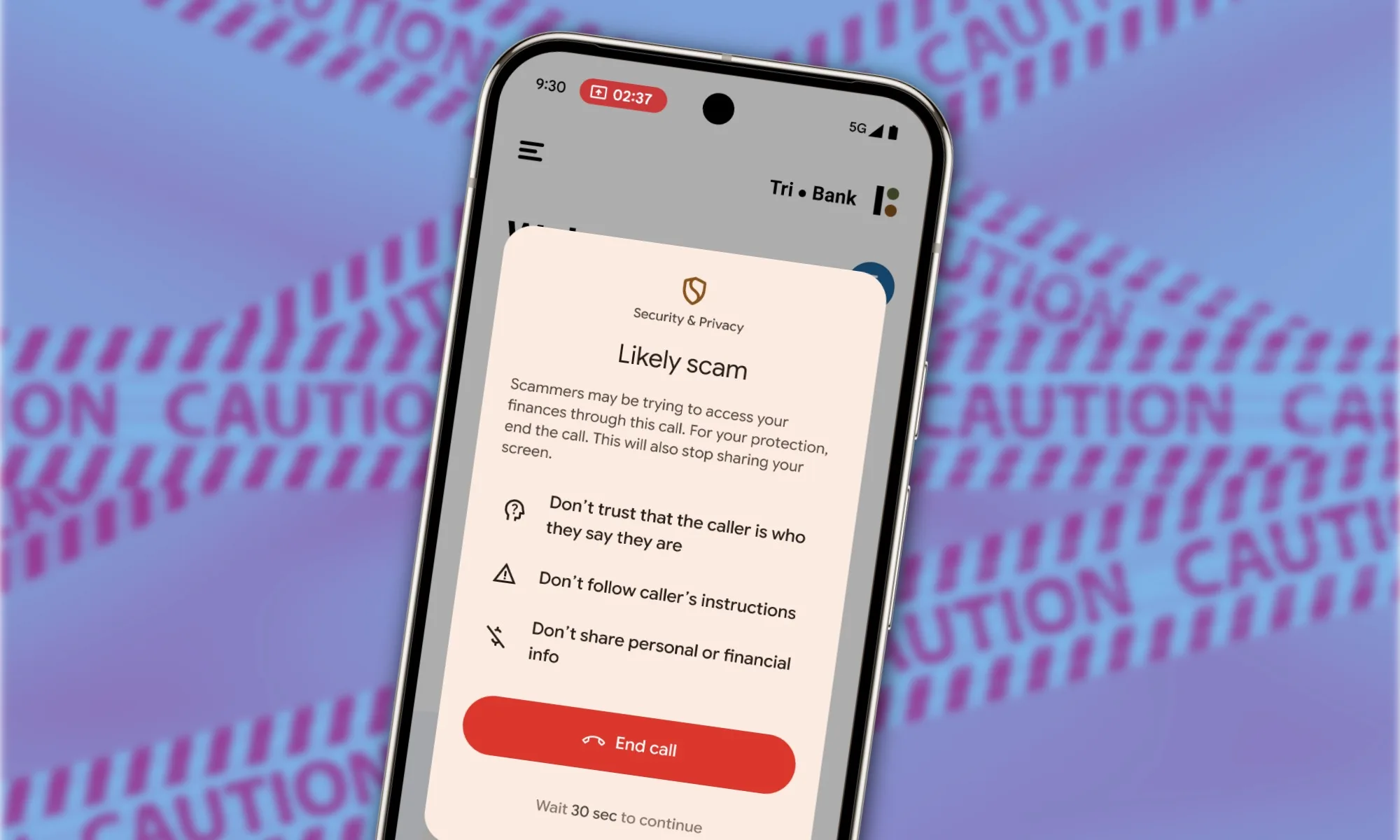
Scam calls are evolving. Your phone is about to do the same. Samsung’s upcoming foldables are shaping up to get an intelligence upgrade, with Google’s Gemini-powered Scam Detection expected to expand to devices like the Galaxy Z Fold 8, Galaxy Z Flip 8, and even a new Wide Fold variant. And yes, this time your phone may finally be better at spotting fraudsters than your patience at 7 PM after the fifth unknown call of the day.
Samsung joins the scam detection club
Google has been steadily building Scam Detection into its AI ecosystem, using Gemini to analyze live phone conversations and flag suspicious behavior as it happens. So, if a caller starts sounding like they’re scripting a heist movie, your phone gently steps in and says, “Maybe don’t trust this one.” On Pixel devices, this feature runs directly on-device, so it doesn’t send your calls to the cloud for analysis. That keeps things private while still letting AI do the heavy lifting of spotting patterns that usually scream scam.

Earlier this year, Samsung teamed up with Google to bring this capability to its own Phone app, starting with the Galaxy S26 series. That meant users didn’t have to rely on Google’s default dialer anymore to get scam protection baked in. There was a catch, though. The rollout has so far been limited to English-speaking users in the US, leaving many global users still answering unknown calls the old-fashioned way. Now, that seems to be changing.
Recent findings from the Phone by Google app suggest that Scam Detection is being prepared for Samsung’s next-generation foldables. The feature appears linked to several model families, including the Galaxy Z Fold 8, the Galaxy Z Flip 8, and a new Wide Fold device. These appear alongside a wide range of regional variants, suggesting a global rollout strategy. In short, Samsung isn’t just testing the waters here. It looks like it’s preparing to scale the feature across markets from day one.
Beyond the US-only limitation
Google’s Scam Detection already works in multiple regions on newer Pixel devices, including the Pixel 9 and Pixel 10 series. That suggests Samsung’s eventual rollout may not remain as geographically restricted as it is today. If anything, the inclusion of multiple regional variants in the code points to a broader ambition: making scam protection a standard feature rather than a market-specific perk. And honestly, it’s about time.

Samsung is expected to unveil its next foldables at its usual Galaxy Unpacked event around July 2026. While new hinges, displays, and processors will likely take the spotlight, this AI-powered call protection adds something more practical to the mix. And if Samsung and Google get this right, your next foldable might just be the smartest thing you use before you even unlock it.
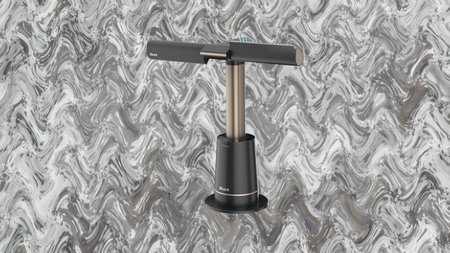
Buying a fan before the first proper heatwave arrives is almost always the smarter move, and a 29% reduction on one of the more capable options on the market makes that decision considerably easier to justify right now.
That saving brings the Shark TurboBlade down from £249.99 to £176.99 at Amazon, cutting £73 off a fan that is built around a pull-and-accelerate airflow system designed to project air up to 20 metres in Boost mode.
Shark’s TurboBlade tower fan just got a major price cut ahead of the summer heat
Buying a bladeless tower fan before the first proper heatwave arrives is almost always the smarter move, and a 29% reduction on one of the more capable options on the market makes that decision considerably easier to justify right now.
That reach is what separates the TurboBlade from cheaper tower fans that struggle to cool anything beyond the immediate vicinity, and with 180-degree oscillation running alongside it, the fan can sweep an entire room rather than directing airflow at a single fixed point.
The vents pivot from vertical to horizontal and can also be twisted to blow air at two angles simultaneously, which means a shared living room or bedroom with people positioned at different distances from the fan can be cooled more evenly than a single-direction unit would manage.
Control across all ten speed settings is handled via the included magnetic remote, and the lowest setting is rated at just 40dB, which is quiet enough to run overnight without the background noise becoming a distraction for light sleepers or anyone using it in a bedroom.

A 12-hour timer, Sleep mode, Boost mode, and Breeze mode are all available, giving the fan enough flexibility to behave differently depending on whether it is running during the day in a busy room or winding down alongside you at night.
Maintenance is straightforward too, as the bladeless design wipes clean and the DustDefence filter inside the base can be removed and cleaned to keep airflow performance consistent over time rather than degrading as dust accumulates inside the unit.
If you want a fan that handles a full room rather than a single spot, this is genuinely the right time to buy, and at £176.99 the TurboBlade delivers that alongside quiet overnight modes and flexible directional airflow.
SQUIRREL_PLAYLIST_10148964
A brilliantly-designed fan, the Shark TurboBlade is highly adjustable: its side blades can be twisted separately, there’s height adjustment, and the entire top can be rotated. Excellent coverage and a wide range of speeds make this a great choice, although it is quite expensive and its LED readout a little basic.
-
Highly adjustable
-
Very powerful
-
Quiet
-
Basic LED read-out
-
Relies on remote control

OpenAI has closed a yawning gap in its ChatGPT subscription pricing with a new $100 per month Pro plan that slots between the $20 per month Plus plan and $200 per month Pro plan. Offering five times more Codex than the $20 option, it appears designed to challenge Anthropic’s $100 per month Claude option. “Compared with Claude Code, Codex delivers more coding capacity per dollar across paid tiers,” an OpenAI spokesperson told TechCrunch.
So what’s the difference between OpenAI’s two Pro plans? The $200 version does offer four times the Codex. However, you get the same advanced tools and models with $100 plan, according to OpenAI’s product page. To encourage users to jump in, it will offer double the Codex for a limited time, or 10 times what you get with the Plus plan.
Users have been screaming for such a plan for a while now, according to posts on OpenAI’s developer community forums. “The Plus plan will continue to be the best offer at $20 for steady, day-to-day usage of Codex, and the new $100 Pro tier offers a more accessible upgrade path for heavier daily use,” OpenAI said in a post on X.
With the launch of GPT 5.2 late last year and GPT-5.3-Codex in February, OpenAI significantly boosted the speed and reasoning capabilities of Codex, giving developers a tough choice between ChatGPT and Claude Opus. However, the sticking point for many power users was ChatGPT’s $200 per month price — so OpenAI no doubt hopes the new plan will convince those on the fence to switch.


Driving through an active work zone can put a damper on your day, especially if you’re in a rush. Traffic slows down, potentially causing a delay, and you often have to navigate narrow lanes, one-lane roads, abrupt lane shifts, and close proximity to both heavy machinery and construction workers. All of these factors combined sometimes create a dangerous situation. According to the CDC, there were around 96,000 crashes in active work zones in 2022, resulting in about 37,000 injuries and 891 fatalities. Of those deaths, 105 were workers.
To reduce the risk of an accident, drivers typically see warning signs indicating an active work zone ahead. The speed limit drops, and flaggers may be present to help direct traffic. Distracted driving is dangerous anywhere, anytime, but it can be especially hazardous in work zones. As of 2026, 33 states plus Washington, D.C. have enacted “no touch” laws, which ban drivers from even holding their phone while operating a vehicle. This includes changing map settings, tapping to answer your phone, and often even picking it up at a red light. Some states are turning to AI, or artificial intelligence, to bust drivers who break the rules, including Arkansas, where it’s illegal to touch your phone while in a work zone with highway workers.
It’s a difficult law to enforce, but the state has set up still cameras in two work zones on Interstates 49 and 57. To help catch violators of the no touch law, the state is using AI to analyze the photographs, looking for cell phones in drivers’ hands.
AI assistance in law enforcement

The system in Arkansas is new and was implemented in January 2026. To ensure accuracy, the information tagged by AI is shared with Arkansas Highway Police officers on the scene, and they pull over the flagged vehicle to assess the alleged infraction. Fines are never automatically issued based only on artificial intelligence, and a police officer is required to verify and either issue a warning or fine. Additionally, signs have been placed to alert drivers about the cameras before they enter the monitored zones.
Of course, AI is a touchy and complicated subject, and the use of this tech has ignited privacy concerns. Critics are worried that Arkansas police aren’t tracking false positives, when AI flags phone usage but it doesn’t turn out to be true. There’s also questions about how else the footage may be used, though state officials maintain that any footage not required for legal proceedings is deleted.
Arkansas certainly isn’t the only state turning to AI for law enforcement and road safety. In Utah, law enforcement is using a license plate recognition system like the ones already used in California to track and find potential lawbreakers. The technology can also identify cars based on descriptions and, according to police, help them avoid unnecessary stops. However, critics are concerned about how much information the system preserves and the risks of so-called mass surveillance. Other states are using AI in less controversial ways, such as Hawaii’s dashboard cam giveaway, which is using AI to inspect guardrails and other potential issues on the road from camera’s mounted in willing drivers’ cars.
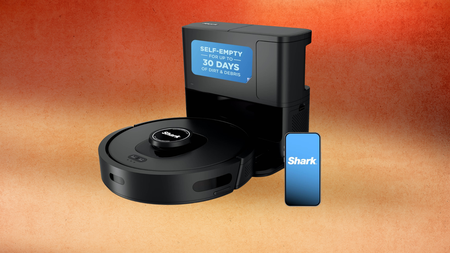
If keeping your floors clean without lifting a finger sounds appealing, a robot vacuum with a self-emptying base that goes a full month between empties makes that promise far more convincing than most.
That level of hands-free convenience is exactly what the Shark AV2501S AI Ultra Robot Vacuum delivers, and it is currently down from $549.99 to $269.99 at Amazon, saving you $280 in the process.
One of Shark’s top-rated robot vacuums is seeing massive 50% price cuts right now
If keeping your floors clean without lifting a finger sounds appealing, a robot vacuum with a 51% discount makes that dream far more appealing.
The headline feature is Matrix Clean Navigation, which maps your home using 360-degree LiDAR and then cleans in a precise grid pattern, taking multiple passes over the same area to ensure dirt and debris are not simply nudged aside rather than picked up.
That methodical approach matters most in homes with pets, where hair, dander, and fine dust tend to settle into carpets and along skirting boards in ways that a single-pass robot would routinely miss on a standard cleaning run.
The self-cleaning brushroll addresses the specific frustration of hair wrapping around the roller, which tends to be the maintenance task that makes robot vacuum ownership feel like more effort than it is worth over time.
Once the robot returns to its base, the collected debris is automatically transferred into the bagless 30-day capacity unit, which uses true HEPA filtration to trap 99.97% of dust and allergens down to 0.3 microns, keeping the air cleaner as well as the floor.
Battery life runs to up to 120 minutes per charge, and the Recharge and Resume function means the robot will return to its dock mid-clean if needed and pick up from where it stopped rather than starting the whole floor plan over again.
Scheduling and on-demand cleaning can both be handled through voice commands via Amazon Alexa or Google Assistant, which adds a layer of convenience for anyone who already runs a smart home setup.
At just over half its original price, the Shark AV2501S AI Ultra Robot Vacuum is a strong option for pet owners or anyone in a larger home who wants genuine whole-floor coverage without the ongoing cost of replacement bags.
We have tested several Shark’s vacuum cleaners across different price points, and our Shark vacuum cleaner reviews are a useful starting point if you want to compare models before buying.


Dutch healthcare software vendor ChipSoft has been impacted by a ransomware attack that forced the company to take offline its website and digital services for patients and healthcare providers.
ChipSoft is a large provider of Electronic Health Record (EHR) systems in the Netherlands. Its flagship platform, HiX, is used by many Dutch hospitals.
Earlier this week, users on Reddit reported that the digital solutions developer for the healthcare sector was affected by a cybersecurity incident.

Local media confirmed that the company was hit by a cyberattack, based on an internal memo ChipSoft circulated to healthcare institutions, alerting them of “possible unauthorized access.”
The IT services provider reportedly assured healthcare center operators that it was taking all measures to “limit the adverse consequences as much as possible,” while advising them to disconnect from its systems until the cleanup is completed.
Yesterday, the country’s computer emergency response team for cybersecurity in healthcare (Z-CERT) announced that a ransomware incident had impacted ChipSoft.
The agency stated that it is working with the firm and healthcare institutions to identify the impact and help them recover.
As a precaution, ChipSoft disabled all connections to its Zorgportaal, HiX Mobile, and Zorgplatform digital health services.
While some media outlets in the Netherlands said that most patient-facing systems are working normally, there have also been multiple reports that the same systems are unavailable at various hospitals.
Confirmed reports about system outages concern Sint Jans Gasthuis in Weert, the Laurentius in Roermond, the VieCuri hospital in Venlo, and the Flevo Hospital in Almere.
BleepingComputer has contacted ChipSoft to ask for more information about the incident, but we have not received a response by publication time.
Cyberattacks on healthcare IT system providers can be very damaging and lucrative for threat actors, as these companies operate information hubs for multiple healthcare centers, managing troves of sensitive data.
Last month, healthcare IT firm CareCloud disclosed a data breach incident that exposed sensitive data and caused a multi-hour service disruption.
Earlier in March 2026, Cognizant’s healthcare IT company, TriZetto Provider Solutions, suffered a data breach that exposed the sensitive information of over 3.4 million people.

Automated pentesting proves the path exists. BAS proves whether your controls stop it. Most teams run one without the other.
This whitepaper maps six validation surfaces, shows where coverage ends, and provides practitioners with three diagnostic questions for any tool evaluation.
Tech
Innovative Wristband Uses Sound Waves to Track Every Hand Motion and Direct Robotic Hands Wirelessly


MIT engineers have created an innovative wearable wristband that can measure hand movements with super-high accuracy, even minor shifts in between. Dian Li, a graduate student, demonstrated the technology by moving her hands around as if she were in real life, and a robot hand on the opposite side of the room could duplicate every finger bend and palm tilt.
This little band employs tiny ultrasonic stickers that sit flat against the skin, just like a watch, and compact electronics around the size of a phone manage the processing, all of which sits snugly on the band itself. Sound waves enter the wrist and bounce off the muscles, tendons, and ligaments, creating a vivid black and white image of what is going on inside your wrist. And those images demonstrate how much the tissues stretch and glide as you curl or extend a finger.

LEGO Disney & Pixar Wall-E & EVE Building Set for Adults, Ages 18+ – Home Office, Book Shelf, or Room…
- LEGO SET FOR ADULTS – The WALL-E and EVE (43279) building set offers adults 18 years old and up an immersive construction challenge featuring…
- 4 DISNEY PIXAR CHARACTERS – Builders can create iconic robots WALL-E, EVE, M-O and Hal from the hit movie—each with authentic functionality like…
- MINDFUL BUILDING EXPERIENCE – This detailed construction set lets builders practice advanced construction techniques for an immersive and relaxing…
The team has compared tendons to puppet strings, and one of their team members, Gengxi Lu, stated that being able to take a snapshot of those strings at any one time provides a very precise picture of where your hand is positioned. Your fingers can move in a variety of ways, from basic bends to many various angles, and ultrasound images reveal every single one of these changes in crystal clear clarity. An AI algorithm then takes this information and explores all of the patterns in the photographs, learning how to match them up with the real motions, all with the help of some training from volunteers who have provided the program with a plethora of labeled samples.
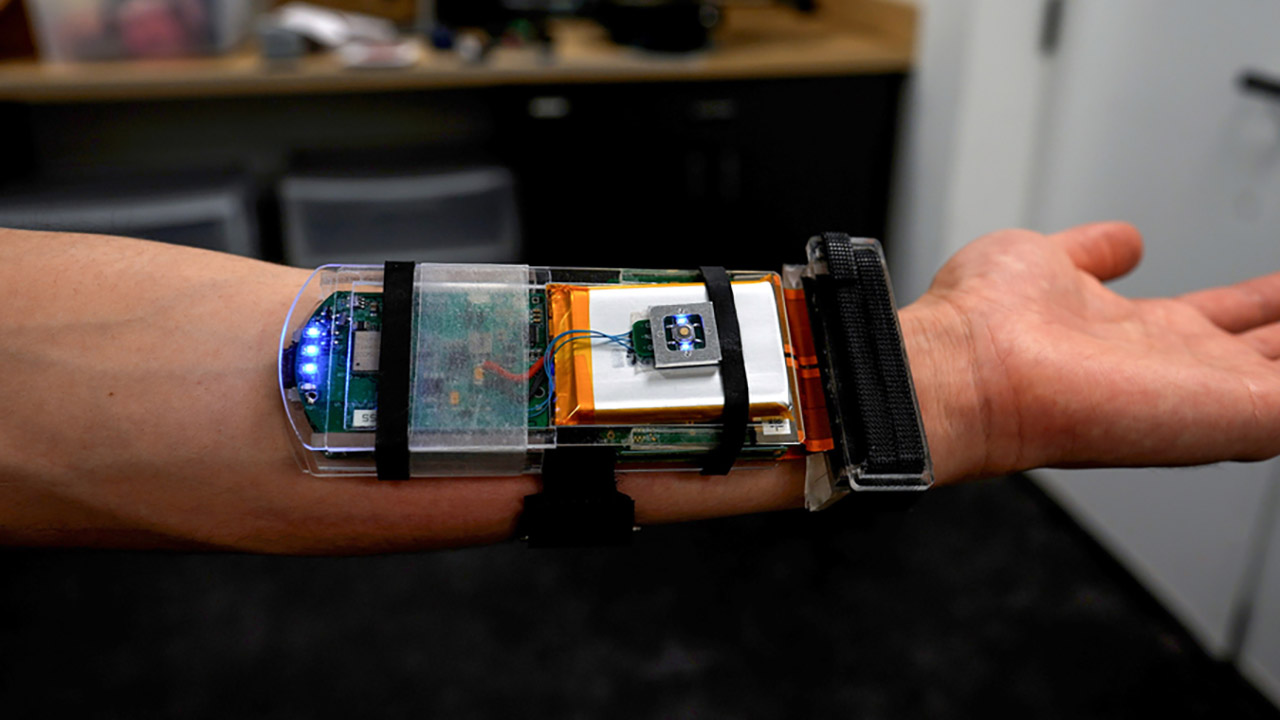
So, during these recording sessions, volunteers sat down with cameras tracking their hand movements as the band collected ultrasound data. The AI then went through and studied the matched pairs until it was able to figure out the movements for itself using only a fresh image. Then, when they tried it on eight people with various hand and wrist shapes, they discovered that it recognized every single move, whether it was spelling out the 26 letters of American Sign Language, picking up a tennis ball, a plastic bottle, a pair of scissors, or even a pencil. And the forecasts came in quickly enough for them to apply it in real time without any issues.

It’s fair to say that other approaches are rather constrained in their own ways, yet this band manages to overcome all of them. Cameras tend to lose track if there is an obstruction in the path or if the lighting changes even slightly. Sensory gloves tend to get in the way and reduce touch sensitivity. Sensors that detect electrical impulses from the forearm may receive a lot of background noise and miss the subtle distinction between open and closed postures. The ultrasonic approach from the wrist avoids all of this by simply looking at the movement source directly, eliminating the need for any specific views or covers.
[Source]

A film adaptation of Metal Gear Solid is in the works again, this time from filmmakers Zach Lipovsky and Adam B. Stein, the directors of Final Destination: Bloodlines, according to The Hollywood Reporter. The duo are reviving the project at Columbia Pictures as part of a new first-look deal with Sony, the latest attempt in what’s been multiple decades of work to turn the blockbuster stealth game into a blockbuster film.
“Metal Gear Solid was nothing short of a groundbreaking cinematic masterpiece that forever revolutionized video games,” Lipovsky and Stein said in a statement. “We are thrilled and honored to bring Hideo Kojima’s iconic characters and unforgettable world to life.”
Lipovsky and Stein’s horror bona fides helped make Bloodlines a critical and commercial hit when it came out in 2025, and the directors have a variety of other IP-focused genre films in the works, including a sequel to Gremlins for Warner Bros. and an animated Venom movie for Sony. It remains to be seen how exactly the duo will translate Metal Gear Solid‘s unique quirks to film, though.
Metal Gear Solid is heavily indebted to director Hideo Kojima’s own taste in action and spy cinema, while also being in conversation with video games themselves in a way that wouldn’t naturally translate to film. And even if you removed those metatextual rough edges, can it really be Metal Gear Solid without Kojima’s equal parts charming and awkward writing?
Attempts to create a film version of the game date back to 2006, when Kojima first shared that an adaptation was in the works. Columbia Pictures announced a new version of the film in 2012, with Avi Arad, former head of Marvel Studios, producing. In 2014, Jordan Vogt-Roberts, the director of Kong: Skull Island, was attached to direct that adaptation. And six years after that, Oscar Isaac was reportedly cast as Solid Snake. Arad and his son Ari Arad are still producing this latest take on the game, but with Lipovsky and Stein in charge, that older version of Metal Gear Solid is likely dead. Still, hope springs eternal that we’ll get to see a man hide in a cardboard box on the big screen someday.
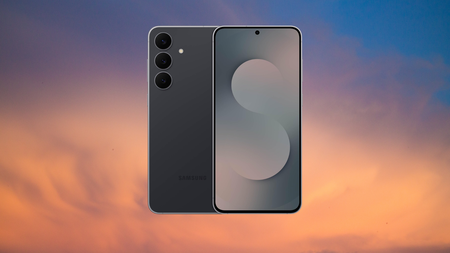
Samsung’s Fan Edition phones have always existed to make the flagship experience accessible without the flagship price, and the S25 FE makes that case more convincingly than most, given where it now sits in the market.
That positioning gets even sharper with this deal, as the Samsung Galaxy S25 FE is currently down from $709.99 to $551.78, putting a phone with genuinely capable hardware well within reach of the mid-range budget.
The 256GB Galaxy S25 FE is now so cheap it’s barely more expensive than the base model
Samsung’s Fan Edition phones have always existed to make the flagship experience accessible without the flagship price, and this S25 FE deal makes that case more convincing.
The display is where daily use begins and ends for most people, and the S25 FE‘s 6.7-inch FHD+ panel running at up to 120Hz gives scrolling and streaming a fluidity that screens locked to 60Hz simply cannot match in side-by-side use.
Camera hardware is a triple rear setup led by a 50MP main sensor, supported by a 12MP ultra-wide and an 8MP 3x optical zoom telephoto, with ProVisual Engine processing working across all three lenses to boost colour, sharpness, and contrast in real time.
That processing matters more than the raw megapixel count, because it is what determines whether a shot taken in mixed lighting or against a bright background comes out usable or flat, and Samsung’s Generative Edit tools let you move, resize, or remove elements from a photo after the fact without needing a separate editing app.
Power comes from the Exynos 2400 S5E9945 chipset paired with 8GB of RAM and 256GB of storage, which is enough headroom to handle multitasking and gaming without the thermal throttling that tends to surface on lesser mid-range processors under sustained load.
The 4,900mAh battery is rated for up to 28 hours of video playback, and Super Fast Charging 2.0 support means top-ups are quick when you do need them, though the 45W charger is sold separately rather than included in the box.
Construction uses Armor Aluminium framing and Gorilla Glass Victus Plus, which gives the S25 FE a durability story that most phones at this corrected price point cannot match without asking you to compromise on something else.
This is the right phone for someone who wants Samsung’s software experience, a large display, and a dependable camera system without paying for the Ultra tier, and at $Y it is genuinely difficult to fault the value on offer.

Coinbase moves x402 protocol to usage-based model for agentic AI tasks

7 Prime Video Shows Where Every Episode Is a Masterpiece

This Chart PERFECTLY Predicted Bitcoin’s Last 300 Days. $50K Is Next.


-

 Fashion7 days ago
Weekend Open Thread: Spanx – Corporette.com
-

 Business4 days ago
Three Gulf funds agree to back Paramount’s $81 billion takeover of Warner, WSJ reports
-

 Sports5 days ago
India men’s 4x400m and mixed 4x100m relay teams register big progress | Other Sports News
-

 Business6 days ago
Expert Picks for Every Need
-

 Tech2 days ago
How Long Can You Drive With Expired Registration? What Florida Law Says
-

 Business5 days ago
No Jackpot Winner, Prize to Climb to $231 Million
-

 Fashion4 days ago
Massimo Dutti Offers Inspiration for Your Summer Mood Board
-

 Fashion3 days ago
Let’s Discuss: DEI in 2026
-
Politics7 days ago
Wings Over Scotland | The quality of mercy
-

 Crypto World2 days ago
Bitcoin recovers as US and Iran Agree a Ceasefire Deal
-

 Business5 days ago
Akebia Therapeutics, Inc. (AKBA) Discusses Pipeline Progress and Strategic Focus on Kidney Disease Treatments at R&D Day – Slideshow
-

 Crypto World19 hours ago
Canary Capital Files SEC Registration for PEPE ETF
-

 Fashion7 days ago
Frugal Friday’s Workwear Report: Hammered Metallic Button Sweater Vest
-

 Politics6 days ago
The UK should not pay a penny in slavery reparations
-

 Tech4 days ago
Haier is betting big that your next TV purchase will be one of these
-

 Fashion7 days ago
Tory Burch’s Spring 2026 Campaign Goes on a Getaway
-

 Fashion7 days ago
Weekly News Update, 4.3.26 – Corporette.com
-

 NewsBeat6 days ago
Kemi Badenoch talks ‘spring cleaning’ Reform defections
-

 Tech4 days ago
Samsung just gave up on its own Messages app
-
 Fashion7 days ago
Philip Jones Kids Jewellery collection – Genuine 925 sterling silver
You must be logged in to post a comment Login