Tech
OpenAI’s First Hardware Device Could Be a ChatGPT Speaker With a Camera

OpenAI did not agree to pay roughly $5 billion in stock for the remaining 77% of Jony Ive’s io Products because the world desperately needed another fabric-covered cylinder that can set a kitchen timer and misunderstand the name of your favorite jazz pianist.
According to a new Bloomberg report, OpenAI’s first major consumer hardware product is expected to be a portable, screenless smart speaker built around ChatGPT. The still-unannounced device reportedly includes microphones, a camera, additional environmental sensors, a rechargeable battery and mechanical components capable of moving on their own. OpenAI reportedly wants to reveal the product before the end of 2026 and begin shipping it in 2027.
OpenAI has not confirmed the design, specifications, price or release date. This is therefore not a product launch, regardless of how many tech websites have already written headlines this morning pretending that one occurred.
It is, however, the clearest indication yet of what OpenAI and Ive believe should come after the smartphone: an AI companion that lives in your home, understands its surroundings and communicates without requiring you to stare into another glowing rectangle.
That sounds more ambitious than an Amazon Echo or Google Home.
It also sounds like something Philip K. Dick would have removed from the wall with a hammer.
Related Reviews:
What Is OpenAI Reportedly Building?
The device is described as resembling a smart speaker, although that may undersell what OpenAI has in mind.
It will reportedly be able to play music and other media, answer questions, control smart home products, respond to messages and access the broader capabilities of ChatGPT. A camera and other sensors would allow it to interpret objects, people and activity in the room rather than relying entirely on spoken commands. Its rechargeable battery would let users move it around the house instead of permanently tethering it to a kitchen counter.


Bloomberg also reports that the device will use GPT-Live, OpenAI’s new voice technology. GPT-Live is designed for full-duplex communication, meaning it can listen and respond continuously, recognize interruptions and pauses, and decide whether to continue speaking or wait for the user. That should make conversations feel less like issuing instructions to a hotel-room alarm clock and more like speaking with something that understands conversational rhythm.
The strangest reported feature involves mechanical elements that move independently. Nobody outside the project appears to know whether that means a rotating camera, a speaker that physically turns toward the user, or something more disturbing that follows you into the garage during a phone call to Moscow and then into the bathroom for some deeply unauthorized OnlyFans surveillance.
A moving camera could improve visual tracking and microphone positioning. A device that nods sympathetically when you complain about the mortgage would be another matter entirely.
Previous reporting suggested a price between $200 and $300, although that figure has not been confirmed and could change before release. Reports have also pointed to a larger OpenAI hardware roadmap containing approximately five products, potentially including smart glasses and other home devices.
Why Start With a Speaker?
A speaker gives OpenAI direct access to the interface it already understands best: conversation.
Building a smartphone would require OpenAI to compete immediately with Apple, Google and Samsung across displays, processors, cellular radios, operating systems, app stores, cameras and carrier relationships. That is a wonderful way to turn billions of dollars into a warehouse filled with unsold phones.
A screenless speaker is a more manageable first step. It can rely heavily on cloud processing, use existing Wi-Fi networks and connect with services people already use. It also allows OpenAI to position ChatGPT as something that exists throughout the day rather than an app that must be opened.
OpenAI and Ive have repeatedly criticized the limitations of traditional interfaces. In announcing the io acquisition, they argued that modern AI capabilities remain trapped inside familiar products and screens. Ive and his independent design company LoveFrom now have broad creative responsibilities across OpenAI, while the former io hardware team has been absorbed into the company.
The speaker is therefore unlikely to be marketed primarily as an audio product. It will be marketed as the physical body of ChatGPT.
Whether it also sounds good remains a very different question.

Is This Really a Smart Speaker?
OpenAI will have to explain whether this is a speaker designed for music or an AI appliance that happens to contain a loudspeaker.
Amazon, Apple, Google and Sonos have spent years developing microphones, acoustic echo cancellation, multiroom synchronization, voice pickup, loudspeaker protection and room-adaptive processing. OpenAI has world-class AI researchers and an expensive collection of former Apple engineers, but it does not have an established home-audio platform.
Portable operation also creates compromises. Batteries, cameras, processors, motors and thermal management all consume internal space that could otherwise be used for drivers and acoustic volume. If the product is small enough to carry from room to room, nobody should expect it to replace a proper stereo system unless OpenAI has discovered a new branch of acoustics while the rest of the industry was attending another cable demonstration.
The product will also need broad support for Spotify, Apple Music, Amazon Music, YouTube Music, TIDAL, Qobuz and internet radio if OpenAI expects anyone to use it as a serious music source. Smart home support will require Matter, Thread and integrations with lighting, security, thermostats, cameras and appliances.
OpenAI currently controls none of those ecosystems.
That leaves partnerships, APIs and a great deal of account authorization. The AI may be clever, but it still needs permission to open your calendar, send a message, change the thermostat and play Kind of Blue from the correct service.
What Could OpenAI Offer That Amazon and Google Cannot?
The existing smart-speaker companies are hardly asleep.
Amazon’s Alexa+ already uses generative AI for conversational responses, personalization, smart home control, shopping, reservations and multi-step tasks. Amazon has also introduced Echo hardware built specifically for Alexa+, including sensor fusion intended to make the assistant more proactive and aware of what is happening in the home.
Google’s new $99.99 Google Home Speaker was designed for Gemini for Home. It supports more natural language, multiple commands within a single request, conversational corrections, smart home control and optional advanced features through Google Home Premium.
Apple has introduced Siri AI, a substantially more conversational assistant integrated across Apple devices and personal data. HomePod already offers music playback, HomeKit control, messaging and personalized voice recognition, while Apple continues to emphasize privacy and integration with the iPhone.
Sonos Voice Control is narrower, but it performs music and system commands locally without sending voice data outside the home. That is not as dazzling as asking an AI to reorganize your life, but some consumers may prefer a speaker that knows less about them and reliably plays the correct album.
OpenAI’s potential advantage is the combination of stronger conversational reasoning, visual understanding, long-term memory and agentic behavior.
The reported device may not merely wait for “turn on the lights.” It could understand a request such as, “The room is getting dark and I am starting a movie,” then lower the lights, close compatible shades, adjust the temperature and switch the television system to the correct input.
A camera could allow someone to hold up an unfamiliar cable, medication bottle, appliance component or piece of audio equipment and ask what it is. It might help troubleshoot why a television has no sound by examining the connected hardware. It could remember which family member prefers which music, when the dog was last fed or where someone left an object.
That contextual awareness is the feature most likely to separate it from a conventional smart speaker.
It is also the feature most likely to make people unplug it before Thanksgiving dinner.
AI Is Already Inside Your Headphones
The broader concept is not new. Artificial intelligence and machine learning have already become important parts of headphones, earbuds and hearing products.
Manufacturers have long used machine learning for adaptive noise cancellation, beamforming, voice isolation, personalized hearing tests and automatic transparency modes. Those systems generally analyze audio locally and adjust the hardware without attempting to become your confidant.
Generative AI has pushed headphones further.
Google’s Pixel Buds Pro 2 were designed around Gemini access, allowing users to conduct hands-free conversations with the assistant through a connected phone. Google’s Live Translate system can also provide real-time spoken translation through compatible headphones.
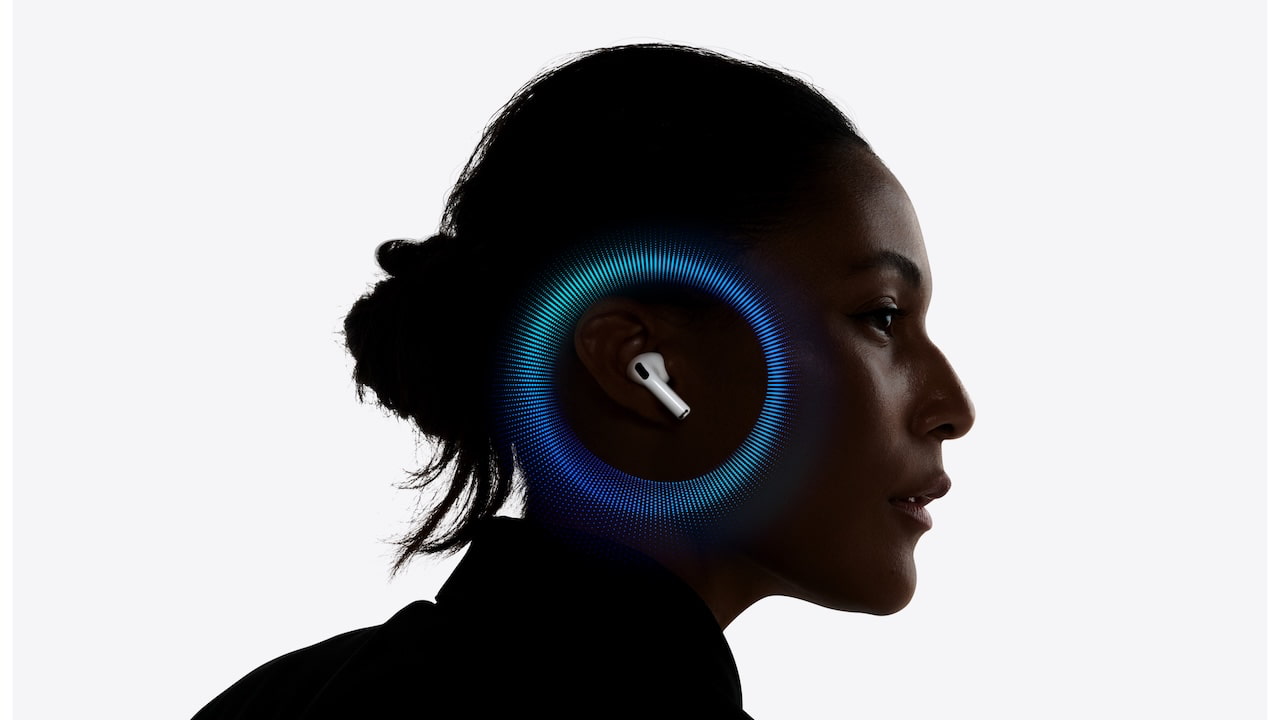

Apple Intelligence powers Live Translation through AirPods Pro 3, AirPods 4 with ANC and AirPods Max 2 when paired with a compatible iPhone. Apple also uses computational processing for Adaptive Audio, Conversation Awareness, Voice Isolation and environmental response.
Meta’s AI glasses may represent the closest current comparison to OpenAI’s reported device. They combine cameras, microphones, open-ear speakers and an AI assistant capable of answering questions about what the wearer is seeing. Unlike a home speaker, however, Meta’s glasses travel into public spaces, where everyone else gets to participate in the privacy experiment whether they volunteered or not.
The OpenAI speaker appears to take those same ingredients and place them inside the home.
Big Brother Is Listening, but Is He Recording?
Smart speakers have always created privacy concerns because their microphones must remain active enough to detect a wake word.
That does not automatically mean every conversation is uploaded or stored. Conventional smart speakers generally perform wake-word detection locally and begin transmitting audio only after activation. False activations, retention policies and human review programs have nevertheless damaged consumer trust over the years.
OpenAI has not disclosed how its hardware will handle wake words, local processing, camera data, stored memories or active listening. Until it does, nobody can honestly claim that the device will be either invasive or private.
Current ChatGPT Voice policies provide some indication of OpenAI’s approach, but they cannot be assumed to apply unchanged to future hardware. OpenAI says standard voice audio is deleted after transcription unless the user chooses to share recordings. Audio and video clips are not used for model training unless the user opts in, although transcripts may be used when the “Improve the model for everyone” setting is enabled.
A home device raises additional questions that an app does not.
Will its camera remain active between requests? Will visual analysis occur locally or in the cloud? Will it recognize individual household members? Can visitors disable it? Will parents be able to prevent children from forming persistent personal histories with the assistant? Can stored memories be inspected, corrected and permanently deleted?
There should be a physical microphone switch and a genuine mechanical camera shutter, not merely an icon that promises the software has stopped watching. Clear lights or audible signals should indicate when audio or video is being processed.
Anything less deserves suspicion.
Learning From You Could Be Useful and Uncomfortable
Personalization is central to OpenAI’s likely strategy.
A genuinely useful assistant must know which services you use, what devices you own, who lives in the house, what music you prefer and which requests require confirmation. It becomes more effective as it accumulates context.
That same context could create an extraordinarily detailed map of a household.
A camera-equipped assistant could potentially know when people arrive, which rooms they occupy, what objects they use and how they interact. Combined with calendars, messages, purchase history, music preferences and smart home activity, it might understand daily routines better than some family members do.
That information could improve accessibility, elder care, reminders and home automation. It could also become extremely valuable to hackers, litigants, insurers, advertisers or anyone who gains unauthorized account access.
The product’s commercial model matters. Powerful cloud-based AI is expensive to operate. OpenAI has not disclosed whether the speaker will require a ChatGPT subscription, include a separate monthly plan or offer reduced functionality without one.
Consumers should also ask what happens if the subscription ends or the company discontinues the service.
The Humane AI Pin provides a useful warning. Humane shut down its cloud-dependent wearable after selling parts of the company to HP, leaving the AI Pin unable to perform most of its intended functions. A sophisticated connected device can become an expensive paperweight when its servers disappear.
The Problem With an AI That Can Act
Answering a question incorrectly is irritating.
Taking an incorrect action is potentially dangerous.
A conversational AI controlling locks, appliances, purchases, messages and home security requires stricter safeguards than a chatbot generating a restaurant recommendation. Commands involving money, safety, identity or access should require confirmation and, in some cases, authentication from a phone or wearable.
The device must also understand which person is speaking. A child, visitor or television commercial should not be able to unlock a door, order $700 worth of Pokémon cards or send your employer a message explaining that you have chosen to pursue your true calling in artisanal cheese.
Hallucinations remain another concern. GPT-Live may sound natural and confident, but fluency is not the same as reliability. A voice assistant that speaks smoothly can make incorrect information feel more trustworthy because users do not see citations, uncertainty indicators or alternative answers on a screen.
A screenless interface removes visual clutter. It also removes the easiest method of reviewing what the AI thinks it heard before allowing it to act.
Why Does It Need to Move?
The mechanical movement may be functional. A rotating camera could follow the user, improve room coverage or direct microphones and speakers toward the person speaking.
It may also be intended to create personality.
Humans instinctively respond to movement, eye contact, voices and gestures. A device that turns toward someone, pauses at the right moment and remembers personal details will feel more socially present than a stationary speaker.
That could make it easier and more enjoyable to use. It could also encourage emotional attachment, particularly among children, isolated adults and elderly users.
OpenAI will need to decide whether it is building a tool or a relationship, and parents may have strong feelings about that distinction. Then again, we have already surrendered an entire generation to smartphones, social media and algorithms before breakfast. June and Ward Cleaver would probably have been removed by Child Protective Services in 2026 for allowing Wally and the Beaver to roam the neighborhood unsupervised without location tracking.
A tool should make its limitations clear. A companion is designed to make people forget them.
The Apple Lawsuit Could Complicate Everything
The report arrived only days after Apple sued OpenAI, io Products and former Apple employees Tang Tan and Chang Liu for alleged trade-secret misappropriation.
Apple claims former employees accessed confidential hardware files, engineering specifications, supplier information and unreleased product details after leaving the company. It also alleges that OpenAI recruits were encouraged to bring confidential materials and physical parts to interviews. These are Apple’s allegations and have not been proven in court. OpenAI says it has no interest in other companies’ trade secrets and is not aware of evidence supporting the complaint.
Apple is seeking damages and preliminary and permanent injunctions preventing OpenAI and the other defendants from possessing or using Apple’s trade secrets. It also wants relevant material returned and evidence preserved.
The lawsuit does not automatically block OpenAI from releasing hardware. A court would have to determine whether protected information was taken, used and connected to the products under development.
It does create risk. An injunction, discovery dispute or required redesign could delay the reported 2027 release. The case may also expose details about OpenAI’s hardware program long before Jony Ive is ready to reveal it from a perfectly lit room containing one chair and no visible cables.
The Bottom Line
OpenAI’s reported speaker could become the first smart home product to place a genuinely capable conversational AI at the center of everyday life.
Its potential advantages are substantial: natural dialogue, visual understanding, long-term context, portability and the ability to perform multi-step tasks across services. For users with disabilities, mobility limitations or complicated smart homes, a well-designed ambient assistant could be transformative.
The difficult questions are equally substantial. OpenAI must explain what the device sees, when it listens, what it remembers, where the information is processed and how much control users retain. It must create safeguards for purchases, messages, locks and other consequential actions. It also needs to prove that the product offers something a smartphone, pair of earbuds or existing smart speaker cannot already provide.
And because eCoustics readers will ask the question that most technology publications will forget, OpenAI must tell us whether the speaker can actually reproduce music without sounding like a Bluetooth-enabled soup can.
A more intelligent smart speaker could be useful.
A camera-equipped AI companion that learns the household, turns when summoned and depends on a permanent cloud connection could become the most articulate surveillance appliance ever placed on a kitchen counter. The future may not arrive wearing jackboots. It may speak softly, remember everything and ask whether we would like to renew our subscription.
You must be logged in to post a comment Login