Connect with us

Tech

OpenAI’s robotics chief quits over the Pentagon deal

Published

on

Caitlin Kalinowski spent 16 months building OpenAI’s physical AI programme. On Saturday, she said the company moved too fast on something too important.


The week that began with Anthropic being blacklisted by the Pentagon and ended with OpenAI taking its contract has now claimed OpenAI’s most senior hardware executive.

Caitlin Kalinowski, who joined OpenAI in November 2024 to lead its robotics and consumer hardware division, announced her resignation on Saturday on X. Her statement was short, direct, and more candid than anything OpenAI itself has said about the deal.

“AI has an important role in national security,” she wrote. “But surveillance of Americans without judicial oversight and lethal autonomy without human authorization are lines that deserved more deliberation than they got.”

Advertisement

The 💜 of EU tech

The latest rumblings from the EU tech scene, a story from our wise ol’ founder Boris, and some questionable AI art. It’s free, every week, in your inbox. Sign up now!

In a subsequent post, she was more precise about the nature of the complaint. “It’s a governance concern first and foremost,” she wrote. “These are too important for deals or announcements to be rushed.”

Kalinowski was careful to frame her departure in personal terms. “This was about principle, not people,” she wrote. “I have deep respect for Sam and the team.”

Advertisement

That last note carries some weight: Sam Altman has himself acknowledged that the Pentagon deal was “definitely rushed,” and that the rollout produced significant backlash.

What Kalinowski’s resignation adds to that admission is a name and a title: the most senior person at OpenAI, whose job was to bring AI into physical systems, has decided that the process by which it will now enter weapons systems and surveillance infrastructure was not good enough.

What the deal involved

The sequence of events that led here unfolded over roughly a week. Anthropic, which had been the only AI company cleared to operate on the Pentagon’s classified networks, following a $200 million contract awarded in July 2025, spent several weeks in tense negotiations with the Defense Department over the terms of continued use.

Anthropic’s position was that its models should not be deployed for mass domestic surveillance or fully autonomous weapons. The Pentagon, under Defense Secretary Pete Hegseth, insisted on language permitting use “for all lawful purposes,” without specific carve-outs.

Advertisement

On 28 February, with negotiations collapsed, President Trump directed all federal agencies to stop using Anthropic’s technology and called the company “radical woke” on Truth Social.

Hegseth formally designated Anthropic a supply-chain risk to national security, a classification previously reserved for foreign adversaries, and one that requires DoD vendors and contractors to certify they do not use Anthropic’s models.

Hours later, Altman posted on X that OpenAI had reached its own agreement to deploy its models on the Pentagon’s classified network.

OpenAI’s stated position is that its deal includes the same core protections Anthropic sought: no mass domestic surveillance, no autonomous weapons.

Advertisement

The company published a blog post outlining its approach and arguing that its cloud-only deployment architecture, retained safety stack, and contractual provisions, anchored to existing US law rather than bespoke prohibitions, make its agreement more robust than any previous classified AI deployment, including Anthropic’s.

What Kalinowski’s departure means for OpenAI

Kalinowski’s career before OpenAI was unusual in its breadth. She spent nearly six years at Apple as a technical lead on the Mac Pro and MacBook Air programmes, including the original unibody MacBook Pro, before moving to Meta’s Oculus division, where she led virtual reality hardware for more than nine years.

Her final role at Meta was heading Project Nazare, later named Orion, the augmented reality glasses initiative Meta unveiled as a prototype in September 2024 and described as the most advanced AR glasses ever made.

She joined OpenAI the following month.

Advertisement

During her 16 months at OpenAI, Kalinowski built out what the company describes as its physical AI programme, including a San Francisco lab employing roughly 100 data collectors training a robotic arm on household tasks.

Her departure leaves that effort without its most experienced hardware leader at a moment when OpenAI has staked considerable ambition on moving beyond software.

OpenAI confirmed her resignation on Saturday and said in a statement: “We believe our agreement with the Pentagon creates a workable path for responsible national security uses of AI while making clear our red lines: no domestic surveillance and no autonomous weapons.

We recognise that people have strong views about these issues and we will continue to engage in discussion with employees, government, civil society, and communities around the world.”

Advertisement

The wider picture

The fallout from OpenAI’s Pentagon deal has not been limited to internal dissent. ChatGPT uninstalls reportedly surged 295% following the announcement, and Anthropic’s Claude climbed to the number-one position in the US App Store, displacing ChatGPT. As of Saturday afternoon, the two apps remained first and second, respectively.

What Thursday’s resignation of the company’s robotics chief confirms is that the deal’s costs for OpenAI are still being counted. Altman wanted to de-escalate a confrontation between the government and the AI industry. He may yet have succeeded. Whether the price of that de-escalation, in talent, in trust, and in the specific question of who was right about the guardrails, was worth paying is a question that will take longer to answer.

Source link

Advertisement
Continue Reading
Click to comment

Leave a Reply

Your email address will not be published. Required fields are marked *

Tech

EFF, Ubuntu and Other Distros Discuss How to Respond to Age-Verification Laws

Published

on

System76 isn’t the only one criticizing new age-verification laws. The blog 9to5Linux published an “informal” look at other discussions in various Linux communities.

Earlier this week, Ubuntu developer Aaron Rainbolt proposed on the Ubuntu mailing list an optional D-Bus interface (org.freedesktop.AgeVerification1) that can be implemented by arbitrary applications as a distro sees fit, but Canonical responded that the company does not yet have a solution to announce for age declaration in Ubuntu. “Canonical is aware of the legislation and is reviewing it internally with legal counsel, but there are currently no concrete plans on how, or even whether, Ubuntu will change in response,” said Jon Seager, VP Engineering at Canonical. “The recent mailing list post is an informal conversation among Ubuntu community members, not an announcement. While the discussion contains potentially useful ideas, none have been adopted or committed to by Canonical.”

Similar talks are underway in the Fedora and Linux Mint communities about this issue in case the California Digital Age Assurance Act law and similar laws from other states and countries are to be enforced. At the same time, other OS developers, like MidnightBSD, have decided to exclude California from desktop use entirely.
Slashdot contacted Hayley Tsukayama, Director of State Affairs at EFF, who says their organization “has long warned against age-gating the internet. Such mandates strike at the foundation of the free and open internet.”

And there’s another problem. “Many of these mandates imagine technology that does not currently exist.”
Such poorly thought-out mandates, in truth, cannot achieve the purported goal of age verification. Often, they are easy to circumvent and many also expose consumers to real data breach risk.

Advertisement

These burdens fall particularly heavily on developers who aren’t at large, well-resourced companies, such as those developing open-source software. Not recognizing the diversity of software development when thinking about liability in these proposals effectively limits software choices — and at a time when computational power is being rapidly concentrated in the hands of the few. That harms users’ and developers’ right to free expression, their digital liberties, privacy, and ability to create and use open platforms…

Rather than creating age gates, a well-crafted privacy law that empowers all of us — young people and adults alike — to control how our data is collected and used would be a crucial step in the right direction.

Source link

Advertisement
Continue Reading

Tech

Seattle’s newest early stage fund makes a bet on vertical AI startups

Published

on

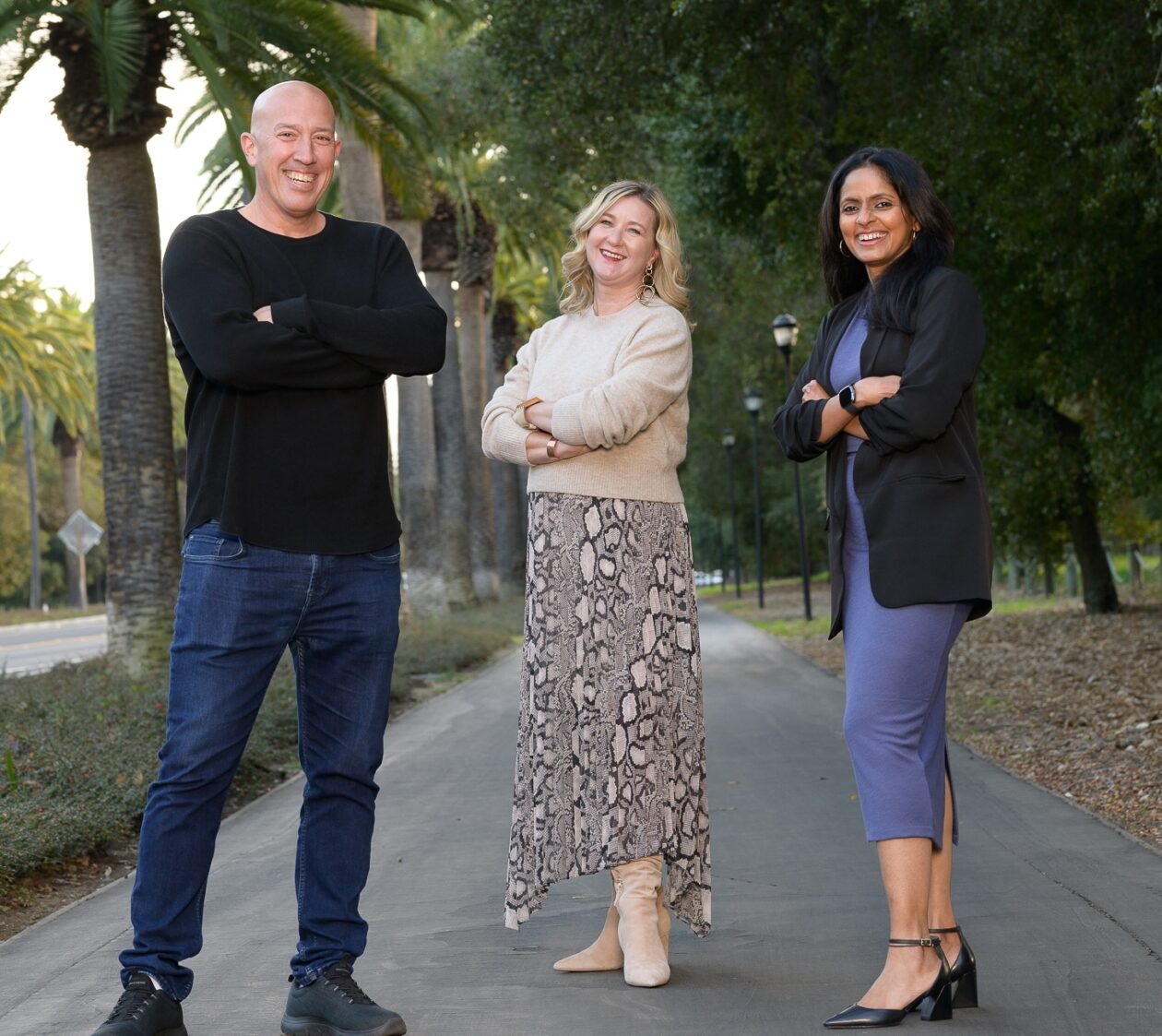
TheFounderVC team, from left: Paul Longhenry, Mia Lewin, and Shail Kaveti. Not pictured: Jay Bartot. (TFVC Photo)

TheFounderVC (TFVC), a new early stage fund based in Seattle and San Francisco, announced the public launch Tuesday of its inaugural $5 million fund.

The firm is focused on “vertical AI” — startups building industry-specific products on top of increasingly powerful AI models. It’s led by a team that includes:

  • Mia Lewin, founding partner based in Seattle, previously launched three startups including StyleGenome, which was acquired by Wayfair.
  • Paul Longhenry, partner based in San Francisco, a longtime investor and former exec at Tapjoy, Pinpoint Predictive, and Bolt.
  • Shail Kaveti, partner based in San Francisco, former Wayfair exec and Amazon senior manager, angel investor in Perplexity.
  • Jay Bartot, founding CTO based in Seattle, founded multiple startups in the Seattle area and was previously managing director at Madrona Venture Labs.

In a LinkedIn post, Lewin said the biggest opportunities in AI are in applications that combine structural data advantages with workflow-native products and highly personalized user experiences. “We back visionary founders who combine deep domain expertise with an AI-native vision to build category leaders of tomorrow,” she wrote.

TFVC invests at the pre-seed and seed stage. It plans to make 25 to 30 investments, with initial check sizes of $100,000 to $250,000. TFVC said it has about 60 limited partners.

The firm invests across the U.S., but is deeply tied to Seattle: five of the fund’s seven portfolio companies have at least one founder based in Seattle. Those include Potato, which is automating science experiments; Liminary, an AI-powered knowledge storage company; Planette, which helps businesses plan for weather and climate risks; and Ridge AI, a data analytics dashboard startup.

Its portfolio also includes fashion AI startup Daydream and home-buying company Catchouse.

Advertisement

Source link

Continue Reading

Tech

Schiit Asgard X Headphone Amp Packs Mjolnir Tech and Continuity A Power for Under $550 at CanJam NYC 2026

Published

on

At CanJam NYC 2026, Schiit Audio kept a lower profile than in past years, but the Texas based manufacturer still had something worth hearing. The company has now fully relocated operations from California to facilities in San Antonio and Corpus Christi, and judging by what we heard at the show, the move hasn’t slowed development one bit.

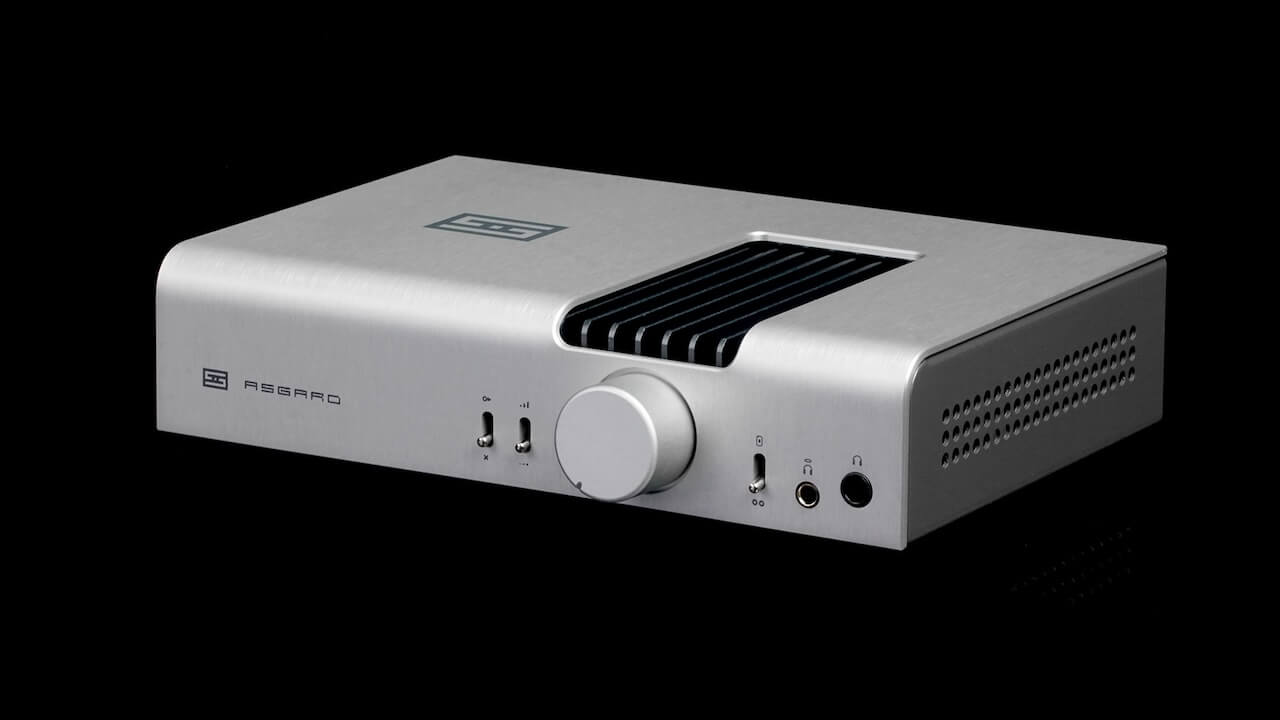
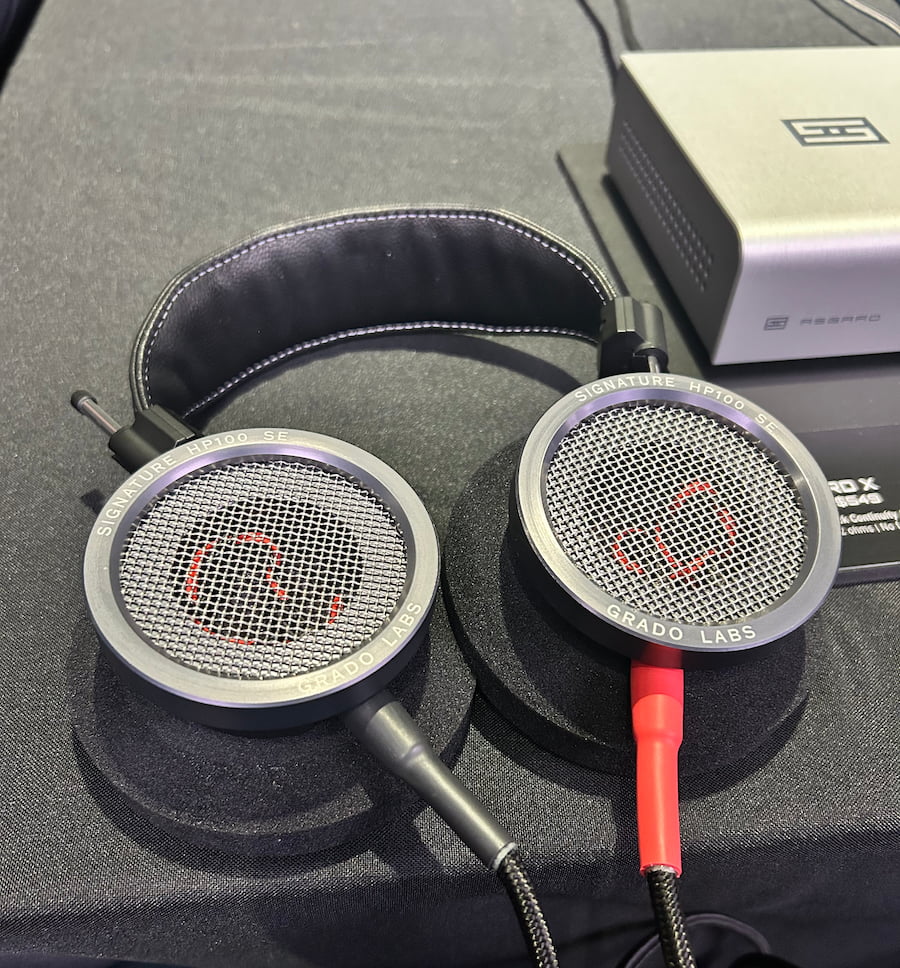
Front and center was the Schiit Asgard X headphone amplifier, a modular desktop amp that pulls technology directly from Schiit’s flagship Schiit Mjolnir headphone amplifier. The new model introduces Schiit’s Continuity A output stage and supports an optional internal DAC card that adds digital control through the company’s Schiit Forkbeard control system. The demo unit on the table included the DAC module and was paired with the Grado HP100 SE headphones we reviewed in 2025, making it one of the more interesting desktop headphone rigs on the show floor.

The result is a mid tier amplifier that looks familiar on the outside but carries more serious tech under the hood. With trickle down circuitry from the Mjolnir platform, app based control, and modular expandability, the Asgard X feels less like a routine update and more like Schiit raiding its own vault for parts. And judging by the crowd around the table, New York City still appreciates a little well engineered Schiit.

Schiit Audio Asgard X Class A Headphone Amp/DAC Silver Angle

Asgard X: Class A Power and a Little More Useful Schiit

Base price starts at $399, which gets you the amplifier and preamp functionality. Add the Mesh DAC card for $150, and the Asgard X turns into a compact all in one desktop rig with digital input and app control through Schiit’s Forkbeard control system. That’s where things get more interesting.

Advertisement

The DAC card introduces Schiit’s Mesh digital architecture, a custom filter design that is optimized in both the time and frequency domains rather than chasing the usual marketing buzzwords. The bigger change for day to day use is Forkbeard. Through the app you can control volume, balance, loudness, phase, NOS mode, and even adjust a full three band parametric EQ. In other words, the kind of controls people usually beg for once they realize their desktop stack requires three remotes and a flashlight.

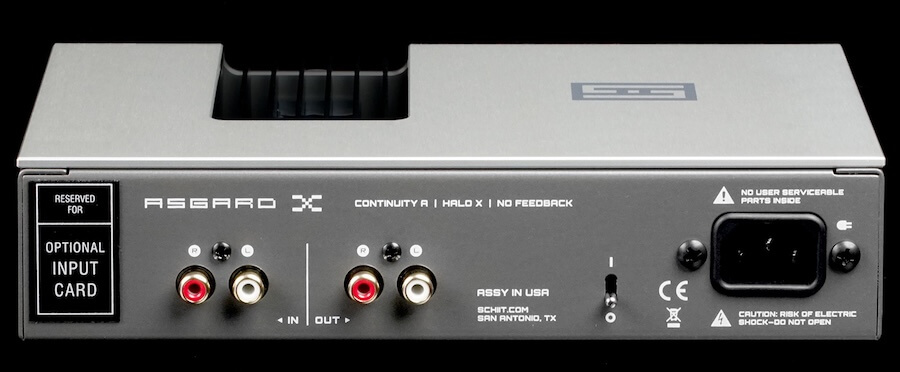
Schiit Asgard X Rear

Power output is more than adequate for most headphones:

  • 3.4W RMS at 16 ohms
  • 2.8W RMS at 32 ohms
  • 1.9W RMS at 50 ohms
  • 380mW RMS at 300 ohms
  • 200mW RMS at 600 ohms

Digital input is handled through Schiit’s Unison USB interface, supporting sample rates up to 384 kHz. No DSD. No MQA. We can hear Jason and Mike laughing all the way from Times Square.

No smoke machines, no Thor cosplay. Just a modular desktop amp with plenty of power, a DAC option that actually adds functionality, and enough control to keep both the Brooklyn headphone crowd and the Texas engineers reasonably happy.

grado-hp100-se-headphones-schiit
Grado Signature HP100 SE Headphones with Schiit Asgard X at CanJam NYC 2026.

Listening to the Asgard X: Class A Power, No Funny Schiit

Right off the bat, it was clear the Schiit Asgard X headphone amplifier had more than enough power and headroom to keep the Grado HP100 SE headphones fully under control. It didn’t try to goose the top end with extra sparkle, but where it really impressed was from the bass through the lower midrange. Black Sabbath and AC/DC had real weight and drive, while Deadmau5 and Kraftwerk showed just how well the amp handles pacing and rhythmic energy.

The treble could use a bit more air on some recordings, but the sense of space and impact made up for it. Percussion had real snap, kick drums landed with authority, and the overall timing kept everything moving forward with purpose. It’s the kind of presentation that makes you stop analyzing after a few tracks and just keep listening.

Advertisement

The Grado HP100 SE headphones have always handled vocals well, and that remained true here, though I did find myself wishing for a little more illumination at the top. Some higher notes came across slightly muted on certain tracks, but I’ll take that over a presentation that turns hard or brittle after a few minutes. Your mileage may vary depending on the recording, but in this setup the balance leaned toward smooth and listenable rather than aggressively detailed.

Advertisement. Scroll to continue reading.

The Bottom Line

The Schiit Asgard X headphone amplifier is aimed squarely at listeners who want a powerful Class A desktop amp without turning their desk into a stack of separate components. At $399, it works well as a straightforward headphone amp and preamp, and the optional Mesh DAC card adds modern convenience through Schiit Forkbeard control system without complicating the design.

With solid power, modular flexibility, and a sound that favors weight, pacing, and long listening sessions over flashy treble, the Asgard X makes the most sense for desktop headphone listeners who value control and usability over chasing the last ounce of analytical detail.

Advertisement

For more information: schiit.com

Source link

Advertisement
Continue Reading

Tech

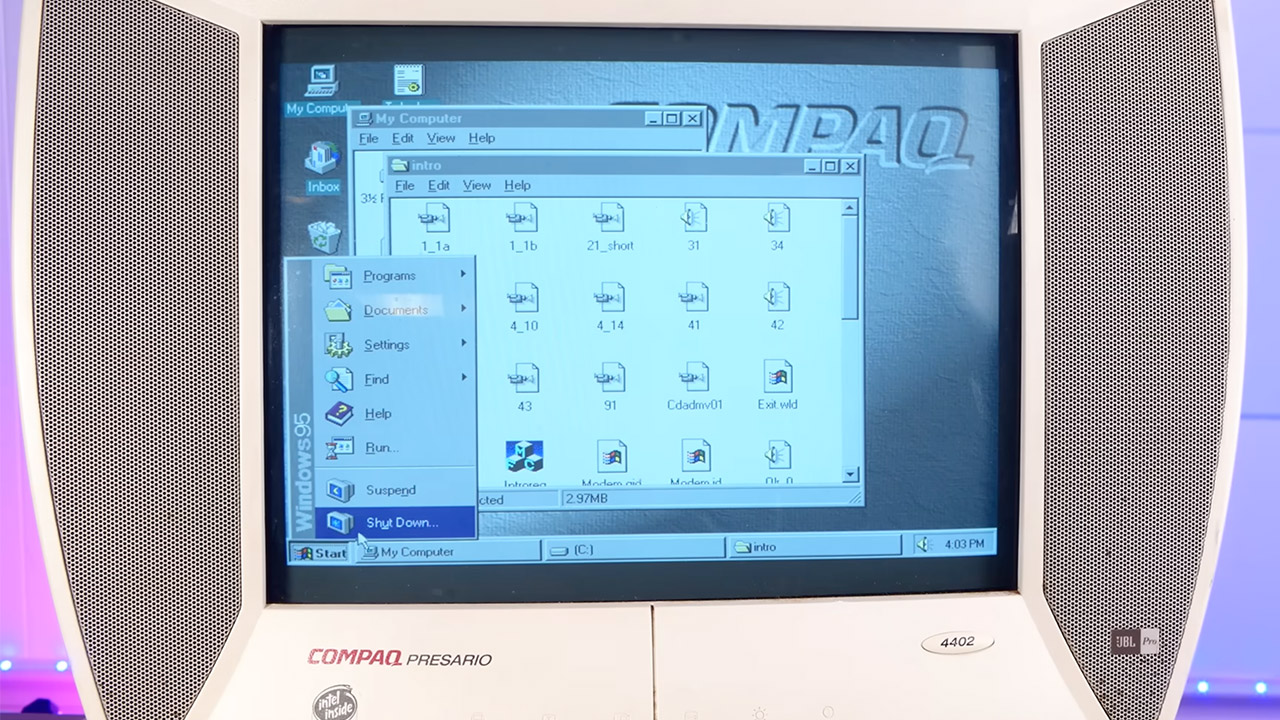
Fascinating Look Back at the Compaq Presario 4402 from 1996, a Time When Compaq Put the Computer Inside the Monitor

Published

on

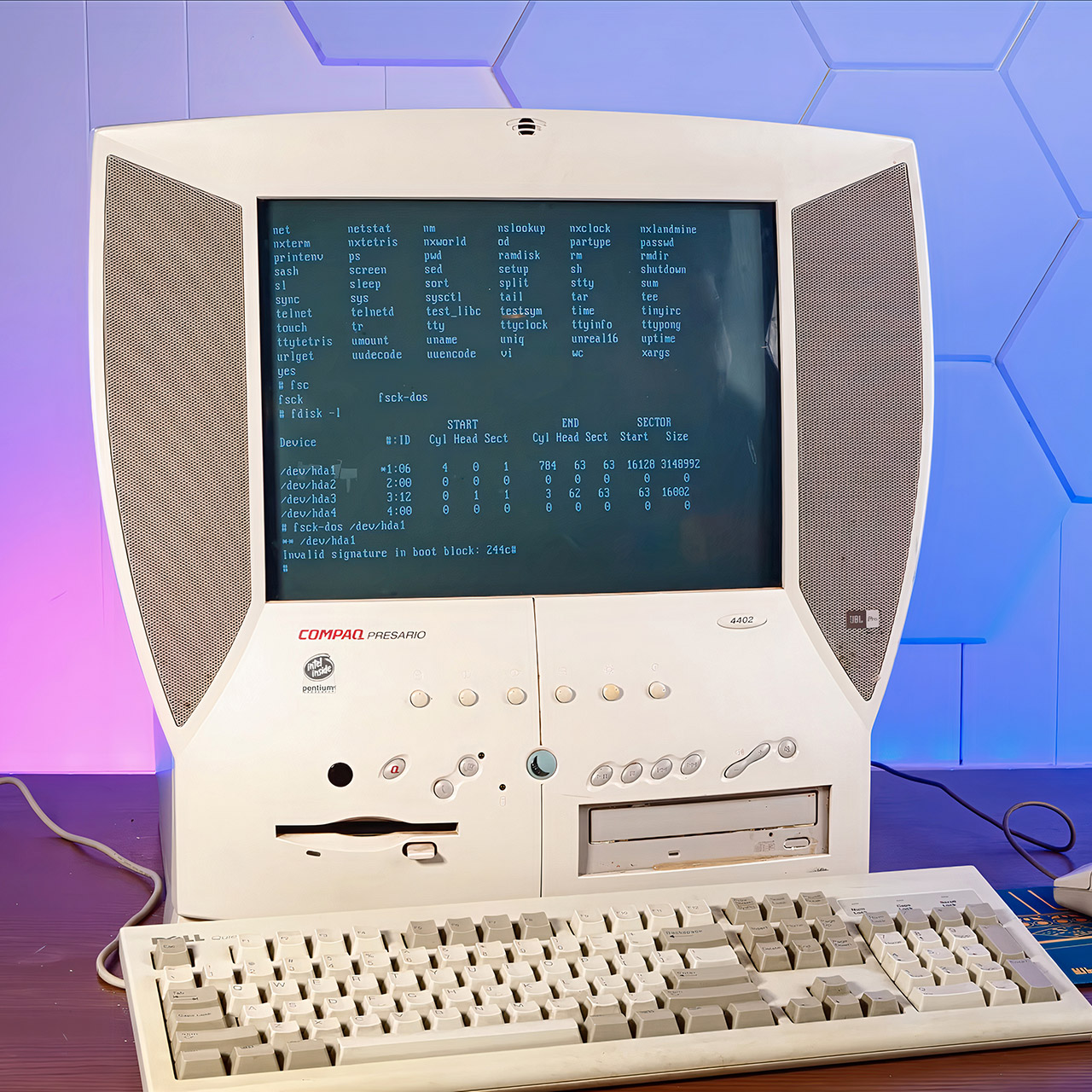
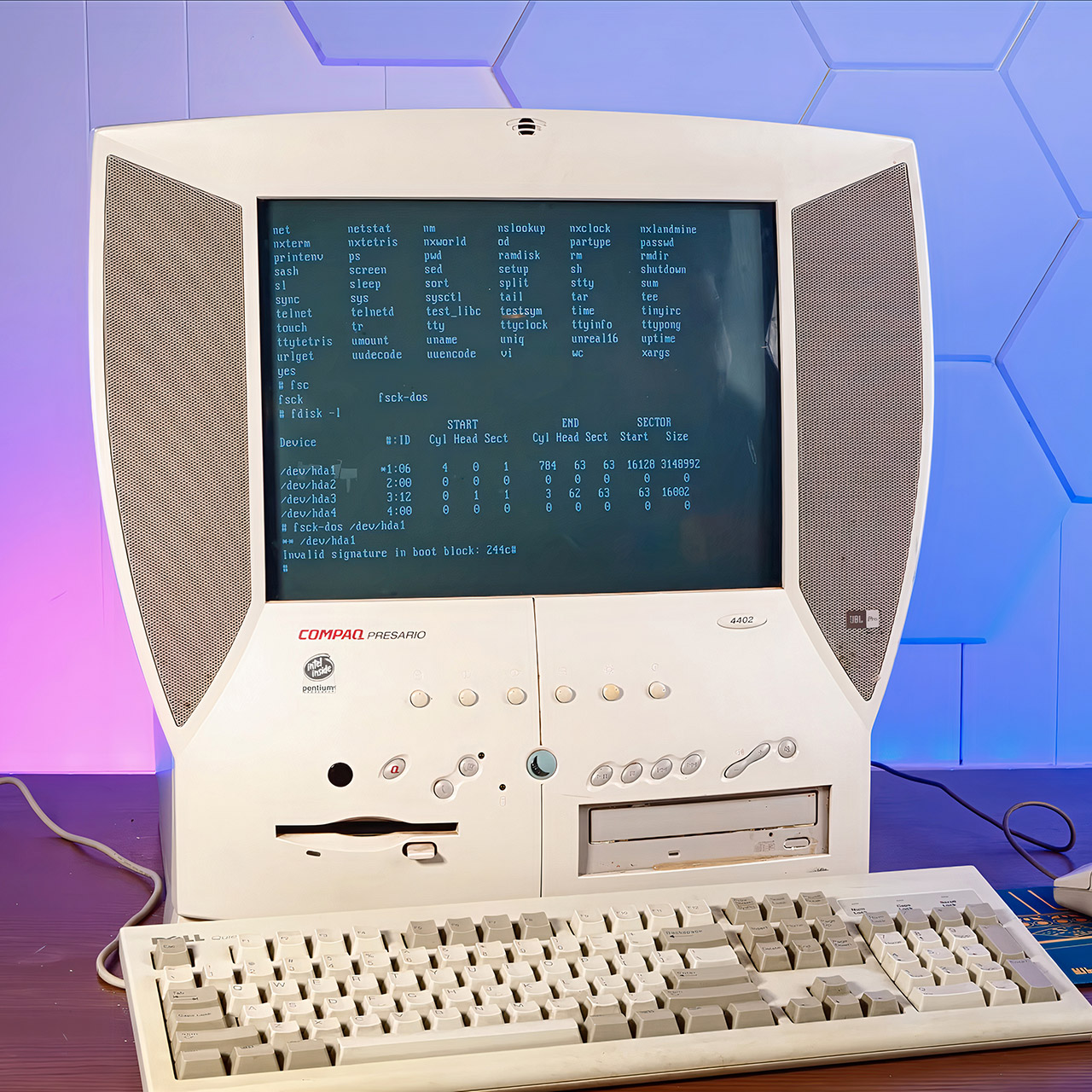
Compaq Presario 4402 All-in-One Computer 1996
In 1996, families looking for a home computer had the same old problem: a cluttered desk with different boxes, cables strung out everywhere, and setting it all up felt like launching a small rocket. Compaq responded with the Presario 4402, a stylish (for the time) all-in-one system that combined all of the necessary components into a single, large package.


Compaq introduced the Presario 4402 in mid-1996 as part of an effort to simplify home computing. It cost roughly $1,999, which is nearly $4,144 now, for a system that critics described as one of the few truly all-in-one packages available at the time. The design contained a 15-inch display, but only 13.8 inches showed a real image, and it was fastened on top of the computer’s internals, all squeezed into one enormous beige monstrosity. It was a mammoth, measuring 16 inches wide, 14.1 inches deep, and 15.2 inches tall, weighing a whopping 43 pounds.


HP 27 inch All-in-One Desktop PC, FHD Display, AMD Ryzen 7 7730U, 32 GB RAM, 1 TB SSD, AMD Radeon…
  • CONNECT AND COLLABORATE ON YOUR TERMS – Built with all the features to keep you connected like a tiltable pop-up privacy camera, HP Video Controls…
  • MORE MUSCLE FOR YOUR HUSTLE – With a powerful AMD Ryzen 7 7730U processor, ample storage, speedy connections, and plenty of memory, you’re all set to…
  • THE RIGHT FIT FOR EVERY FLOW – Immerse yourself in whatever you are doing with an ultra-slim three-sided micro-edge display and up to a…

Compaq Presario 4402 All-in-One Computer 1996
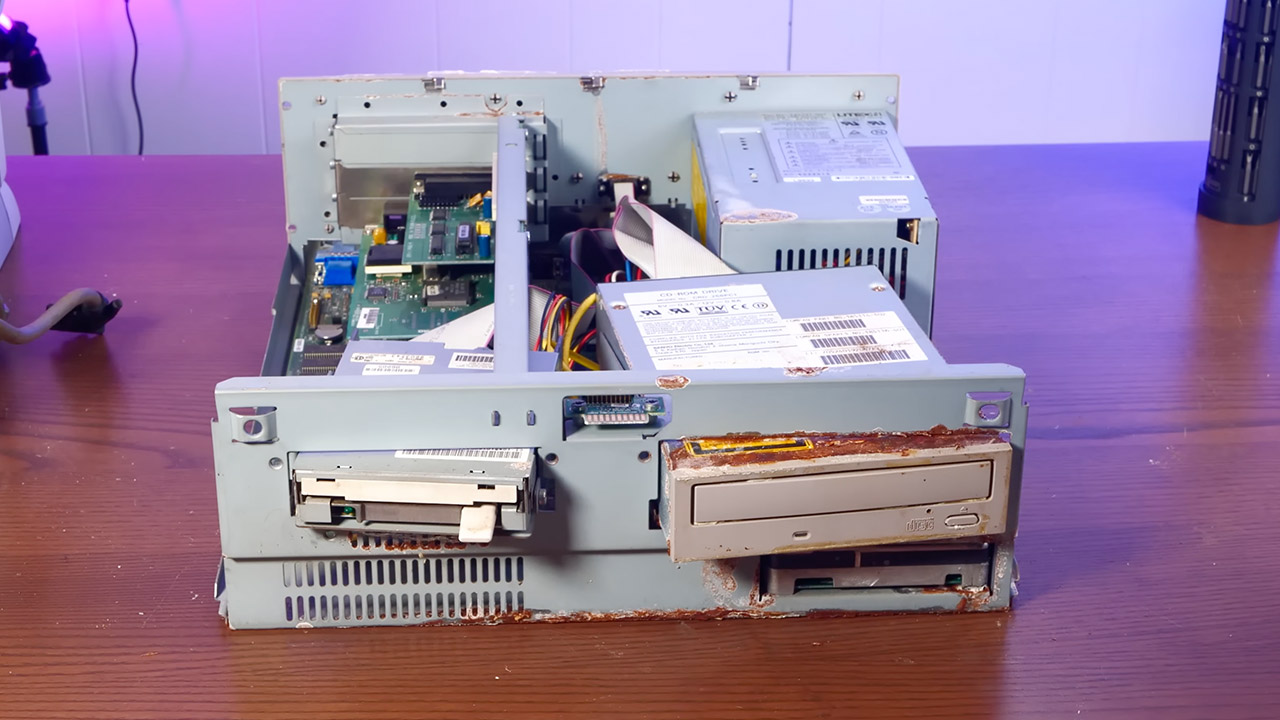
An Intel Pentium CPU ran at a respectable 133 MHz on a 66 MHz system bus, with RAM starting at 16 MB of EDO and expanding up to 128 MB with 60 ns modules. A 1.6 GB hard drive was used for storage, a 6x CD-ROM for software installation or audio disc playback, and a 1.44 MB floppy drive for file transfer to disk. The built-in speakers provided stereo sound, and a 33.6 kbps modem enabled dial-up access to the early internet and other services. Windows 95 came included with a Quick Restore CD to assist you fix problems if the system went wrong.

Compaq Presario 4402 All-in-One Computer 1996
You could control the CD player from the front panel, so you could just insert an audio disc and modify the level without having to restart the computer. Finally, the system functioned as a speakerphone/answering machine, allowing you to keep your desk clutter-free. Then there came the matching remote, which allowed you to control several devices from across the room. The software bundle featured Microsoft Works for work and spreadsheets, Netscape Navigator for web browsing, and Compton’s Interactive Encyclopedia 1996 for quick lookups. You can also choose between CompuServe, America Online, and GNN internet access.

Compaq Presario 4402 All-in-One Computer 1996
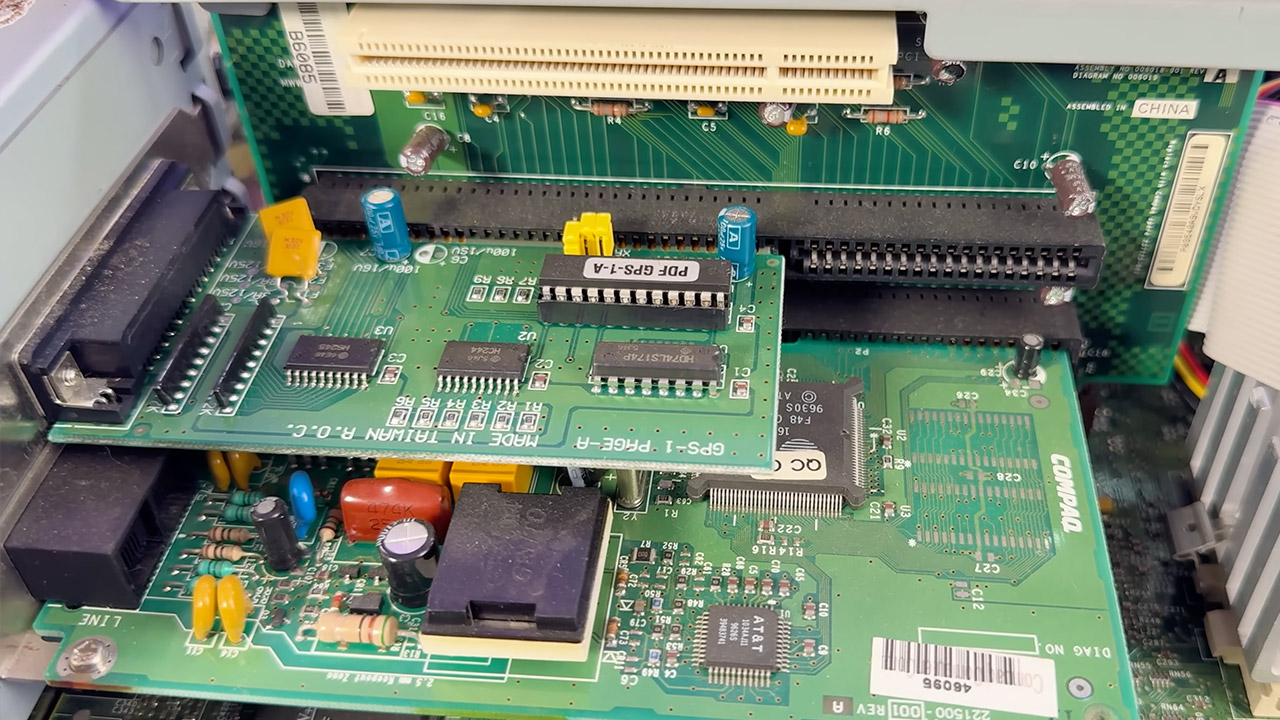
Critics at the time praised the Presario 4402 for its performance without requiring you to make too many compromises. One reviewer in particular stated that it was ideal for writing papers, playing games, or searching up information online, particularly if you were cramped in a small college dorm or family room with little space. The main disadvantage of the built-in display was that you couldn’t simply replace the screen when you needed to update; instead, you had to replace the entire system. Internal extension was feasible, however, thanks to a riser card that provided two ISA slots and one PCI slot for adding things like enhanced graphics.

Source link

Advertisement
Continue Reading

Tech

My 8-year-old daughter was struggling with math until we discovered this app

Published

on

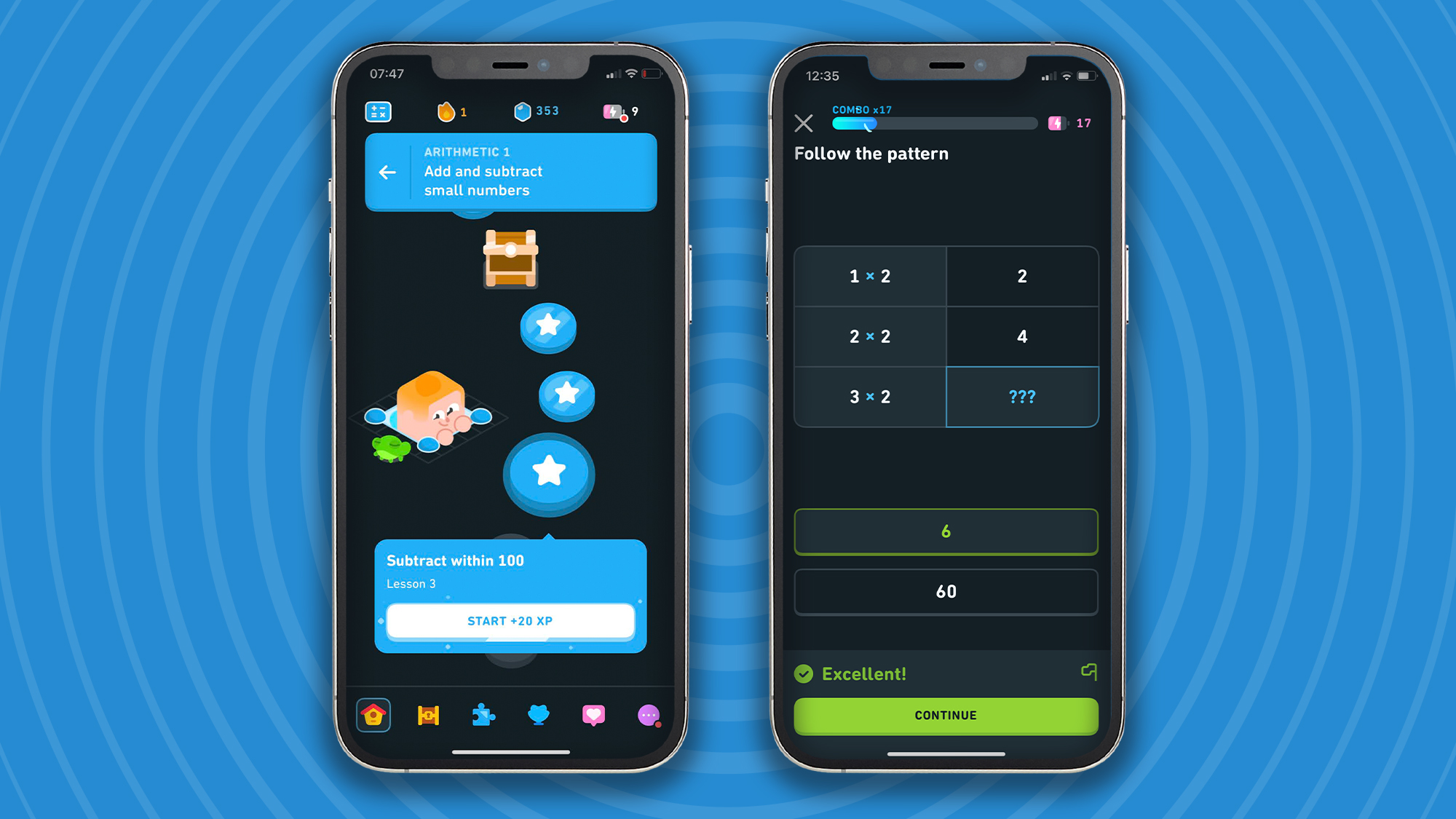
If you say the word ‘Duolingo’, people think of language learning. With over 40 supported languages and an engaging learning workflow, it’s no wonder that the app is currently the most downloaded education platform globally, nearing the historic 1 billion install milestone.

But did you know that language lessons are not the only string to its impressive bow? In fact, in October 2022, the company launched a standalone math app before integrating the module directly into their main app a year later.

Source link

Advertisement
Continue Reading

Tech

Google made Gmail and Drive easier for AI agents to use

Published

on

A new command-line tool published to GitHub consolidates Workspace’s sprawling APIs into a single interface. It also signals how seriously the company is taking the agentic AI moment.


The tool, whose documentation describes it as “one CLI for all of Google Workspace, built for humans and AI agents,” is called gws. It provides unified command-line access to Gmail, Google Drive, Calendar, Docs, Sheets, Slides, Chat, and most other Workspace services.

But the more revealing detail is buried in the instructions: the documentation includes a dedicated integration guide for OpenClaw, the open-source AI agent that went viral in late January and has since become something of a Rorschach test for where agentic AI is headed.

Google’s decision to name-check OpenClaw in official documentation, even unofficial official documentation, is not something companies do by accident.

Advertisement

Why a command-line tool matters for AI agents

The 💜 of EU tech

The latest rumblings from the EU tech scene, a story from our wise ol’ founder Boris, and some questionable AI art. It’s free, every week, in your inbox. Sign up now!

Before GWS, an AI agent that wanted to search a Gmail inbox, pull a file from Drive, and update a Calendar event had to navigate three separate APIs, each with its own authentication flows, rate limits, and response formats. The process worked, but as PCWorld described it, it was “a royal pain.”

The new tool collapses that into a single interface. Every operation produces structured JSON output the format AI agents can parse reliably without the ambiguity that can derail graphical interfaces. Authentication is handled once via OAuth, then inherited by any agent that calls the tool.

Advertisement

The architecture has one particularly elegant feature: gws does not ship a static list of commands. Instead, it reads Google’s own Discovery Service at runtime and builds its entire command surface dynamically. When Google adds a new API endpoint, the tool picks it up automatically.

There is no version to update, no stale documentation to wrestle with. For agents designed to work across long time horizons, that self-updating quality is not a minor convenience; it is a meaningful reliability guarantee.

The repository also includes more than 100 pre-built “agent skills” covering common Workspace workflows: uploading files to Drive with automatic metadata, appending data to Sheets, scheduling Calendar events, forwarding Gmail attachments, and dozens of similar operations.

These are the discrete, composable building blocks that agent frameworks like OpenClaw are designed to chain together.

Advertisement

The OpenClaw connection

OpenClaw’s story has moved fast. The project was published in November 2025 by Peter Steinberger, an Austrian software developer, under the name Clawdbot, a name that drew a trademark complaint from Anthropic.

After a brief stint as Moltbot, it settled on OpenClaw in late January 2026. Within weeks, users had created 1.5 million agents using the platform; the GitHub repository accumulated nearly 200,000 stars. OpenClaw’s premise is simple enough to fit on a business card: AI that actually does things.

On 14 February, Sam Altman announced that Steinberger was joining OpenAI to lead the next generation of personal agents. OpenClaw would move into an independent open-source foundation that OpenAI would support. “The lobster is taking over the world,” Steinberger wrote in his farewell post. “My next mission is to build an agent that even my mum can use.”

Google’s Workspace CLI landing in the middle of that story, with OpenClaw integration instructions in the documentation, three weeks after Steinberger joined OpenAI, is the kind of timing that does not look accidental. Whether it reflects a deliberate competitive response, a coincidental release, or simply developers at Google shipping something that was already in progress is not confirmed.

Advertisement

What is clear is that a major platform company has now built infrastructure specifically to make its apps more useful for the open-source agent ecosystem that OpenAI just acquired the architect of.

MCP and the broader picture

Beyond OpenClaw, gws also functions as a Model Context Protocol server. MCP is the open standard for how AI agents communicate with external tools, originally developed by Anthropic and now adopted across the industry. Running gws mcp exposes Workspace APIs as structured tools that any MCP-compatible client, Claude Desktop, VS Code with AI extensions, or Google’s own Gemini CLI, can natively call.

That MCP support is significant because it means the tool is not merely an OpenClaw utility. It is infrastructure for the entire class of AI agents that is converging on MCP as a standard. Google is, in effect, making Workspace a first-class citizen in the emerging agent ecosystem, regardless of which model or framework is doing the work.

One important caveat: Google’s documentation explicitly notes that gws is “not an officially supported Google product.” It is published as a developer sample, meaning there are no guarantees of stability, security, or ongoing maintenance at the level of a production service. For individual developers and experimenters, that is a manageable risk.

Advertisement

For enterprises considering deploying AI agents against live Workspace data, it is a meaningful limitation, particularly given the ongoing concerns about OpenClaw’s security model, which a Cisco research team found vulnerable to data exfiltration and prompt injection via malicious third-party skills.

What Google is signalling

Addy Osmani, Director of Google Cloud AI, has framed his team’s focus as building infrastructure for agentic systems, those capable of generating command-line inputs and managing structured outputs across complex workflows. The Workspace CLI fits that vision directly.

The broader pattern is legible. Microsoft has Copilot Tasks. OpenAI now has the architect of OpenClaw. Google has its own Gemini agent stack, and now a CLI that makes its most widely-used productivity suite readable by any agent that speaks JSON and MCP.

The competition for where enterprise AI agents live and what data they can reach is accelerating, and the battleground increasingly looks like the infrastructure beneath the applications, not the applications themselves.

Advertisement

For now, gws is a GitHub repository with a caveat. But the 14,000 stars it accumulated before most journalists noticed suggest that developers who build agents for a living already understand what it means.

Source link

Advertisement
Continue Reading

Tech

Today’s NYT Connections: Sports Edition Hints, Answers for March 9 #532

Published

on

Looking for the most recent regular Connections answers? Click here for today’s Connections hints, as well as our daily answers and hints for The New York Times Mini Crossword, Wordle and Strands puzzles.


Today’s Connections: Sports Edition features a mix of topics. As a Minnesota Vikings fan, the green group came quickly to me. If you’re struggling with today’s puzzle but still want to solve it, read on for hints and the answers.

Connections: Sports Edition is published by The Athletic, the subscription-based sports journalism site owned by The Times. It doesn’t appear in the NYT Games app, but it does in The Athletic’s own app. Or you can play it for free online.

Advertisement

Read more: NYT Connections: Sports Edition Puzzle Comes Out of Beta

Hints for today’s Connections: Sports Edition groups

Here are four hints for the groupings in today’s Connections: Sports Edition puzzle, ranked from the easiest yellow group to the tough (and sometimes bizarre) purple group.

Yellow group hint: Rocky Mountain High.

Advertisement

Green group hint: Upper Midwest division.

Blue group hint: Speed demons.

Purple group hint: Leading the team.

Answers for today’s Connections: Sports Edition groups

Yellow group: A Colorado athlete.

Advertisement

Green group: NFC North cities.

Blue group: Types of racing.

Purple group: Coach ____.

Read more: Wordle Cheat Sheet: Here Are the Most Popular Letters Used in English Words

Advertisement

What are today’s Connections: Sports Edition answers?

completed NYT Connections: Sports Edition puzzle for March 9, 2026

The completed NYT Connections: Sports Edition puzzle for March 9, 2026.

NYT/Screenshot by CNET

The yellow words in today’s Connections

The theme is a Colorado athlete. The four answers are Bronco, Buffalo, Nugget and Rockie.

The green words in today’s Connections

The theme is NFC North cities. The four answers are Chicago, Detroit, Green Bay and Minneapolis.

Advertisement

The blue words in today’s Connections

The theme is types of racing. The four answers are BMX, drag, horse and stock car.

The purple words in today’s Connections

The theme is Coach ____. The four answers are Carter, K, Prime and speak.

Source link

Advertisement
Continue Reading

Tech

MacBook Neo, Studio Display XDR, iPhone 17e and more, on the AppleInsider Podcast

Published

on

Apple released a slew of new devices this week, including the stellar MacBook Neo and iPhone 17e, plus the very good Studio Display XDR, all on the AppleInsider Podcast.

Open pink MacBook-style laptop on a desk, screen showing colorful macOS desktop with multiple windows, including a food website and document, with a black circular ai logo floating to the right
MacBook Neo was the most exciting of Apple’s launches

It wasn’t a full week of launches, but Apple certainly packed a lot into its three days of announcements. Practically all of it was predicted, but still there are stand-out releases like the MacBook Neo.
That seems to be polarizing people, as some regard Apple’s compromises as going too far. It’s certainly not for everyone, but then Apple has aimed at everybody by also updating its MacBook Air and MacBook Pro models.

Continue Reading on AppleInsider | Discuss on our Forums

Source link

Continue Reading

Tech

Grell OAE2 Open-Back Headphones Debut at CanJam NYC 2026 with Forward Projecting Soundstage You Have to Hear to Believe

Published

on

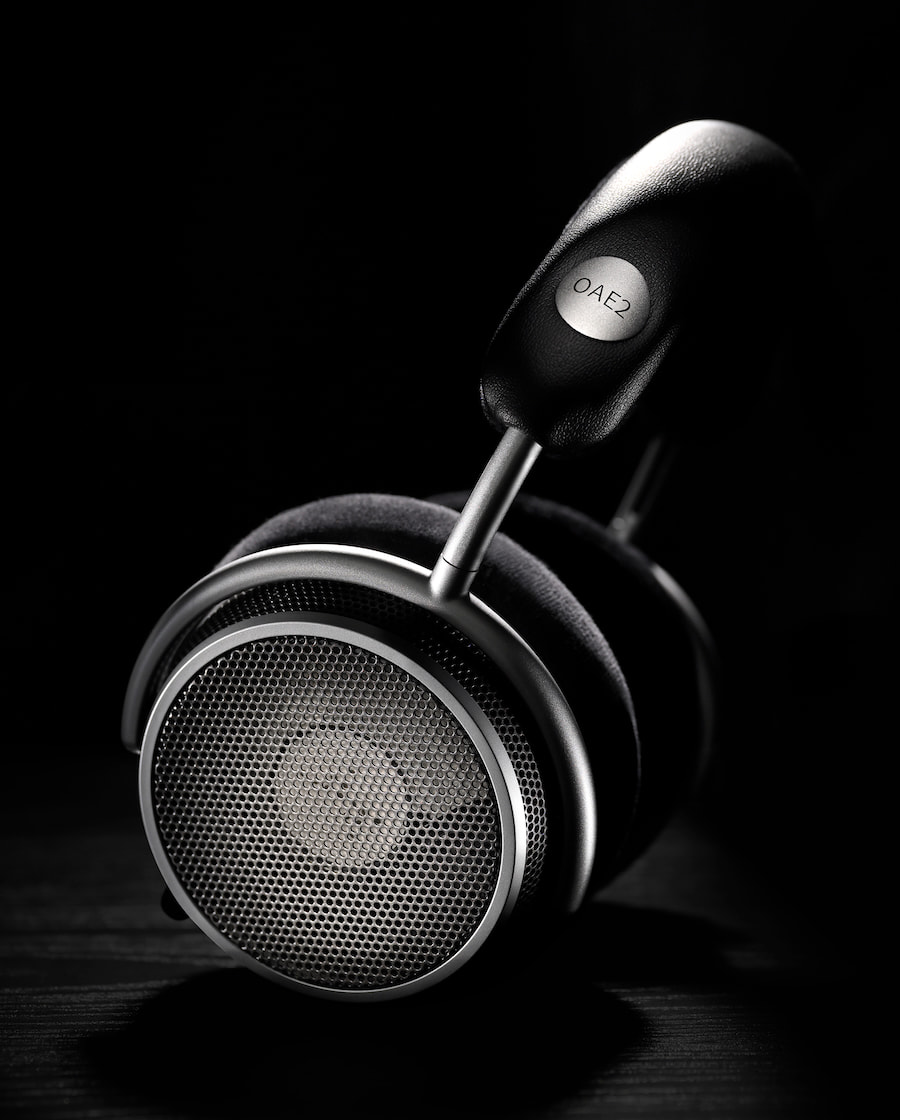
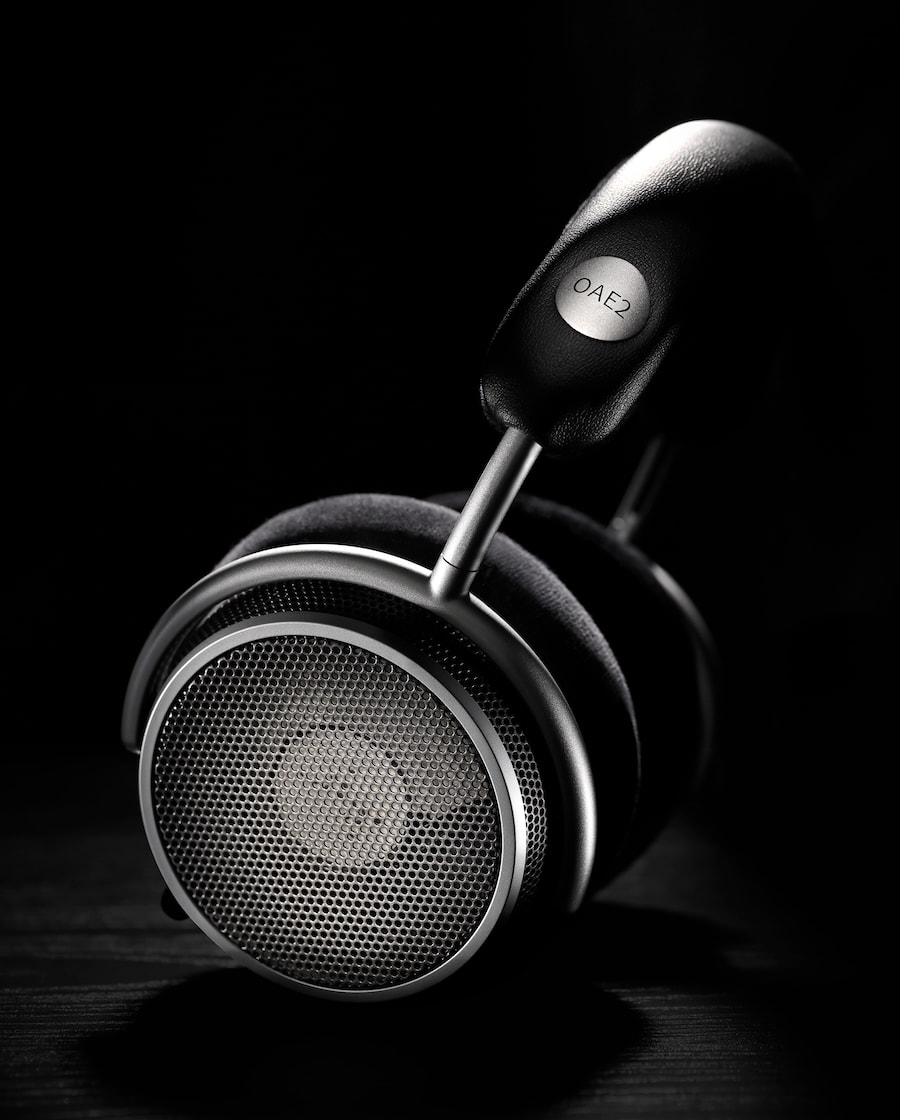
At CanJam NYC 2026 this past weekend, Grell’s latest design, the Grell OAE2 open back headphones, made their U.S. public debut. The $599 model builds on the original OAE1 and continues Grell’s pursuit of tonal accuracy, mechanical precision, and long-term listening comfort. The open back over ear design incorporates a newly optimized dynamic driver and an acoustically refined housing intended to improve airflow and project a more speaker like soundstage presentation in front of the listener.

Grell OAE2 Open-Back Headphones side
Grell OAE2

If you’ve spent enough time walking the halls at hi-fi shows, you know the routine. Every year a handful of startups promise they’ve reinvented the wheel and that what you’re about to hear will change everything you thought you knew about speakers or headphones. You nod politely, sit down, listen for a few minutes, and try not to roll your eyes when the demo playlist inevitably lands on Diana Krall, the Eagles, or Norah Jones.

But when the name on the badge is Axel Grell, you stop joking around and actually pay attention.

Grell is hardly another “trust us, it’s revolutionary” startup voice on a crowded show floor. Before launching his own brand, the veteran headphone engineer spent decades at Sennheiser, where he was responsible for developing some of the most respected high end headphones of the past few decades. Small German company. You might have heard of it. They also make a decent strudel.

Advertisement

How the Grell OAE2 Tries to Move the Soundstage Out of Your Head

Drop + Grell prototype headphone at CanJam SoCal 2023
Drop + Grell prototype headphone with forward mounted driver.

One of the biggest limitations of traditional headphones is the so called “in head” effect. Because the drivers sit millimeters from the ear and fire directly into the ear canal, most headphones create a listening perspective where instruments appear to originate from inside the listener’s head rather than from a believable space in front of them. While open back designs can widen the presentation and improve air and separation, they rarely change the fundamental geometry of how the sound reaches the ear. The result is often a presentation that feels spacious but still anchored inside the listener’s skull rather than resembling the externalized imaging produced by loudspeakers.

The Grell OAE2 open back headphones were engineered to address that specific limitation. Instead of following the conventional layout where the driver points straight into the ear canal, Axel Grell designed the acoustic structure so the output interacts more deliberately with the outer ear before entering the ear canal. This approach allows the pinna and surrounding ear structures to contribute to spatial cues in a way that more closely resembles how we hear speakers in a room.

In speaker listening, sound reaches the ear only after interacting with the head, shoulders, and outer ear, creating small timing, phase, and tonal variations that the brain uses to interpret direction, distance, and placement. By preserving more of those interactions inside the headphone structure, the OAE2 attempts to shift the listening perspective forward so that instruments appear positioned in front of the listener rather than inside the head.

The goal is not to artificially exaggerate soundstage width or create gimmicky spatial effects, but to maintain stable imaging, natural treble perception, and controlled low frequency behavior while presenting music in a way that resembles nearfield loudspeaker listening.

For listeners accustomed to the traditional headphone presentation, the perspective can initially feel unfamiliar, but the intention is that the brain adapts to the spatial cues over time, making the presentation feel more natural and less fatiguing during long listening sessions.

Advertisement

German Engineering, Replaceable Parts, and None of That Disposable Headphone Nonsense

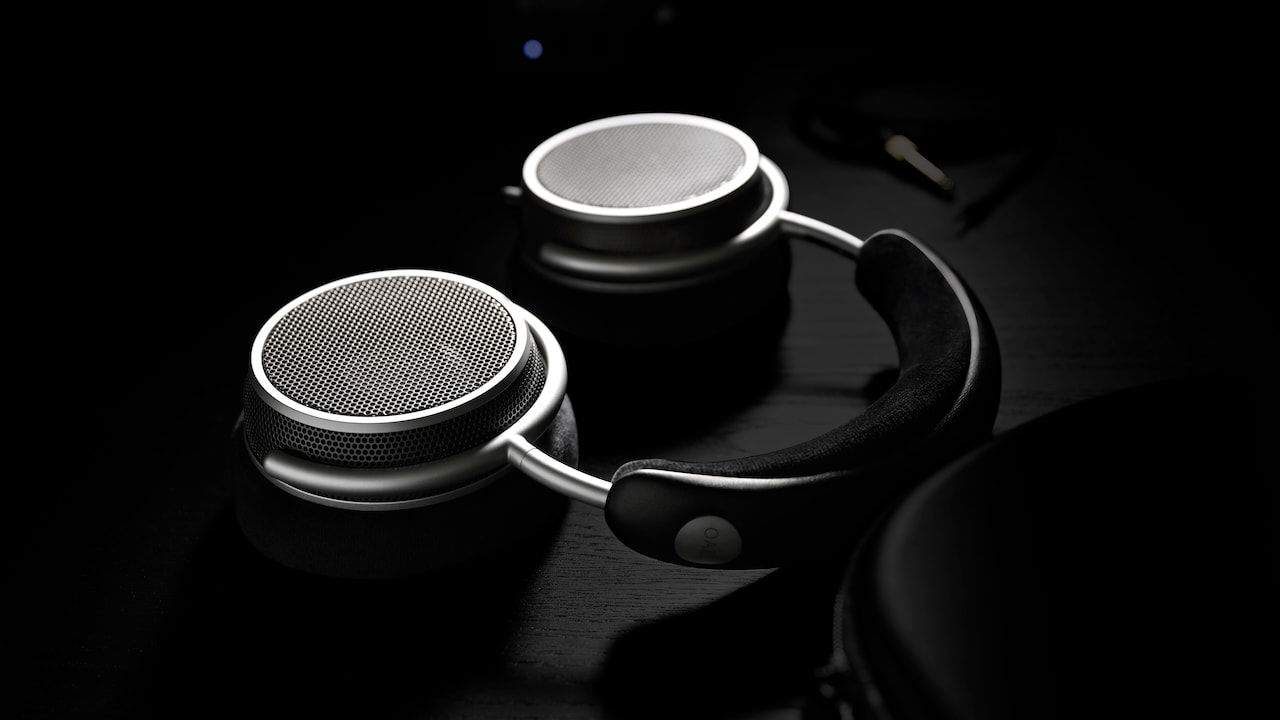
Grell OAE2 Open-Back Headphones Flat

Beyond the acoustic design, the Grell OAE2 reflects Axel Grell’s long standing belief that premium headphones should be built to last. Instead of chasing short product cycles, the design emphasizes durability, serviceability, and long term ownership. In other words, the opposite of the sealed plastic approach that dominates much of the modern headphone market.

At the center of the OAE2 is a 40 mm wideband dynamic driver built around a bio cellulose diaphragm, paired with a carefully tuned damping system. Part of that system includes a precision manufactured stainless steel acoustic mesh produced in Germany, which helps regulate airflow and maintain consistent driver behavior. The goal is controlled acoustics rather than brute force tuning, supporting the headphone’s spatial presentation without introducing unwanted resonances or instability.

Advertisement. Scroll to continue reading.

Construction follows a modular all metal architecture with replaceable components that can be serviced if parts wear out. The idea is simple: headphones should not become disposable because one component fails. Connectivity is equally straightforward. The OAE2 ships with two detachable 1.8 m cables, including a 3.5 mm single ended cable and a 4.4 mm balanced cable, along with a screw on 3.5 mm to 6.3 mm adapter for traditional headphone amplifiers and a protective carry case.

From a technical standpoint, the OAE2 remains close to the OAE1 but with small refinements. The circumaural open back design uses a dynamic transducer rated from 12 Hz to 34 kHz within ±3 dB, extending from 6 Hz to 46 kHz at -10 dB. Nominal impedance is 38 ohms with 100 dB sensitivity at 1 kHz (1 VRMS), making it compatible with portable players while still benefiting from a capable amplifier. Total harmonic distortion is rated at 0.05 percent at 1 kHz and 100 dB, and the headphone weighs 378 g (13.3 oz) without the cable attached. Slightly heavier than the OAE1 by three grams. German engineering apparently does not skip arm day.

Advertisement

The Germans Ran the Numbers. Now We Listen.

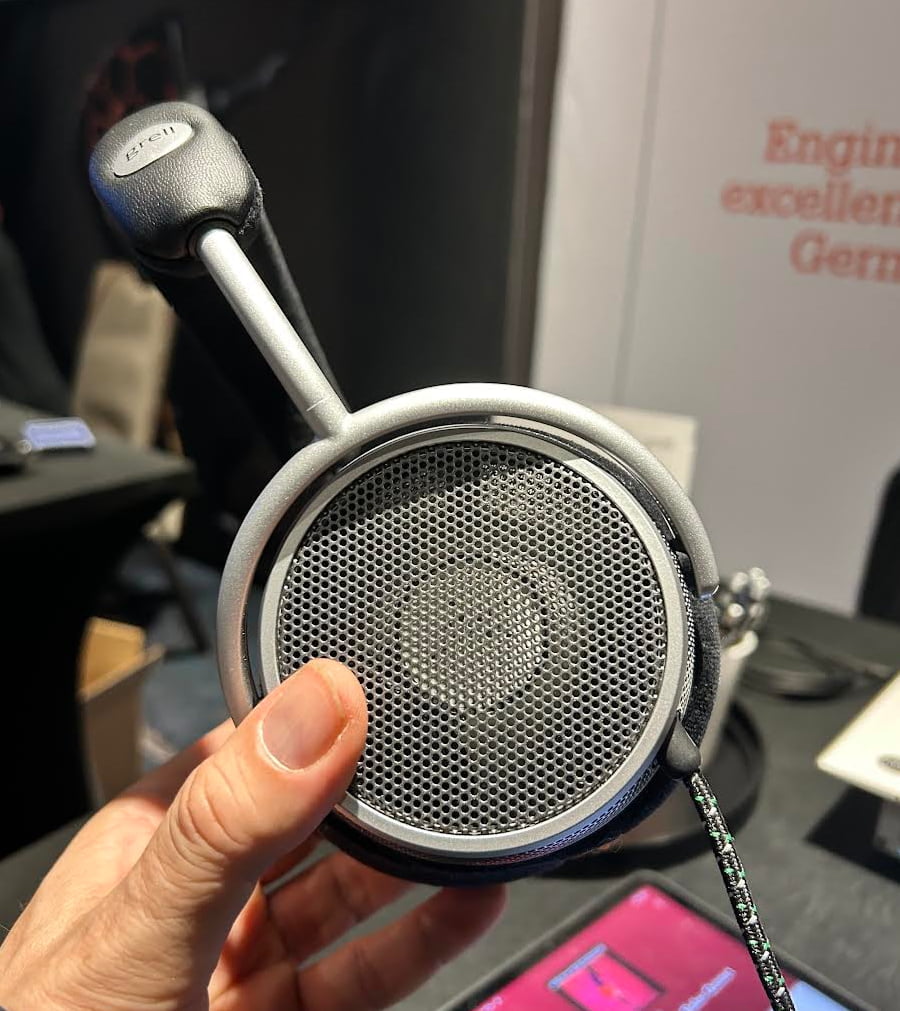
Grell OAE2 Headphones at CanJam NYC 2026

Grell kept things refreshingly simple at CanJam NYC 2026. No $30,000 source chain, no mystical demo playlist, and no attempt to overwhelm people with exotic gear. Just three pairs of the Grell OAE2, a few source devices, and a small stack of EarMen ST-Amp headphone amplifiers priced around $400.

The setup was about as straightforward as it gets for a show floor demo. The EarMen ST-Amp offers both single ended and balanced output options, rated at 0.5W into 32 ohms (4V) single ended and 1.85W into 32 ohms (7.75V) balanced, which is more than enough for a 38 ohm headphone like the OAE2. In other words, plenty of clean power but nothing exotic that might artificially inflate the listening experience.

Even the music selection avoided the usual trade show clichés. There were no sacred audiophile demo tracks looping endlessly in the background. Attendees could simply plug in their own phone and listen to whatever they wanted. Which I appreciated. I even spent a little time surfing through German tracks on the playlist. My German is… limited. Although if knowing Yiddish counts as partial credit, I was doing just fine.

A short run through Deadmau5, Daft Punk, and Aphex Twin was enough to get my attention. The OAE2 leans toward a neutral presentation without obvious boosts or dips across the spectrum. Clean, but not the sterile kind of clean that some German designs fall into. Bass is not tuned for exaggerated punch, but the definition and speed are excellent, especially with electronic music that depends on tight timing. The top end is equally well behaved. Detailed and open without any glare or hardness.

hirams-exterior

Then came the part that really mattered. Soundstage. The presentation is clearly wide, but not absurdly wide in the artificial sense. Think more East River to the IAC Building on the West Side Highway wide, not across the Hudson into New Jersey for chili dogs at Hiram’s wide. More important than width, however, is placement in front of the listener. If Axel Grell’s goal was to push the image outside the head and create what I would call a “nearface” listening perspective about 6 to 10 inches in front of you, the OAE2 largely succeeds.

Switching over to vocals confirmed that impression. Tracks from Amy Winehouse, Billie Holiday, Bjork, and Belinda Carlisle showed the same spatial behavior. Voices did not collapse into the center of the skull as they often do with headphones. Some appeared slightly closer, others further back, but the image remained focused and stable. Never diffuse. Always locked in dead center. And frankly, that was pretty impressive.

Advertisement

The Bottom Line

The Grell OAE2 stands out for one reason: it actually delivers on the promise of moving the soundstage out of your head and placing it slightly in front of the listener. The effect is not gimmicky or exaggerated. Instead, it feels closer to a nearfield speaker presentation with stable imaging and natural placement. Sonically the tuning leans neutral with clean treble, fast and well controlled bass, and no obvious peaks designed to impress in a quick demo.

Comfort was also encouraging. Clamping force is moderate, the headband is well padded, and the overall build quality feels appropriate for a headphone expected to retail for $599 / £499 / €499. Based on our first listen at CanJam NYC 2026, Axel Grell’s latest design shows real promise. A full review is coming later this month once we spend more time with a production unit.

For more information: grellaudio.com

Advertisement

Source link

Continue Reading

Tech

5 Of The Worst Places To Store Your DeWalt Batteries

Published

on


We may receive a commission on purchases made from links.

Gone are the days when you had to be attached to the nearest wall whenever you needed to use a power tool. These days, the rise of electric power tools has introduced not just the convenience of a cordless workflow but also the benefits of a swappable battery system. With batteries that can work across multiple product lines, electric power tool fans can save time, effort, and storage space. Because of this, it’s no wonder that everyone from regular homeowners to professionals has invested in their own electric power tool systems, like DeWalt. However, it’s important to note that, while cordless power tools offer a lot of convenience, they still require maintenance.

While DeWalt is known for its trustworthiness, some of the most common issues with DeWalt power tool batteries include premature failure, overheating, and charging issues. And while some of these issues are just mildly annoying, others can cause harm both to you and your property. Like other power tool brands, DeWalt batteries are also at risk of typical lithium battery issues, including degradation, swelling, and fire. Apart from using it correctly and charging it only with legitimate chargers and tools, one of the most important things you can do to make your DeWalt batteries last longer is to keep them in the right place at the right time. So, if you’re committed to doing so, here are what you should avoid.

Advertisement

1. Inside your car (and other super hot places)

Leaving your power tool batteries inside vehicles can lead to many problems, from minor efficiency issues to permanent damage. However, the vehicle itself isn’t entirely the problem, but how it can be like an oven. After all, DeWalt states that anything above 105°F is a big no. According to DeWalt, this is because the chemicals inside it won’t be able to get the right reaction it needs to charge properly. In line with this, it’s best to keep the batteries out of the reach of anything that generates excessive heat, such as fireplaces or space heaters. It also goes without saying that you should avoid placing them anywhere else where they’re exposed to direct sunlight. For example, it’s best not to leave them outside on your workbench in the afternoon sun for too long.

If you do need to bring your DeWalt batteries with you for any reason, it’s also important to prepare them properly for transit, especially when traveling on a commercial plane. The United States Federal Aviation Administration (FAA) notes that, due to the inherent risk of lithium batteries, there are many restrictions on them. Because of this, DeWalt cautions FlexVolt battery users not to forget the red transport cap. Thankfully, if you do lose it, you can buy these separately. On Amazon, you can snag a replacement DeWalt 60V battery cap for under $10, which buyers have confirmed meets airline requirements.

Advertisement

2. Unheated garages or sheds

While heat can be a problem, the cold can also ruin your power tool batteries. In fact, DeWalt notes that anything below 40°F can cause similar problems to exposure to extreme heat. So, if you live in a country that regularly experiences freezing temperatures, you’ll need to be more mindful when moving your batteries to less volatile spaces. This can mean investing in insulating your garages, sheds, or workspaces.

If you have no choice but to leave your DeWalt batteries in a place with poor insulation, there are some things you can do that won’t break the bank. For example, some budget-friendly hacks for keeping your tool batteries safe in cold temperatures include using insulated bags or even a closed cooler. Similar to how these are designed to keep your beer cool in the summer, they’re also an ideal way to maintain a steady temperature in the winter. Just make sure no leftover ice or water is inside when you chuck your batteries in it.

Advertisement

But take note, it’s never a good idea to revive a power tool battery when it doesn’t seem to be charging, since the process can be both complicated and dangerous. Unless you’re a professional with access to the right parts or know the ins and outs of modern batteries, including the software, you’re likely better off sending it to the service center or replacing it with a fresh product.

Advertisement

3. Utility rooms

One common warning you’ll get from any lithium-powered battery is to keep it away from moisture and other liquids, which basically means humid environments are at the bottom of the list. Humidity can lead to corrosion that can affect the battery’s ability to function over time, leading to issues like battery deformation or even short circuiting. Because of this, places that tend to have fluctuating, humid temperatures, like utility rooms, should be avoided.

Like most of its portfolio, DeWalt batteries can’t be used when wet anymore. While there are cases of users claiming their batteries still work after dropping them in buckets or getting wet in the rain, this isn’t always the case. To help counter this, you can invest in something like DeWalt’s ToughSystem 2.0 Charger Box. Apart from being a charger for small electronic devices and your power tool batteries, the box itself is rated IP55. Although it still can’t be submerged and isn’t fully dust-tight, it does offer protection from low-pressure water jets (and a little bit of rain).

If you spot any corrosion you suspect is affecting your tool’s performance, it doesn’t mean you have to dispose of the batteries yet. After unplugging the battery from your tool or charger, you can use a baking soda paste to help remove it. But if it looks too far gone, you might as well send it over to the DeWalt service center for professional guidance (or at least free, guilt-free disposal).

Advertisement

4. Near potential fire hazards

For many of us, our garages house more than just our vehicles. Unless you’re a committed minimalist, it’s not uncommon for the average person to accumulate a lifetime’s worth of stuff, much of it functional and some of it sentimental. Because of this, it’s quite common to use the garages as a general storage space, including for tools. Unsurprisingly, many of us may find ourselves storing our power tool batteries alongside a ton of other items, which they probably should not be close to at all.

In general, there are certain things you should avoid storing in your garage or shed entirely, including your DeWalt batteries. Apart from temperature-sensitive perishables, like wine or food, it’s also good to find a home elsewhere for flammable items. If your DeWalt batteries do catch fire, things like paint cans, propane tanks, or even old paperwork can make the damage even more terrifying.

That said, this can be easier said than done, especially if you have a small space to begin with. To avoid this, it’s always a good idea to keep your garage organized to keep fires at bay, whether they are caused by your DeWalt batteries or not. By conducting regular inventories, creating designated workspaces, storing similar items together, and setting a maintenance schedule, you can both keep the clutter at bay and catch any issues with your power tools and their batteries.

Advertisement

5. Near conductive or corrosive items

In an ideal world, DeWalt batteries are supposed to last up to three years. However, among the many factors that can affect them are the number of charger cycles and small actions that can increase the rate of degradation, like not being careful with the terminals. If you’re wondering how to mess up this sensitive part of the battery, DeWalt mentions several ways to do so, such as avoiding conductive materials. In layman’s terms, this means things that can channel electricity, like keys or coins, should be stored away. For people who work with DeWalt batteries professionally, this can also mean hand tools or loose tools, such as nails, bolts, and screws. But while this can be a problem if you haphazardly throw your things into a random bag, this won’t be such a big concern if you are traveling with DeWalt’s TStak or ToughSystem.

Apart from this, it will also be a good idea to clean your DeWalt battery terminal regularly. Although things like sawdust, drywall dust, dirt, or oils are pretty common when you work with power tools, it’s important not to leave them on for too long. With just a few minutes of your time and a damp (not wet) cloth, you can remove particle buildup from your batteries. Just make sure to avoid any unnecessary solvents, so you don’t accidentally damage them.

Advertisement


Source link

Advertisement
Continue Reading

Trending

Copyright © 2025