Tech
Ortofon MC Vertex Arrives at High End Vienna 2026: $17K Flagship Phono Cartridge Takes Aim at Audio-Technica

High End Vienna 2026 just turned into a very expensive cartridge fight.
Audio-Technica arrived with the $11,000 AT-MCD1, a new flagship moving-coil cartridge built around an integrated diamond cantilever, Shibata stylus, titanium body, and the kind of engineering brief that makes vinyl diehards start checking credit limits they should absolutely not be checking. Ortofon’s response? The MC Vertex is a $16,999 moving-coil cartridge billed as the most advanced cartridge the Danish company has ever produced. Subtle, it is not. Cheap, it is not. Accidental, it is definitely not.
For everyone not shopping in the $17,000 cartridge aisle, Ortofon also introduced the new MC X series as well. That one will matter to a much larger group of vinyl listeners, and we will get to it shortly.
For 99% of vinyl listeners, spending $11,000 to $17,000 on a cartridge is not an upgrade path. It is a cry for help wrapped in titanium, diamond, and a very small box. But for owners of reference-level turntables, tonearms, phono stages, and systems capable of exposing what happens at the groove wall, Ortofon has earned the right to make a statement like this.
After more than a century in phono cartridge design, the company is not wandering into the ultra-high-end cartridge category looking for attention. It already has the résumé. The MC Vertex is Ortofon reminding Audio-Technica, and everyone else in Vienna, that analog credibility is not built overnight or with a press release and a nice hotel demo. Although a nice breakfast with some herring and coffee never hurt.

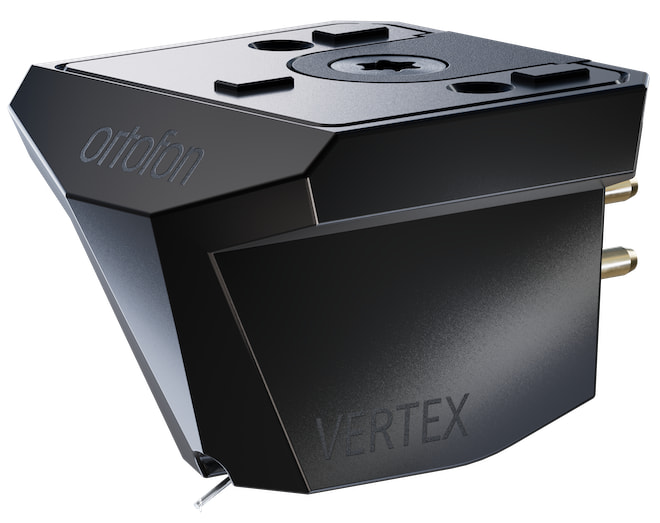
The MC Vertex is built around Ortofon’s new Vertex diamond. The stylus has a 4 μm scanning radius and a 110 μm contact radius, giving it an extended contact area along the groove wall.
The goal is more stable tracking, more even pressure distribution, and reduced localized wear compared with more conventional stylus profiles. That geometry should also help the cartridge maintain more consistent contact with the groove during complex passages.
At this level, the diamond profile is not a minor detail. It directly affects tracing accuracy, groove wear, and how much information the cartridge can retrieve before the signal ever reaches the phono stage.

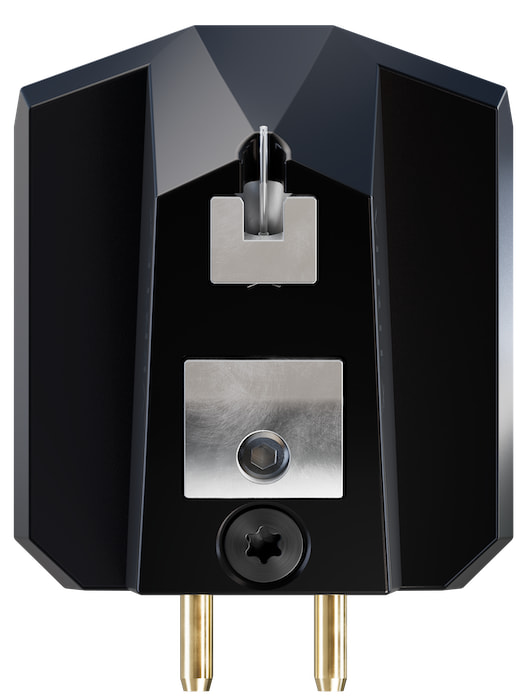
Solid Diamond Cantilever
The Vertex diamond is mounted to a laser-polished solid diamond cantilever, which is one of the more important details here. Diamond is extremely rigid and very low in mass, so the goal is to transfer mechanical energy from the stylus tip to the generator system with less flex, delay, or stored energy than more conventional cantilever materials.
That matters because a cartridge is a mechanical-to-electrical converter. Before anything reaches the phono stage, the stylus and cantilever have to trace the groove accurately and move the coil system without adding their own problems. Ortofon is trying to keep that mechanical chain as short, stiff, and controlled as possible.

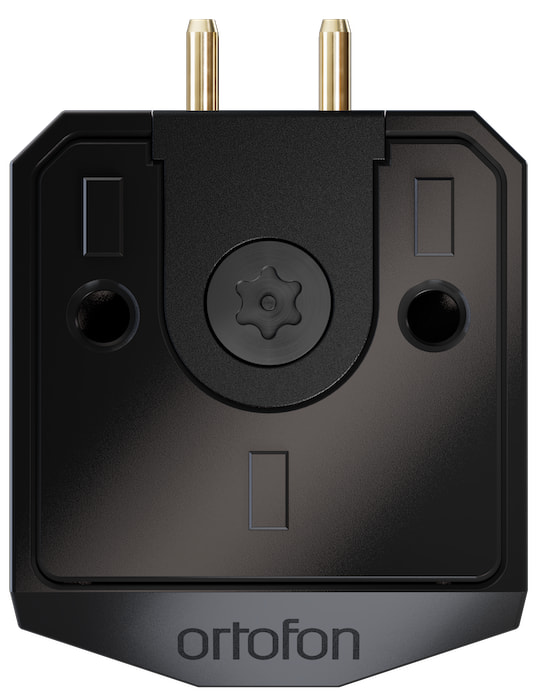
The body and internal core are made from SLM titanium with a DLC coating. Selective Laser Melting allows Ortofon to control the body geometry, mass distribution, and internal structure with greater precision than conventional machining.
The goal is a rigid, mechanically stable cartridge body that helps reduce unwanted resonance before it can affect signal generation.
Inside the MC Vertex, Ortofon uses a refined magnetic system with a non-magnetic armature. The purpose is to reduce moving mass and avoid unwanted magnetic interaction inside the generator. That is paired with high-purity silver coils, with Ortofon claiming more stable and linear signal generation, improved transient behavior, and more precise tracking across the audible range.
Ortofon’s Wide Range Damping system is also part of the design. It uses a platinum disc positioned between two dampers made from proprietary Ortofon rubber compounds. The intent is to control resonance across the audible frequency range without overdamping the cartridge or restricting dynamic response.
MC Vertex versus AT-MCD1

The published numbers suggest a very serious low-output moving-coil design: 0.3 mV output at 1 kHz, 5 cm/sec; 30 dB channel separation at 1 kHz; 0.1 dB channel balance; 20 Hz to 20 kHz frequency response within ±1 dB; 19 ohms internal impedance; 9 μm/mN lateral compliance; recommended 2.5 gram tracking force; and a recommended load above 100 ohms.
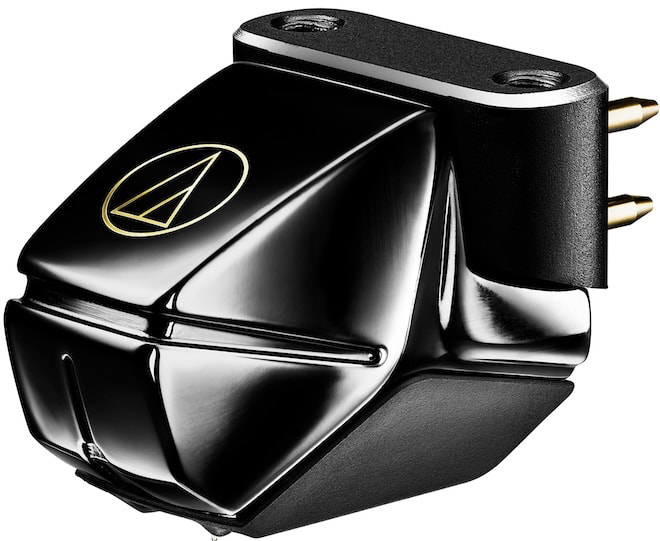
Compared with Audio-Technica’s new AT-MCD1, the Ortofon MC Vertex appears to be taking a slightly different engineering path to the same ultra-high-end destination. The AT-MCD1 also uses an integrated diamond cantilever/stylus concept and is clearly aimed at the same small group of listeners with reference-level turntables, tonearms, phono stages, and systems capable of exposing microscopic differences at the groove wall.
The Audio-Technica offers higher output at 0.55 mV, 28 dB channel separation, 12 ohms coil impedance, 20 Hz to 50 kHz frequency response, and a recommended tracking force of 1.8 grams. The Ortofon counters with a lower 0.3 mV output, tighter 0.1 dB channel balance, 30 dB separation, the Vertex 4/110 μm stylus geometry, SLM titanium/DLC bodywork, Wide Range Damping, and a 2.5 gram tracking force.
Neither cartridge is for casual vinyl listeners, and pretending otherwise would be silly. These are statement cartridges for systems where the turntable, arm, phono stage, setup, and record collection are already at a level where the cartridge is not being asked to rescue the rest of the chain.
Ortofon MC X50: The MC for the Rest of Us

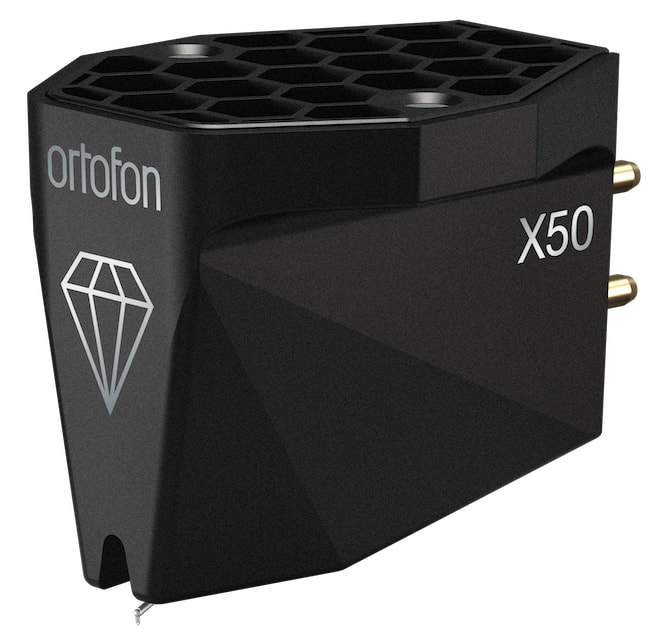
The MC Vertex is the statement product, but the MC X50 is the new Ortofon cartridge more listeners are likely to consider for a serious high-end vinyl system.
Priced at $1,699, the MC X50 sits at the top of the MC X Series. It uses a Nude Micro Ridge diamond stylus with a 2.5/75 μm stylus tip radius, mounted to a boron cantilever. That combination is intended to provide accurate groove tracing, low moving mass, and consistent tracking behavior.
Ortofon has also developed a rubber suspension compound specifically for the MC X50. The suspension works with the Micro Ridge stylus and boron cantilever to help maintain stable contact with the groove and control mechanical movement during playback.
The MC X50 uses high-purity silver coil wire and a newly developed magnet system for the MC X platform, with a one-piece pole cylinder integrated into a rear magnet yoke. The design goal is stable signal generation and improved magnetic efficiency.
The cartridge body is made from MIM stainless steel with a honeycomb core structure. Metal Injection Molding allows Ortofon to control the body geometry, while the internal structure is intended to balance rigidity, mass, and mechanical stability.
The published specifications include 0.4 mV output at 1 kHz, 5 cm/sec; 28 dB channel separation at 1 kHz; 0.5 dB channel balance; 20 Hz to 20 kHz frequency response within ±1 dB; 14 μm/mN dynamic lateral compliance; 6-ohm internal impedance; 2.0 gram recommended tracking force; half-inch mounting; black finish; and 8.6 gram cartridge weight.
The Bottom Line
The Ortofon MC Vertex is the statement cartridge. It uses the new Vertex diamond profile, a solid diamond cantilever, SLM titanium body with DLC coating, non magnetic armature, high purity silver coils, and Wide Range Damping. What makes it unique is the amount of mechanical control Ortofon is applying from the groove contact point through the generator system. At $16,999, it is for reference turntables, tonearms, phono stages, and systems where setup quality is already at a very high level.
The Ortofon MC X50 ($1,699) is the more attainable high end model. It uses a Nude Micro Ridge stylus, boron cantilever, dedicated rubber suspension, high purity silver coils, new MC X magnetic system, and MIM stainless steel body with honeycomb core. What makes it important is that it brings Ortofon’s current focus on low moving mass, stable tracking, controlled resonance, and precise signal generation to a cartridge that more vinyl listeners can realistically consider.
You must be logged in to post a comment Login